
Translated material
Cinema and prison locks
Russian documentary at MMKF - about captivity, sports for people with developmental features, village and again about a pot from the Kish group
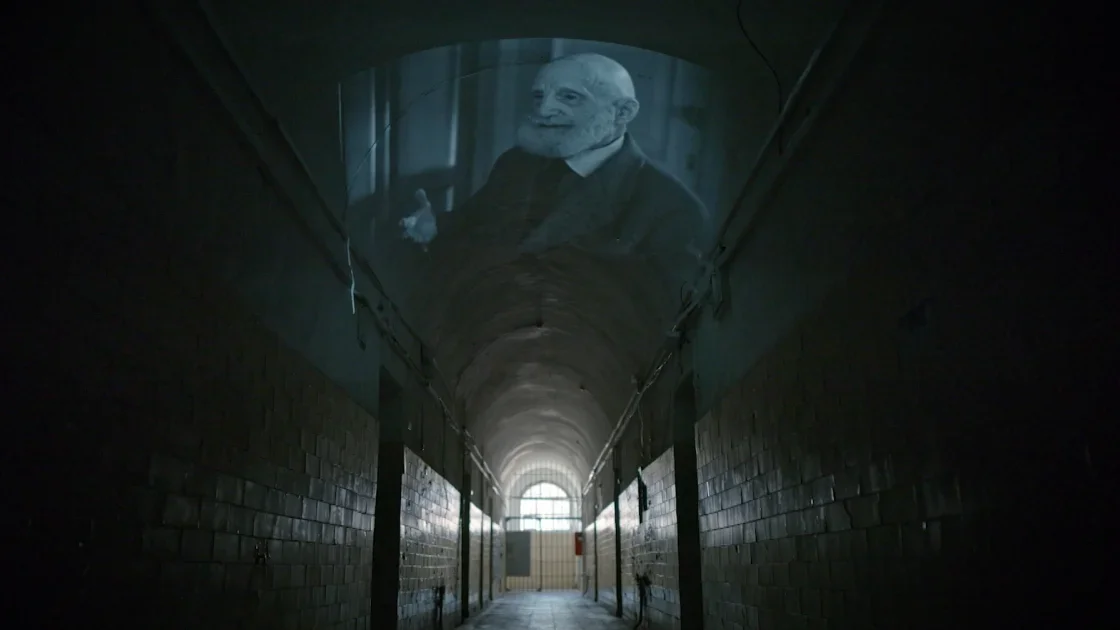
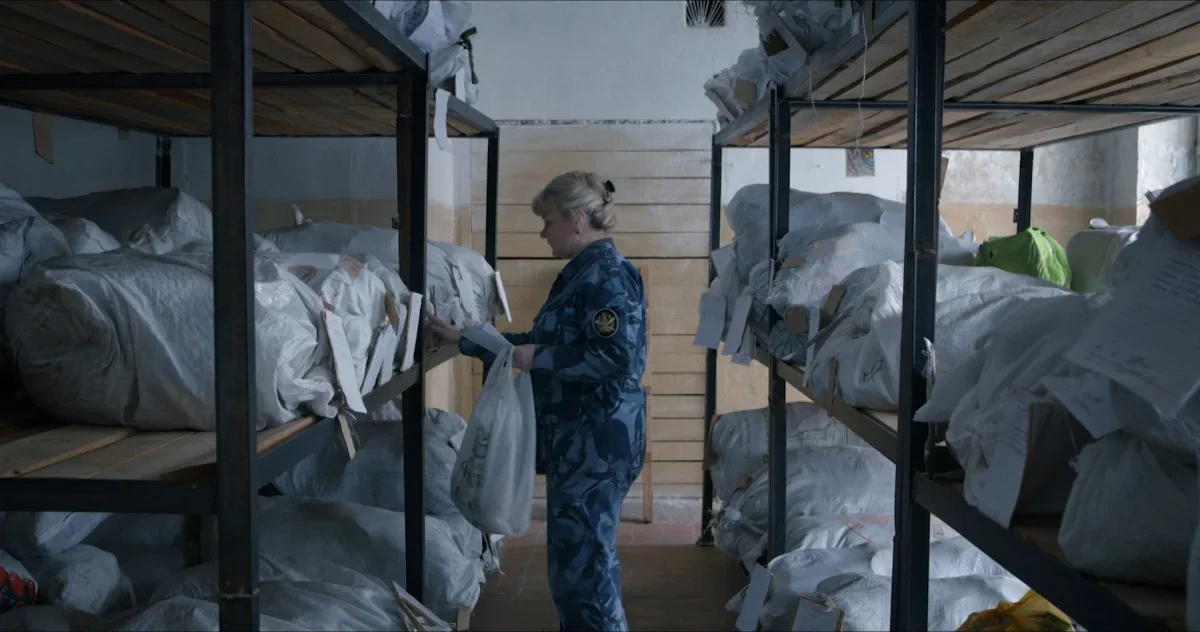
Frame from the film "History of Russian Pros" / Kinopoisk
The legend of the pot
They say that documentary cinema does not have their own viewer - therefore, cinemas with a documentary program and specialized television channels do not survive. But there are films that collect full halls - for example, “Mikhail Gorshenev. The legend of the king and the jester. " At the festival show, Daria Ivankova’s tape about the famous musician, the frontman of the punk rock band “King and the Jester” was a full house. A lot of unique personnel (sorry, in the archival television shootings “Raughty”-blurred-the names of old television channels), frank interviews of the process participants, through stories like the confrontation of Gorshenev and his father, an officer-resident with a cool character ... “OKKO” can be proud of his product-from the point of view of television transmission, he is made qualitatively, there are many penetrating penalties here. interlocutors - and many apologists.
Fans accepted it with a bang, but is everything said directly and clearly here?
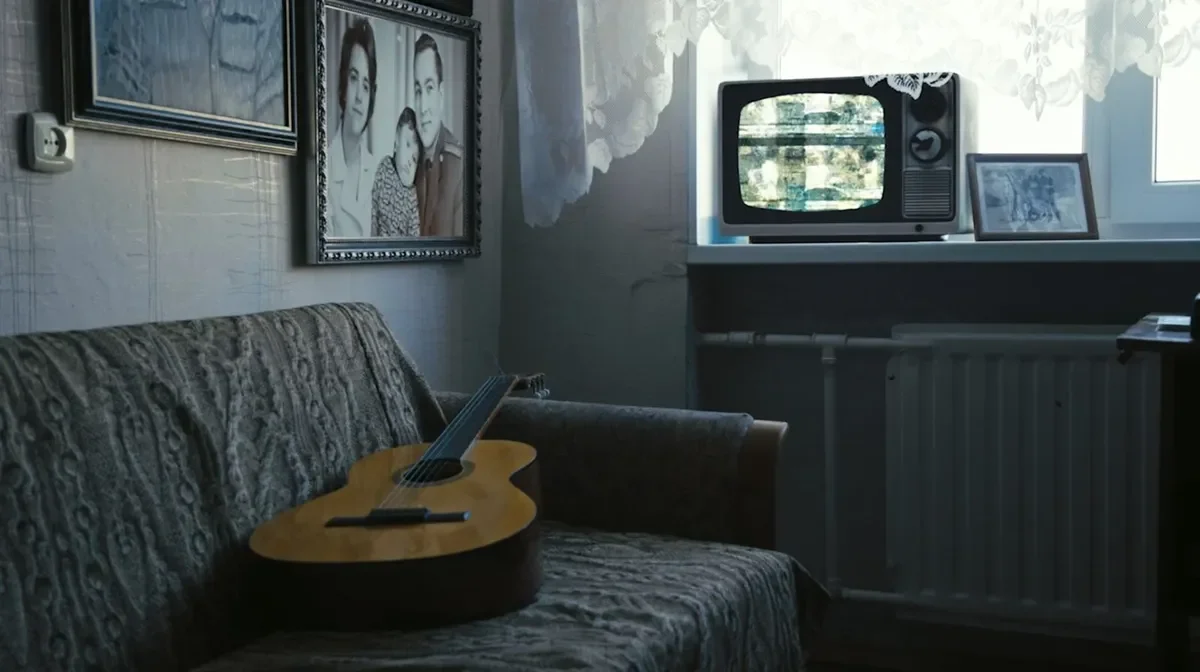
On the final shots, my neighbor asked bewilderedly - I still did not understand what Gorshenev’s tragedy was? They talk about drugs and heroin dependence, without pedaling this topic, even in the Wikipedia article there is much more information about this tragedy of the pot - eight clinical deaths, the death of his first wife, also drug addicts, which is said in the film that her traces are lost ...
At the festival, the first series “Legends about the King and the Jester” was shown, maybe a lot will be clear into the second.
In the shadow, there are moments associated with the history of punk rock and post-Soviet life-is its role something to confront with classical rock, this is exhausted by its tasks and significance? But what then apologizes the bad sound and not always articulate singing, not to mention the drugs and emphasized apoliticality (so reap its fruits, I want to say in combat for)? Or is the role of Andrei Knyazev in the history of the “king and jester” really more important than the role of pot? And most importantly - the context, how did the army of fans arise, which gave rise to the success of the "king and the jester"?
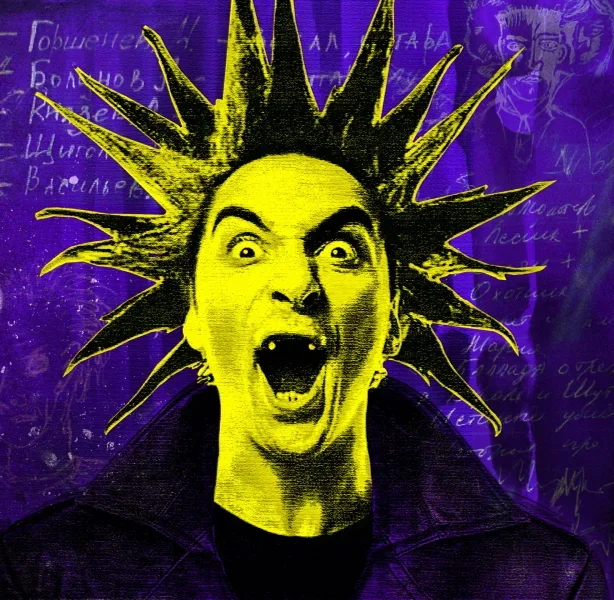
The era remains behind the scenes, although in the answers of the musician Alexei Gorshenev, the senior brother of the singer, a lot of interesting things, but in general everything is quite amused, the feeling of conversation in a smoked and cramped room, which is pierced by sounds - alas, not mu.
"Fathers" Yuri Mokienko
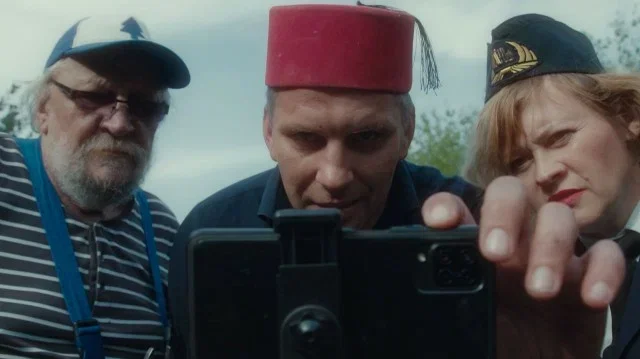
The full house was accompanied by the most witty film of a documentary competitive program, charming "fathers" Yuri Mokienko. A student of Alexander Sokurov put a movie about cinema: in the village they make a film for the Golden Scurip the Moszereva festival; Watch the filming of continuous pleasure. In this ironic, nonpathos cinema there is so much charm that the fear of the in vain spent time is disappeared, which involuntarily arises whenever you read the state synopsis in the booklet.
"Let me win"
With crowded halls, shows of tapes created with the active participation of Sergei Miroshnichenko also took place. He is one of the curators of the documentary cinema program - this program can now be called largely family, at least four tapes in it, to the creation of which Miroshnichenko and his two daughters are directly related to. One of them, Mari Finkelstein, who heads the documentary films of the Russia 1 channel, set the tape “Let me win” along with Svetlana Muzychenko - about sports changing the lives of people with developmental features. For some time now, Russians have participated in the competitions held by the International Organization of Special Olympics International, in 1968 it was organized by Unis Kennedy Schravever, Sister John Kennedy; Russia has joined the movement only recently.

The empathy with which you monitor the heroes do not interfere with the feeling of increditedness: what is the reason for the indifference of the people to sick children, where so many dislike, and sometimes the frank hatred that the parents of such children experience on themselves? A friend whose daughter stopped in development, tells about the reaction of many inhabitants of the native village to their appearance on the playground, this anger cannot be explained.
But the film, made with the support of Sberus and Coca-Cola, ends with information that the German authorities refused to allow the Russian team to be competitions.
However, one of the heroines, listening to the news about the beginning of his own, exclaims perplexedly: “How is Ukraine and Russia? I don't understand!"
QUOTE
"History of Russian prisons"
The first film is about crosses, the second film is about Butyrka, the third film is about the Vladimir Central
With the support of the Ministry of Culture of the Russian Federation, Sergei Miroshnichenko began the multi -part project “History of Russian Pros”. It is concentrated on the history of prison castles, most of which arose in the era of Catherine II - “Crosses”, “Butyrka”, the Vladimir central became the heroes of the first three tapes.
QUOTE
The first film, about the St. Petersburg “Crosses”, in 2017 was shot by the daughter of Miroshnichenko Angelina Ashman (Golikova), screenwriter and producer-Miroshnichenko himself, manufacturers-the Russia 1 channel and the Studio “Ostrov” (among the founders of Mr. Miroshnichenko and MMKF President Nikita Mikhalkov). “Crosses” were made spectacular, the film was bought by Netflix, but human rights activists do not like it. Zoya Svetova spoke sharply about the film: “Everything is quite primitive in it, and if this is a film about the Russian prison, then the truth about the prison is not half or even a third, but some very small drop ... This is the truth of the employees of the penitentiary system who was given the word. It's good that they were given a word. Only they set out their truth. Yes, of course, not all. And the one that they want to convey to the authorities. On the other hand, the prisoners showed in the film are mainly convicted Hozov services. I understand why they are mainly filmed, this is a category of super -layered. If they shot other prisoners, they could tell a lot of superfluous. Tell something about the real "Crosses". About press khats, trials, about the looking, thieves in law, their relations with the administration, etc. And not about those “crosses”, in which, according to one of the bosses, only lawyers bring mobile phones, only guilty people are in prison and kill each other in the cells only during conflicts. ”
QUOTE
The “Crosses” and the Politzek of Soviet times Naum him negatively speaks negatively: “It could have been like an advertisement for the FSIN, they say, come to work for us - if the FSIN needed such an advertisement” (the archive of the magazine “Woel”, which edited him for many years, is available on the Internet).
Leonid Agafonov, the author of the non-profit multimedia investigation on violation of women's rights in prisons “Woman, agrees with critics. Jail. Society":
QUOTE
“Those who make such films are not configured for critical thinking, but on the picture. They have money, there are equipment, there is a resolution for shooting. Here you want to make a film about the new “Crosses” - try to apply for you to be allowed there. You will understand that it is impossible to overcome the barrier, without being the first channel or NTV,. Those who shoot, usually do not understand anything in the prison system, they do not need it. If they wanted to understand, they could attract an expert who understands the prison system, and the expert is not from the FSIN system. Otherwise, they will not be able to show the back of the prison. ”
QUOTE
But the creators of the prison cycle do not have the task of showing the “back of the prison”. At a meeting with the director in the Yekaterinburg Yeltsin Center, Ms. Ashman spoke about the support of the V.R. Medinsky, because he is a historian, while she does not believe that "all human rights activists pursue some bad goals, there are smart and sensible people there."
QUOTE
“But due to the inconsistency of thought and [misunderstanding] of what we want to achieve, this [movement] sometimes turns into a booth,” although human rights activists could think about how to help sitting during the long-term investigation “not to degrade”.
QUOTE
Human rights activists are probably grateful to Ms. Ashman for the advice, although they can pay attention to the inconsistency of thought in the most prison project. Three films are close in the picture and sound - the gnashing of locks, the eye of the overseer in a chamber eye, work in the kitchen, the prison library as a place of power, a short list of sitting celebrities, beautiful general views conquered from drones, snow falls sweetly in winter scenes, and most importantly, conversations with employees, both real and former, and prisoners. In the “Crosses” and “Butyrka” are prisoners from the Hozo -Services, in the Vladimir Central - prisoners with a long time, even with lifelongs (dialogues in the film by Julia Bobkova “Vladimir Central” are not the only thing that highlights her work in the general cycle). These conversations clarify something uninitiated; But in general, their content is easy to assume in advance, such as the fact that loneliness in prison grinds.
Enough for video vikipedia, but is it enough for a thinking movie?
QUOTE
From the declared interest in the phenomenon of the prison castle in Russia there is not a trace, the cycle ignores the uniqueness of this architectural and social phenomenon, refusing to compare with similar castles in Europe. These films fall into the context of other films about the prison (they recall the substantial “Crosses”-the place of Russian lack of freedom. A film-interview with Evgeny Vyshenkov) and in the literary context. The topic of conclusion was developed in Russia not by philosophers, but by writers, from Solzhenitsyn and Shalamov to numerous authors of the Gulag memoirs - every concentration camp began with prison. There are researchers, from Yakov Gilinsky to Lyudmila Alpern, not to mention the much translated in Russia Niels Christie, the Story Stalinism series, produced by Rosspen, classical work by Anne Applebaum. And there are numerous shootings that make you expect a relevant one from the movie, for example, the files of the secret archive of the FSIN and the FSB published on the Web with the notes of torture in Russian colonies.
QUOTE
Instead of a response, some secondary are developing even for the educational project of the details.
So, the story of Bukovsky gives the words of the former guard who met the dissident in prison. The guard says that he could not beat him in prison - how he allegedly wrote - could not. It sounds a substitution - in the memoirs of Bukovsky “and the wind rises” it is not said that he was beaten, on the contrary, the author writes that the political prisoners were treated differently than to criminals:
QUOTE
“They, on a special one, the regime was no different from the regime of the Stalinist camps. The same authorities, the same overseers treated them in a completely different way than to us: they were beaten, humiliated, they fought among themselves for the rations of bread ... "
In the "Butyr castle" director Sergei Popov, a portrait of Beria and his personal account in prison are largely shown, where he entered the street through a personal entrance - and then it was as if in passing that Meyerhold wrote denunciations to his colleagues. The logic of the appearance of this information, similar to fake-nuis and based, apparently, is not clear only on an interview with the daughter of actor Leonid Varpakhovsky. The director mentions this in the film, who puts a fragment of Shakespeare's play in prison, and the prisoners, apparently, sent the administration almost by force at rehearsal.
But if two names, Beria and Meyerhold were nearby, tell us how Beria ordered Meyerhold in a barrel with sewage - the testimony of Marshal’s assistants were published officially.
But the tasks of the cycle are to provide a picture, an uncritical view of the past and present prisons and the problems of the penitentiary system. There is no place for emotions here, the main feelings are horror and fear that are so relevant for dissenters today.
The material is spreading, voices are distributed from the inside - these are employees or sidelts. Former employees are involved as experts - this is how the FSIN officer Igor Zakurdaev, who created the prison museum, was involved for the Vladimir Central. But for the examination, independent points of view are needed, the films lack an external analytical look - the same Yakov Gilinsky, not to mention the seals or Olga Romanova, the author of the book Butyrka. At the same time, the “Vladimir Central” Julia Bobkova, who won the MMKF documentary movie contest, is still the best cycle film, the atmosphere here is woven from details, interviews are intertwined with projections on the prison walls of frescoes and photo portraits of former prisoners. Bobkova herself believes that the faces of sinners on ancient frescoes are similar to the faces of modern sidella - subtle observation, but does it turn the film into a study, or does it remain within the given paradigm?
The fact that TV channels offer today as a documentary movie gives too many questions for films, and not to the audience, although in case of luck it usually happens the other way around. The problem of the format is combined with the dependence on the money of the Ministry of Culture, the latter are clearly understood as a form of state order and the need to reflect the point of view of the authorities. The artists and producers do not directly experience the pressure of power, but they know: grants are not eternal, they will soon distribute new ones.