
Translated material
Look out of the house
Vladimir Putin signed a decree on deportation from the occupied Ukrainian territories of local residents who will not accept citizenship of the Russian Federation
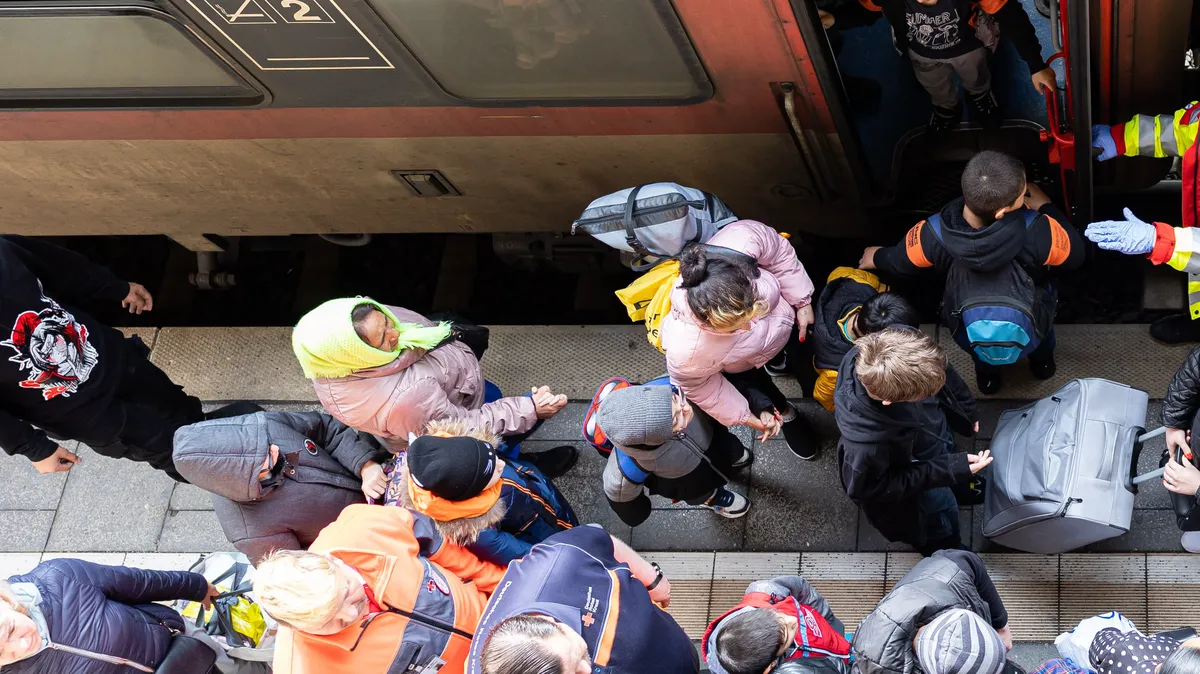
Refugees from Ukraine. Photo: Michael Matthey/DPA Via Reuters Connect
According to the decree, people living in the territories of the LDNR, Kherson and Zaporizhzhya regions should either become citizens of the Russian Federation, or officially refuse to do this. Those who until July 1, 2024 will not accept Russian citizenship will be considered foreigners and can be expelled from the occupied territories.
Separately, the decree states that the deportation will affect those who “pose a threat to national security” of Russia. Residents of the annexed regions who advocate “forcibly changing the foundations of the constitutional system” in Russia finance terrorist and extremist activities or participate in “unauthorized” shares, will deport and prohibit their entry. The New Gazeta Europe talked with the lawyer of the first department, Valery Vetoshkina, how this decree can be put into practice.
Valeria Vetoshkina
Lawyer of the Human Rights Project "First Department"
- Why did the Russian authorities need to accept this decree right now? As we see in the course of the war, they did not particularly really need certain laws to deport the objectionable people. In addition, do they not fix this that Russia at the legislative level is engaged in deportations? Can this decree become an additional certificate of war crimes for an international court?
- Perhaps [decree] became a natural reaction to the next failures in the annexation of [Ukrainian] territories and the integration of their population. By this decree, the inhabitants of the occupied territories, in fact, are put in a hopeless position. If they refuse to obtain Russian citizenship, then they make decisions on deportation, relate, administrative expulsion, ban on entry into the territory of the Russian Federation, reduce the term of temporary stay, unwillingness of stay in Russia, deprivation of the status of a refugee or temporary asylum, and canceling a residence permit. [They can deport them and if they] pose a threat to the national security of the Russian Federation, including stand for a violent change in the foundations of the constitutional system of the Russian Federation, or finance, plan terrorist (extremist) acts, provide assistance in committing such acts or commit them, and also support terrorist (extremist) activities, or encroach on public order and encroach on public order and encroach on public order and encroach on public order and encroach on public order and encroach on public order Public safety, including participating in unauthorized meetings, rally, demonstration, procession or picket.
Or they receive Russian citizenship, but they may be deprived of this citizenship in the manner prescribed in Article 26 of the Federal Law of April 28, 2023 No. 138-ФЗ “On Citizenship of the Russian Federation”, if they “pose a threat to national security”.
Regardless of the receipt or non -receipt of citizenship, objectionable persons by any power decision can be deported from the country.
Deportation as one type of war crimes is provided for by the Roman statute of the International Criminal Court. You need to understand: everything that the Russian authorities do and decide will form the basis of the prosecution of war crimes.
- How legitimate is the assertion that this decree is similar to those that were in the USSR? How will such deportations differ from the Soviet ones?
- On the one hand, a lot of similar ones: the Soviet authorities also found an excuse, called one or another ethnicity or nationality of “treacherous” and “dangerous”. People lost their house, normal life, labor and personal freedom and went to other regions. On the other hand, now it will be necessary to deport the inhabitants of the occupied territories to the country where the war is going on.
- What is the logic of such lawmaking, what is its legal necessity in the context of war?
- Legal mechanisms have long become only a tool of political will. There is no legal meaning in this "legislativeness". It can be assumed that not all residents of the occupied territories want to enter into Russian citizenship, and the authorities thus strive to intimidate them.
- The decree states that those who are fighting for Russia are exception. Does this mean that they can not accept citizenship?
- In relation to them, measures will not be taken to deport and administrative expulsion, that is, [fighting on the side of Russia] they receive a kind of indulgence.
- How in this decree the criteria for the threat of national security are defined? This is, in fact, the opportunity to deport anyone who the authorities simply do not like?
- This is not the first normative legal act in which the authorities mention the category of “threat of national security”. The current law enforcement practice shows that there are no clear criteria for the threat of national security and the authorities can really deport anyone - this has already happened against foreigners in the Russian Federation.
As the European Court of Human Rights, “lying on states, lies with the responsibility for ensuring public order obliges them to control the entrance to the country, the stay of foreigners and deportation outside the country of offenders from their number. However, such decisions, since they can violate the right to respect personal and family life, guarded in the democratic society of Art. 8 of the Convention on the Protection of Human Rights and Fundamental Freedoms, should be justified by the extreme social necessity and correspond to the legitimate goal. ”
That is, in each case, the state has the obligation to find a balance between the protection of public interests (that is, the elimination of the threat of national security) and the respect of private and family life
(That is, it is important to consider that a person most likely has a strong connection with a specific place, social communication is established, etc.). But, of course, there is no expectation of any follow-up in international legal standards in the field of compliance and protection of human rights in this case.
- Is it clear how deportations will be put into practice?
- We know how the deportation is carried out in the Russian Federation: a person is placed in the center of temporary content and expelled from there. But are there these centers in the occupied territories? Perhaps it is worth expecting that people will be placed in torture conditions in a pre -trial detention center, for example.
- Does the decree follow that the official documents that the inhabitants of the LDNR had no longer have weight?
- They will cease to operate from July 1, 2024.
- Some political scientists believe that the decree is associated with the upcoming elections in Russia in 2024. But will “new citizens” be able to vote on them?
- According to Art. 14 of the Federal Constitutional Law of May 30, 2001 No. 3-FKZ “On the Emergency”, in the territory in which a state of emergency, elections and referendums are introduced throughout the entire period of the state of emergency.
Now the emergency regime has been introduced in the occupied territories, and with such introductory elections of the President of the Russian Federation they cannot pass there. But by itself, the Federal Law of June 12, 2002 No. 67-ФЗ “On Basic Guarantees of Electoral Rights and the Right to Participate in the Referendum of Citizens of the Russian Federation” does not contain restrictions on participating in the elections of “New Citizens of the Russian Federation”.