
Translated material
United Russia Oppositionists
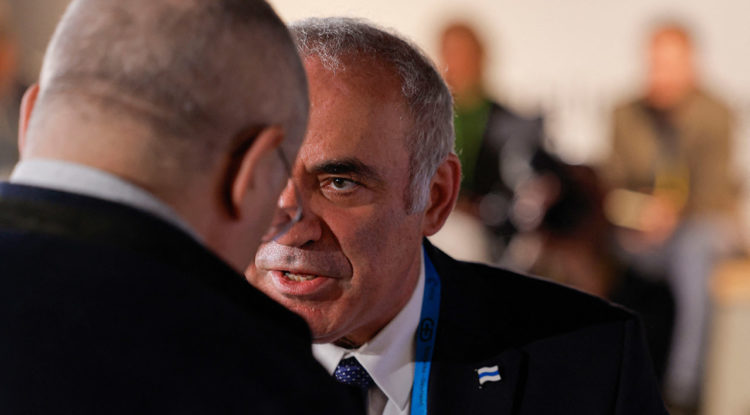
The Russian opposition is trying to unite again - and again comes out so -so. The presenter of the podcast “This is the basis” Alexander Zamyatin explains why
In early June, a round table will be held in Brussels, to which all the main opposition forces of Russia are invited. The meeting will be held under the patronage of the European Parliament, and the result should be a joint plan for Russian democratic forces. A similar event took place in late April in Berlin. And on May 1, Mikhail Khodorkovsky published on his Facebook “Declaration of Russian Democratic Forces”, which were signed by participants in the Berlin conference. In one of the points, they promise to "refrain from public conflicts in democratic and anti -war movements." The Berlin Conference itself was called upon to unite all the politicians who disagree with the war and the regime of Putin - but this did not work out: in particular, the supporters of Alexei Navalny did not come to it. But is the unification of the opposition so necessary - or, conversely, each political force should conduct its struggle without compromises? Especially for the “cold”, this is argued by the teacher of the RANEPA, the leading podcast “This is the Basis”, the author of the book “For Democracy. Local policy against depolitization ”Alexander Zamyatin.
In order not to miss the main materials of the "cold", subscribe to our Instagram and telegram .

The request for the association of the opposition is poured by a protest environment, however, in paradoxical, attempts to respond to this request and unite only criticism, skepticism and caustic irony once after time. This is due to the fact that behind the abstract slogan about the unification against a common enemy are different political strategies and contradictions. Let's figure out what these strategies are.
There are two logic of the association: moral and political
Arguments in favor of unification are two different types: moral and political. The first type of arguments is built on the approval of general goals that have a purely moral character: if we all agree that there is a unequivocal higher evil, then other differences between us should fade into the background in the name of the fight against this evil. I think that it is obvious to all readers of this material that now it is such a higher evil, the end of which anyone wants to put in opposition. And if we all want the same thing, then the mind tells us to unite.
The problem of this argument is the same as with any other moralism: consent in moral codes and assessments does not mean consent in ideas about the causes of evil and ways of combating it. For example, society can agree that the murder of a person is evil, but to differently represent the causes of crime, and hence medicines for it. Some will talk about poverty and inequality, the latter - about poor education, others - about the decline of the authority of religion and the church and so on. In the same way, the opposition does not have the generally accepted theory of the Putin regime.
The logic of moralism is very popular among those disagreements who have recently been politicized and have not yet formed clear political views. The more depolitized a person is, the more difficult it is for him to see the difference between the right and left and the more conditional and excessive ideological disagreements of politicians in the presence of a moral consensus between them. Therefore, they easily come across a replacement for moral policy - moralization from some politicians.
The reasons for the failures of this logic of unification can be illustrated by the example of those politicians who made moralism to their political credo. The most striking example is Harry Kasparov, a veteran of the association in the opposition and one of the leaders of the first wide opposition coalition “Another Russia”. His claims for leadership were always built not on the representative office of the interests of citizens, but on the possession of the right moral assessment of the Putin regime. In a recent interview, Yuri Dudu Kasparov once again demonstrated this. Since moral logic levels political disagreements, the only way to gain authority in it remains a demonstration of moral superiority, which quickly turns into ordinary snobbery and marginalizes politics. Which happened to Kasparov.
Outside of moralism, a political type of arguments for unification appears. For example, Mikhail Khodorkovsky sees the goal of unification in the preparation of a liberal-democratic bloc, which will become an alternative to authoritarian “parties” in the process of redistributing power after Putin's departure. The unification in this logic is necessary for the consolidation of the liberal part of society and the general diplomatic line in negotiations with Western states, on the support of which the successes of this block will greatly depend.
Another version of political arguments for the association is offered by Maxim Katz. At first glance, he calls for unification in the logic of moralism, because he focuses on a consensus moral goal. However, the reaction of Katz to a recent investigation of the FBK on Sobyanin showed that he meant precisely the political considerations that manipulatively masking into purely moral. He says that Criticism Venediktov and Sobchak are harmful to the opposition, because they supposedly have the same position in relation to the war. This is a purely moral logic. But then he directly says that he counts on a political alliance with that part of the elite that is unhappy with Putin. That is the point of uniting the opposition, according to Katsu, to support that part of the Putin elite that can break away from Putinism and overcome it.
Outside the logic of unification. Navalnists
An elephant lives in the room with discussions about the unification, which is impossible not to notice - this is Alexei Navalny and his team. Navalny made the last attempt to unite before the Duma elections of 2016. That coalition did not live even before the start of the election campaign. Since then, Navalny has made a clear bet on the development of his own movement and the removal of unpopular opposition leaders and parties from unpopular opposition, for which he received many accusations of authoritarian inclinations. His associates continue this line so far.
The political success of Alexei Navalny on this path is unconditional. His audience and resources grew so much that the unification with anyone has lost any meaning for him. Any potential ally cannot add anything to his popularity, but he can pull him down his anti -rating and drag him back into the swamp of all kinds of coordination tips, forums and other unproductive measures.
Navalny formulated his alternative to unit, whose roots can be seen back in the debate with Kasparov before the 2011 elections. This is the tactics of consolidated protest voting. It is similar to the association in that it add up the political resources of different forces, but is fundamentally different from it in that it does not require the consent of all sides and any compromises. On the contrary, calling for vote, for example, for candidates from the Communist Party without their consent, Navalny exacerbated internal contradictions in the party and launched another cleaning in it, which continues to this day. Unlike many attempts to unite, this approach showed its high efficiency.
However, in the new conditions, this tactic loses its strength for several reasons. Firstly, during the war it became more difficult to convince supporters that participation in the elections makes sense. Secondly, it became strange to call people to vote for the “second” candidate who, with a high degree of probability, takes a militaristic position. Thirdly, at a new level of repression it is almost impossible to conduct independent election campaigns, which were an important help of this tactics. Fourth, remote electronic voting displays falsifications to a qualitatively new level. All these are counterattacks from the ruling elite, which is defended by radical methods from the threat of loss of power, that is, part of the political struggle. Any association still could hardly strengthen the position of the Navalny team in it.
The paradox of the unification
Behind different approaches to unification are not just different arguments, but different political positions and strategies. Each of the parties advocating the unification of the opposition has its own political rates. This morale may seem vicious, but as soon as the moralist begins to achieve his moral goals, he will also find that he has his own political position, which competes with others.
Thus, behind any logic of unification is the logic of the political struggle, that is, competition and demarcation in defending its political line, which makes the very idea contradictory. Therefore, any attempts to unite are always turned into criticism from the units themselves: each time this is not what one of them would like.
Actual political arguments of units
We list the political lines that are behind different logic of the association. As already mentioned, the Khodorkovsky project is openly aimed at creating a liberal block that could become a strong alternative to revengeists after Putin and gain the trust and support of Western states at the international level. The peculiarity of this block is that it should rely on the city middle class, which gives 15–20% of the electoral pie-this is enough for the role of the second-third fraction in the potential post-Putin parliament. However, this class does not have enough its own resources for an effective political struggle, so it should either find mass lower support from those who are alien to liberalism, or enter the coalition with the highest classes, that is, representatives of the business elite and bureaucracy.
The formula for the unification of Kats is very similar: it also relies on the liberal layer and is looking for an alliance with the ideologically representatives of the Putin elite. The only significant difference is that Khodorkovsky is not ready to get along with the highest echelon of this elite, and for the liberal protoparty of Katz, the modest level of political freedoms that could guarantee the power of Sobyanin - Mishustin is sufficient. Simply put, Katz is ready to become the mayor of Moscow under President Mishustin if he ensures the regime of liberalism without democracy, which will allow Katsu to realize his political program. Khodorkovsky, on the other hand, claims to be more and wants to become not the leader of the liberal party under the elites, but a new elite, co -opting the liberal part of society.
Both of these strategies are strikingly different from the fact that Navalny is building. It also relies on the middle class of large cities, but seeks to go beyond the narrow liberal layer and gain mass support, having shifted the focus in the opposite direction - on layers with low income. Therefore, he does not need alliances with Venediktov and Sobchak, and even more so with Mishustin and Sobyanin. On the contrary, they become his target, because from the standpoint of the lower layers of the middle class, the entire Putin elite looks like one point, and rhetorical differences inside it - as an ordinary hypocrisy and a performance.
Regarding the moderate strategies of Khodorkovsky and Katz Navalny and his team, in turn, look like radicals, for which they received the stigma of the “Bolsheviks” from them. At the same time, inside the Navalny team itself, they also treat the oligarchs differently, as the scandal with Leonid Volkov from the FBK showed. This is quite natural for a political project based on different parts of the middle class.
There is a clear gap in this spectrum: in Russia, there is no left democratic force in Russia, which could rely on people with incomes below the middle, which make up the majority of our society. This is partly due to the purposeful efforts of the Kremlin, partly - the weakness and stupidity of the left.
Another important point. All the described strategies are built on the assumption that Putinism will end in some natural way and this will give the opposition the possibilities that are now blocked by dictatorship. The intensity of talking about combining is growing as the space for political actions is compressed. If you cannot change the amount of the total winnings, try to redistribute it. When such a space appears, as it was, for example, in the elections to the Moscow City Duma in 2019, the tactical association itself occurs around real common tasks, without forums and congresses.
It shows that the unification is not an instrument of struggle against Putinism - it is no longer possible to actively fight with it, it must collapse itself - but in a rhetorical way to build coalitions for postputinism. The idea of uniting all good people around good deeds in politics is naive and paradoxical. The moral consensus between different opposition politicians should not mislead us: they will continue to be different politicians who are fighting for different versions of Russia of the future.
The author’s opinion may not coincide with the opinion of the editorial office.