
Translated material
"Our budget is a client’s wallet, and his wallet is less than ever."
IKEA remakes its bestsellers to maintain low prices. This is how Billy’s cabinet, Sabovik bed and other legendary items changed
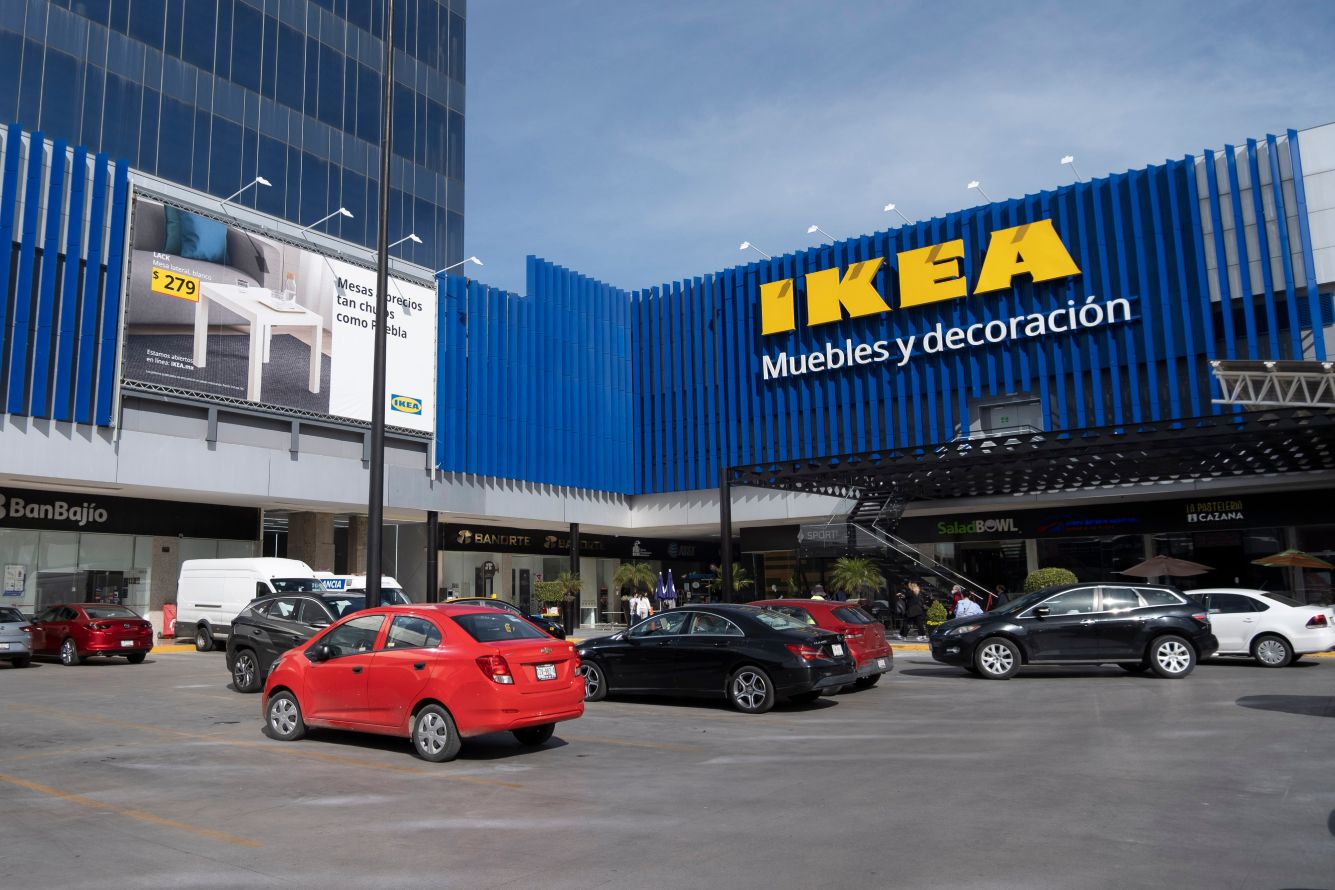
The Swedish IKEA retail chain has turned into a global giant thanks to affordable quality furniture, but in recent years it is more difficult to maintain low prices: costs not only for metal, glass, wood and plastic, but also increased the salaries of customers by inflation. Medusa retells the material of The Wall Street Journal about how the IKEA leadership redid its religious products to cope with problems.
The founder of IKEA Ingvar Kamprad believed in the “democratic design” - that is, that everyday things should be attractive, functional and affordable. Now it has become much more difficult to realize his idea because of problems with logistics and production caused first by the pandemia, and then the war in Ukraine-and, as a result, high inflation.
IKEA faced the choice: to increase prices in order to compensate for rising costs, while risking to push off customers - or to hold prices and sacrifice profitability. The company tested both options. As a result, her profit for 2022, despite the record sales, was halved - according to WSJ, to 710 million euros.
In the fight against growing expenses, the Billy bookcase - a bestseller, is considered “IKEA’s heart”. Designer Gillis Lundgren drew Billy on a napkin when his colleague complained that the closet was not enough simplicity. Since 1979, when he appeared in the catalog, the company sold more than 140 million copies (IKEA claims that Billy is buying around the world every five seconds).
The Billy cabinet is released in white and with wood finishes. After IKEA revised the production method, its first version became cheaper than the second - back in 1999, designers replaced a white varnish coating with a melamine film and reduced costs by about 20%. IKEA did not stop there - and began to reduce the costs of cladding furniture, replacing an expensive wooden veneer with paper foil. Usually a veneer - a thin piece of wood with a thickness of less than a millimeter - is glued to chipboard made of pressed chips and sawdust. The paper foil is cheaper and applied to the chipboard much faster, and in appearance it is not very different from real wood.
IKEA gradually reduced the cost of the production of paper foil, along with this, increasing its level of reliability. And by 2020, when the company began creating an even more economical version of Billy, the designers were already sure: the veneer can be replaced with paper foil and in a company cabinet.
When developing a new version of the dining table "Renning", designers came up with another approach. If earlier the legs of the table for strength were created from an array of wood, now - from a hollow veneer with wooden inserts above and below. This approach significantly reduced production and transportation costs, since at each stage the volume of wood decreased by 90%. It was not necessary to sacrifice quality, as WSJ writes.
IKEA also partially replaced the wood in furniture with lighter and less expensive plastics - they began to be used, for example, in the doors of cabinets and boxes. Instead of a zinc, the cost of which since the beginning of a full -scale war in Ukraine doubled and reached $ 4,571 per ton, the company began to use processed aluminum. Now many details are made of it - for example, hooks for the bathroom.
Another important step towards saving is the reduction of transportation costs, for this the company changed the design of some furniture. For example, designers reduced the armrests of the Flintan office chairs so that they can be put more tightly in flat packaging. The decision made it possible to fit 6900 chairs in the transport container instead of 2750. True, the total costs increased so much that the price remained the same ($ 199 in the United States). On the other hand, according to IKEA, if it had not changed the design of chairs (without saving on logistics), then their cost for the final buyers has increased.
Similarly, the Swedish company rebuilt the frame of the popular Sabovik bed: a sandwich Dosk, consisting of glued thin layers of wood, changed to a combination of a massif, plywood, wood flakes and glue. Now the whole structure from oriented-brown plates is not placed in three compact boxes, as before, but in two.
IKEA global supply manager Suzanne Wizunas in an interview with WSJ explains the reason for changes in production very briefly: “Our budget is a client’s wallet, and his wallet is less than ever.”
"Jellyfish"