
Translated material
The zone of turbulence
The zone of turbulence
The story of whether it is safe to fly by aircraft of Russian airlines
Project team
May 15, 2023
The war and sanctions hit Russian civil aviation, but this type of transport still remains extremely important for the country. In 2022, Russian airlines transported 95 million people, millions of others will fly domestic carriers this year. All these people are in danger, shows the investigation of the “project”: due to problems with spare parts and quality maintenance, Russian airlines began to significantly reduce safety requirements.
The first days of the war. Vladimir N., commander of the aircraft of the Victory, Project, his surname is known, put his Boeing 737 in Turkish Antalya and, by tradition, took a microphone, or in the pilots the aircraft loudships to say goodbye to passengers. This time, the pilot wanted to say non-duty words-he left the cabin and spoke with the salon from the bridge of the flight attendants, one of his colleagues wrote down his commander’s speech on a mobile phone.
“ The war with Ukraine is a crime . And I think that any sane citizen will support me. And he will do everything that is possible to stop it - preferably, right now. We don't need war! " - said the pilot.
In the cabin there were applause. After a short time, the recording of the anti -war performance of the pilot of the Russian State Airline (Victory is a member of the Aeroflot group, the Russian National Air carrier) was posted on the Internet, and after a short time Vladimir N. was fired, it follows from the financial documentation of Victory, provided by the “project” with a source familiar with the work of the company.
It is likely that the performance of the Pilot "Victory", a native of Belgorodchina, closely connected with Ukraine of the Russian region, had personal motives. However, in general, the history of the Victory pilot reflects the confusion that arose in Russian aviation with the outbreak of war. The general director of Aeroflot Mikhail Poloboyarinov disappeared for several days - so suddenly that the media related to the Russian authorities even wrote that he went abroad (then it looked more than believable: for example, in the early days of Marta, Aeroflot deputy director and the author of the state -owned company Andrei Panov left Russia, after two months, the Russian court arrested him in absentia fraud). A friend with Poloboyarinov, the ex-official says that he "swept and managed to leave, but then returned." The other two interlocutors of the “project” doubt that it came to leaving abroad. One way or another, but the government immediately in March Poluboyarinov fired with the comment that he could not withstand the "stressful conditions" of the work. In 2023, it became known that Poloboyarinov settled in Rostec.
Following or simultaneously from the posts, other top managers of Russian civil aviation-the head of Victory Andrei Kalmykov, director of Red Wings Evgeny Klyucharev, CEO of S7AIRLESS Tatyana Fileva, who, however, remained the owner of a 25%share of the Siberian airline. The head of the flight efficiency department of the Federal Air Transport Agency Valery Kudinov, who publicly spoke out about the upcoming problems with flight safety, was immediately fired on March 10, 2022. “They covered their ass,” says a friend of the ex-official.
To run and hide, indeed, there was something from. As a result of the sanctions immediately introduced against Russia, domestic civil aviation in a few days turned into an outcast with minimal chances of survival - carriers lost the western sky, leasing sides, spare parts and maintenance of foreign aircraft, software, insurance instruments and a significant part of the income - besides the actual proceeds from flights to other countries, including the lost royalties for the abolished Trans -Siberian flights of foreign airlines to pandemia - this is from $ 500 to $ 800 million per year. Airlines managers in new reality were shone with either international sanctions, or sooner or later, responsibility for the fault of the war, safety flights that have arisen due to the fault of war.
The investigation of the “Project” shows that the biggest problems in the future can be expected not by managers, but by ordinary Russians who continue to fly domestic airlines.
Russian aviation before and after the outbreak of war
The Russian aviation industry in the prewar years grew steadily (Coronavirus pandemic negatively influenced tourism and civil transport, but transportation was rapidly restored). The growth of passenger transportation: from 2014 to 2019, by almost 40% and on the eve of the pandemic reached a record 128 million people, the ratio of international and internal traffic was 43 to 57%.
Since the beginning of the war and the introduction of sanctions, this indicator has rolled back to the numbers for at least 8-9 years ago in a matter of months. The number of transported passengers decreased to 95 million people, and international traffic fell to 19%.
Prior to the start of the war, 1.2 thousand aircraft were operated in Russia and over 60% of them were foreign. At the same time, it was foreign sides that provided about 95% of the traffic (according to the number of passengers transported). The estimated market value of the rented air park in Russia exceeded $ 10 billion .
After the start of the war and the introduction of sanctions, 78 foreign aircraft of Russian airlines were immediately arrested abroad. Due to the lack of details and allowed routes, many foreign aircraft remaining in Russia are idle. The Ministry of Transport expects that by 2025 up to a third of the existing foreign air park will be cannibalized (dismantled for spare parts).
In the prewar years, the security situation in air transport in Russia gradually improved. In any case, according to the number of victims of air preferences, the situation in Russia in 2012–2021. It improved by almost a third compared to the previous decade (740 died against almost one thousand in 2002-2011).
In September 2022, the International Civil Aviation Organization (ICAO), evaluating flight safety, marked Russia with a red flag along with liberia and Butan, which indicates serious, according to ICAO, civil aviation safety problems.
Aircraft service problems
Russia does not have enough capacities and specialists for mandatory deep ones - from fuselage cracks to the complete analysis of the engine - technical inspections of all types of foreign aircraft that remain the only support for civil aviation. Before the war, all complex examinations were carried out mainly abroad, and now at best in Iran, where the situation with air security is so unimportant
In early April of this year, an unprecedented one happened-Aeroflot sent its plane, a wide-body Airbus A330-300, the lessor-the Irish Goshawk Aviation, follows from the Aeroflot documentation provided by the “project” with a source familiar with the work of the company-for maintenance in Iran. Previously, the aircraft of Russian airlines distilled for these purposes to the licensed Boeing and Airbus technical centers in developed countries, but because of the sanctions and rowing the issue of property, in response to the introduction of Western sanctions, Russia left the lizing liners, that is, expressed by the words of the Minister of Transport Vitaly Savelyev, "took someone else's property." The stolen planes, in fact, are locked in Russia, since any sorting abroad threatens the arrest of the vessel. The Russian authorities are trying to negotiate with the owners, redeem the planes, legalize them in the Russian State Register to let them go into the sky. In particular, the government allocated about 300 billion rubles. ($ 4 billion) for ransom of aircraft from foreign lesslers, this is no longer an option.
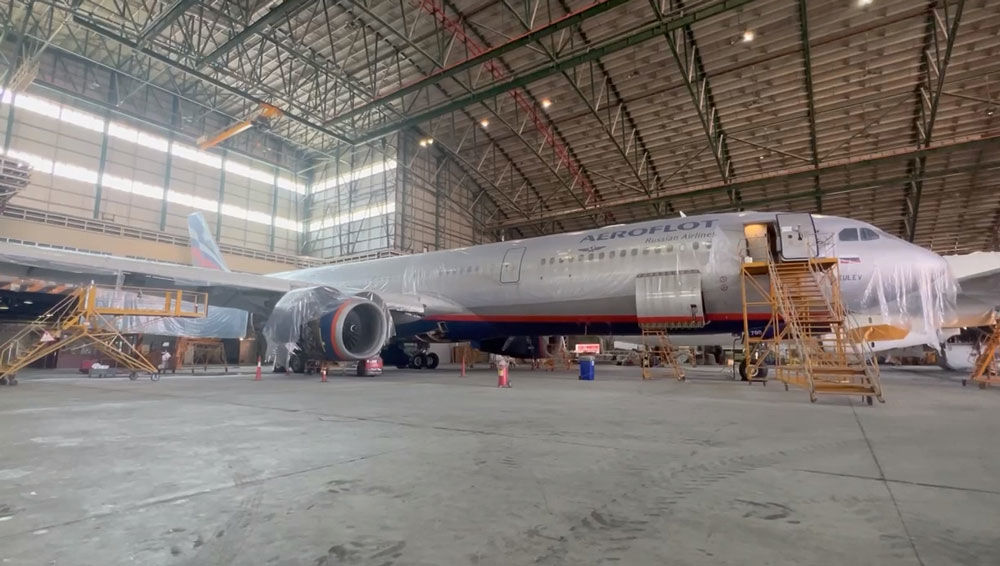
Iran is a dubious place for quality service of Western aircraft. The Iran itself flies under the sanctions on old liners: the average age of the air park there significantly exceeds 20 years, and, for example, in Aeroflot before the start of the war, this indicator has been a little more than 6 years. In terms of aviation security indicators, Iran is inferior to almost all countries not even the most advanced in this sense of the Middle Eastern region. According to the International Foundation for Flight Security, which maintains a database of all incidents since the beginning of regular civilian air traffic is quoted by Forbes, Iran is the worst country of the region and by the number of airlines and by the number of victims in them.
It was in this country that last summer, officials of the Russian government went to negotiations on the repair of aircraft. One of the participants in the delegation, who agreed to talk anonymously with the “project”, did not hide pessimism:
“Iranians answered any concrete question“ You will also learn to learn under the sanctions after 40 years ”. Everything is done there on the knee, ”says the participant in the delegation.
However, even forced maintenance in Iran is better than the lack of maintenance at all. And this is a completely real scenario, follows from the conversation of the “project” with a aircraft technician and a former top manager of the Russian airline.
The greatest problems are regular maintenance of the sides “with a large raid”, that is, for a long time and often flying, which is of two types. Type “C” is carried out about once every two years, the liner is decommissioned for 3-4 weeks. Type “D” checks almost complete disassembly of the vessel, it is carried out every 6-10 years and takes several months. In the framework of “large forms of service”, as the interlocutors of the “project” in the industry call it, complex work is carried out - for example, engines are removed, the chassis is replaced, the fuselage is inspected for damage and corrosion, etc. In 2022, about 170 Russian aircraft were supposed to undergo maintenance of type “C” and 55 - such as “D”, the calculations of The Wall Street Journal, which previously compared the Airbus and Boeeing service with the dates for their receipt by Russian air carriers. In 2023 - 159 and 85 aircraft, respectively.
Types of aircraft checks
Type "C"
Once every two years
A deep examination of most parts of the aircraft
Study of aircraft structures for corrosion
Checking the control unit checking
Type "D"
Every 6-10 years
Full analysis of the aircraft
Checking all equipment systems, including engines
Updating the interior of the salon
Both the one and another type of service for such a number of aircraft in Russia is almost certainly unrealistic, experts surveyed by the “project” believe. Not only hangar places, repair workshops for components, specific equipment and spare parts, with the delivery of which can arise, “these are not banal filters and rubber gaskets, which, excuse me, are also not made within Russia, and sometimes they had to be imported in personal luggage,” the specialist in the maintenance of civilian aircraft, but also also said in a conversation with the “project”, but also trained specialists are deeply versed in Russia before the war and sanctions recorded a shortage of technical personnel. which the "project" got acquainted with.
No less problem - technical instructions for servicing aircraft. Western manufacturers stopped technical support of Russian airlines, which means that the latest version of any documentation stopped as of the end of February 2022, and at normal time the technical documentation is updated several times a year, new revisions and updates are released, the specialist in the technical maintenance of civil aircraft: “Our planes no longer correspond to the modern maintenance state, which is required by the manufacturer, which is required by the manufacturer, which is required by the manufacturer as the corresponding Flight aircraft. If we assume that the inconsistency of the manufacturer's requirements in terms of flying suitability is an unsafe state, then we are already in it. Despite any vigorous assurances from above. ”
Problems with spare parts
But even more often than inspections, planes need foreign consumables and spare parts. Due to sanctions, they cannot be imported directly into the country. This problem is still being solved with the help of gray imports and disassembling its own aircraft. But these methods are fraught with their problems.
“Without consumables, after the imposition of our aviation sanctions, a few months would have to fly,” recalls a specialist in servicing civil aircraft. Since February 26 last year, the United States, the EU and Canada, that is, the main producing countries, banned the import of aviation goods and technologies into Russia, as well as insurance and maintenance of Russian aircraft aircraft. In addition, many aircraft manufacturers have introduced a ban on the transfer of details of Russia and for their partners in third countries.
For a year now, this problem has been solved in Russia in two ways-firstly, with the help of the so-called “gray import”, and secondly, by removing spare parts from their own aircraft (the so-called “cannibalization”). The "project" appreciated the scale of these phenomena.
To assess the scale of the import of spare parts bypassing sanctions, we analyzed the data of Importgenius - the customs data aggregator. Although this statistics are not complete - the data is limited by the end of August 2022 - it gives an idea of the scale and logistics chains of sanctions imports.
First of all, the import of aviation spare parts and components of European and American manufacturers was dramatically reduced: the leaders of the Russian aircraft market in the number of passengers (Aeroflot, S7 Airlines, Victory, Russia, Ural Airlines) for the first six months of the war (from March to August 2022) purchased spare parts and complete European and American manufacturers for a general amount less than $ 44 million. For comparison with the pre -war level: over the same period of 2021, only one Aeroflot purchased parts worth at least $ 430 million, follows from the analysis of the project according to IMPortgenius.
The geography of imports has also changed decisively. French, German and American suppliers were replaced by companies from China, the UAE, as well as Uzbekistan, Tajikistan and Kyrgyzstan, who practically did not appear among the partners of Russian airlines before the war.
The largest suppliers for Russian airlines
March August 2022, million dollars
Source: Importgenius; Project calculations
For example, in June last year, Casper Aviation, registered in the UAE, set the S7 AIRLINES Air Airlines electronic control unit of steering surfaces for Airbus 319/320/31 of the French Thales Avionics for $ 42 thousand. Tajik Kafolati Komil in August brought to August Yekaterinburg “Ural Airlines” regulator of fuel supply to the engine for the same type of Airbus manufactured by American Woodward - for $ 144.6 thousand. Aeroflot purchased new Michelin Aircraft tires for $ 255.7 thousand in July WADI ALRYAN GENERAL TRAIDING AND Astrakhan company "Quantum".
The most important thing is that not all imported spare parts were new. According to documents accompanying components, they are often removed from foreign donor aircraft. This was also allowed in peacetime, but this practice was not widespread to the sanctions, because there were enough opportunities to order them from the manufacturer. “Judging by the fitness certificates, we are talking about EASA Form 1 - a European certificate confirming the compliance of the details of the developer, spare parts can be obtained from the planes standing around the world and serviced by companies that are engaged in components,” the project specialist explains the maintenance of civil aircraft.
Assessing the scale of post -war cannibalization is not easy. Russian airlines do not disclose information about the aircraft from which spare parts were removed in favor of other vessels (in addition, the practice of removing serviceable spare parts from some aircraft for installation on others is common in the world and without any sanctions). Indirectly about the number of sides that could become victims of cannibalization, can be judged by the number of aircraft temporarily deregistered. “Project”, on the basis of the data of the Flightradar aircraftorer, calculated that at least 11.4% of the air park “Aeroflot”, S7 Airlines, “Victory”, “Russia”, “Ural Airlines”, “Yuteir”, “Nordwind”, etc., and the project analyzed data on 700 aircraft did not rise to the sky for more than three months, accounted Also, the sides stored before the start of the war. This does not mean that all these aircraft are cannibalized, perhaps some of them are waiting for their spare parts from other countries or their simple is associated with a general decrease in air transportation. However, part of this park can indeed be dismantled, for which, for example, indicates that those that were already known about the disassembly of which were already known. For example, in our list of “idle” the newest board of Aeroflot Airbus 350 (Russian number RA-73156 ), which was delivered to Russia exactly on the day the war on Ukraine, February 24, 2022. В мае борт попал под директиву европейского авиационного регулятора — он требовал от эксплуатантов обновить программное обеспечение основных компьютеров управления полетом, чтобы устранить потенциально небезопасное условие, которое могло привести к потере управления самолетом. Но из-за санкций «Аэрофлот» не смог обновить софт, и отправил новейший самолет на донорство запчастей для других своих бортов , о чем писало агентство Reuters и профильный телеграм-канал «Авиаторщина». В составленном «Проектом» списке также оказались два «Суперджета» авиакомпании «Якутия», про которые тоже уже было известно , что их разбирают на запчасти для других самолетов (значительное число деталей вроде бы российского самолета Superjet-100 иностранного производства, и они также попали под санкции).
Это не мешает министру транспорта и бывшему директору «Аэрофлота» Виталию Савельеву рапортовать, что в России не разобран на запчасти ни один самолет. «На сегодняшний день из 1167 самолетов у нас не каннибализирован ни один самолет. Все самолеты работают в нормальном режиме, мы все обеспечиваемся запчастями, я хочу подчеркнуть, что это запчасти нормальные, сертифицированные, не на коленке сделанные», — сказал Савельев в марте 2023 года.
Из чего сделан Суперджет
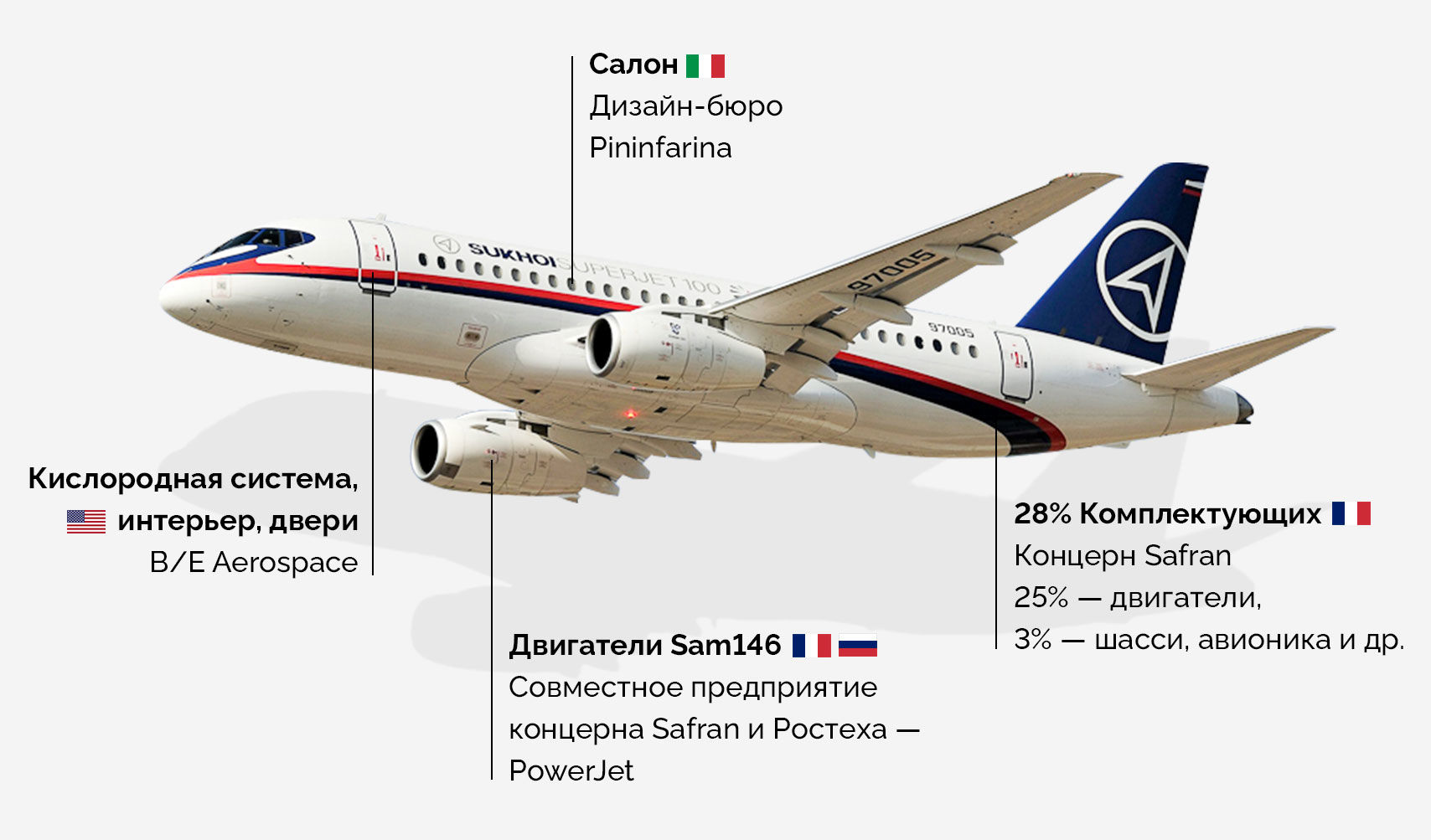
Самолет Sukhoi Superjet 100 (SSJ-100, «Суперджет») очень условно можно назвать российским, он на 70% состоит из иностранных материалов и комплектующих . Данные приведены по состоянию до 2019 года, когда информация о доле иностранных материалов и комплектующих была засекречена. Сердце самолета, «горячая часть» двигателя , речь идет в частности о газогенераторе в составе компрессора высокого давления, камерах сгорания и турбинах высокого давления, — на «Суперджете» французская. Это, кстати, стало отдельной большой проблемой, сокрушается в беседе с «Проектом» бывший директор одной из российских авиакомпаний: «На Суперджете стоит электронная система управления двигателем (FADEC), после введения санкций нам производители даже ключи от софта не оставили, у нас нет кодов!».
К концу 2030 года, по прогнозу производителя «Суперджета» корпорации «Иркут» и Объединенной двигателестроительной корпорации (ОДК, обе входят в «Ростех») , как следует из документа, оказавшегося в распоряжении издания Коммерсант, в эксплуатации может остаться всего 28 из более чем 150 SSJ-100, если не получится освоить ремонт «горячей части» двигателей.
Перспектив снижения зависимости «Суперджета» от иностранных комплектующих нет, полагает специалист по обслуживанию гражданских воздушных судов: «Какую-то небольшую часть заместить удастся. Всё — никогда. Останется только воровать микросхемы из стиральных машин».
Снятые по миру и завезенные в обход санкций запчасти, а также детали, снятые с самолетов в России и обслуживаемые там же, таят в себе риски, оценить которые еще предстоит, хотелось бы, чтобы не ценой человеческих жизней. Проблема, как ее описывают опрошенные специалисты по ремонту гражданских самолетов, в следующем. В довоенное время российскими властями и собственниками летающих в нашей стране иностранных самолётов принимались сертификаты годности компонентов — этот документ подтверждает, что компонент был произведён или отремонтирован сертифицированной организацией по правилам производителя и с использованием сертифицированных же запчастей, —, одобренные только авиационными властями Канады, США, ЕС и Бермуд (это очень популярная для регистрации бортов юрисдикция). С мая 2022 года правительство России значительно расширило число стран, чьи сертификаты годности запчастей теперь принимаются. В новый список вошли Китай, Иран, ОАЭ, Индия, Узбекистан, Египет, ЮАР и др. Более того, российское правительство разрешило ремонтировать запчасти и отечественным организациям, для которых ранее требовались одобрение и разработка технологии от производителей самолётов (сейчас ни о каком сотрудничестве с производителями речь не идет). Насколько надежными окажутся сертификаты годности запчастей из новых юрисдикций, а также насколько хорошо запчасти могут обслужить в России, покажет только практика, насторожен собеседник «Проекта».
Беда с безопасностью
Из-за перебоев с поставками запчастей российским авиакомпаниям уже сейчас пришлось отступить от международных стандартов безопасности полетов, которые они за годы работы на глобальном рынке вроде бы научились соблюдать.
У каждого самолета есть два вида бортовых журналов. Первый — Technical Log Book (он же Aircraft Technical Log), куда записываются отказы техники и неисправности за время рейса, основные работы по самолету, календарные формы обслуживания, заправки маслом и топливом. Второй — Cabin Log Book, куда заносятся дефекты, замечания и работы по бытовому и аварийно-спасательному оборудованию салона.
«По протоколу все технические отказы и неисправности должны заноситься в бортовые журналы. Это документы строгой отчетности, и, соответственно, по ним нужно отрабатывать. Это контролируется не только руководством авиакомпаний, но и международными и национальными инспекциями», — рассказывает про довоенные времена бывший сотрудник «Аэрофлота».
В марте 2022 года, вскоре после введения санкций, всем старшим бортпроводникам «Аэрофлота» по электронной почте поступило новое распоряжение от методологического отдела департамента обслуживания на борту — все замечания по оборудованию салона вносить в бортовой журнал (Cabin Log Book, CLB) лишь по согласованию с командиром воздушного судна. Копия письма есть в распоряжении «Проекта», его подлинность подтвердили трое бывших сотрудников «Аэрофлота».
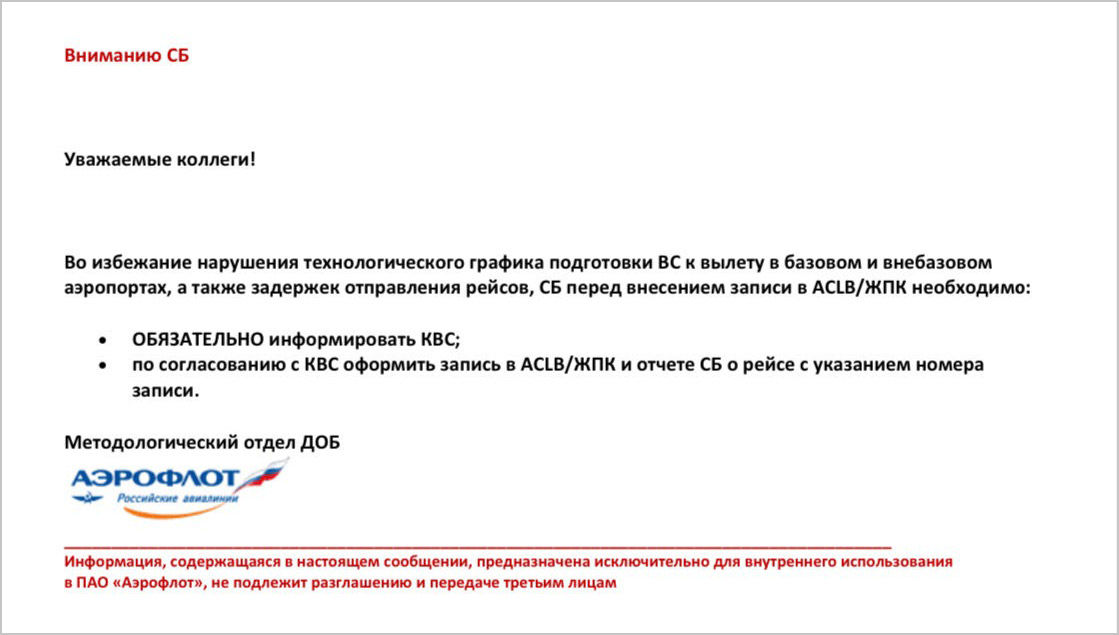
На первый взгляд мелкое изменение в действительности может грозить огромными проблемами. До начала войны и санкций старшие бортпроводники записывали все дефекты в CLB и только ставили командира судна перед фактом, уточнили двое собеседников «Проекта». «Записывали всё, шанс получить замечание от внезапных инспекторских проверок был велик», — уточнил один из них.
“When problems with flights and interruptions in the supply of spare parts began, an unspoken decree was received. It was a massive newsletter to all senior flight attendants, which read that any breakdown that you will encounter during the flight, you do not bring to the CLB, but verbally say what and where is not so. Соответственно, если запчасти нет и чтобы борт на бетон не сажать, самолет мог улететь с неисправностью, в том числе достаточно серьезной, — объясняет „Проекту“ старший бортпроводник, проработавший в „Аэрофлоте“ более 10 лет».
“Techniques behind the word do not climb into the pocket. I came to them and said: “Listen, well, this is broken, I did not write anything.” Зачастую они отвечали: „Ну и правильно. Все равно этой запчасти нет“» — рассказал бортпроводник.
О каких поломках может идти речь, насколько они опасны для пассажиров?
К оборудованию салона, проблемы с которым теперь не обязательно вносятся в бортовой журнал, например, относятся кислородные баллоны, используемые в случае разгерметизации или для экстренной медицинской помощи на борту. Один из бортпроводников «Аэрофлота» рассказывает, что в 2022 году самолет этой авиакомпании совершил рейс из ОАЭ в Москву без полного комплекта кислородных баллонов на борту. This happened just due to the fact that the aircraft commander previously considered it inappropriate to make an entry in the CLB about the lack of cylinders with the subsequent departure of the departure. Проблему указали в бортовом журнале, когда самолет уже прибыл в Шереметьево, вспоминает стюард, работавший на этом рейсе. «Раньше за нехватку аварийно-спасательного оборудования увольняли сразу же», — категоричен собеседник «Проекта».
«Проект» обнаружил и другой пример такого рода. In the toilets on board the aircraft for flushing, the device is called the “vacuum generator”, it is he who is responsible for the operation of the air “sewage system”. По правилам производителя, с неисправным генератором можно летать не больше 10 дней , объясняет авиатехник. Тем не менее самолет российской авиакомпании по просьбе собеседника мы не называем перевозчика летал с неработающим генератором около 6 месяцев , с лета до декабря 2022 года. Из-за этого туалеты на борту работали только при достижении полетной высоты свыше 5 км , в то время, как средняя высота полета составляет 9-11 км, на этой высоте всё работает за счет перепада давления, ниже и на земле содержимое унитаза просто оставалось не смытым. “Due to the sanctions, this unit could not deliver logistics earlier than six months later. И получается, что самолёт примерно 5-6 месяцев летал незаконно неисправным», — рассказывает собеседник «Проекта». Эта проблема на первый взгляд может выглядеть досадным курьезом, но в такой строго регламентированной отрасли, как гражданская авиация, даже мелкие недочеты нередко приводят к кошмарным последствиям.
«Главная цель такого распоряжения (о невнесении поломок в бортовой журнал — „Проект“) — чтобы самолёты не оставались на земле из-за неисправности, которая по документам запрещает судну летать до ее устранения, — говорит на условиях анонимности бывший сотрудник „Аэрофлота“. “Previously, before the war, this rule was strictly observed: they wrote every little thing and repaired all this right there.”
«Любая неисправность может привести к трагедии, потому что все правила авиации написаны на крови. Но сейчас стали закрывать глаза на часть нарушений», — подтвердила бортпроводница, в прошлом году уволившаяся из «Аэрофлота».
Собеседник «Проекта» из технического персонала подтверждает, что и в других российских авиакомпаниях теперь негласно действует такая же практика, как и в «Аэрофлоте» — все, чтобы не держать еще летающие борты на земле, как того требует регламент. «Согласно документам производителя, большинство серьёзных отказов техники должны быть устранены в срок 3 до 10 дней, и если раньше логистика справлялась с доставкой в эти сроки, то сейчас это стало проблемнее», — объясняет авиатехник, обслуживающий самолеты российских авиакомпаний. «В первое время (после введения санкций — „Проект“) были проблемы с тормозными дисками: на Airbus-A320 можно летать с одним деактивированным тормозом, что и делалось намеренно», — вспоминает собеседник «Проекта». «Эта практика — деактивировать тормоз, а потом его заменить при удобном случае — использовалась и до санкций, но раньше это было исключением. А после введения санкций приходилось после истечения законного срока таких полетов без одного тормоза (10 дней) переставлять тормоз на другую позицию, и открывать дефект , то есть официально внести в бортовой журнал уже по другому тормозу, а по первому — изношенному — закрывать. Это давало компании ещё 10 дней на поиск и доставку расходных материалов для переборки тормоза», — объясняет авиатехник.
Более того, еще один собеседник «Проекта» утверждает, что сталкивался с ситуацией, что дефекты вынужденно не вносились и в более серьезный бортовой журнал — так называемый Technical Log Book или TLB.
Бывший пилот российской авиакомпании Nordwind — контролируется бизнесменом турецкого происхождения Рамазаном Акпынаром; авиакомпания, по данным СПАРК, записана на Каринэ Букрей — по данным источников Коммерсанта, супругу Акпынара – рассказал «Проекту», что в январе 2023 года в аэропорту Казани уже при запуске двигателей из-под капота Boeing 737 , номер RA-73313 неожиданно полилось топливо — в этот момент на борту, по словам собеседника «Проекта», находилось почти 190 пассажиров.
Прибывшие на вызов авиатехники течи не удивились, вспоминает пилот. «Оказалось, что с этим бортом, по словам инженеров, такое происходило уже несколько раз, но ни одной записи в TLB об этом сделано не было — администрация авиакомпании просила не писать ничего», — рассказывает он, уточнив, что внес информацию об инциденте в бортовой журнал , слова пилота об инциденте подтверждает и внутренний отчет Nordwind, согласно которому причина течи была в длительной стоянке при низкой отрицательной температуре. Копия есть в распоряжении «Проекта». По словам собеседника «Проекта», с весны 2022 года число прецедентов, когда администрация авиакомпании давит на пилота не вносить дефекты в TLB и лететь с неисправной техникой, возросло. «Русское авось работает и в авиации. Понятно, что летать на авось страшно, но, к сожалению, так во многих авиакомпаниях страны сейчас происходит», — добавил он , авиакомпания Nordwind не ответила на запрос «Проекта».
Может показаться, что часть проблем с авиабезопасностью и своевременным ремонтом поломок могла бы быть решена, если чаще использовать самолеты российского производства (из таковых на регулярных рейсах сейчас в основном используются «Суперджеты»). But this is not so. О сложностях с поставкой иностранных запчастей для «Суперджетов» говорилось выше, но о проблемах с этим самолетом «Проект» обнаружил еще более красноречивый факт. В распоряжении редакции есть внутренний документ авиакомпании «Россия» (входит в состав группы «Аэрофлот»), крупнейшего эксплуатанта «Суперджетов» в стране ( 76 бортов RRJ-95 ). Данные, собранные в «Анализе состояния безопасности полетов за 2022 год» — подлинность документа подтвердил источник, ранее работавший в группе «Аэрофлот» –, говорят, что в 2022 году число авиаинцидентов , то есть событий, которые угрожали безопасности полета, но не привели к гибели людей, разрушению самолета или его пропаже без вести, «России» выросло по сравнению с предыдущим годом примерно на четверть (с 68 в 2021 году до 85 в 2022 году). Почти весь рост — именно за счет российских «Суперджетов».
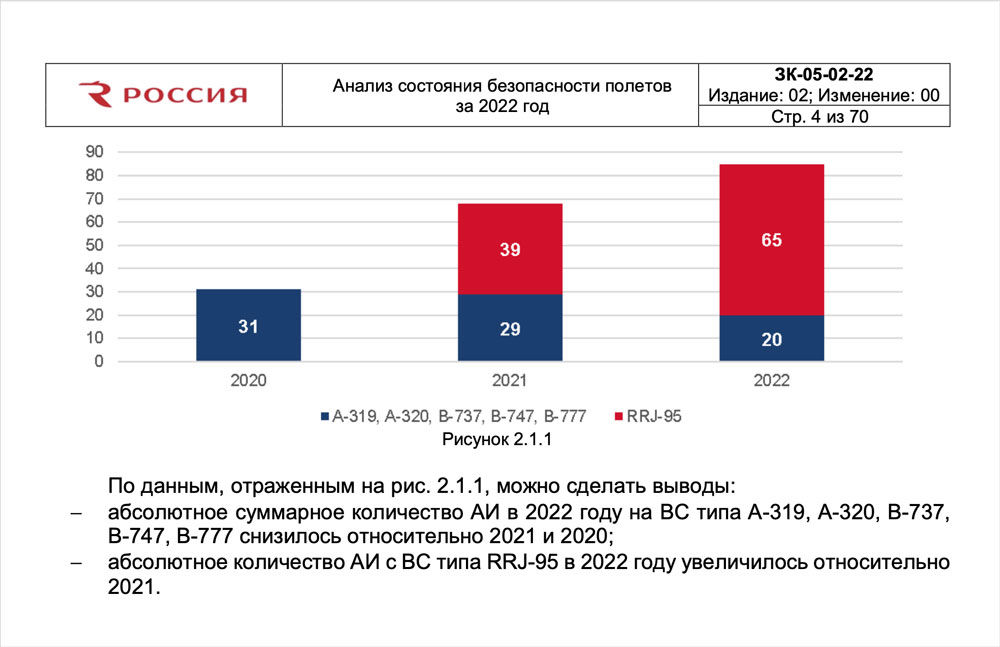
При этом , как следует из документа, каждый третий инцидент с «Суперджетом» связан с отказом авиационной техники, а не с внешними обстоятельствами или ошибками экипажа. По итогам анализа директор по безопасности полетов «России» рекомендовал направить запрос производителю «Суперджета» корпорации «Иркут» (входит в «Ростех»). О принятых по итогам жалобы мерах «Проекту» ничего неизвестно.
Авиакомпании «Аэрофлот», «Победа», «Россия», «S7 Airlines», «Уральские авиалинии» и Nordwind не ответили на запросы «Проекта».
* * *
Кроме бортовых журналов в авиации есть еще один чрезвычайно важный документ. Это так называемый список «минимально обязательного исправного оборудования» или на языке пилотов MEL (Minimum Equipment List). В документе приводится список агрегатов и узлов самолета, при неисправности которых эксплуатация судна все же разрешается (там же указаны и сроки ремонта или замены вышедших из строя деталей).
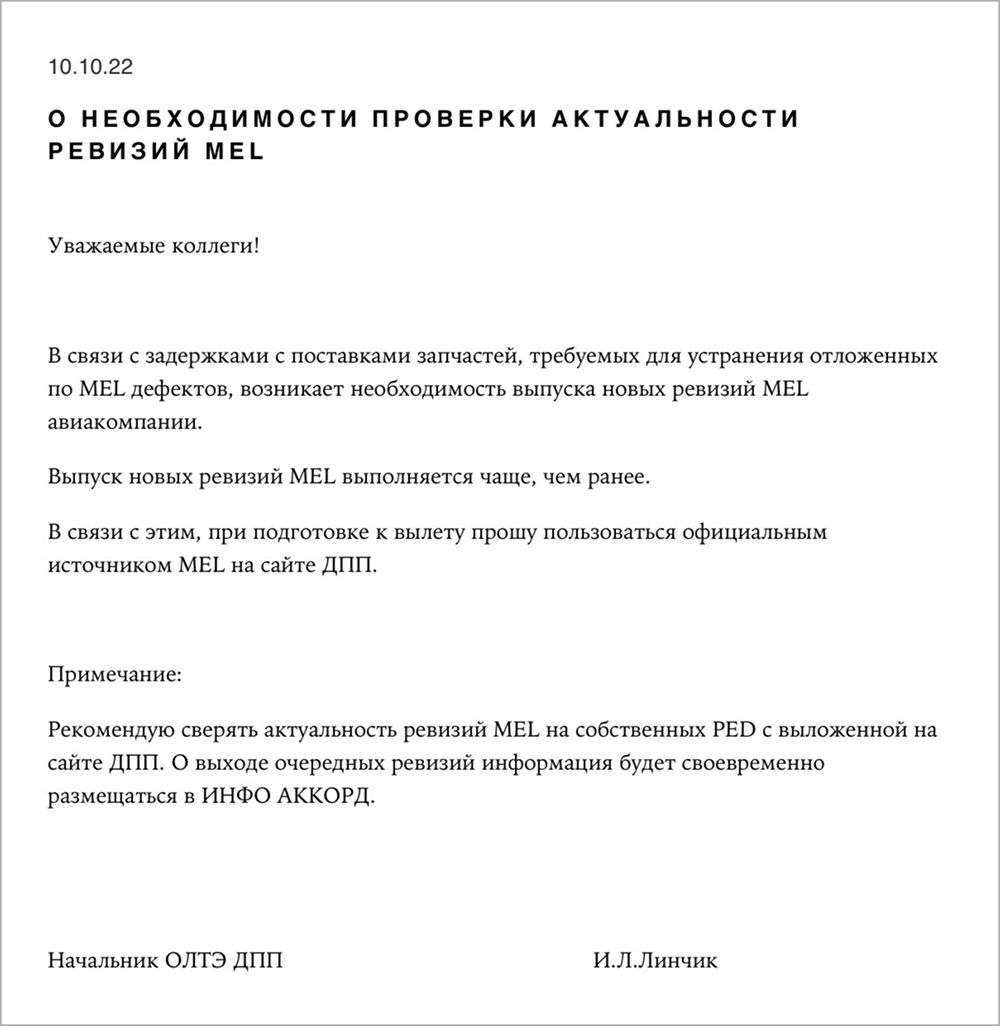
Этот внутренний документ составляется самой авиакомпанией для пилотов и обслуживающего персонала. Компании обычно следят за тем, чтобы их список минимального оборудования был строгим. Например, MEL «Аэрофлота» до начала войны был одним из самых жестких среди российских авиакомпаний, и сроки устранения дефектов там были указаны даже меньше, чем того допускал производитель , рассказывает специалист по техническому обслуживанию самолетов. Однако война и санкции внесли в этот процесс драматические коррективы. В распоряжении «Проекта» есть внутренний документ отдела летно-технической эксплуатации «Аэрофлота», где сказано, что из-за задержек с поставками запчастей в MEL вносятся изменения «чаще, чем ранее». Иными словами это означает, что «Аэрофлот» с каждой ревизией увеличивает сроки, в течение которых разрешается летать с неисправностями на борту , полагает специалист по техническому обслуживанию самолетов.
Редактура — Роман Баданин
Фактчекинг — Михаил Маглов