
Translated material
Where is Putin?
While the drones are attacking the Kremlin, and Prigozhin is fighting with Shoigu, the President of the Russian Federation seemed to take a self -setting. What is he waiting for and what risks are creating for him? Answers Tatyana Stanaya (Carnegie Politika)
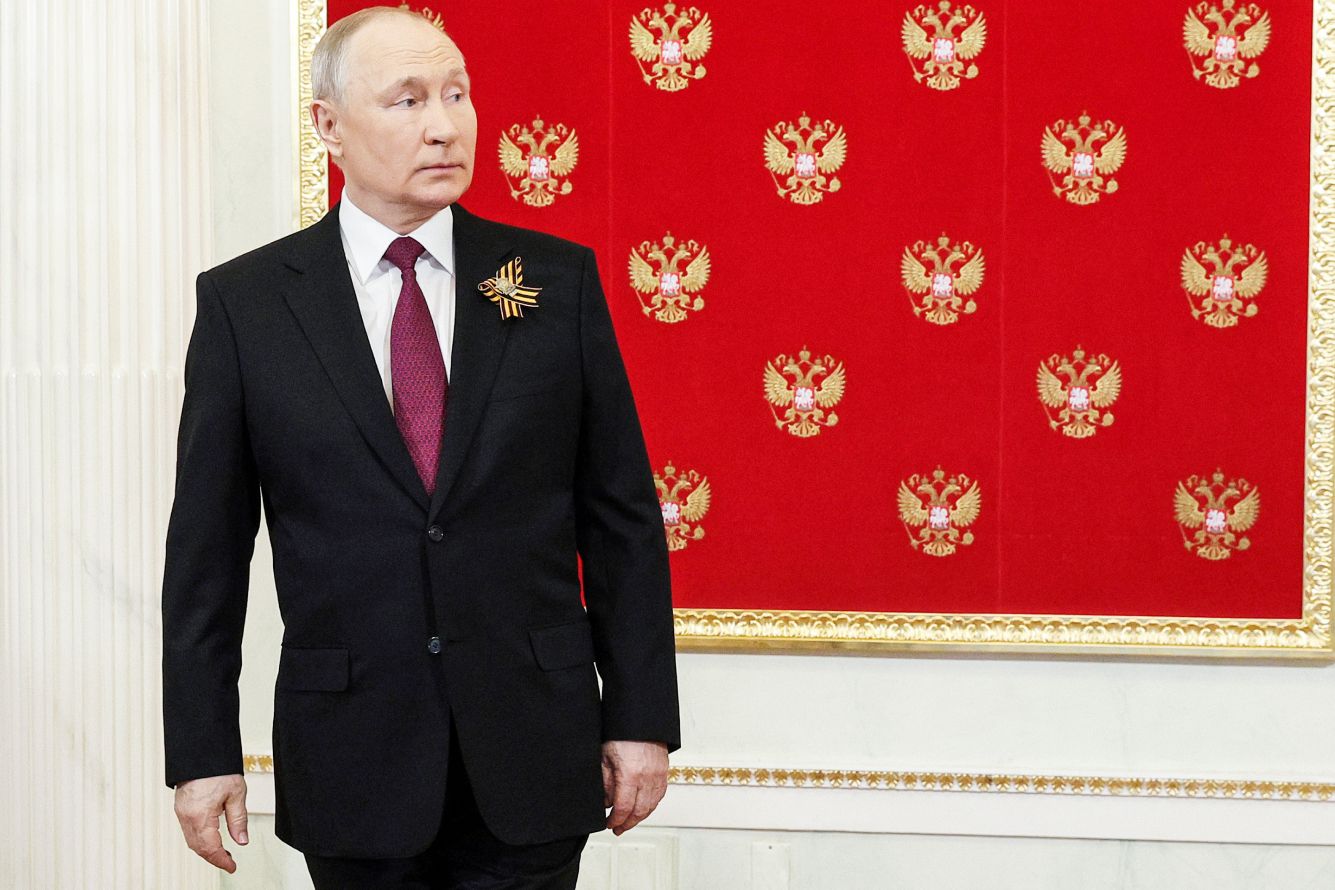
In recent months, Vladimir Putin has been so rarely expressed on strategic issues that it may seem that the future has ceased to worry the President of Russia. Political scientist Tatyana Stanaya believes that behind Putin’s silence is the expectation that the foreign policy situation will change in the direction favorable to him, after which it will be possible to return to discussing the Kremlin’s goals. These hopes cannot be called completely groundless, but the problem is that passive waiting for a Russian political class can stop at some point. With the kind permission of the Carnegie Politika project, Medusa publishes Tanaya Stanovaya an article.
Nothing happens in Russia - this impression is formed if you look at what Vladimir Putin was doing in the last six months. It seems to be the president is extremely active: he is constantly breaking between the secret micro -study of hostilities and a public imitation of immersion in routine affairs - from macroeconomic meetings to the opening of the tram line in Mariupol. But nothing is heard at least about some presidential initiatives aimed at adapting the country to new military reality and everything that is connected with it.
Neither drones above the Kremlin, nor Prigozhin against the Ministry of Defense, nor even the Ukrainian counterattack can pull Putin from this self -removal. The president is stubbornly limited to talking about the turnover, historical lectures and optimistic relations about the excellent prospects of the Russian economy and terrible - among the West.
All this, of course, does not mean that nothing happens in the country at all. On the contrary, events are gaining momentum. They are simply connected not with the plans or strategic interests of the president, but with the conjuncture and corporate interests of individual departments and figures. As a rule, all these events are only a reaction to arising (most often contrary to the desires of the leadership of the Russian Federation) new circumstances.
For example, the digitalization of the system of calling for military service was the response to a mess with the databases of military persons in a situation where things at the front are going completely differently as it was planned. And the growth of repression deeper and in breadth is only the desire of the system for self -preservation in the conditions of sharply grown geopolitical risks, not to mention the fears of military defeat (albeit only theoretical).
Most of the latest solutions are repressive inertia and the needs of large institutions like the FSB, the Ministry of Defense and the Ministry of Finance. It is according to such principles that, for example, is the ideologization of the state and all spheres of society. Education, cinema, theater, poetry - everything is translated into “patriotic” rails, up to the point that an official ideology may soon appear in Russia, which the Minister of Justice Konstantin Chuychenko openly speaks . Creeping ideologization has long gone beyond the limits of Putin’s direct control and is now developing in addition to the will of the president, although with his passive consent.
In the same way, Putin’s voices are not heard when discussing many other topical issues. Should you close a free departure abroad? Do you limit the rights of those who have left? Who to give a delay from mobilization? What measures to introduce against those who were recognized as “foreign agents”? What to do with Prigozhin? How to respond to military and launched incidents such as drones and attempts on ultrapatriots?
Deputies, party leaders, ministers, “military commissar”, special services - everyone has positions on these and other issues. Putin is silent. He manifests itself only when making purely situational and forced decisions - for example, leave Kherson, suspend participation in the NTV and withdraw from DOVS , conduct personnel rotations in the army. Even the long -awaited message of the president to the Federal Assembly did not bring any special news: the head of state, in fact, only listed measures that were already taken by the government.
Today, anyone is engaged in politics in Russia (and more and more active), just not Putin: Medvedev, Prigozhin, Volodin, Patrushev, military bloggers, TV presenters. The president, as if he had taken self, completely immersed in secret military and geopolitical affairs. In an area where only the elected ones are allowed.
This is not a consequence of weakness or fear - rather, this is the result of its growing messianism and the desire for managerial comfort. Now literally all the political hopes and plans of Putin are tied to external changes, which do not depend on him. The president has no tools and resources to change the situation in his favor. But he believes that the world will change himself. Putin’s initial goal-the surrender of Kyiv-is still relevant. But it, as the president now believes, does not achieve either military means or peaceful negotiations.
The Putin plan is to wait for deep changes in the West and in Ukraine, which, from his point of view, are exclusively a matter of time. The fear of the Ukrainian counterattack is gradually fading into the background, giving way to conviction that the situation at the front will not change dramatically (and local defeats for Putin are tolerant). Without a military breakthrough, as they hoped in the Kremlin, Ukraine is waiting for the split of the elites with the advent of the “party of the world” (or rather, the “parties of surrender”), and the internal disagreements in the West will force him to reduce the military and political support of Kyiv.
These hopes cannot be called completely groundless, but the problem for Putin is another: he cannot afford to transfer this agenda of Zhdun to the mainstream. The Russian political class, no matter how loyal and controlled, it has changed so much under the influence of war that it can perceive such a expectation as amazing.
All this creates the conditions for the heyday of the political ambitions of other shelter figures, who, out of habit, seem manual, but gradually gain political capital and can once challenge a very worthy regime. Because he could not really explain what exactly he was waiting for.
In the first months of the war, it was noticeable how the wire ultrapatriots politically grew and filled the information mainstream, ceasing to be marginals. Now a new stage begins - the demarcation between the official “hawks” (Medvedev, Patrushev, Volodin) and “angry patriots” (Prigogine, Riflekov, “military commissars”). The former gradually become obsolete, morally wear out, they are too sofa and conjunctural for wartime. The latter are grown in combat conditions, close to the ground, look much more authentic and subjective.
Of course, nothing threatens the regime until Putin’s rating is stable, and the mechanics of power itself are completely controlled by him. However, the public paralysis of the president, who now refuses to take responsibility for solving the most acute issues, deprives the current role of both himself and the court “hawks”. As a result, a political vacuum arises, which is gradually filled with an all -pervasive patriotic plankton. Putin himself may not notice how one day it turned out to be depending on the harmless environment yesterday, which he himself gave rise to his own closedness and inaction.
Read also on Carnegie Politika:
Forgotten gingerbread. Why did Russia return visa -free and air travel with Georgia
Numbering of reforms. Why is the Mirziyev regime in Uzbekistan loses stability
To Moscow, urgently. Why did the Presidents of Central Asia come to the parade on May 9
Two toxic resources, two Crimean wars and other false analogies of the Russian-Ukrainian war
Tatyana is becoming