
Translated material
Goblin friend
A month ago, a Russian, ultra -lane activist Dmitry Petrov, nicknamed Ilya Leshy, died near Bakhmut. His friends remember how he was in the war and for which he died
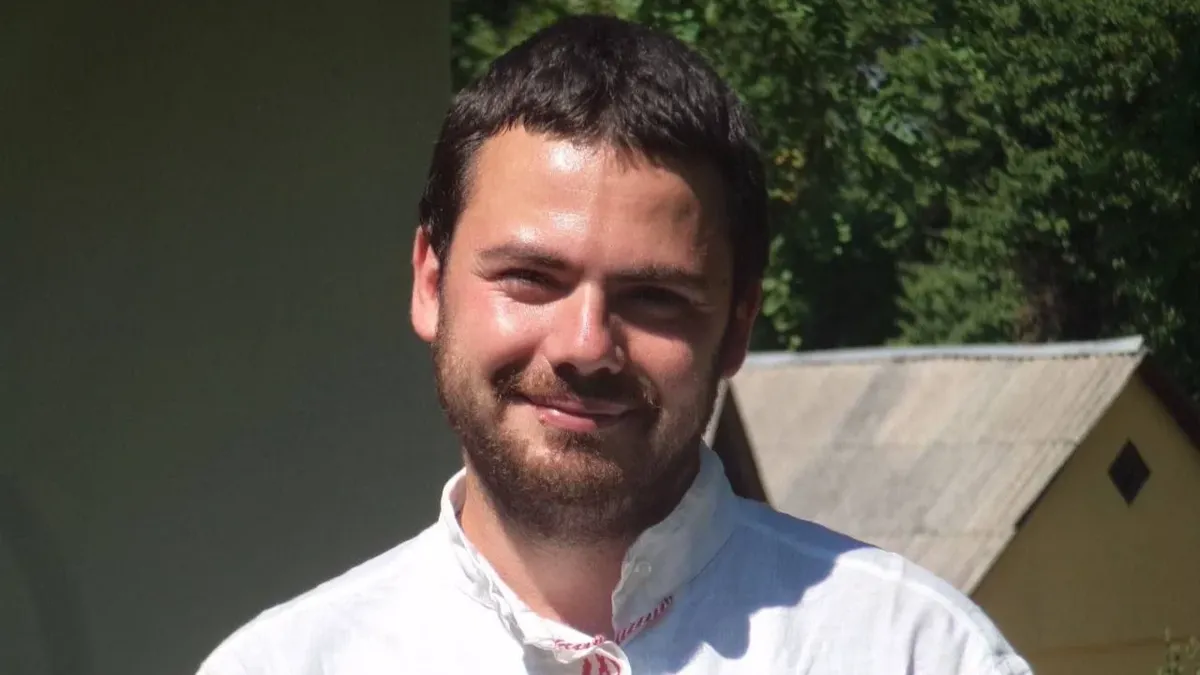
Dmitry Petrov. Photo: Comitet Coaling / Telegram
Exactly a month ago, on April 19, at the hottest point of Ukraine, near Bakhmut, Russian anarchist Dmitry Petrov, a researcher at the Institute of Africa of the Russian Academy of Sciences, candidate of historical sciences, the author of several books about the liberation movement in Kurdistan, died. Dmitry was one of the founders of the combat organization of the anarcho-communists who took part in the war on the Ukrainian side. He was not a “media” representative of anarchists in Russia (as, for example, Alexei Socrates Sutug, who died in a fight on September 1, 2020, or other famous figures). Those who were familiar with the Russian anarchist movement of the end of the zero can recall it under the nickname "Ecologist".
Already after his death, the comrades of the deceased Petrov published information that from the end of the zero he had been active partisan activities in Russia. He took part in the shares of the Black Bloc - the arson of the DPS point and other direct action shares for which no one has been punished. At the same time, Dmitry himself was in Russia until 2018, combining city geril with scientific activities. During this time, he managed to write several books, participate in Moscow protests on Bolotnaya (2011–2012), in the revolution on the Maidan (2014), in protests in Belarus (2021), visit Kurdish revolutionaries in Rozhava (2015–2019).
We met Dima at the beginning of the tenth at one humanitarian event in the history in Voronezh. I gave a lecture on city partisans in post -war Europe there, Dima filled me up with questions. A person with encyclopedic knowledge about everything, he himself was an excellent lecturer, deeply immersed in the topics that he was passionate about: history, anarchism, nature.
Dima was a convinced anarchist. And, no matter how pathetic it sounds, he made a huge contribution to the development of the anarchist movement in Russia, Ukraine and Belarus.
He became interested in anarchism at school, together with his comrades, they produced the Anarchist newspaper "Black".
Once upon a time, in an interview, he told me that in childhood he was greatly influenced by his father’s stories about the Makhnov movement during the Civil War in Russia. The father and first brought him to the phanser store (the oldest independent bookstore in Moscow), where Dima fell into the hands of the magazine Autonomous . “My first acquaintance with the movement was to participate in the“ Bespart school ” - a rather interesting circle of lectures and discussions, which took place many years ago at the Jerry Rubin Moscow club. From fifteen years, he began to actively interact with the organization of “revolutionary anarcho-syndicalists”, to write articles for their samizdat, ”Dima later recalled.
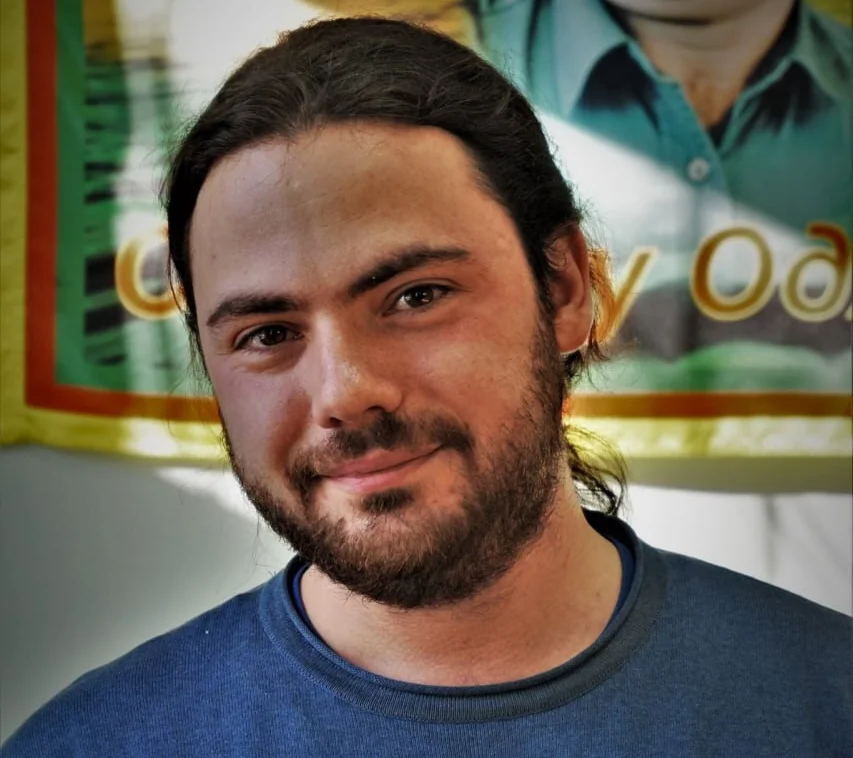
A little later, the first protests began. From the middle of the zero, he actively participated in the struggle against point development, in various zooisor activities, and environmental protection. For his environmental activity, he then received his nickname - an ecologist.
Nature in general was for him the most important component in life along with anarchism. Behind his shoulders were dozens of ethnographic expeditions, campaigns in the distant corners of Russia. He could tell about each nookhille of Moscow, and probably there was no museum in the capital and the region that he would not visit.
Another point that surprised me when meeting: the ecologist was a pagan. Moreover, he professed Slavic paganism, which in those days was an absolute nonsense among the antiph and left movement.
The “monopoly” on paganism was then in the hands of the ultra -right, among the nationalists it was a common thing.
Then, at the end of the zero, he created and promoted the Pagan Antifa website, on which materials about ecoanarchism, primitivism, paganism were published, thematic music laid out. I well remember how then the ultra -right triggeril from this project: they could not understand why the anti -fascists “encroach” on their culture, and wrote angry comments on the site forum.
The ecologist did not hesitate to identify himself as Russian, he never avoided this. Even being in Ukraine, he always emphasized that he is Russian, which defends the freedom of Ukraine from the Putin invasion. The connection with his homeland was very strong for him, this can be seen in some of his last interviews . In his dying letter, he emphasized: all nations have one grief - greedy and power -loving rulers.
He was not a nationalist, any chauvinism and imperialism despised. At the end of the zero, he was an active member of the nascent antifa movement in Moscow. Then violence by the ultra -right reached its peak. Numerous attacks of neo -Nazis on migrants and informals provoked spontaneously self -organizing groups of youth for forceful rebuke. Dima was part of the so -called “mob” (power group) of Ivan Kostolom Khutorsky: they defended concerts and lectures from the attack of neo -Nazis (for the sake of fairness, later they attacked them). In November 2009, Ivan Khutorskaya was shot dead at his entrance with a ultra -right action movie from the Born gang. Prior to that, on January 19, 2009, Anastasia Baburova and lawyer Stanislav Markelov were killed by anarchist and Novaya Gazeta journalist. The murders were committed by the neo -Nazi group “Bourn”, related to the nationalist organization “Russian Image”. The latter were accused of relations with the Kremlin.
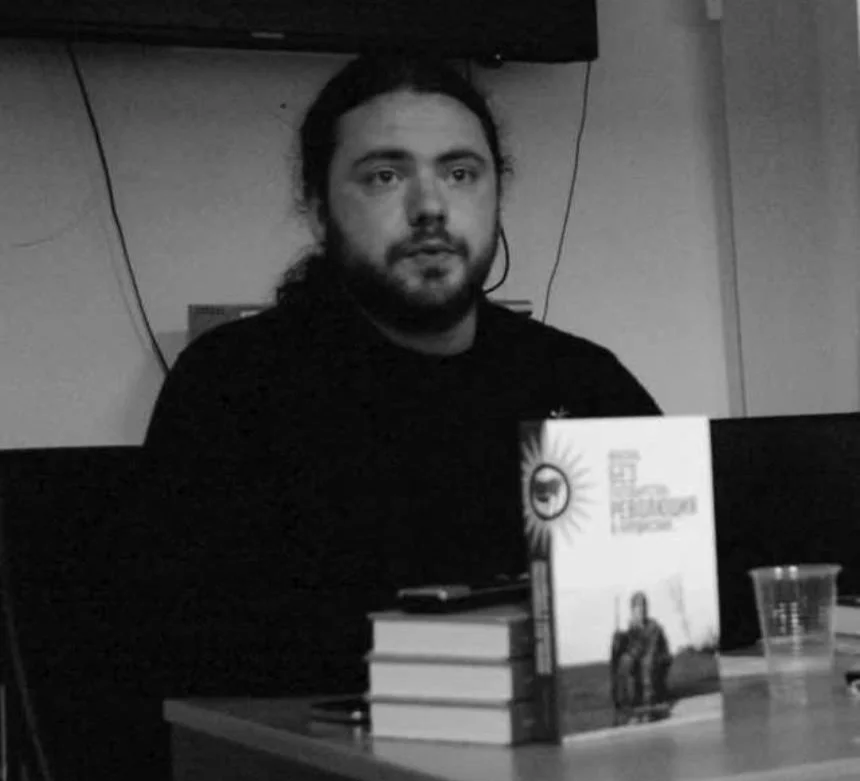
Despite this dangerous rhythm of life, Dima Ecologist managed to conduct active activity and at the same time not to fall into the millstone of the system. He took part in all the “swamp” protests in Moscow, and he met the most “hot” period of the Maidan in Kyiv in a tent town. Later there was Rozhava in Syria, where Dmitry studied the egalitarian community of Kurdish partisans. At the same time, he managed to write books, scientific articles, defended his candidate on the topic "Sacred geography of the eastern regions of the Arkhangelsk region."
In 2018, the anarchist movement in Russia was subjected to rigid repressions, the case of the “network” began (anarchists from St. Petersburg and Penza accused of creating a terrorist group to overthrow the state system, everyone found guilty, from 5 to 18 years) - several “terrorist” cases with a dozen anarchist Zhlobitsky in the Arkhangelski building in the building FSB. Now the security forces were interested in Dima: he learned about this from his sources while he was in Kurdistan, and made a difficult decision not to return to Russia for himself.
Later, at the place of his registration, a search was held. The ecologist settled in Kyiv, where he continued to engage in activist and scientific activities. Then the war began.
But the environmentalologist entered the Putin regime not on February 24, 2022, but much earlier. After his death, it became known that he took an active part in a number of partisan groups from the end of the zero. “People’s Retribution”, “Zanurgaliev”, “Anti -Nashi action” - these groups were signed by various names, but led similar activities. They set fire to police branches, police vehicles, military commissariats (they were always an important goal among the anarchists, long before the start of the war). One of the most high-profile partisan actions of those years was to undermine the DPS post on the 22nd kilometer of the Moscow Ring Road on June 7, 2011. The responsibility was taken by a certain “anarchist Gerilla”, the security forces never found these mysterious bombers. As it turned out, Dmitry took a direct part in this action. The platform for the publication of the shares of "People's Retribution" was the Black Blog project, created to cover the city Gerilla. The ecologist also took part in its creation. Over a few years, more than a hundred ( according to the Black Blog archive ) arson of police sections and vehicles, military registration and enlistment offices, and cars of government officials and construction equipment intended to destroy forests were committed for several years. In 2019, the project officially completed existence.
Dmitry conducted underground activities after leaving Russia: both during protests in Belarus and Kyiv. To take part in protest in Belarus, he illegally crossed the border of Ukraine. There he participated in the self -organization of anarchists, direct action shares and fights with security forces.
Despite such a tremendous activist experience behind him and fidelity to his ideological principles, Dima Ecologist was not divorced from reality, in his life he was a quite ordinary guy, educated, intelligent and charismatic. Communicating with him, even it was impossible to think that at night this person was throwing state institutions with Molotov cocktails. The soul of the company, it was possible to drink with him, and talk heart to heart, and discuss. The comrades with whom Dmitry once corrupted him recall him as a faithful and reliable ally, who, again sorry for the pathos, first of all thought about the team, and then about himself.
“Once we wandered at night through the autumn forest, disabled construction equipment,” recalls Svyatoslav Rechkalov, a political officer in the case of the anarchist organization Narodnaya Self -Defense. - And one girl lost the sneaker. It just stepped on the ground, and she swallowed her leg. The leg was pulled out, but the shoes remained somewhere there, underground. Well, Dima took off, gave her his sneakers, put on bags on his feet and went like that.
I look, ask, they say, you are not cold? Do you want to change after some time? He said: if it becomes unreasonable, then we will change. But in the end he was in packages all night. He was like that. "
Dima Petrov was from an academic family, a modest Moscow intelligentsia, his father was a writer. Dima himself connected his professional activity with science. He was an employee of the Institute of Africa of the Russian Academy of Sciences, before that he worked in museums and was engaged in journalism (was a correspondent at the social information agency ).
“I was always amazed at how he managed to engage in scientific research on the topic of the Russian North, by studying the Kurdish social experiment with direct democracy in the Middle East and a bunch of other things,” recalls Dmitry Oskhast, journalist, author of the Public Supporting and co -author of several books by Dima Petrov about Kurdistan. -He always approached the preparation of texts carefully and accurately, did not want to make a tip-lip and did not pull the blanket over himself. His strong side was that he did not look for reasons and reasons for conflicts, but on the contrary, he always tried to avoid them. He perfectly understood the importance of communication: the fact that people can be on emotions, people can be mistaken, and if the quarrel is not escort, then everything can be good. Yes, we argued more than once about the books, how and what to publish, we had different approaches. I wanted less politicized reading with a more journalistic story. But we always found compromises. I heard similar stories from other people who worked with him. We have not seen him personally for a long time and in recent years we talked little, we lived in different countries. Again, I accidentally found out that Dima at the front, when I was preparing an episode of my podcast about the anti -fascist movement. Dima never liked to talk about himself. Others could already make thousands of selfies from the front, but not Dima. And this reluctance of pride, of course, speaks a lot about him, about how he was. "
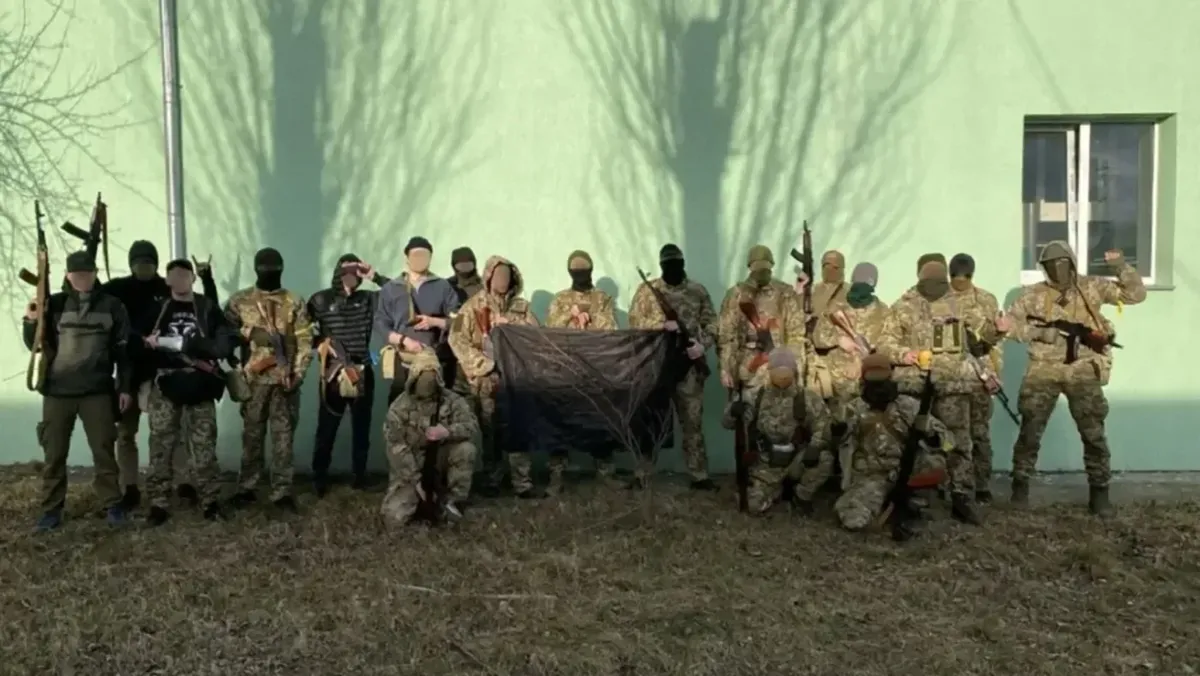
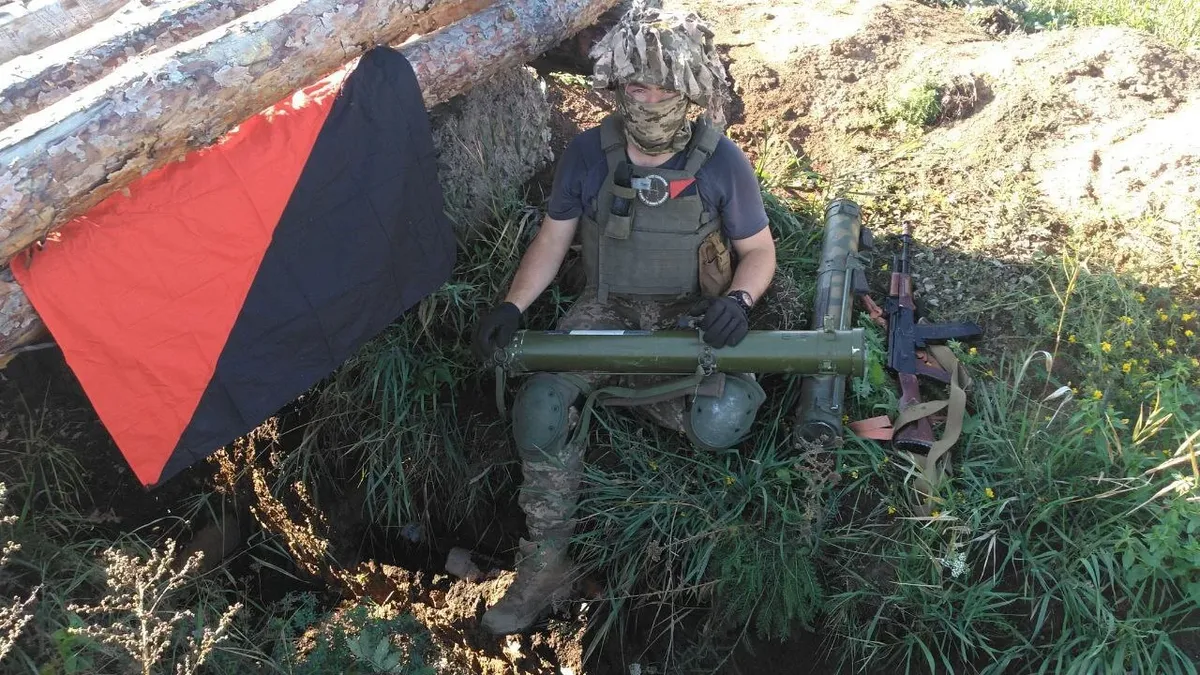
His heightened sense of justice and faith in the idea was not stopped by any boundaries, nor police clubs. And even the fear of death was not able to stop him. After the outbreak of war, Dima became a volunteer, after which he joined the territorial defense. He and his comrades organized an “anti -authoritarian platoon” as an independent unit as part of TRO forces. But after a series of bureaucratic problems, after some time their platoon was disbanded, and the ecologist began to look for the opportunity to get to the front line. After long and stubborn attempts to be at the front, he still succeeded. He participated in the liberation of a number of occupied territories. Dima Ecologist was killed under the shelling, performing a combat mission near Bakhmut, surrounded by his comrades - foreign volunteers, anarchists Cooper Andrews and Finbar Caffes, who also died.
Dima Petrov (ecologist, Ilya Leshy, Phil Kuznetsov - his pseudonyms of different years) was a historian, and now he had a chance to write a story himself. He used it.
He was 34 years old.
Benjamin Volin
This is an interview with the author of audio podkasta about the history of anti -fascism “Public Calls” Dmitry Tsrest recorded in February 2023. The text version was not published. With the permission of the author, we give fragments of this conversation.
In Russia, more than a dozen anti -fascists and anarchists died at the hands of the Nazis. Over 60 people suffered from repression. In Belarus, at the moment, more than 30 activists are in prison. In Ukraine, five people from the movement died over the past year. Since February 2020, the Russian state monopoline claims to be anti-fascism, conducting hostilities in Ukraine under monotonous conversations about denacing.
About what happened between February 22 and February of the 23rd, says Ilya Leshi, a political officer from Russia, who left the country due to repressions and is now at the front, and journalist Sergei Movchan. He is a member of the volunteer network "Collective of Solidarity" (initially the team was called "Operation Solidarity"), engaged in support of volunteers and civilians.
- Do you remember how the first day was when it all started?
Movchan:
- It seems to me that the memories of the first day of the war are already a kind of genre. This begins a fairly large number of conversations between people. Intimate communication can be configured by discussing this very first day.
For me, the day began with a phone call. At 5:00, my friend from the Kherson region called me. I dropped, and then I understand that it’s not just a call at 5:00, and I call back. He said it began. Well, I woke up. I woke my friend, I say: "Well, it has begun." One word that explains absolutely everything. Unfortunately, I had no plan at that time, there was no anxious backpack.
But I watched on the streets how the cars broke, people packed, everyone flew somewhere. And in parallel with this, other people smoothly walked dogs.
Leshy:
- Relatives called very early in the morning at a time when they usually do not call. And at that moment it became clear that a very extraordinary story happens. Well, of course, we all expected that this could happen, although we hoped that it would not happen. I was not believed until the last moment.
But when a call happened and rang out, he heard that there was already thunder and roar around. Actually, these are the very first impressions. And then the comrades and I began to actively move, run on business. We, in principle, had a preliminary plan for volunteering and joining territorial defense. All meetings began in a month, already before the start of a full -scale invasion there were discussions on how we will react if this happens.
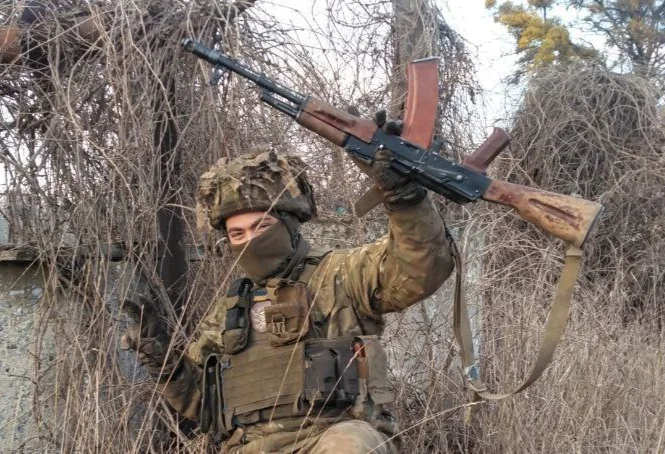
- What does your typical day look like today?
Leshy:
- There is no freedom of movement. A fairly harsh regime of military control, and in general the Spartan regime: here was a manually washing. Everything that in a civilian ordinary life, in a metropolis, is made for us, here we make our own hands. The thesis that my comrades-revolutionaries from Rozhava said. According to them, any military path is only a few percent of the time when you are really in battle. Everything else is the expectation and solution of household and logistics problems.
- What is the team doing now?
Movchan:
-Two to three weeks before the invasion, possible actions were discussed, and it was decided that two such entities would be created: military (people will go to territorial defense) and volunteer (should provide people who will take up weapons, everything necessary).
The organization began as a volunteer initiative that helps fighters of the anarchist movement at the front. At the very beginning, we really tried to look for the most necessary things, because in Ukraine there was nothing at all. In the early days, even bandages could not be bought at a pharmacy and almost everything had to be taken out of Europe and to be taken thanks to our comrades from Poland, Germany, France and other countries. But over time, of course, our organization has grown.
The number of people to whom we began to help has grown up, and from a certain point we started humanitarian trips - once a month we are sure to do it.
Leshy:
-In the first couple of days, I concentrated on media work. From February to the end of July, he called up with reporters and through his comrades gave comments. Again, from our initiative, people began to collect help - volunteer and humanitarian. And from the first day, some of the comrades went to the territorial defense of the Kyiv region. We had an agreement with our friend officer Yan Samoilenko, unfortunately, he already died.
Ian was a lieutenant, the organizer of his group. We met somewhere a month before the war. He was an old anti -fascist from the Arsenal football club (the fans of this Kiev club were known for their anti -fascist position) and worked in the power structures for a long time: he considered it important that the movement of [anti -fascists] had a way out of these structures. Для нас это очень неординарная позиция, но которая в итоге в нынешних условиях себя более чем оправдала. У него было широкое стратегическое мышление, что, опять же, к сожалению, не всегда характерно для нашей братии.
В 2014 году, когда был похожий вызов (была попытка собрать анархическую сотню на Майдане, которая должна была состоять из активистов Украины, России и Беларуси. Попытка была сорвана усилиями праворадикалов) , товарищи принимали участие небольшими группами в отдельных подразделениях. Накануне этой войны хотелось сделать что-то более организованное, что могло бы стать структурной составляющей вообще самого движения.
Еще до начала полномасштабного вторжения Ян приглашал нас на тренировки. От соседних отрядов нас отличало то, что мы проводили интенсивные тренировки и основы начальной военной подготовки — это было частью нашей самоорганизации.
Люди из соседних подразделений спрашивали, можно ли как-то к нам попасть, потому что видели: у нас достаточно всё организованно и активно.
В отряде преобладали товарищи с Украины, но были люди из Беларуси и России. Кинули клич мировому анархическому сообществу — приехали несколько товарищей из западных стран, в том числе люди с опытом участия в революции в Рожаве. Эти люди стали нашими главными инструкторами.
— Почему отдельное воинское формирование из анархистов и антифашистов перестало существовать?
Мовчан:
— По сути дела, командование очень долго наотрез отказывалось переводить отряд в зону боевых действий. С какого-то момента люди небольшими компаниями начали делать это самостоятельно, так как не хотели отсиживаться в тылу.
Для одних в отряде вопрос номер один — это дать отпор российской армии. In principle, that's it. Для других важен вопрос: «За какую Украину мы воюем? А что же должно быть после этой войны?» Также мы столкнулись с довольно классической проблемой конфликта авторитарности и эффективности. Люди, которые делают много, пытаются делать всё и контролировать всех. Им начинает казаться, что на них всё лежит, значит, имеют право решать больше, чем остальные.
Леший:
— Распоряжения командования исполнялись, но мы обсуждали многие вопросы — всегда была свобода критики. Это даже было оформлено институционально: заместитель командира отделения собирал критику и передавал. Часть проблем была связана с тем, что наше сообщество небольшое и в одной компании оказались люди, у которых были старые счеты — от этого никуда не денешься. Плюс привычка не прислушиваться ни к каким авторитетам. Но в целом люди проявляли должное понимание и уважение, если руководитель был с большим опытом и неслучайно оказался на лидерской позиции.
— Что конкретно нужно делать в плане обеспечения отрядов?
Мовчан:
— От носков до дронов и автомобилей. Около 150 людей из левого антиавторитарного движения, которым мы более-менее регулярно помогаем. Также начали активно сотрудничать с профсоюзами и начали помогать членам профсоюзного движения.
Леший:
— Именно на плечах гражданского общества и волонтеров лежит обеспечение рациями, тепловизорами, приборами ночного видения, дронами, матами, спальниками, бронежилетами.
— В руководстве «Азова» были изначально известные российские и украинские нацисты, о чем мало кто любит вспоминать. Но про это было немало текстов расследователей, например, которые объявлены за другие вещи иностранными агентами в России. Сейчас «Азов» расширен до бригады. А вы чувствуете какую-то правую гегемонию, о которой так часто говорят российские пропагандисты?
Леший:
— Понятно, что это широкий спектр: есть последователи Степана Бандеры, а есть откровенные нацисты. Да, они заметны, но не доминируют в армии. Говорить о том, что это кругом нацисты, — это чистой воды пропаганда. Но при этом нельзя сказать, что этих людей вообще нет и это всё выдумка Кремля. Я как россиянин, безусловно, чувствую напряженность, допустим, в коллективах с побратимами-украинцами.
Мовчан:
— Гегемонии ультраправых в армии сейчас нет. Даже больше того, в 2014 году их роль была скорее даже более заметной, потому что тогда добровольческие батальоны играли очень важную роль в обществе. На них смотрели как на главных героев. А ультраправые играли там не последнюю роль: они вышли победителями и набрали огромное количество политических баллов. После 2014 года создали партии и гражданские организации.
Практически все ультраправые сейчас, действительно, пошли на фронт, но у них нет монополии на высказывания в этой войне. Сейчас бойцы есть у всех — у правых, левых, либералов, ЛГБТ, феминисток.
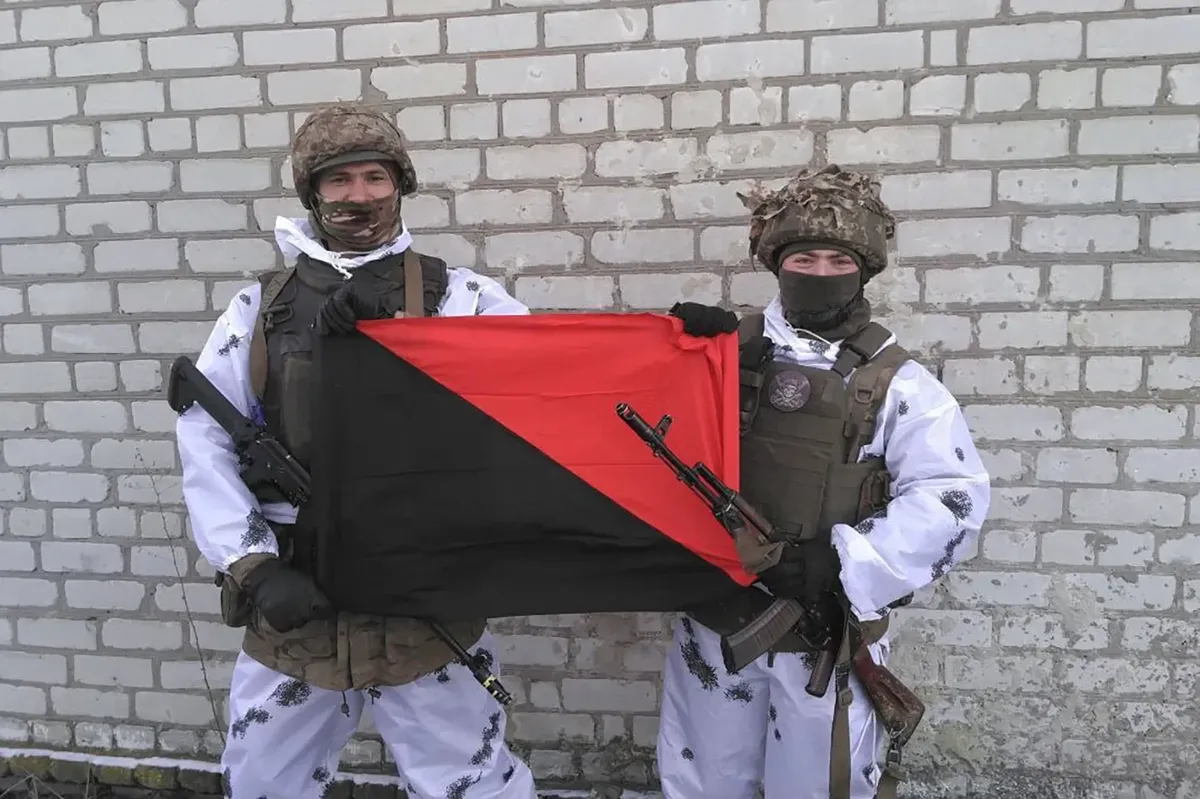
Но произошла нормализация украинского национализма, который перестал быть абсолютно проблемным. Спасибо Путину: Бандера превратился в символ украинского сопротивления. Но кто такой реальный Бандера, чем он занимался и кем был, никого не интересует. Люди рассуждают так: «Бандера — это фигура, которая бесит Путина и россиян, поэтому это наш герой». Или вот черно-красный флаг — уже не важно, что под ним происходило в середине ХХ века. Это точно такой же символ нашего сопротивления. Его носят все кто угодно. В том числе люди, которых обычно принято ассоциировать с прогрессивными взглядами. Существование «квир-бандеровцев» — это показательная вещь, которая абсолютно реальна в современной Украине. То есть национализм нормален, но в то же время нет гегемонии ультраправых. И даже больше скажу, они чувствуют эту проблему. Если сейчас зайти на правые информационные ресурсы (нацистские особенно), то они переживают, что, когда вернутся с фронта, то Украина будет не такой, как они бы хотели.
— Немало знакомых после 2014 года стали в обиходе использовать исключительно украинский язык. Многие медиа отказались от двуязычия в публикациях после февраля. Вообще, насколько изменилось отношение к России и к русскому языку?
Мовчан:
— Вопрос, который ставят украинцы перед россиянами: «Почему вы не свергаете Путина?» Получается коллективная ответственность. Украинцы задаются вопросом, почему так много людей его поддерживает и где антивоенные протесты. Огромное количество людей в Украине, действительно, думали, что когда начнется вторжение, то это вызовет внутреннюю дестабилизацию в России. Пропасть ли это? Сожжены все мосты? Я бы сказал, что скорее нет. Но уровень ненависти к россиянам экстремально высокий — никогда еще такого не было. Но, наверное, еще шансы есть. Со сменой режима, наверное, что-то бы могло бы измениться.
Леший:
— Сотни моих соотечественников, на самом деле, сопротивлялись, искренне сопротивляются и не хотели, чтобы подобное случилось. И тем не менее негативные тенденции развития российского общества привели к такому страшному знаменателю. Есть определенная ненависть у части людей, но нельзя сказать, что прямо существует массовая ненависть к русским — ко всем как к народу. Короче, отношение, конечно, очень сильно усложнилось. Оно, естественно, стало напряженнее и хуже. Но, опять же, я верю и надеюсь, что еще можно поправить. Но для этого, конечно, нужно россиянам всё-таки себя проявить уже как некая историческая общность. Если вы не рабы, если вы не за Бучу и Изюм (наиболее известные казнями гражданского населения города), то что, собственно, что вы нам можете сказать в ответ? Это очень непростой вопрос.
Каково быть сейчас русским в Украине? Персонально могу сказать, что если скажу «я родом из России, я ничего общего с этим иметь не хочу и прошу меня из россиян выписать», то, в принципе, вопросов вообще минимум.
— Немало людей воспринимали восстание в Донбассе как некую альтернативу. В итоге один из лидеров нацболов сел на выезде из региона в тюрьму, а партии запретили довольно скоро вести всякую агитацию. Коммунисты из «Боротьбы» оказались на подвале, а командир бригады «Призрак», который заигрывал с социалистической риторикой, погиб при достаточно странных обстоятельствах, как и другие полевые командиры.
Леший:
— Что касается моего отношения, то я еще с Майдана в этих событиях принимал участие. Поэтому с самого начала я относился к этой эпопее как к проекту кремлевского режима. Хотя я, конечно, тоже отдаю себе отчет в том, что там история не черно-белая и не такая однозначная. Конечно, был определенный социальный конфликт с глубокими корнями.
Мовчан:
— Антифашистская риторика — это стандартный нарратив, который Россия до сих пор использует. Все эти разговоры про Великую Отечественную войну, великую победу, красный флаг Победы. Мы же прекрасно понимаем, что ничего левого за этим не стоит. Даже если брать вот этих вот близких сердцу некоторых коммунистов Мозгового (как заявил журналистам в Луганске представитель ЛНР Сергей Горенко, сначала сработала мина, а после этого машины, в которых находился Мозговой с охранниками, были обстреляны из пулемета) и батальон «Призрак».
Ну, точно так же надо понимать, что на самом то деле это просто красные консерваторы, ностальгирующие по Советскому Союзу, но которые не имеют ничего общего с современной прогрессивной левой повесткой.
— Какой вы вообще видите победу?
Леший:
— Для меня победа — это в первую очередь военное поражение путинской армии и восстание в России. По моей мечте, это должно привести к тому, что наше многострадальное российское общество всё это взбудоражит, оно встанет на дыбы и сбросит то дерьмо, которое мы вынуждены нести уже больше 20 лет. Я на это искренне надеюсь. Это одна из важнейших причин, почему я здесь нахожусь на фронте. Я хочу лично внести вклад в поражение этого монстра, который теперь уже выплеснулся так ужасно за границу Российской Федерации и который, я надеюсь, здесь переломает свои зубы.
Мовчан:
— Ну, вот лично для себя, когда я задумываюсь о победе, то я скорее думаю о новом этапе борьбы. О том, что наконец-то мы сможем перестать бороться с этим внешним врагом, с которым мы сейчас вынуждены бороться, хотим мы того или нет. После этого мы сможем переключиться на все эти внутренние противоречия, о которых я как человек левых взглядов обычно считаю нужным говорить всегда. То есть вопросы социальные, экономические. А их будет очень много!