
Translated material
"Volya aboa death!"
Olga Musafirova explains why the Bakhmut fortress, destroyed to the ground, cannot be conquered
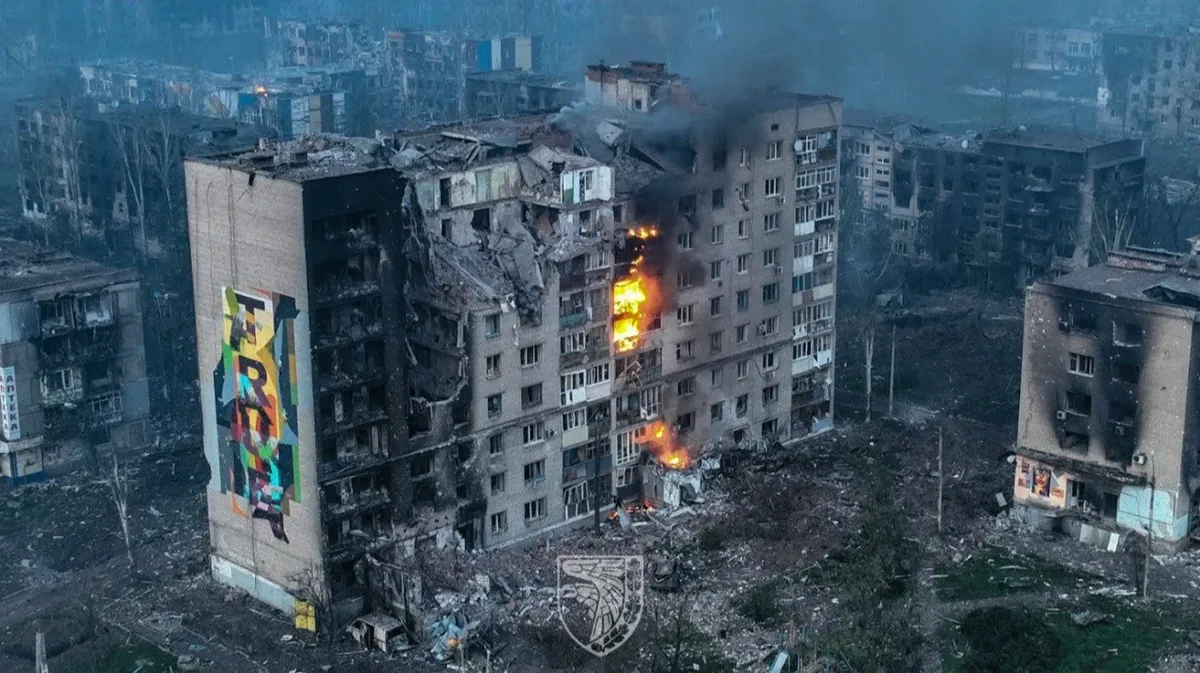
View of damaged residential buildings in Bakhmut, May 23, 2023. Photo: Defense of Ukraine / Handout / Anadolu Agency / Getty images
In Ukrainian culture, there is a special type of songs of the winter cycle of holidays - carols. Initially, they accompanied pagan rites associated with the cult of the newborn sun, the cult of ancestors. The carols turned out to be immortal, although they were, along with the singers, persecuted and the Russian Orthodox Church, and the Soviet government. Life still triumphed above the ashes, like the sun over darkness.
According to NUAM, the largest playlists with Ukrainian music in the country, from February 24, 2022, a real explosion of song creativity in different genres occurred in Ukraine: more than eleven thousand new works. And every seventh song is about the war. I do not presume to say how many carols are among them. But the “carol for the Armed Forces”, the words and music of which was written in one night by the Ternopil historian, volunteer and bard Oleg Vitvitsky, almost immediately gained a million video examinations. It was first performed in Ternopol, in the temple of the Ascension of the Lord of the Orthodox Church of Ukraine (PCU):
*There, in Bakhmuti, de pylili,
De stilki tsvit in the same field ...
It became quiet at once.
“Born Christ! Slavimo yogo! "*
(There, in Bakhmut, where shots are heard,
Where so many color ( meaning selfless Ukrainian defenders. - Approx. Aut. ) Already died ...
Suddenly it became quiet and sounded:
“Christ was born! Praise him! ")
My Christmas days of 2023 passed under the sign "There, in Bakhmuti." The song, interspersed with sirens of air anxiety and explosions, sounded in Kyiv and Odessa, Kharkov and Poltava. She responded in Gulyaipol by the stanza “And in Gulyaipoli Kutya to the ST O LI, the sky was bloomed there” (“And in the Gulyipol of Kutia on the table, the sky flourished there” - I mean: the first Christmas star appeared. - Approx. Aut. ) - by the definition of Russian occupiers, the most “evil city” Zaporozhozhskoye areas, destroyed by artillery, reactive systems of volley fire and aircraft.
Local, who did not evacuate, moved to the basements and called their small homeland no longer the “Mahnograd”, but “Makhnov’s arc”.
I came to Gulyaipol many times: both on journalistic business trips and friends. Recently, the city has been especially transformed. This open-air museum, with signs and signs, where among the restored old buildings-both dark red brick and wooden, with carved shutters-lay tourist routes associated with the "Old Man Nestor." Batkin Monument, for some reason gilded “under Lenin”, towered in the center, and his Tachanka was in incredible demand among the guide. Not only anarchists from all over the world pulled here. Climb into a tachanka, take a photo under the black flag with white letters "Will Curuis Death!" Everyone wanted. But how many suggested that the slogan would again be relevant and the question would rise just like that?
The battles for the city began on March 1 last year and still last. The city is controlled by the Armed Forces. What are the successes of Russians? The shells were damaged by the Museum of Local Lore (1901) and the Krieger family mansion (1892), where the museum’s branch was going to open, the Hope's steam mill (1894), the house of the merchant Karmanov (1900), the estate of the philistines of the Meleshkovs (1910), the building of the inn, the Altganusen hotel, the retroactive house of Yakov Gurevich (in it The city council was located), the House of Honorary Citizens of the Mitkalevs (burned to the ground), the house of the Makhnovsky commissar Panchenko (direct rocket hit) - the list is incomplete.
Everything that has survived the Second World War was destroyed on the principle of "if you can’t capture, then at least to be trimmed with the ground."
“In the MISTI MARIA, it rusted over the Azov to the sky ...” (“In the city of Maria (occupied Mariupol), a ray of hope somewhere above the azov (Azov sea) shone in the sky” ), the carol continues.
My last date with a living Mariopol took place in quarantine 2020. She wrote about immigrants, refugees from Primorsky Shirokino, at that time a hot point on the clash line, and until 2014, before the Russian aggression, disguised as separatism, is a viticulture, fishing, richest village. I walked with the heroines of the future report on the avenue with the planemar. I drank coffee on a veranda with a view of the Mariupol Drama Theater. I admired the sea and shook my head condemningly at the sight of the steaming “dumps” on the horizon (the so -called man -made mountains of slag near the Azovstal metallurgical plant was called).
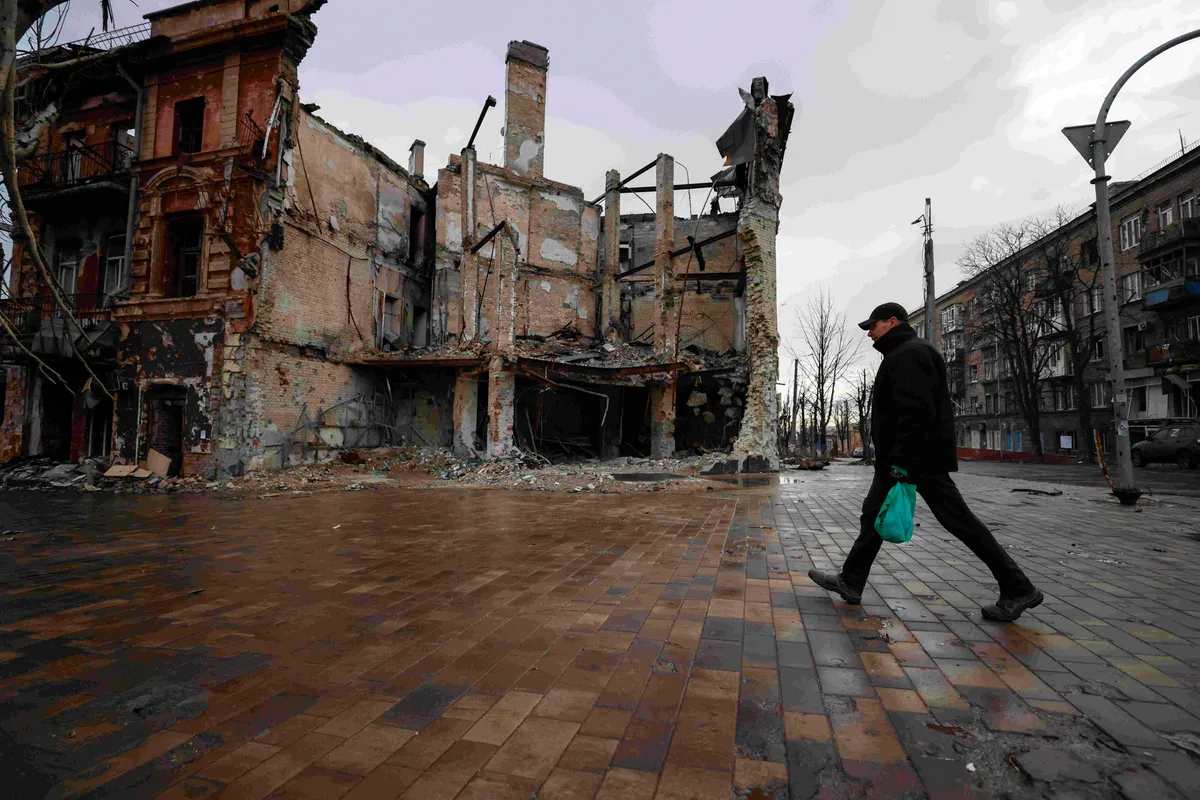
Two adult women, having lost everything, except, fortunately, relatives, faith in their strength and in their country, were able to start life here again. Natalya Logozinskaya graduated from a business school, received a grant. Her bistro "Italian panini" was beating records of popularity. Rita Nuikina found work in the specialty in the grain terminal in the Mariupol port ( “Extreme Episode two: Mariupol” , October 14, 2020, “New Gazeta”).
In 2022, both Natalia and Rita had to become refugees again. The Logozinsky family escaped, passing through the Adovas circles of filtration camps and the threat of execution. They were under the guardianship of the non -governmental organization Rubicus and the Estonian International Migration Organization in the town of Valga. Soon they themselves took up volunteering. Around Natalia, newcomers-Ukrainians rallied: "We are not dependents, we want and can work!" Logozinskaya teaches Estonian, recently defended the project - already has a certificate of the entrepreneur.
Nuikina with her daughter, grandson and an old lying mother made a path from Mariupol under the bombs first to Berdyansk, then to the Ternopil region, to the west of the country, then in Izmail near Odessa, from where the vessels go along the “grain corridor”. It is a little like Mariupol ... Rita remembers the names and surnames of dozens that were shared with them, the inhabitants of Donbass, food and grave and, squeezing their fists, listened to the news about the city that the Russian army turned into a ghost, into a cemetery, along with prospectuses, planeis, a drama theater and Azovstal. Not your own, it’s not a pity!
Both women, after February 24, fundamentally stopped using Russian language even in household communication.
“A carol for the Armed Forces” and for Natalia and Rita her own to tears. And "promise above" - a ray of hope - does not dim: Mariupol will be returned. Only the dead do not resurrect ...
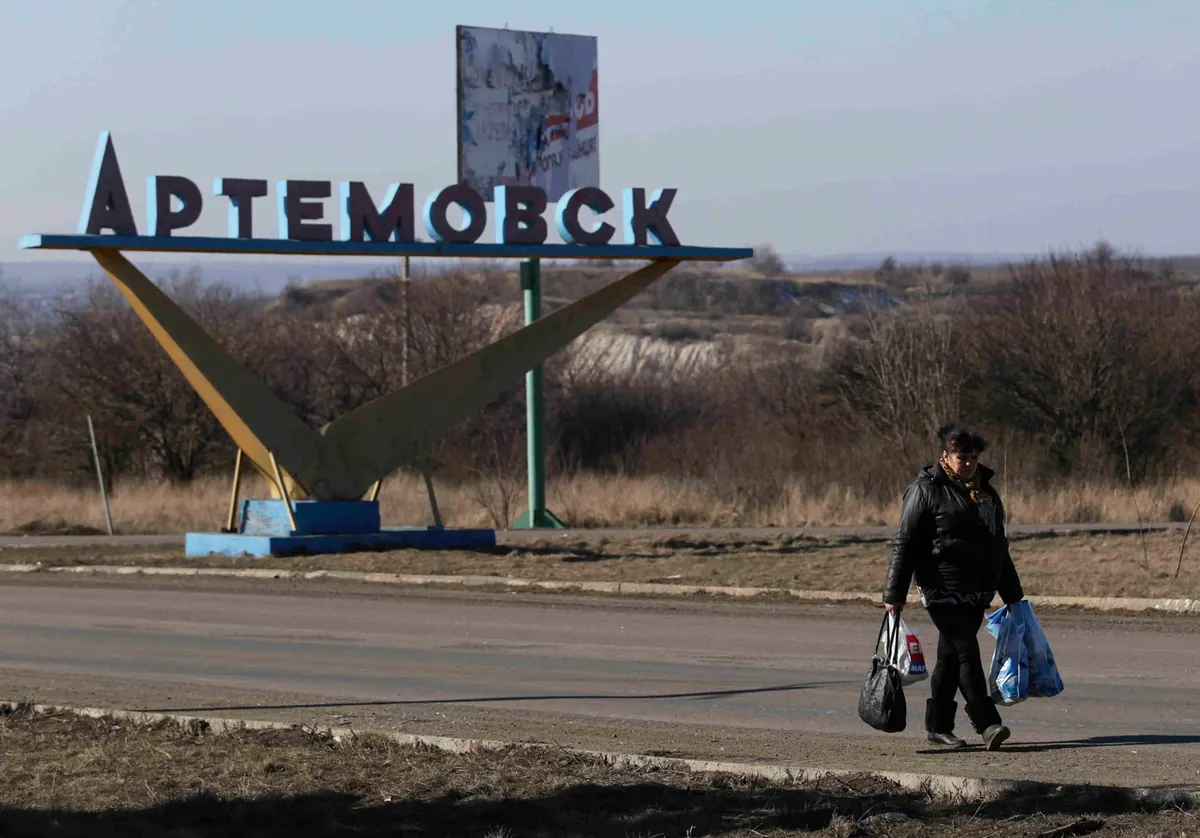
In Bakhmut, it so happened, I visited at the beginning and at the end of the 2015 military ( “First company” , December 6, 2015, “New Gazeta”). At the beginning of the year, the front -line city was also called Artemovsky, in honor of the party nickname of a certain Bolshevik. Patients and staff from neighboring Svetlodarsk were urgently evacuated to the Central District Hospital: Grad hit next to the building. Before the tragedy of the "Debaltsevsky boiler" there was very little. The hospital only equipped, there was not enough everything: cars, diesel fuel, medicines, hands, tools, dressing material, censorship vocabulary to describe what they saw. The first medical company in the National Guard of Ukraine (staffed, of course, only volunteers) accepted combat baptism there.
At the end of 2015, Oleg Voitskhovsky, an engineer from Lviv, a convinced nationalist, “twenty years in the public sector, veteran of street policy”, lieutenant, deputy company, already corrected me: “Not Artemovsk, but Bakhmut!” The deputies of the City Council voted for the return of the historical name. Moreover, they removed from the processes, without a hint of protests by the local population, monuments to Lenin and Comrade Artem. Only the pin continued to stick out. True, Artyom gave a farewell to the tractor cabin in a granite fist, in which he was taken to a landfill of history ... Voitskhovsky showed Bakhmut not without pride, finding not only in architecture common to the lion's line: “The attitude of people towards Ukraine is changing. We examined what the “Russian world” is, I did not like it. ”
Then I met a young family doctor of general practice, a native of the occupied Debaltsev Debaltsev Marina Ryazantseva, the senior resident of the hospital department of the medical company. She remained the only qualified health worker in Debaltseve during the “boiler” and even a few days after him. She talked about severe patients - diabetics paralyzed by the elderly. Marina was responsible for them, took care of, even in the bomb shelter did not go down. If possible, it rushed to the "mainland", in the same Bakhmut, for medicines, bread and water. And she did not hide that as a volunteer helps the Armed Forces. Lonely grandmothers tried to kiss their hands. Then Ryazantsev was warned: it is in the top positions of the pro -Russian resource "Tribunal" as a "accomplice of punishers". Soviet grandmothers correctly indicated: home address, phone ...
The military doctor and the combat doctor Ryazantsev is now again at the front. On her decision “at least a little rest in a civilian hospital,” Marina admits , put an end to February 24. There are so many losses behind that the pain threshold has been passed. A new breath has opened. “Our clan and on - all of Ukraine, I Zbroinі Sili, I Tro” (“Our family is all of Ukraine, and the armed forces, and Tro (Teroboron)),” the carol recalls.
It is interesting to note: the further, the more words - like a “counteratus” or “zbroichny forces” - freely enter into Russian speech across the border with the Belgorod region.
Why do I recall the heroes of materials when the propaganda of anti -heroes climbs out of the skin: “Ukrainians are demoralized, Kyiv tries to minimize the political effect of Bakhmut’s loss”, after calling it “Artemovsky”? To the fact that here the Russians were mistaken. Bakhmut remained in his hearts, he will be rebuilt after the victory. Like Mariupol, Gulyaipol, Maryinka, Popasnaya and our other native places. They will also sound the songs there.
There is enough breath.
Kyiv