
Translated material
I will turn over the calendar
As part of the cleansing of the Moscow inheritance, the Orthodox Church of Ukraine goes to the new calendar
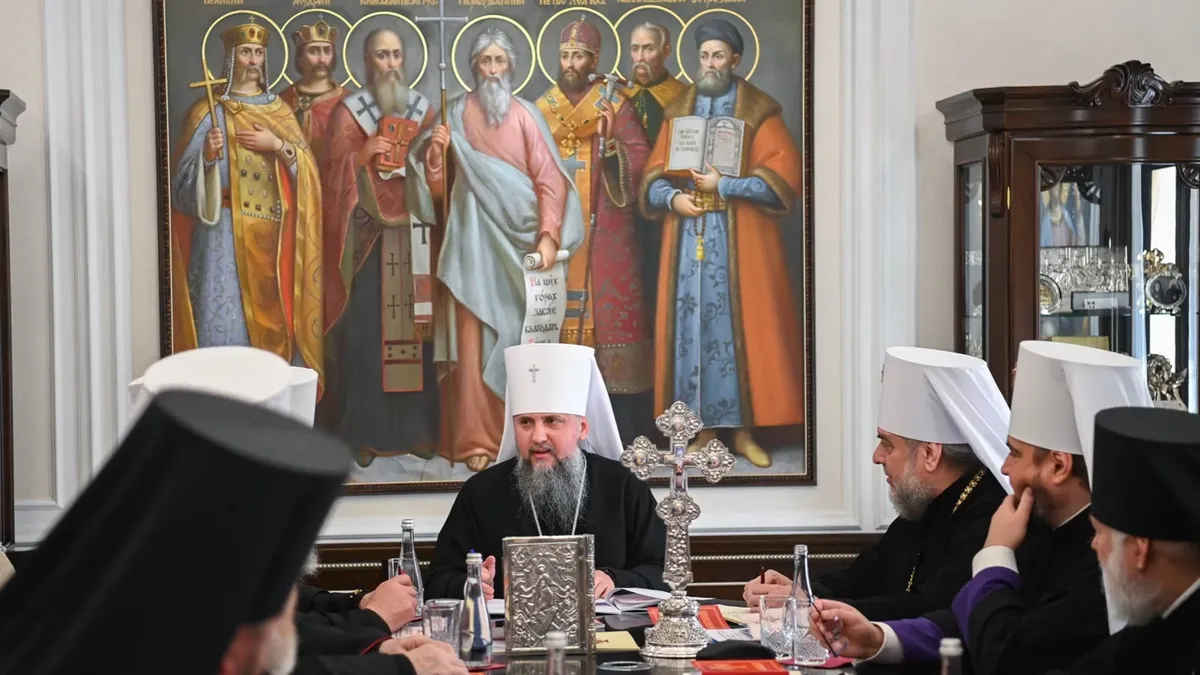
Meeting of the Holy Synod of the Ukrainian Orthodox Church, May 23, 2023. Photo: PCU
The sensational, at first glance, the decision was made on May 24 by the Bishop Cathedral of the Autocephalous (Independent) Orthodox Church of Ukraine (PCU), for the first time gathered in the refectory church of the Kiev Pechersk Lavra. 51 The bishop of 53, gathered to the cathedral, voted for the transition of the PTC from September 1 to the Novo -Sogulian calendar, which so far (until 2800) coincides with the Gregorian, that is, the "new" style. The script of the calendar reform in the PCU will be soft: the monasteries and parishes who want to save the “old” (Julian) calendar can vote for this choice of at least 2/3 of the vote.
The problem of the church calendar has become a challenge to the Christian world in the Middle Ages. The Julian calendar introduced in the Roman Empire, even before the Nativity of Christ, is very inaccurately corresponded to the time of the full turn of the Earth around the Sun (Star year). According to the Julian calendar, the year lasts exactly 365 with a quarter of days (therefore, every fourth year is a leap), while the exact duration of the Earth around the Sun is 365,242190 days. Because of this mistake, every 128 years, the Julian calendar adds a lag behind a day from the star year. For 2000 years, 13 days of such a lag run up, and the holiday of the Nativity of Christ, tied with the first Christians to the Day of the Winter Solstice, moved in the Julian calendar on January 7th. If this goes further, then in the 7th millennium A.D. Christmas will be celebrated in the spring, and in the 12th-in the summer! The problem was recognized by the European astronomers of the 16th century, the Catholic Church accepted their argument, and the decree of Pope Gregory XIII after October 4, 1582 immediately occurred on October 15. By the name of the pope, the corrected calendar began to be called "Gregorian." It has fewer leap years than in Julian, but from the point of view of modern calculations it is also imperfect - a mistake for one day occurs in the Gregorian calendar once every 10 thousand years. The most accurate is the Novoyulian calendar adopted in the twentieth century. Most of the local Orthodox churches and so far coincide with the Gregorian.
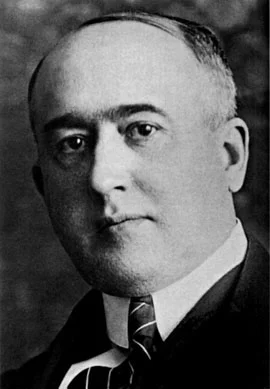
An error for one day occurs in the Novoyulian calendar every 43,500 years. Its developer was Professor of the University of Belgrade Milutin Milankovich, but the Serbian church still adheres to the "old" calendar.
In the liturgical life of the Orthodox churches, the Novo -Sudalian style introduced the All -Orthodox Congress in Constantinople in 1923, before the Second World War, he was also accepted by the Elladskaya, Cyprus, Romanian, Alexandria, Albanian and Antioch churches, and after the war, Bulgarian. Only four local Orthodox churches officially continue to adhere to the “old” style - Jerusalem, Russian, Georgian and Serbian. However, here “everything is not so clear”: for example,
Part of the foreign parishes of these churches serve according to the Novoyolian calendar and this is not considered a canonical crime.
Church-calendar reform in Greece, Romania and Cyprus caused a large-scale “calendar split”-several “old-style” churches were formed in these countries that broke communication with official world Orthodoxy. The argument of the “old -style” boils down to the fact that the church calendar is “an icon of time”, it connects modern Christians with a continuous liturgical chain with the times of earthly life of Jesus Christ. According to the “old -style”, the calendar reform was needed by the Frequencies who seized power in some churches after the fall of the Orthodox Russian Empire - in order to get closer to Western heretics and combine Orthodoxy with Catholicism. All the "news" churches gradually entered the ecumenical movement, which church conservatives call "heresy of heresies."
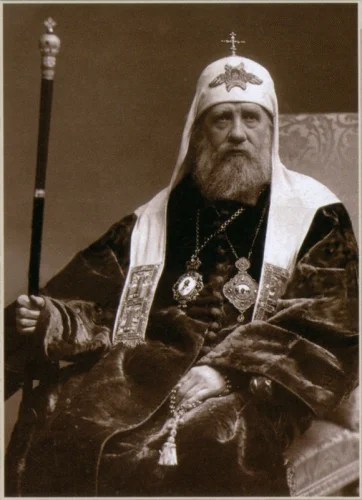
The attempt of the calendar reform in the Russian Church was made in 1923 by Patriarch Tikhon, but it did not meet the support of the church people and was “temporarily delayed”. The modern Russian Orthodox Church seeks to emphasize its specialty in every possible way, to distance himself not only from Western Christians, but also from Orthodox churches that do not support Putin’s policy, so the issue of clarifying the calendar in it is not even discussed. On the contrary, in the Moscow Patriarchate there are calls to connect with the Greeks “old-style”, which are perceived as a radical-conservative force, opposing the official hierarchy, with which the Russian Orthodox Church broke through the recognition of the independence of the Ukrainian church from Moscow.
PCU received its autocephaly and canonical recognition in 2018-19. From the Patriarchate of Constantinople, and initially more focused on the modern Greek tradition than on the old Moscow one. The Council of the PCU Cathedral in its decision to change the calendar style directly refers to the circumstances of the “aggressive war of the Russian Federation against Ukraine” as a factor that accelerated this decision. The cathedral admits that if earlier the Julian calendar served as an “identifier of the Ukrainian church tradition”, now it is associated with the Moscow tradition, since only the Russian Orthodox Church and its satellites who do not recognize the Autocephalia of PCU are adhering to the “old” style.
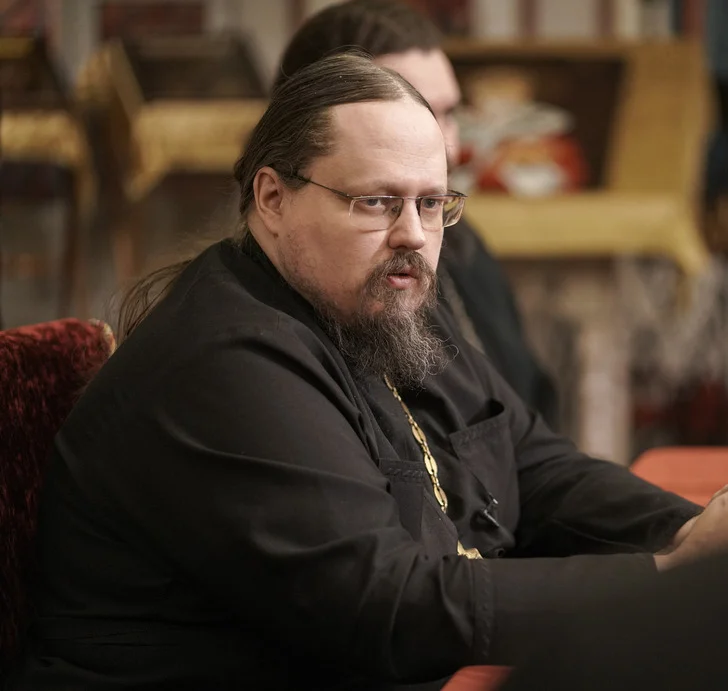
Moscow also recognize the political subtext of a church-calendar issue. The priest Georgy Maximov writes a member of the ROC's interlocal presence: “All church reforms of the 20th century are associated with politics, with specific political forces, with certain political trends ... Greeks visible in the direction of the union not so much even with Rome as with a new normality,“ new world order. We do not need in that direction. " In military conditions, PCU is trying to intercept the initiative, since all sociological measurements of the last 15 months show a logical outflow of parishioners from the structures of the Moscow Patriarchate. The mismatch of the dates of the celebration of most church holidays in PCU and the Russian Orthodox Church will put Ukrainian parishioners before a more tangible choice - "with whom we are celebrating." Moreover, another large Ukrainian church-Greek-Catholic (Uniata)-also announced the transition to the Novoyulian calendar at the beginning of this year. The watershed between world Christianity and the “Russian world” in church ries becomes the most accented in Ukraine, the churches diverge through various civilizational vectors.
Is the risk that the Ukrainian church people will not support the calendar reform? Oddly enough, some fears of this kind were mainly expressed by the participants of the cathedral from the West Ukrainian dioceses, where the “old” style for centuries fenced the Ukrainian identity from polonization (latinization) and Sovietization (fainting). If the last challenge has completely lost its relevance after February 24, 2022, then rapprochement with Western Christians is perceived by modern Ukrainians as an organic part of the European choice. And the Cathedral of PCU made this choice - at his own canonical level.