
Translated material
She left the winner
Lev Gankin - about Tina Turner and her incredible overcoming on the way to world glory

After a long illness, Tina Turner died in Switzerland. She was 83 years old. She began her musical career in the 1960s. For several decades, the singer was twice at the peak of popularity: first in a duet with her husband Aiku Terner, who applied violence to her, and then after leaving him. In the 1980s, she was repainted, recorded several eternal hits and gained recognition and the most important musical awards in the world. Journalist Lev Gankin talks about the paths of Tina Turner and the obstacles that she had to overcome.
Aik Turner, a talented guitarist, producer and band leader (and, as it turned out later, a cruel home tyrant), he believed that he came up with Tina Turner. In the late 1950s, she (even under her real name-Anna May Bullock) fled to his ensemble The Kings of Rhythm, but at first nothing more than bird rights.
The first solo vocal party - in the song “A Fool In Love” in 1960 - got it by a happy coincidence: the full -time vocalist walked a studio session. After the composition became a hit, Aik realized that it was worth betting on the singer - and gave her his own surname (although he later claimed that they were never officially married), as well as the pseudonym of Tina in honor of the tire, the queen of the jungle from the comic book of the same name.
The musician definitely imagined himself with a pygmalion who sculpted his Galatea from Bullock - in particular, he gave her, which had never been professionally engaged in music, valuable vocal lessons. However, AIK was not going to share creative subjectivity with the singer-and even fixed the right to the Tina Turner brand: so that, if necessary, without unnecessary sentiments (and without prejudice to business), replace it with some other artist.
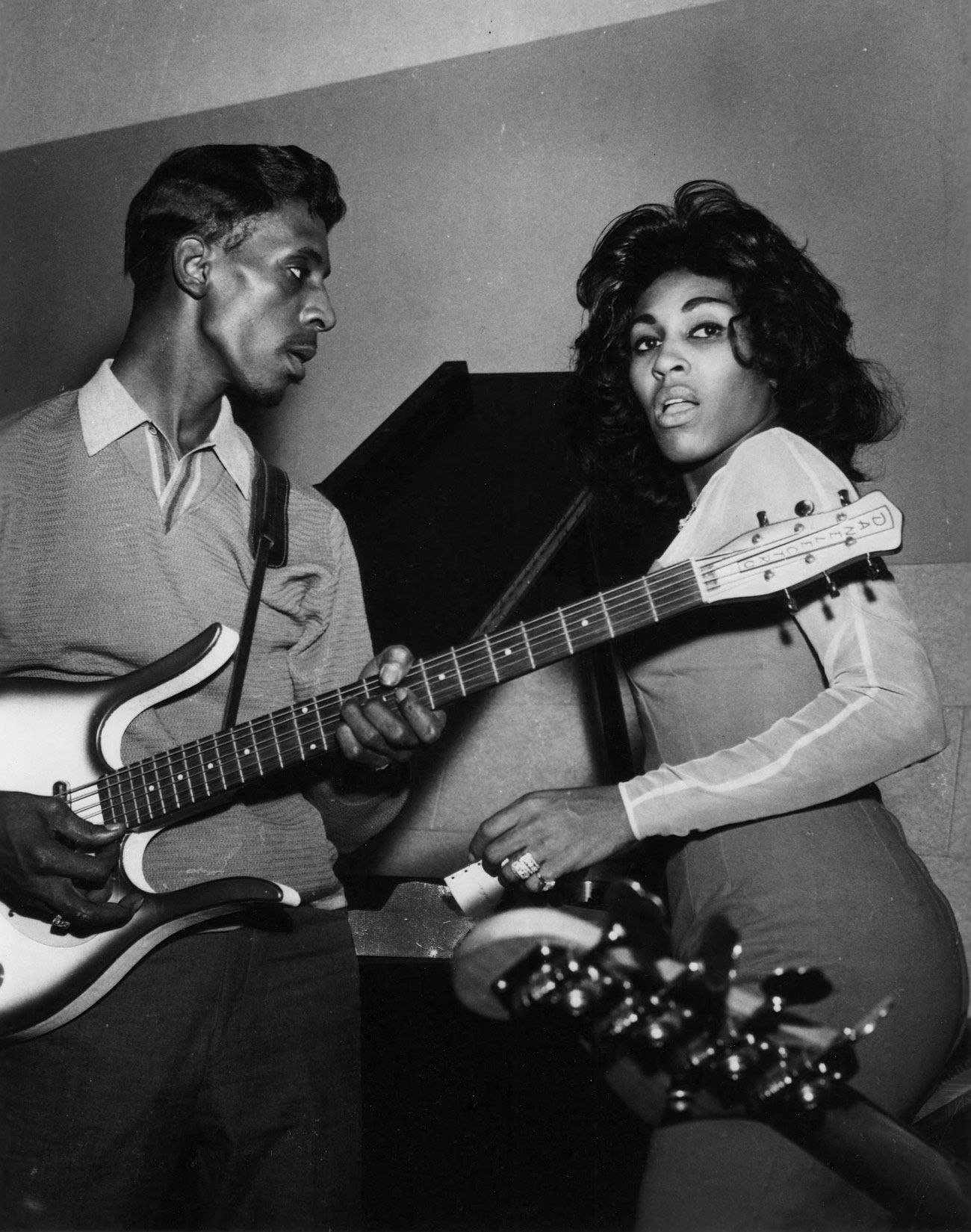
In 1976, after 20 joint full -format albums under the Ike & Tina Turner guide, seven dozen singles and countless monstrous cases of domestic violence - physical and psychological - Tina Turner with 30 cents in his pocket jumped out of the hotel in Dallas, having nor have nothing to do with Aikom. On the following trial, the main object of her claims was precisely the stage name - in order to redeem the rights to him, she was even ready to take on numerous penalties in the abolished concerts.
The ultimately achieved agreement from the part seemed unprofitable for the singer: she remained in debt, and Aik at the same time retained the rights to the vast majority of songs released by the duet. But Tina Turner was satisfied: after all, she finally received the right to independently dispose of her career. Galatea abandoned Pygmalion and, while he was engaged in nostalgic scam with old hits (interrupted by imprisonment in prison), directed a grandiose fluke with multi-platinum albums “Private Dancer”, “Break event Rule” and “Foreign Affair” in the 1980s.
Undoubtedly, the meeting with Aikom, in the distant 1957, became Turner fateful for Tina, and, of course, being a sophisticated musician, in the past-a scout of young talents for one of the American studios, he could teach a beginner artist a lot. But, despite the lack of experience, Tina from the first days also had something that cannot be taught: extraordinary vocal courage, frantic energy, unique plastic movements. The boss of the Sue Records label Jaggie Murrei persuaded Ayk Turner to give the singer a chance after he appreciated her “dirty screams” in the composition “A Fool In Love” .
In the mature years, Tina recalled that she was forced to exist all the time in the studio and on the scene in the register of screams - and, on the contrary, thanked the producer Phil Spector for the fact that he in the famous composition “River Deep, Mountain High” ordered her to strictly adhere to the melodic line. But the truth is that the “Fool in Love” was performed by Turner as a demoter - it was assumed that then the vocal party would crate the professional singer. So, irresistible piercing cries on high notes was her own solution - and most likely, purely instinctive: this is how Tina Turner felt music.

The spector, by the way, actually understood this well - and therefore in the same “River Deep, Mountain High” (George Harrison called her “ideal song”) gave the singer a melody, best suitable for her vocal manner. It actually consists of climaxes: the first line is a consistent ascent on an automobiles almost on an entire octave, then, in the same piece, another swift take -off and, finally, the supersonic rocket of the chorus with a peak on the word “High”. Faster, higher, stronger - any classical singing performance Turner was formed as if in accordance with the Olympic motto, and each of its living performances was, among other things, a sucking athletics feat.
The singer (along with the back vocalists-the Trio The Ikettes) was in constant movement-in the feeling, not a single muscle of the concert was at rest at rest. No matter what Tina sangs-the original Aika compositions, the ancient rhythm-end-blinkers, pop songs, the cover versions of the hits The Beatles (“Come Together”, “Get Back”) and Led Zeppelin (“Whole Lotta Love”),-her music was struck by bodily: her voice for Turner was, it was, it was, it was, it was, It seems not so much a mirror of the soul as an additional department of the muscle system. Mick Jagger, the most mobile rock musician of his generation, truly “pumped” stage mobility precisely after a meeting with Tina-Ike & Tina Turner warmed up The Rolling Stones on the British tour of 1966 (and then at many other performances).
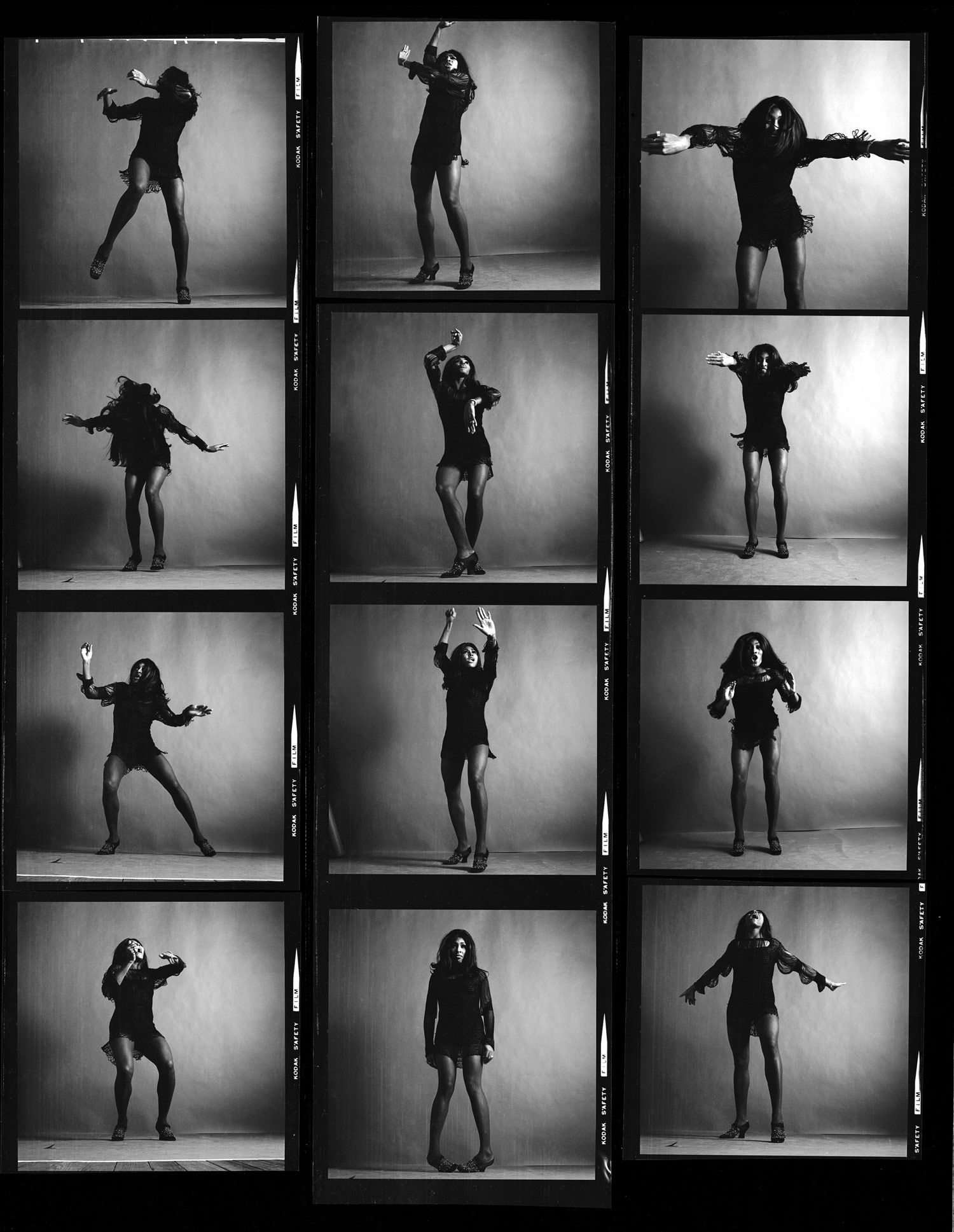
It was not easy to resist the Terner performing power-and in her characteristic power manner she achieved a cross-imperial of the User: the first few singles of Tina and Ayk in the early 1960s brought a rustle not only in a specialized R&D-hut parade, but also in pop chart. That is, translated into an understandable language, both dark-skinned and white-and the same thing in the 1970s would concern such compositions such as “Proud Mary” (re-tribute to Creedence) and Nutbush City Limits .
In the latter, the singer recalled her not too happy childhood in the town of Natbush, Tennessee: "Church, cotton cleaning plant, school, street toilet." True, despite the retrospective nature of the track, it was made in hard rock and bluer, to which the singer was always indifferent-and which was so well suited for her performing manner. But the most important thing is that this is the song of her own composition: Aik Turner is only a producer in her. The owner of such a voice - and such stage habits - could not be only an obedient performer of someone else's will, and Tina really began to show creative independence during the time of alliance with Aiku.
And fully, these qualities were useful to her after the divorce - and the decay of the duet. Having managed to tear off relations with the partner tortured her, she did not acquire instant happiness - neither personal nor artistic - but phenomenal sports persistence ultimately helped her survive failures. Two albums of the late 1970s, on which Turner tried himself in a discos, were not successful; The tour in South Africa from the Aparteid caused reasonable claims in a lack of political and cultural sensitivity. Nevertheless, she continued to flounder-and eventually ended up in the charts thanks to the cooperation with the Heaven 17 group, British hitmakers of the Sinte-Pop era: Together with them recorded the Cavered versions of the songs “Ball of Confusion” The Temptations and “Letʼs Stay Together” Ela Green. A year later, the album “Private Dancer” was released, which made almost a 45-year-old singer a world superstar; The popularity of this and the following and the following plates Turner significantly exceeded its indicators of the times of cooperation with AIK.

The artist’s fluke itself from the 1960s in the new conditions-and with the new sound-was not something out of the ordinary: in the 1980s, they could invent themselves again after a long silence, for example, Dusty Springfield or Leonard Cohen. Turner’s case looks exceptional only thanks to the scale of its newfound glory: the multimillion -dollar circulation of the Private Dancer album, five platinum certificates in the United States, first place in a single chart with the song “Whatʼs Love Got to Do with it” , three Grammy awards, and then, a year later, and the fourth - for a song from a song from a song from a song from a song from a song from a song from a song from a song The soundtrack to the Mad Max, where Tina at the same time starred in one of the main roles.
The company Capitol, which experienced certain doubts about the success of the enterprise, allocated Turner for only two weeks to record a breakthrough record, but that was what she needed. The singer has always been especially good at sprint distances where a jerk is important: to get air into the lungs, clench the fists to whitewashed dots - and resolutely overcome the obstacle. Moreover, Tina did not have to compose music this time: the record was completely collected from the songs of other authors.
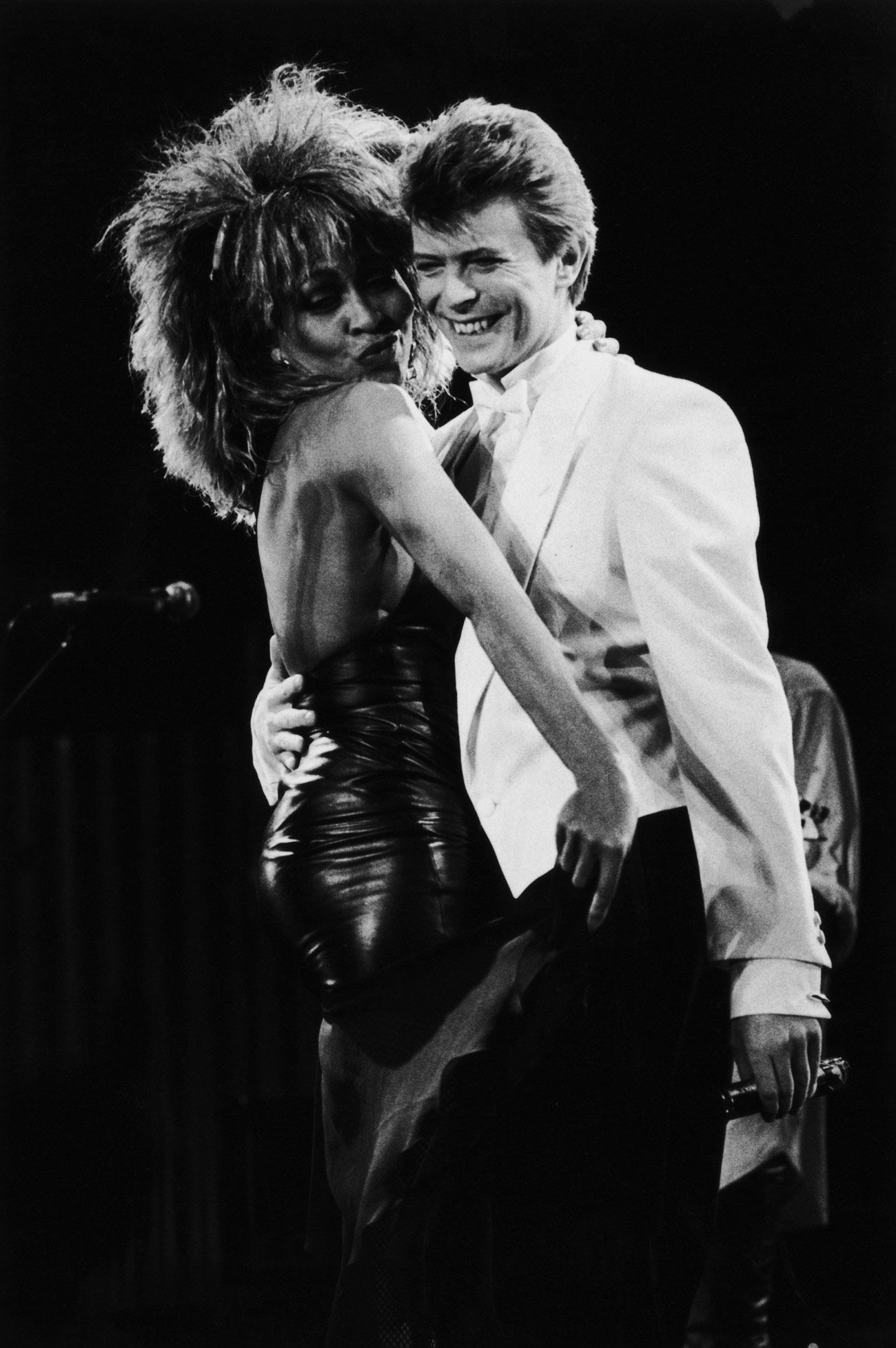
Some fragments of the album - for example, “Show Some Respect” or “1984” (by the way, the composition of David Bowie, who collaborated with Tina at this stage of his career) - successfully operated the patented Terner vocal drive: its tendency to take the upper notes, its hyperactive performance in the attacking manner. The image of the river from the I Might Have Been Queen Opening plate - the only song composed specifically for Private Dancer - transparently refers to the classic notes of the singer, including “River Deep, Mountain High”. The next cover version of the hit The Beatles-at first glance, is also an allusion to the early period of Turner's work; However, it has been decided here differently - the high -speed, emotionally tense composition "Help!" John Lennon is turned into Soul ballad.
The convincing execution of penetrating socks is something new for the singer, in his youth, it seems, who was more likely to them as an inevitable evil. At the fifth ten, having survived the decades of a heavy family Abuez and miraculously avoiding bankruptcy after parting with Aiku, she gained experience that allows her to speak out in such a register, with the corresponding melancholic intonation. The title composition of the album , a soft-rok number composed by Mark Nopfler from Dire Straits, was written on behalf of a girl forced to trade herself in order to make ends meet. In the main hit with the record, “Whatʼs Love Got to do with it”, Tina was interested in: “What does love have to do with it? And why do you need a heart if it is so easy to break? "
Private Dancer followed new successes. For example, “The Best” , in the melody of which is another spectacular ascending figure, however, not one and a half octaves, as in “River Deep, Mountain High”, but only four steps. Or Golden Eye - Turner's contribution to Bondian music, composed by the frontmen of the U2 group. Clips for both of these tracks liken the singer to animals with their natural combination of grace and power - a horse and a leopard; The English -language stamp “A force of Nature” (“Natural Power”, “Element”) in its case really suggests itself.
In the 21st century, Tina's creative life acquired an irregular, episodic character: the Beyond vocal ensemble, which performed Buddhist and Christian spiritual music in New Augar arrangements, turned out to be its main project. The singer also published a couple of books - in particular, a volume called “Happiness to your face: a guide on how to change your life for the better.” And she knew what she was writing about-and it was not only about the fabulous earnings of Turner of the second half of the 1980s. The artist’s private life also managed to radically change for the better: since 1986, Tina lived in a happy union with the German musical functionary Erwin Bach. If the first husband, Aik Turner, for many years subjected her to violence, then the second in the literal sense of the word extended her life: when the singer refused the kidneys, Bach sacrificed her.

The career of Tina Turner is the focus of several narratives at once. This is the idea of how “racial music” (as it was quite officially called the notes of black artists in a very recent past) is also common for the rhythm end-Blue of the 1960s) leaves the ghetto and becomes a universal property. This is a triumphal biographical narrative: about how a woman decisively leaves the position of submission, tears with a person who caused her suffering, and becomes the mistress of her own fate. This is finally noteworthy for popular music of the 20th century the history of late success - Turner proved that a superstar can become more than 40 more.

Shina, the queen of the jungle, in the early 1940s turned out to be the first heroine to dilute the one hundred percent male club of the title characters of American comics. Having received her stage name in her honor, Tina also became the first: the first woman on the cover of Rolling Stone magazine in the 1960s, the most experienced conqueror of the hit parade in the 1980s or, for example, in the 2020s-the first artist, for seven decades of the UK, who got into the top 40 of Great Britain (though she brought her a rather meaningless achievement Remix of the Norwegian Kygo Electron on the song "Whatʼs Love Got to do with it").
The endurance, which the singer showed at a short distance of the concert-that in the 1960s with Aiku Terner, which in the 1980s with the material of the albums of Private Dancer and Break Everey Rule-turned out to be characteristic of her at the marathon distance of his whole life. Tina Turner lived on the principle of “faster, higher, stronger” - and left the winner, champion, legend.
Lev Gankin