
Translated material
Mushroom epidemic
Could the mass infection that was shown in the series The Last of USs occur in real life
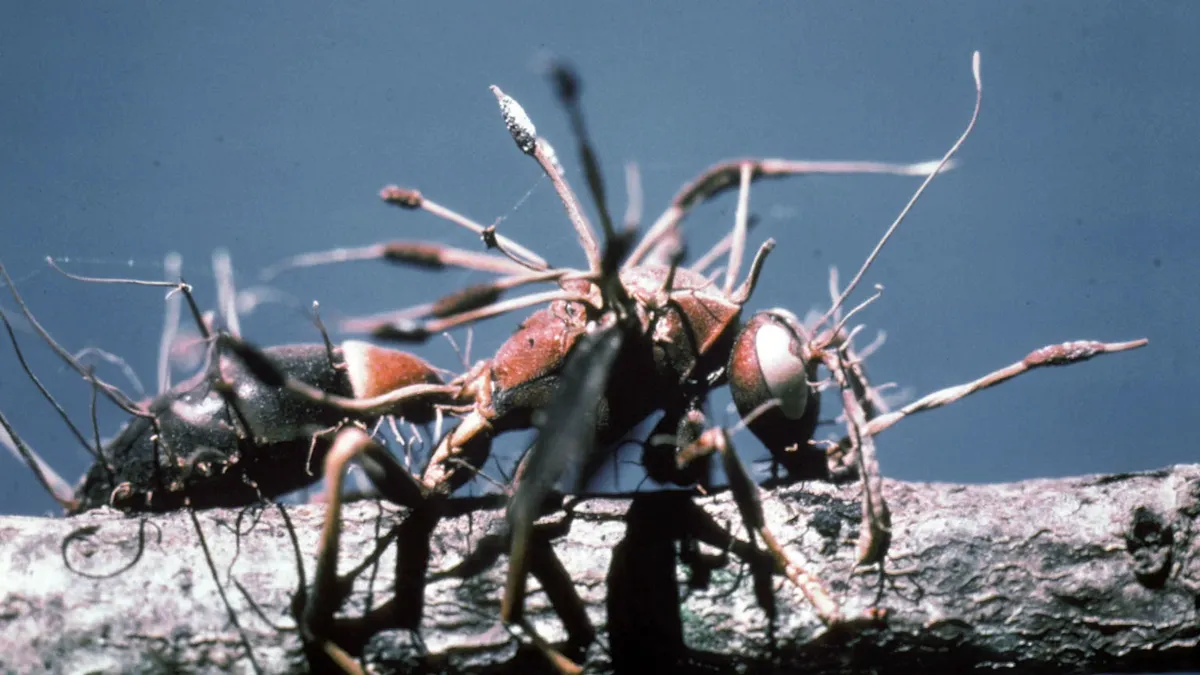
Mushroom-CordyCeps parasitizes on the Osa.
The HBO, published in January, immediately burst into the top of the most popular series of recent years. The events in it unfold against the background of a very convincingly shown pandemic caused by a parasitic mushroom of the genus Cordyceps. The biologist and scientific journalist Irina Yakutenko figured out how likely such a scenario in life was.
Can a pandemic caused by mushrooms happen?
Theoretically yes. The “mushroom” diseases are “fed” are much less viral or bacterial, but they are often fatal. And although mushroom pandemia will not be spread so spectacular, its consequences can become quite destructive. Mushrooms have some features that allow them to be more firmly introduced into the hosts population and significantly complicate treatment. For example, mushrooms are distributed with the help of dispute, which can survive for a long time outside the body of the owner. That is, even if the mushroom destroys all available victims, such behavior will not be suicide for him than, for example, for viruses.
Mushroom disputes will remain in the environment until new potential owners who can be infected in the devastated area.
Moreover, many parasitic mushrooms can grow and develop at least for some time, eating dead organic, that is, behave like non-parasitic mushrooms, the so-called saprophys. The presence of this super -resistance “turns off” the rule that is valid for other parasites, when, when the population is reduced to a certain level, the transmission of the pathogen ceases. Many mushrooms survive perfectly without owners, which, one might say, turn out to be a pleasant addition to the non -living diet. Diseases distributed by such pathogens are called sapronoses, and sapronoses transmitted by mushrooms often have a severe course. It is enough to recall the Histoplasmosis advertised by the series “Doctor House” or the meningitis caused cryptococci-one of the main killers of the HIV people in Africa south of Sakhara: annually, this disease takes away the lives of 130 thousand people, and in the world there is 180 thousand patients from cryptococcal meningitis.
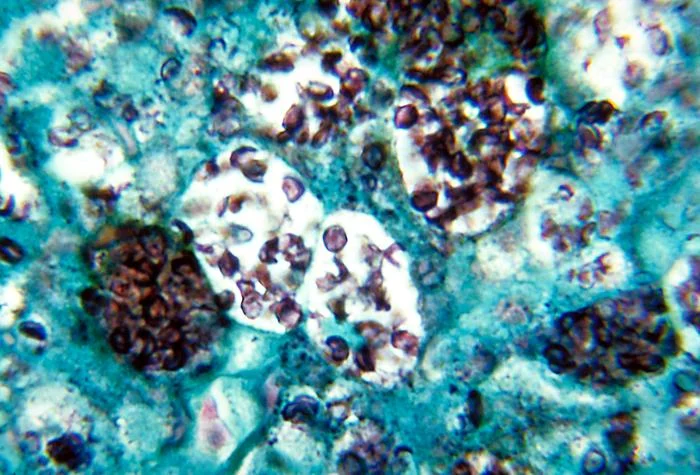
Mushrooms also have other features that provide them with great potential in terms of infection and possible destruction of entire population populations. For example, for many years, the Batrachochyum Dendrobatidis destroying amphibians for many years can infect 508 modes-hosts, and 109 species that kill the Phytophthora Ramorum . And even if some of the susceptible species are more resistant to parasitic mushrooms, it only helps him: such stable species work as super-stability, maintaining a constant influx of infection. We are observing this right now in the population of crayfish in Europe: North American signal crawls imported from the United States are less susceptible to the Aphanomyces Astaci fungus and effectively infect European crayfish, which are unstable to the fungus and die massively.
If the mushrooms are so dangerous, then why did not happen in mushroom pandemic?
Oddly enough, the answer given by The Last of US - the inappropriate climate is quite believable, although not full. Global warming is a very likely driver of future mushroom epidemics. Moreover, several epidemics and even pandemics have already begun and take millions of lives annually. True, not yet human, but, for example, amphibians or bats , but Homo sapiens in this sense does not have an exclusive guarantee of survival.
Warming can increase the risk of mushroom epidemics, as it changes the temperature optimum of mushrooms, forcing to adapt to a changing climate. Now the temperature is optimal for the development of most mushrooms below 30'C. This does not mean that there are no mushrooms that can survive at higher temperatures - let us recall the preparation of beer and yeast pastry, which is put in the oven to warm up - but with an increase in temperature to each degree, about 6% of the types of mushrooms are “falling off” .
As a result, in mammals and birds with their body temperature, about 37'C and above fungal infections are noticeably smaller than in cold -blooded animals. Some mycologists, that is, experts studying mushrooms, even believe that
It was the reduction in the risk of infection with mycosis that determined the temperature of the body of mammals and birds.
Creatures in whom it was lower, that is, amphibians and reptiles, could not compete with the warm -blooded dinosaurs after extinction, because their development was inhibited by mushroom infections.
If this hypothesis is at least partially correct, then until recently people were for parasitic mushrooms inappropriate niche. With an abundance of susceptible cold -blooded creatures, there was no need to adapt to our warm bodies. But as the climate on the planet became increasingly hot, those niches in the environment in which mushrooms flourished for millennia turned out to be inaccessible to them. Mushrooms began to change, adjusting to new conditions, and these changes suddenly opened warm -blooded. The heat filter that protected us from mushrooms disappears.
However, even if this assumption is confirmed, mammals and birds still have a second pillar of protection. This is a complex immune system that destroys hundreds of mushroom disputes and cells that enter our organisms daily. But when one of the bastions falls, the probability of defeating the second increases sharply. Moreover, we are actively helping fungi: we widely use antibiotics (and thereby destroy the competitors of fungi), we transplant the organs (and, accordingly, “plant” them for immunosuppressants for life), help those who have innate immunodeficiencies of a particular nature.
It is precisely people with a weakened immune system that it does not matter, due to the use of immunosuppressants after transplantation or against the background of cancer therapy-today are the main risk group for infection with deadly mycoses. Every year, more than 150 million of such patients are diagnosed with severe fungal infections, and at least 1.7 million people kill mushrooms, and these figures were growth from the second half of the 20th century and increase every year.
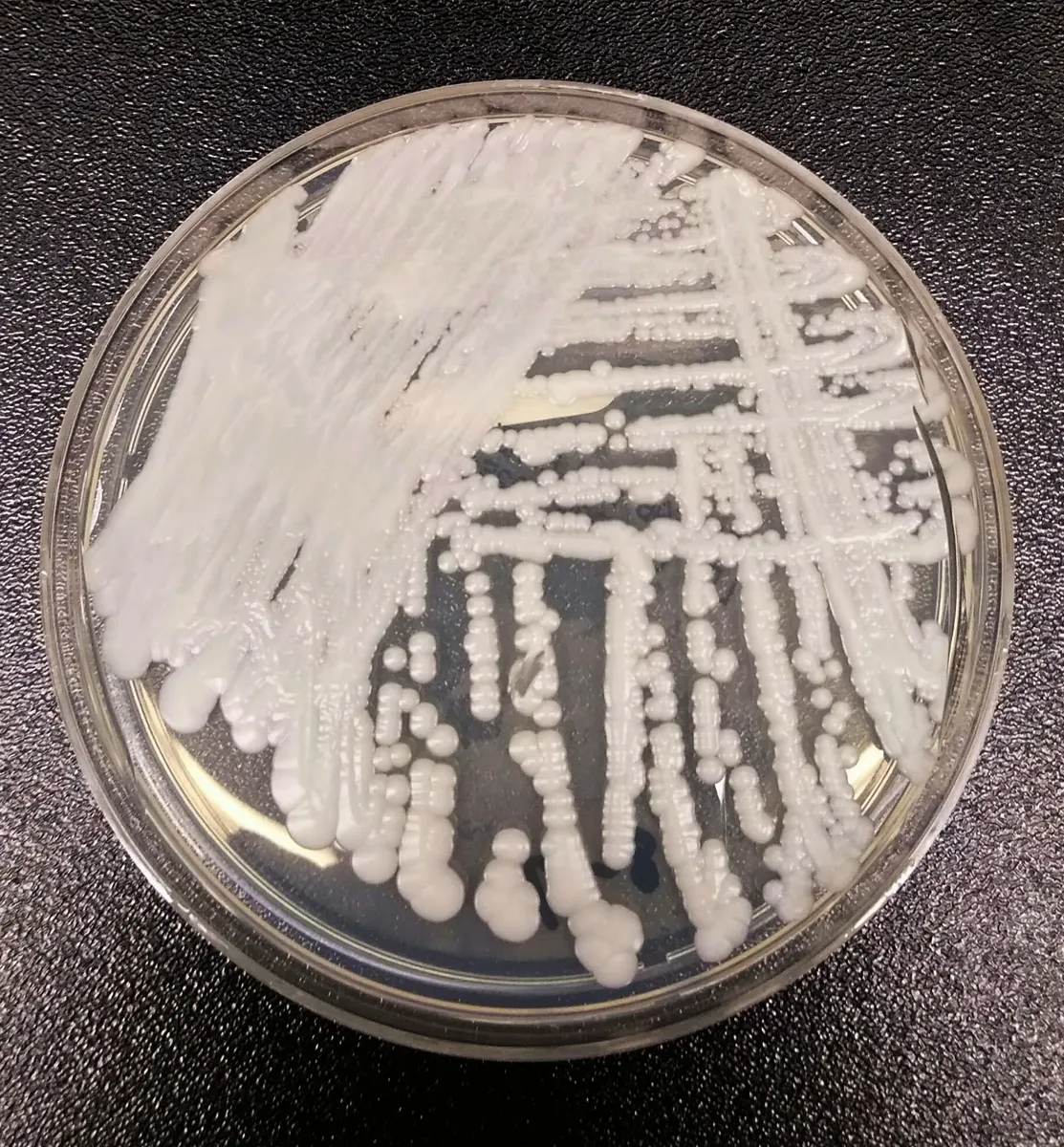
In 2009, a new type of fungus pathogenic for people was described - Candida auris . Initially, it was discovered in South Korea, but over a few years spread around the world. Mortality among patients who developed the C. Auris systemic infection is 30-60%. Existing antimycotic drugs for infection C. auris help poorly, and more and more often doctors find strains that are completely resistant to all three preparation classes.
C. Auris presents the greatest risk for people whose bodies have various invasive devices: catheters, artificial joints, heart valves. Mushrooms form biofilm on their surface - super -resistant structures formed according to the principle of composite materials. Mushroom cells are constantly separated from the biofilles, which are spilled through the body with blood flow, forming foci in other parts of the body. Preparations and immune cells cannot penetrate inside an overflifier biofilm, as a result, either the patient should take high doses of antifungal drugs for life (and they are not at all harmless, especially for people who already have health problems), or the doctors will have to remove the structure that parasites have chosen, which is often impossible.
Is it true that drugs and vaccines cannot be invented from mushrooms?
In the series, micologists unequivocally claim that there are no drugs and vaccines for fungal infections, and even offer to bomb cities where they reveal the infected ones. In reality, everything is not so bad, although it happened in The Last of Us Pandemia now, we would be approximately as defenseless.
Medicines for mushroom infections exist, although there are much fewer than, for example, antibiotics. We have three classes of such drugs: Azols, Paulines and Echinocandines. The problem is that among mushrooms, resistance to them is increasingly spreading, and since there are only three classes, the acquisition of resistance to drugs even one of them immediately deprives us of a significant part of the means to fight. Moreover, some diseases caused by mushrooms, such as aspergillosis, show the mortality rate up to 50% against the background of treatment. If the mushroom is resistant to the azole - and there are more and more such people today - this figure reaches 80%.
The reasons why at least two antimycotics are at least two. First: mushroom cells are much more similar to human cells than, for example, bacterial cells. And this means that the goals that could be directed for are present in our cells, that is, the medicine beating on them will be toxic. We discussed the second reason above: until recently, humanity did not need a large number of drugs. From the second half of the 2010s, the problem of the growing number of dangerous fungal infections and the simultaneous spread of resistance to antimycotics began to seriously occupy both regulators and pharmaceutical companies, and there is reason to believe that in the near future several new drugs will enter the clinics at once.
With vaccines the situation is noticeably worse. There are many reasons for both fundamental, and technical and economic. The fundamental reason is the same as in the development of drugs:
Mushroom cells are much more similar to human than bacteria cells or the more viruses that have no cells.
This means that it is not easy for scientists to find such a part of the mushroom that, on the one hand, would excite the immune system well, and on the other, it would be enough to do not close to parts of our own body so as not to provoke autoimmune reactions. But theoretically, this is the question that is solved: several vaccines-candidates are now at different stages of tests, but from their implementation into practice, even in case of ideal set of circumstances, it separates many more years.

It is more difficult to solve the other two problems - technical and economic. The technical difficulty lies in the fact that, since fungal diseases are relatively rare and dangerous primarily for people with immunodeficiencies, the question arises of the recruitment of suitable participants for clinical trials. To dial sufficient in size for a long time, wait even longer while the participants get sick - we cannot deliberately infect people. And although this is also a resolved issue, it needs motivation, primarily financial.
But due to the intake of fungal diseases - at least compared to many other infections - pharmaceutical companies are not eager to invest in vaccines. Even if the vaccines help specific people from risk groups, the profit from their development will be quite modest, and the losses are significant, taking into account technical difficulties.
So here the authors of the game and the film did not sin against the truth: if suddenly a fungal pandemic begins as rapidly as shown in The Last of US, no vaccine will be created, despite the presence of several promising candidates.
Can fungi manage people's behavior?
In the game and the series, Cordyceps completely subjugated the infected people, turning them into zombies: the sick people pounced on the not yet infected and bit them, thus transmitting mushroom cells. On this scheme, the creators of the game were inspired by the actually existing mushroom from the kind of cordyceps Ophiocordyceps unilateralis , parasitizing on ants. The spores of the fungus penetrate under the chitin exoskeleton, multiply and completely change the behavior of insects.
An infected ant ceases to fulfill its duties in an anthill, crawls to a stalk to a height of about 25 cm above the ground, where the conditions are optimal for the development of a parasite, firmly clinging to the plant with jaws, after which it stops moving. The mushroom continues to develop inside the body of the insect, slowly killing it. After death, a long stalk grows from the anthogether’s head, at the end of which there is a fruit body with mushroom spores. When it breaks, disputes fly over a long distance and often fall directly into the colony, to which the sick ant belonged, infecting a lot of insects at once.
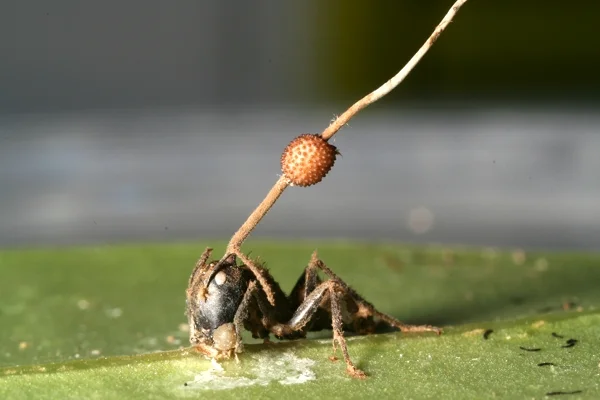
For a long time, scientists believed that O. unilatelis enters the anti -anti -anterane brain - and the cordyceps from The Last of US did just that. But the recent work, in which the authors, using a fluorescent microscope, studied in detail the cuts of the body of infected insects showed that, apparently, events develop differently and the mushroom cells enslave primarily muscles. In fact, the fungus isolates them from the brain and makes them contract in the required rhythm, driving the insect to high stems. The brain remains intact.
Oddly enough, such a scheme is more real if we are talking about the prospect of the appearance of a parasite similar to O. unilateralis , but dangerous to people. Because completely
It will not be possible to subjugate the brain of Homo sapiens even with the most cunning pathogen - this is a too complicated structure.
Making muscles to contract is much easier.
But still, the probability that some mushroom due to global warming will suddenly change a little and spread from insects into people, turning them into “clicks” (as in The Last of Us called the blind infected in the later stages of infection), imaginary. Cordyceps adapted to ants for hundreds of millions of years. To get such a subtle setting that allows you to infect much more complex creatures - people, theoretical parasites would take no less time. However, not to notice the growing frequency of fungal infections and the stability to all existing drugs that spread among them would be the height of carelessness. Because, resistant to all types of therapy, fungi that cause severe systemic infections threaten to negate all our brilliant achievements in medicine, even without such beautiful special effects as in the series.