
Translated material
The third pole
To the 70th anniversary of the conquest of Everest
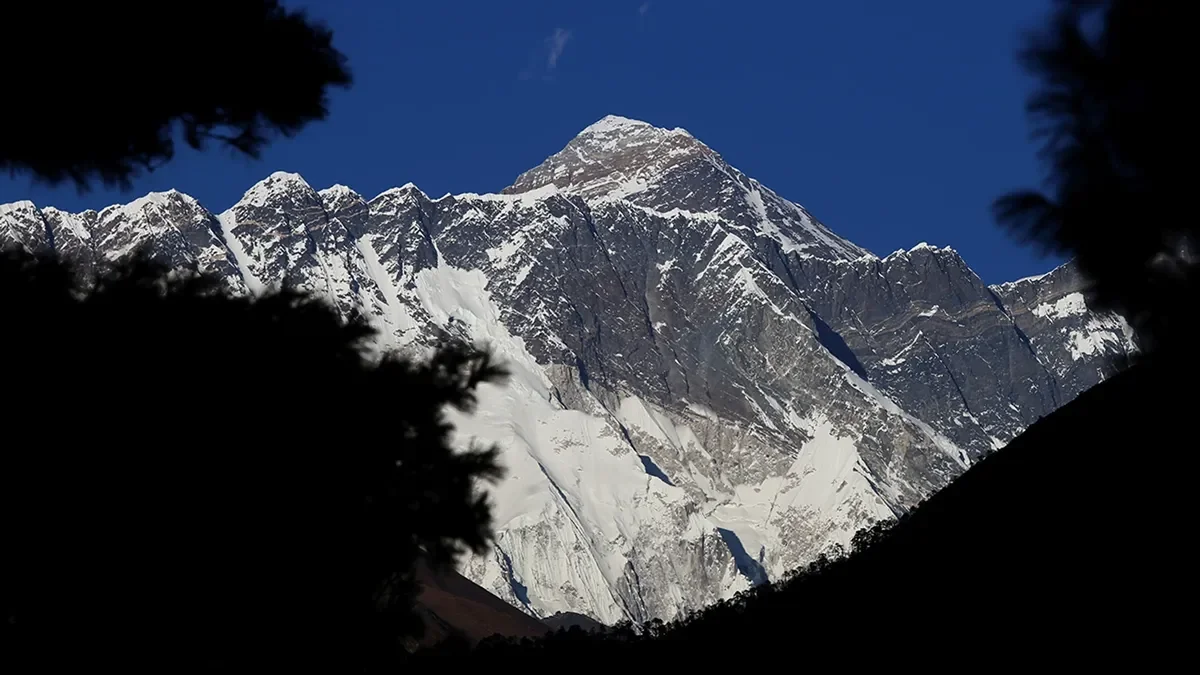
Everest. Photo: Zuma TASS
Dedicated to Yuri Growth
1. Alpinism
Everest is the third and most inaccessible pole of the world. It was not for nothing that he was discovered by the last. Also, because mountaineering - unlike all other types of travels, is a relatively recent achievement. Alpinism was born in 1786, when the Swiss doctor Packard rose to Mont Blanc. Europe “Storms and Natizla” experienced a boom of emotions, the visual expression of which was the ascent to the main peak of the continent. The person was powerful enough to spend strength on aimless promotions. The “modernity” in which we live today has begun.
The fact that the feat of the Swiss climber could accurately measure (4810 meters) had a huge impact.
The Greeks knew the Olympic champions, but not Olympic record holders. The concept of a record expressed in exact numbers - seconds or meters - a characteristic property of our era.
And the record causes delight precisely because of its absolute inconsistency in the practical sphere. A quantitative criterion creates the illusion of meaningfulness of action.
When Edmund Hillary, the first (together with Sherp Tenzing) who conquered Everest, was asked why he climbed to this lifeless peak, he replied: "Because it is." In these words, as in the Nabokov formula of poetry, "there is little sense and a lot of meaning." And this is the best that can be said about mountaineering.
The rebellion against total expediency continues today. Not a single ascent brought the benefit to people, but each of them required sacrifice, nurtured the spirit and served as an example. First of all, for young people, with her so natural in his youth with a craving for heroism.
It is especially important that the exploits of climbers do not associate heroism with the war. Every duel with nature is a duel, not a massacre. Therefore, I am sorry that the masterpieces of climbing literature, such as the epic "Annapurna" by Maurice Erzog, ending with significant words: did not study at my school:
“In our youth, we were not worried about the bloody battles of modern wars, giving food to children's imagination. The mountains were for us a natural arena, where on the border between life and death we gained freedom that we unconsciously sought and which we needed, like bread. ”
2. Meeting
I always loved mountains. Perhaps because he spent youth in flat Latvia, where the railway embankment was considered a hill. But since then I often had to be in the mountains. I saw Everest, and twice. Once from the plane, and the other on the horizon, when a Nepal guide pointed to it. Even from afar, the peak looked so that it still dreams. But I can never get there, like almost everyone else. Fortunately, the mountains do not require the impossible from us, and every ascent - even if it seems to be a walk to professionals - is able to reward what only a vertical that offers us over the plain of life can give. I know I tried.
Getting up until dawn to turn to the sunset, I frivolously went to the alpine peak, tempting whitening in the hotel window. The path, as always in the mountains, lay along the stream making the path of marshy. But the higher I rose, the land the road and the air became. It was easier to go, breathing is harder. The sun was baking more and more, but it was not done warmer from this. Finally, uncertain red snow appeared. Only then I noticed that the path to my grief ran instructively, as in a parable, between two abysses. Trying not to look at them, I wanted to add a step, but a compact cloud blocked the road. Someone was breathing noisily in it.
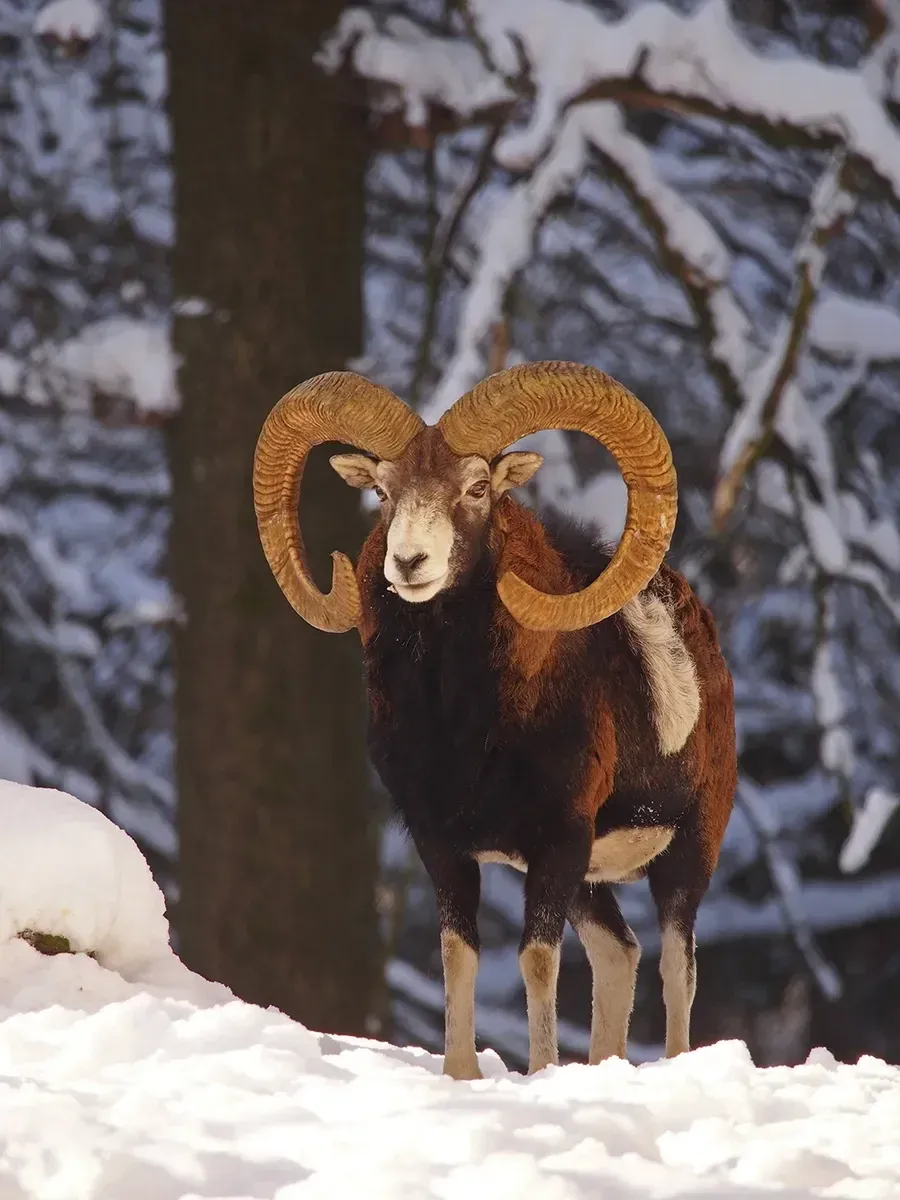
“Yeti,” I guessed, but was wrong: horns appeared from the cloud. Being on the upbringing of a materialist, I was not ready for this meeting, but, recognizing the obvious, took a step towards reckoning. The horns also approached, opening the eye of the radical body of a mountain goat, which Jules Verne, I remember, called a mouflon.
Having delighted with a postponement, I beckoned the animal with a friendly gesture. It willingly came up, threateningly exposing curled horns. For Corrida, the place was unimportant: the path under me was in three palms, and even on all fours I lost the mouflon in the knowledge of the terrain.
To turn - meant leaving behind the beast with criminal inclinations. To overtake - there could be no speech. Remembering Mtsyri, I decided to accept the battle and first threw a stone.
The goat was injected. Having cowardly settling the classic, I took out a sandwich with goat cheese from my backpack. Sensing his own, the mufton broke my dinner and wandered home. I dutifully reached for him. We parted only at the top, where Muflon left me to admire the empty stomach with a look, which, however, was not so much to the feast as to thoughtfulness.
For a day, I, as in a time machine, pierced all seasons. They could be cast in one glance, still standing at the foot. Turning space during, the mountains make the impossible visual. Below is stuffy, women eat ice cream in light dresses. But it is worth raising your head a little, how the look rests on the juicy (herself ate) pastures full of spring colors, whose nectar makes alpine milk sweet.
Even higher - a strip of eternal autumn: a mushroom forest, turning into the timelessness of a rocky slope. Gray and boring, he prepares a traveler for winter, like December - for the New Year. Snow appears at the pass. Still still sick and loose, he corrodes the summer with metastases of winter.
Mountains are a calendar set on the priest. Rising, we abandon its multi -colored days for the totality of all colors collected by white alpine peaks. White covers everything with itself: like gray hair - a head, and snow is a roof. Especially in alpine chalk, even in summer reminiscent of snowdrifts.
In the mountains of the house are designed for a winter landscape. Spacious sheets of roofs hang over the porch with such a margin to protect the owners from the icicles. Their inverted portico is the favorite decoration of the lollipop alpine architecture.
Mountain towns, like bald men, always remember how they look from above.
The archipelago of squat chalets slides to the vertical of the church, which is crowned with onion, as in Russian temples, a dome. He is an inevitable tribute to snow, capable of breaking a less witty roof. The church ends, however, not a cross, but a weather vane. Without saving from troubles, he at least indicates where to expect them, because in these parts the weather either replaces religion, or it is it.
3. The weather
In the mountains, the weather is so capricious that a round dance of snow clouds, clouds and fogs forces to change optics, moving from a photo to the cinema. Another - inhuman - the rhythm of the local changes opens another metaphysical perspective.
Where the agriculture zone begins, where cattle breeding does not get, where there is nothing to do and mushroom pickers, God's plot begins - you can’t live here, but you can pray.
Showing us the mountains in accelerated shooting, the atmosphere is trying to say something that we have not heard below. At the same time, the very combination of the unshakable monumentality of the mountains with the endless excitement of their air shell is a friendly hint. The graceful dance of the motionless with ephemeral lures us into endless metamorphosis. The game of the constant with the variable prevents the portrait of the mountains - they, like us, are almost never equal to ourselves. Due to the eternal wealth of weather, we always see another that, in essence, does not change. This paradox emphasizes the illusory nature of our picture of the world, but also indicates the strength of those foundations that we admire in rare moments of complete clarity.
In vain, I waited for them on the shore of the lake, climbing so high that even fearless alpine cows did not wander here.
Sitting on the shore, I guarded the views promised by postcards. But instead of them, like a madman, I was surrounded by cotton walls.
Incorrectness makes the fog a thing for the eye. Refusing to us in vision, he forces him to rely on inner knowledge. Having scared into the mountains all day, I knew for sure that they were here, but I was not given the weather to see this. Even when the wind opened a window in the wall, such a small fragment was visible through it that it was impossible to imagine a whole. The mountains live in strict order and never get confused, like, say, hair. But the fragment of the puzzle peering into the gray lumen, knowing his place in the general device, did not give it out to strangers.
“Truth,” I comforted myself, “will open myself when we will be ready for it. Our business is to find a place and wait. ” Instead of truth, however, snowflakes began to fall from the sky, not inferior to what was cut out on the eve of the winter holidays.
4. Snow
Snow is the only thing that the Russian Muse considers it when it falls into the mountains. Admiring them, she builds a landscape on the plain residents. So in Pushkin, the Caucasian peaks rhyme with that state pyramid that replaces the mountains with a flat power:
Gorgeous paintings!
Eternal snow thrones,
Their peaks seemed to the eyes
Motionless part of the clouds.
And in their circle the colossus is two -headed,
In a crown, shinely icy,
Elbrus is huge, majestic
White blue in the sky.
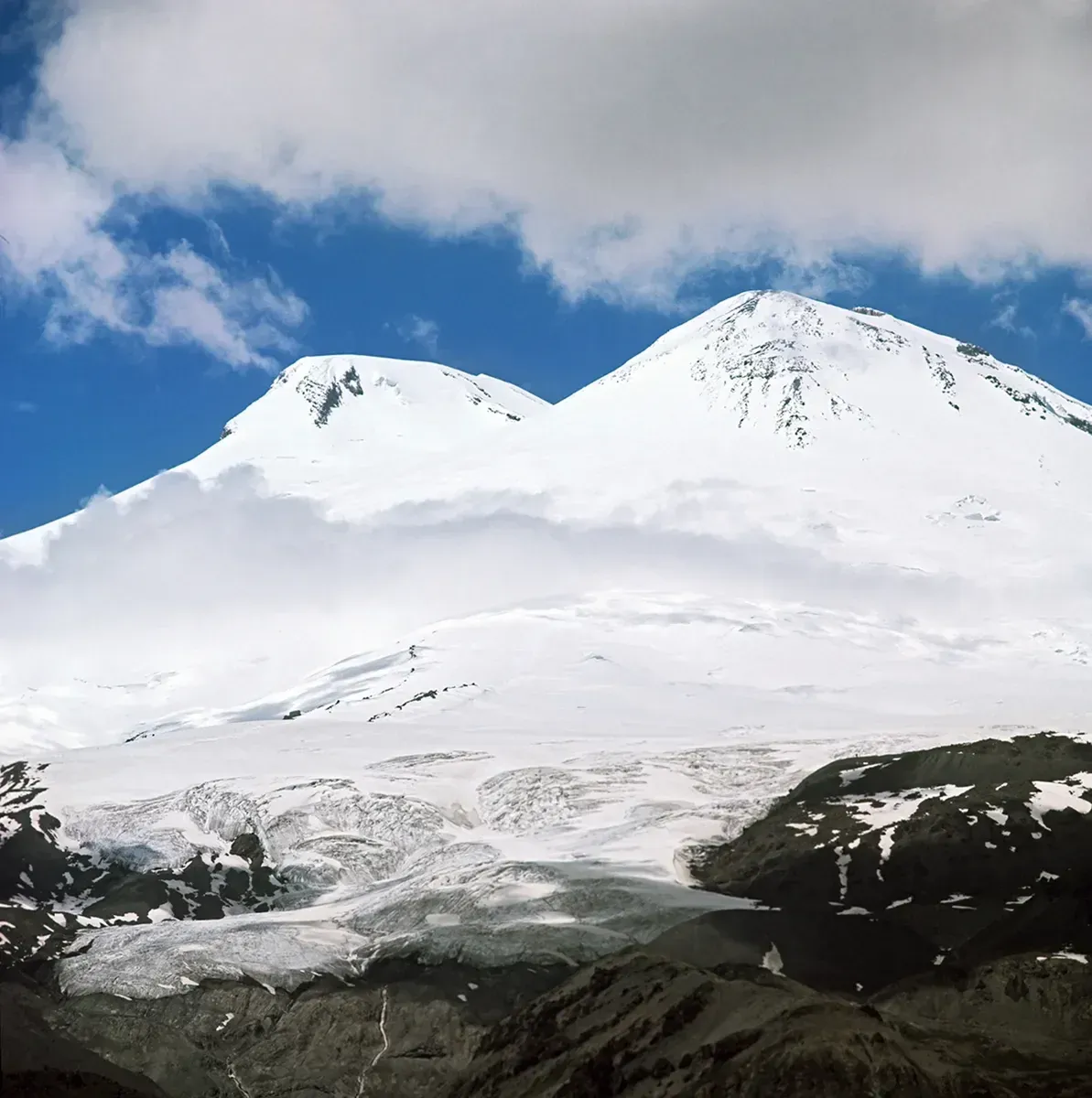
The two -headed, like the imperial eagle, Elbrus, sitting on the heavenly throne, like a Savaof, parodies the state trinity of the Russian monarchy: autocracy, Orthodoxy, foreignness. Even the “ice crown”, with which Pushkin completed the picture, has a royal article: ice is mountain water, ascending from the ground to the sky.
In order to return it back, Lermontov was needed, who wrote about the same Caucasus: "The valley was littered with snow snowdrifts, reminiscent of quite live Saratov, Tambov and other lovely places of our Fatherland."
Having highlighted the word "lovely", the author expresses disapproval of the landscape, devoid of exotic coloring. Once in a foreign country, the Russian eye is waiting for the color that he lacks in his homeland.
One dissident told me that, going out of the wild, he ordered six glasses of cranberry jelly in the station buffet. The color hunger was stronger than ordinary.
That is why the Lermontovsky Caucasus of the Sarafan Pesrefan: Red -Rednecks , ivy - “Green” , cliffs - “yellow” , plus - “golden fringe of snow” , “black gorge” and “Silver thread”. But the white color still subordinates the tropical expanse. Having folded the rainbow, like a telescope, white holds it under his arm. The treasure he got so invaluable that it is enough for them to own without spending.
Snow landscapes said in antiquity, educate "noble loneliness and frees from vulgarity." The Japanese tourist with an inevitable but useless camera that arose from the fog prevented me from achieving this. Without noticing me, he celebrated his stay in the mountains in his own way. Bowing low with the invisible peaks, the Japanese clapped his hands loudly, welcoming the spirits living here.
5. The gods
Closed with deserts, the mountain gods are not like anyone. Deprived of animal features and human appearance, they rush between the dead peaks, animating the soulless landscape with their windy dance. It is more difficult to wait for help from them than troubles. Those busy with themselves, they only allow you to admire the game of their exorbitant forces. Looking pious at this spectacle, people learn the solemn aimlessness of transformations, in the series of which they are preparing to enter. The mountain gods are beautiful and ruthless. It is easier to die with them than to live.
Natives of a different landscape, we prefer to our own gods. If mountain spirits have chosen snow and rocks, then ours live closer to the water. These-river-the gods drink a lot, go in vests and unintelligently mutter something touching. However, they should not be confused with Mitki - they were wound up much earlier. One of them was described by Vyazemsky:
*Grace is full of stupid,
To the smart mercilessly strict
The god of everything that is inappropriate
Here he is, here he is, Russian God.*
If mountain spirits are not like people, then river do not differ from them. Sellless and carefree, they, like a swamp, are ready to equal everyone with them. Surpopted in its simplicity everything that is protruded, they are not inferior in power to mountain spirits.
Not by force, the Romans spoke, and a stone grinding a stone with a frequent fall to ease the mountains in the sand, into the serene sandbars, from which the blond heads of bottles cooling in the river water stick out. This thought helped me return to dawn.