
Translated material
Really BAM again?
Labor reserves, or “hidden industrial overpopulation”. Which is hidden behind the words of officials about the "need to move millions of workers"
Photo: Alexey Belkin / Business Online
The phrase of the head of the analysis and forecasting of the macroeconomic processes of the Center for Macroeconomic Analysis and Short -term forecasting (TsMAKP) Dmitry Belousov that the Russian economy may need an “organizational set” made a lot of noise. Moreover, the authors of the comments that quoted the economist referred to a certain “Report of the Central Executive Committee”, which said that “in Russia it is necessary to ensure intersectoral maneuver - retraining, perhaps, moving about a million employed per year for ten years”.
The reader of these comments immediately stood personnel from Soviet films, in which young (and not so) people walked in construction to the trains that took them to the east, where they had to dig foundation foundation pit under the foundation of the giants of the second five -year plan. So whether we should pack a suitcase and prepare to get into the ranks of the builders of new state capitalism as part of the modern version of the “Directorate of the Construction of the Far North” (Dalstroy).
"Artificial employment"
Not quite so. A report in which there really is a phrase on the movement of a million people from the “sector to the sector” is called “On the Logic and some key parameters of the investment-active script for the long-term perspective”. He was presented at a meeting of the Academic Council of the Institute of People's Economic Forecasting (Inp) of the Russian Academy of Sciences (RAS) on April 19, 2023.
And the phrase on the “moving workers between sectors” in the context of the “report” looks somewhat different.
Arguing about the situation in the Russian labor market, the authors of the “report” explain that
The low unemployment that Russian ministers are so proud of is the flip side of low labor productivity. And, accordingly, the low level of salaries.
Yes, what did you think? These are “two sides of one coin”, as one former deputy prime minister put it.
If literally, then "... excess employment and the observed deficit of labor (especially for complex production) - one whole."
Quote from the report
“On the one hand, we support artificial, excess employment in enterprises, which is manifested in the appropriate labor productivity.On the other hand, low productivity also leads to labor underestimation. As a result, there are no motives for the technological modernization of enterprises and the replacement of labor by robots (and in general to low innovative activity in the economy); Uns not enough qualified personnel play an increasing role in production, which affects the quality, ”the report says.
(Regarding robotics, the authors make such a touching note: “The work is too cheap to be replaced by robots, respectively, relatively low -performance - and this is cheaper in Russia before the crisis, in 2019, there were 5 robots for 10,000 in industry, despite the fact that the average in the world is 99 robots for 10,000.")
As a result, experts of the TsMAKP write, there is no sufficient “personnel reserve” in industries and construction (due to the unwillingness of young people to receive working specialties), as well as the “reserve” of the released workers.
In other words, boast of low unemployment is = give out the need for virtue. Almost universal employment is due to low work prices, and low labor prices demotivate companies to investment. But if labor productivity will grow, you will have to dismiss “extra workers”, who will need to be employed in some way-this is what the authors of the “report” want to convey to readers. Then, perhaps, the "intersectoral maneuver of labor" will be needed. By the way, the main parameters of this maneuver in the “report” are explained as follows:
In principle, the development of digitalization is able to release “ceteris paribus” 12–13 million employees, which eliminates the current “hidden industrial overpopulation”, manifested in a chronic gap in labor productivity between Russia and countries - technological leaders).
About 1-2 million people. “Eat” a deterioration in the demographic situation.
About 3-4 million people. It can accept a small business.
But another 6-8 million people. It must be preserved due to growth in production.
It is necessary to provide intersectoral maneuver - retraining, possibly moving (the question of cheap housing and 100-120 million m2 of housing per year!) About a million employees per year for ten years.
Like this. If you want growth - be ready to employ those who do not find a place “in a digital economy”.

So collect suitcases? Not yet
Is it worth it to be afraid of the speedy movement of the “labor reserves” on the construction of the “New Five -Year Path”.
It is unlikely - in any case, as long as the authorities of the Russian Federation insist on their policy of “icport substitution”, an outstanding researcher of the problems of inequality, economist Branko Milanovich, explaining what consequences for the labor market an attempt to “lean on their own strength” could lead to.
The fact is that the previous examples of “import substitutions”, which the world economy knew, rely on the idea of “catch up and overtake”. Logic was this: there are developed countries, they have advanced technologies. On the basis of these technologies, they produce goods that, having entered our local market, “win” goods of “their” manufacturers. Let us somehow motivate our manufacturers to master these technologies, creating special conditions for such manufacturers (we’ll close the market with customs duties, give subsidies, there were many options).
Somewhere it turned out well (England in the 17th century, the United States in the XVIII-XIX, Japan in the XIX, South Korea in the twentieth century.) It turned out somewhere worse-Brazil, Türkiye. Somewhere it turned out "like in Argentina", which from the countries of the first world rolled into the second. Russia also played import substitution - under Emperor Nicholas the Second (“First Industrialization”), under Comrade Stalin (“Second Industrialization”).
But the key principle did not change: “import substitution” was important not “in itself”, but as an instrument of complication of the economy, its modernization, and progress.
And such import substitution required improving the quality of human capital (well, how the Bolsheviks began with the elimination of illiteracy, libraries, schools and “total mathematics”) and the growth of labor productivity, and the growth of salaries.
But now the situation in the Russian Federation is completely different!
“Import substitution” is presented as a “thing in itself”, which is necessary in order to “revive” industry and release “their” goods instead of imported, but on the basis of old technologies, there are no others!
Branko Milanovich suggested calling what was happening “regressive import substitution” - Technology Import Substition - unlike the import substitution of “progressive”.
And regressive import substitution will require the “regression” of accumulated human capital, Milanovich explains . The labor market in this case will not need workers “high”, but “average” qualifications, which will enable tenants to ignore their level of education. Such “declining” will certainly affect the demand for both education and other “complex skills”.
Actually, experts of the TsMAKP are the same: the current economic policy does not contribute to the growth of demand for highly qualified, highly productive and highly paid labor. And the growth of salaries in individual industries is a certificate of the need to “plug” holes in production chains, and not a certificate of growth of human capital.
All in place
In addition, the idea of replacing “at all costs” of foreign goods “local” in the absence of access to modern technologies in itself does not imply the growth of labor productivity and release of labor resources.
Intuitively, by the way, this is not so obvious: is it impossible to just borrow high -performance technologies?
No, this does not work like that, the philosopher of science Michael Polani could say. In the middle of the twentieth century, Polani explained that any technology consists of two parts: obvious, documented knowledge (technical description, instruction, regulations) and implicit (technologist experience, engineer intuition), which can only be transmitted through direct training. Therefore, to master the new technology, contact with the expert and accumulation in his presence of sufficient personal experience are necessary. The previous experience of Russian industrial development - where he was successful - showed that the main tools for developing technologies are cooperation with the owners of these technologies, the involvement of qualified specialists (as under Stalin), direct foreign investment (as under Nicholas II), and training in foreign enterprises.
But in a situation where there is no purpose of transition to export and open competition in the world market, “import substitution” will not contribute to the growth of the economy. Industry, closed within the boundaries of an individual country, will work and produce goods - but exactly in those volumes and with the characteristics that the government and local buyers will be paid. No less. But no more.
Production will even be profitable, since guaranteed demand volumes will allow business to balance costs. But there will be no motives for investment, because the volume of internal resources is limited.
And why not expand production by selling goods “to friendly countries”? Because these countries do not present demand for Russian products in the volume of sufficient in order to justify investments in a significant expansion of production and in increasing performance. Even China and India, the main trading partners and buyers of the Russian Federation, are ready to purchase only raw materials, and they do not really need Russian goods. It is over that oil production is a high -tech industry, it requires large investment, but does not require a large number of employees.
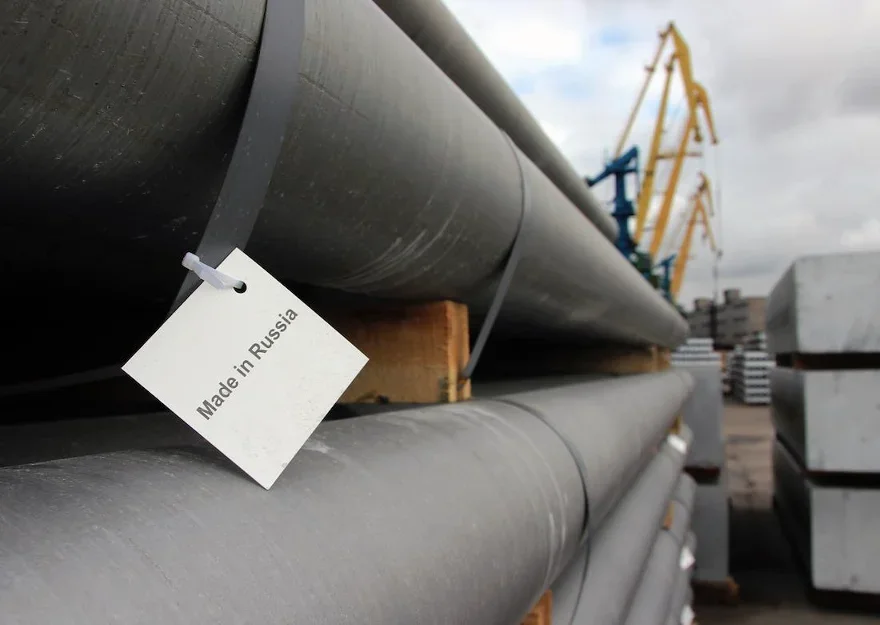
And all the other potential buyers of “Made in Russia” goods are all as for the selection of raw materials, the demand of which is in less or less complex products limited by the volume of export revenue from the sale of their own raw materials.
Thus,
No mass movements of resources from the sector to the sector should be expected until the government is ready to pay for the maintenance of the economy in its current state: to do what you need to complete the tasks, to ensure employment and support the consumer showcase - so that without a deficit.
An attempt to artificially direct “labor reserves” to some “priority industry”,
Firstly, it must be paid by the government,
And secondly, it will instantly lead to a deficiency of the same labor reserves-where they will be removed from. And such a deficit will immediately turn into the growth of salaries in the sectors that will encounter a shortage of workers, and will launch "cost inflation."
The government with such difficulty more or less balanced the economy-so that there were enough resources to “fill the shelves” and the “fulfillment of tasks”. It is impossible to assume that it itself will take up the destruction of this balance.
Moreover, there are no objective reasons for this. And the authors of the “Report of the Central Executive Committee” are not about the current need to move labor resources to “expand production” in the current situation (now not 1927, and in Russia there is no excess of rural youth), but that such a need will arise if investments in the latest equipment and technologies (which are not yet) will turn out to be increased productivity and release working hands. But the idea of a “besieged fortress” does not objectively imply - it is important for it that everyone is “in their places”.