
Translated material
Pillar. Booth. Point "Lobok"
The border of Russia and Belarus is like a crawled map: sometimes hides in the sleeve, sometimes throws into the game
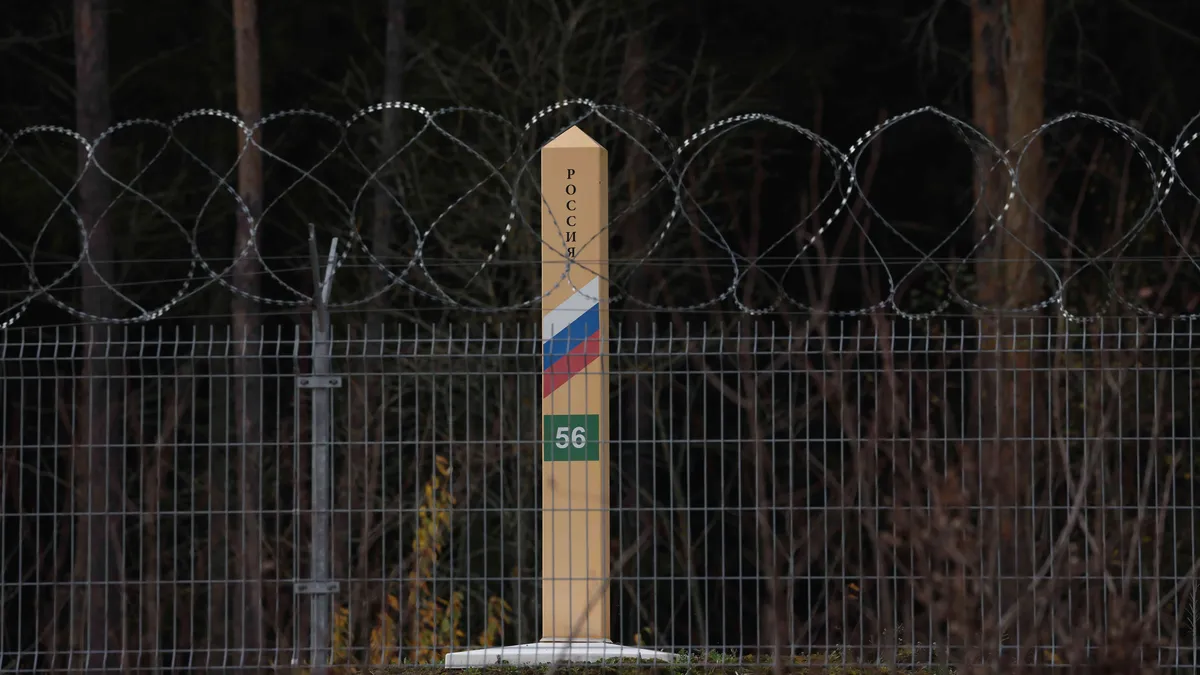
Photo: Sean Gallup / Getty images
The Belarusian-Russian border is the concept of sometimes conditionally philosophical, sometimes geographical, sometimes political. The presence and absence of control on it is a thing that needs to be followed, because yesterday’s situation today can change dramatically, and tomorrow to become yesterday again. Previously, there was complete control, then no, then Russian, then a pandemic, then again Russian, and now also Belarusian.
One thing is undoubted: the Belarusian-Russian border is an important tool with which Alexander Lukashenko and Vladimir Putin exchange signals. Sometimes warning, sometimes welcome.
In May 1995, the border was abolished, and in May of this year it, albeit in a slightly truncated form, but appeared again. When Belarus introduced border control, this was officially called temporary events "in the framework of the fulfillment of the ratification agreement on mutual recognition of visas with Russia."
The version, frankly, is not too convincing: mutual recognition of visas always means removing all sorts of control points at the border.
In our case, this is rather an instinctive attempt to fence off either from Prigogine with his “Wagner”, or from the status of the coagressor, or just in case so that the uninvited guests do not come. So far, all this does not look fatal for Russians who want to leave Russia through Belarus, and for Belarusians, who, on the contrary, leave through Russia.
“For the first time since 1995, the Russian-Belarusian border appeared almost in full, on both sides,” explains political analyst Dmitry Bolkunets. “I think there are several reasons for this.” Firstly, there is a war, and Lukashenko fears that a weapon that can easily get from Russia to Belarus will turn out to be a threat to its personal power. Moreover, the first messages about the introduction of border control from the Belarusian side appeared immediately after the drones flew to the Kremlin towers. Secondly, Lukashenko’s recent disease: he felt vulnerable and preferred to block the possible paths of the penetration of some forces that threaten him. So the border is an attempt to ensure political security and prevent the appearance of armed groups or weapons on the Belarusian territory. Lukashenko sees that Russia no longer controls the processes that are taking place there, and is trying to protect its territory. His time is approaching the end, and he is trying to track any movements, especially from Russia.
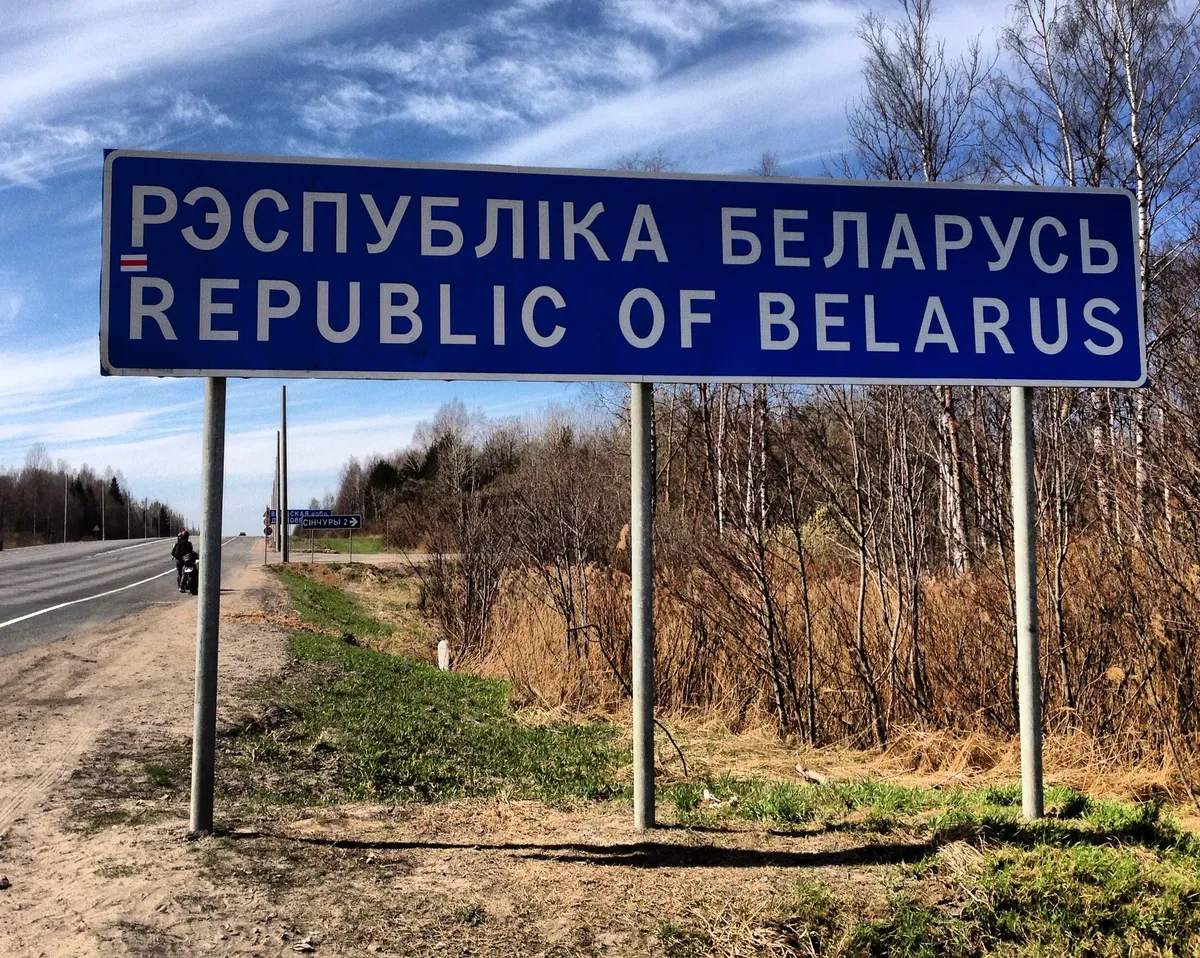
Push-pink
“The“ border ”recently appeared in Yukhovichi,” says journalist Tina Palynskaya (she lives in Polotsk and often travels to the Pskov region by hitchhiking through Yukhovichi -Dolosians).
- This is the extreme village on the border with Russia in the Rosson region. The village is except for half, and as a base for the “border” device they chose a five-stump, on which insurance kiosks are working and now. There is nothing more there, only a few plywood houses of insurance companies. And the summer cafe "Carnet", which this year, despite the obvious summer, has not yet earned.
They dragged to the “border” primarily a lantern. The real lantern, it was moved from somewhere, installed in the middle of the road, and it even lights up in the evening. They also dragged concrete blocks, they are laid across, so that a narrow corridor remains for the carriage of the truck. Blocks also work "border". The barrier is automatic, it breaks periodically-and then the border guards open it and open it with their hands.
The highlight of this border with a rather big burst that she is “protected” not only by border guards, but also by traffic police. Moreover, DPSniks are quantitatively larger, and it is they who perform the supporting function: they divide the cars into two stages - “just cars” and those on which fines hang. We tried to communicate with the border guards and ask if the border will always be, but we didn’t find out anything.
Inspection occurs unprofessional and meticulous. Unprofessional - because there are no dogs capable of detecting prohibited substances, but shifting things from place to place in the trunk open, well, very slowly. Moreover, the bags-male bags themselves do not open, border guards simply talk about them with drivers for a long time. But shifting things from place to place - flowers compared to the speed at which passport control is carried out.
Having gathered a whole bunch of passports from a dozen cars, the Belarusian border guard goes to the trailer and ... for a long time is closed in himself. Or in a computer. But it lasts a very long time. In about forty minutes, he appears and goes along the column, distributing passports by selection and recognition. Another portion of cars drives beyond the barrier and drags to the real border - the Russian checkpoint. There, I note, everything happens many times faster - even the “registration” of Belarusians, that is, breaking through a passport on the base, takes just as much time as it should occupy.
In the evening of the same day, my daughter and I returned on foot, in the status of passengers. The Girl-Sebezhanka (Sebezh is a city in the Pskov region. -Ed. ) Drive us under the border in the dolosets. We give passports. They are taken to the trailer, and we are watching the window as a border guy does something endlessly on the computer. "Maybe he does not know how to use it?" - suggests a daughter.
He comes out in about twenty minutes. “Tina Zakharovna? - a long deep look in the eyes, anxious silence. “Take your passport.”
The same is repeated with the daughter. But she is not so gnawing, I realized that this border guard can withstand a special pause. Then we woven from the Yukhovichi towards the Klyastits. Silence, evening. After about forty minutes, a string of cars is shown, which we saw on the “border” during passport control.
Border is a lightning
Now all control points on the tracks work as Tina described above. As if we were returning 30 years ago. Once, only having appeared after the collapse of the USSR, the Belarusian-Russian border looked like: a joke, a plywood house and a lantern. Only without a traffic police, but with customs. Normal checkpoints were not yet built then, and the same plywood houses performed their function. They wrote “Mytnya” (customs in Belarusian). The Russians were asked with interest, crossing the border: and this is from Belarusians, is it customary to put a bathhouse on the border?
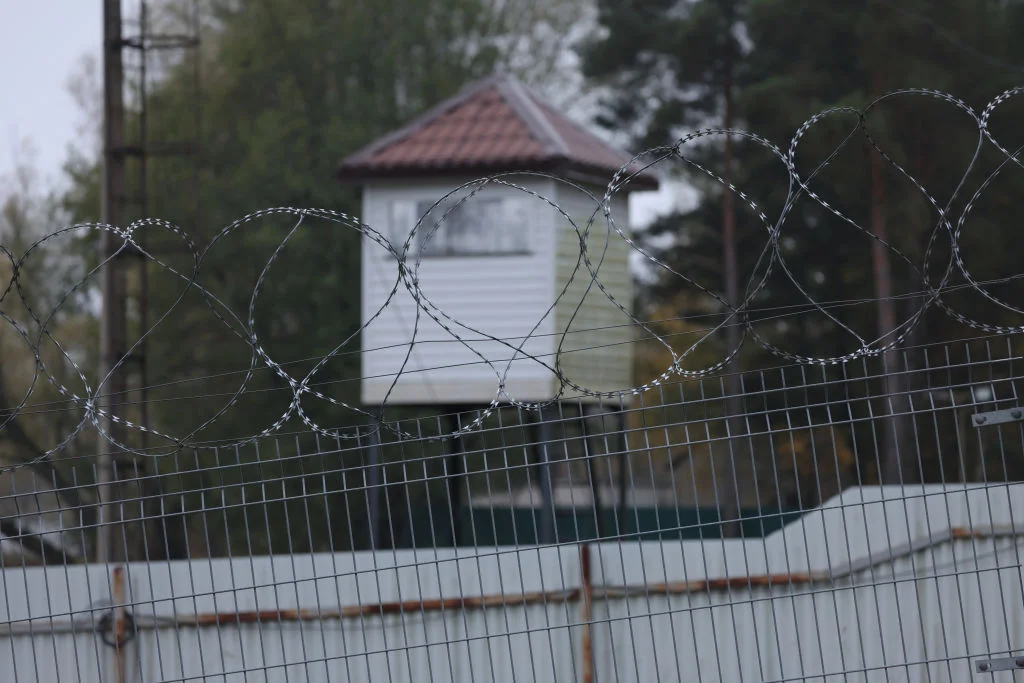
Customs officers on both sides even then lived well: Belarusians actively brought food to Russia and sold them in the nearest settlements on impromptu push -ups that became a note of time. And the point is not that in Russia it was worse with products, at all, - just the Belarusians, the national currency, then called the "bunny", was multi -colored pictures without any content. And, selling products cheaper than they cost in Russian stores, the Belarusian "shuttles" received rubles in their hands, which were quite convertible currency. And customs officers on both sides, when traveling there, received their bribberries - some with sour cream and sausage, some in cash.
In 1995, Alexander Lukashenko and Boris Yeltsin agreed on the creation of the Customs Union. On May 14 of the same year, Lukashenko held his first referendum on integration with Russia and giving the Russian language the status of state. And on May 26, as a sign of the beginning of the integration of Lukashenko and the then Prime Minister Viktor Chernomyrdin solemnly dug up a border post on the Brest-Moscow highway (the journalists of the pool later said that Lukashenko turned to Chernomyrdin: “Vitya, hold the shovel,” and Chernomyrdin was outraged: no one called me Vitya for 30 years).
From that moment on, all the roads from Belarus to Russia and back became free of inspections. Trains from Moscow without any control followed in Minsk, which foreigners willingly used, who for some reason could not or did not want to get a Belarusian visa. Airplanes in Minsk flew out of the internal sectors of Moscow airports, and on the board were designated as "federal".
And how many defects on the same side and the other side were able to leave their native country thanks to the neighboring one-hardly anyone will ever calculate. In any case, the Belarusian oppositionists were even a kind of entertainment: Belarusian border guards were not released - you go to Moscow and calmly fly to Europe. Then you return right directly to Minsk and the surprised question of the border guard "How, you are not a day off, we have not released you for the third day?" It is proud to answer something like "I'm Batman."
In 2017, Russia unilaterally introduced border control. Orders of the FSB established border zones in the areas of the Pskov, Smolensk and Bryansk regions adjacent to the Belarusian territory. Many thought that this was a response to Alexander Lukashenko’s decree on a five -day visa -free stay in Belarus of foreign citizens entering the Minsk National Airport: Lukashenko signed it on January 9, and the FSB order was registered on January 26.
But the then head of the FSB Bortnikov signed it on December 29, 2016, so where is the chicken and where the egg is still incomprehensible.
But it was then that patrols appeared on the Russian side. At the same time, Russian border guards began to check their passports on Minsk -Moscow trains, and Moscow -Minsk flights were transferred to the international sector. On the railway and on the tracks, Russian border guards, however, did not even take the documents of passengers into their hands: they just had to make sure that the route is exclusively by Russian and Belarusian citizens. In Moscow airports, border control was almost complete, only without subsequent visit to Duti-Fri stores. Passengers of airplanes honestly stood in line for border control, and then in Duty Fri they were told: "We are not serving Minsk."
In 2020, with the beginning of Pandemia, Russia closed the border with Belarus, and travels for Belarusians became impossible. But then a small border business appeared: for 5-8 thousand rubles near the border behind the wheel of a Belarusian car, a Russian sat down and calmly drove into the territory of his country (Belarus did not close the borders, and the Russians could enter freely), and his partner in a car with Russian numbers of Belarusian roads in a agreed place. The proposals were published in cargo transportation groups, and no “control purchases” followed. In any case, there were no news about the detention of illegal immigrants and their conductors. These same roads, by the way, exist in large numbers to this day, and there, of course, there are no posts there.
You can, only carefully
I spent several days, studying the telegram chats of travelers traveling from Russia to Belarus or in the opposite direction. Here are the main conclusions from the stories of people crossing the border.
Key words about control from the Belarusian side are the human factor and "randomness". Sometimes border guards take the documents and take to them to the "booth", where they break through the general police base. The base of debtors, by the way, is not used: having unpaid fines or taxes, you can go from Russia to Belarus and vice versa. The main thing that is found out is whether the traveler is on the wanted list. And sometimes they look at the passport directly from their hands, do not take away anywhere and do not break through any bases, they only make sure that a citizen of Russia or Belarus is traveling, and not a third country. Here is how lucky.
The lines at the border, as a rule, appear on weekends or holidays. At first, when Belarus only introduced control on its part, many considered this this cause of the queues. But these were the same “May” when citizens of both countries prefer to get out somewhere. On weekdays, the queues are small. For example, on Saturday May 27, at the Lobok checkpoint in the Pskov region in the line, as reported in the Telecram-Chat, the RB-RF Border, there were more than one hundred cars. Moreover, cars and trucks rode in the same row, which several times increased time in line. At the same time, at the Red Gorka checkpoint, in the Smolensk region, the queues were small. And on weekdays there were practically no time anywhere. So here, one might say, without surprises.
And finally, the most important thing. Between Russia and Belarus - 1239 kilometers of border. And the automobile tracks and checkpoints - 13.
Thus, huge sections with small forest roads remain uncontrolled. And for those who want to leave Russia through Belarus, without falling into the field of view of the state, endless expanses and local conductors still remain. In addition, the Moscow-Kaliningrad train still drives, on which there is no additional control, but there is a technical stop in Lithuania at Ken Station. By the way, in trains from Russia to Belarus there is also no full border control, only checking passports for citizenship of their owners. So you can still leave. And even, probably, it is necessary.