
Translated material
The drones attacked Moscow and the Moscow Region. Where did they come from and where did they aim?
Military expert briefly answers the main questions about the attack
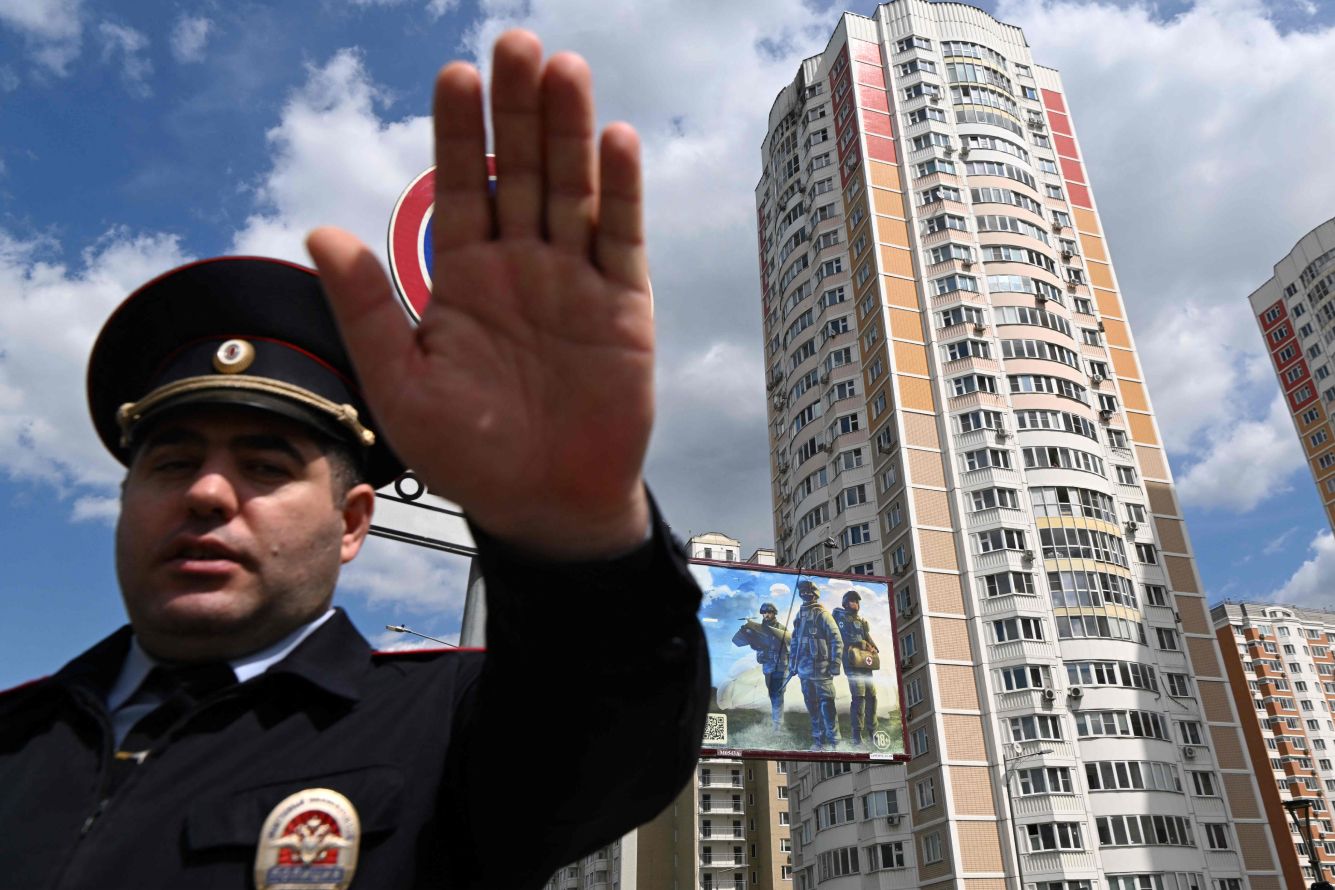
On the morning of May 30, several drones attacked three residential multi -storey buildings in Moscow. A few more drones were shot down in the suburbs. The Ministry of Defense of the Russian Federation announced the “terrorist attack”, which was undertaken by the “Kiev regime”. Advisor to the head of the Office of the President of Ukraine Mikhail Podolyak, in turn, said that Ukraine has no “direct attitude” to the attack. Medusa asked the main questions about this attack to a military expert .
- What is the most likely scenario of the attack: launch of drones from the territory of Ukraine or Russia?
- Ideally, it seems to me, [the one who did it] had to arrange the most diverse attack. If the task was to complicate the actions of the air defense and tracking this blow should use a combination of launches from the territory of Ukraine and from the territory of Russia.
But now we are actually guessing, because there is no information. We do not know what kind of drones they were, what a range and device they had. In one case [if the drones were launched from the territory of Ukraine] there would be questions to the air defense [Russia]: how was the drone could fly so long , avoiding any air defense?
In the second case, if the launch has been made from the territory of the Russian Federation, this is a question for the FSB: how could they carry out and run the drones to the territory of Russia? It is difficult to assess the probability of one of these scenarios. In any case, there are questions to the Russian law enforcement agencies.
In my opinion, rather they could be launched from the territory of Ukraine, especially since drones [from there] are launched along the Bryansk and Belgorod regions. They could find some hole [in the Russian air defense] for quite some time.
-Is it possible to talk about the specific goals of the attack (the Academy of the General Staff on Leninsky Prospekt, the residence of the president in Novo-Ogarevo, objects on Rublevka) or is it more about the action of intimidation?
- I can’t say this, because, apparently, not one of the drones reached the goal. In the south-west of Moscow, there are a lot of different goals [military nature], closer to the city center there are even more. Where they flew is incomprehensible.
It is also not very clear what the navigation system of these drones was. Did they fly at the GPS signal? The GPS does not work very well on Moscow, especially if the drone is noticed in advance: the signal will probably be jam.
If they [had] inertial navigation , it is still more complicated, because it is very inaccurate. Then these drones will simply fall in about the same area from the goal - with a difference [from the intended point] hundreds of meters or kilometers - I don’t know what kind of probable deviation they have. It is probably not worth talking about the optical navigation system - it is too difficult and expensive.
Therefore, where they flew, it is incomprehensible. But, most likely, they flew somewhere in the hope that GPS [which is jammed] will take them to the object.
-We still know little about the type of drones that were used, but information appears that at least some of them were equipped with KZ-6 cumulative charges. Can such explosives be used to attack really important military objects and what is its destructive power?
- We really know little about the type of drones that participated in the attack. At least in one case it was equipped with a KZ-6 cumulative charge. This is an engineering charge that is used to cleanse, destroy the walls, and other engineering work. It is needed in order to break through a fortified wall, concrete or metal shelters.
Cumulative ammunition should be used for shock on armored vehicles, for example, or on bunker. If the blow is applied on a weakly fortified target, it is better, of course, to use a high -explosive . If it is assumed that the projectile should impress as many people as possible, fragmentation shells are used.
I do not know what the goals and objectives of this attack were. We do not even know who formally did this: the Ukrainians said that it was not them, although, in general, it is obvious that they were most likely Ukrainians. Judging by the fact that they used the cumulative ammunition, apparently they did not want to cause great harm to people [nearby from the goal], but wanted to cut it precisely according to some strong large structure. But what kind of building is this is not clear.
We do not know how the fuse was arranged on this drone and how this KZ-6 was driven. When it is used by engineers, there is a remote blowing system by signal. That is, it would be logical to assume that it should have been some kind of shock detonator. Why did he not work is not very clear.
If it is [the system of the system] the result of the electronic effect on the part of the [Russian] electronic warfare , then the signal passed [to the drone] through some kind of electronic interface, it is difficult to say [confidently]. But what is interesting: the warhead of this drone is some kind of collective farm . It seems that [those who collected it] at hand somewhere in the warehouse was engineering explosives and tried to mount it into the drone. All this looks like improvisation and an attempt to do something “on the knee”.
This drone was done, trying to somehow improvise: a glider from one apparatus, a combat unit is adapted to it, which has nothing to do with aviation at all. This is really curious, but neither the type of drone, nor the details of its device are unknown.
- What does this attack say about the quality of the work of the Russian air defense and the electronic warfare, and how should they have planned to act in such a situation? Will they be able to cope with more massive drones attacks, given today's experience?
-The Ministry of Defense of Russia announced that eight drones were somehow shot down, of which three were the means of REB, and five-by air defense systems. All this is generally similar to the truth if we admit that these drones were only eight, and not more, as some editions said. So far, there are no evidence that there were more of them. If there were really eight and they managed to knock them down, then Russian air defense and the electronic warfare as a whole worked regularly.
Another thing is if the three drones, which, as a result, hit the buildings, were processed by the electronic warfare - and [as a result] either lost control, or tried to land them, but they crashed into the houses. Here the question arises of how to do next: how to shoot down drones over such a densely populated city as Moscow? Where will they fall later? And how to build this defense, given that the Russian leadership, apparently, is trying to prevent this war from entering the life of Muscovites and residents of other [large] cities?
Judging by this situation, they will bring down [new possible drones] even over Moscow. If this is a more mass attack, they will miss something ( that is, they will not be inhibiting-approx. “Medus” ), there is something-but apparently will be shot down everywhere.
The main question is - for what reason they [the forces of air defense and the electronic warfare] missed drones to the Kremlin during the previous attack . What would happen if they knocked them over the city? How much noisy and loud story would it be? It seems to me that until some point they, of course, will cope. If there are much more these drones, they may not cope, but it is important that in any case they will try to do this - regardless of what directions these drones fly.
"Jellyfish"