
Translated material
Serbian tricks
Under the pressure of protesters, Aleksandar Vuchich resigned from the post of leader of the ruling party in Serbia, but remained president. Explain how this is due to new clashes in Kosovo
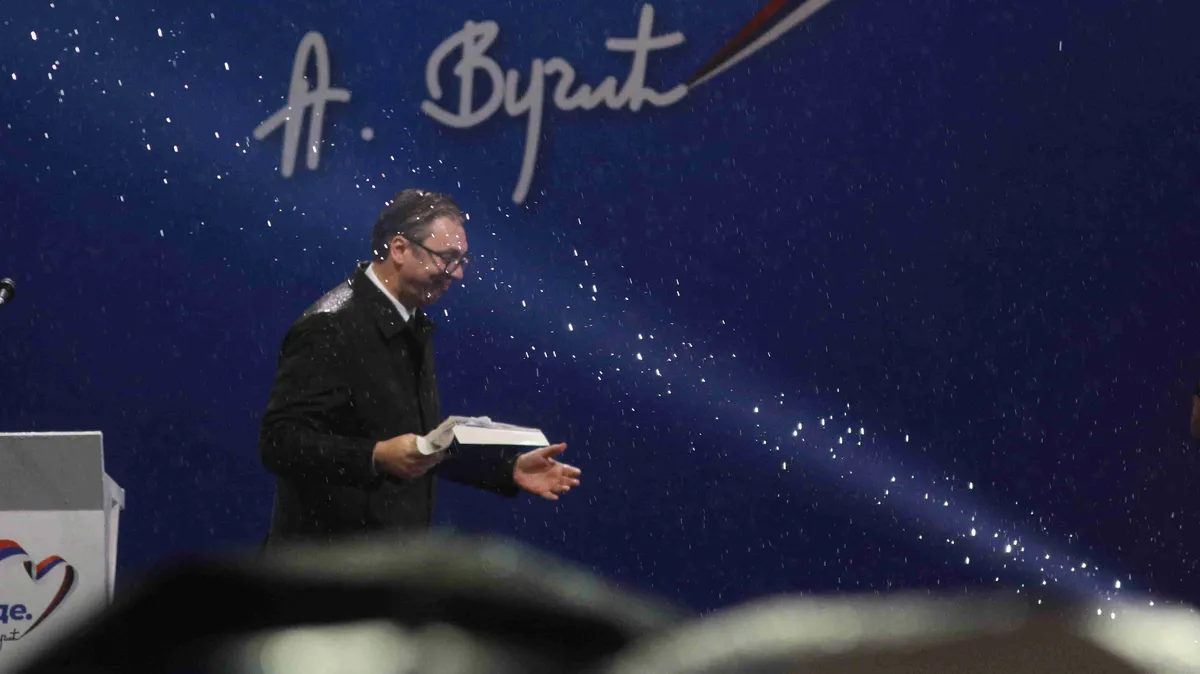
Alexander Vucich during a rally in Belgrade, May 26, 2023. Photo: Milos Miskov / Anadolu Agency / Getty images
The last few days in the northern municipalities of Kosovo, where the Serbian population prevails, there are clashes of demonstrators with the police and the peacekeepers of NATO. Yesterday, during the protests, at least 50 protesters and 20 peacekeepers suffered. From Friday, President of Serbia, Aleksandar Vuchich, began to transfer the troops to the border and brought the army to full combat readiness.
A new round of escalation between Serbia and Kosovo erupted due to municipal elections that took place in the northern provinces of Kosovo in April. The Serbs boycotted the elections, thereby trying to get from the Prime Minister Kosovo Albina Kurti creation of a wide autonomy of Serbian municipalities, about which Belgrade and Primetin, with the active participation of the West, agreed at the beginning of the year. Meanwhile, in Serbia itself, Aleksandar Vucich collided with internal protests. And although the reason for them was recent sculpture, the tension in Serbian society has been accumulating all the last months due to the same West plan to resolve the Kosovo problem. Serbia should recognize the independence of Kosovo, which causes a sharp rejection among most residents of the country. Vucich tried to dump this tension by resignation from the post of leader of the ruling party, but probably rallies - like Vuchich’s attempts to balanced between the plans of the West and his own voters - will continue. In the next confusing episodes of the Balkan policy, political scientist Alexandar Dzhokich understood the New Evrop.
At the rally at the end of May, Serbia President Aleksandar Vuchich is solemnly - how much it was possible in the pouring rain - announced that he was resigned, but not from the post of president of the country, but from the post of leader of the ruling in the country of the Serbian progressive party. Wuchich proclaimed Milos Vuchevich, an inconspicuous party functionary, who did not pose any political threat to the Serbian President with his heir.
At the beginning of his career, Vuchievich managed to visit the mayor of Novi-Sad, the second largest city in Serbia, and then occupied the posts of Deputy Prime Minister and Minister of Defense in the Government of Serbia. Vuchievich is exceptionally loyal to Vuchich, since the Serbian leader became his “political father” and built a career of Vochevich in fact from scratch. That is why the replacement of Vuchich Vuchevich as the leader of the main political party of Serbia is nothing more than a formality, a political trick. The president needs him in order to cope with social stress in the country increased after a new stage of settlement began in the conflict with Kosovo and sculletes first occurred in the Balkans.
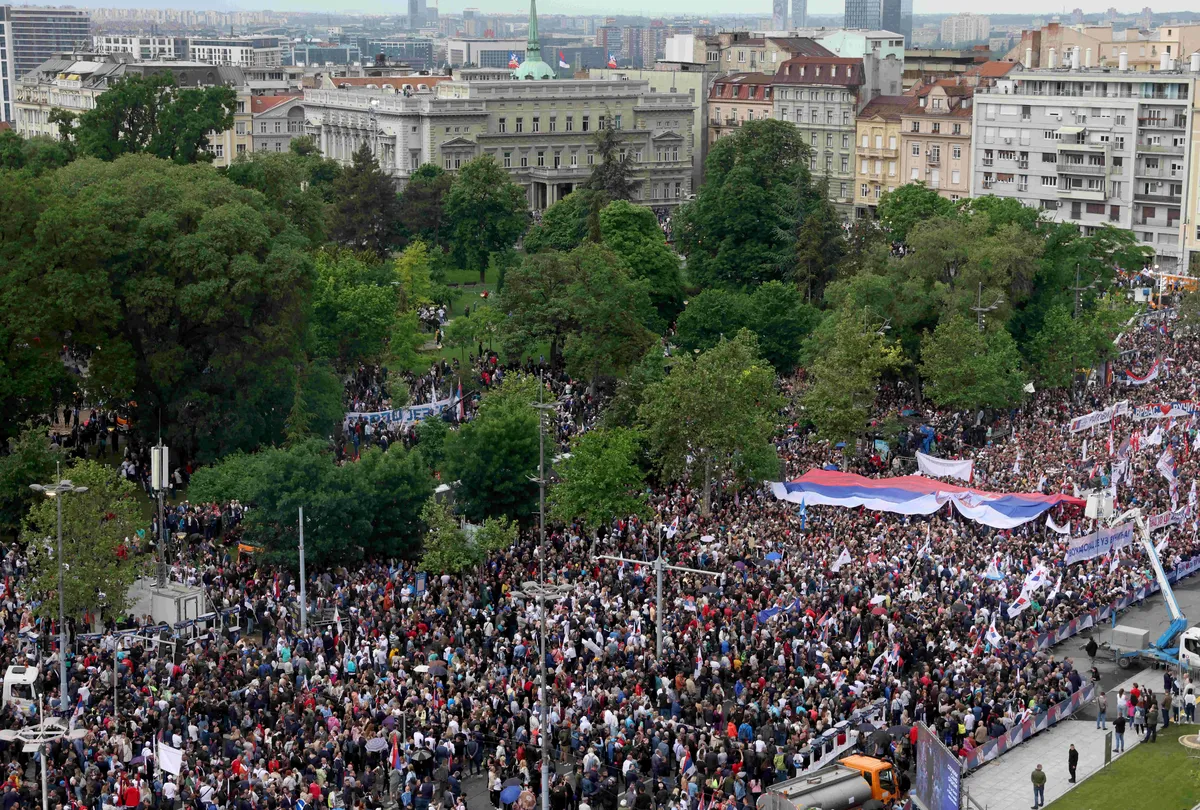
The rally of one actor
On the day of the announcement by Aleksandar Vucic, about 50 thousand supporters of the president, who were brought to Belgrade from different parts of the country, as well as from Kosovo, Bosnia and Montenegro, gathered about the resignation in the square, opposite the building of the Serbian parliament. According to Transparency International Serbia, this could now cost the former Party of Vucich 2-3 million euros.
The incident is called “countermathy” - a response to a new wave of protests in Serbia, organized by the opposition Vuchich by liberal parties. The reason for the protests was an event that really shocked the whole country: on May 3, in the Belgrade school, a thirteen -year -old boy killed his nine peers and a school guard from a pistol, as well as wounded five more children and a history teacher.
Since the beginning of May, the opposition has already held four mass rallies with the requirements of the resignation of Vuchich and the government, so that the president had to take some steps to stabilize the situation.
This step was countriming, but it is unlikely that the president managed to achieve something, except for a waste of party resources. First of all, Vuchich Loyal forces did not succeed in demonstrating the mass support of the president: due to bad weather and low enthusiasm, the protesters began to disperse almost immediately after Wucishch finished their 15- minute speech . His speech, with the exception of the announcement of his resignation from the post of leader of the party, was not much different from the newly weekly appeals to the nation on the live broadcast of the main television channel.
During the performance at the rally, Vuchich traditionally recalled that he was doing everything possible to soften the problem of violence in Serbia, and invited the opposition to the dialogue in the “ friendly atmosphere” , emphasizing, however, he did not agree to form a new, transition government with the participation of opposition forces. Previously, he also threatened the opposition with extraordinary parliamentary elections, but Western countries probably opposed this, which would perceive this step as a tightening of the newly restrained process of resolving the conflict with Kosovo. The elections and expectation of a new government will postpone this process for several months.
The rally was also attended by international guests - the current member of the presidency of Bosnia and Herzegovina Milorad Dodik, the Hungarian Foreign Minister Peter Siyyarto, the leaders of the Serbian nationalist parties from Montenegro Andriy Mandich and Milan Knezhevich, recently crashed in the presidential election in this country. Such a list of the invited clearly was to become the EU and the USA signal: if Brussels or Washington supports the protesting opposition, then Serbia will again flirt with the most conservative and traditionalist forces in Europe.
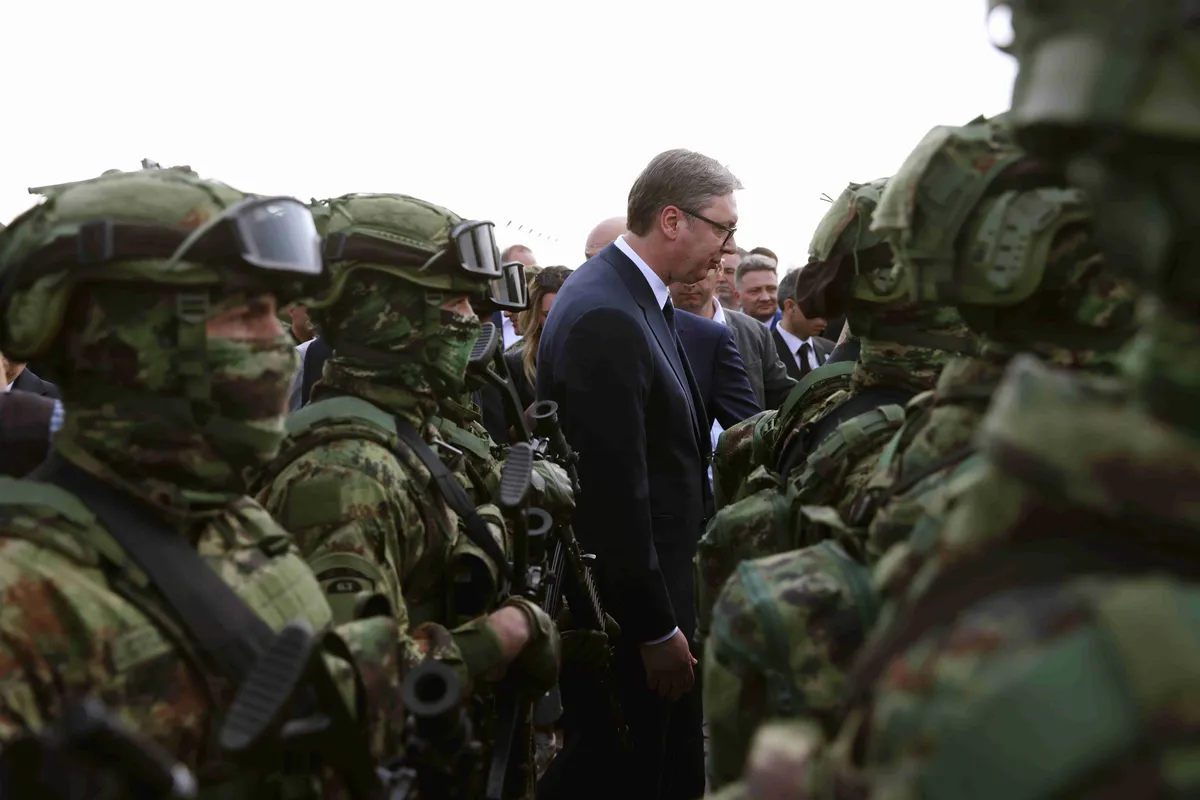
From the party in motion - and vice versa
However, the main news of the rally-Vuchich’s departure from the post of chairman of the party-is unlikely to have any political consequences for Serbia.
Firstly, Vucich almost all the time that he leads the country, avoids to occupy the most important, according to the Serbian constitution, the post of prime minister. Being in fact the most influential politician in Serbia since 2012, he spent only two years in the prime minister’s chair-from 2014 to 2016. Vucich’s political strategy is to concentrate more informal power in their hands, but to minimize their responsibility in the eyes of voters for what is happening in the state. In other words, rule from the shadow. The formal resignation from the post of the party leader, but not from the post of president - the continuation of the same logic of flight from responsibility.
Secondly, the decision on resignation can hardly be called a surprise: Vucich threatened to leave the perspective of the leader of the Serbian progressive party for years. For the first time, he made a similar statement on May 31, 2016, speaking with a farewell speech as a prime minister. “I have several more ideas that need to be implemented in our political party in the near future, after which [I will give in to leadership, and may others continue my way,” Vucich designated his plans, preparing to take the president’s post.
By the way, his predecessor at the presidential post, Tomislav Nikolich, in accordance with the Constitution of Serbia, resigned his authority to the leader of the Serbian progressive party, becoming the president of the country.
Vuchich de facto violated the constitution, since all the last years he combined posts.
Thirdly, Vucich gives his successor the party is not completely. He has already stated that Vidovdan (the main national Serbian holiday, which refers to the battle on Kosovo Field in 1389) is going to form a new social movement. The same Serbian progressive party will be based on it. The meaning of the political technological decisions of Vuchich, thus, is to demonstrate some renewal of the forces loyal to Vuchich, which will now give him legitimacy, simply under a different brand.
If, after the death of the long -term authoritarian leader of the communist Yugoslavia, the main state slogan was “even after Tito -Tito”, then in modern Serbia the motto is “and after Vuchich - Vucich”.
The threat to the West
It may seem that albeit such a departure to Wucich from the post of head of the party is still the victory of the opposition. The rallies that organize liberal parties over the past weeks really collect at least the participants than the president’s countermark, but with much smaller resources. According to independent experts, last weekend oppositions it was possible to gather the same 50 thousand people as the ruling party a day earlier, and on May 20 - to take about 65 thousand demonstrators to the streets . The previous two rallies were no less crowded.
Such a scale of protests, of course, does not affect the image of Vucich as the most stable leader in the Balkans, but still does not pose a threat to his regime. Vuchich has a reliable majority in parliament, and in an extraordinary election, if they were announced, the liberal opposition could hardly have significantly improve their results.
In April, polls showed that only 25% of the vote could receive a total of liberal parties, while the rating of the ruling party after Vucich ranges at the mark of 40–45%.
For Vuchich, the main problem of protests is now in their surprise. After the beginning of the new stage, the President of Serbia directed all his efforts and attention to balancing between the interests of the West and his voters in Kosovo. Now he is afraid that the West will use the situation and support the protesters to make Serbia more accommodating or convince Vucich to finally break all ties with Russia.
The actions of the opposition of the concern of Vucich only confirm. So, Croatian journalists recently interviewed one of the organizers of the protests of Radomir Lazovich - the article went out with the heading: "Serbia is ready to free herself from Vucich and Russia."
The West really expects from Wucic cooperation and concrete actions within the framework of the new Franco-German plan by decision of the status of Kosovo. According to the EU and the United States, Kosovo should enter the UN and de jure to become an independent state, and the Serbs living on the territory of the enclaves in Kosovo-to obtain a serious level of political autonomy from the authorities of the Profita in the form of a community of Serbian municipalities. In March of this year, a contract was concluded in Jrido between Kosovo and Serbia that confirmed the intention of the parties to the settlement of this extremely difficult and protracted conflict in the Balkans according to the plan proposed in Berlin and Paris.
Not giving autonomy
But at the moment, Vucich is far from the main obstacle to the Western plan. The authorities of Kosovo himself are a much greater problem. It is the Prime Minister of the country Albin Curtain that now blocks the implementation of the contract by refusing to propose new rights in the agreement on the autonomy of the Serbs in Kosovo enclaves.
The unwillingness of the Courts compromise led to the latest clashes of Serbian demonstrators with the Kosovo police and NATO peacekeepers. Serbian politicians boycotted municipal elections in Kosovo in April, which made it possible to form the Albanians with a total turnout of only 4% to form authorities in four northern provinces, where the Serbian majority prevails. The boycott of voters and candidates was associated just with the fact that Protina did not make it possible to form a community of Serbian municipalities. Albin Curty last week approved the appointment of loyal prisoners of officials for municipal positions, which provoked a new round of violence.
Commenting on what happened, US Secretary of State Anthony Blinken sharply condemned the Act of Curtain, since the actions of the Prime Minister Kosovo block the implementation of the roadmap adopted in March.
But at the same time, such behavior of Kurti gives Vuchich himself the opportunity to stay in a kind of limb - not to invest in resolving the crisis with Kosovo and continue to balance between good relations with the West and sympathy for Russia.