
Translated material
Apocalypse tomorrow
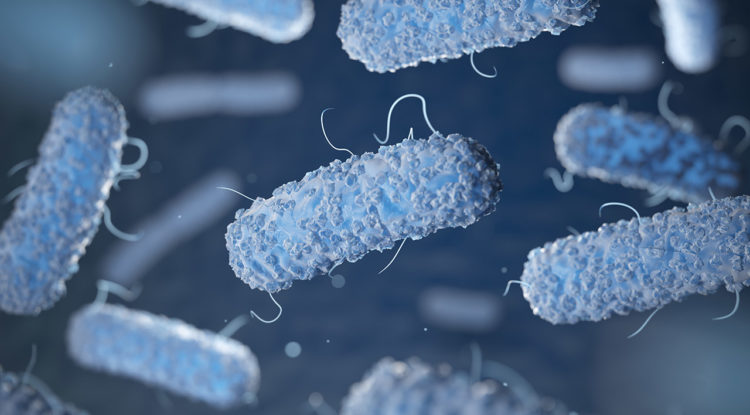
Will humanity die because antibiotics will cease to act? We understand
Recently, anxious predictions have been increasingly sounding that the usual modern medicine will soon come to an end, because due to the widespread use of antibiotics, superbacteria appeared-that is, bacteria resistant to them. And this means that soon we will all begin to die from the infections that mowed humanity in past centuries. The "cold" is versed in what superbacteria is, and answers the question of whether to humanity will come from them.
In order not to miss the main materials of the "cold", subscribe to our Instagram and telegram .
Remember the first scene of The Last of Us? One of the heroes, a mycologist, a participant in the television show, predicts the future apocalypse, the pandemic of an incurable fungal infection that turns people into zombies. So: almost the same frightening prophecies sound in reality, with the only difference being that the victims are promised only death, and its perpetrators will not be mushrooms, but bacteria - bacteria resistant to antibiotics .
“Some experts say that we return to the era to antibiotics. No. This will be a plain era ... The plain era actually means the end of modern medicine in the form in which we know it. Ordinary ailments and injuries, such as a sore throat or a scratched knee in a child, will be able to kill us again, ” said Margaret Chan, then CEO of WHO in 2012.
The threat is more than real. According to researchers, in 2019 about 1.27 million people died due to the causes associated with antibiotic resistance, and in 4.95 million dead, resistant strains were found.
This creeping catastrophe is almost worse than the paintings from The Last of Us. Death will become a little closer and slightly more commonplace - we will more often die from postoperative complications, there will be more cases of death from sepsis after injuries, and in hospitals people will more often pick up infections that they will not be able to get rid of.
What is this attack?
In 2012, biologists from Harvard and the University of Israeli, a Technion, under the leadership of Roy Kishoni, put an experiment on the evolution of bacteria.
The group made a frame of 60 by 120 centimeters (they called it Mega - Microbial Evolution and Growth Arena, “Arena for the growth and evolution of microorganisms”), the bottom of which was covered with a layer of nutrient for the propagation of bacteria - agar. This space was divided into nine equal stripes. The extreme stripes contained only agar, but then the agar stripes with an antibiotic went to the center - in the same case with trimetrome, in the second - with cyprofloxacin. In the first “charged” trimetrome, the amount of the drug was three times higher than the minimum inhibitory concentration (that is, the minimum dose that stops the increase in the colony of bacteria or fungi), in the second - 30 times, in the third, and in the central strip of the antibiotic there were three thousand times more (in the case of ciprofloxacin, it was 0, 20, 200, 2000 and 20 000).
The experimenters placed the Escherichia Coli intestinal sticks free from antibiotics, bacteria free from antibiotics, which began to multiply intensively, form colonies, but the antibiotic zone was a death zone for them, so the first time they remained only in the initial strip.
But not for long. After 44 hours, at some point in the border, the bacteria began to penetrate into the “poisoned” zone. In other words, a mutant bacterium appeared, which was resistant to the action of an antibiotic. And 88 hours after the beginning of the experiment, the colony filled the second zone, to the next border - with the area where the concentration of the antibiotic was 10 times higher.
Then, when a strain was found in this colony, stable to such an antibiotic concentration, and this border was broken, and 264 hours after the start of the experience, the entire plane of the “window” was populated by the column of the bacteria, which right in the eyes of scientists learned to withstand the effect of the antibiotic.
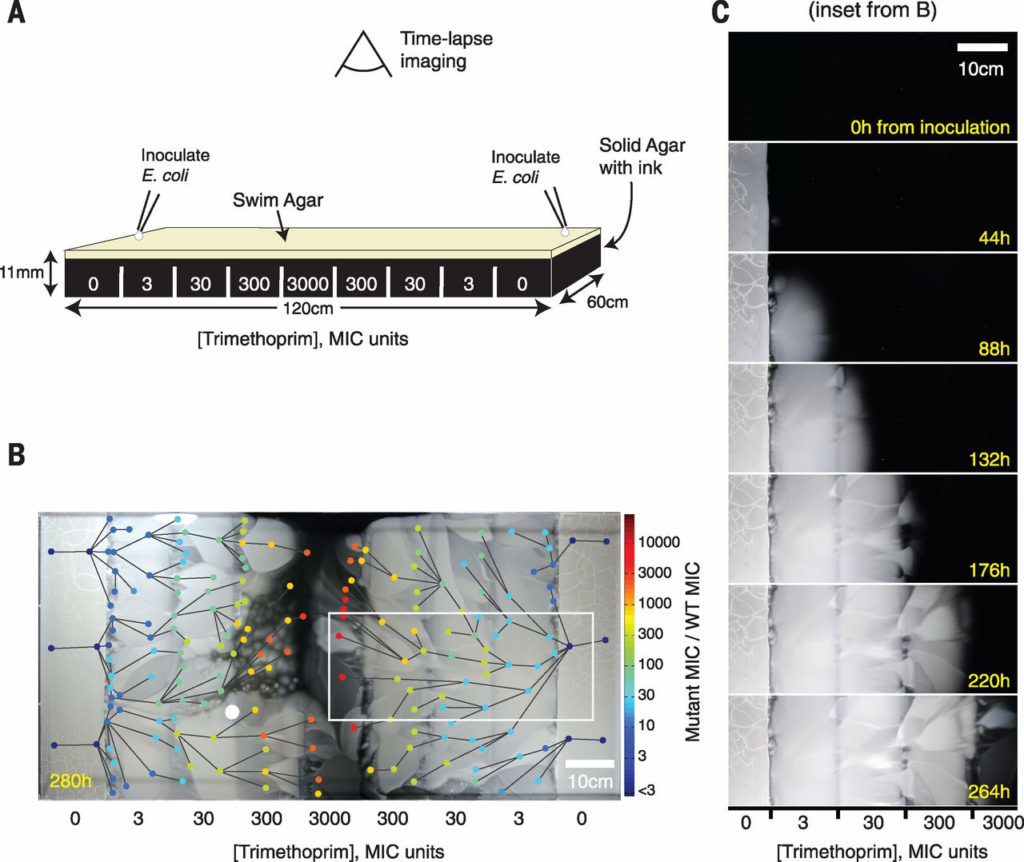
Exactly the same experiment from the middle of the 20th century on a global scale puts all of humanity. The only difference is that the space for the propagation of new stable strains is ourselves, our bodies.
Where did this problem come from?
Already during the Second World War, when the really massive use of antibiotics began , scientists understood that they could lose strength, that new strains of bacteria could appear, which will acquire the ability to withstand the effects of antimicrobials.
In 1945, the inventor of the first antibiotic - Penicillin - Alexander Fleming warned in his Nobel speech : “There is nothing complicated in making microbes resistant to penicillin ... It is enough to subject them to concentrations that are insufficient to kill them ... There is a danger that an ignorant person can take an insufficiently high dose and, thereby subjecting his germs to the action the amount of medicine, make them stable. ”
Actually, the mechanism of the future disaster is almost completely described here. Bacteria is much better than people, Nietzsche's shut -up quote is suitable: “What does not kill me, then makes me stronger.” If the concentration of the antibiotic is not high enough to kill all the bacteria, the surviving part of the population adapts to it, gains stability, and the antibiotic loses its strength.
Strictly speaking, this is not surprising: any living creatures can adapt to the changed conditions. But bacteria have two advantages: the speed of reproduction and the ability to exchange genetic information with each other.
The rate of reproduction of bacteria is fantastically large: for example, under normal conditions, the change of generations in the intestinal sticks takes about 20-30 minutes. For comparison: people have a change of generations - from birth to their own offspring - takes about 20–25 years.
One of the longest experiments in the history of science was set just on Escherichia sticks: in February 1988, scientists from the University of Michigan took 12 identical Escherichia Coli populations to trace how their evolution will go and how their genomes will change for a long period.
The LTEE experiment still continues (though scientists had to pause during the Covid: they froze bacteria, and then defrost and resumed the process). During this time, many events took place in the colonies: some colonies as a result of mutations “broke” with DNA restoration mechanisms, and their frequency increased sharply, some colonies sharply increased growth rate, all populations lost the ability to survive on other nutrient media, except for those on which they grew all this time. However, one thing is important to us: during the experiment, more than 65 thousand generations of bacteria were replaced.
For comparison: from the moment of the appearance of Homo sapiens about 45 thousand years ago, 1800 generations passed , that is, from the point of view of bacteria, the beginning of the LTEE experiment is as far as for us - the era of Pithecanthropes.
The high speed of reproduction gives bacteria an excellent opportunity to adapt to any adverse conditions, but they have another trump card - horizontal transfer of genes, that is, the ability to transmit genetic information not from ancestors to descendants, but to each other.
For the first time, Frederick Griffith, who studied the pathogens of pneumonia - pneumococcus (Diplococcus pneumoniae), found the possibility of such an exchange, hoping to develop a vaccine. In the experiment, he consistently infected the mice at first with a harmless strain of pneumococci (mice survived), then pathogens (mice became ill and died), then he introduced mouse pathogenic bacteria, previously killed by heating, - the mice felt great. However, then he introduced mice a mixture of dead pathogenic bacteria and living harmless - and these mice became ill and died. That is, the dead bacteria somehow were able to convey to living bacteria their ability to cause pneumonia.
Bacterial cells do not have a nucleus (unlike eukaryotic cells, of which multicellular organisms consist, including you with you). In eukariz, the shell of the cell nucleus protects DNA. The bacteria has their “naked” thread and is just in the cytoplasm - the internal liquid medium of the cell. Moreover, in addition to the main bacterial chromosome in the cytoplasm, the so -called mobile genetic elements can also be in the cytoplasm - “freely floating” DNA fragments, for example, closed into the ring of DNA -plasmids.
Bacteria can exchange plasmids and thus acquire new properties useful for themselves.
According to the estimates of scientists from the Institute of General Genetics of the Russian Academy of Sciences, approximately 10–20% of the bacterial genome is fragments obtained due to horizontal transfer.
Plasmids that transfer resistance to antibiotics have received a special designation R-plasmids, or Rfactors . They contain genes that cause stability sometimes to several antibiotics at once - up to eight different types, and these plasmids can be transmitted between bacteria of different types and childbirth.
For the first time, the connection between drug stability and the set of genes in plasmids was discovered in the late 1950s by Japanese scientists who studied medicinal stable strains of the bacteria of the genus SHIGELLA, taken from patients with dysentery.
R-factors can convey from bacteria to bacteria the ability to produce enzymes that destroy antibiotics, such as beta-lactamase , which destroys the molecules of beta-lactam antibiotics, in particular penicillin or cephalosporins, or make the walls of the cells impermissible for antibiotics.
However, it cannot be said that resistance to antibiotics is an invention that arose thanks to a person. Scientists find resistant strains of bacteria in nature, in areas where there were notly “human” antibiotics. For example, in 2011, Canadian scientists discovered a whole set of stability genes for tetracycline, as well as beta-lactam and glycopeptide antibiotics in bacterial DNA about 30 thousand years extracted from eternal permafrost.
How we harm ourselves
So, bacteria are evolved very quickly, and the genes are transmitted not only to descendants, but also to each other, from time to time generating options resistant to antibiotics, even without human influence. Why is this our problem? Why should it be solved if it exists without us?
The problem is in degree. Humanity creates the conditions for the evolution of bacteria to develop precisely in the direction of increasing resistance to antibiotics - simply because it uses massively.
First of all, this is a scenario described by Fleming: an arbitrary decrease in doses of antibiotics, self -medication and self -enforcement. In 2016, a group of scientists under the leadership of Larisa Grigoryan investigated (in a sample of 400 people), as the residents of Houston use antibiotics. It turned out that over the past year, about 5% took antibiotics without a doctor’s prescription, many store antibiotics in their first -aid kits, and some use veterinary antibiotics. Moreover, in most cases, self -medication using antibiotics is simply useless. “The most frequent disorders in which patients resort to self -medication using antibiotics are a sore throat, runny nose, cough - conditions that pass without such drugs,” said Grigoryan.
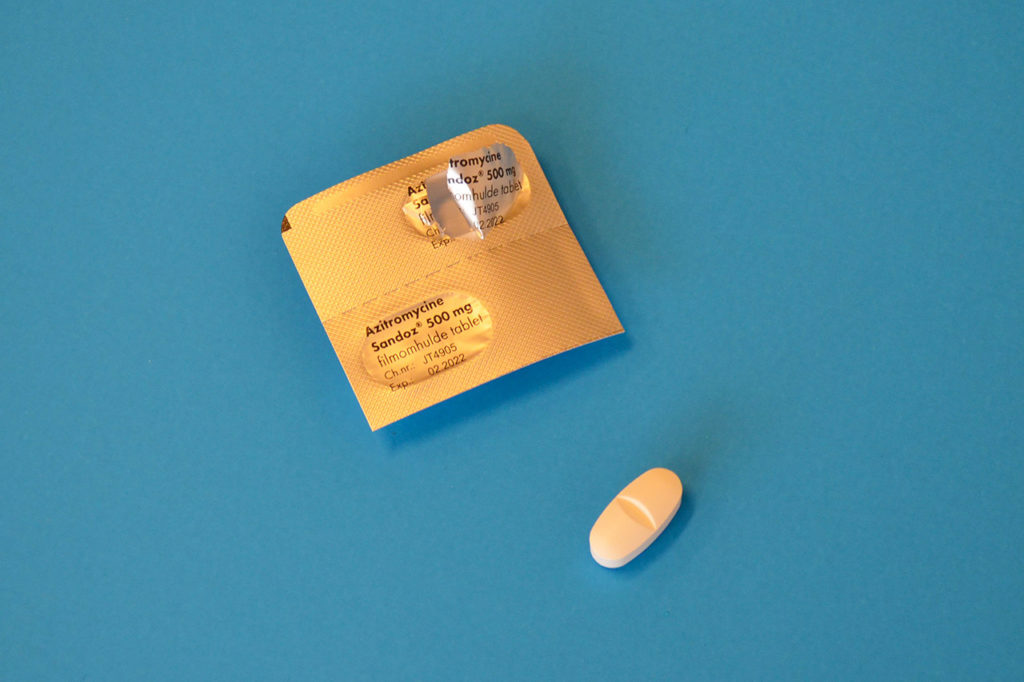
It should be noted that in the states the sale of antibiotics without a doctor’s prescription is prohibited, but in Russia, where they are sold freely (although it is prohibited to sell them without a prescription), the scale of such self -medication is significantly wide : according to data as of January 2022, almost half of the inhabitants of Russia taking antibiotics do this without a doctor’s prescription.
However, the use of antibiotics absolutely justified from a medical point of view has negative consequences. Any surgical interventions, chemotherapy and many other types of treatment are accompanied by the preventive use of antibiotics, therefore, it is hospitals that often turn into “hot spots”, where new stable strains of bacteria are formed.
In particular, it is with hospital conditions that the appearance of superbacteria (Superbugs), resistant to several types of antibiotics, is most often associated. The most famous among them, the golden staphylococcus MRSA, only in 2017 in the United States took the lives of 10 thousand people, and from the total number of picked up this infection from 30 to 40% of patients dies. Therefore, both doctors, and patients, and those who visit patients in the hospital should carefully observe antiseptic measures, since the hospital “Super -Summary” can be extremely dangerous.
Another “hot point” is a sewage system. Antimicrobial drugs are excreted from the body of people in almost the same form, therefore, noticeable concentrations of antibiotics and bacteria that live there are fixed in the sewer networks of cities, and gradually acquire resistance to them.
Scientists propose to explore the wastewater in order to control the degree of distribution of resistance to antibiotics, and in 2022 the EU launched a large project to control strains resistant to antibiotics using sewage monitoring.
However, the main source of resistance to antibiotics is not human medicine, but veterinary. In agriculture, large doses of antibiotics are often used just for prevention. “The number of antibiotics that give healthy animals exceeds the number of antibiotics used for unhealthy people,” said President WHO Margaret Chan.
Moreover, farmers add antibiotics to livestock feed and poultry in subtractive doses, not only to prevent them from getting sick, but also because taking antibiotics contributes to animal growth. Although in the EU the use of antibiotics in agriculture is gradually reduced , in other regions of the world they are still widely used.
The news on this topic now resembles the reports of the army, which is defeated: here is another, perhaps the last line of defense, and then there is no one between the enemy and us. Only the defense line is another antibiotic of the last line, for which a stable strain was found. For example, scientists have found staphylococci, resistant to such the latter antibiotics - vanc -committee. Sometimes there are encouraging reports: scientists were able to synthesize a new, much stronger antibiotic. The only problem is that the development and testing of new drugs takes years and this is much slower than the muttings rate of bacteria.
WHO is trying to create reserves in the event of a “breakthrough of defense”: the organization divided all antibiotics into three groups, of which the third, reserve should not be used in any cases, except situations where no other means helped.
The world in the coming years will not become the revitalized decoration of The Last of US series, the sliding in the plain era will be slow: people will simply perceive more and more often from diseases that we were weaned from pneumonia, from postoperative infections, from sepsis. Of course, scientists and pharmaceutical companies will look for and find more and more new types of antibiotics, bacteria will adapt to them, and in this tug of rope you can hardly count on the final victory.
But the intensity of the confrontation can be greatly facilitated for people - if you simply do not use antibiotics for every runny nose, grow animals without them and, if you have been prescribed a course of antibiotics, do not throw it in the middle: you must not allow the next superbag to appear in your own body.