
Translated material
"Put me in Zekov Rob ..."
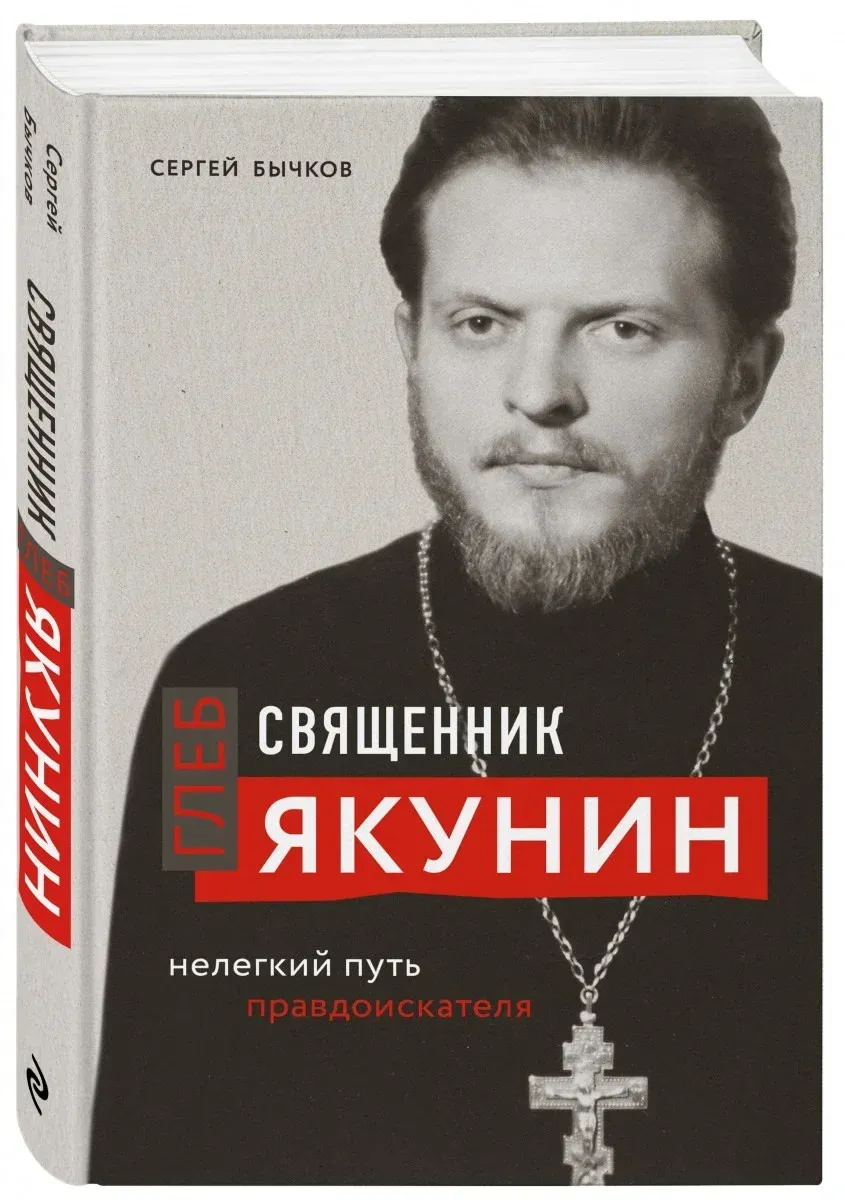
The personality of the priest-dissident Gleb Yakunin was paradoxical. A book about him came out
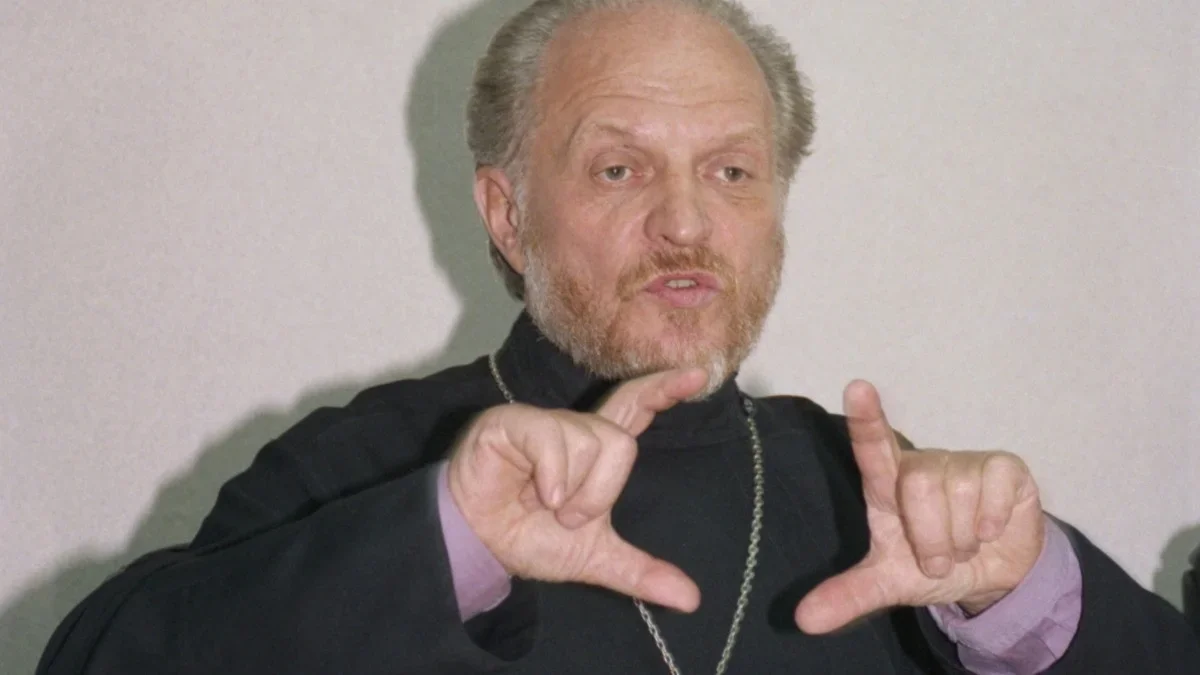
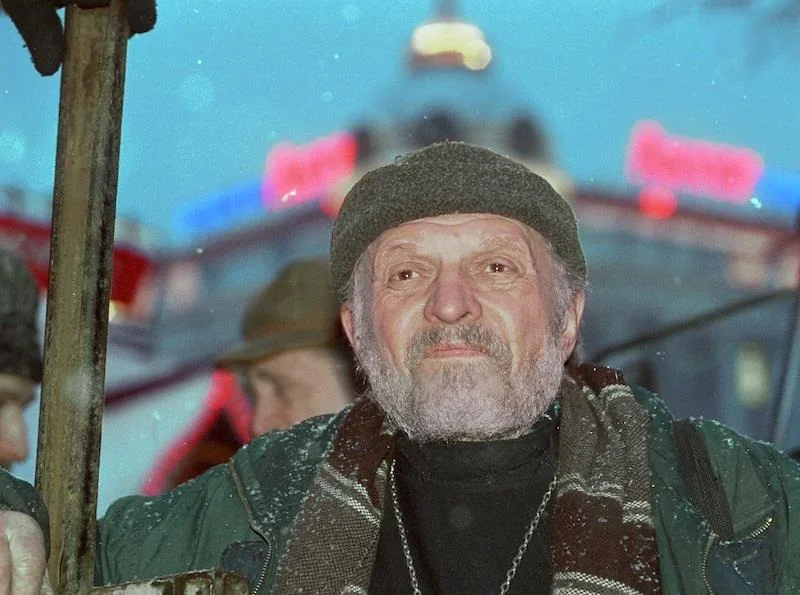
Priest Gleb Yakunin. Photo: Nikolai Malyshev / TASS
“This book is the first large -scale attempt to consider the paradox of the personality of the priest Gleb Yakunin. To figure out what happened in the USSR after the Great Patriotic War, how the best people of our country fought against systemic evil for half a century. In this struggle, the priest Gleb Yakunin took an active part, ”the publishing annotation, preceding an interesting study on the bright church dissident of the late Soviet time, friend of Fr. Alexandra me and associate of Boris Yeltsin, co -founder of the Democratic Russia party and founder of the Apostolic Orthodox Church. O. Gleb is practically our contemporary, he died in 2014, having managed to give an unpleasant moral assessment of the events of that year in the Crimea and in the Donbass.
The author of the book is not a random person, a historian of the Russian Church and a hagiographer, a doctor of historical sciences and journalist Sergei Bychkov. Being a parishioner of the Sretensky temple in the new village, where Fr. Alexander Men, Bychkov was an associate of the fathers of Alexander and Gleb, for which he was repeatedly persecuted.
I met Father Gleb about 20 years ago, when I randomly ended up in the office of the famous movement “For Human Rights”, where I took up the organization of a rally-concert “Against the War in Chechnya”. The concert turned out to be not very successful, and I did not really communicate with my father Gleb, basically only greeting for politeness, as with everyone. Then, of course, he regretted this omission. I remember, I received a pack of his brochures “Orthodox Taliban” from him to spread. So I remembered him - a gray -haired and low old man, clearly battered by life, but always with a good warm smile.
In the preface, entitled by a line from the poetic testament of Father Gleb - “Possess me in Zekov Rob,” Sergey Bychkov resembles some truths that are already non -obvious to many Russians. For example, about the inhuman essence of communism:
“Today, when nostalgic voices are increasingly heard, extoling the power of the Bolsheviks, who supposedly baked the needs of the people, it is important to remind of the humanistic nature of communist power.”
The author also recalls the Orthodox presence in the dissident movement: “The activities of the two priests-Sergey Zheludkov and Gleb Yakunin, as well as the laity-Anatoly Krasnov-Levitin and Boris Talent, who died in the camp-the most striking manifestation of the confrontation of the Russian Orthodox Christians of God-Gothic power.”
However, the Father Gleb introduced the “most significant share in the exposure of the lies about the position of the Russian Orthodox Church in the post -war period”. In the early 70s, he got secret reports of the deputy chairman of the Council for Religious Affairs and betrayed their publicity:
"It is amazing to be fearless - he perfectly understood that he could take a martyrdom, but this did not stop him."
The book of Sergei Bychkov is a set of history of free thought and confrontation of the Soviet alienation and anti -spirituality of the state. 22 chapters cover the period from the post-war years (chapter I-“Moscow in the late 40s-early 50s”) to the post-Soviet (chapter XXII-“October rebellion”), personalities, fate, events are described in detail and in detail.
An interesting story is about the youth of Gleb Yakunin in the chapter "Future Priests in Siberia." Young Gleb lost faith when “it was required to comprehend spiritual dogmas”, because the faith of his mother, a simple Orthodox uneducated woman, was ritual. Gleb again found Vera under the influence of Alexander's classmate:
“I went a long way from yoga, anthroposophy, Steiner,” he recalled. “And now, thanks to Father Alexander, I came to faith, and therefore for me this is a very close person.”
Such a remark is also curious: “Furiously hated Soviet power,” Gleb Pavlovich, only after the war about the death of his father - the tsarist officer and the nobleman - from hunger in 1943.
Memories of the youth of the students Gleb Yakunin and Alexander me at the St. Atic Institute in Irkutsk are given in the book of the latter:
QUOTE
From the memoirs of Alexander me
“The institute made a rather vile impression on me. The state -owned state is wild. Students are gray, stupid, sharply differ from us. We are like a fresh stream here. For example, it is characteristic: everyone was going to go to the collective farm at the institute. We came with screams and poems. And they stood a huge silent and frightened herd and looked wildly at us. ”
...
“We have to wander on dark nooks home late at night (we are in the second shift). If I do not write for a long time, then know that I was stabbed somewhere. This is everyday phenomenon here. And I don’t even have a decent knife. ”
Fortunately, about. Alexander was destined, or measured, a lot of time before he nevertheless accepted his martyrdom ...
From the chapter V - “Passions around the Vatican Cathedral” - the reader will learn another interesting detail: the main posttalin persecutor of believers in the USSR was not Nikita Khrushchev at all, like many, like the author of these lines, possibly thought, and the ideologist of the post -war CPSU Mikhail Suslov.
QUOTE
From the book "Priest Gleb Yakunin. The difficult path of the truth -seeker "
“Khrushchev himself was indifferent to the problems of religion - it was a sphere very far from his interests ... The initiative of persecution came from Mikhail Suslov ... For the first time in the post -war period, he tried to resume the attack on the Russian Church - first during the life of Stalin, in 1949, then in 1954. But the struggle for power within the highest leadership of the USSR and partly external circumstances prevented him then to deploy a new offensive on religion. However, in 1958 this moment came. "
And this is how it was:
“In general, the KGB agents in the late 1960s amounted to about 166 thousand people, which is very far from the traditional ideas of Soviet people about the KGB secret agents around them everywhere, but it is enough to control the social layers and groups that are potentially dangerous for the regime.”
However, the Thaw soon came. After the abolition of the death sentence, two “planeers”, M. Dymshitsa and E. Kuznetsov, at the request of the Western public, Soviet Jews had the opportunity to emigrate. Gleb Yakunin was then “one of the most striking and extraordinary personalities not only in the Russian Church, but also among human rights activists. Even then, his name was covered with a legend. Alexander Solzhenitsyn sympathetically wrote about him. Many of the Moscow clergy were respected by him. ” In the zenith of the dissident glory of the young priest, in 1973, the author of the book, Sergey Bychkov, met him.
QUOTE
From the book "Priest Gleb Yakunin. The difficult path of the truth -seeker "
“He ( Gleb Yakunin - approx. Ed. ) Saved to the end of his days. It seemed to him that the time is slow, that events unfold too slowly. He sought to terminate and force them to move faster. He was lacking in patience, he was annoyed by human inertness and blindness. ”
The author is perplexed by one of the old Chekists who participated in the defeat of the Christian seminar Alexander Ogorodnikov:
QUOTE
From the book "Priest Gleb Yakunin. The difficult path of the truth -seeker "
“It was not clear to the Chekists, especially the older generation: why did Soviet youth, brought up in an atheistic spirit, devoid of the temple and sacred scripture, come to church? (“We shot you all in the 30s! Where did you come from?”) It was unknown to them that the human soul did not tolerate emptiness, that, according to the Blessed Augustine, “by nature of the Christian”.
Despite all his odiousness for both dissidents and the Kagabashniks, “it was his ideas that were learned in the new century by party-cockerel leadership,” Bychikov believes. In 1976, Shimanov wrote an open letter to Patriarch Pimen, where he criticized the Moscow Patriarchate for not protesting against forced atheistic education. He “proposed the Russian Orthodox Church to play the role not only of the censor, but also to implement a return to monarchical rule, restoring the famous Uvarovsky triad“ Orthodoxy, autocracy, nationality ”.
This letter was not seen either by the Bishop of the Russian Orthodox Church, nor the church department of the KGB. But in the first quarter of the 21st century, Shimanov’s ideas gained flesh and blood in the appeals of the Communist Party, as well as ideologists-patriots such as Dugin. ”
But - in contrast - a case from the life of Father Gleb, who characterizes his sequence and sacrifice. When Metropolitan Juvenal suddenly invited him in the same 1976 and offered to continue the pastoral ministry. But, to the great amazement of Sergei Bychkov, Father Gleb refused: “There is no way back. If I return, then I can no longer openly oppose persecution. ” “The former priest, who did not abandon his beliefs, and even continued the struggle against the atheists, was for the episcopate and clergy as a leper,” the author states. Long before the chain, but through the false, church triumph over the atheistic ideology, Father Gleb seemed to have foreseen how it ended, and voluntarily chose the way to continue the struggle not only against atheism, but also against false chief. “Even then, he believed that the Russian Orthodox Church, created by Stalin in 1943, is not capable of reforming,” Bychkov emphasizes.
An example of a person’s “spiritual killing” by a system is an indicative - the story of one of the heroes of the book and human rights movement about. Demetrius Dudko.
After several arrests and losses of almost all parishioners, Father Demetrius signed and read out on television the KGB prepared by criticism of his former views, former colleagues and associates. After admitting his guilt, he was conditionally convicted and immediately released. And in the early 90s, “the delusional system finally took him to the camp of the Communists.
He began to regularly be published in communist newspapers - “Soviet Russia” and “tomorrow”. In June 1996, during the election campaign, he appeared in the retinue of the leader of the communists Gennady Zyuganov, as if indicating that the Orthodox Church supports the “believing communist”. Finally, Stalin’s “Orthodox” apology came up: “Stalin from the outside atheist, but in fact he is a believer, this could be shown on facts ... It was no coincidence that he was sang in the Russian Orthodox Church when he died, even an“ eternal memory ”, so accidentally could happen at the most godless time. It is no coincidence that he studied at the Theological Seminary, although he lost faith there, but in order to truly acquire it. ”
I will complete the review of the book with a quote from the epilogue:
QUOTE
From the book "Priest Gleb Yakunin. The difficult path of the truth -seeker "
“He never lost the hope that the course of history is developing according to God's plan. He enthusiastically took the collapse of the USSR. He hoped for the transformation of Russia and understood that it could only occur through repentance - he constantly called for him, believed that the victims of the Russian new martyrs would bear fruit sooner or later. He was sad because Russia from the mid-90s began to turn into an authoritarian power again. He never lost hope of interference from above ... He lived with this hope and devoted his whole life to the future, transformed by Russia. ”
Now about. Gleb needs a country, the people, the world, perhaps even more than in Soviet quilting.
Gideon Young