
Translated material
I'm afraid to fly on an airplane. How to deal with this?
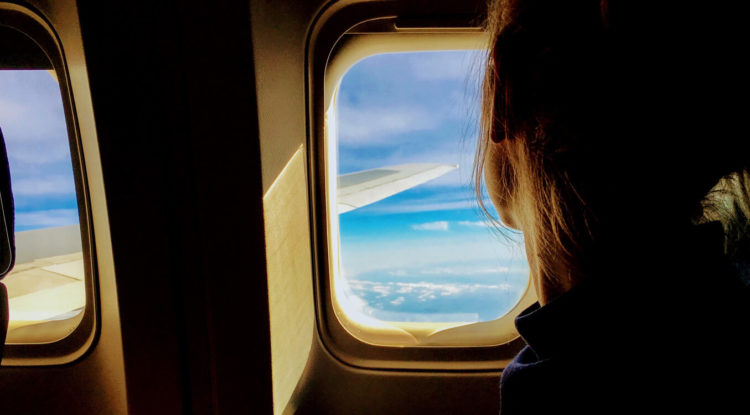
We asked an expert how to overcome aerophobia
Aerophobia is a fairly common problem, and people who have it are not just afraid of flying - they avoid flying. Even if the tickets are bought and the hotel is paid for, they may simply not come to the airport. Together with psychotherapist Andrei Kamenyukin, we understand how aerophobia manifests itself and how it differs from ordinary anxiety before a flight.
In order not to miss the main materials of "Cold", subscribe to our instagram and telegram .
What is aerophobia? How does it manifest itself?
Aerophobia is the fear of flying due to the interpretation of the upcoming flight as a threat to one's own life. It manifests itself in the fact that a person tries not to fly. If a person flies, he experiences unbearable discomfort and panic.
The main symptom of aerophobia is a feeling of fear in response to the upcoming contact with everything related to aviation. The closer the planned flight, the more pronounced the feeling of anxiety. However, just the excitement before the flight is not necessarily aerophobia. If you're nervous before a flight but don't try to avoid it, you probably don't have aerophobia.
Physiological symptoms include increased heart rate and breathing, tension in the hands, muscle tremors. For example, a person can squeeze into the armrests, try to get up, nervously walk along the aisle of the aircraft.
Some people with aerophobia still fly. Their avoidance is manifested, for example, in an attempt to "regulate" experiences with the help of anxiolytics (drugs that reduce anxiety) or alcohol. Sometimes, shortly before the flight, they drink so much that they literally have to be brought on and out of the plane. Alas, this method does not solve the problem. If at some point a person has to fly without "auxiliary drugs", the fear will only intensify.
Why does aerophobia occur?
As a rule, personal experience plays an important role. For example, a person experienced a flight in a turbulence zone and began to perceive it as a threat to life, although in fact this is a relatively safe phenomenon.
Sometimes a feeling of fear arises after a person has learned about a tragedy. Simply put, someone said that his friends were in a plane crash, and he formed the idea that all flights are dangerous. After an emotional story, you might think that aviation is an institution for the destruction of people, and not, for example, a way to travel and communicate with people from different countries.
In addition, the cause of aerophobia may be the perception of the world as a threat. We are talking about people who, in principle, consider the world around them to be unsafe. This worldview is formed in connection with childhood and adolescence experience. Perhaps a person has repeatedly encountered situations when it seemed to him that the environment is hostile, and this pattern has become fixed in him. Or relatives constantly convinced him that the world is dangerous. Therefore, even if a person has not experienced a negative experience with an airplane, it will seem to him that aviation is part of one big threat.
How can you deal with aerophobia?
Psychotherapy helps to cope with aerophobia. In particular, cognitive behavioral therapy and responsibility acceptance therapy are useful here. The course of psychotherapy with such a request should consist of several important steps.
First of all, a person needs to determine the motivation for fighting aerophobia. It should be understood what he loses when he refuses to fly: maybe these are meetings with friends, travel, business trips and career growth. It will also help to understand what a person gains if he begins to fly.
The second step is to deal with triggers in flight. Why does even a little turbulence seem like a danger? Learning how an airplane works can reassure a person and show him that modern aircraft are safe. Of course, a psychotherapist cannot always answer specialized questions about aviation. In this case, it will be useful to independently study the topic with the help of videos or articles. Even at this stage, it can be effective to visit flight simulators in order to get answers to exciting questions from a professional pilot.
The next is contact with the model of the world, in which a person interprets everything around as a danger and tries to control it. We need to work on accepting our inability to control everything around us and form a more adequate assessment of reality, adhering to a probabilistic approach. There are indeed risks and dangers in the world, but they differ in degree of probability. For example, according to ICAO (International Civil Aviation Organization), there are less than two accidents per million departures. This figure makes civil aviation the safest mode of transport. The probability of accidents exists, but it is much lower than an accident.
At the same time, the desire to protect oneself from threats during air travel is realized at the cost of colossal restrictions and serious emotional losses. The main result of psychotherapy at this stage will be the understanding that you cannot control everything, but without a feeling of total insecurity and your own helplessness.
The fourth step - it is also important for a person with aerophobia to learn how to reduce the level of activity of the sympathetic autonomic nervous system. It is responsible for arousal reactions and is activated when there are threats (for example, flight). Another part of the autonomic nervous system - parasympathetic - is responsible for "inhibition" and allows you to feel calmer.
And the most important step, the fifth step, is to face what causes fear. This must be done until your level of experience decreases, that is, until the ability to fly with acceptable excitement instead of fear. As a rule, this is done gradually: you can start with trips to the airport, and gradually reach the flight itself.
Meditative and breathing practices can help you relax in a stressful situation. But they will not help overcome fear. These are simply decisions that can stabilize the emotional state of the moment. It is most effective to use techniques that involve switching attention. For example, "square". For her, you need to find a rectangular object - it can be a monitor in front of a standing chair or a table. Then focus on the upper left corner and inhale to the count of four. Move your gaze to the upper right corner and hold your breath for a count of four. Move your gaze to the lower right corner and exhale, counting to four. Move your gaze to the lower left corner and hold your breath for a count of four.
Of course, even after a long course of psychotherapy, a person will not fly absolutely fearlessly. The goal of working with a specialist is to stop avoiding flying, but this is not the same as a state of absolute rest. It is quite possible that after psychotherapy, a person will be worried and anxious during turbulence. However, his emotions will be much less intense. And with fairly frequent flights after psychotherapy, even such experiences can significantly decrease over time.