
Translated material
The constellation of good dogs
Report from the center of training of guide dogs. The most important thing is to raise absolute non -aggression in puppies
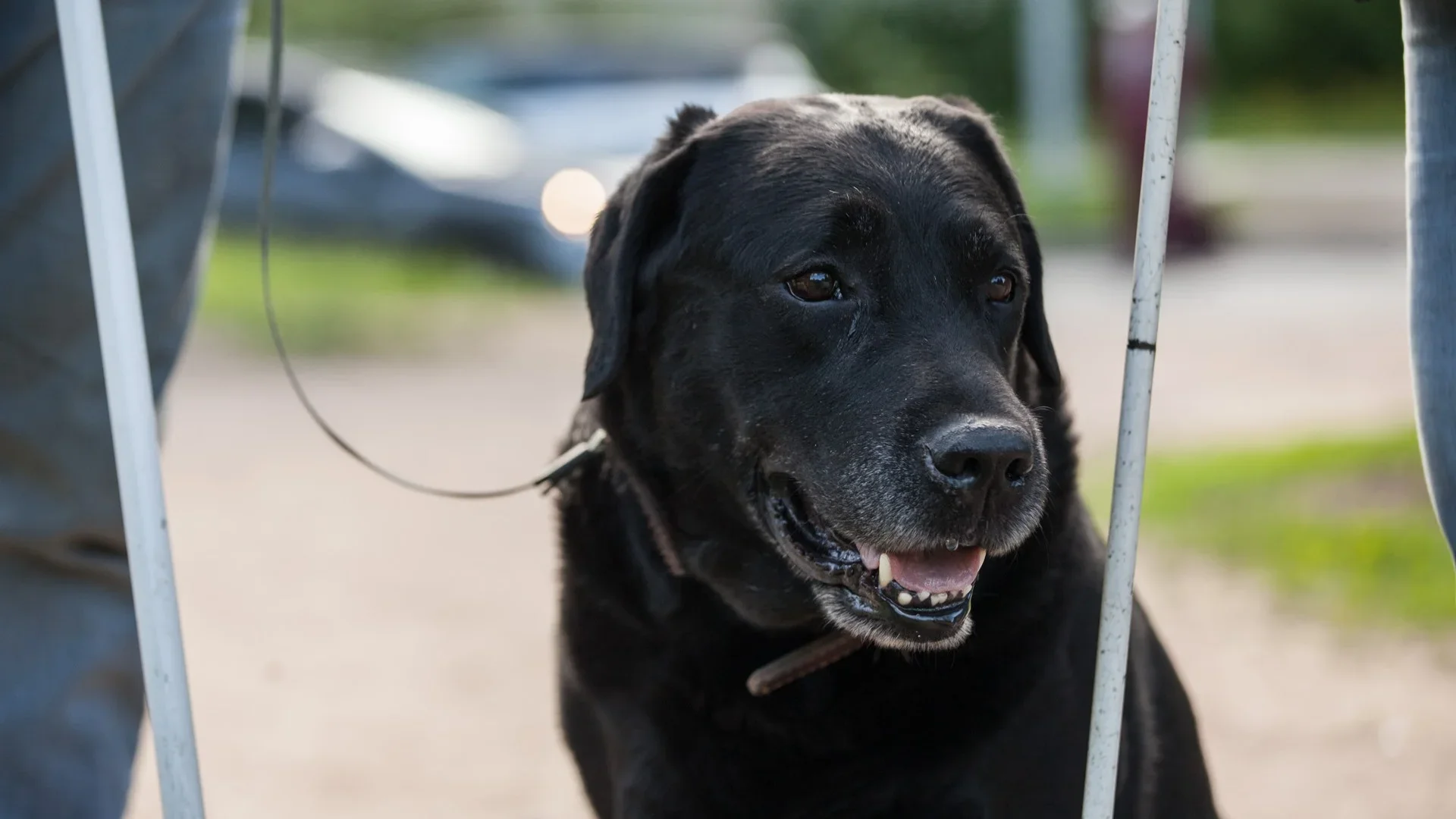
Photo: Elena Lukyanova / "New Gazeta"
How dogs are selected and prepared that you should expect from them, and what should not even be tried to demand why people with a guide dog are increasingly faced with manifestations of aggression.
As we have already said , a lawsuit by Valery Krumkach against the St. Petersburg Metro is being considered in the St. Petersburg City Court. The plaintiff requires canceling the point of use of the St. Petersburg metro prohibiting the entrance to the subway with a dog without a muzzle. In the lawsuit, Krumkach notes that a guide dog (or a guide dog) in a muzzle loses half of his capabilities and cannot fully fulfill his duties. Valery Mikhailovich said the correspondent of the New ”that the prejudice of some people towards guide dogs appears from ignorance what kind of dogs are and how they are trained.
On Thursday, June 1, it became known that the court sided with it and decided that it was possible to let the dogs in the metro.
“Firstly, not all breeds are initially approached the role of a guide/guide dog,” says Victoria Zyryanova, General Director of the North-Western Center for the Training of Simargl special dogs. - Most often these are golden retrievers and labradors. But there are German shepherds and poodles. One of the main indicators for the guide dog is a complete lack of aggression. Its level is determined in puppy by a special technique developed in the United States. In addition to the lack of aggressiveness, activity, obedience, learning are important.
According to Zyryanova, Labradors are inherently “foods”, saying easier, gluttonous. Therefore, the consolidation of the necessary skills in them occurs through the stomach. But their same habit complicates their future life. No, a trained guide dog will not stop in the middle of the road during work and will not pull to the side, feeling the smell of food.
But without slowing down the move, to choose something from the ground or treat yourself to a random person in public transport (the owner does not see) well) may well. And because of the doghanters, this may end deplorable.
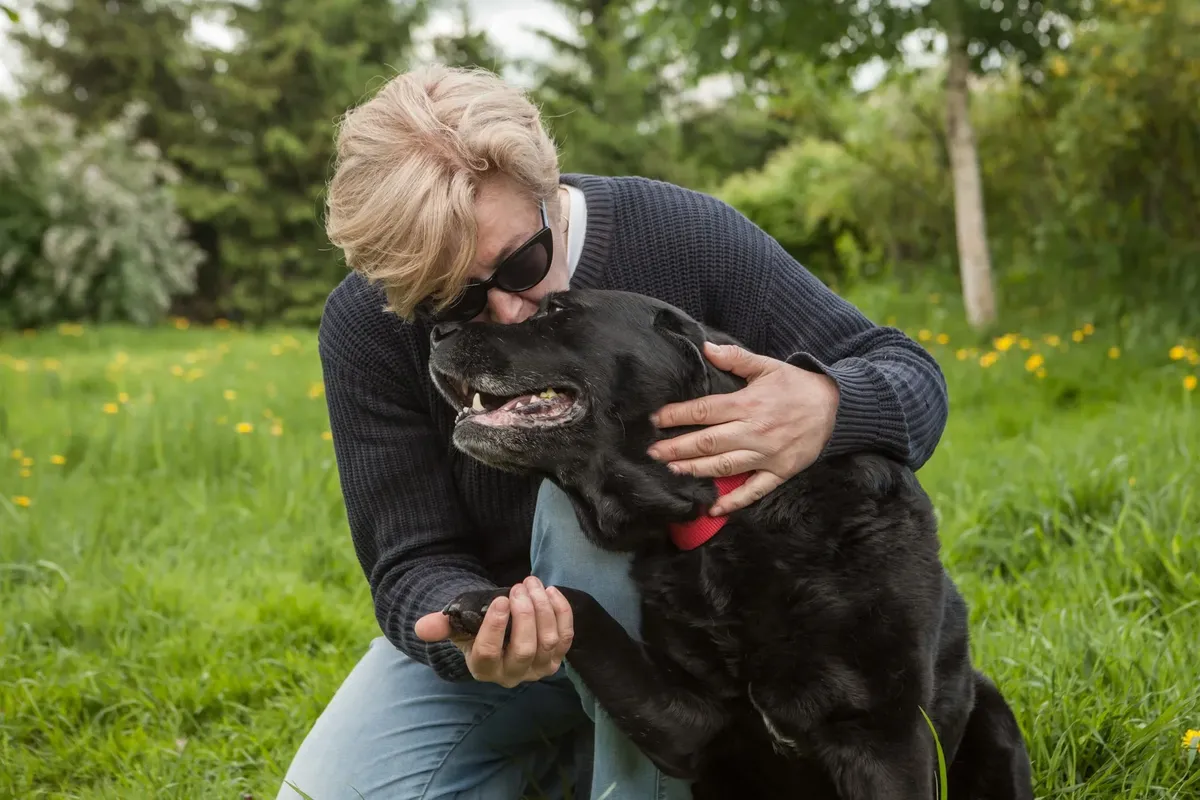
“Labradors, despite their gluttony, are still cunning,” Victoria smiles. -We were somehow with Viva (a guide dog) at an exhibition-media, where they determine whose center or school is better prepared by guide dogs. So, during the competition there was a test for "take food from the hands of someone else's." In the hall where the competition took place, everyone turned away, proceeded with saliva, looked plaintively at the hosts, but did not take the food. But as soon as he left the hall and ... not a single dog refused!
However, gluttony still does not outweigh the other advantages of this breed. Although the selection of guards is quite strict.
“Usually the selection occurs on the 29th day after the birth of the dog,” says Zyryanova. - When the puppy is no longer a blind kutonok, but did not have time to gain a lot of information about the world around him. At this age, what is embedded in it by nature itself.
But even if the puppy is suitable for all tests, it happens that in the learning process, and this is at least six months, the dog is unsuitable for future activities. Sometimes the culling “selects” us up to 50% of the dogs.
The preparation of guide dogs is fundamentally different from the training of service dogs. Where future helpers of blind people train, you will not find a landfill with ladders, logs, barriers, pipes and other obstacles that are learned to overcome service dogs. But there are audio columns, pits, imitation of open hatches and even tram tracks and railway rails, a variety of paths (asphalt with and without and without, sandy, laid out with tiles or bricks, just countrywater).
“The guide dog should not respond to any unexpected sounds,” explains Valery Krumkach , Executive Director of Simargla. -
It should not frighten it either a sharp sound of the siren, nor the beep of the car, or the explosion of firecrackers. On the sidewalk, she should lead her led along the edge, most often to the left.
The fact is that the speed of movement of the blind with the dog is noticeably higher than the speed of an ordinary pedestrian, who, maybe, believes that he is coming quickly, but is still distracted by what he sees around. And unconsciously slows down. So if a visually impaired person will go in the center, he can more often face other people. And this sometimes leads to the most unexpected consequences.
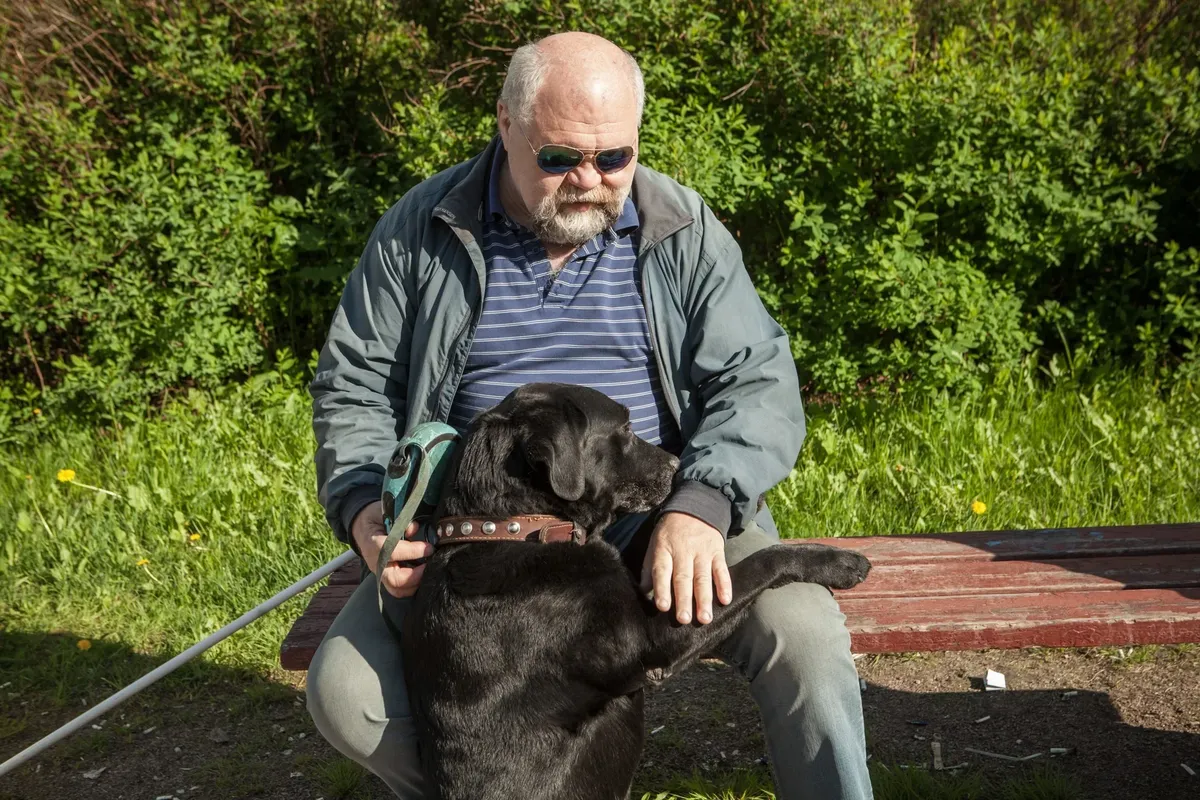
On January 27 of this year, Victoria Zyryanova conducted “Lesson of Kindness and Tolerance” for schoolchildren in Sosnovka Park. As usual, her viva-guide dog (age-related, but still active) was an absolute star. Having relying it in the snow and poured it, the children finally released Victoria and Viva.
The path to the tram stop was unfamiliar, so they moved carefully, involving a white (tactile) cane. And Victoria accidentally touched this cane (she did not hit, namely, she caught up: the blind feel the space not by blows, but with light touch) a child of about six years old.
The mother’s reaction was shocking. She attacked Victoria and began to beat her on the head of the phone, shouting insults. "Blind should sit at home!" - the woman yelled.
The random passers -by calmed her, called the police. Victoria took an ambulance (in the hospital she was diagnosed with a closed head injury and a concussion). And against an inadequate mother, a criminal case was opened under Article 116 of the Criminal Code of the Russian Federation (beatings, up to two years in prison).
“Unfortunately, we have been observing the growth of unmotivated aggression for the past two years,” says Andrei S., psychologist, an employee of the Center for Psychological Assistance to Psychological Assistance to the Nazille (surname). -
In my opinion, this is due to the fact that the Russian media now purposefully pump aggression. And it doesn’t matter that their goal is “enemies” from neighboring countries and from behind the ocean. After all, all of them are somewhere there, and the general background forces to splash aggression here and now.
Therefore, any person can become an object of unexpected violence, especially with disabilities that cannot answer violence for violence.
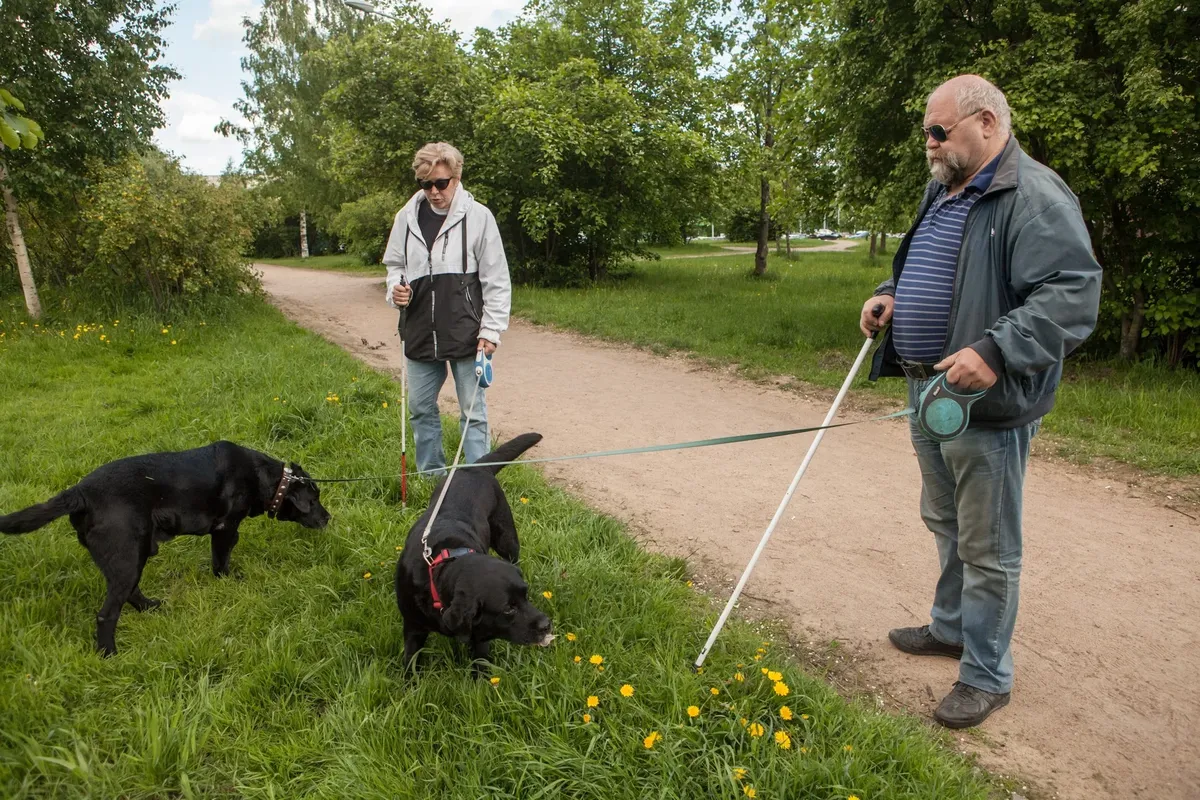
Victoria Zyryanova claims that her case is single. But her colleague Valery Krumkach believes differently:
- The point is that in the cultural capital the general cultural level has recently fallen to zero. Help offers less and less. In order for the place in public transport to give in, it is generally happiness. In stores, instead of helping, for example, to help a ripe fruit to choose or not very rotten potatoes, you will be sent to hell, or they will simply push you away, and they will advise at home to sit and not lean out.
But both converge in one: a guide dog in such cases can help even with its presence. Firstly, the most cruel person, the hate of dogs, looking at the friendly physiognomy of Labrador, involuntarily soften. And many will be struggled to contact a disabled person, who is accompanied by such impressive sizes of the satellite.
For the most part, people do not know that a guide dog cannot be a guard. And even if they attack her owner and begin to beat, she will only cry plaintively, but she will never rush at Hama.
Let me remind you: for raising guide dogs, puppies are selected with a zero level of aggression. And then long training is carefully fixed the complete inability to aggressive actions - even to other dogs or cats, not to mention a person.
“It is this understanding that is the complete absence of aggression in a guide dog, we are now trying to explain the metro employees in court,” Krumkach says. -Representatives of the subway repeat that no matter how the dog is trained, it still remains a dog and can bite someone.
Yes, it cannot! Neither the flowing bitch, nor the cries of the child, nor the explosions of the firecracker are able to distract the guide from the main task: to conduct the led on the route.
Another thing is when we just go out for a walk. Here the URS (Valery-Povyryr dog) can afford to relax: get acquainted with other dogs, play with children, lie on the grass or in the snow. But even then he is absolutely not capable of aggression. Like any other prepared guide.
In St. Petersburg, there are only 40 working guide dogs and about 60 more people are waiting for their guide. And it is not a fact that everyone who is waiting will be able to get it/it. Not because there are not enough dogs or they are expensive (a guide dog is a blind person is provided for free). The social service pays for its preparation, attracting (on a competitive basis) centers similar to Simarglu. Only then, the dog will have to take care of its owner. But usually those who decide to start a conductor understand this. However, there are not very good stories.
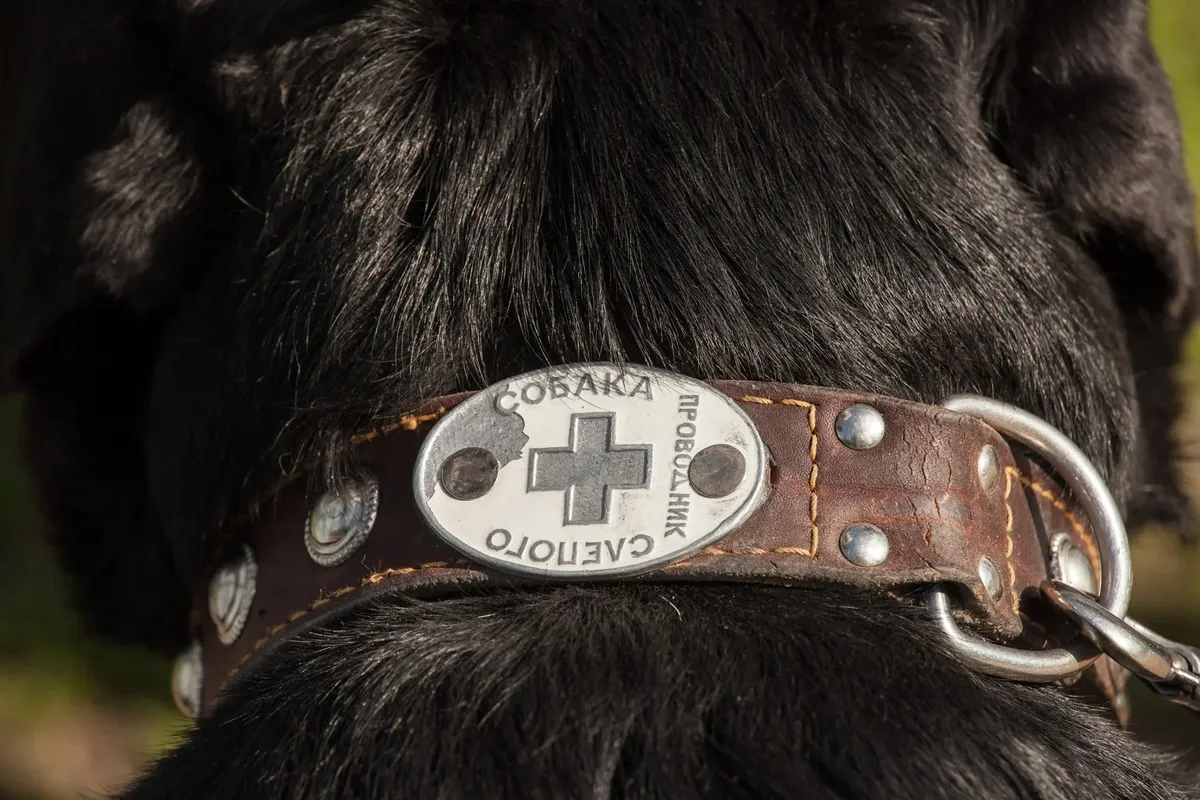
“We had such a case,” Victoria recalls, “a former policeman who lost his vision filed an application to the social service for providing him with a guide dog. We just had ready -made guide. The policeman and his assistant were joint training, worked out, each other liked it. And after a while we will find out that he uses the dog to ask for alms in the transition of the metro. Checked, it is. They reported to the social service, they went home to the dog owner and did not find any violations. The dog has a bed, bowls with food and water are standing, it does not look exhausted. Yes, and no one hangs a plate like “There is nothing to feed the dog” on it. She just lies nearby, while her owner collects money for a bottle.
Former colleagues of the blind did not abandon him in trouble - they determined him in a narcological clinic, and then taken to another city, away from the drinking companions.
But the guide dog has become completely unsuitable for work. She was given in good hands, she continues to live and enjoy life, but a guide can never work. But the preparation of one guide dog costs at least a million rubles.
“It’s not just sorry for the money, but the work being spent,” Victoria sighs. - When you prepare a dog for a future work, you should definitely follow the distance so that it does not consider the dog handler as its master. Otherwise, it will be more difficult for her to get used to the one to whom she will be given later. So here a relationship of the type -teacher is built between a dog handler and a person. And when the teacher sees how his student is growing professionally every day, how the team even understands the hint, when the conductor finally masters the “reasonable disobedience” (non -fulfillment of the team, when it can threaten the lender), the teacher is proud of the student. And it is bitter to see how many months of work goes like water in sand in just a couple of months.
The term "reasonable disobedience" introduced American dog handlers. They believe that the dog has the right to determine, execute or not to fulfill the command if the execution may threaten the lead. But at the same time, there is a danger that a dog can get used to deciding on its own which command to execute.
“I will not say that I am a supporter of this technique, but not an enemy,” says Zyryanova. - Everything depends on the dog. After all, they have, like people, someone has more developed intellect, and someone hardly understands human speech. For such disobedience, a complete break in the template.
They are accustomed to perform commands, and not decide how and where to lead a person. Well, how intellectual the dog is and whether it should be trusted in those cases when she tries not to execute the command, the owner himself must decide.
Here the connection of a person and his assistant is checked - how subtly they can feel each other.
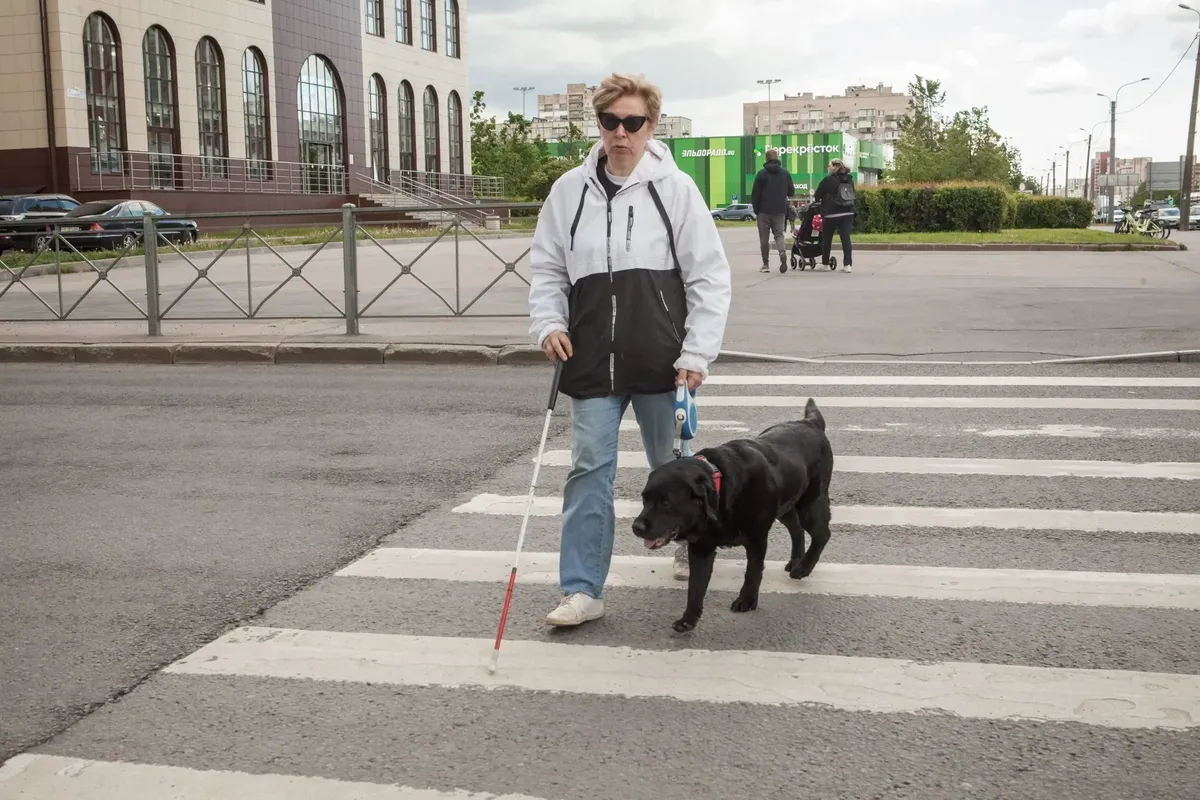
Victoria said that a couple of years ago a funny incident occurred with her friend, which could end in a tragedy. The woman and her guide walked along the route, which both knew thoroughly. And suddenly the dog pulled the led to the side. The woman decided that the conductor simply decided to go through the lawn and returned the dog. Two more steps, and the dog pulls the driven back already. The woman pulled with irritation by the slide, took another step and ... fell into the sewer hatch open right in the middle of the sidewalk. And on top, a dog fell on her head.
Both were not injured at all. But that case was a lesson for many owners of guide dogs: if your dog does not begin to behave on the usual route, be more careful and more actively using the cane. Because some four -legged assistants are much smarter than we are used to thinking about them, and are quite capable of making our own decisions. For the benefit of a person.
Read also
"If blind, sit at home"
The St. Petersburg court decides whether to let a guide dog into the subway without a muzzle. This question is very important for disabilities in vision