
Translated material
A full -scale war came to the territory of Russia. The main hot point is the city of Shebekino in the Belgorod region. This is what is happening there
“We hoped that they would protect us. But nobody cares no one "
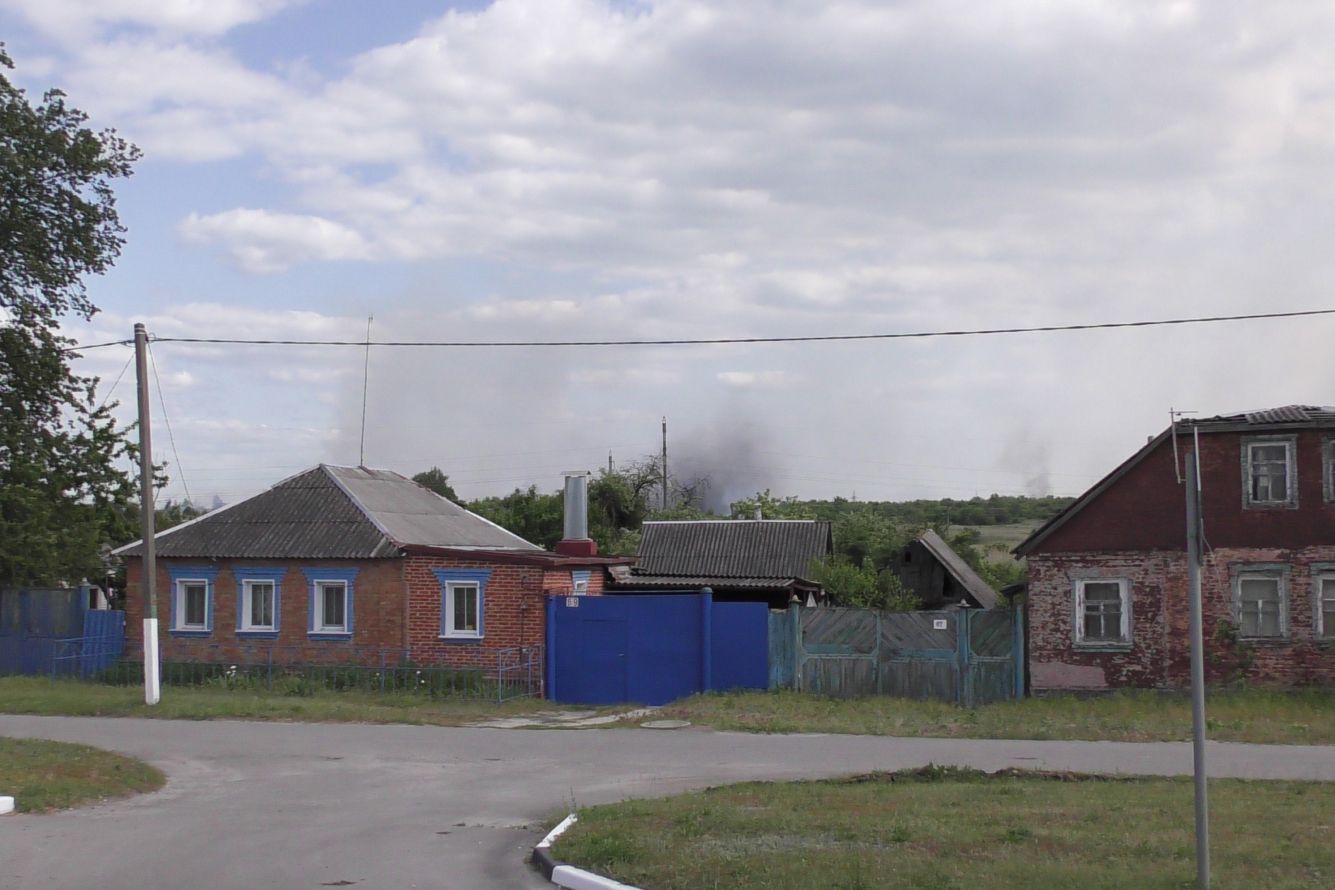
A full -scale war came to the territory of Russia. The drones attack Moscow and the Moscow Region, the “Russian Volunteer Corps” regularlyenters the border regions - it seems, without meeting any real resistance - and these regions themselves are constantly shelling. The main hot point within Russia is the 40 thousandth city of Shebekino in the Belgorod region. The fire there does not stop for several weeks. In early June, local authorities finally decided to evacuate the inhabitants. The cooperative of independent journalists "Bereg" tells what is happening in Shebekin - and how the inhabitants of the city now relate to the war. With the kind permission of the editorial office, we publish this text entirely.
There is a mat in this text - if this is unacceptable for you, do not read it.
The first shelling of Shebekin, a city located about 30 kilometers from Belgorod and six - from the border with Ukraine, began in October 2022. From the hit of the projectile, the Gallery shopping center caught fire: two were killed , 14 people were injured. Even then, some citizens thought about moving, the interlocutors of the “coast” in Shebekin say.
Among them was Alena (the name was changed for security reasons): after autumn shelling, she collected things and left - along with her parents. Three days later, they returned - in the hope that the shelling would stop.
“In the early days of the shelling, when they were not so intense, people because of [feeling] unknown hid in bathrooms, basements, corridors,” recalls Alena. - But [gradually] Shebekins are used to it, they began to relate to it calmer. Typically, shells fell into certain [the same] areas. Sometimes there were exceptions - but every person [who lived not there] believed that he would not touch him. "
The intensity of the autumn shelling is not comparable with what began in the spring of 2023, explains Nikita, another resident of Shebekin: “[Before] rattled moments. And it happened, in two or three weeks not a single cotton-nothing. ”
“Bachs”-as the inhabitants of the Belgorod region call shelling-all perceived in different ways. Nikita himself says that “feelings and emotions” because of attacks seemed to “disconnected”: “Maybe the body wants to save you from this so that you do not resolve. And he just cuts it off. ”
Parents of Nikita - they also live in Shebekin - on the contrary, they were very nervous. “They called in every shelling and asked:“ Everything is fine, are you at home? Stay at home, don’t go anywhere! ”” He recalls. The same was the reaction of some friends and acquaintances-even if they shot somewhere near their houses.
Gradually, the shelling of the city increased . In May 2023, the leadership of the Belgorod region reported on 130 shelling. In April there were 42, before that - usually about two dozen per month.
“When they began to talk about the [Ukrainian] counterattack , everything [tension] grew, and in the last days [spring] it became completely terrible: they were not shy and beat already in residential quarters,” says Nikita.
A new powerful series of shelling began on May 26. By the 31st, people began to run from the city massively.
“Are we Russia or where? They will be interested in us "
“At three o’clock [at night on May 31] I was awakened by the sound of an arrival. I have not heard such a loud yet - I immediately ran to the corridor. In the morning it turned out that the shell was in the city center, ”recalls Alena's interlocutor. Then four people suffered .
After that, Alena decided to leave the second time. The fees took place in a hurry. Due to the fact that the Shebekin residents did not yet know where they would live (they planned to move to another city of the Belgorod region), the family had to leave the cat: “[We] were not sure that we would find an apartment. What can be there with animals. ” Alena hoped that she could return for a cat someday later.
There was no question of real systemic evacuation organized by the authorities, according to local residents with whom the “coast” spoke. They got out themselves: on buses, taxi, left with their neighbors on their cars. “It is always scary to leave the city, because shells often get along the roads,” Alena comments. Staying was even worse.
All interlocutors of the “coast”, leaving the city until June 1, left Shebekino lightly. They believed that they would return home soon, although in some areas the infrastructure was already damaged due to blows: there were often no electricity and water in houses, mobile communications worked with interruptions.
The news leaving learned from the neighbors remaining in the city in telegram channels and chats:
- A friend of me left: says the roof is already going. Motorcyclists drive - and it feels like a siren.
- I also have a roof. At the [car] parking lot in front of the house, the hood is banging - it seems [that] flew in.
On the night of June 1, the city was fired again. During these attacks, the hostel and the building of the local administration were partially destroyed , eight people were injured, one handed away . After that, the locals launched the hashtag #Shebekino -Etorossia in social networks - in the hope of drawing the attention of federal media and officials to the situation in the city. The hashtag was proposed to put under posts and photographs with the consequences of shelling.
“Who is according to the SBC ( I mean Shebekino, - approx.“ Coast ” ) will say where quietly?” - asked in one of the local chats a resident of the city, who managed to leave shortly before the shelling intensified. “The quieter is in Moscow, this one does not concern their own,” another resident of Shebekin answered him.
In one of the Shebekinsky telegram chats during the next night attack, the local resident wrote: “Fuck, are we Russia or where? They will be interested in us? "
"Why not evacuated before?"
“I saw the first shelling from the window of my apartment. Then one of the shells flew to my house, ”recalls Shebekinets Ilya. He decided to leave precisely after that.
But getting out of the city was now more difficult than in previous days: public transport froze-in telegram chats, residents wrote that due to shelling, drivers were afraid to go to work. Those who do not have their own car hoped for evacuation, which the regional authorities were not in a hurry to declare. True, the head of the administration of the Shebekinsky city district Vladimir Zhdanov made a caring repost of publication from the telegram channel of the Governor of the Belgorod Region Vyacheslav Gladkov, in which he recommended that everyone who could not leave the city independently “call the local administration”.
Soon after, the governor promised that those who need urgent evacuation would “adjust the protected equipment” to the houses of which you can leave the city. It was proposed to leave the application by calling the numbers indicated in Telegram. They were afraid to declare common points of the power of power: according to the governor, “those people who are now shooting at civilians, at children” could make them goals for new attacks.
“Bombed constantly. I don’t understand why in such a situation the city was not evacuated before, ”Ilya says“ shore ”. According to him, he was able to get out of Shebekin thanks to the military - they "traveled around the city and gathered everyone," who wanted to go to a safe place:
Of course, [during the shelling was] very scary. The atmosphere you see is difficult to convey in words. People were shaking on the bus, doctors and psychologists worked all night. When the shell flies into your house, when you see how to tear the limbs to people, this is very sad.
"There is no information from the authorities"
For evacuated residents in Belgorod, six points of temporary placement (PVR) were opened. The largest is at the Belgorod-Arena stadium, where they installed long rows of metal beds. According to the authorities, 1250 people will be able to accommodate the stadium, three thousand Shebekins are ready to accept in the capital of the region (on the morning of June 2, more than two and a half thousand were in the PVR).
In such a PVR, the military brought Ilya. He does not complain about everyday life: the main thing is for Ily that “they provide both overnight and food”, and “there are doctors and volunteers who help the victims.” What to do next, a resident of Shebekin does not understand: from the house he did not have time to pick up not only money, but even documents.
“All [documents of those who have left the border areas] are restored as usual, because in our region there is no emergency regime - which means that we are not officially listed as refugees,” Ilya explains. - The only thing they said: “Go write a statement, pay the state fee [for issuing a passport].” If there is no way to pay, then that's it. I have only 200 rubles in a small handbag ”(the cost of a fee is one and a half thousand rubles).
But even those who managed to take documents with them, the state does not actually help. “There is no information from the authorities. They said that you can go to the Red Cross and get humanitarian and financial assistance, ”says Elena Shebekin, a resident of Shebekin. - So far, only he helps. I am a mother with two minor children; They said that they would give 10 thousand [rubles], five more for the father-pensioner. But there are now huge lines. ”
Some residents of Shebekin had to pay extra for evacuation. According to them, for the export of a child to a summer camp in the Voronezh region, commercial companies that organized the departure took three thousand rubles from their parents. The head of the administration of the Shebekinsky city district, Vladimir Zhdanov, explained this by the fact that the authorities agreed on transportation with private firms before the start of mass shelling. Nevertheless, the official agreed with his parents that now “this amount will be important in every family budget,” admitted that the officials “saw this situation”, and said that the Shebekin residents would be returned.
Now those who were in the PVR are resettled by the dormitories of Belgorod universities and colleges. Students of two universities in Belgorod told reporters that for the sake of this they were transferred from new dormitories to old ones, where “dirty and full of cockroaches”.
Some residents of Shebekin themselves rented apartments in Belgorod. Prices for some categories of real estate, according to chat participants, jumped in the city two to three times. Now finding an apartment in the capital of the region at the same price is almost impossible. Previously, they say chat participants, one -room apartment could be rented for only 10-13 thousand rubles a month - now the rental starts with 40 thousand. Some authors of ads, according to the searching for housing, indicate one price, but at the meeting they call another, even higher.
The interlocutor of the “coast” Alena confirms that the search for an apartment for her family was a difficult task - but in the end they managed to find housing, and they were even able to pick up a cat left in Shebekin. True, the Alena family does not plan to linger in the Belgorod region: in her opinion, it is basically unsafe to be in the Belgorod region.
The interlocutor of the “coast” Nikita, having left Shebekin, simply returned to his student dormitory in Belgorod: in the fall of 2022, the regional authorities “for safety reasons” transferred all students to distance learning and Nikita went home to his parents. Now he has returned, and his parents left Shebekin to the city of Koruch - also in the Belgorod region.
According to the student, he does not plan to leave the region. “In Belgorod, in comparison with Shebekin, I feel like behind my seven castles,” Nikita explains. -It’s not scary here, even if something bals: Shebekino is not sheated by any rockets, but from mortars, from long-range artillery-[from this type of weapon to Belgorod] they simply will not achieve. And the missiles, if they really want, they will let in Moscow. ”
"In the city of Chaos"
According to the census of 2021, almost 40 thousand people constantly live in Shebekin. The interlocutors of the “coast” say that the city is practically empty: it remained mostly elderly people who were not ready to leave for the unknown, and men trying to protect from looters what is left of their city. According to the head of the Shebekinsky city district, Vladimir Zhdanov, over the past week more than a thousand apartments in 67 apartment buildings and 370 private houses suffered from shelling.
Nikita says that in his apartment building there is now only one neighbor - but the connection with him is unstable, so it is difficult to find out whether the apartment was intact.
Officials in private conversations configure Shebekin residents that they will not succeed in returning home yet. “This will not end quickly, do not wait for a quick return,” a participant in one of the local telegram chats quoted the governor as saying. According to him, this conversation took place in the PVR, where the head of the region came to personally meet with the evacuated.
To go to Shebekino even for a short while - for example, for pets, forgotten things or documents - there is already a big problem: from the evening of June 2, the authorities officially closed access to the city, blocking roads. According to the interlocutors of the “coast”, the military reluctantly make exceptions even for those who are ready to take all risks on themselves-but sometimes they still manage to agree with them.
For example, the interlocutor of the “coast” Elena first took out the children, and later returned to the city for an elderly father and dog. For animal days, shelling has become serious stress. “She is constantly sick, I don’t know what to do with it,“ we are looking for a doctor, ”says Elena.
According to her, looters go around the city: “I worked in a supermarket - we have a door knocked out. On the market, all mobile salons are robbed. In the city of Chaos. "
Elena says that until the last she did not believe that Shebekino could be in this position. “We hoped that we would protect us - even Wagnerians, even the Kadyrovites ... But no one cares about us. It used to seem that [war] is somewhere in the distance, and now we ourselves were obscurity and do not know what to do. ”
The Shebekin residents, with whom they managed to talk “the coast”, are reluctant to say about their attitude to the war. Most often, their words come down to the formula: "The main thing is that everything ends with Shebekin."
Nikita says that in the first two weeks after the start of a full -scale invasion "was in complete apathy." “I did not understand what is right, what is wrong,” he recalls. “But when your city is fired throughout the year, you are somehow inclined to one side ... and I, it turns out, [now] for his.” Hard. In general, I am for the “special military operation” to be carried out to the end, because if you do not put an end, it is not a fact that the conflict will not resume. One way or another, you need to finish. ”
“I do not see any possible solutions to this problem, in order to move the front line from the border,” Alena argues. To the questions about where it needs to be “pushed” and how, she refuses to answer, because “she understands this badly.”
"Shore"