
Translated material
Austria publicly supports Ukraine and condemns Putin - but continues to conduct business with Russia
Politico talks about the close ties of Moscow and Vienna, which almost did not prevent even war
After the start of the full-scale Russian-Ukrainian war, Austria retained strong business ties with Russia, especially in the field of energy and finance. At the same time, Austria supplies humanitarian assistance to Ukraine, accepts refugees, votes for sanctions against the Russian Federation and publicly condemns the actions of Vladimir Putin. Politico published an article on how such relations of Moscow and Vienna developed. "Medusa" retells this material.
From the very beginning of a full -scale war, Austria recalls its neutrality. Opponents of its politicians accuse the country's elites of “cynicism” and believe that the Austrian approach to relations with Russia poses a threat to European unity. Given the good relations that the Prime Minister of the neighboring Hungary Viktor Orban has developed with Putin, in Brussels, they fear that over time, the number of countries moderate in relation to Russia in the very center of Europe can increase - and this will give Moscow an advantage in its ongoing attempts to destroy unity on the continent.
In Austria, they do not agree with such an assessment. The country's Foreign Minister Alexander Shallenberg told Politico that since the beginning of a full -scale invasion of Russian troops in Ukraine, Vienna repeatedly made it clear what her position was in this conflict. At the same time, the minister emphasized that "for a small dependent on the country's export supplies, it is important to observe international law and the principle of Pacta Sunt Servanda ."
Good business ties between Russia and Austria, reminds Politico, originate in the middle of the twentieth century. After the defeat of the Nazis in the Second World War, Austria secured neutral status in the Constitution - and the authorities quickly realized that the country's position between NATO and the countries of the Warsaw Treaty is an advantage that allows business to conduct business on both sides of the iron curtain. In June 1968, Austria was the first of the Western European countries to sign a contract with the USSR for the supply of natural gas. Just two months later, Soviet troops invaded neighboring Czechoslovakia, putting the end of the Prague spring. Austria, fearing the invasion and to its territory, abstained from criticism of the USSR and even withdrew troops from the Czechoslovak border.
It was a determining moment for Austria in the Cold War. The Soviet troops did not invade, and the gas continued to arrive. The lesson for most Austrians was obvious: neutrality is useful for both business and safety.
Thanks to this neutrality, Politico notes, Austria also became an important platform for international diplomacy-the headquarters of the OPEC and one of the main UN offices, and later-the headquarters of the OSCE, were located there.
After the collapse of the Soviet Union, Vienna became one of the favorite cities of Russian oligarchs and officials - there, Politico notes there, greeted Russians with money and influence. The connections between the two countries were strengthened in the opposite direction: many senior Austrian officials, regardless of party affiliation, found work in Russia after resignation.
For example, the former Chancellor Wolfgang Schussel from the right -centric People's Party later became a member of the Boles of Directors of MTS and Lukoil. Social Democrat Alfred Guzenbauer, who replaced Shüssel as Chancellor, later found a job at the pro-Russian research institute Dialogue of Civilizations. Another Chancellor Christian Kern became part of the reign of Russian Railways. The former head of the Foreign Ministry of Foreign Affairs Karin Knaisl, who was dancing with Putin at his wedding, was sitting in the Council of Directors of Rosneft. They all explained their actions by the fact that Austria should remain a bridge connecting the West with Russia - and this, in their opinion, corresponds to the interests of the West, writes Politico.
In June 2014, just a few months after the annexation of Crimea and the beginning of the war in the Donbass, Putin visited Austria - and in the presence of the president of the country he publicly joked about the dictatorship and that part of the territory of modern Ukraine used to be Austrian. After the beginning of the full -scale invasion, the Jokes ended, writes Politico, but economic relations were practically not injured.
Russia is still the second country (after Germany) in terms of investment in Austria (25 billion euros or 13% of their total volume as of the end of 2022). Only a third of the largest Austrian companies investing in Russia turned or plan to curtail or reduce business there - 60%compared to the average for foreign companies.
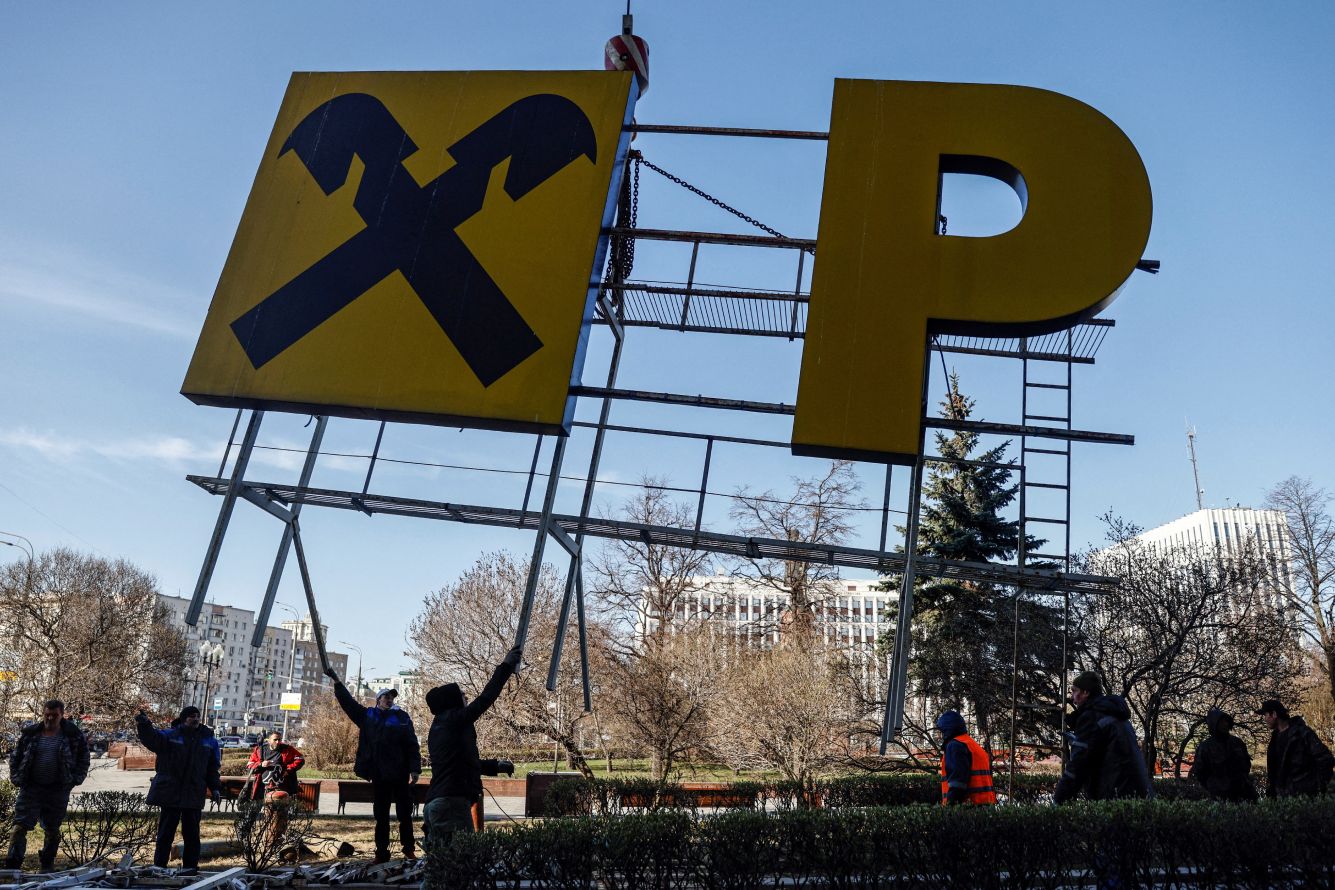
The OMV oil and gas concern (the largest company Austria), Raiffeisen Bank and a manufacturer of Red Bull energy drinks remain in Russia. OMV, in particular, states that it is obliged to purchase at least 6 billion cubic meters of Russian gas per year under the contract until 2040 - this actually contradicts the promise of the country's government to reduce the consumption of Russian gas to zero by 2027.
According to Politico, for many years the Austrian leaders dismissed the objections of their EU partners regarding close ties with Russia and the penetration of Russian influence agents. Such carelessness led to serious consequences-so, in 2021, Western allies removed Austria from the exchange of intelligence information, which is why the authorities had to begin cleaning in the ranks of the special services. This happened after a high -ranking Russian spy was exposed in the Austrian security services.
Against the background of the continuing war, the pressure from the allies on Austria increased significantly. So, Poland directly accused Austria of a “pro -Russian position”, when the Austrian Minister of Foreign Affairs Alexander Shallenberg in January 2023 said that Russia from the OSCE should not be excluded. Around the same time, the US Treasury became interested in Raiffeisen in Russia, suspecting the bank inpressing sanctions (subsequently the bank said that he would consider the possibility of selling Russian assets). The European commission in May recalled that Austria does not have enough to ensure energy security - still 70% of gas to Austria is supplied from Russia.
As Politico notes, such increased attention made Vienna adjust the public position. Alexander Shallenberg, answering the question of journalists, does he still consider Austria a “bridge” between the West and Russia, said: “To be a bridge, two shores are needed-and now they are not.” At the same time, it concludes the publication, taking into account how much Russian interests are rooted in the policy and economy of Austria, in reality obligations to change the course can remain only at the level of public rhetoric. According to polls, the most popular political force in Austria today is the ultra -right Party of Freedom, advocating the abolition of sanctions against Russia.