
Translated material
Apple finally showed her helmet of mixed reality
They can control the eyes and movements of the hands, but the charging is enough only for two hours, and the device costs 3.5 thousand dollars
On June 5, Apple opened the 34th conference for WWDC developers, introducing a new product for itself-a mixed reality helmet called Vision Pro. The device, thanks to which digital objects are “applied” to the picture of the real world, will allow Apple to compete with other industry leaders - Meta, Sony and Microsoft. "Medusa" tells the main thing about the long -awaited helmet from Apple.
Virtual reality sets are far from always convenient. This is how the helmet from Apple works
The set of mixed reality Apple Vision Pro looks like a couple of ski glasses. The front part is made of glass, and the frame is made of aluminum alloy. “Mask” with a fabric lining can adapt to different forms of persons (at least, so approves Apple). And the size of the ribbed strap - by the way, several colors will be available - regulated.
The Apple Vision Pro has only two buttons: the main one - for example, for shooting photos and videos, as well as a wheel necessary mainly for switching between augmented reality and a complete immersion in a virtual one.
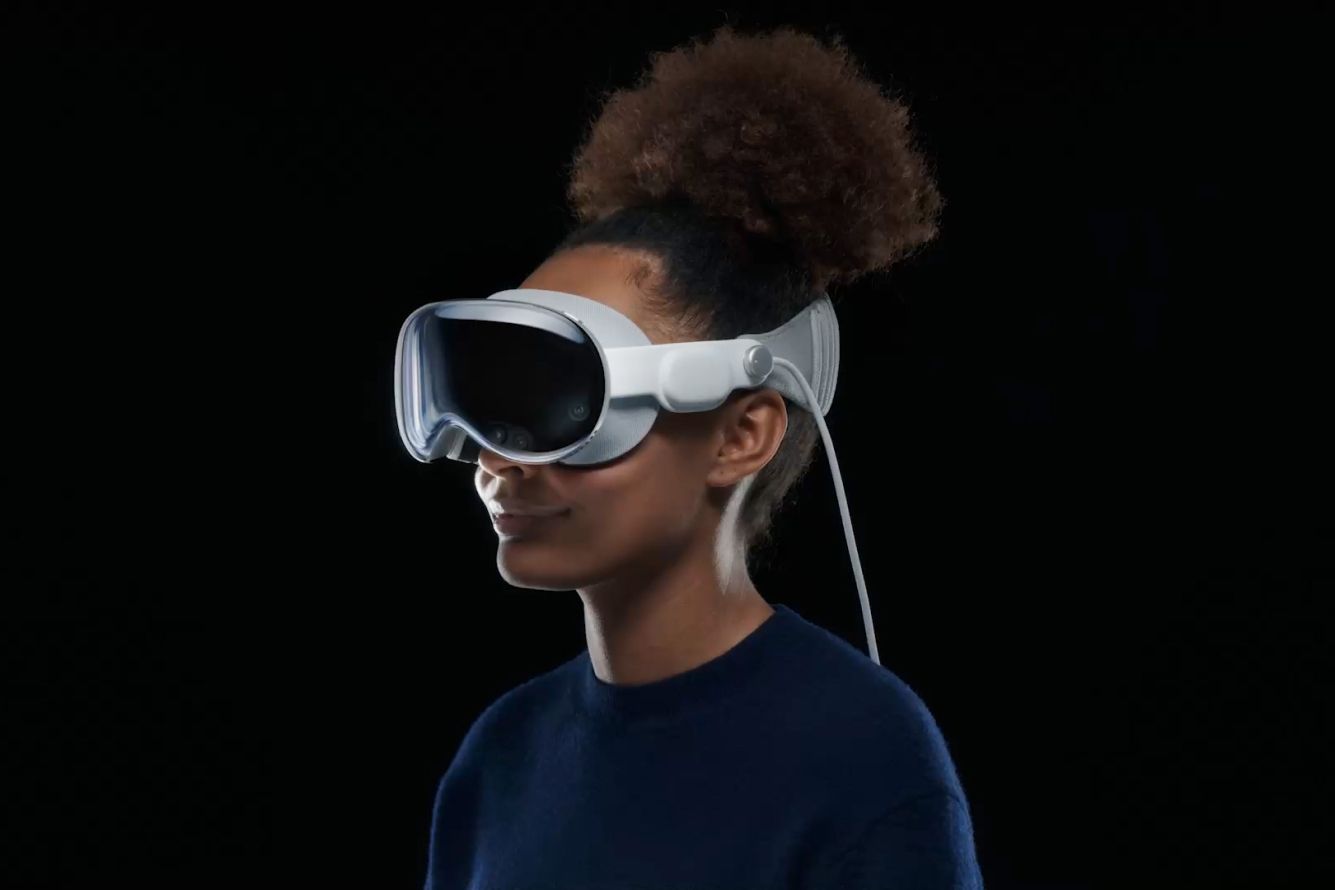
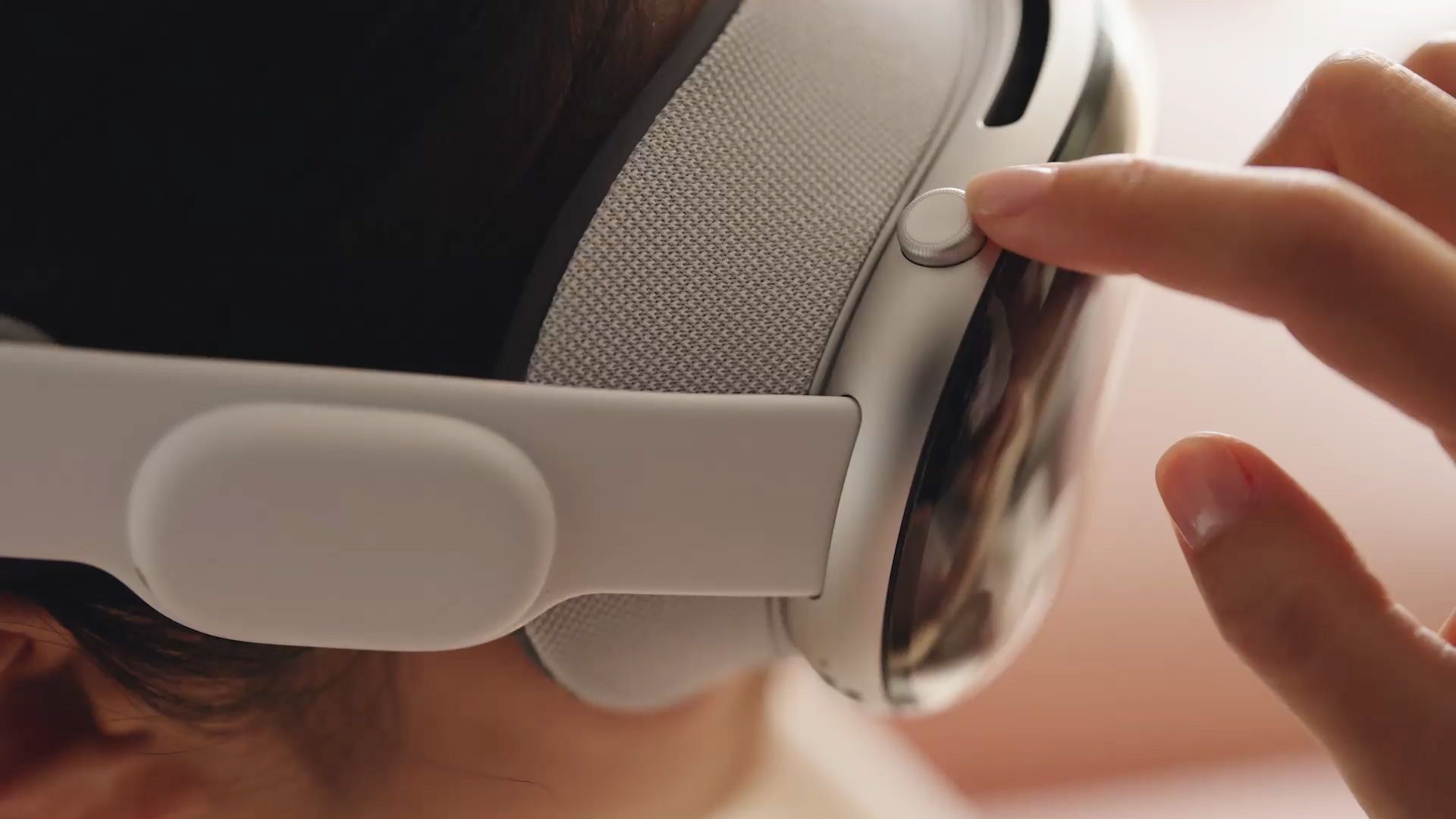
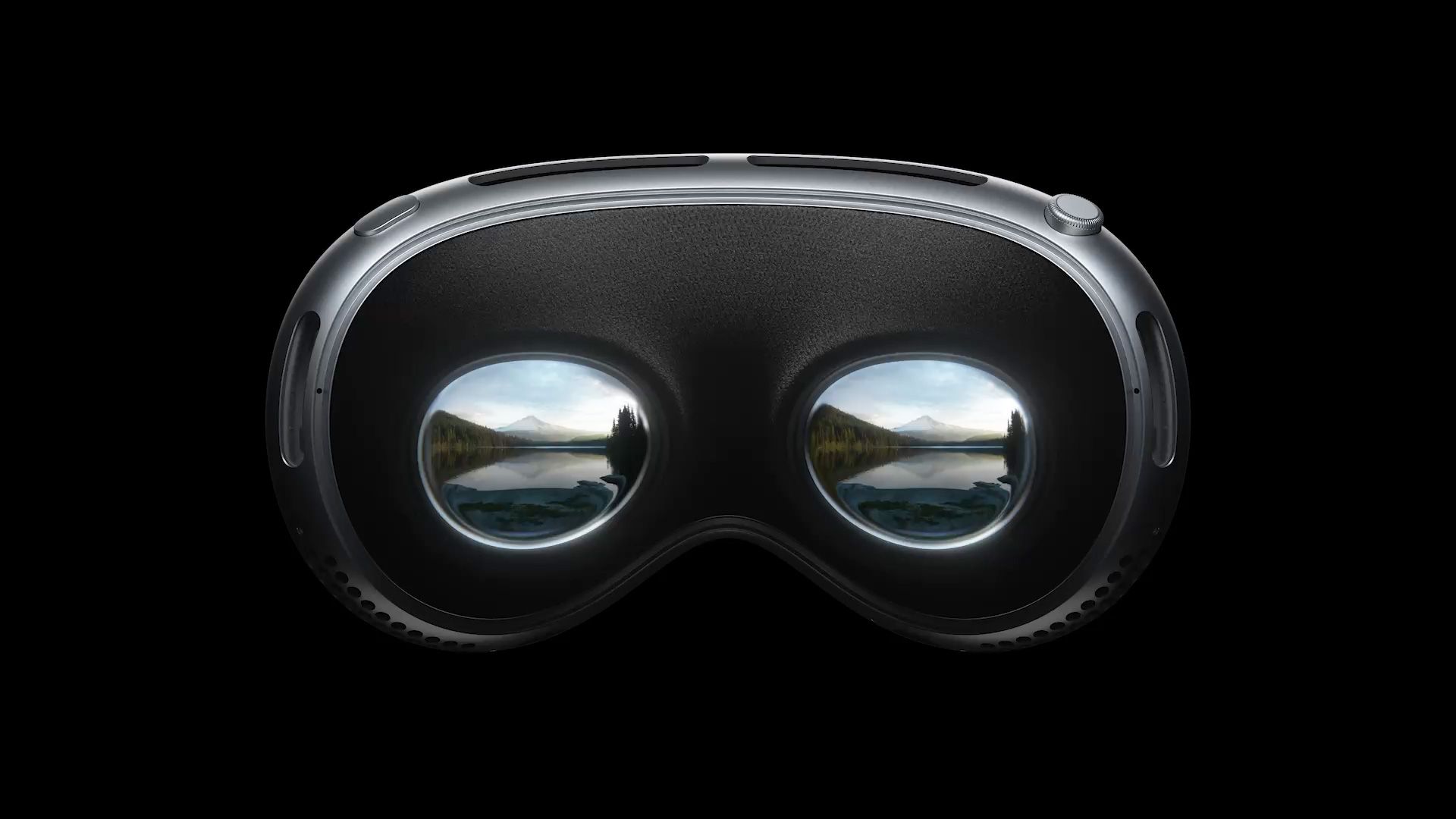
The company claims to use the easiest materials from the available ones, but the weight of the headset does not mention the presentation. Built-in Microled displays (Apple compares their size with mail brands) in total reflect 23 million pixels, which is more than two 4K screens (up to 17 million there). In theory, this should give a picture in which pixels are invisible to the human eye.
The headset works on two of the Apple - M2 own chips, which was previously built into macbooks, and R1, created specifically for a new device. The first is responsible for performance, and the second - for processing data from all sensors in real time, including Lidar, 12 cameras and six microphones.
The headset will work for two hours on the battery. Apple offers to wear it in your pocket
The Apple Vision Pro can work autonomously up to two hours - for this, the headset needs to be connected through a short cable to a small external battery. In a promotional site, the headset users wore a battery in the pants pocket. If longer operation is required, the device can be connected directly to the outlet.
Apple tracks your eyes - and "shows" them to people around
Apple monitors the eye movements of the head of the headset, scans the face - and can broadcast the picture from cameras inside people who are near. This technology is called Eyesight - and it helps to remain in touch with the real world.
So, if someone else is next to the owner of the Apple Vision Pro, he will see the eyes of the headset user, and he himself will receive a notification of the presence of another person.
But what about the video call, for example, through Facetime, if there is no familiar front camera, and there is such a massive device on the face? In this case, the headset will create a digital avatar (Persona) - other interlocutors will see their face without a special device.
Apple claims that other companies will not see what sites and applications a headset user visits. For security, an analogue of Face ID is used - the Optic ID system, recognizing the owner of Vision Pro. All data is encrypted and stored only on the device itself.
There are no controllers!
The Apple’s headset can control the eyes, dictation with a voice assistant and hands. For example, you can choose an element in the application - a button or icon - you can simply look at it, and to open it, it will simply be necessary to “click” with the thumb and forefinger, bringing them together. For scrolling, it is enough to make movement of the wrist. At the same time, the hands do not have to hold in front of you - the cameras see how they are on the knees of the user or on the table.
Two speakers, built into the device, give the feeling that the sound comes from the surrounding space. For this, the technology of spatial audio (Spatial Audio) is used, which is in AirPods Pro.
Apple claims that the helmet is perfect for work - both in the office and beyond
The Vision Pro user can display several applications to the virtual screen at the same time, and switch the work from one to another - using a simple head rotation. The text (like the rest of the elements) will remain the maximum clear, at whatever angle the owner of the headset looks at him.
You can connect MacBook or Mac to Vision Pro - and open the computer desktop without removing the headset. For printing, you can use both the Magic Keyboard keyboard and virtual, as well as Magic TrackPad.
Apple offers to turn Vision Pro into a cinema screen
According to Apple, it is convenient to use the headset to view photos and videos in the most accessible quality. For example - a huge panorama made on an iPhone.
On Vision Pro, you can also shoot three-dimensional photos and videos-and save something like “voluminous memories”, which can be returned later (using the same helmet, of course).
Apple also promotes Apple Vision Pro as a way to plunge into films even more-and offers to turn the device into a “personal cinema”, including for viewing a 3D-tone (for example, Avatar).
On the first day, the headset users will be available to their own striming service of Apple TV+, as well as Disney Plus, which became its first partner. So, for example, it will be possible to watch sports with additional content on the virtual screen.
Apple is tuned to make the headset an important hub for games
On the first day when the Apple Vision Pro will go on sale, users will be able to play the “more than one hundred” games in Apple Arcade - the company's game service available by subscription on the iPhone, iPad and Mac.
To play the helmet, as with the help of a TV, you will need a controller - it is suitable both from Xbox and PlayStation. At the presentation, Apple promised to further develop gaming on a new device.
So, the company announced partnership with Unity (it developed the game engine of the same name) - and transferring applications at its base with full access to the operating system (Visionos), rendering and built -in gestures.
Apple Vision Pro is an extremely expensive device. But if you really want to, there is time to accumulate!
Apple's mixed reality headset will cost $ 3499 . At such a price, the device will be sold in the United States. What will turn out to be the official price in Europe and around the world is still unknown.
In the United States, Apple Vision Pro will be released “at the beginning of 2024” (when exactly, Apple did not specify). Most likely, those who wish to use the helmet in other countries will have to wait even longer.
In the meantime, you can look at him in real life-with the help of journalists who are at the Apple headquarters in Silicon Valley.
"Jellyfish"