
Translated material
To himself
The story of Alexei Gorinov, told by himself
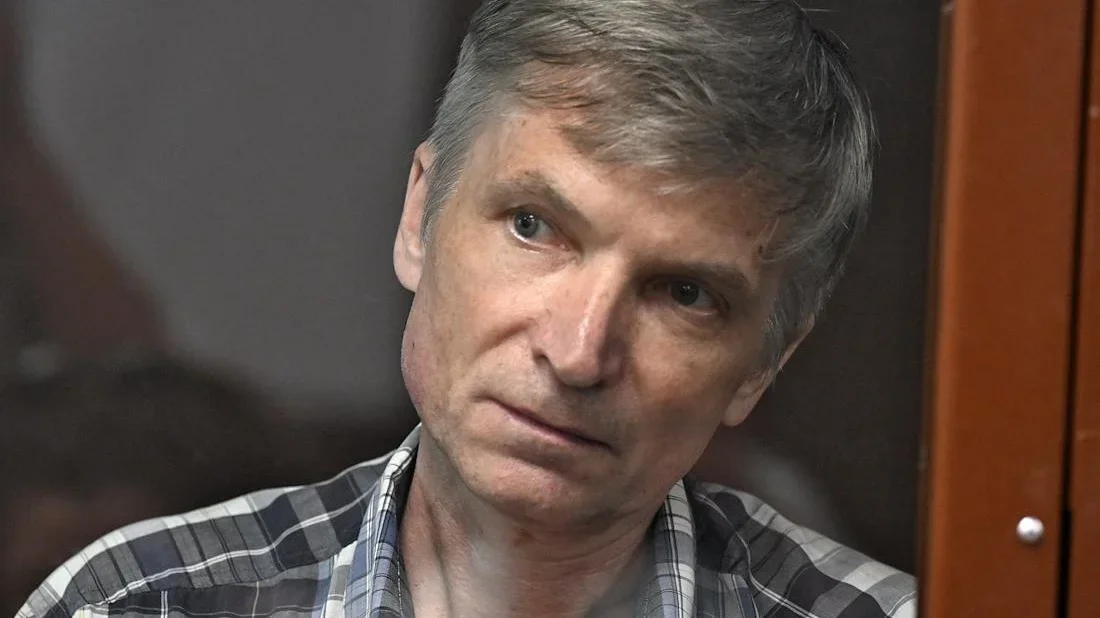
Alexey Gorinov. Photo: Anatoly Zhdanov / Kommersant
Alexei Gorinov - lawyer, human rights activist and politician - the first convicted for a public statement against his. On July 8 of last year, the bourgeois court sentenced him to seven years in colony, and later the term was reduced by one month. In the near future, Gorinov’s cassation will be considered for the verdict.
I am not familiar with Alexei Gorinov. But we sent questions to him in the colony, asking to talk about our life.
Before the arrest, he almost did not give an interview, after his conviction, the journalists began to write letters to him in a pre -trial detention center and a colony to try to understand who this previously was not a public politician who could not be silent when he began, and received seven years of lack of freedom for his words.
Based on his answers, one can imagine this modest person who has long remained in the shadow of more vivid and ambitious satellites in the political life of Russia. And to see a person who has chosen a policy not for the sake of glory, but to serve his compatriots.
If you try to describe Alexei Gorinov with one phrase, then we can say this: "He is a person equal to himself." Not dependent on the conjuncture or someone else's opinion, listening to himself and his intuition. Fate, providence or history three times in life called on Gorinov to take part in the country's public life: at the beginning of the nineties, at the end of the zero and after February 24, 2022. Remaining true to himself, he once responded to this call, not experiencing a sense of fear-he acted and continues to act on the basis of some deep knowledge.
Love for three musketeers and ideals of communism
Is it possible to know that it forms a person, what will determine his future actions? It seems that Alexei Gorinov was influenced by parents, a school with the ideas of justice, the book “Three Musketeers”, admiration for science, “Enemy voices”. And also - the dream of seeing the earth from space. However, about everything in order.
QUOTE
“I am a person who was born in the Soviet era and lived in the Soviet regime of half a life: he received a higher education, began his career and even, as an officer of the reserve, adopted a military oath for allegiance to the USSR. My generation of young people was suggested that the Soviet system is the best in the world, communism is inevitable, and we will definitely build it, the socialist model of the economy today is the best and more efficiently capitalist, based on private property, freedom of entrepreneurship and competition. I had to believe in this, because another view of the world was not available to Soviet people ” - so Alexei Gorinov writes about himself and his generation from the colony in the city of Pokrov.
He was born in Moscow in 1961. Parents are humanities. Before the war, his father studied at the actor, but went to the front without finishing up. And in 1942, he was seriously wounded near Rzhev and the actor no longer, he graduated from legal, but took up journalism, stood at the origins of the creation of the Mayak radio station, then was the deputy head of the correspondent network of the All-Union Radio and Television (GOSTELEDODROY of the USSR). Mom worked in the museum, in the publishing house and in the library.
The father and mother of Alexei brought the war: they met in the Military Hospital of Tomsk. Gorinov did not find his parents from his father. But he talks in detail about his mother’s grandfather, calls him a “joke”. This grandfather lived a very rich life: he is from a family of Poles who lived in Ukraine. Born in 1895, at the beginning of the reign of Nicholas II, and died during the presidency of Boris Yeltsin, having lived 97 years. He became one of the founders and the first director of the Far Eastern Fasting CHARTENT in Khabarovsk. In 1939 he was arrested, accusing him of calls for the overthrow of the Soviet system.
They released it after ten months of imprisonment. It was a short period of time when the NKVD, instead of Nikolai Yezhov, headed Lavrenty Beria and some things were reviewed. Grandfather was going to plant again, but he left Moscow to the Far East and left with familiar geologists on a long expedition, avoiding repeated arrest. He was rehabilitated at the end of perestroika, at the age of 95, he restored his party membership.
A critical attitude to Soviet power began to form in Gorinov in high school. This is the second half of the 1970s, the reign of Leonid Brezhnev.
“Then it seemed to me that Lenin’s ideas were correct. I still believed in the ideals of communism, but believed that his political heirs, finding himself in power, distorted, defame his teachings with their actions, violated his attitudes - the so -called “Leninist norms”. This was considered both in our family, and we often discussed it in the kitchen, ”Gorinov explains.
In an amazing way, faith in the ideals of communism was combined with a student Gorinov with admiration for the musketeers of Alexander Dumas. By imitating them, Alexei went to study fencing on the rapiers, and then became interested in astronomy.
He did not become an astronomer or astrophysicist, but chose an engineering specialty associated with the high -precision calculations of the orbit of artificial Earth satellites and the study of physical forces acting on the spacecraft, by the study of their influence on the orbits.
Having graduated in 1984, the Moscow Institute of Geodesy Engineers, aerial photography and cartography, he remained there as a researcher and teacher.
Gorinov still had a dream that was not destined to come true. He turned to the Cosmonaut training center with a request to enroll him in the preparation for space flights. But for an unknown reason, he was refused.
Remembering the beginning of perestroika, Gorinov pays tribute to Mikhail Gorbachev and that time of hopes. And he speaks of how quickly invisible before, for decades, silent people suddenly realized their citizens and spoke: “It turned out to be so many talkative people in the Gorbachev perestroika. It is just amazing where they all suddenly came from. Gorbachev gave us the opportunity to feel like citizens of his country, responsible for its fate, to criticize power, but also to participate in competitive elections to its various levels, to create freedom, to receive information, to spread it. ”
Perestroika and two couples
Thanks to the Gorbachev perestroika, Gorinov was in politics. In the late eighties - early nineties in different areas of Moscow, “voters' clubs” were created, where people who wanted to change their lives in the country gathered. One of these clubs was visited by Gorinov. A little later, he joined the Democratic Russia public movement and in 1990 ran for the district deputies of Moscow. He was elected, and he left his work at the institute, became deputy, and then chairman of the Commission on Economic Policy of the Council of Deputies.
Alexey calls these first deputy elections among events that had an important influence on him. And also - the landing of a person on the moon and two couples: August 1991 and October 1993. During the confrontation between the State Emergency Committee with supporters of democracy, Alexei Gorinov was among the defenders of the White House. In an interview, he recalls how on the first night he went home to say goodbye to his wife and two -month -old son and, preparing for a possible sad outcome of events, took an army gas mask and a Finnish knife with him. The putsch of the GKChP ended with the victory of the supporters of Boris Yeltsin. And deputy Alexei Gorinov continued to engage in the economic committee of the district council of deputies with the problems of privatization of companies and stores and got a job at the Moscow branch of the registration chamber.
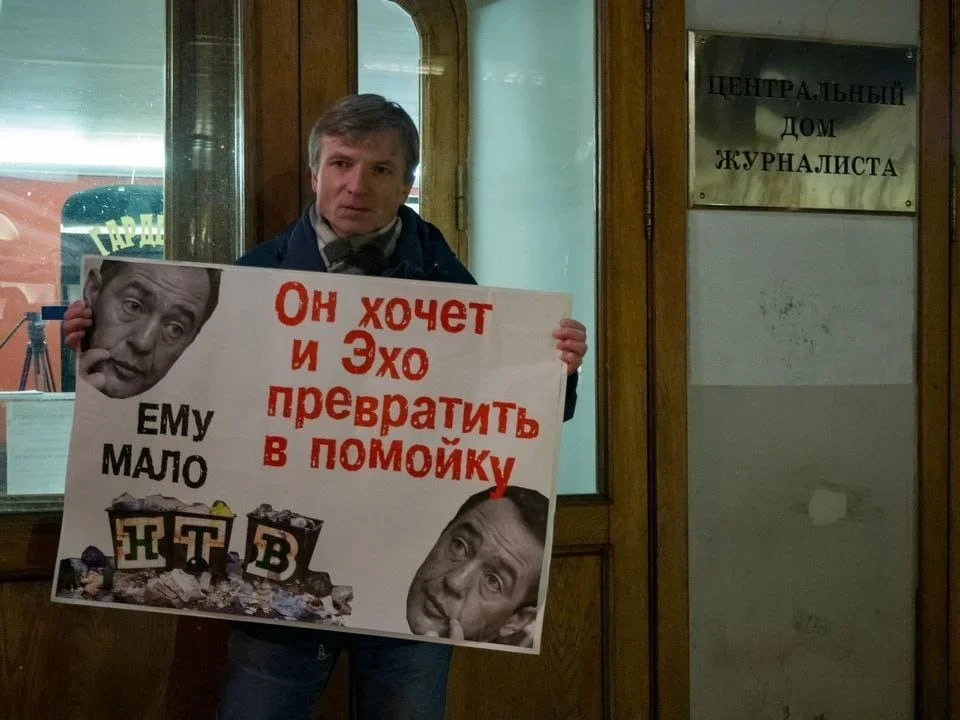
Gradually, he began to be disappointed in political life. He did not like that representatives of the nomenclature were returning to power. Gorinov calls the execution of the Belo House building tanks in October 1993, Gorinov calls the “beginning or harbinger of the end of parliamentarism in Russia”. His disappointment in politics became final and, as he thought then, irrevocable. He resigned his deputy powers and left politics for 15 years.
“After the suppression of the putsch, it turned out that on the side of the winners there are a lot of former officials of the party and economic apparatus of the Soviet era,” he explains. - Having suddenly the most ardent adherents of the law, freedom and democracy, their main defenders in the confrontation with the couples, these people from the past and occupied all the key posts in the state.
Without going into the analysis of the conflict between Boris Yeltsin and the Supreme Council, I will say that the way of blocking deputies in the White House and the subsequent execution of the buildings of the legislative body of Russia made a difficult impression on me. This was accompanied by the dissolution of all legislative and representative authorities. So my deputy career ended ahead of schedule.
The country began its slow, so far a barely noticeable drift towards strengthening the regime of power of one person. I could not see my place in this system and went to work as a hired manager in a private company, ”writes Gorinov.
"Solidarity" and "Mr. Observer"
Fifteen years later, at the end of the zero years, Gorinov gradually returns to the political life of the country. He enters the opposition movement "Solidarity". And he meets there people that he heard about in his youth.
“I learned about dissidents in the USSR somewhere in the mid-1970s from the programs of the Voice of America, Freedom, the BBC, which my grandfather regularly listened to. For me, the presence of such people was a revelation. They seemed unusual to me, possibly “not from this world”, but, of course, convinced, fundamental, courageous. It was impossible to disagree with many that they talked about when they criticized the power and the system of its device. The farther, the more I understood it. So I learned about their personal stories and fate. But, of course, there were even more details about the life of dissidents, their views, ideas and relationships between Gorbachev’s restructuring and freedom of the media. Did I then think that after many years, with a completely different socio-political system, I would be along with such dissidents of the Soviet era as Vladimir Bukovsky and Alexander Podrabinek, a participant in the opposition movement “Solidarity” created by the later-killed politician and public figure Boris Nemtsov and the 13th champion of the world of chess, Harry Kasparov*. ”
By the time Gorinov, Gorinov had already received a second higher education at the Moscow State Law Academy. He provided legal assistance to the detainees at rallies and protests. His comrades -in -arms by the Solidarity movement recall that Gorinov - a lawyer and human rights activist - was very effective. He managed to pull people out of the police branches. Those whom he freed from the police department say that Gorinov could for hours explain the “letter of the law” for hours, according to which they did not have the right to keep activists in custody. And often it worked, as if it were easier for the police to free those for whom Gorinov stood up than arguing with him: he knows the law thoroughly.
Before his arrest, Gorinov worked in a private company, which he went after his first deputy. Colleagues talk about him as a successful corporate lawyer in the field of civil law. And here is what he himself recalls his work in the company: “It was a hard but interesting work, which includes the redemption of land plots, investing and direct construction of commercial real estate and residential buildings, as well as the management of built objects and their operational maintenance.”
It would seem, why, doing your favorite work in a leading position, to go around the police areas, providing legal assistance to the detainees, and in non -working hours to prepare observers in the elections?
Alexey Gorinov considered these classes no less important than his main work in a commercial company.
Gorinov himself participated in the election. For example, in one of the plots for voting in the elections to the Moscow City Duma in 2009, he recorded and presented evidence of an throw over 500 ballots for United Russia. Naturally, the voting results were not reviewed and did not punish anyone for stuffing. But Gorinov did not stop this failure, he continued to participate in the Mr. Observer project and prepare for the parliamentary and presidential elections in 2011-2012. The data that the participants in this draft collected and published, their certificates of mass stuffing and violations of the law, undoubtedly, determined protests against dishonest elections in 2011-2012.
In September 2017, the coalition “United Democrats” created by Dmitry Gudkov* and candidates from opposition parties defeated “United Russia” in 29 out of 125 districts of Moscow. In six districts, the party of power lost all the mandates. Most of these areas are in the center of the capital. Gorinov, along with the team from Solidarity, received seven out of ten seats in the Krasnoselsky district. Among the deputies of the Krasnoselsky district was the politician Ilya Yashin*, who later became the head of the Council of Deputies of the Krasnoselsky district. He worked in this position until July 2021, having made up the powers of the head of the council due to permanent prosecutors, and lost his place to the deputy Elena Kotenochkina.
"Propheting Dream" and a letter to Sergey Shoigu
Returning to politics, Alexei Gorinov successfully combined the duties of a deputy with his main work. Activities in the Council of Deputies were the most diverse - he advised pensioners and veterans, explaining to them that they can demand from the executive branch, helped residents with the overhaul of houses and so on. And also continued to participate in rallies and protests.
He recalls February 22, 2022:
“Two days before the start of the event, which the Russian authorities Vitievo called the special military operation, I had a dream in which I saw everything that happened in the future and continues to happen in Ukraine and with us, Russians. So far, not everything happened from what I saw, and it is better not to talk about it. I can only say that there was no positive end for us, Russians in this dream. ”
Then, on February 22, Gorinov sent a short letter to the Minister of Defense of Russia Sergey Shoigu: “I tried to warn him from a crazy venture if he planned to start fighting, explaining all the perniciousness of this step.”
Of course, the municipal deputy Gorinov did not receive any answer from the Minister of Defense. In the evening of February 24, after work, he went to Pushkinskaya Square. At the exit from the metro were people who, like the deputy Gorinov, drove shame on the square, the inability to remain silent and despair before the inability to resist what was decided by the supreme power. The police snatched people out of the crowd and took them to a car carrier. They also seized Alexei. It seems that for him, who was engaged in legal assistance for the detainees for ten years, his own detention was new.
“Before you shove me in a car gut, a young police officer who is suitable for my grandchildren by age, for some reason also hit me with inexplicable ferocity several times in the face and corps,” he recalls.
The district court then sentenced the municipal deputy to 30 days of administrative arrest, but he was released at the Mosgorsud, recognizing the arrest illegal. For the first time in bars, Gorinov stayed a little more than ten days.
Returning home, he continued to write on social networks everything that he considered fit, not caring about censorship and, as if without thinking about the consequences. Three days before the arrest, he wrote on his Facebook ** page: “I wonder how many years the special operation was planned. I would like to make life out of life. ”
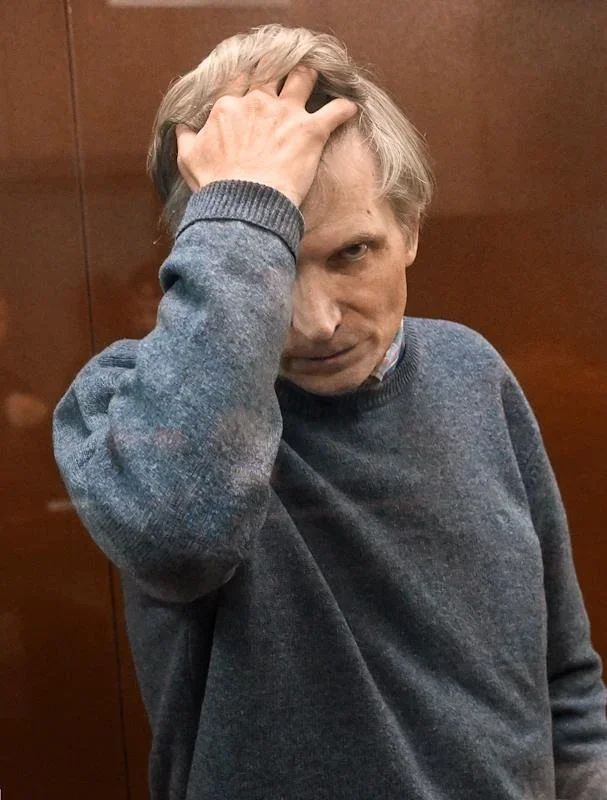
On March 4, 2022, a new article of the Criminal Code was adopted - “On the spread of knowingly false information about the Armed Forces of Russia”. In the colloquial - “Article about fakes”, or “Gorinovskaya article”. The case against the deputy Gorinov was initiated not because of his publications on social networks, but because of his speech. This is how he himself recalls this story, which pulled a general regime for seven years: “The event of my crime lies in my words and phrases, which I uttered at an ordinary meeting of the Council of Municipal Deputies on March 15, 2022. It was the 13th or 14th issue of the agenda of the meeting, the speaker on which I was as the chairman of the social commission. We had to approve or reject the district’s administration (executive body of the municipality) quarterly plan for leisure work with the population of the district. Usually we always claim such plans. But this time, against the background of the *** [special operation], some points of the proposed plan seemed inappropriate to me. And I invited my colleagues to reject it. In accordance with the regulations of meetings of the Council of Municipal Deputies in this case, I was obliged to give my arguments justifying my position. And I brought them. "
Seven years of colony on edification
The criminal case against deputy Gorinov and deputy Elena Kotenochkina (she managed to leave before the arrest) arose after several denunciations from deputies of the State Duma and other “vigilant comrades”. И хотя никаких ни ложных,ни истинных сведений о вооруженных силах ни Горинов, ни Котеночкина не сообщали, делу дали ход.
На расследование уголовного дела в отношении Горинова ушло рекордно мало времени: всего шесть дней. Процесс в Мещанском суде судья Олеся Менделеева, известная по делам Кирилла Серебренникова и братьев Магомедовых, провела за четыре заседания. Она отмерила Алексею Горинову ровно тот срок, который попросил прокурор. Seven years.
Горинов пишет:
«Единственное, о чем я жалею, если бы я знал, что из моего короткого выступления перед депутатами раздуют целое уголовное дело, распиарят его на всю страну и за ее пределами, то подготовился бы получше и выступил бы поярче, с расчетом на большую аудиторию. Но я и помыслить не мог, что власть сама сделает из меня известную личность».
Как так получилось, что именно московский мундеп стал первым осужденным по статье о «фейках»? На этот вопрос у Горинова есть ответ: «Сделано это в назидание другим — вот смотрите, обычный человек, хоть и муниципальный депутат, высказавшийся по поводу ***, лишен свободы на семь лет. Подумайте, что будет с вами, если не будете молчать…»
Как можно судить по ответам Горинова, по отзывам друзей, по его нескольким интервью, Алексей — скромный человек с чувством собственного достоинства, не допускающий резких суждений в отношении своих оппонентов, с большим чувством иронии и самоиронии. И пожалуй, только один раз, вспоминая о том, что произошло с ним после ареста, он с трудом может держать себя в руках. Когда речь заходит о следователях и судьях.
«Вряд ли я что-то скажу судье, выносившей приговор по моему делу, если ее встречу. Но на других судебных процессах, которые она ведет, я, пожалуй, поприсутствую, когда выйду. Мне это будет интересно. Считаю, что судьи, подобные ей, позорят свою юридическую профессию. Вспоминаю, как она пялилась в лежащий перед ней айфон, с кем-то переписывалась и что-то комментировала в то время, пока мой адвокат выступала, приводила доводы и доказательства в мою защиту. Судья, похоже, не слушала ее, увлекшись каким-то чатом. Я смотрел на нее в упор. Иногда она, обратив на это внимание, выключала айфон, но через некоторое время опять включала, и все продолжалось. Как такое вообще возможно!»
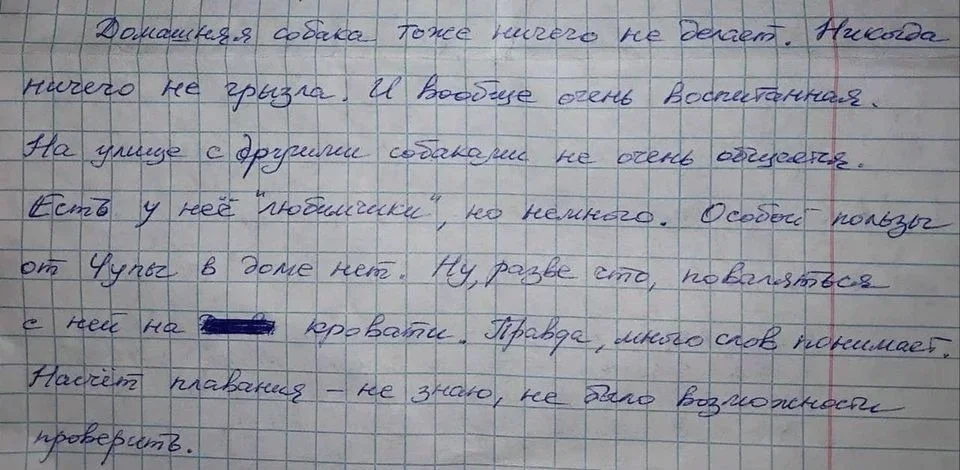
И еще: «Не уверен, что я смогу простить разлуку с моей собакой, которая меня так и не дождалась, следователям, обвинителям и судьям по моему делу». У Алексея была дворняга, которую он подобрал на улице. Ее звали Чупакабра. Или — сокращенно — Чупа. После ареста Алексея собака почти не подпускала к себе других людей и умерла от горя и одиночества.

Отсутствие страха и план на будущее
За год, который прошел с ареста Алексея Горинова, сотни людей были осуждены по той же самой статье, сроки варьировались от штрафов до восьми с половиной лет колонии. Более 20 тысяч человек были подвергнуты административным арестам по статье о «дискредитации Вооруженных сил РФ». Получается, что властям и судам не удалось полностью подавить гражданское сопротивление. Сам Горинов, отвечая на вопросы, чего боялся и чего боится, признается, что не испытывает этого чувства: «Мне нечего бояться, тем более в моем возрасте. Думаю, про страхи лучше спросить тех, кто возбуждал уголовное дело, вел его, выступал в качестве обвинителя, выносил приговор.
Почему-то мне кажется, что им должно было быть гораздо страшнее, чем мне, если, конечно, все эти люди психически нормальные».
Находясь в колонии, он получает много писем, отвечает на них и пишет открытые письма, например, патриарху Кириллу, спрашивая его, почему РПЦ не занимается миротворческой миссией и не требует от государства остановить СВО.
Наивные вопросы, скажете вы, и спросите: неужели Горинов не понимает, что обращаться бессмысленно, ведь патриарх уже сделал свой выбор. Agree. Но ведь бессмысленно и наивно со стороны Горинова было обращаться и к министру обороны Сергею Шойгу накануне 24 февраля 2022 года. Но Горинов не может иначе. И судя по всему, он живет по принципу: «Делай, что должно, и будь, что будет».
Согласно приговору, который Мосгорсуд сократил ему на месяц, сидеть Горинову в колонии еще чуть меньше шести лет. Вот как он представляет свое будущее: «Свои жизненные планы после выхода на свободу я связываю с переменами в России в лучшую сторону. Я готов стать послом в Украине после восстановления дипломатических отношений между нашими странами и содействовать восстановлению и укреплению гуманитарных связей между россиянами и украинцами. В любом случае я хотел бы быть полезным своей Родине, когда свобода, демократия, права человека станут ее фундаментальными ценностями.
В житейском плане мне не хватает бильярда, хорошей рыбалки, звездного неба, путешествий. Надеюсь все это наверстать на свободе и еще прожить свой самый счастливый день в жизни. А может быть, и не один».