
Translated material
Gaulle for fiction
Emmanuel Macron speaks of European independence from the United States, wants to be the most important in the EU and is still ready to talk with Putin. Where else can France get France?
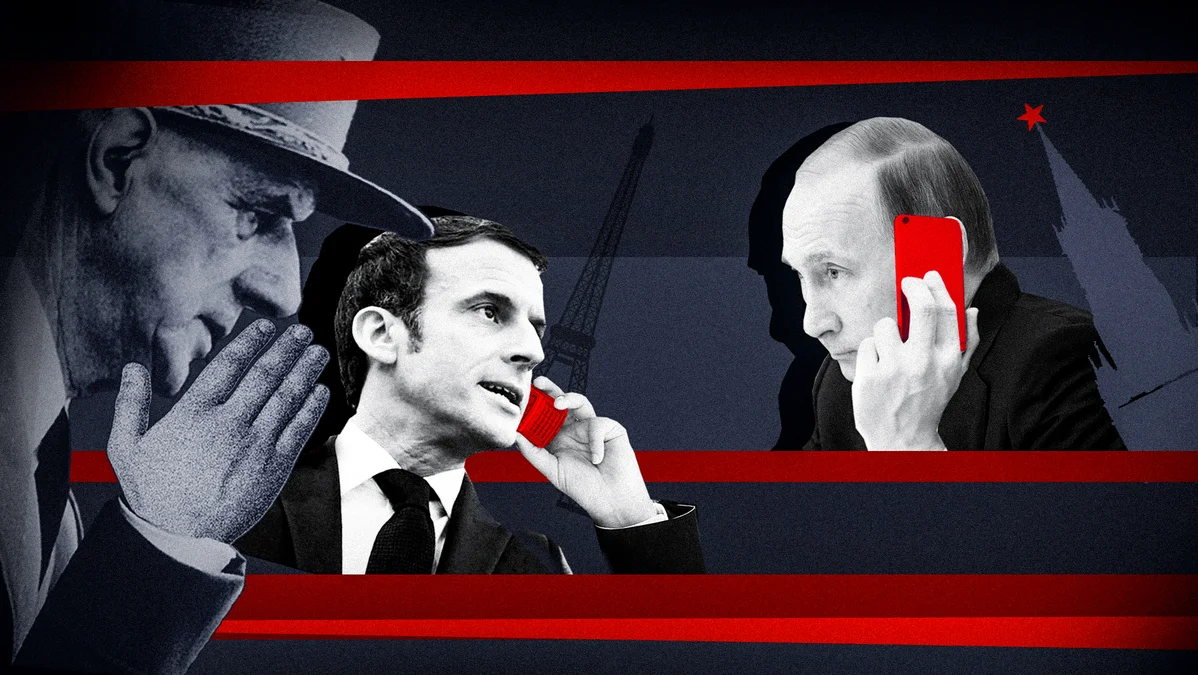
Illustration of "Novaya Gazeta Europe"
In the first photograph taken after Emmanuel Macron's post, the President of France is visible on his table, an open book. These are the memoirs of the most popular French leader Charles de Gaulle, whose follower, like many other French presidents, also considers himself the current leader of the Fifth Republic.
“Hollism” is called an approach in French politics when Paris seeks to pursue a more autonomous policy from the United States and Great Britain, and also claims to be a European leadership. At the same time, at the foundation of "Hollyism" lies the idea to avoid at any cost of a new war in Europe. Therefore, the “Hollist spirit” can also be seen in the multiple calls of Macron Vladimir Putin, during which the French president tried to persuade the Russian president not to start a war in Ukraine. It is no coincidence that Macron is so actively promoting a new association in Europe - the European political community (EPS), the summit of which has united the leaders of 45 countries last week in Moldova. The idea of the EPS resembles the "Europe of the Fatherland" formulated by de Gaulle. Especially for Novy-Europe, political scientist Denis Leven, together with experts, sorted out the principles of Hollyism and ultimately explains why in fact, France’s attempts should not be surprised to pursue an independent policy.
“To be an ally does not mean to be a vassal,” said French President Emmanuel Macron, regarding European-American relations in mid-April 2023.
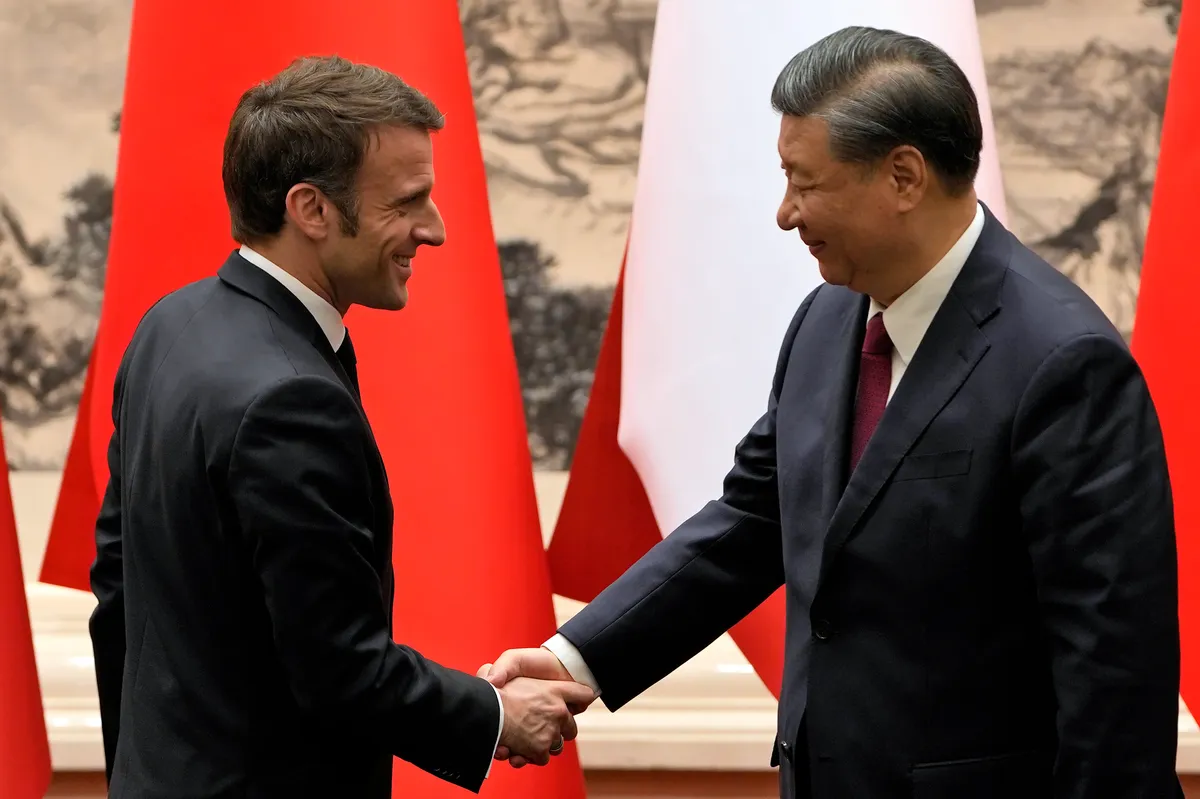
This statement was made after the trip of Macron and the Chairman of the European Commission Ursula von der Layen to China, during which the President of the Fifth Republic also distanceed from the United States. “We, Europeans, must wake up,” Macron said , adding that Europe should not blindly “follow” the American or Chinese politics, but to develop “strategic autonomy” and become “third superpower”.
Such sharp statements by the President of France predictably caused criticism in the United States. The American publication The Hill suggested that Macron is trying to divert attention from France’s internal problems with such statements and a trip to China: in the spring throughout the country, protests against unpopular pension reform continued . In the editorial column in The Wall Street Journal, the French leader was also accused of "weakening the containment of Chinese aggression and undermining Europe from the United States."
Criticism of Macron's statement in Europe caused criticism. Reinhard Buticofer , a German Euro -deputy and chairman of the Parliamentary delegation in the PRC, called Macron's trip to China a “full disaster”. “When we say that we do not want China to invade Taiwan, we are guided by our own values and interests, because we are in solidarity with Taiwanese democracy ... and not because we are dancing under the American pipe,” the politician noted .
Inside the France itself, one of the three largest national newspapers Libération found that the president demonstrated weakness before China. At the same time, both the critics and supporters of Macron called his policy of the "Hollyist". “During his visit to Xi Jinping, the president mixed up China in 2023 with China of the Charles de Gaulle era,” said Libération observer and political scientist Valerie Nike. Former Ambassador of France to the United States and supporter of President Gerard Aro in a column for French Le Point also said that in the statements of Macron there was little new for him and French foreign policy since de Gaulle.
The statements of Macron and, in general, his approach to foreign policy is really a gallist nature. However, it seems that this is caused not only by the personal position of the President of the Fifth Republic, but also by a number of objective factors, which have been determining the foreign policy of France and almost every president for several decades, at least a little make a follower of de Gaulle.
Strong and proud
The term "Hollyism", which Macron's critics decided to describe his behavior, refers to the most famous president of France - Charles de Hell - and characterizes a certain political doctrine, which is not limited only by foreign policy.
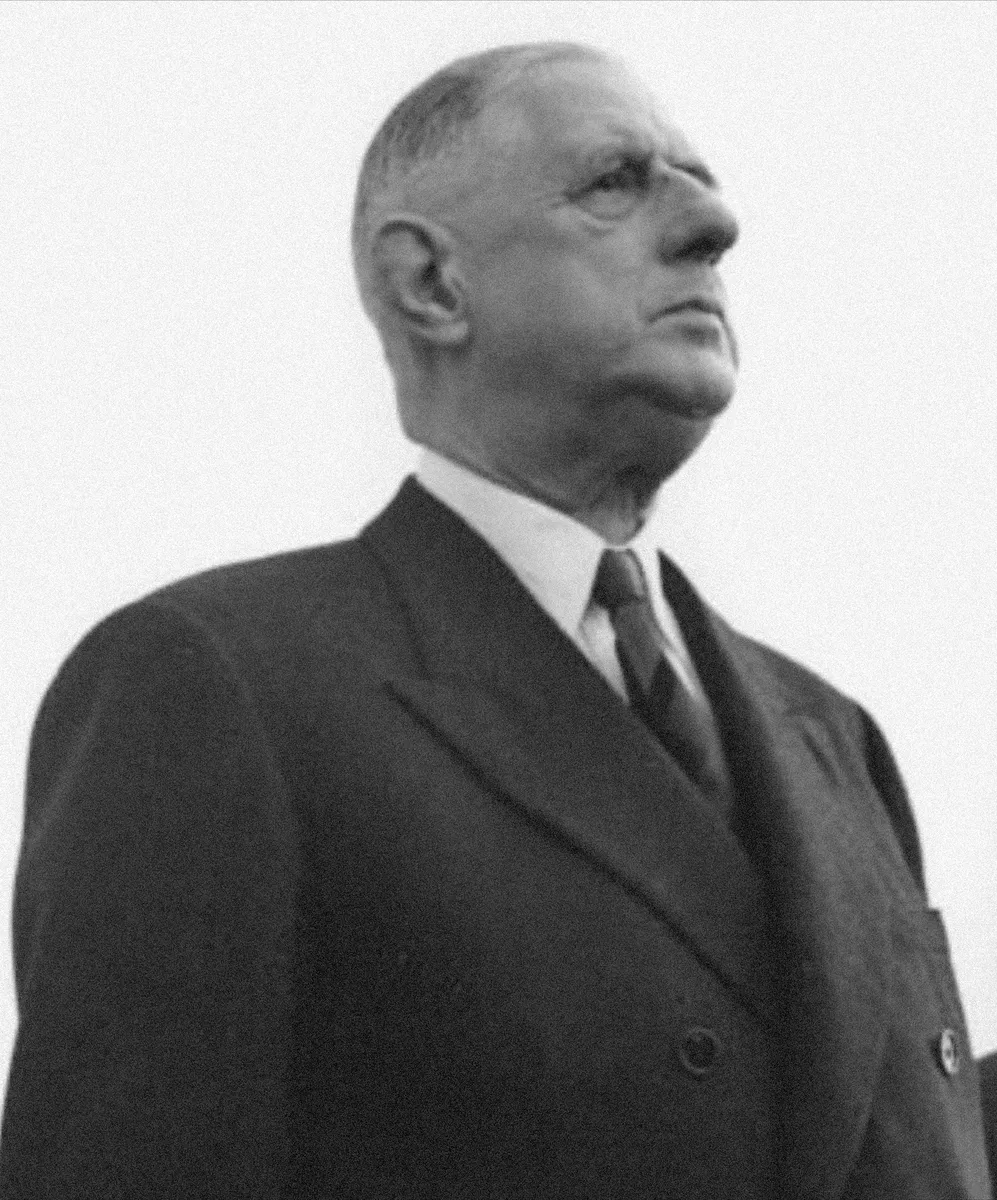
First of all, Charles de Gaulle became famous as the leader of the “fighting France” during the Second World War and as the head of government in exile, along with the allies of the opposing Nazi aggression. However, de Gaulle came to power in already free France only in 1958 - from that moment it is customary to count the existence of the Fifth French Republic.
By 1958, France was in an acute political crisis: for 13 years that passed from the end of the occupation, 21 government had been replaced in the country. During the same period there was a decline and the gradual decay of the French colonial empire: at first, during an armed confrontation from France, Vietnam separated, and in 1954 the war in Algeria began.
Having come to power, de Gaulle was able to cope with the crisis, reconcile different ideologized groups and consolidate power. It was a strong state, not in the commentary of Novo-Europe, Professor of the University of Groningen Benjamin Lyut , who became the fundamental principle of the Hollyist approach. At that moment, the France parliament, in order to avoid a civil war, transferred the extraordinary powers to restore order, to carry out the reform of the institutions and prepare the project of a new constitution. But the cost of stabilizing the situation in the country was the establishment of the strongest presidential power in Europe, when the president has the opportunity to adopt laws bypassing parliament. By the way, it was this heritage at the beginning of 2023 that Macron took advantage of to increase the retirement age, despite the protests and failures of voting for reform in parliament.
In foreign policy, de Gaulle’s political credo was the restoration of “greatness”. France, from the point of view of de Gaulle, should occupy a strong and independent position in the international arena, and the basis of its foreign policy it is necessary to lay national interests. The argument in favor of this state of affairs was the appearance of nuclear weapons in France: the first tests were carried out in 1960. “Hur of France! From this morning it has become stronger and proud! ” - proclaimed de Gaulle.
A unique concentration of power for the president, as well as the fusion of military and political functions-the President of France is the supreme commander in chief of both ordinary and nuclear forces-formed the basis of the French statehood of the Fifth Republic, notes in the commentary of the Novo-European, the director of the French Institute of International Relations of Tom Gomar . The purpose of this supercontacence, Gomar was convinced of, was to prevent the disaster from repeating on June 22, 1940, when France lost the war of Nazi Germany. The same conditions have played the unique role of the President of France and in international relations.
The consolidation of the authorities and the nuclear arsenal allowed de Hell to pursue an independent foreign policy and distance himself from the United States, while not taking the side of the USSR in the Cold War. So, in 1958, de Gaulle sent a memorandum to the American president and British Prime Minister, in which he urged NATO activity in the territories of “special interest in France”, which, apparently, was meant former colonies, and establish a “tripartite directorate” to manage the alliance. After the refusal in 1959, the President of the Fifth Republic, in response, banned the United States to deploy nuclear forces in France - the American military command was forced to relocate its nuclear bombers in Germany (the western part of the divided Germany) and the UK.
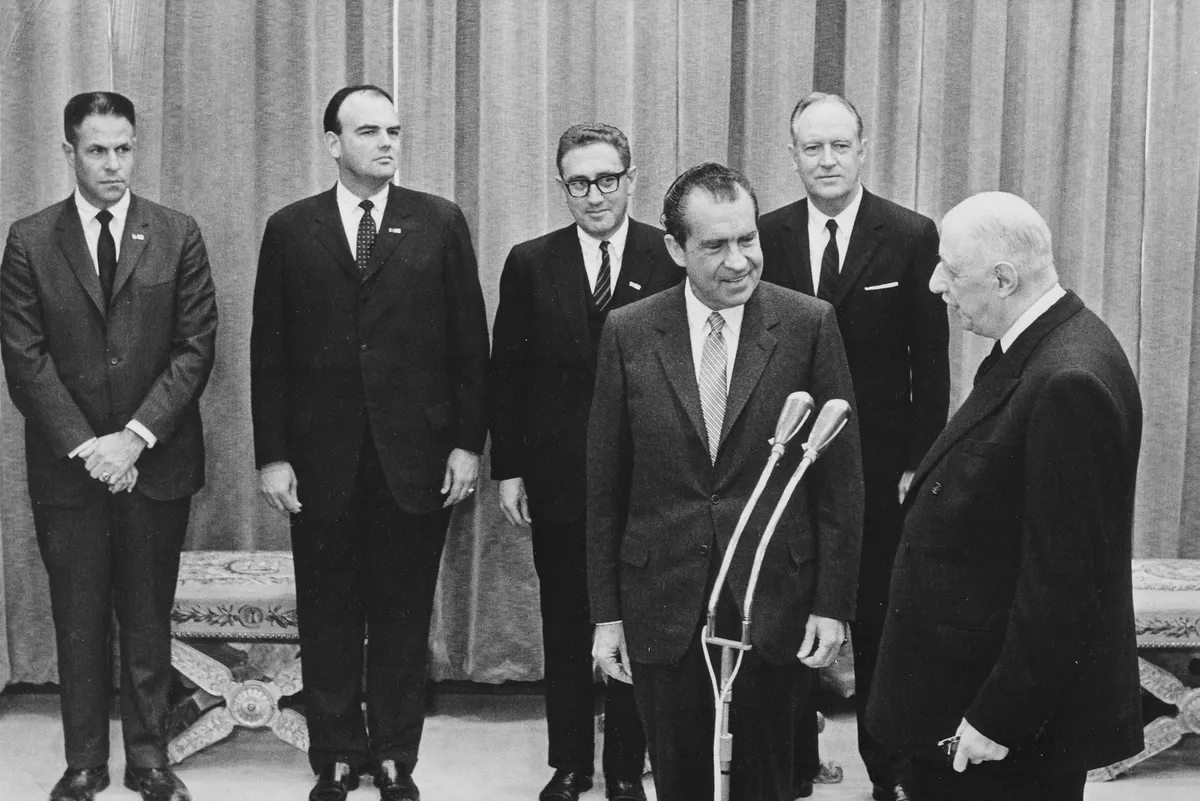
The culmination of the distance of France from the Western allies was 1966, when the fifth republic left the NATO military organization, and all NATO bases were ordered to leave the country's territory. This meant that France refuses to participate in the unified NATO command system: the French military was no longer at the headquarters of the organization, which in this regard moved from France to Belgium, and the French units were no longer transmitted to NATO leadership. Nevertheless, the fifth republic did not denounce the North Atlantic Treaty, but the alliance returned to the military organization only in 2009.
At the same time, de Gaulle did not deny the need for European integration - but without supranational institutions. This approach was called "Europe of the Fatherland" - a union of sovereign states with strong economic integration.
It is such a style in domestic politics that it is customary to call “gallism” - independent and strong France, defending its interests in different regions of the world and part of the “club of great powers”. In addition, this approach implies distance from superpower and from projects of excessive European integration.
The standard de Gaulle
After de Gaulle’s departure from the authorities and his death in 1970, the preserved approach to foreign policy turned out to be quite popular not only among the political heirs of the heroic president - members of the Hollist movement, but also among other political forces.
What does the Hollist movement look like in France?
The political movement of the gallists is usually attributed to mainly mainstream parties of the legalist, which have direct ties with de Gaulleus or take one or another interpreted ideas of the first president of the Fifth Republic for their ideological basis.
The first such political party was the Union for the New Republic, founded by de Gaulle himself in 1959. In 1967, even under de Gaulle, this party merged with the Left -Hill Democratic Union of Labor, and together they formed the Union of Democrats in support of the republic. This party, in turn, after the death of de Gaulle, was reborn to the association in support of the republic under the leadership of Jacques Shirak.
Currently, the largest “political heiress” of the Hollyist movement isthe Republican party . But, remaining a noticeable political force, she lost the mainstream status-in the National Assembly, her representatives occupy 62 places out of 577. This is less than that of the deputy group “Renaissance” (members of the macron party)-171 places, the national association (the extreme right-hand Party Marin Le Pen)-88 places or “Formy France” (Left Party under the leadership of Jean-Lyuk Luke. Melanchona) - 75 seats.
One of the most noticeable supporters of Hollyism in foreign policy in the 1980s was Socialist President Francois Mitteran. Despite the fact that earlier Mitterand was an ardent opponent of de Gaulle, especially in the case of domestic policy, in the international arena he adopted the main components of the approach of the first president: independence, cooperation of European sovereign states, non -alignment and skepticism in relation to the United States and the UK.
For example, Mitteran opposed the Reagan Star Wars initiative and even supplied weapons to Nicaragua, with whose left government Washington was actively fought then. The confrontation with the United States and Great Britain also took place in the territory of the former colonies, where Mitteran tried to strengthen French influence and protect him from the "Anglo -Saxon world."
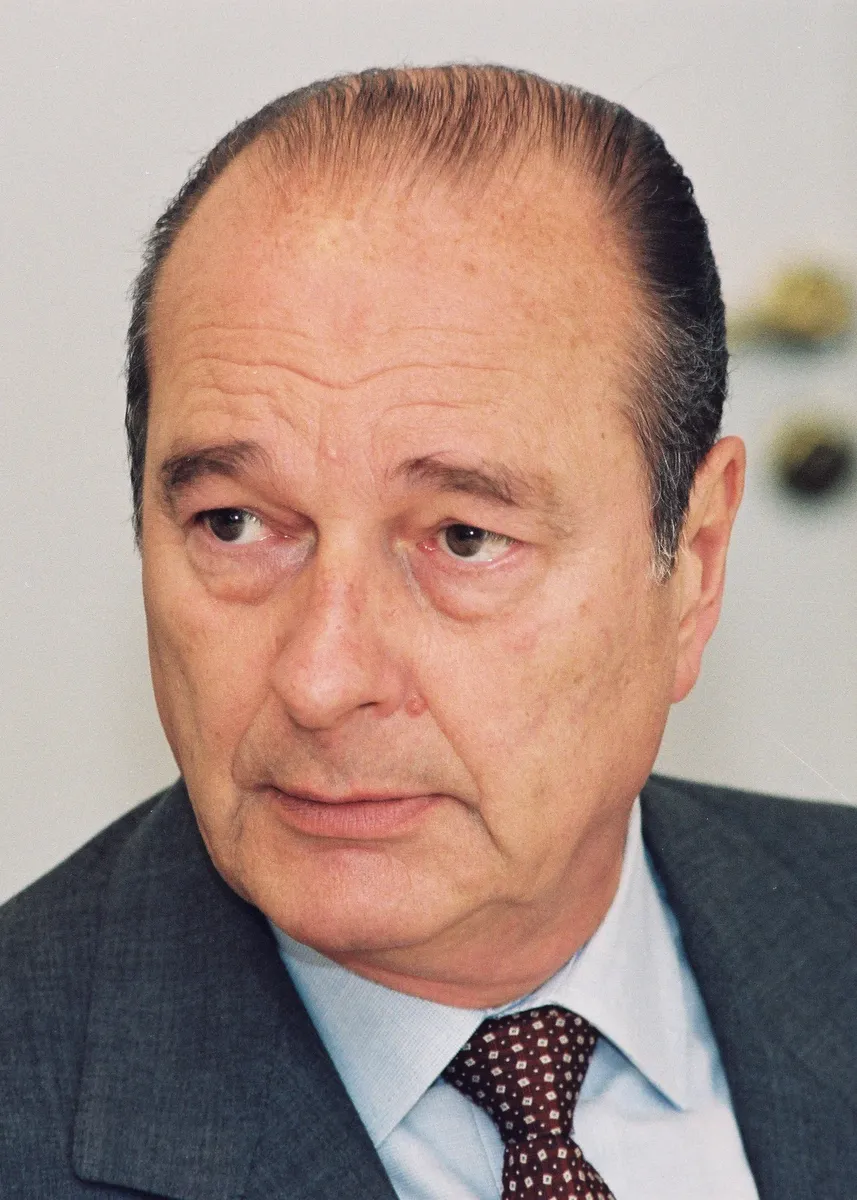
Another French President-Hallist can be called Jacques Shirak, who was extremely strictlytrying to resist the outbreak of war in Iraq by the USA and Great Britain. Supported by Russia and Germany, France threatened to impose a veto on the UN Security Council resolution, which would legalize an invasion. Then, in order to avoid exacerbation, Washington and London were forced to withdraw the draft resolution. Although the invasion of Iraq, which was condemned even by the Secretary General of the UN COFIO Annan, they still carried out.
In addition, Shirakwas an active supporter of the “multipolar world”, in which there would be not one dominant player, but many independent centers of power. His commitment to this concept found support in Germany, Russia and the PRC - this is how the term "axis of Paris - Berlin - Moscow - Beijingarose .
Finally, some experts call Hollyist and the approach to foreign policy Nicolas Sarkozy-primarily because of the military operation in Libya in 2011 under the leadership of France-although during the years of the presidency of Sarcosi in 2009 there was an unprecedented rapprochement of France with NATO when, after 43 years of cold relationships, the country returned to the military-atlence alliance.
In addition, over the past few years, the leaders of all the main political forces of France have referred to de Gaulle's policy as a standard. Even the head of the extreme right -wing French party “National Association” Marine Le Pen in the summer of 2020 published a large article on the significance of the Hollyist heritage for modern France. The article by Le Pen was the turning point for its political movement, since the founder of the party Jean-Mari Le Pen was a tough opponent of de Gaulle and in 1958 voted in parliament against the expansion of the powers of the president. After more than half a century, his daughter Marine Le Pen invited the people of France to rally around the Holistic principles of sovereignty, independence and unity for the return of the magnitude of the fifth republic.
The Nationalist Erik Zemur, candidate of 2022, also declared his Hollist heritage in the presidential election of 2022. He drawn parallels between his euroskeptic and anti -American views and the desire of de Gaulle to a sovereign foreign policy.
Even the extreme left politician, the head of the “Unconquered France” movement, Jean-Luke Melanshon found common in his views and views of the founder of the Fifth Republic. In 2020, Melanshon gave an interview in which he emphasized that he was sharing the desire to pursue a foreign policy of non -alignment after de Gaulle and mitteral. In addition, Melanshon agreed with de Gaulle that the participation of the state is especially important in the formation of a political course and in the economy.
Relay stick Merkel
Macron's statements during and after a trip to China caused a lot of criticism and associations with Hollism, but the French president did not show this approach for the first time. At the symbolic level, Charles de Gaulle accompanies Macron from the very beginning of his presidency.
In the France International Politics Program , which Macron prepared as part of the 2017 presidential campaign, the current president noted that he was going to follow the “Hollist and Mittein traditions” so that France is “independent, humanistic and European power”. As one of the main sources of this independence, Macron was indicated by the French potential of nuclear deterrence and the military power of the fifth republic.
Then, in 2017, the famous Sorbonne speech of the already elected President Macron sounded. In it, he presented his vision of European integration.
Europe should be "sovereign, united and democratic."
The EU sovereignty should contribute to an independent and strong position in the international arena and be achieved through the deepening of European integration in military spheres and proactive foreign policy.
Separately emphasized the importance in the pan -European foreign policy of the directions of Africa and Mediterranean - zones of traditionally increased interest from France.
In addition, the EU himself, according to the ideas of Macron, should work “ at different speeds” - the principle in accordance with which the countries that are ready to go further along the integration path should not interfere with others, advancing at a shorter pace. At the same time, the same Mittein Franco-German tandem should play the most important role in the development of Europe.
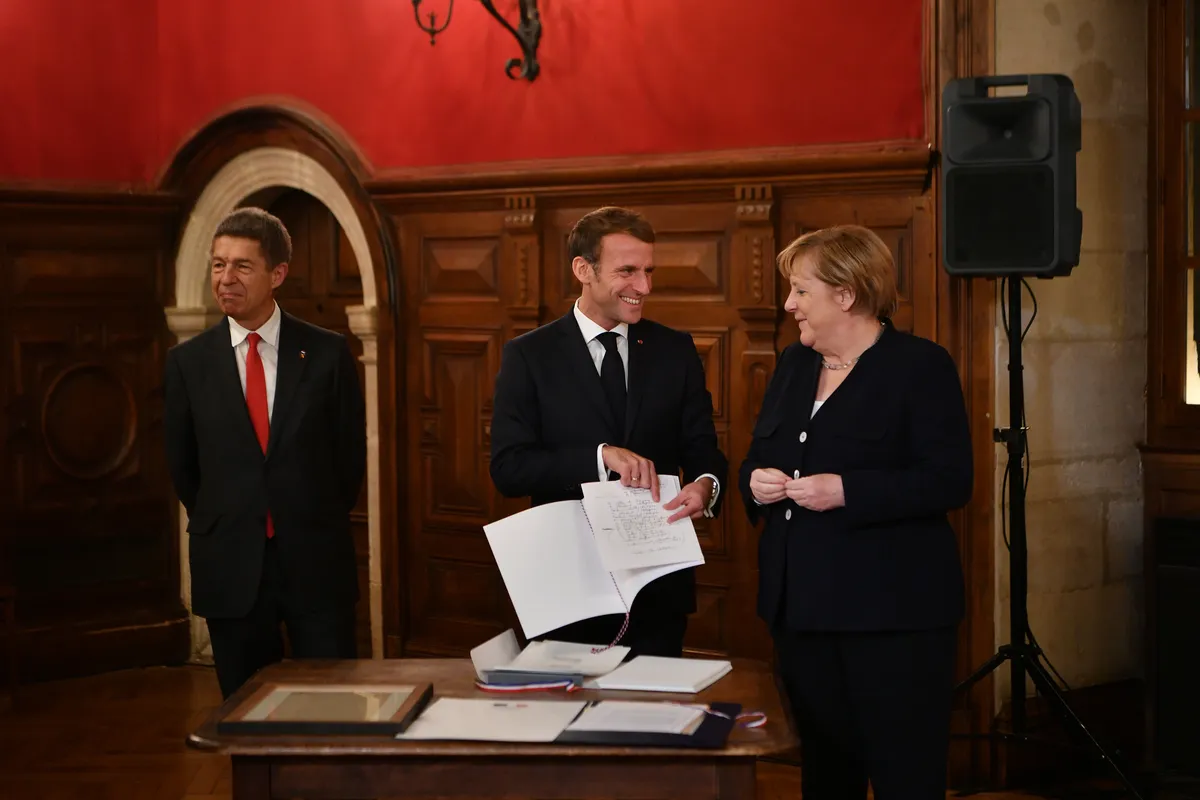
Thus, the personal qualities and ambitions of macron harmoniously fit into the Hollyist paradigm. Both the concept of “Europe of different speeds”, and the idea of Franco-German leadership may well be an attempt by the French president to “intercept the relay wand” by Angel Merkel and become a new panzilian leader after the German chancellor retired. Therefore, high -profile statements during a trip to China were made by Macron not on their own personally or on behalf of the French, but on behalf of all Europeans.
In an effort to position himself as a strong world player, Macron more than once tried to act as an intermediary in international conflicts around the world. After his election in 2017, he participated in the settlement of conflicts between groups in Libya, as well as between Kurdish autonomy and the central government of Iraq. А в начале 2022 года Макрон пытался снизить напряжение между Россией и Украиной и, по его словам , даже добился от Владимира Путина гарантий, что вторжения не будет. Более того, несмотря на критику со стороны союзников по НАТО, Макрон продолжил личные телефонные переговоры с Путиным и после начала войны.
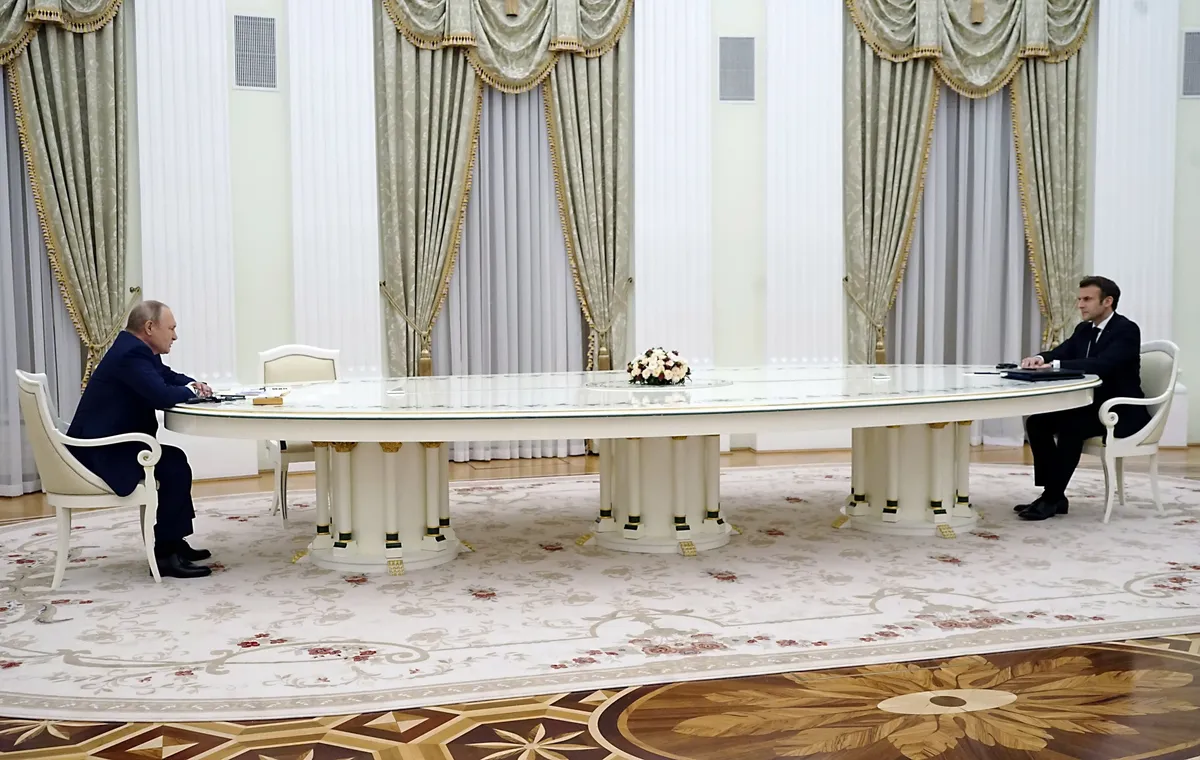
Тогда Макрона осудили за чрезмерно индивидуализированный подход к дипломатии и попытки «договориться с агрессором». Президент Франции, в свою очередь,призвал отказаться от «ошибочного морализаторства», которое ослабило бы позиции Франции. Он также подчеркнул, что не хотел бы, чтобы «Турция осталась единственной мировой державой, которая разговаривает с Россией».
В этих попытках Макрона добиться главной цели, лежащей в основании Пятой республики, — избежать новой войны, — Тома Гомар также видит «дух голлизма». При этом, добавляет эксперт, в такой политике отчетливо прослеживается личный стиль Макрона. С одной стороны, он считает себя главным европейским лидером, а с другой — верит в свою способность найти решение конфликта с помощью дипломатических методов.
В плену интересов Франции
Однако приверженность Макрона «голлизму» во внешней политике объясняется далеко не только его взглядами, личными амбициями или качествами. У такой политики есть и вполне объективные причины.
Прежде всего, французский президент вынужден считаться с общественным мнением. Так, согласно опросу 2016 года, почти 60% французов называют де Голля самой важной фигурой в истории страны — за ним с большим отрывом следует Наполеон I Бонапарт (45%).
Помимо этого, граждане Пятой республики разделяют и некоторые установки голлизма. Многим французам традиционно свойственен антиамериканизм — лишь 50% из них в 2020 году положительно относились к США. Это несколько больше, чем в период президентства Дональда Трампа, но меньше, чем в начале этого века, когда позитивно воспринимали США 62% французов. Опасаются французы, как показал межстрановой опрос Yougov, и чрезмерной «американизации» в разных сферах культуры.
Наконец, французы гораздо скептичнее других европейцев относятся к НАТО. Если в 2009 году к Альянсу положительно относились 71% граждан Франции, то в 2022 году — лишь 54%, что на 10 процентных пунктов ниже среднего результата среди остальных членов НАТО. Для сравнения, в Германии аналогичный показатель в 2022 году составил 70%, в Великобритании — 74%, а в Польше — 89%.
Необходимость занимать значимую и независимую позицию на международной арене обусловлена и стратегическим положением самой Франции. Помимо европейской территории, Пятая республика имеет заморские владения: семь из 13 таких департаментов расположены в Индо-Тихоокеанском регионе, и в них проживают 1,65 млн граждан страны — главным образом, это остров Реюньон, Майотта, Новая Каледония и Французская Полинезия. Поэтому в этом случае основные задачи французской внешней политики — защита суверенитета своих территорий, с одной стороны, и поддержание стабильности и безопасности — с другой. Суверенитет Франции в этих департаментах обеспечивают 7 тысяч солдат и моряков.
Другой регион традиционного высокого интереса Франции — франкофонная Африка и Ближний Восток. Там проживают 1,2 млн французских граждан, а 6 млн жителей Франции имеют родственные связи в этих странах. Здесь же, в Мали, последние почти десять лет Франция проводила единственную наземную военную операцию, о неудачном завершении которой в начале 2022 года объявил Макрон.
В 2022 году по инициативе Макрона было создано Европейское политическое сообщество, призванное стать площадкой для политического диалога и координации между всеми странами европейского континента. А 1 июня 2023 года в Молдове прошел саммит организации, и в нем приняли участие 45 глав государств и правительств: стран ЕС, стран южных Балкан, Швейцарии, Исландии, Лихтенштейна, Андорры, Сан-Марино, Великобритании, Молдовы, Украины, Грузии, Армении и Азербайджана.
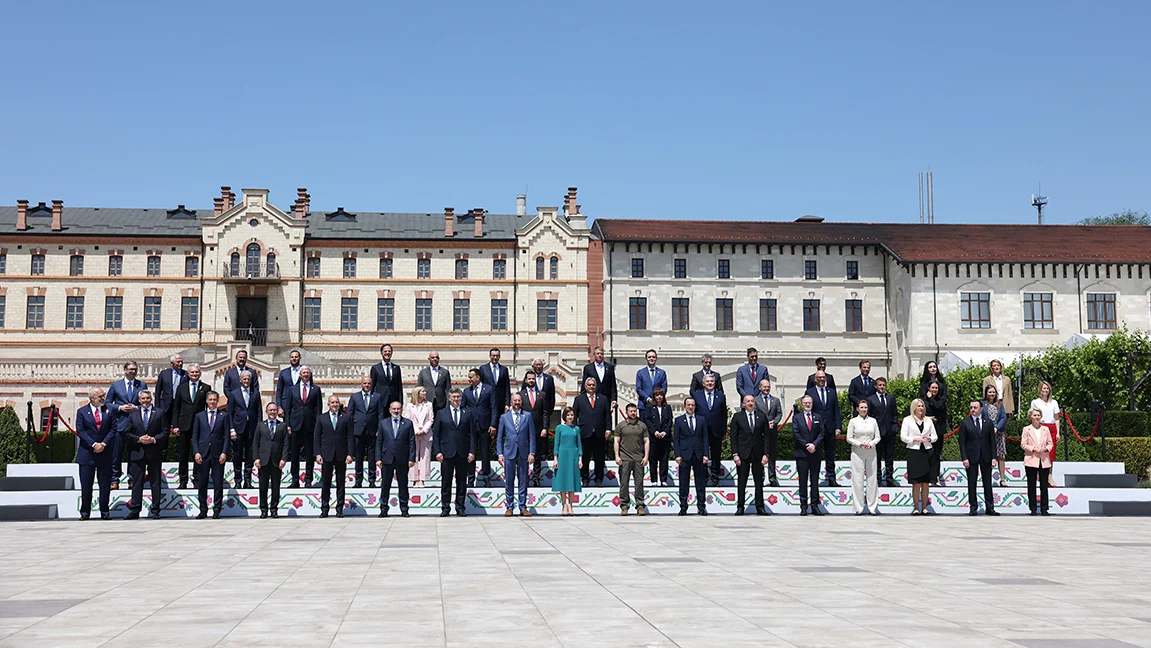
Как отмечает Гомар, сама идея такого сообщества тоже очень голлистская — Европа от Гибралтара до Урала, страны которой умеют договариваться и принимать общие решения. Создание этой инициативы, по мнению эксперта, особенно важно в условиях, когда Великобритания вышла из ЕС, а Турция туда очевидно не войдет: необходимо искать способы поддерживать диалог и с этими региональными державами, а также с Балканами и Украиной.
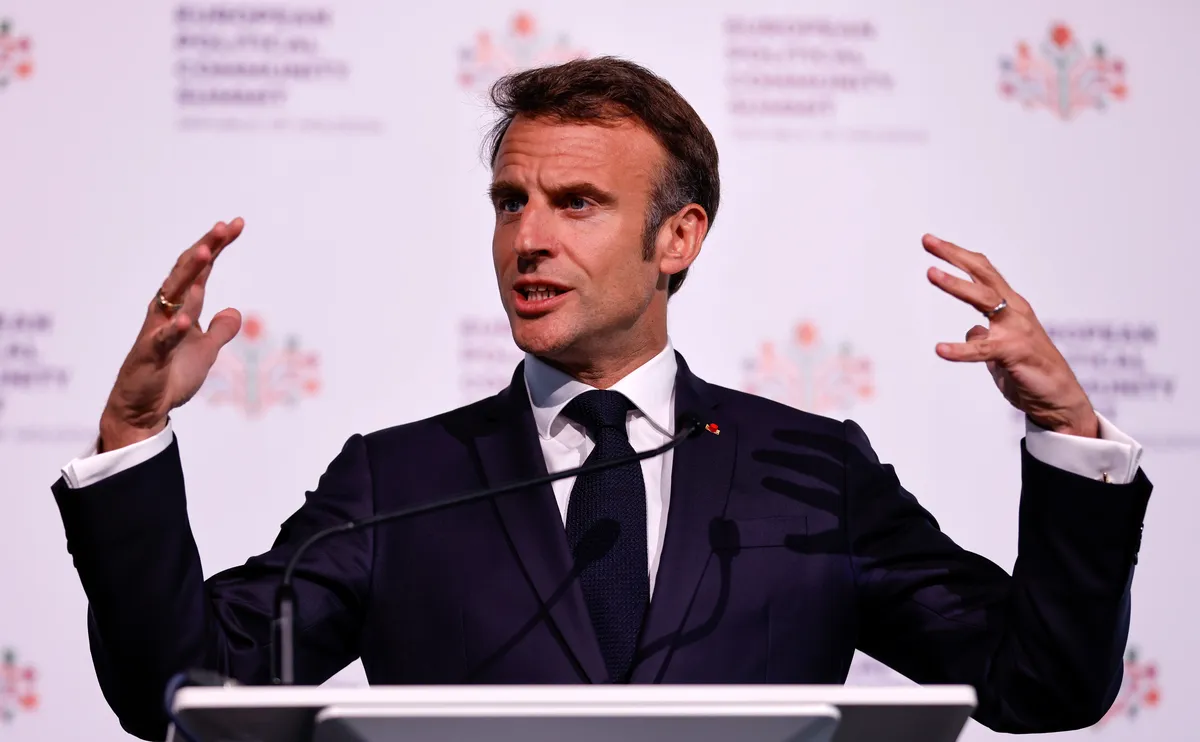
Накануне саммита Макрон выступил с речью в Братиславе, где отметил : «Я не думаю, что есть Европа Западная и Восточная, старая и новая; есть только одна Европа… со стремлением к единству». И хотя об успешности проекта Европейского политического сообщества говорить еще рано, он сильно напоминает голлистскую концепцию «Европы отечеств», согласно которой сильные и независимые европейские державы совместно решают общие проблемы — без участия внешних игроков.