Date
Author
Дата ; Полина Ужвак; Екатерина Фомина
Source

Preserved copy
Translated material
“We prepared, bought boats and hid them from the Russians. And then they ran away from Kherson on them "
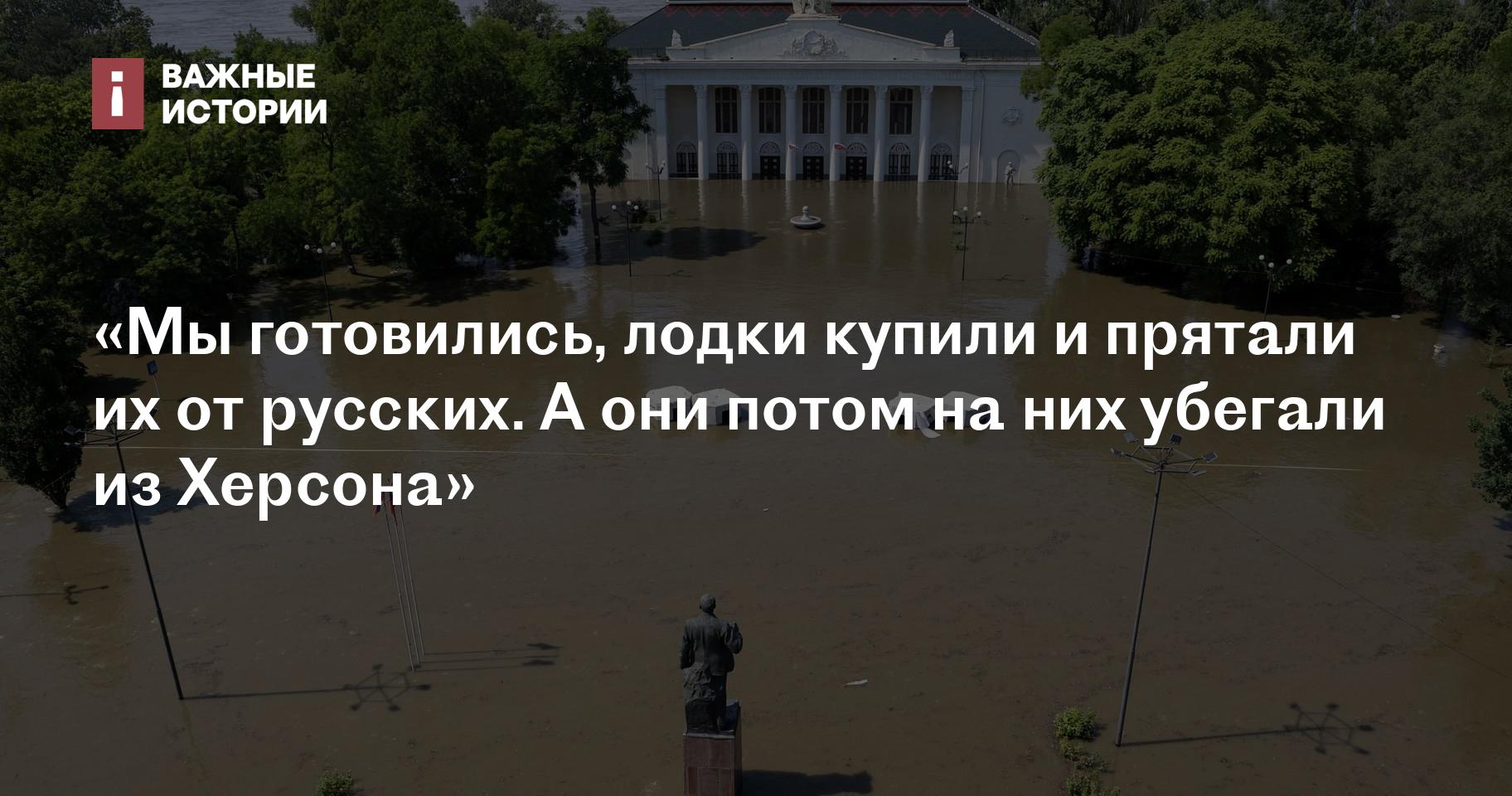
On the night of June 6, there was a breakthrough of the dam of the Kakhovskaya hydroelectric power station on the Dnieper. In the flood zone were settlements on both sides of the river with a population of about 38 thousand people.
On the right bank controlled by Ukraine, the Ministry of Internal Affairs announced the evacuation in eleven settlements. By three o'clock in the afternoon, more than 1300 people were evacuated to the Right Bank of the Dnieper. Water spill flooded 260 houses in 13 settlements.
The residents of the occupied left bank Ukrainian authorities called to take care of security. According to pro -Russian local administrations, the evacuation of the civilian population from the three districts - Novokakhovsky, Golopostan and Aleshkinsky also began there. More than 10 settlements were in the risk zone. Only in the new Kakhovka, according to the occupying authorities, about 600 houses are flooded , and the city of Alyoshka is flooded entirely.
Locals from both shores of the Dnieper told “important stories” what is happening now in the Kherson region, and experts estimated the possible environmental damage from the disaster.
"First, the dogs drown, and then swell and pop up"
Yuri (name changed), volunteer and resident of Kherson
Dad called at 6 in the morning and said that the dam was blown up. In our house in the microdistrict island there was a technique that we use to create furniture. We went there by car from the area in which we now live - it is higher, it was not flooded. We come to the island, there are already a little less water than knee -deep. By nine in the morning, the water was waist -deep. They were afraid to get a blow in the car if the car floods.
In the area of the island and nearby there were many people who came for things. Many military and police officers evacuated people. In parallel with evacuation, there was still a mortar battle. There were silence for two days, and today it was in the morning that they began to shell, because there were a lot of military men in one place. Everyone collected their things and grouped as best they could: who took the animals, who left and did not even unleash. We walked around the yards and unraveled the dogs.
At first, people were evacuated and helped to take the dogs of neighbors, and in parallel they still picked up the other remaining ones. We did not have time to take them somewhere in order to look for their owners later, so we released them to the sections of the city where it was dry.
And one man, the owner of the dog, says: "Let's go for the dogs." He saw the dog washing off. I caught up with and caught it. I don’t know how I took it in my hands, because it is very aggressive. As soon as I lowered her to dry land, she ran away and did not listen to any teams.
The friends who were with me on the evacuation of the locals rode in armor and helmets. And this attracts attention, and they began to shell. First we hit the branches of trees next to us. We quickly ran to the car, and the second [shell] arrives, but it seems that everything is intact in our car, and I don’t know for other guys. They left, it was not clear what was with them.
Today, a lot of animals have died. First, the dogs drown, and then swell and pop up. The water is cloudy, nothing is visible. I walked around the district and hit the water in the water about something. Then I realized that it was a dog. I think how the water goes, there will be many corpses. The problem of this particular area is that people were evacuated from shelling to the flood, and the dogs were left on a leash in the yards. They took money for food for some one neighbor who went around 10 houses every day and fed dogs. And now such a neighbor has been evacuated.
Most people left until 7 in the morning, when it was still possible to move around the area. My neighbors remained. I don't know for what reasons. We called them half an hour ago. When I was there for the last time, the water was already above the waist, and in the evening they are already sitting on the roof of a two -story house and pulling the dog upstairs.
Purely logically, I cannot explain why people remained in this area. After the occupation, the district was under hard shelling and it was destroyed by 50%. And these same people are there now. Maybe the fear of changes for a person is more than a desire to escape.
We expected the damage to the occupation, when since November it was clear that something was being prepared. We really prepared, many bought boats and hid them from the Russians. And then they took some and ran away from Kherson on them.
During the occupation, local residents suggested that it would be profitable to undermine the dam, because the Russians undermined the dam in Krivoy Rog when ours went to de -Ukrainian. The tactics are clear, and, accordingly, if ours are advanced, then the Russians can undermine the Kakhovsky hydroelectric power station, because it is profitable, it will definitely delay the offensive of the Armed Forces. This happened.
"The city has a very large tension with water"
Tatyana, Kherson
On the first line of houses, the water rose more than a meter, already knee -deep.
They are evacuated in full swing in the morning, as soon as it became known about the undermining. People immediately began to leave the house, collect things. They called all the services from the house, the military pushed back (changed the deployment), and moved a constant checkpoint.
The check is tough. Without documents, people are not allowed to the places of flooding, despite the fact that they even live there.
We collect mass water for people, hot dinners that can be brewed. Evacuation points work everywhere. They constantly call throughout Ukraine, ask how to help, what to send.
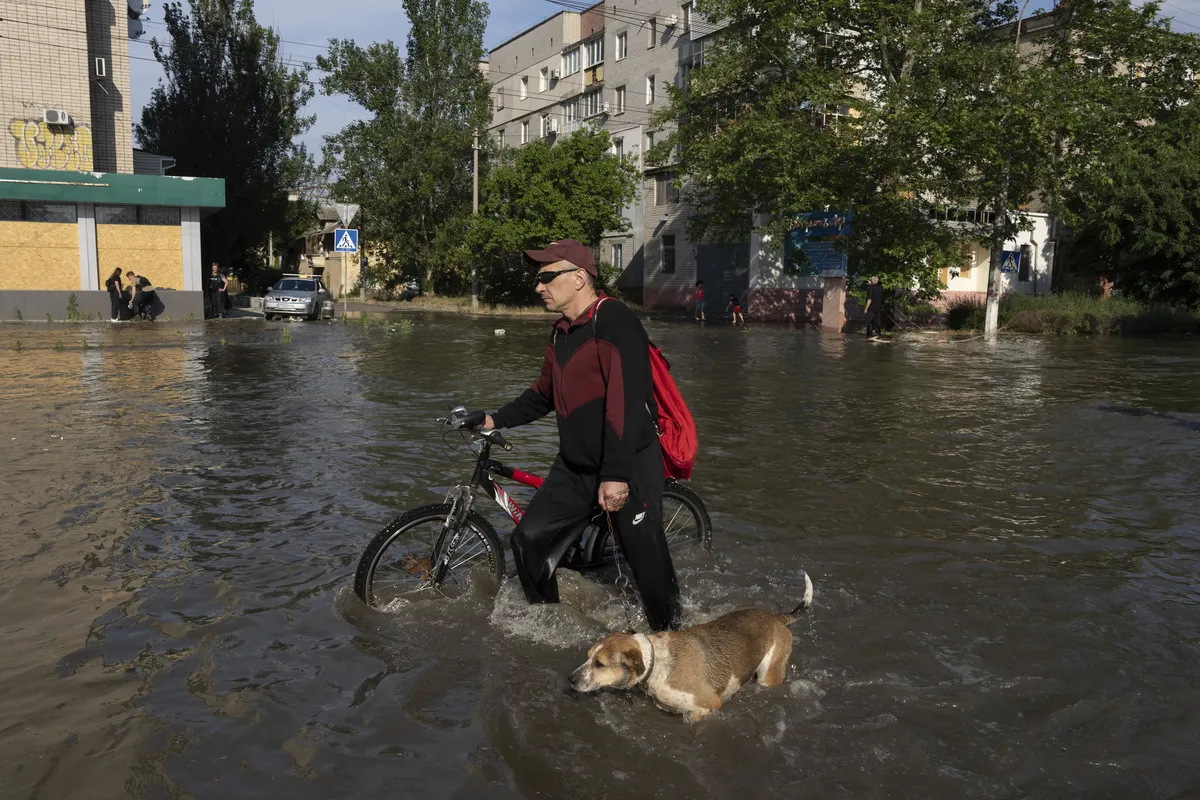
The city has a very large stress with water, people buy everything, supplies, respectively, so quickly. In the water that runs in the tap, you can’t even wash. Everything will be dirty, in the foam. We must look for some ways so that we can deliver water as much as possible here.
This morning I went to the store with my child. Before the opening, I bought 60 liters of water, stood in line for an hour and a half. In no other way. We were prepared when we did not have water in the cranes, but did not expect the dam to be blown up and we will remain again in such a situation.
"The window shows how swans and vipers swim"
Denis, naked pier (occupied by the Russian Federation)
My parents live straight near the executive committee on Dneprovsky Avenue. Due to the fact that the connection is jammed, I cannot call them often. The light was turned off. There is gas.
Two swans swimmed near the recreation center. There are many animal corpses in the Kazkova Dibrova [Mini-Zoo "Fairytale Dubrava"]. Only the dog was saved from there.
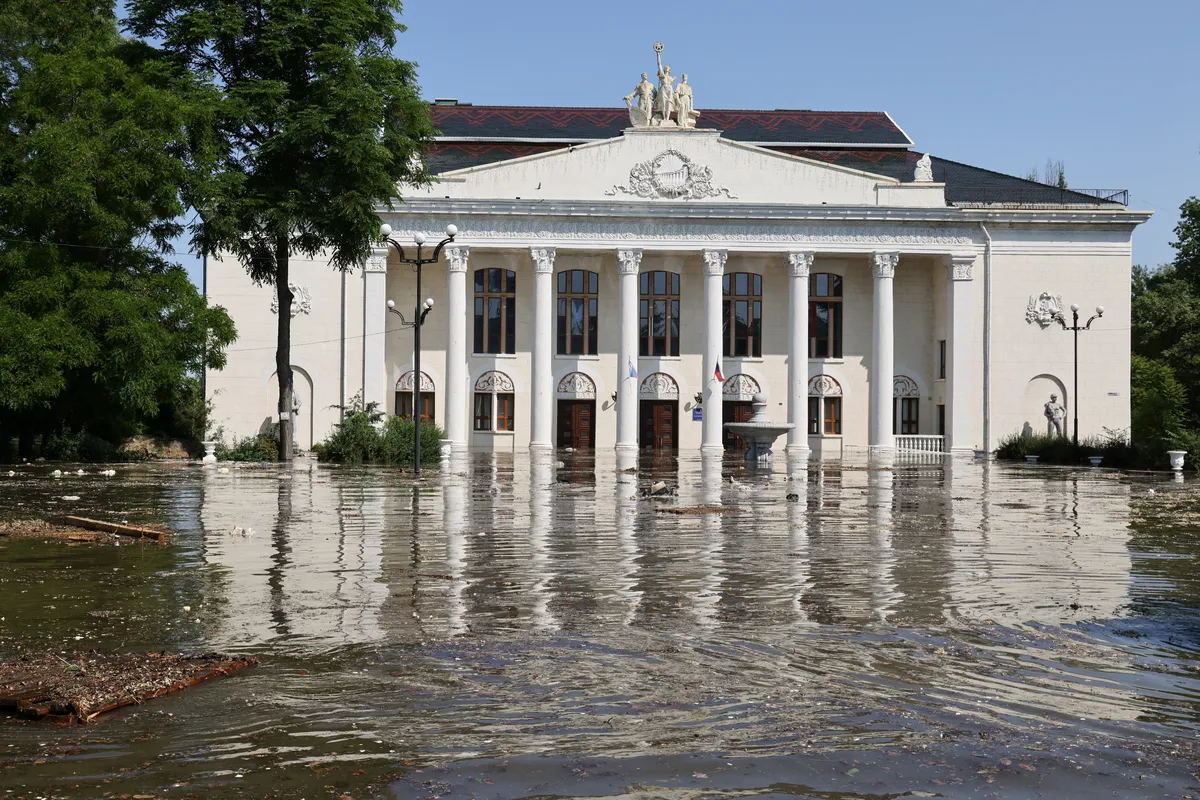
The water level near the house, where the executive committee is about a meter to the waist. There is water [drinking], but it is normally impossible to wash off the toilet: the water returns. Parents on the positive, probably, do not want us to worry. From the window they can see how swans and vipers swim.
The Ministry of Emergencies will be evacuated by buses from 11 a.m. Parents still do not want to go anywhere, although the water continues to rise. Dad says that it should not reach more than a meter, but maybe again, so that we do not worry about them.
Everyone expected this, they said that the hydroelectric power station had long been mined. But they knew that they would not touch the new Kakhovka much, so they did not leave anywhere.
"Somewhere a third of large animals have already died"
Sergey (the name changed), the ecologist, was at the place of flooding
I arrived in Belozerka ( the village of urban type of Kherson district. - Approx. Ed. ) After I found out about the demolition of the hydroelectric power station. From what I saw with my own eyes: the water level in the white lake rose one or two meters about 10-11 in the morning.
The lake is relatively far from the channel, it accumulates water, acts as a deceler. Here, events are going on behind. Ahead will be the peak of lifting, it will be quite long. What will happen next, let's see.
As I understand it, there is no inevitable threat to life due to the rise in water now, the release of chemicals (from warehouses, etc.) into water. Huge damage is caused to the animal world, a significant number of animals have already drowned. All groups of the islands that went under water are known. Somewhere around 30% of large animals have already died, maybe much more.
As for the possible termination of the cooling of the reactors of the Zaporizhzhya nuclear power plant and the accident at this station ... I don’t want to think about it. We hope for the Almighty.
"Everyone blames Rashistov, such a feeling of hatred for them with me"
Julia, evacuated from a flooded house in New Kakhovka (occupied by the Russian Federation)
I woke up at 06:30 in the morning. My area - Dneprovsky Avenue - flooded. The water gradually walked, even closer and closer. Gradually, until she reached the courtyard and almost into the house. The neighbors began to panic, but many remained. No evacuation was organized.
I thought that animals needed to evacuate - I have two cats, a cat and five kittens. I collected clothes, all the necessary things, food and so on. I took it with me for now, all the animals are with me. I took them in carrying them, they meowed loudly, were very afraid.
We drove our car through Kherson, from Kherson to Nikolaev and to the right bank of the Dnieper Kherson region. We were scared, of course, to evacuate, but we were forced, because there was not life - to sit when everything flooded with water.
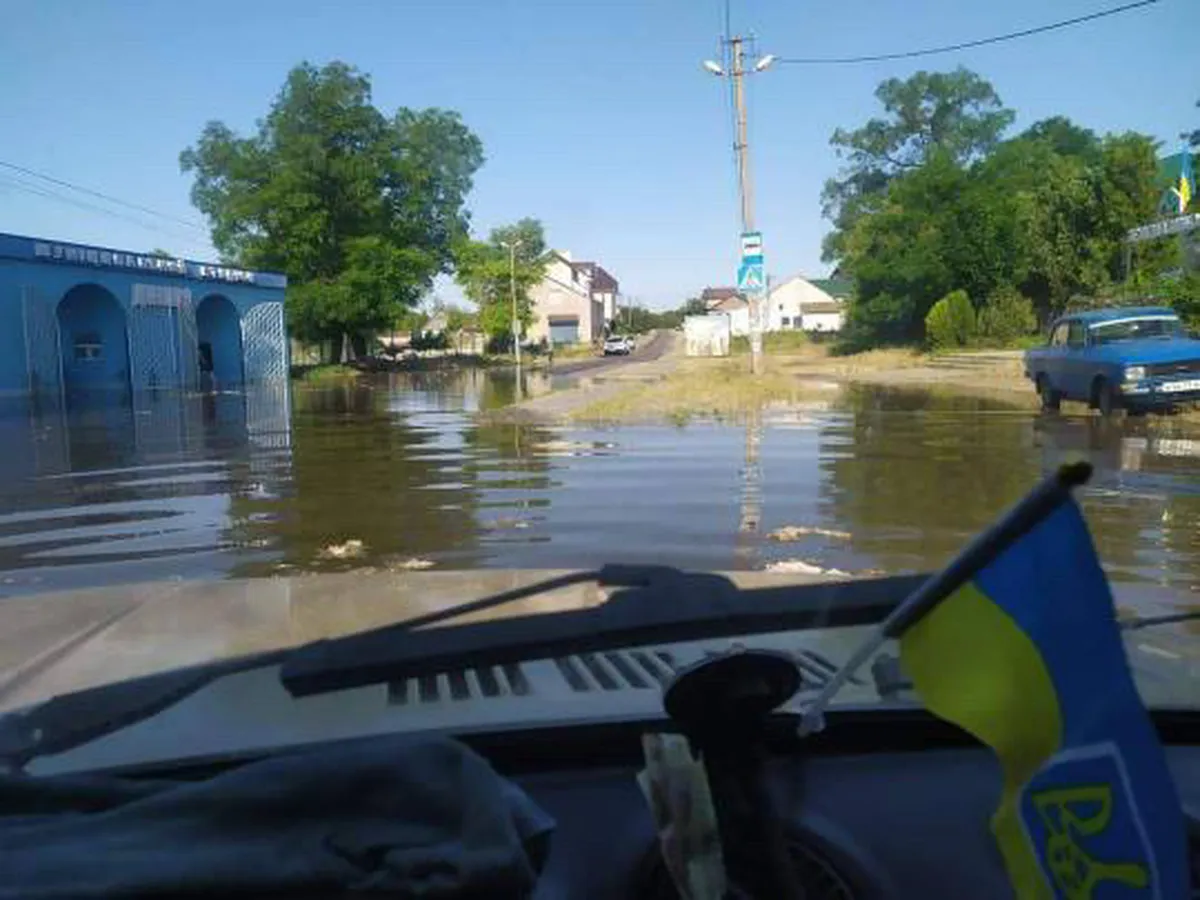 Departure from the city is presented by a heroine
 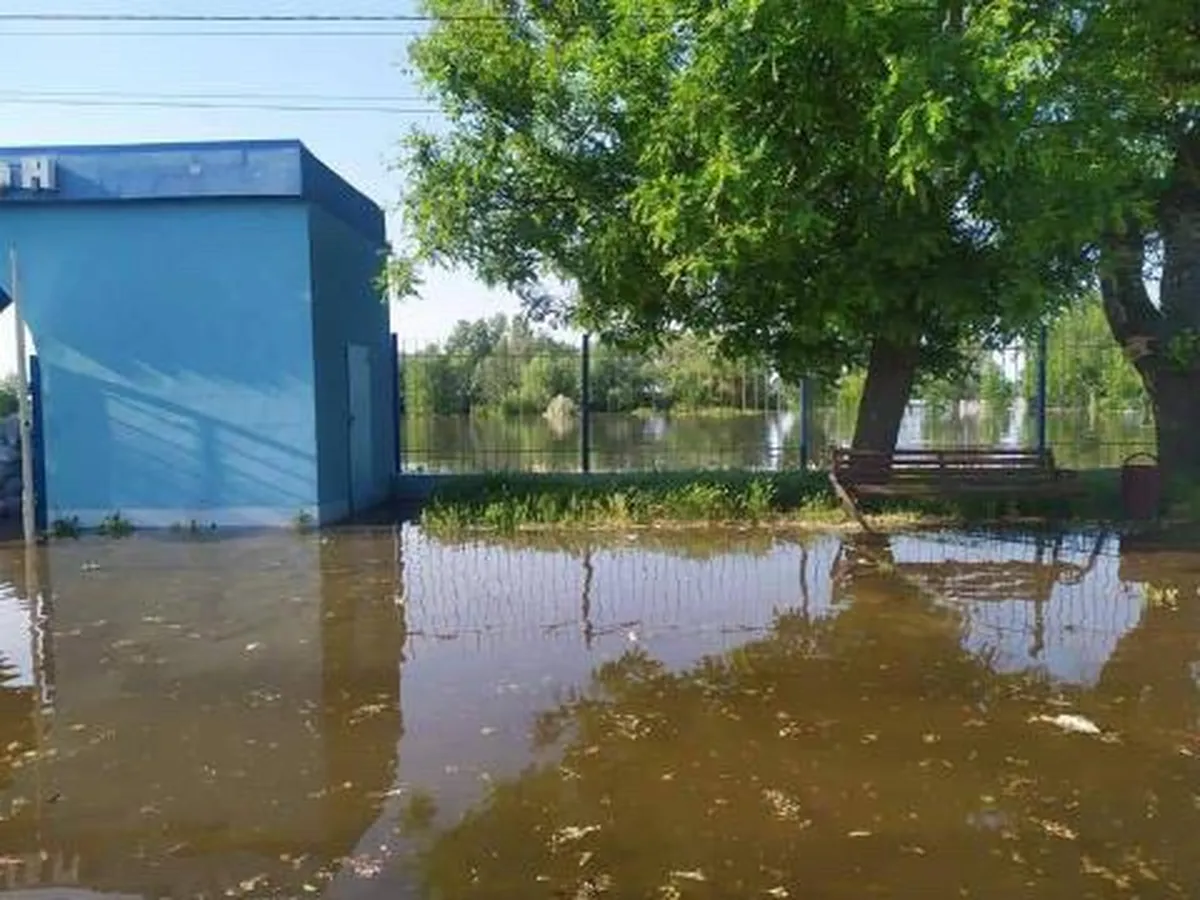 The streets of the city are presented by the heroine
Still scary. But when all the water leaves, I will go back to the new Kakhovka, I temporarily moved here, for about three to four days, now I stopped at my friends.
Of course, people discuss that these rashists blew up the Kakhovsky hydroelectric power station. Everyone blames Rashistov, such a feeling of hatred for them with me!
"Water rose above the windows"
Denis, Kherson
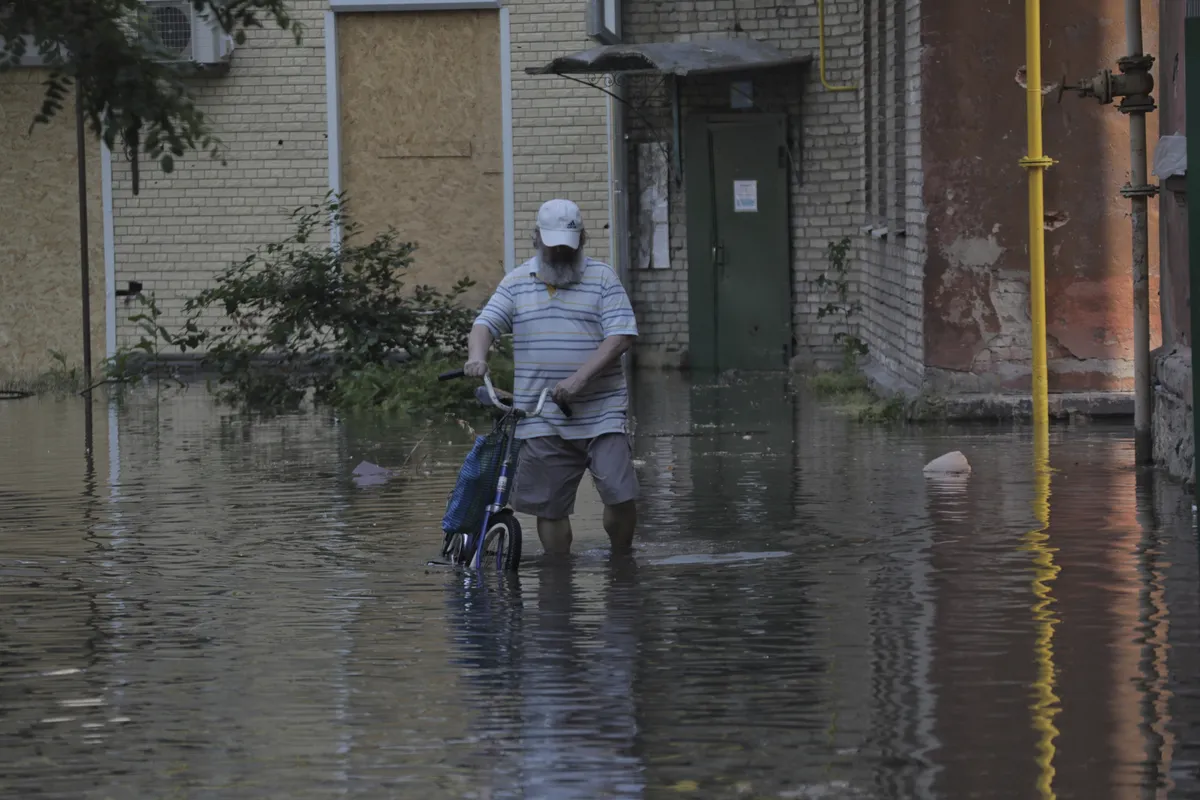
We usually provide products with products, but today we evacuated a colleague: he has the first [on the first line] house on the Dnieper, and there the water rose above the windows. They transported things and family two streets above.
We lived our lives, and, of course, we did not expect this. Although the news said that there would be provocations. There is still electricity and water at home. But those houses that were flooded were disabled from electricity. It affected people who directly live on the river bank.
Most of all wild animals suffered. While they evacuated, they looked: there were small ducks, and gulls, and turtles, and hedgehogs.
"As the first day of full -scale invasion"
Victor, lived in New Kakhovka (occupied by the Russian Federation), he has a mother and grandmother left there
The first line from our old embankment is completely flooded. And according to the cascade from the hydroelectric power station further with the flow, depending on the geographical heights of the shore itself. There are flooded at home. But there, further after the new Kakhovka, the village of Dniels, there are already at home under water. Closer to Kherson, everything is much worse.
The shore where our house is located is 15 meters high from the old level of the Dnieper. And now, until the middle of the garden, water is worth it. That is, about 15 meters, water rose, it is already being selected to the house. If you believe our services that this is a critical moment of raising water, then perhaps this will remain. But again, it is not known how it will be next.
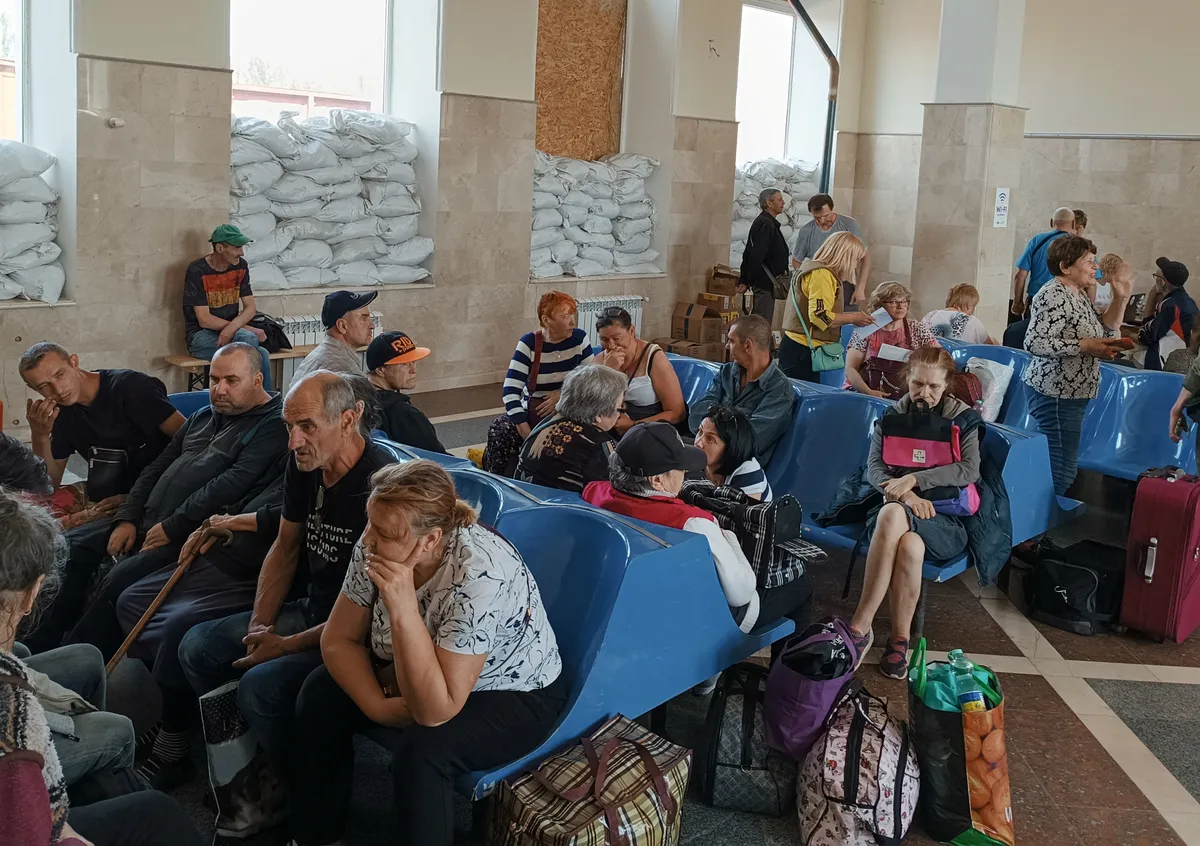
I have an apartment in my new Kakhovka, my mother has now moved there. It cannot leave there, because there remains an old grandmother, her mother, she cannot leave her.
I think that for all of us, Novokakhs, this morning was like the first day of the beginning of a full -scale invasion. Big shock. And just people could not believe that this is generally possible. I am worried about relatives, close people who are there. There are a lot of shocking shocking from your hometown in which you lived all your life.
“There are few shelling and bombing. We decided to destroy nature. "
Olga, lived in New Kakhovka (occupied by the Russian Federation), water is selected to her house
I do not know what is with my house, because it is located near the coast. It enters the flooding zone, because it is a coastal zone, water will be understood, this is not the end. Water is selected to him. It hurts very much. The Kherson region that I knew and loved, unfortunately, no longer exists.
The most important thing will happen next. The channel will completely change. This is an ecological and technogenic disaster. What was built seventy years ago ... There are villages that are completely cut off from the paths, they turned into islands.
I was inside the hydroelectric power station itself, at a depth of thirteen meters in the machine rooms, I can imagine how scale this structure is. She was protected even from a nuclear strike. How much was it necessary to lay explosives to destroy it?
There are few shelling and bombing for them. They decided to destroy nature. This is the edge to which my ancestors arrived a hundred years ago. This is a land that has changed over the 70 years of the existence of hydroelectric power plants until recognition.
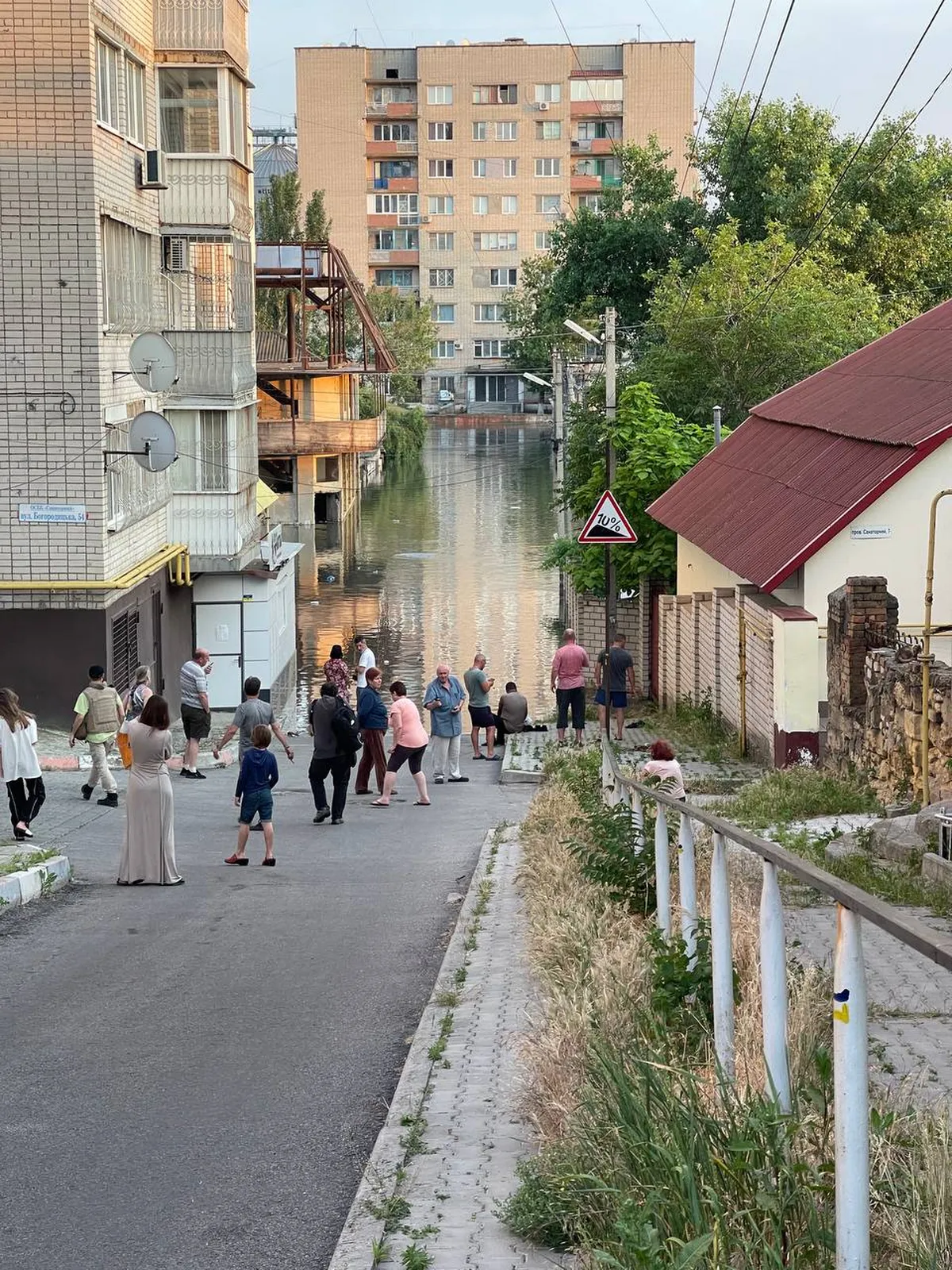 Flooding in Khersonophoto provided by the heroes of the material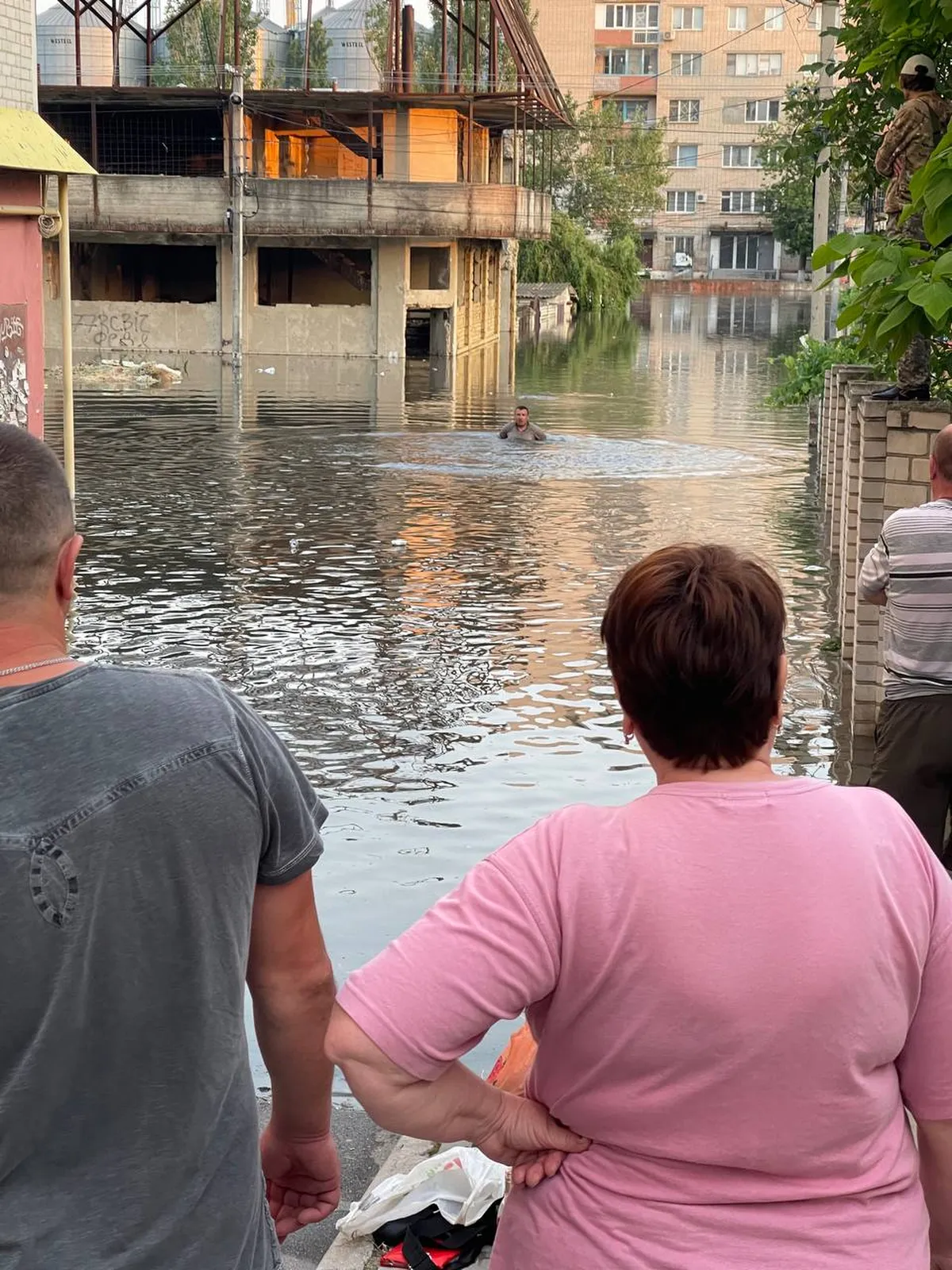
Thanks to the hydroelectric power station and the Kakhovsky reservoir, water came in the steppe, dusty storms that my ancestors remembered disappeared. This land thanks to the "big water" has become flowering. Kherson tomatoes and watermelons were grown thanks to watering, which became possible only thanks to the construction of this hydroelectric power station.
This is an extraordinary environmental disaster, the consequences of which are difficult to predict. This is a big pain of my land. Water from the Kakhovsky reservoir went to the Zaporizhzhya region, to the Dnepropetrovsk - not only the Kherson region, where the whole huge edge begins to suffer. It seems to me that many are not fully aware of the scale.
I survived the beginning of the war. I remember my feelings. And today there were the same sensations. I think everyone has it. This is not despair, it is just horror and anger. We lived peacefully, we lived perfectly. I had the best life in the world, and I was aware of it then, and not only now, comparing. I realized how well we live, especially the last eight years, every year better and better. But, apparently, someone envied that we live well there. They completely destroyed their lives to people.
I lived for 54 days in the occupation. [Before that] I lived in a free country and was not used to coordinating my actions with the authorities or someone else. And here, strangers, invaders came. They started shooting. For more than a week we were hiding in the basements. It was just some kind of horror. Only now, when more than a year have passed, I can like such sounds - tractors, thunder - perceive normally. Although a month ago the sound of the woodpecker took for an automatic machine.
I had to seal the windows, because your [Russian] military with assault rifles rode along my street. Near my windows on the trees were traces of bullets. What do you think I had the sensations?
This is our city. Why came to win us? I remember how we went to the rally. Despite the fact that the Internet was blocked, the information was simply transmitted to each other. Five thousand people went out to speak out. I went out with the children, with my husband to defend my rights. And all my life I will remember bullets over my head, all my life. We decided that we could not live in captivity. Living in occupation is the worst of all. You are powerless, you can catch you in the middle of the street and just close you, pick up on the basement. Our good acquaintance was just taken on the street what was done with him there, this cannot be imagined in a terrible dream ( read about the abductions of people in the occupied Kherson in the report of “important stories.” - approx. Ed. ). You went out for bread and you can not return ... A terrible feeling.
Now it all flashed before my eyes again.
Most of my friends left, but those who have elderly parents, disabled people, whom they cannot abandon, remained. It causes anger and hatred. All this needs to be stopped. [Russians] should open eyes to what they did.
"A sharp descent carries a bouquet of environmental consequences"
Evgeny Simonov - an expert of the working group for the study of the environmental consequences of the war in Ukraine
The main threat of breaking the dam for ecology
- Above the dam, the bottom will be exposed. The Ukrhydroenergo said that they would not restore the Kakhovskaya hydroelectric power station. On the one hand, this is good, because Ukrainian ecologists have sharpened the tooth for this reservoir for several years. This is the most unsightly reservoir in the Dnieper cascade, which has a lot of environmental consequences. But the trouble is that after 50 years of existence [hydroelectric power station], such a sharp descent also carries a bouquet of environmental consequences.
The biggest problem will be the neutralization of the clusters of the silt. The river carries not only water, but also solids, the so -called sediments. The reservoir creates conditions under which the speed of the river is minimized, and a huge number of sediment accumulates at the bottom. When the water leaves, the bottom dries, dust will remain. This can lead to dusty storms in large space ( the area of the Kakhovsky reservoir is 2155 km2, this is almost the area of Moscow. - Approx. Ed. ). In addition, dust contains many toxic substances, because the nanos entered the reservoir, including from industrial areas. It will be necessary to take samples and immediately think what plants can be stabilized by these huge areas with such an emergency room.
Downstream, the problem is more trivial. Many animals have already died that did not have time to escape. All garbage, which lies along the shores, will wash into the river and take it into the coastal part, littering the estuary. There will be strong erosion, especially a lot of soil will be washed away where there were trenches. If strong pollutant agents get into the water, there may be a much greater negative effect. In conditions of war, military warehouses, fuel reserves ( according to the office of the President of Ukraine, are of 150 tons of machine oil. - Approx. Ed. ) Pay great danger. The only thing that is somewhat comforted is huge volumes of water. Whatever washed into the water, it will dilute very much.
Of the protected natural areas, the Dnieper National Park will suffer the most strongly. But to what extent the consequences will differ from natural flood, it is difficult to say.
Останется ли Крым и другие населенные пункты без воды?
— После аннексии Крыма вода из Каховского водохранилища была перекрыта. Российским властям пришлось решать эту проблему. Был переход на менее водоемкие виды хозяйствования, на использование других источников воды. Потребление домохозяйств гораздо меньше. В тех количествах, сколько нужно для обеспечения населенных пунктов Крымского полуострова, вода была.
На материке немногие населенные пункты брали воду для питья из водохранилища, оно не сильно чистое. Криворожье жалуется, что им перекроют воду, есть сообщения, что люди запасаются водой. Я думаю, что эта проблема решается легче, чем с сельскохозяйственным водоснабжением. Она решается уже полтора года по всей Украине. Во всех районах, где идут боевые действия, регулярно перекрывают водоснабжение. Воду для домохозяйств в конце концов можно какое-то время привозить.
Есть ли угроза для Запорожской АЭС?
— Чтобы надежно охлаждать Запорожскую АЭС, создан пруд-охладитель — закрытый контур, где находится около 42 млн кубометров воды. Эта вода идет на все нужды охлаждения станции. Когда в пруду-охладителе снижался уровень воды, он пополнялся из водохранилища. Сейчас АЭС потребляет на охлаждение гораздо меньше воды, чем она потребляла при активной работе. Поэтому пруда-охладителя хватит на очень долгий период. Если не взорвут пруд-охладитель, в ближайшем будущем никакой экстренной ситуации, скорее всего, не будет. «Энергоатом» уже отчитался, что в пруду уровень воды нормальный.