
Translated material
There is an election, no GDP problem
Why are the indicators grow, and the economy is destroyed and its condition is increasingly difficult to evaluate
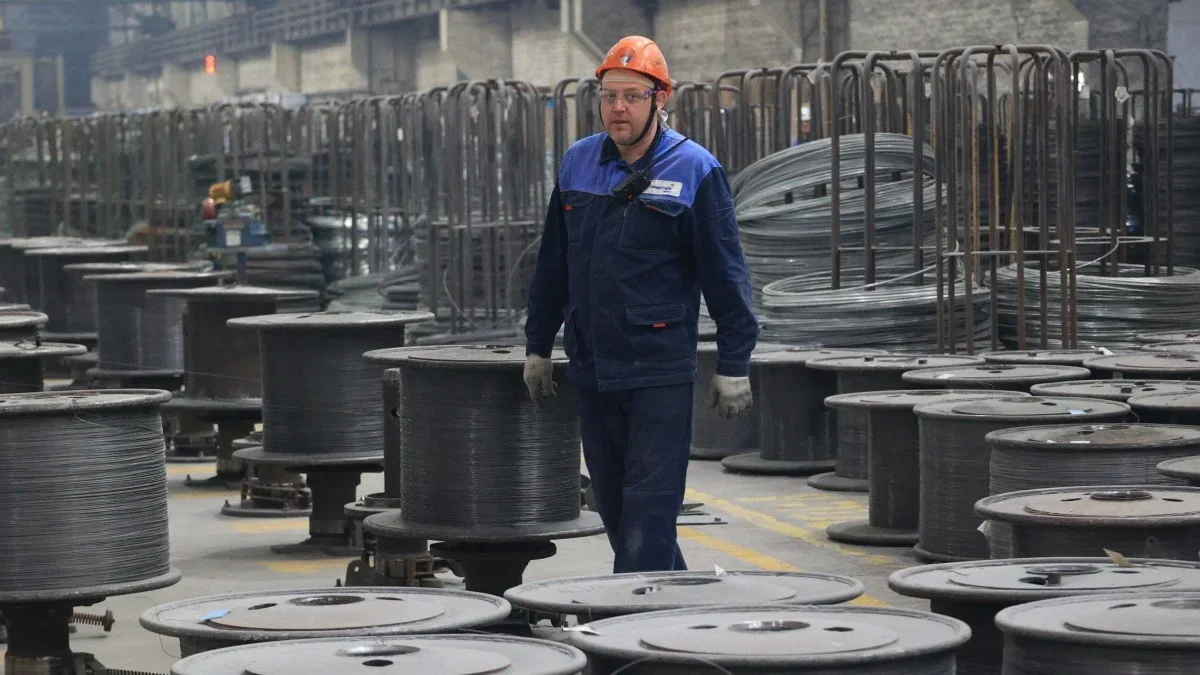
Photo: Dmitry Rogulin / TASS
The data of the Federal State Statistics Service, the Ministry of Economic Development and the Central Bank, demonstrating the economic successes of the government, are not in doubt, but ... Based on these data, it becomes more and more difficult to understand what is happening with the economy in fact.
Unfixed numbers
The new report “On the socio-economic situation of the Russian Federation”, in which Rosstat assessed the state of the economy according to the results of January-April, leaves, let’s say, mixed feelings.
On the one hand, GDP in April showed growth - moreover, by 3-3.5% year by the year (a little earlier the Ministry of Economic Development estimated this growth of 3.3%).
On the other hand, “this GDP growth” is the result of the “statistical effect”. That is, last year, the economy braked sharply - this is, in March of 2022, the Russian Federation in March 2023 demonstrates good results in relation to the failure of April 2022. But this is the most part of the “low base effect”, which is also recognized by the Ministry of Economic Development in its release “On the current situation in the economy. April-May 2023. "
The processing industry paid by the government remains the driver of economic growth - in April 2023 its growth (in relation to April 2022) is measured by two -digit figures: “Ready metal products” - plus 30% GG, “Electrical equipment” - plus 29.3% ... At the same time, the dynamics of cargo transportation surprises. With a reduction in pipeline turnover, everything is clear - sanctions and all things, but the cargo turnover of railway transport has not yet returned to last year's indicators (minus 0.5 years). That is, we produce a lot of the same "metal products", but where do we take it?
And the data of Rosstat “On the financial results of the activities of organizations in the first quarter of 2023” force them to doubt the restoration of the economy even more.
QUOTE
Rosstat data for 1 quarter of 2023
“In the first quarter of 2023, according to operational data, the salted financial result (profit minus) organizations (without small businesses, credit organizations, state (municipal) institutions, non -credit financial organizations) in the current prices amounted to 6027.5 billion rubles, or 77.7% of the quarter of 2022.”
How does it turn out: the economy is growing, but the profit decreases?
At the same time, the most successful industries turned out to be “activity in the field of information and communication” - a profit of profit 2.9 times, “transportation and storage” - growth of 2.1 times, “construction” - growth of 2.1 times.
But - a two -time drop in the profit in the oil and gas industry, the profit in metallurgy also reduced, the profit in coal production and 24% in the agricultural industry decreased by 60%.
We explain why these figures are important.
Firstly, most of the investments in the Russian Federation are carried out from their own funds of enterprises: there is no profit-there will be no investment.
Secondly, Neftegaz is a “stanous ridge” of the budget. Yes, the current decrease in profits in this industry looks significant, although it is such as a record results of Neftegaz last year, but these super -profits have already turned to its favor, and there are no signs that the industry will return to the previous results.
In general, the “profit for profit” was recorded in “export-oriented” industries-the very ones that bring the foreign exchange earnings necessary to pay for imports. And profit growth is noted in companies that are funded by budget expenditures - wealthy revenues that fall.
Oil and gas revenues of the budget in May amounted to 570.7 billion rubles. - for 30.6 billion rubles. Below expected, in June they will also be 44 billion rubles. Below the basic level. The missing money will be taken from the National Welfare fund, the Ministry of Finance of the Russian Federation reports in its release of June 5 .
It seems that this is a small “shortage” of income, and Russian oil industry workers (and partly to the gas workers) managed to reorient the sales of raw materials to the Asian markets ... Yes, this is so, but it was possible to do this on much worse conditions - not in volume, but by net profit from supplies.
At the same time, as we recall, the government classified data related to the oil industry, and we can judge the situation in it only by indirect signs.
So is it possible to believe in some indicators that official statistics broadcast? It seems to be nothing to complain about-but the pictures of successful restoration of the economy from these indicators somehow ... does not develop.
Can.
But with an important reservation.
"Goals" and "indicators"
In 1975, the wonderful British economist Charles Gudhart, discussing the problems of managing monetary policy, formulated the rule that he himself called the “law of the Gudhart”:
Any observed statistical pattern is prone to destruction as soon as pressure is on the purpose of managing [economics].
In a broader sense, the idea of Gudhart was as follows: “When the measure becomes a goal, it ceases to be a good measure” because it becomes an object of manipulation of both direct (falsification of numbers) and indirect (work exclusively to improve this measure). ”
So, if an economic indicator becomes a targeted function for conducting an economic policy, the previous empirical patterns that use this indicator cease to act.
And the Gudhart law explains well why the positive indicators that Rosstat demonstrates to us (for example, GDP growth) or the central bank (inflation braking) does not yet mean that the Russian economy is in good condition.
No, neither Rosstat, nor, moreover, the Central Bank of the Russian Federation does not lie or manipulate data. It is simply the fixation of the authorities solely on measurable indicators (“trees”) leads to the fact that behind these “trees” “forests” (that is, economics) becomes not visible.
How does this work?
The authorities set the task - GDP growth as an indicator of the fact that everything is in order.
Excellent, says the government, we allocate budget funds in several industries and pay “for the performance of tasks”, not counting the money.
Formally, Rosstat fixes growth (and he is right!), But incorporation by budget money “processing industry” in itself does not mean the growth of the well -being of people and the growth of the profit of companies.
This is similar to the situation with the patient, whose condition the doctor will evaluate exclusively “on thermometer” - you can give antipyretic, and the temperature will decrease, but this will not mean recovery. This will only mean a decrease in temperature.
In principle, calculating the indicators on which the bosses have hung up, evaluating the economy, is quite simple.
This is GDP (everything is clear here), this is inflation (it should not grow), it is a ruble exchange rate to the dollar (it should be such as to ensure the possibility of importing at acceptable prices, and repatriation of the revenue of enterprises abroad on comfortable conditions). Probably still “meters of square” and “number of people behind the poverty line”.
It is even ridiculous with the last indicator - the distribution of benefits really led to the fact that the number of people receiving income is less than the “poverty threshold” decreased, but the excess of this threshold turned out to be scanty, and the consumption of people did not grow. (Actually, the “threshold of poverty” can be considered by the “level of income”, as the government of the Russian Federation does, but it is possible to “in terms of consumption.” It is easy to guess why the government chooses “income” to assess poverty.)
Causes and consequences
Continuing the story of why the “Directorate for indicators” does not lead to anything good, if the indicator becomes a fetish in itself, one cannot but give an example: the Russian authorities did very well, and as if in itself, without national projects, state plans and KPI.
What in Russia “managed to do” and it works fine?
Supermarket networks. You can argue about the prices, assortment and quality of products, but supermarkets solve the main task of their existence - in large cities seven days a week, almost 24 hours a day you can come without any problems and stock up on food.
At the same time, supermarkets (and generally food trade) seemed to have not been used by any special attention of the authorities, there was no “supermarket” national project.
And what happened?
There was a political decision.
The authorities had (and there is) a clear understanding that for people in the Russian Federation the “issue of food supply” is an extremely painful issue.
No matter what they say on TV about the “miracles of the USSR”, everyone who was more than 20 in 1991, they perfectly remember (and do not forget) empty shelves, kilometer queues and coupons.
Therefore, the question of “full shelves” is no longer a question, but politicians, and the whole “vertical” understands this without any additional instructions.
No KPIs are needed here: the authorities are in the chopper that the “consumer showcase” is its main support, and he does not need any “indicators” to try not to destroy this window.
Turkish lessons
Economic indicators “work well” until they remain indicators to evaluate the consequences of certain measures aimed at ensuring movement towards the goal. Problems begin in a situation where the indicators themselves become the goal.
A good example is the economic policy of the Erdogan government.
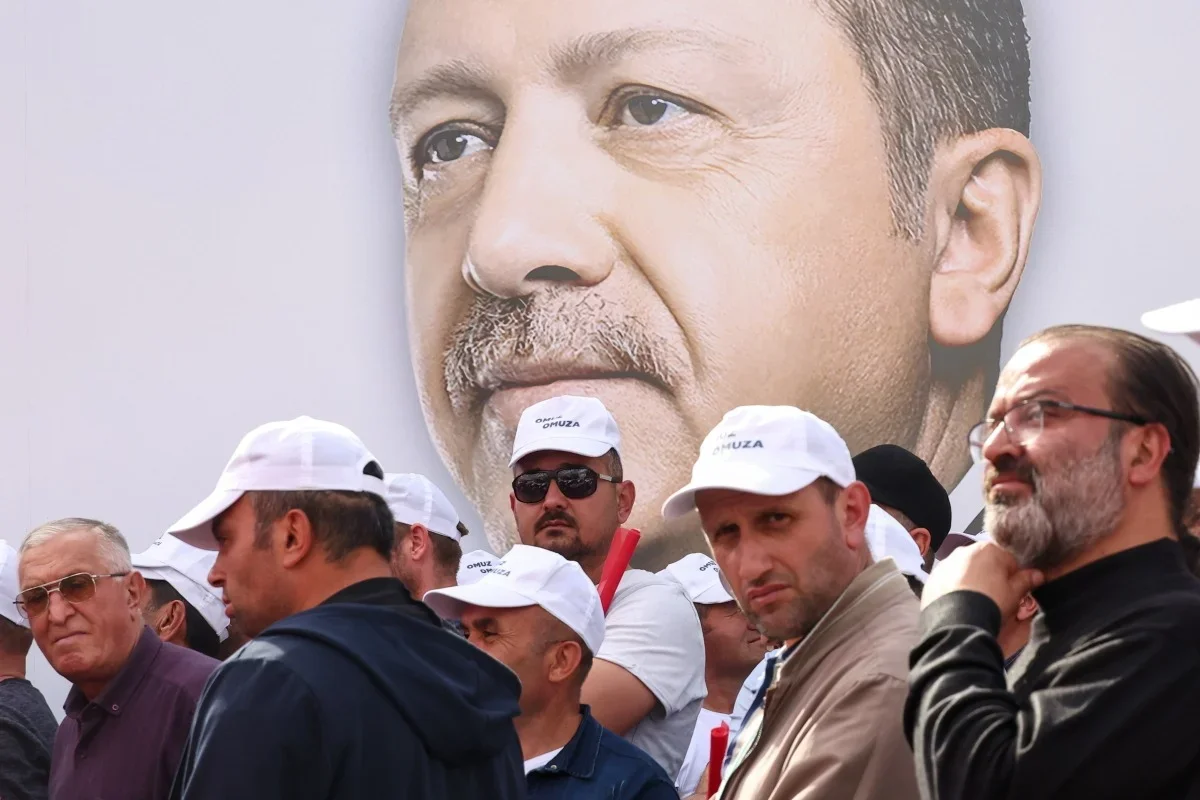
Economists rightly indicate that in Turkey high inflation, this inflation harms both investments and annoys the population, and is actually a direct consequence of the monetary policy of the Central Bank of Turkey, which is insisted by Erdogan.
Everything is so.
But the fact is that for President Erdogan there is no goal called “Low Inflation”.
He has a goal called "Win elections." Accordingly, from this point of view, he looks at the economy and the actions of his government. Will I help me win the election or not?
Erdogan has a sufficient number of voters for whom prices can be unpleasant, but not so critical as to refuse support to its leader.
Why do large cities vote for Erdogan opponents?
Because for a city dweller, constant rewriting of price tags in a supermarket is a rather critical thing.
But if you have “your own economy” - the matter is different, moreover, the food is growing in price - we will sell it more expensive, this is normal.
Therefore, Erdogan knows and understands about inflation, but for his political purposes it does not matter much.
Please note: where there are elections - there are no programs like “Increase GDP”.
There may be a program, for example, “we will give each medical insurance” - that is, a program, the degree of execution of which can evaluate each on their own (I have insurance or not). And as there, the authorities consider the growth of GDP - the voter in general, no difference.
But in Russia, the situation is different: the authorities do not allow an independent assessment of the results of his policy - which means that he has to focus exclusively “on indicators”, which the chief leader likes and which the farther, the more they will obscure the real situation.