
Translated material
I emigrated because of the war and left my love in Chelyabinsk. That's what I understood
Special Corps "Cold" Olesya Ostapchuk tells how relations work and do not work at a distance
The invasion of Ukraine, the introduction of military censorship and repression against dissenters led to a new wave of emigration from Russia. So thousands of people were forced to be in a relationship at a distance when one partner left the country, and the other remained. As studies show, people usually do not believe that relations at a distance can be successful, but psychologists have found that often they are deeper and more trusting than usual relationships. The special corner of the “cold” Olesya Ostapchuk, who herself was in a relationship at a distance, found out what scientists and philosophers think about this, and described her own experience.
In order not to miss the main materials of the "cold", subscribe to our Instagram and telegram .
It was winter, and once again we said goodbye to the airport - as always, painfully: we managed to spend only one weekend together. However, it was easy to look into the future: after a few months he would graduate from the university and move from Chelyabinsk to Moscow, and before that I can come to him more than once for the weekend.
We sat on a bench at Koltsovo Airport and expected the last minute when it was finally time to land. The minute came too fast. Hurrying to the racks, where the landing plants are checked and the escorts are cut off, we kissed up to the door.
“There was such a good day,” he said later. “As often happens after something good, it seemed that something bad would happen.” But I don’t remember doubting good. I sat on the plane, listened to the song The XX “Crystalered”, smeared with brilliance the cracked lips and imagined how very soon we would live together in the “Cozy Odohak on Taganka”.
A day later, on February 24, 2022 came. In the early morning, Russian troops invaded the territory of Ukraine, and the war began. I knew that he was not going to emigrate. It was necessary either to continue relations at a distance, or part.
We have never had a candy-bouquet period, and the non-romantic stage of acquaintance has met in several hours. We met when neither he nor I wanted a relationship. In early July 2021, in disheveled feelings, I went to Gazelle from Yekaterinburg to Chebarkul. A few months before, I broke up with a guy with whom I lived together for several years, a couple of days before I completed a spontaneous short romance, and a few minutes before the trip the driver showed a huge pink suitcase and said: “Why are you looking? Such nails have grown - now and now raise it. "
I had to go to Chebarkul on a minibus, because there were no tickets to my native Chelyabinsk. I sat in the back seat of a stuffy minibus, on both sides I was crushed by snoring women. I complained about everything that was happening in correspondence with a friend, and she replied: “You need to see the alignment of the Tarot for Gemini for this month right now.” Usually I am not at all interested in such things, but what can not be pressed to distract from the snoring of the neighbors? I pressed the link - and the Yetuub Tarologist almost immediately said that this month the cards promise me a new man.
“Brad,” I decided. I definitely was not going to get to know anyone.
- She is not mistaken. So it will be so, ”my friend insisted.
A few days later I sat in the kitchen with one of my Chelyabinsk acquaintances.
“You don't mind if my friend comes to us?” She asked.
- I don't care, but I will most likely sit and be silent, there is absolutely no mood.
I met my previous partners when I was painted in a dress. This time everything was different. When he came in, I sat in leggings and a sports top on the sofa, sweaty after training, and smoked a hookah. Girlfriends went to bed early, and we stayed in the kitchen together-discussed the movie, my travels, something else. In the morning he went to see me home, I invited him to drink tea and see the view from the 16th floor to his native industrial Leninsky district.
So we began the “resort novel” if Chelyabinsk, of course, can be called a resort. We saw each other every day and regularly remained to spend the night with each other, but were in no hurry to call it a relationship. It was clear that at the end of July I would leave for Moscow, and he would definitely remain in Chelyabinsk to study in the last year of specialty. When the time came to part, I no longer thought that I did not want anything serious. I thought we were perfect for each other. Life with her irresistible circumstances seemed terribly unfair.
At night before the departure, he asked why I was upset.
“I don't understand what we have,” I answered.
- What do you want?
- Relationship.
- So, we will have a relationship at a distance.
The format alarming us both, but at that moment there was a clear horizon of expectations. I can fly to him, he can come to me. It will not pass even a year, as he will graduate from the university, and we will eat: moving to Moscow looked like a logical career step for him, he would not have to sacrifice anything.
Relations at a distance are often emotional swing. Some of my friends, even living in neighboring cities with boyfriends, suffered from jealousy, the absence of a person nearby, the desire to control what is impossible to control. I saw how many tears such relations brought them and how quickly they ended. Typically, a sudden detected betrayal became a catalyst.
We did not have this. Knowing that he likes the surprises, sometimes I flew without warning, and could knock on his door or call in the early morning. He was always happy. I have never had any grounds for suspicion or distrust. However, even in such conditions, I experienced different, but invariably strong emotions. Bright saturated days together, which were so easy to idealize and romanticized, were inevitably replaced by loneliness and existential doubts. Relations at a distance required work, a special level of openness, intimacy in correspondence.
We saw each other every few weeks, but I still regularly tormented me with how viable these relations are. The brain threw me a false alternative: sometimes it seemed that the choice is between monogamous relationships at a distance and ideal dates with guys from Tinder, each of which would be so bright and memorable that you will constantly receive positive emotions. A friend with whom we lived together that autumn joked: “You have like a clock. It takes two weeks after your separation, and you again ask me: “Nast, what do you think, the relationship at a distance is normal?” ”, When it became completely unbearable, I sat on the plane in Chelyabinsk - everything was again in the fairy tale, and for the time the question was filmed.
When you are in a relationship at a distance, familiar sometimes seem to expect excuses from you. Few people believe that a man will not change (by the way, the percentage of betrayal of steam at a distance is the same as everyone ), few believe that such relationships can generally bring joy. On Twitter, they will not forget to remind you that people with an avoiding type of attachment are pushed into relations at a distance, that perhaps something is wrong with you, since you continue to behave in a world where you can open an application for dating right now and find a dream man in a radius of five kilometers.
In order not to worry once again, the psychologist advised me to honestly ask myself: not taking into account joint plans for the future, here and now these relations make my life worse or better? All this time I answered: "Better."
Over the past decades, the format of relations at a distance in many countries has not become a choice, but a necessity. For example, The Economist wrote that more and more married couples are in relations at a distance, often due to financial reasons (for example, because one of the partners was offered more profitable work in another state). From 2000 to 2017 in the United States, the number of such people increased one and a half times.
Then there was a pandemic - and there were even more relations at a distance, and in order to continue them, it was necessary to become an expert on visa and nuances of sanitary measures. I know a few pairs, which have a greatly complicated life. A friend could not meet her boyfriend for more than a year: because of the pandemic, he could not enter Russia, where she lived, and she could not get a visa to see him. Their story ended happily: recently they got married and moved together to the United States. But there were cases when love could not withstand bureaucratic procedures and unknown. Psychologists believe that such difficulties are easier to overcome couples, where at least one of the partners has a reliable type of attachment.
Before the development of the Internet, psychologists studied primarily the negative aspects of relations at a distance: jealousy, stress of partners. And public opinion perceived such relations negatively: relatives and friends of steam can still consider them inferior. However, new studies show that couples in relations at a distance are as happy as the rest. Scientists from the University of Cornell even came to the conclusion that thanks to new technologies and social networks, they often have more emotional closeness. The professor of the city University of Hong Kong Crystal Jiang believes that partners in relations at a distance often "make more efforts to personal communication and the formation of proximity, and their efforts pay off." In addition, scientists have found that in such pairs there are less aggression and problem interactions.

However, it is also true that those couples who know that they can reunite are happier. On average, the relationship at a distance ends three months after the start; Many, especially if the partners are very young, part after reunification - after a few months, when the period of idealization of the partner passes.
I remember how in the first days of the war I released materials in the “cold”, how urgently collected things and moved from a rented apartment when it became clear that Russia would soon completely prohibit independent journalism. But I do not remember at all how I explained my emigration to the partner. After great mental shocks in adolescence, the brain sometimes erases the details of traumatic events from my memory. “In the early days, when it all started, you generally talked with me. You were not able to communicate, ”he told me when I asked me to remember how I talked about leaving. In fact, I put him before the fact: on March 5, I am leaving from Russia on exile. I remember that he did not believe that it was for a long time. And he did not fly to Moscow to say goodbye. However, I was offended by him later. At that moment, it was simply not to that.
In the first months of emigration, I watched my colleagues leave with partners and husbands. We did not have such an option: emigration for him would mean the loss of an engineer's diploma a couple of months before graduation.
I was sure that long relations at a distance in the circumstances of the war, emigration and instability are a very bad idea. A month after leaving, I suggested discussing our future. He was never abroad, did not know foreign languages, and he was much easier for him to look for in Russia. I said that I am aware of this, and suggested that I part, despite the fact that we still love each other. It is simply because I can’t stand it for several months of separation. In the end, love happens more than once in a life and no one is obliged to sacrifice oneself for another.
I think then he was sure that the war would end to the summer, and invited me to maintain relations and see herself immediately after the defense of the diploma. We were going to relax in Montenegro, but by July, flights began to cost so expensive that he did not have enough money for it. I was very upset and said that I could no longer wait. He promised to move to Riga in September, where I settled.
In September, Latvia closed the entrance for Russians with tourist visas. Having searched the work abroad, he received an offer from Egypt, but I did not want to go there. There were no other foreign offers to the young Russian builder-builder, and I was frightened by a potential moving to another country of my dreams. I felt sorry for myself, I discussed it with my girlfriends, and they reinforced my fears even more.
When emigration takes place on the principle of “Oleg Offer Dali” - that is, a woman moves after a reliable man - others often worry about her vulnerable position, about financial and legal dependence on a partner. My friends would have no doubt that a woman, with such a move, loses social contacts, faces a difficult need to build her life again. When a man should face the same, no one understands why he does not fly to you nowhere with a happy smile on his face. My boyfriend did not have remote work, savings, good knowledge of English, the experience of life abroad. And I did not have a salary that we could live together. But most of my interlocutors still said something in the spirit: "When a man wants, he will do everything."
I imagined such a picture: he moves to me, we have no money, the fairy tale about the relationship turns into hell, we swear and part. At that time, the script to be together at all costs did not seem good to me. We agreed to hold a joint vacation in November in Turkey and decide whether we are definitely ready to maintain relations.
To earn on vacation in Turkey, he quit office work in his specialty and went to the foreman for a large construction site. The salary should have been three times more than in the office, and the project was designed for a couple of months. From Latvia, I watched how he got up at six in the morning, went to my native area in Chelyabinsk (which he could not stand), plowed at the construction site and was clearly not enthusiastic about what he was doing. But both of us were warmed by the idea of how we will spend November together in Istanbul.
On September 21, Russia announced a “partial” mobilization.
It turned out that he had the first category of fitness, a military department behind him and he is an officer of the reserve of tank troops. I wrote texts about how Russian men were taken to war, and was horrified. Mobilized wives told how they called on people a much older guy, not with the first, but with the fourth category of fitness. The governor of the Chelyabinsk region called on officials to return from vacations and make every effort to conduct mobilization. Informed sources in the media said that the Kremlin would close the borders from day to day.
It seemed to me that his life was at stake and we had to save him at all costs. I began to hysteria and tried to manipulate. At first, I politely offered him to quit everything and leave for Kazakhstan, then retold my interview, then threw off the statements of anonymous sources. She said that I could not meet with a guy who would go to kill Ukrainians. She said that only two opportunities remain in Russia: to go to war or go to jail. He replied that he could not leave workers at the factory that he could not go right now to Kazakhstan without money, that the principles would not allow him to live at my expense. In the end, I said that if he does not leave, we will part. And he agreed to leave.
In the afternoon I interviewed mobilization and did materials, and at night I was looking for transport to the border and housing in Kazakhstan. Several times the situation developed at the same plot: I book a car to the border, he did not get into it; I was offended, cried, pumped up, he agreed to leave; I book a bus, he missed the flight and returned money to me. As a result, I felt complete powerlessness, burst into tears and said that we parted.
The next morning, my friend complained that her partner, who was with her in the same city, could not get used to writing her “good morning” and “good night”, ask how to do and listen with interest to listen to the answer. In my relationship, this was the norm that I did not pay attention to. I downloaded Tinder, looked at the profiles of other men and remembered all the advantages of my boyfriend. I remembered that we perfectly coincide in the worldview, and in the views of the future, and in sex. I remembered how he cooked borsch to my arrival at five in the morning, how he came with flowers to the airport, how he constantly helped my grandmother, how he went to work for the factory to earn our vacation. I had no complaints about him on the merits - besides the fact that we are not in the same city.
Later, leafing through Facebook, I saw the post of editor -in -chief of “such affairs” Evgenia Volunkova, who married at a distance. He and his partner were in different regions of Russia and could not crucify: he would have lost his job if he had moved to Moscow, she - if she had left there. “The month got married. The same number did not see each other. They planned a wedding trip at the end of October. Now nothing will happen, nothing. Vova cannot urgently leave. Not everyone can, alas. “Summarily mobilization, private, second category.” The fourth day shakes me. Прячусь за рутиной: переезжаю внутри Москвы, работа нон-стоп, много хлопот. А потом ложусь спать и не сплю. Сдохну сама, но не отдам никому», — писала она.
Я написала ей, мы решили поужинать вместе в зуме и долго обсуждали формат наших отношений. После разговора с Женей до меня как-то дошло, что встретить своего человека не так уж легко и расстояние — не главная проблема. Женя говорила, что их отношения во многом были более здоровыми и насыщенными, чем у тех людей, что жили вместе и ненавидели друг друга. Я удивлялась тому, что никто из них не пожертвовал своей работой, а Женя объясняла, что иногда лучше быть на расстоянии, чем терять то, что ты любишь, ради партнера.
Я подумала, что расставаться с человеком, с которым ты совпадаешь практически во всем, только из-за того, что вы не можете сейчас быть в одной стране, — это как-то тупо. Но звонить я ему не стала. И тут он позвонил сам.
Я долго пыталась понять: что такое здоровые отношения? Это когда ты способна ждать, переносить трудности вместе, работать над отношениями и принимать то, что у партнера могут быть проблемы и ваша жизнь может быть неидеальной? Или когда ты расстаешься из-за отсутствия личного комфорта и ищешь на «любовном рынке» идеального кандидата?
Социолог Полина Аронсон отмечала , что ее поколение — женщины, взрослевшие в 1990-е и читавшие Cosmopolitan и другие новые глянцевые журналы западного образца — училось жить для собственного удовольствия и рассматривать отношения как контракт: нужно работать над собой, своим телом и эмоциями, чтобы получить в финале приз в виде надежных отношений. Поколение зумеров, то есть мое, по ее мнению, воспринимает идею работы над отношениями как нечто тяжеловесное. «Понятие комфорта очень сильно изменило понятие любви, во всяком случае в России. Comfort. “Я хочу комфорта, я не хочу никакой любви”», — рассуждает она.
Другая социолог, изучающая эмоции, авторка книги «Почему любовь ранит?» Ева Иллуз считает, что в современном обществе больше неактуальна идея жертвенности, и пишет о том, как «индустрия самосовершенствования» учит людей управлять своими романтическими переживаниями.
Дейтинговые приложения, по словам Аронсон, формируют обманчивое ощущение, что на любой спрос найдется предложение и мэтч случится легко. Порой мне кажется, что, именно руководствуясь этим, мужчины постоянно с недоумением спрашивают, что такого крутого в моем парне, что я не могу найти себе другого в Латвии, здесь и сейчас. А женщины, которые нередко сами годами не могут найти себе подходящего парня, напоминают: «Посмотри на себя, ты офигенная. Конечно, ты найдешь себе идеального партнера».
Это логика эмоционального капитализма, объясняет Аронсон: ты накапливаешь капитал, каким-то образом его обмениваешь и получаешь выгоду. «Современный человек обязательно должен научиться этим капиталом распоряжаться: найти подходящего партнера, находиться с которым будет выгодно. Партнер — это, кстати, тоже слово из предпринимательского языка, языка совместной деятельности в целях получения выгоды», — говорит она. Эмоциональный капитализм предполагает процесс непрерывного выбора, который должен быть правильным, иначе вы потратите ресурс зря. Считается, что психолог учит вас разбираться в себе и после этого вы можете качественно находить партнера. «Это логика непрерывной оптимизации, непрерывного роста, все время нужно искать какого-то прогресса, все может становиться лучше и лучше», — говорит Аронсон.
Аронсон подчеркивает, что современная любовь связана с понятием личностного роста: считается, что настоящая любовь не должна его сдерживать. «Здоровые отношения — это там, где нет риска, это там, где нет боли, и это тоже такая довольно наивная картинка, что этого можно достичь, — говорит она. — И мне кажется, что многие люди делают себе больнее — скажем так, они изнашивают себя в попытке достичь этого идеала».
Может, поэтому отношения на расстоянии многих так пугают. Практически всегда в них один партнер должен подстроиться под другого. Редко жизненные траектории и выгоды совпадают полностью. Я очень много думала над тем, что такое настоящая любовь. Это когда один из партнеров выполняет роль жены декабриста и переезжает вслед за другим, соглашаясь разделить с ним трудности? Или это когда каждый выбирает свой личный комфорт и принимает выбор другого?
В мире, где так много говорят о психологическом абьюзе, от которого сложно сбежать, неудивительно, что, услышав о дискомфорте в отношениях, многие начинают намекать тебе на то, что из них лучше выйти.
23 декабря я сидела в самолете, который кружил где-то над Уралом, и смотрела на фотографию своего парня. К тому моменту мы не виделись уже 10 месяцев, и я точно знала, что если прямо сейчас не прилечу в Челябинск, то не увижу его еще как минимум до весны: через пару недель мне предстояло ехать на трехмесячную стажировку в США. Чтобы встретиться с ним, я провела сутки в дороге из Риги в Санкт-Петербург и два часа летела на самолете. Он ждал меня в аэропорту — пришел туда ранним утром перед работой. В это время пилот объявил, что посадочную полосу занесло снегом и самолет сядет в Тюмени.
Несмотря на то что я очень по нему скучала, мне все равно было страшно, что тело будет реагировать на него как на незнакомца. Даже перед предыдущими нашими встречами, когда перерывы были гораздо меньше, я на всякий случай говорила, что, возможно, нам придется знакомиться заново. Он смеялся, но говорил: «Окей, не буду тебя целовать тогда». Потом, конечно, оказывалось, что никакого предварительного знакомства не требовалось. Так вышло и на этот раз, когда я все-таки до него добралась. Неделя, которую мы провели вместе, была настолько хорошей, что я всерьез думала отказаться от учебной поездки в Нью-Йорк и остаться в Челябинске.
В итоге я все же полетела в США. Прощаться было сложно, но зато я была уверена, что точно хочу продолжать отношения. В этот раз волновался он: вдруг Нью-Йорк вскружит мне голову и мне больше не нужен будет парень из Челябинска?
Поддерживать отношения из Америки действительно было максимально тяжело: нас разделяло больше восьми тысяч километров, а разница во времени составляла девять часов. Первую половину дня я проводила в университете, вторую — за работой, а ночью делала домашние задания или занималась с ученицами, которых готовила к ЕГЭ. На парах у меня часто не было интернета, и мне сложно было найти время даже на звонок.
Одна из проблем в отношениях на расстоянии — FOMO, боязнь упустить в жизни что-то интересное — в Нью-Йорке действительно усилилась. Если раньше я чувствовала, что, возможно, упускаю классные знакомства и свидания, не испытываю важные для меня тактильные ощущения, торможу свой жизненный путь (в обычных отношениях, как мне казалось, я бы уже, конечно, сыграла роскошную свадьбу и жила лучшую жизнь), то теперь на меня стал давить еще и лайфстайл Нью-Йорка — города «отношений на одну ночь». Я видела, как мои знакомые постоянно ходят на свидания, а многообразие ресторанов, парков, музеев и других мест, где можно было бы с кем-нибудь встретиться, сводило с ума.
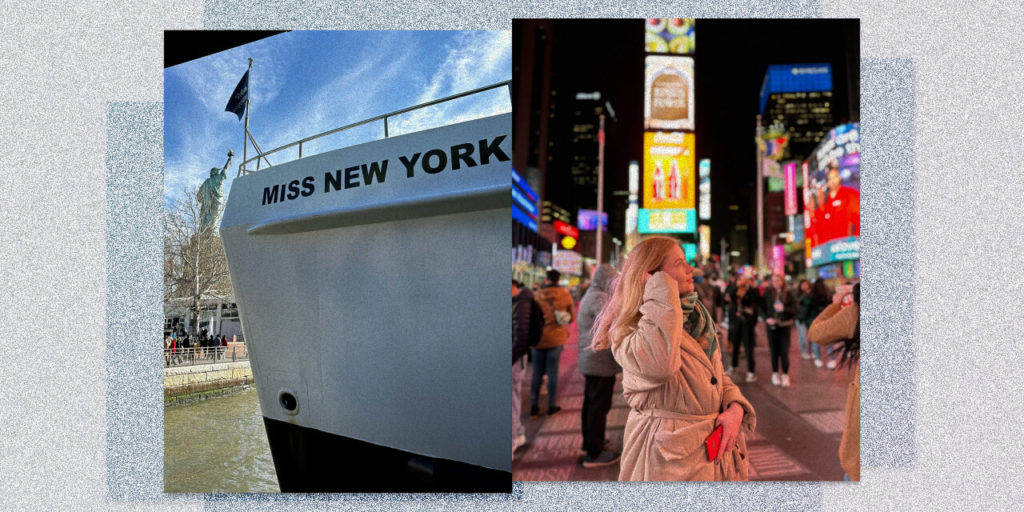
14 февраля моей соседке по квартире принесли букет цветов — их отправил ее живущий в Америке муж. Мой парень мог разве что отправить мне рубли на российскую карту — это совсем не выглядело романтично. Чтобы не идеализировать чужие истории любви, я старалась узнавать о них больше. And it helped. Выяснилось, что в идеальной семье моей соседки еще до свадьбы было несколько лет, проведенных в отношениях на расстоянии. А подружки, ходившие на свидания в Нью-Йорке, сталкивались не только с позитивными эмоциями, но и с разочарованиями и насилием. Их отношения так же приносили страдания, как и мои, и далеко не всегда у этих отношений были перспективы.
Вернувшись из США в Ригу, я поняла, что точно хочу быть с ним вместе. Мы снова стали продумывать варианты, как это осуществить. Он мог легко попасть в страны с безвизовым режимом для россиян, но легализоваться и получить в них работу инженеру-строителю было бы сложно, а я по-прежнему не могла содержать двоих.
Мы начали прорабатывать вариант с переездом в Евросоюз. С трудом собрав огромное количество документов, он запросил туристическую визу в Италию — и получил отказ. Невозвратные авиабилеты сгорели, и мы не увиделись. В июне я должна была поехать на тренинг в Грузию, и он купил авиабилет до Сочи, чтобы увидеться со мной там, но теперь уже у меня кончилась латвийская виза, и поездку пришлось отменить. Сейчас с момента нашей последней встречи прошло пять месяцев.
Когда я рассказывала все эти злоключения своему психологу, она сказала: «Мне больно смотреть на то, как вам не везет. Это действительно тяжело». Но я, кажется, уже привыкла, что любая встреча может сорваться в последний момент. Если меня вновь настигает FOMO, я вспоминаю героинь своих текстов, которые ждут мужей из тюрьмы или живут в браке с моряками дальнего плавания, вспоминаю, как он всегда пишет мне «доброе утро» и «спокойной ночи», интересуется моими делами, отвозит лекарства моей бабушке, в ответ на любую фотографию говорит, что я красавица, и ценит наши отношения. И когда психолог спрашивает, дают ли эти отношения мне что-то важное и нужное именно здесь и сейчас, я все еще отвечаю: «Да».