
Translated material
District content
To attract Russian youth in the village will be a colorful picture, breaking stereotypes and stories about the advantages of rural life
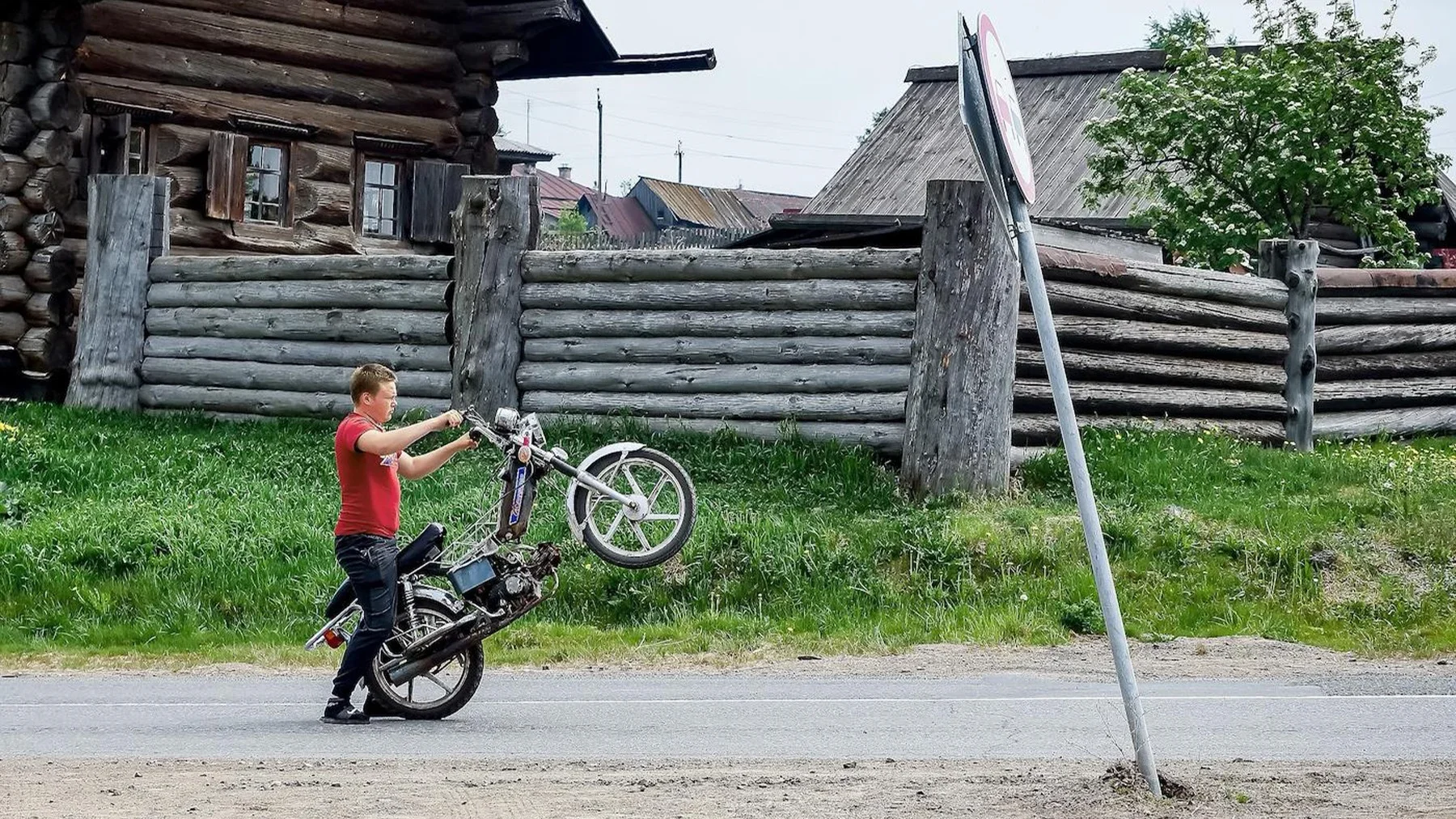
Photo: Evgenia Yablonskaya / Kommersant
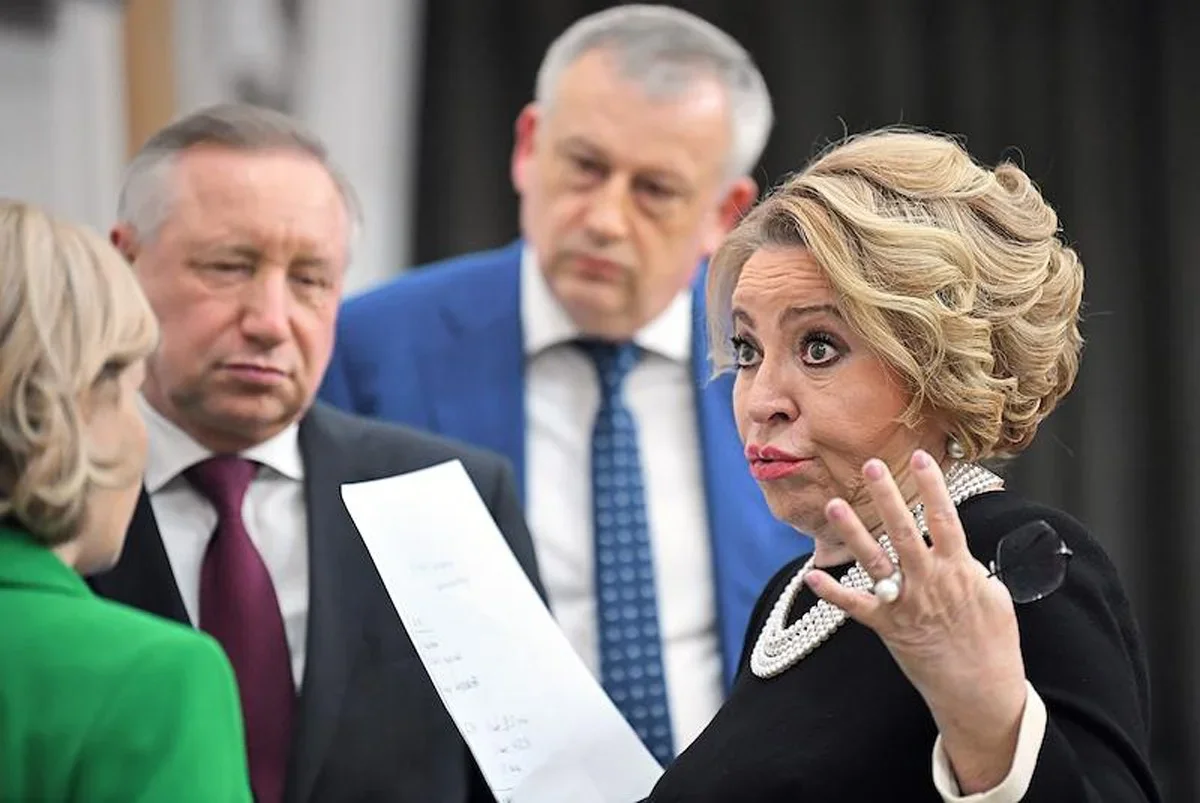
At a meeting with the social sector of the village, the chairman of the Federation Council Valentina Matvienko invited bloggers to popularize rural life among young people and more actively attract her to the village. And the bloggers themselves - to support. Apparently, they have serious hopes. It is the authors of the rustic content, according to the understanding of the speaker of the upper house, that are able to break old prejudices and in an understandable language to tell young people about the advantages and charms of rural life. That, in addition to these stories, the authorities are ready to offer possible immigrants is an open question.
"The ladies hug with goats and visit the cows"
The rural blogger Vitaly Kovrigin began to tell about life in the province one of the first. His YouTube channel “Family in the village” is already 6 years old. The family is a wife and four children. The village is Krasnaya Gorka in the Kinel-Cherkassky district of the Samara region. The population is 300 people.
Here, the Kolligins have a house and a small farm. Since the speaker’s proposal also concerned Vitaly, we with his help tried to understand whether it was fulfilled. And whether the blogosphere is able to motivate young people to move to the village.
“I think Valentina Ivanovna only recently met rural blogging,” Kovrigin suggests. - As a viewer of YouTube, she probably watched colorful videos, discovered a village segment and said: great, people live, develop ... Why don't we support them? In fact, village content in YouTube appeared long ago - 6–7 years ago. ”
Indeed, blogs and channels telling about life in the village are quite simple, there are a lot of them, and they were “drawn” not yesterday. And today they occupy their niche.
This is what one of the representatives of this sphere says:
“The most popular and popular on the YouTube site is entertaining content. It is followed by cognitive (reviews, life hacks, unpacking). And more recently, rural content began to fight for leadership, this is a kind of reality show. YouTube is not only earnings for us. This is a way to communicate, exchange experience. ”
People by their example show how to live in the village, what to do, how to relax, what to earn. True, with one reservation.
“There are enthusiasts like us who really live in the village,” explains Vitaly Kovrigin. - We were one of the first to start shooting this life, to popularize it. But there are very few people who followed [our] example and moved. I’ll say from my own experience: only a few of the spectators who wrote to us “we were inspired by watching your videos”, began to live and do something in the village. The point is that there are a lot of staging videos in the village segment. In them, people living in the city come to the village and show how beautiful and good here, thereby earning views. ”
Quite a secular ladies are probbling, hug with goats, visit the cows, drown the stove. The manicure remains perfect, and the boots are virgin clean. There is enough similar content on the Internet. And his views are serious. A man of a rustic fake will most likely distinguish. City is not a fact. The popular picture, judging by the number of likes, people like it.
If bloggers begin to pay for the romanticization of rural life, the number of authors of rustic content will simply grow, and no more, Kovrigin believes. He is sure that this life can be more attractive with the help of the state.
“I thought,” Vitaly continues, “that they will engage in the village when sanctions began. But, in fact, nothing has changed. Now they want to attract young people to come to the village, begin to revive it - they would feed not only themselves, but also the city. But in order for this to do it, you need to carry out a number of events, and not just show a beautiful picture. ”
"Everything is fine until you get sick"
Another representative of the rural blogosphere Fedor Maslov, commenting on the idea of the speaker of the SF, even considered it belated. At the beginning of the two thousandth, this would be much more relevant. The development of rural territories really gains momentum, but a large gap in education, culture, and health care has formed. This is especially characteristic of small settlements. Separate problems are recognized by Matvienko herself. For example, in villages, the birth rate indicators, according to her, are lower than in the city, and the mortality rate is higher.
“In order to fight these trends, it is necessary that life be boiled in every village or village, and its quality is not inferior to urban standards. And if people see that in rural territories there are opportunities for self -realization, that modern social institutions work there, roads, communal infrastructure are being repaired, then, I am sure that many citizens will return to their roots, Russian villages will receive a second respiration. This is one of our main goals, ”Matvienko said.
Not really, however, understandable: it is enough to show the village of the city standard? Or should she have to do it?
It is even less clear how the idea will be carried out: so that the picture is correct and attractive, will roadmaps develop for bloggers? Will they popularize exclusively prosperous objects?
Meanwhile, the real picture is very contradictory. On specific examples, we will consider how things are with the possibility of self -realization, social sphere and high -quality roads in the village. Let's start with medicine. He says L., who was experiencing on himself what it was like to get sick in the village.
“Everything is fine until you get sick. With our optimization, rural medicine was almost completely destroyed. To take tests, undergo an examination - to the city for 200 km. Of course, this is not the fault of the village. With our wealth we could live differently. And buses would go, and hospitals could be rural. But we live in these realities, where to get sick in the village is many times more. ”
Vitaly Kovrigin is almost inextricably linked. Disabled person of group I, he needs regular hemodialysis. Three times a week he travels to the procedure 50 km from the house. As for the infrastructure, there is a feldsher-obstetric station (FAP) in the village, the mail that works two days a week, the Raipo store, the school and the old club. There is no asphalt, the roads are ground. Therefore, before repairing (and showing bloggers), the roads here must be built. Moreover, in accordance with the city standards of the quality of life - after all, the speaker said this.
It turns out that Red Gorka, despite the presence of his blogger, is unlikely to be one of the objects for popularization-with its primer and lack of work. Most local residents go to work with a rotational basis.
“We have farmers,” says Kovrigin, “who have 2-3 jobs, and they are already occupied. There is no point in attracting new specialists, because there is no base. For example, only one physician can come to the same FAP, there is only one full -time unit. Teachers and retirement continue to work. Do not leave. There are simply no jobs for young specialists. ”
In the village near Torzhok in the Tver region with self -realization, there are also problems. One of its inhabitants, commenting on the proposal of Matvienko, says that he worked at the Russian Post a postman with a salary of 10 thousand rubles. And then the department was closed. And not only him. Self-realization has corny into the search for at least some work.
Take another example: a person is ready to work not for hiring, but by selling his own products. So there are problems here. Here is what one of the rural residents at the thematic forum told (the author’s style is saved):
“Previously, it was possible to take a bull (pig), and not one, to feed in the summer, sell in the fall. Earn. Then they decided that self -laundry meat cannot be sold. Now, in order for a resident of the village to sell the pig/calf, he must be taken to the city to the "Substitute Workshop". There they will fill it up, give a certificate. And go back with this dead carcass. How much do two transportation cost (and even with a refrigerator) and where to get transport? Exactly so much that it becomes absolutely uninteresting to any peasant. ”
Arkady has its own story from a small village in the Shchelkovo district of the Moscow Region. Three times a week he goes to work in Fryazino. On the rest of the days, he also goes to a large village. It works not by profession, but by a watchman and a guard. But there are no other options. It describes a part -time job as follows:
“And whoever asks for something is doing. I can trim the trees, recently I chopped street stairs, I ride here on all its environs when not at work. ”
In a native village with work is very bad. Neighbors, for example, live only due to the fact that they manage to grow and sell. And the youth does not want to stay here.
- Target learning, in your opinion, can at least partially solve the problem? - I ask Vitaly already (perhaps the authors of the channels will have to promote this idea).
- This is now practiced in Belarus. I know that there are a lot of young specialists who receive higher agricultural, technical education, return to the village and work. But there is a platform, a base. And we have nowhere to return.
- In this case, what can really move young people to move?
-For example, the ability to open mini-production. After all, only large farmers are funded mainly. But there are no loans for micro and family farms. For example, the administration of rural settlements could build small workshops. To offer entrepreneurs to make something in them without paying rent, only-utilities. But at the same time, the condition is jobs for local residents. And then these micro -production would not be created in the city, but in the village. Here, labor and rental is cheaper, and some raw materials can be bought on the spot. Then we need an organization that will buy their products from such farms and sell it. It is necessary to arrange more fairs in the villages, let special buses there so that people can come - buy.
"We begin to disappear"
And the housing stock? Suppose a person is ready to move to the village. Will he be able to buy a house that meets the same city standards without problems and for adequate money - with the bathroom, toilet, gas? Gas is a separate topic. A couple of years ago there - the Federation Council - stated a low level of gasification of Russian regions. If on average in the country this indicator fluctuated around 71%, then in some areas it did not reach 20%.
For example, the Altai Territory at the beginning of 2021 was gasified by only 13.1%. Such figures were heard at a meeting of the Council on gasification. According to Gazprom, until 2025, 480 billion rubles will be required for the conclusion, another 259 billion - for the construction of intra -settlement gas pipelines, 279.3 billion for inter -settler ... I know people who have a house in the village of the Shchelkovo district near Moscow. They would like to move there for permanent residence. But joining the central gas pipeline is unbearable.
They themselves say that the house is easier to sell than to gasify. But this is not Altai, this is the near Moscow region.
“I am almost always,” Kovrigin continues, “not only on his channel, but also in many interviews said that it was necessary to build housing in the village so that the cost of this housing does not exceed the size of maternity capital.” To make it affordable. Then we were able to attract at least large families to move to the village.
- Can you interest people with a humane mortgage?
- About that and speech: we need an attractive housing stock and lending. It is necessary that the regional authorities work with bloggers, and they shared specific proposals. Initially, a dialogue is needed.
Half a million views gathered a film posted on YouTube in March, in which the girl tells how she moved to the village, lives there alone and repairs a decrepit house, bought three years ago at the command of the soul, who traveled a lot around the world, shares the motivation for the crossing and acquired experience in restoring decrepit construction.
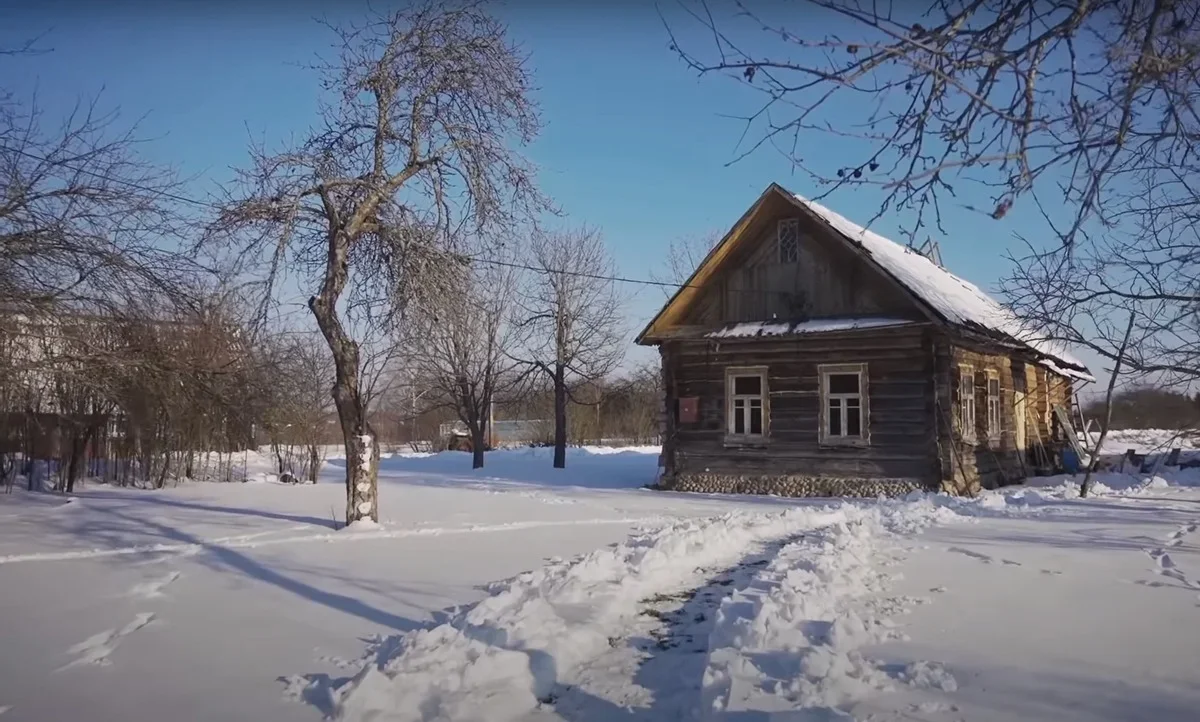
The old wooden house (namely, I was looking for) looked like a complete ruin. I had to warm the floors, change the windows, master the jigsaw and a punch. Buying and reconstruction cost about 20 thousand dollars, but the work is far from the end. The picture of the film is very ordinary, but the eye is pleasant: centuries -old trees, snow knee -deep, frolicing dog. All this is accompanied by a living story by Alesi. Content is quite suitable for the popularization of rural life.
Now the main question is: how many of the potential immigrants are ready to invest in the restoration of housing at least part of the amount indicated above?
A passing question: how many financially lifting offers in the new rural houses are in the market? “The village begins to disappear, like many of our villages,” says Alesya about his place of residence.
"If your whole council moves to the village ..."
A curious detail: we already realized that Valentina Matvienko is preoccupied with the insufficient popularity of rural life among young people. But at the same time, the speaker says that interest in it among Russians is growing from year to year. And now also bloggers will show all the possibilities of such a life. It remains to understand how to be in a different orientation in the light of a nascent campaign? After all, the authors renting abandoned houses and entire settlements are also a lot. And they have a huge number of spectators.
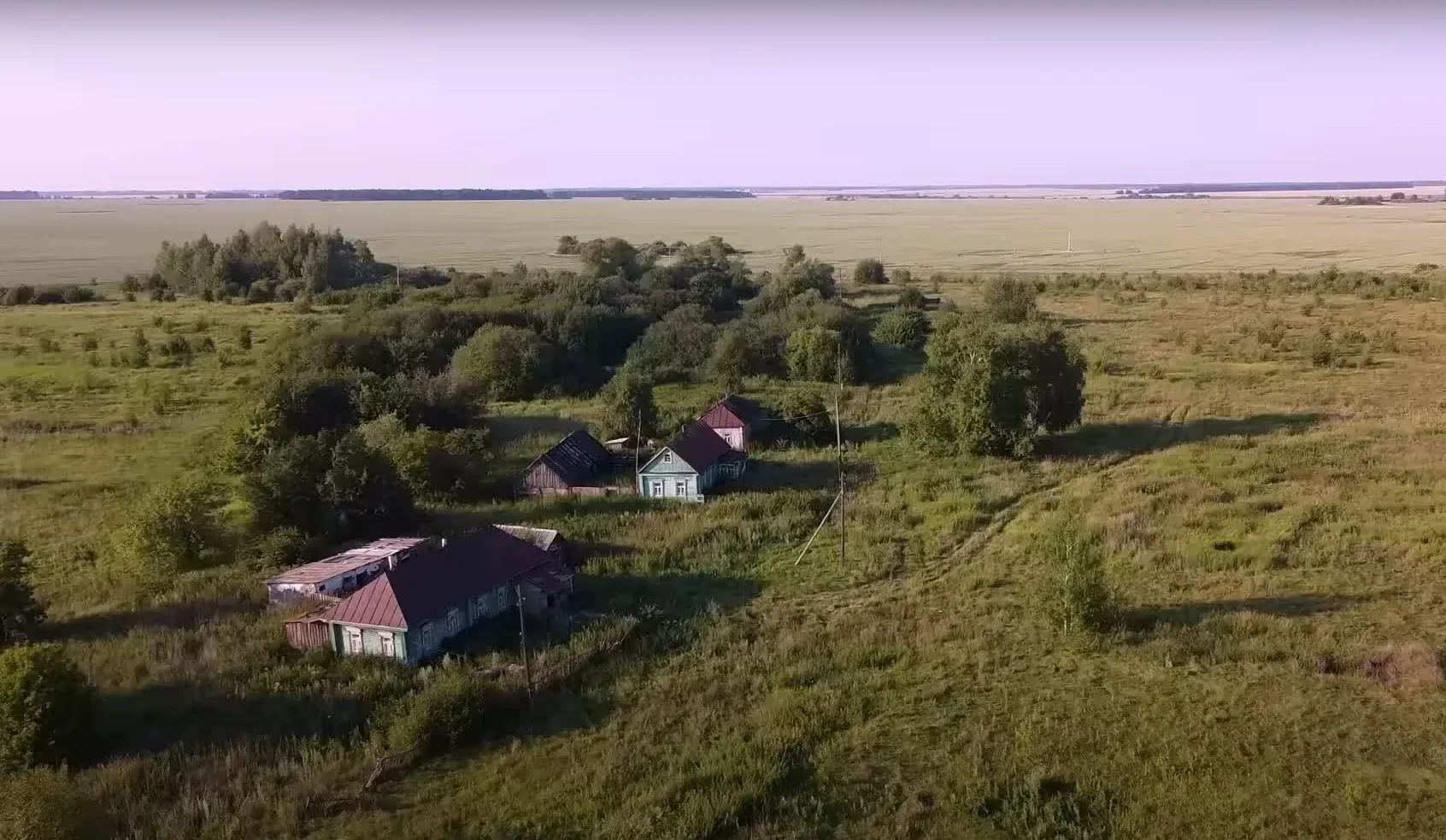
The next material on this topic was released a year ago and collected 3 million views. One of the deserted villages was so large that the authors of the channel examined her for a couple of days. From Moscow to this village (the name is not mentioned, so as not to bully looters) in the Tambov region about 500 km.
In Soviet times, there was a collective farm with its industrial plant, a stable, a first -aid post, a store, a house of culture, mail, an elementary school and a population of 2000 people. According to the census of 2011, there were already about 70 of them. And now not a soul.
The authors of the channel say that in the village there are about two hundred well -preserved houses. And silence, emptiness and abandonment. Similar stories were shot about abandoned villages in the Yaroslavl and Kostroma regions, in Mordovia, in the Urals, near Kirov and Ryazan. Is it possible to popularize what requires recovery? It is unlikely.
And the last: Valentina Matvienko’s proposal to promote the village and attract young people caused a lot of comments on a wide variety of venues. Conventionally, they can be divided into two groups. The first asks questions on the merits. I quote by preserving the author’s style:
“How does she (V. Matvienko) offers live in the village? Where to work? Build a house with conditions no worse than urban ones - 3-4 million (this is still without inside and engineering systems). A well with equipment - 150-200 thousand, a year -round septic tank for a family - 200–250 thousand, to conduct gas - generally unrealistic! If you do not have a car, then from (public transport), as a rule, goes 2 times a day - in the morning and evening. ”
The second group invites senators to inspire the people with a personal example. “The indifferent citizen of Russia” (as he calls himself) to the question of how to lure a millennial in the village, answers extremely simply:
“If your whole council moves to the village (preferably to the Primorsky Territory), refuses the salary of senators, the apparatus, from cars and apartments in Moscow, it will establish perfect life, then the millennials will think: maybe we try it?”