
Translated material
Again hostage
In 1995, Oleg Orlov helped save more than a thousand people during a terrorist attack in Budennovsk. Now he threatens five years in prison for words that people should not die
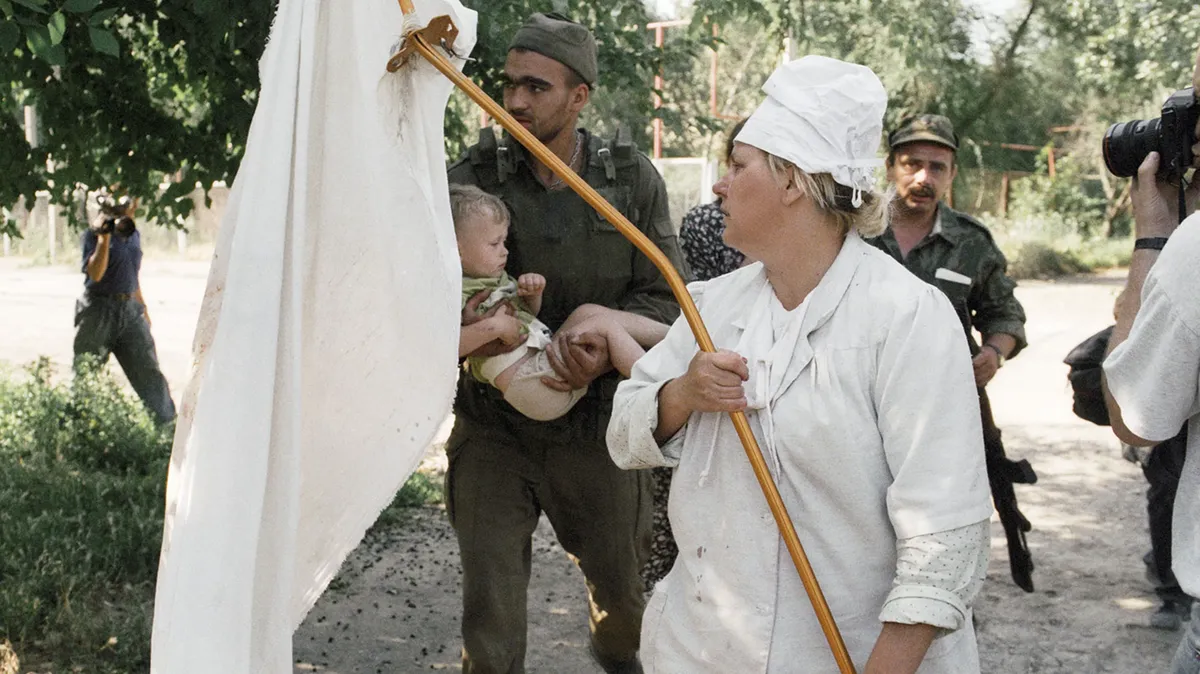
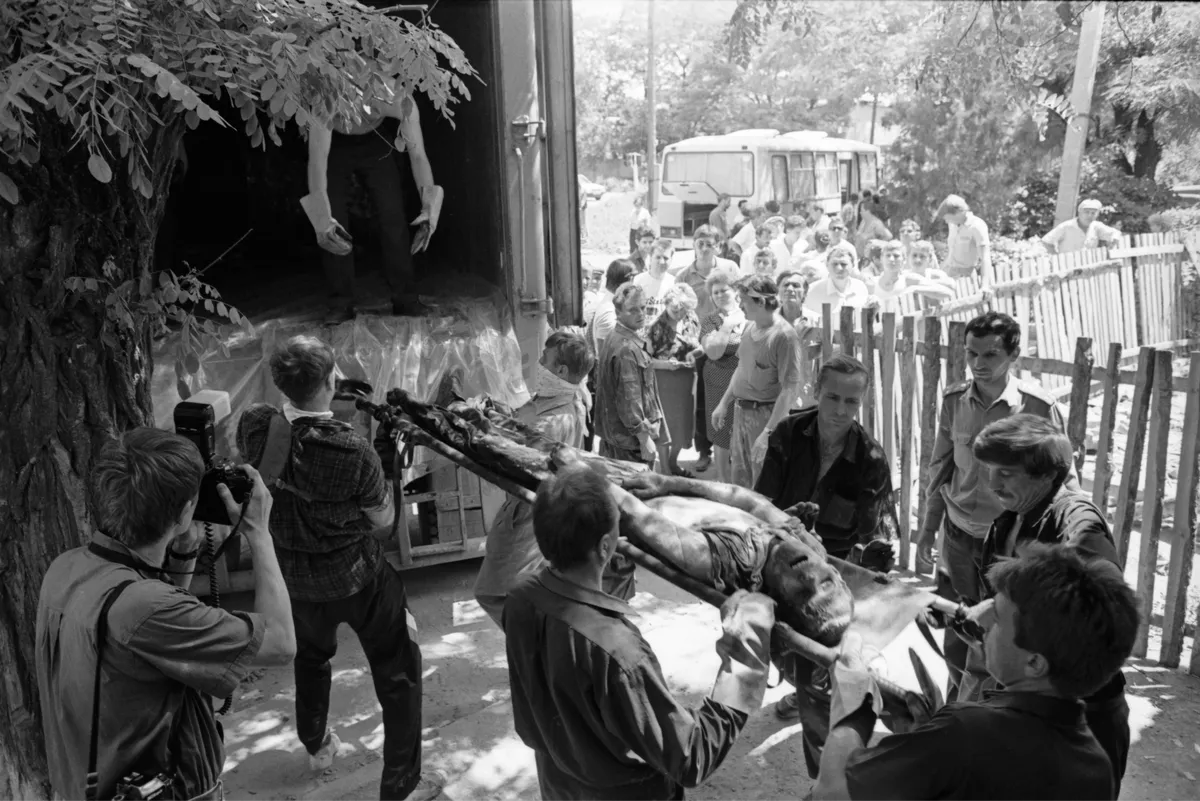
Budennovsk, 1995. Photo: Alexander Zemlyanichenko / RIA Novosti
In the Golovinsky District Court of Moscow, the criminal case of human rights activist Oleg Orlov began. He is accused of discrediting the Russian army due to statements condemning the tragic events that are taking place in Ukraine. Part 1 of Article 280.3 of the Criminal Code of the Russian Federation, he faces up to five years in prison.
Today it is difficult to believe, but 28 years ago the desire of Orlov and his associates to protect life was very necessary for the state. And it listened to the words of human rights activists. On June 14, 1995, a group of 195 terrorists under the command of Shamil Basayev attacked a small city of Budennovsk in the Stavropol Territory. More than 1200 civilians were taken hostage. They were held in the city hospital for five days. The militants demanded to stop military operations in Chechnya. Almost all prisoners were released thanks to negotiations between Basayev and Russian Prime Minister Viktor Chernomyrdin. And they were organized by a group of deputies and human rights activists: Sergey Kovalev, Valery Borschev, Julius Rybakov, Oleg Orlov. They were not only not afraid to come to the captured hospital, but also became voluntary hostages, exchanging themselves for civilians.
Part I.
The road to the hospital
Then on June 14 it turned out to be hot - the air was hot up to 40 degrees. It was the 187th day of the first war in Chechnya.
By 11 in the morning, no one in Budennovsk knew that a column of militants drove 52 checkpoints over the past night, posing as Russian military and policemen who took the-200th cargo. In some places, militants simply gave money so that their three KAMAZ would not be checked.
Around noon, the column near the village of Praskovey, which was four kilometers from Budennovsk, was stopped by the traffic police officers. They turned out to be the only ones who fundamentally demanded to show that he was in trucks, and having received a refusal - they ordered them to follow the police department. So the terrorists got into the 60,000th steppe town, who had not known great shocks before.
Yes, Budennovsk, in fact, was not the goal of terrorists. Basayev himself later said that they were heading to Moscow.
At 12.20, the KamAZ closing column suddenly stopped at the intersection of international and Stavropolskaya streets, not a little reaching the police department. Armed people who jumped out of it and shot a traffic police car accompanying the column. And one of the most bloody terrorist attacks in the history of Russia began, which claimed the lives of 129 people.
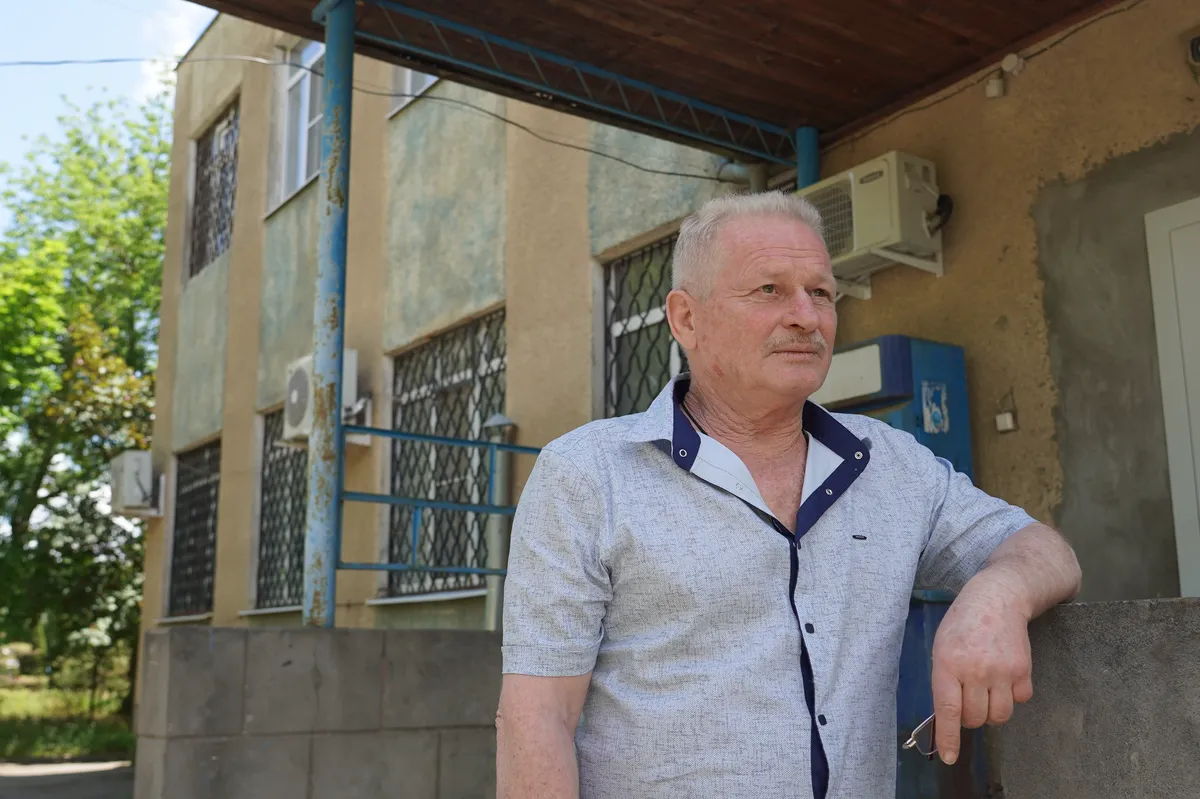
Evgeny Ulshin then worked as a telephone repair specialist. We meet with him in the square with the completely non -tragic name “Smile”, with a fountain and flowering roses, next to the city administration. This place was one of the first where the terrorists began to gain hostages.
“When it all started here, in this park, I had a reception - citizens came who needed to repair phones,” he recalls. - And at the time of the arrival of the militants, I had a classmate. The militants, honestly, simply knocked out the doors. My door was open so that it would not be taken out. We opened in advance, they were surprised. One went, the second with a machine gun stood in the corridor, the third was on the stairs of the second floor. They said: "If you behave normally, everything will be fine." Therefore, we just came out silently, we were brought to the parking lot of the city administration. And there were corpses already shot cars.
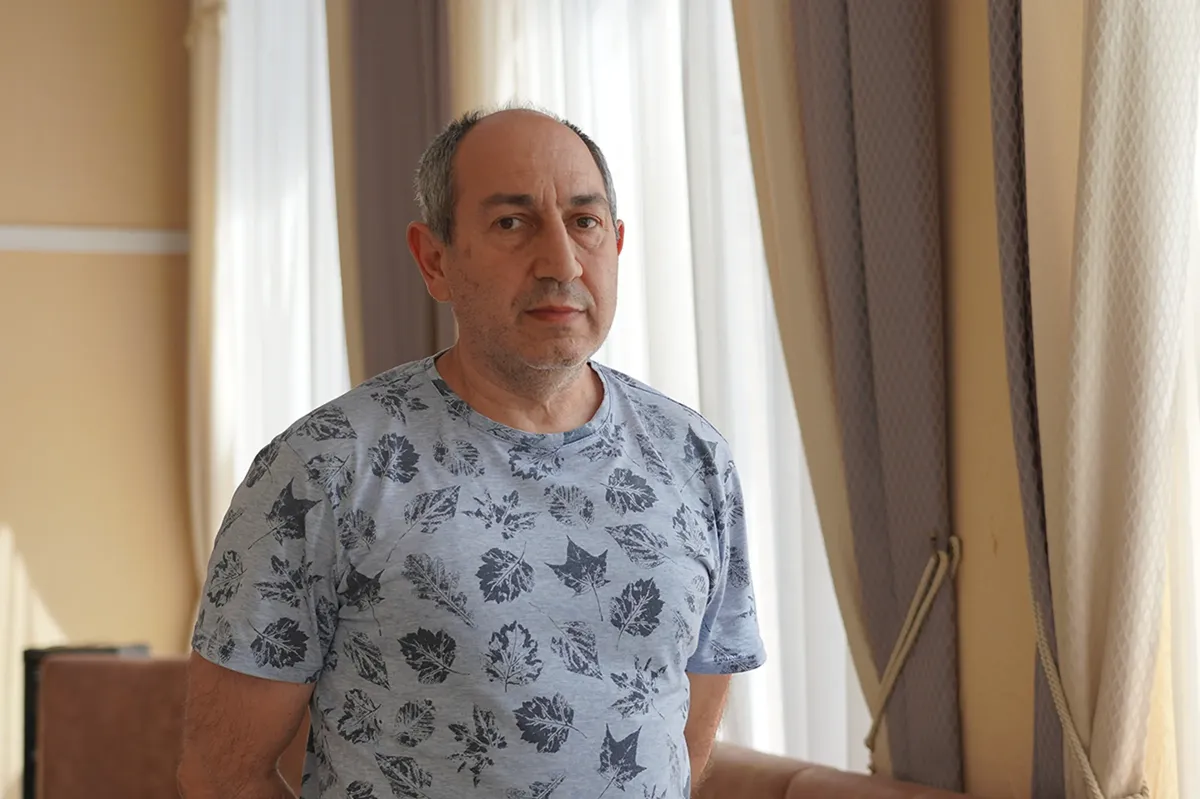
Entrepreneur Nikolai Karakulov, hearing the automatic queues, tried not to get caught by the militants, but they could not avoid meeting with them.
- I was driving home for lunch. And along the way, in the Gorsada area, I heard shots. The feeling of self -preservation made me stop. The shooting alerted everyone, but did not frighten, because no one was ready for her. That is, people went out, looked, no one was afraid of crazy bullets. Nevertheless, I turned around and drove along a parallel street, ”he says. - Already later I found out that the execution of the traffic cops occurred 10 meters from my house. That is, I practically went to the epicenter. But having traveled along another street, I still ran into the remains of the group that stormed the ATS-on three to four militants. They instructed the machine gun, forced them to stop. And, probably, this is my happiness that I reacted, did not press the gas, but when I saw people in camouflage, stopped and got out of the car. Thus, they stopped three cars. And from the police department they already led us on foot. Along the way, one grandfather was shot, who rode a bicycle and, unfortunately, did not react to that danger - he refused to throw a bicycle and follow them. He was immediately shot before our eyes.
From that moment I realized that these are people for whom there are no limits: they did not hit, did not force them to go with them, but simply shot. And, of course, we - these three people whom they led - we were already walking to the central square, realizing that we can be destroyed.
Nikolai recalls that when he was brought to the square, there were already about 70 people.
- The goal of the terrorists was to gather everyone they met on the way, random passers -by, people who do not understand what is happening. Then, as in the films they show how prisoners lead, we were taken to the city hospital. In this column, probably, there were already under 200 people. And we have already seen the dead in the streets. Near the registry office there was a bus car with a killed driver. We were forced to pull him out. When we got it, the bus rolled on, because, probably, the driver with his foot held the brake. I don’t know where this bus stopped.
- There were attempts to escape from the column. Two people shot. After that, no one had any creeps. They brought us to the site near the hospital, planted there. They began to check the documents, collect, identify policemen and the military, who were then shot, ”adds Evgeny Ulshin.
- They started sorting us. The team received everyone to hand over passports and any documents that are. Then - the team will once again go to the police and representatives of all power structures. About 20 people. Before our eyes, these guys were separated. I knew 60–70 percent of them: the city is small, so we knew everyone. We did not see them alive anymore. They were later shot, says Karakulov.
Part II.
The most dangerous side
Budennovsk hospital - eight buildings on the outskirts of the city. Today, mourning signs hang on their walls, and along the alley among the trees - there are commemorative stones with the names of the dead.
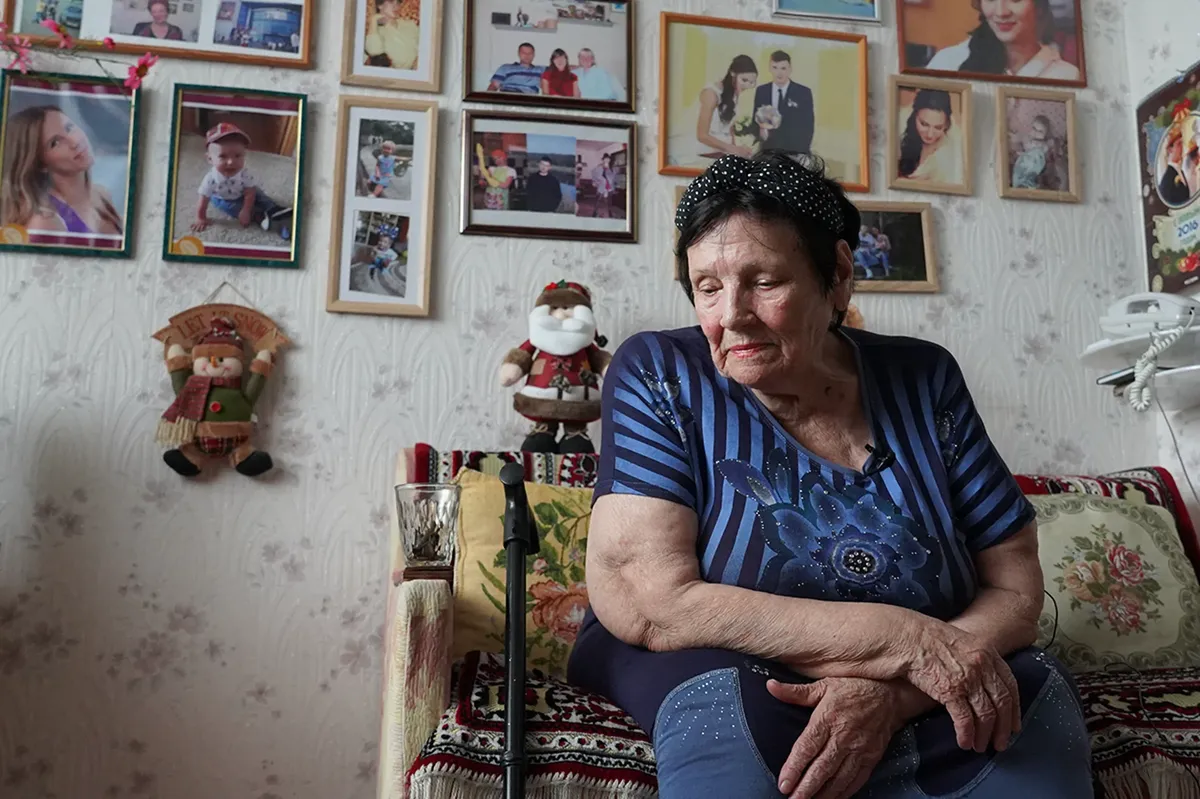
More than an hour before the arrival of terrorists, the nurse of the therapeutic department, Tamara Sokolova, was called by her husband.
- He calls and says: "Get out of work, Basayev’s gang is working in the city." And he is a comedian. I think: well, I came up with something Sokolov! And picked the phone. Five minutes later he calls again: "I'm wounded, do something."
Tamara's husband touched a random bullet, flying through the window of their apartment, where he came to have lunch.
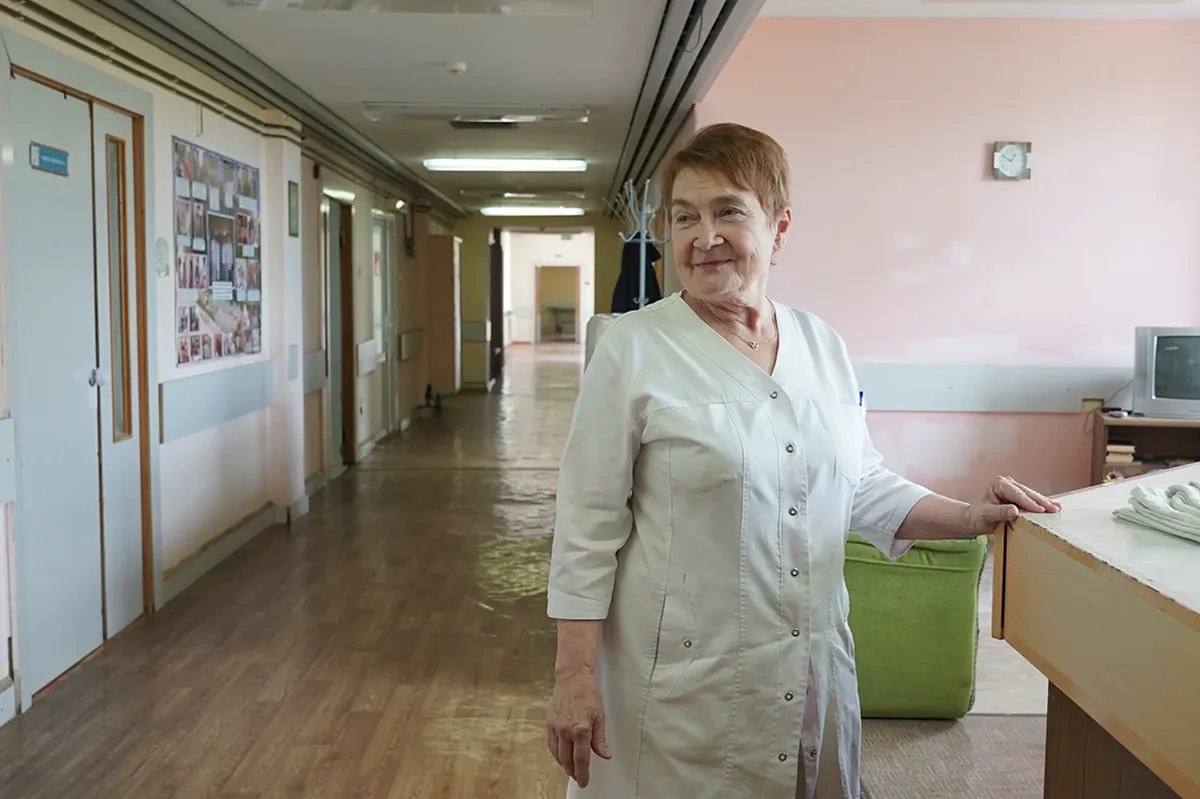
Vera Chepurina then worked in the hospital with a surgeon, and still works - the head of the surgical department.
- For us it was a complete surprise. Ordinary working day, operating room. And suddenly - a message: in the center of the city of shootout, we will now get a large number of wounded. And they began to be delivered, with them there were people with machine guns. One of them also had severe injuries. It was a terrorist, we operated on him. But he died. The militants followed us, and we were afraid that they would kill us. But he had a very serious injury. I went out and those who were sitting with the machine guns, I explained to them that he was heavy, extremely heavy, could die, and all died. After an hour and a half, terrorists showed up with hostages, a whole crowd of hostages.
The terrorists occupied the corps of the hospital, now they had all patients and staff in captivity: together with people captured on the street, - more than 1,200 people. The militants were loyal to the doctors, because they operated and bandaged everyone - both hostages and terrorists themselves.
-And when we needed to transfuse blood-we did not have blood reserves-we walked around the hospital and asked: “We need such and such a blood group, who has?” They offered everything literally. And those who were hostage, too, ”says Vera Chepurina.
The resulting in the hospital - hardly lends itself to comprehension.
- We took out the body of one Armenian, who did not know how he got to the hospital, when everything was already cordoned off. He was looking for his wife. For attempts to calm him down - I remember that, seven times they told him: “Calm down” - he did not react.
He was shot, finished off before our eyes with a shot in the head. This was the first blood on the trousers when we carried him to the front garden -
Evgeny Ulshin recalls. He says that when the militants let the hostages beyond the building: to take out the corpses or even go to the nearest kiosk for cigarettes, no one tried to escape. - And how to escape when 40 people will be shot if you do not return? How do you feel when they tell you this?
- Near my office there was an old man of small stature, from Neftekumsk. Says: "I am so bad." I took him a chair, gave drops, gave him pills. I look, he presses some cat to his chest and says: “I was at my son, he gave me a money, but I don’t know where to put this money now.” I say: "Nothing, press it to yourself, no one will take you from you." And this old man was taken away and shot. Then they brought to our department to the post where the sisters are sitting, two 17-year-old guys, put them on their knees. They graduated from school - just graduation - and one of these guys lay my mother in traumatology. He came to be glad that he had successfully graduated from school. And they say: "Yes, you are scouts." They were, however, beautifully dressed, young. White shirts, trousers. And they stood the night, and then they were also shot, ”says Tamara Sokolova.
On TV, according to hostages, they first said that the attack of terrorists was repelled. Then - that in hostages are no more than 200 people.
- We are sitting, watching this: "Hello you." And the militants: "Ha ha ha." There was no information from the hospital.
In the early days, when the terrorists demanded that the correspondents come, so that they express all their requirements - and our leadership of correspondents would not send here - they shot several people.
And then we, a group of doctors, went to the headquarters for negotiations so that the authorities fulfilled their requirements, otherwise they threatened that they would shoot further, ”recalls Vera Chepurina.
She says that when she and other doctors came to the headquarters of a counter -terrorist operation, chaos was happening there.
- Complete nasty was, to be honest. Nobody practically wanted to talk to us. We rushed around the offices, indignant. Then, in the end, they said: yes, well, correspondents will be for you.
But the authorities decided to put special forces and internal troops into the case.
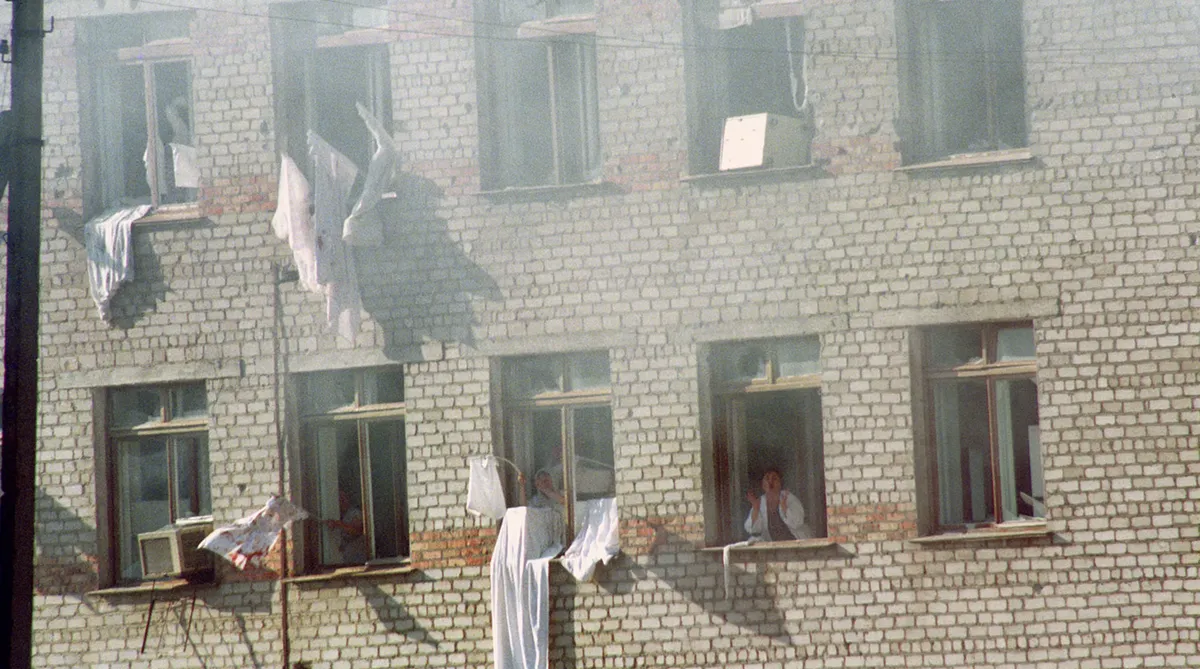
On the night of June 17, the hospital was stormed, during which 30 people were killed, 70 were injured. And for the most part, these were hostages ... The terrorists put them to the windows: on the one hand, special forces shot towards people, and militants fired on their backs.
- We stood, and they hid behind the backs. Our employee died. One killed, the other was injured. And we also saw that they laid explosives with us. And nervous tension said: you either burst or blow up the building already. Patience burst, ”recalls Evgeny Ulshin. - I was sitting on the windowsill. You raise your head, and a bullet sticks out in the triber, which pass a little lower, and your brains would be there. The worst point where you can be located during the shelling is the opposite side of the window, because it is shot. Better to be under the window ...
- The windows are open, and it is impossible to hide behind these windows, because the opening is very small. And here are open windows, the heat is terrible, they drive us to the window: "Shout." We put white sheets and shouted to hoarseness for five hours: "Do not shoot, do not shoot!" - Tamara Sokolova almost cries.
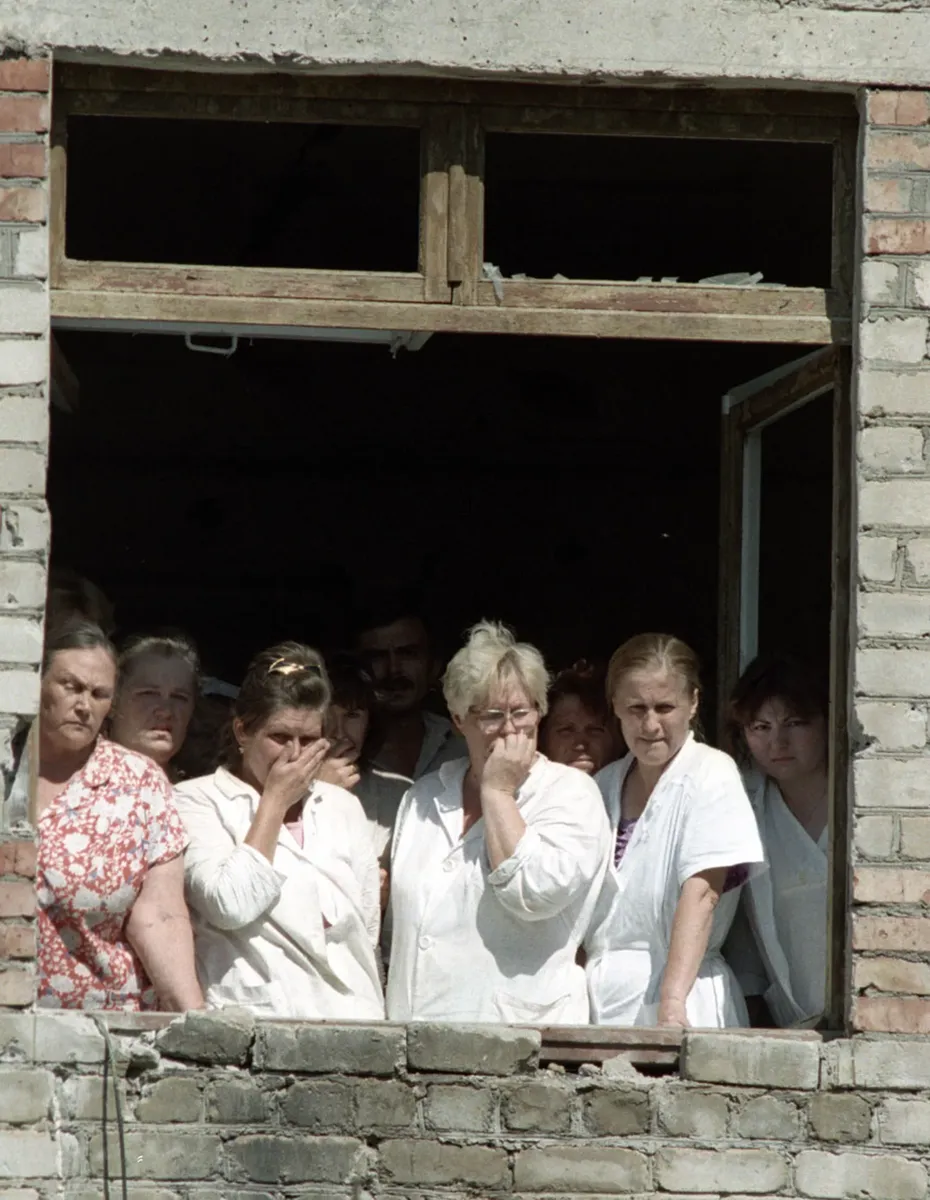
They shot anyway.
By 11 in the morning, the assault ended. The Alpha group managed to withdraw part of the hostages from the trauma department. But the main corps, where there were still more than a thousand civilians, was never liberated.
It was then that the turn of the correspondents came, and behind them-human rights activists.
Part III.
Salvation
Former military correspondent of Izvestia Valery Yakov worked in Budennovsk in the days of the attack. He says that in Moscow a war in Chechnya was not felt at all: the capital lived as if nothing was happening. And in Budennovsk until June 14, people also thought that the tragedy was going on somewhere far away.
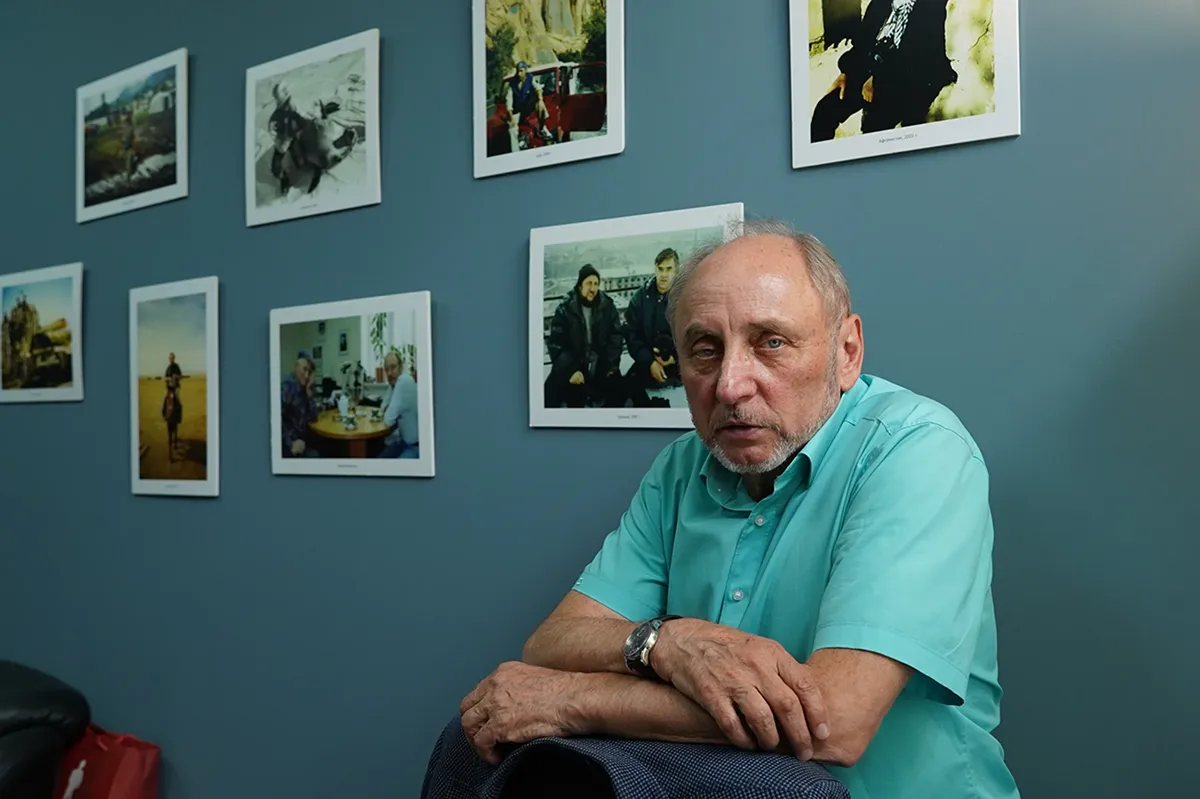
- People on the streets were in a panic, in a semi -artrica, because ... well, a peaceful town, which, as they believed, was quite far from the war. Now, too, many people believe that they are far away. And the war suddenly once - and turned out to be in their streets.
After a failed assault, the authorities agreed to allow journalists to the hospital. Jacob was not in the lists drawn up by the headquarters of the counter -terrorist operation, but he made his way into a car with correspondents secretly.
-I came to the press conference and asked Basayev permission to stay in the hospital at night among the hostages. And he allowed: "One more, one less - stay." I asked why Budennovsk? Some unknown town, and even more so a hospital with defenseless people completely. He said that they were going to get to Moscow. I think that if they drove the Stavropol Territory, they would calmly reach Moscow, because they went through the most difficult segment from Chechnya to Budennovsk, with a huge number of checkpoints. And then, after Stavropol, there were no these checkpoints.
In the hospital, according to Yakov, after an unsuccessful attempt to storm, an atmosphere of all -proving fear reigned.
- No one slept until the morning, because everyone was waiting for a repeated assault. It was scary there, the feeling of fear simply lived in this corridor, everyone pressed there into the walls. They also showed me where to sit better so as not to sit in the doorway. Because if they are stormed, then as if this opening is shot, that it is better to sit down on the wall, lower. And we talked quietly there with doctors. They told me how the assault began, how the militants put them in the windows so that they shout “do not shoot, here the sick, do not shoot,” forced to wave the sheets. Naturally, the main dead in the hospital were during this assault, because the militants fired because of their backs, storming fired at the militants. And this live shield died. And so they told me these stories. And when the morning came - everyone exhaled that a new assault did not happen.
The hope of salvation appeared on the afternoon of June 18.
- Basaev said that the deputies should come. Everyone was waiting for them in the hospital, because it was clear: if they come, then the negotiation process about the salvation of people would certainly go. And therefore, when deputies and human rights activists came - Sergey Kovalev, Valery Borschev, Oleg Orlov - it was a double joy, ”recalls Valery Yakov. -
The deputies did not just come, but people who already knew this war came: we went to Chechnya with Sergey Adamovich more than once, Oleg Orlov participated in the release of captured tankers of the Kantemirovsky division, who went to storm Grozny in 1994.
The deputies did not just come, but people who already knew this war came: we went to Chechnya with Sergey Adamovich more than once, Oleg Orlov participated in the release of captured tankers of the Kantemirovsky division, who went to storm Grozny in 1994. And immediately everyone became calmer, even in these conditions, despite the dead, lying around, because it was clear: with these people a chance of salvation came.
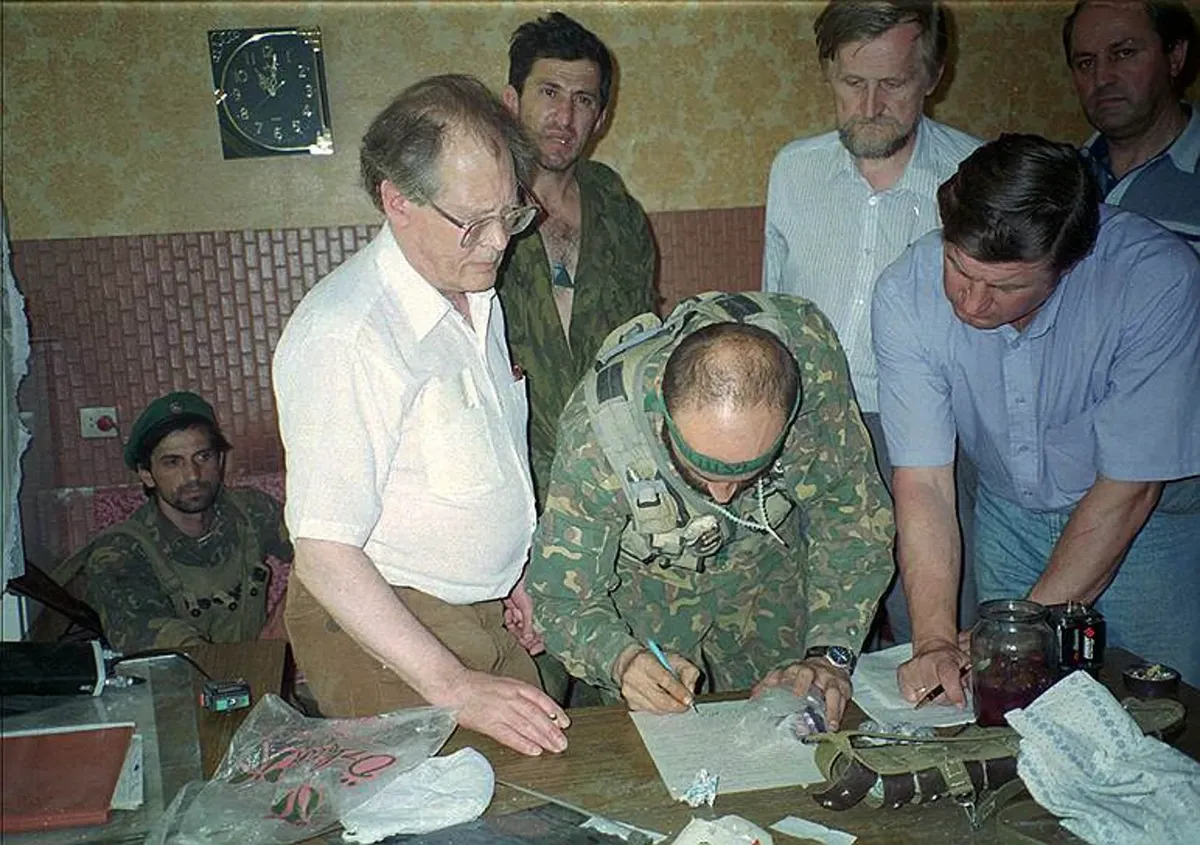
I sat in the office of the head physician and watched Basayev’s negotiations with Kovalev, Borschev and Orlov. Kovalev had a conversation, he was still a leader. He conducted a conversation with Basayev, demanding that he release women. There were still a lot of women with children in the hospital. Part was already released in exchange for journalists, for a press conference, for some products. But many more remained in the hospital, and Kovalev demanded their liberation and stipulated the conditions in which Basayev could let everyone go.
Accordingly, Basaev put forward his demands: stop the fighting in Chechnya, withdraw troops, and finally - to allocate a column of cars to them, to give his detachment to return to Chechnya.
Oleg Orlov balanced this tough conversation. Because he is systemic, very calm and, unlike the smiling, but rather hard Kovalev, he seemed softer, charming. Therefore, he evoked more trust. And, probably, it was easier to negotiate with him than with the not very compliant Kovalev.
As a result, they formulated all this, recorded. And after that they contacted Chernomyrdin. Sergei Adamovich was in touch with a telephone with Yegor Gaidar, and Gaidar organized a direct conversation between Chernomyrdin with a hospital. И это был довольно интересный разговор — по обычному городскому телефону, который стоял на столе главврача.
Басаев довольно жестко выдвигал свои условия, но Черномырдин говорил с ним как один из руководителей страны, довольно спокойно, уверенно, довольно жестко тоже. И Басаев эту жесткость почувствовал и принял ее.
Это было видно по его поведению. Он, видимо, понимал, что перегибать ему сложно, потому что все может сорваться.
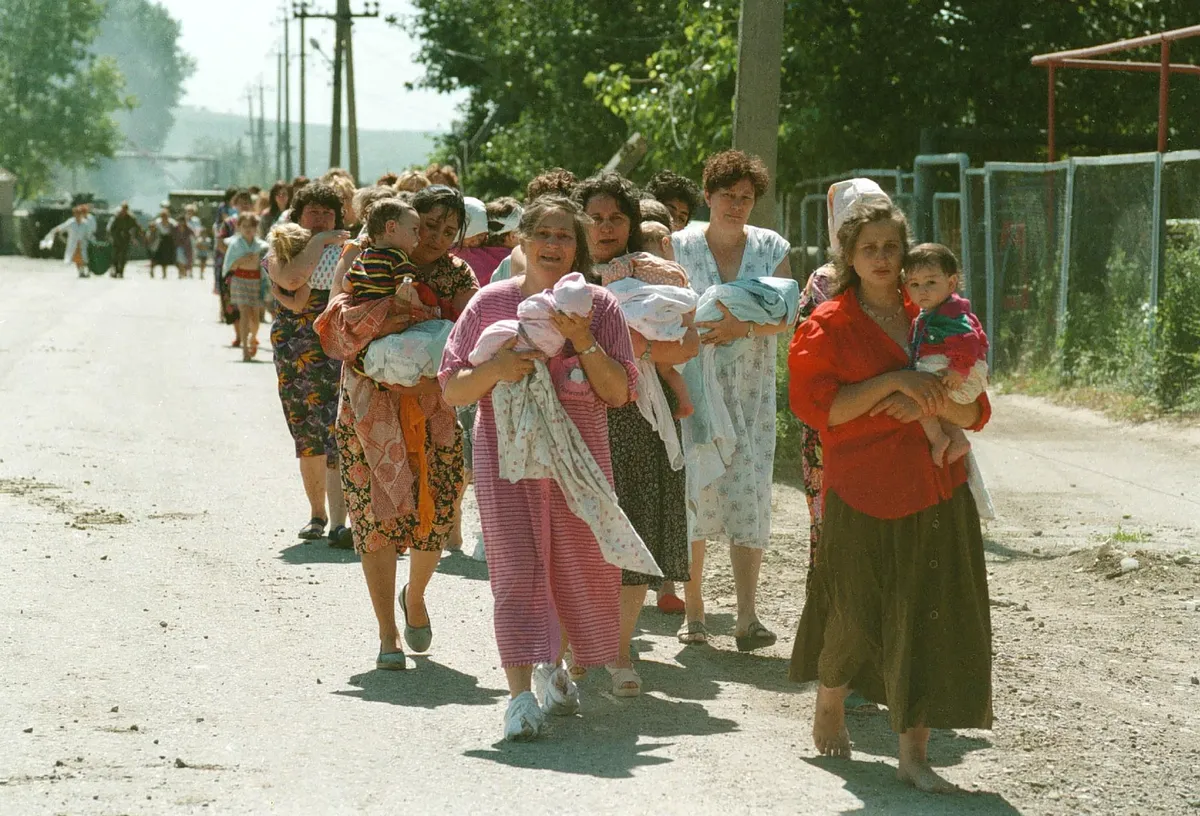
Результатом переговоров стало освобождение более тысячи заложников. Власти взамен пообещали боевикам прекратить военные действия в Чечне и разрешили выехать обратно в республику. Но террористы поставили последнее условие — 139 человек должны были отправиться в Чечню с ними, в качестве живого щита.
Part IV.
Volunteers
Тех, кто поедет в Чечню, набирали из добровольцев.
— Из докторов поехали Магомедали Исламалиевич Абдуллаев. Он и сейчас у нас работает, хирург. Врач-анестезиолог Шендрик. Врач-анестезиолог Дятлов. Врач-стоматолог Бедаидзе. Медсестры некоторые тоже поехали. И кроме этих медиков — журналисты, представители городской администрации, группа Ковалева, — рассказывает Вера Чепурина. — Вы знаете, это очень смелые люди. Они знали, что могут обратно не вернуться. Их могли по дороге «накрыть» [российские военные]. И они ехали в неизвестность и неизвестно, как их в Чечне могли встретить. Поэтому, конечно, это очень смелые люди, это люди, которые выполняли свой гражданский долг. Они жертвовали собой, чтобы освободить всех остальных и освободить город от террористов.
— Чтобы сесть в автобус к террористам, нужно просто быть человеком. Не надо каких-то особых качеств, никакого геройства. Ну сами подумайте: если не ты, то кто? Вы думаете, все такие были здоровые и герои? Все, наверное, в душе боялись. Журналисты, которые ехали в автобусе, — да, они боялись, видно было, что боятся. Но они же ехали, — вспоминает Евгений Ульшин, сам ставший добровольным заложником. — Я не могу это объяснить. Это не какой-то геройский порыв. Просто понимаешь: если ты не поедешь, остальные не выйдут. Ответственность хотя бы за людей, которые вокруг тебя, наверное, так и должны все жить.
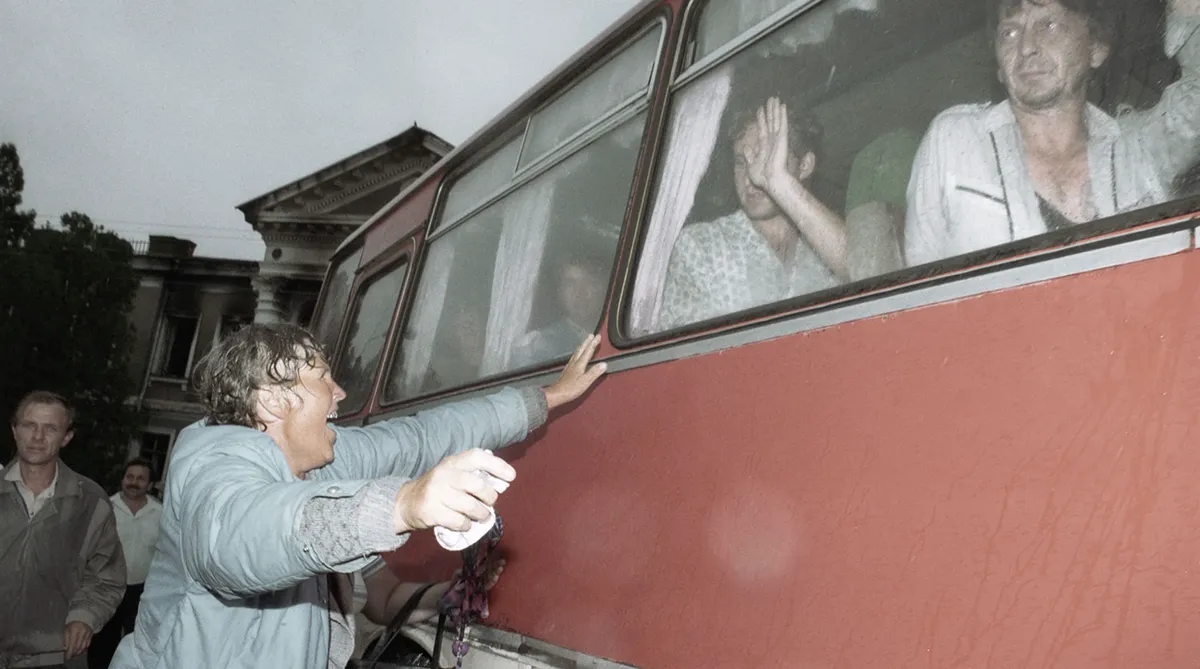
В автобус к террористам сел и предприниматель Николай Каракулов, и журналист Валерий Яков. И Олег Орлов.
— Олег вызвался поехать в составе этой колонны вместо одного из заложников. Притом что было понятно, что риск возможного штурма этой колонны и возможной гибели — был достаточно высок. Тем не менее он на это пошел, сел в автобус. И это, с одной стороны, была одна реальная совершенно спасенная человеческая жизнь, а с другой стороны — это был очень важный психологический фактор для тех заложников, которые поехали в автобусе, — отмечает Валерий Яков. — Потому что рядом с ними был человек, представляющий Москву, власть и правозащиту. Его присутствие было очень важно психологически: людей это успокаивало, и было меньше страха, отчаяния от того, что они едут неизвестно куда, неизвестно на что, и весь автобус забит боевиками с оружием.
Автобусы с террористами выдвинулись из Буденновска в сторону Чечни 19 июня в 16.00. Дорога до мятежной республики заняла два дня. Ни один из добровольных заложников не пострадал.
— На мой взгляд, людей в Буденновске спас Черномырдин и группа Ковалева: сам Сергей Адамович, Валерий Борщев, Олег Орлов, — заключает Валерий Яков.
— Я считаю, что ребята совершили акт патриотизма. Они ехали, не зная, что их ожидает. Писали заявление, что за их жизнь никто не отвечает, — вздыхает медсестра Тамара Соколова.
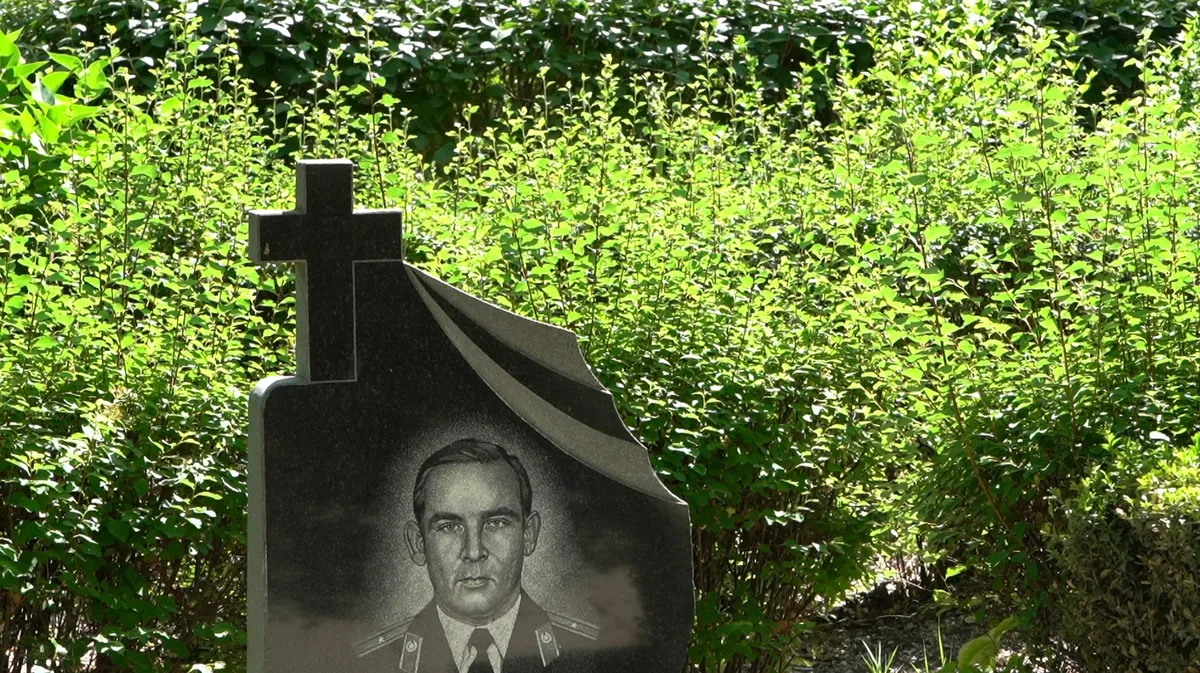
В Буденновске — три памятника жертвам теракта, ставшего центральным событием в истории города. На них — 129 имен. После возвращения из Чечни у Евгения Ульшина родилась дочь, сейчас он работает завхозом в городской администрации; Евгений Каракулов продолжает заниматься бизнесом, Тамара Соколова вышла на пенсию, у нее большая семья, а Вера Чепурина — заведует хирургическим отделением больницы, где провела пять дней в плену. Девять из десяти заложников в июне 1995 года были спасены. Олег Орлов — продолжает защищать право других на жизнь, рискуя собой.