
Translated material
There is no evil and grief
The little country of Natasha Koroleva and Kolya Solodnikov. YouTube review from Irina Petrovskaya
Audio version
This material has an audio version on YouTube . Subscribe to the channel - Irina Petrovskaya reads the text.
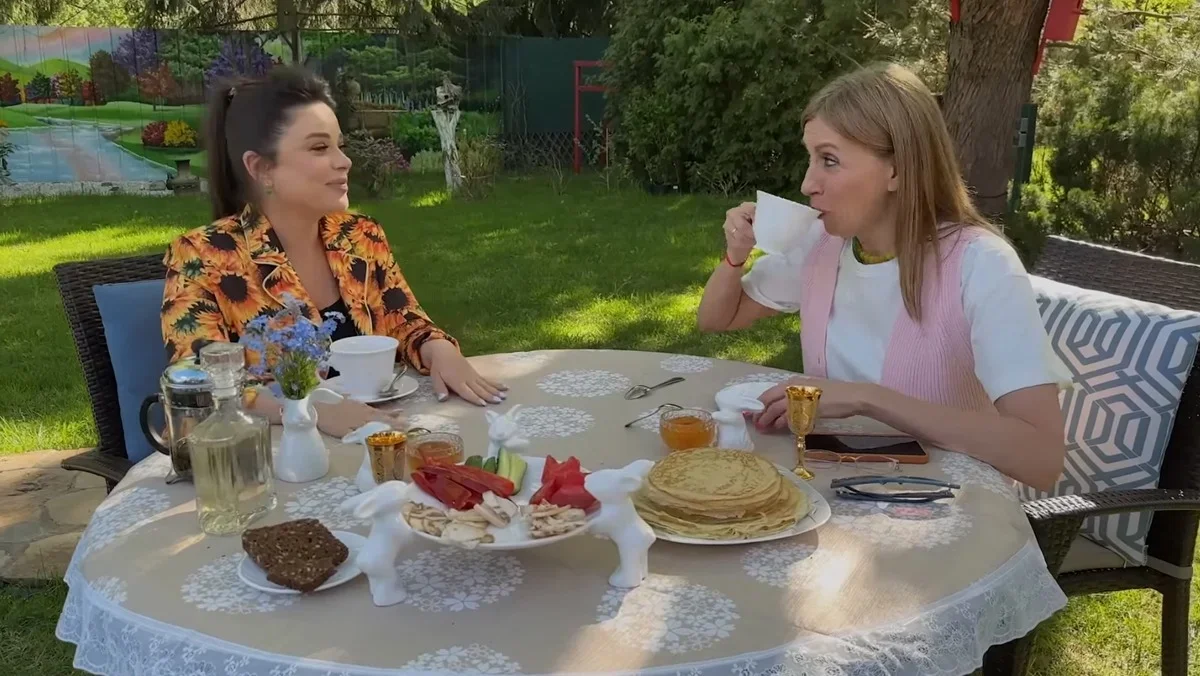
Remember the song that Natasha Koroleva sang? “Little country / Little Country. / Who will tell me who will tell you, / Where is she, where is she? " Utub prompted, posting two new issues almost simultaneously: “Light around the world” (Channel of Svetlana Bondarchuk) and “Solodniki” (channel of Nikolai Solodnikov).
In the first issue, the glamorous light talks with the enthusiastic Natasha Koroleva on the eve of her (Natasha) of the fifty year. In the second - highly spiritual Nikolai Solodnikov, without any reason, listens with his outstanding, as always, guests of the music of Bach, Handel, Penderetsky and reflects on the aesthetics of the ideal.
What is common between them? But the same “small country” - “where the soul is light and clear, where spring is always.” Natasha, with rapture, tells about her happy creative life. Kolya, as usual, cries from touching the beautiful. And my head is spinning a phrase from a hackneyed joke: “Eh, throw everything to hell and leave” ... No, not in Uryupinsk, but where, according to the song, “a miracle lake sparkles, there is no evil and grief there.”
Of course, in my life I would not watch an interview with Natasha Koroleva if I did not know that she was a Kiev woman. Born, grew, took the first steps on the stage in Ukraine.
Meanwhile, after February 24, she did not indicate in any way ... No, not a position, well, what is Natasha Koroleva a position? -And at least his sadness in connection with what is happening in his homeland, the alarm for the remaining loved ones there ... at least something ...
The announcement promises an interview about nostalgia, warm mood and love. Both ladies chirped cheerfully at the set table on the emerald lawn in the Koroleva suburban estate. The singer recalls the most unusual birthday gifts, dashingly climbs on a giant decorative green elephant (a gift of her beloved husband), anticipates anniversary surprises.

Excursion into childhood is executed by bright nostalgic emotions:
“My childhood was beautiful. My Soviet childhood. I am one of those people who are nostalgic for the country that is no longer ... I am such a girl Natasha from Kyiv. ”
In Kyiv, the girl Natasha was also wonderful: a large friendly family, a choir who introduced her to academic music, the first teenage love that was reflected in the song "Kiev boy, where are you, where are you?" (Here you involuntarily tremble, imagining where that Kiev boy can now be. A terrible thing is context).
The interviewer finally carefully actualizes the blessed agenda: “Do you communicate with one of the people from your childhood now?” Natasha, without changing either a contented facial expression or joyful intonation, reports that she communicates with a girlfriend from Kyiv, with brothers, aunt -
“No matter what ... as if in our family, I am a diplomat. I will settle some difficult things ... I feel like laurel in my family, because someone must take this mission. Life - it continues and does not end today, and that it is comfortable and harmonious to us all to live on, here we must be able to be very diplomatic. ”

The topic is exhausted. One can understand one thing from the words of the heroine: some difficulties arose in their family, and it is Natasha who tries to resolve them, using her diplomatic abilities, which, however, does not interfere with her personally and today it is comfortable and harmonious to live in her small country, where the harmony, love and work of the wife, the stripper of Tarzan, who suddenly discovered the gift of the picturesque, reign.
Nikolai Solodnikov is also in harmony with the world and with himself. The help of this is a great art that makes him sob with delight. Moreover, on one row with Fuga Bach and Sarabanda Handel, Solodnikov also gets a song from the cartoon "Blue Puppy". “Oh, I cried good today,” he admits with satisfaction in the final of the program, wiping his eyes wet from tears. His wonderful guests - Yuri Norshtein, Naum Kleiman and Evgeny Zharinov - although they do not cry, but with pleasure they share his enthusiasm with Kolya, raising the glasses from time to time and proclaiming toasts. For example, this: "Let's drink to Alla Pugacheva’s cold."
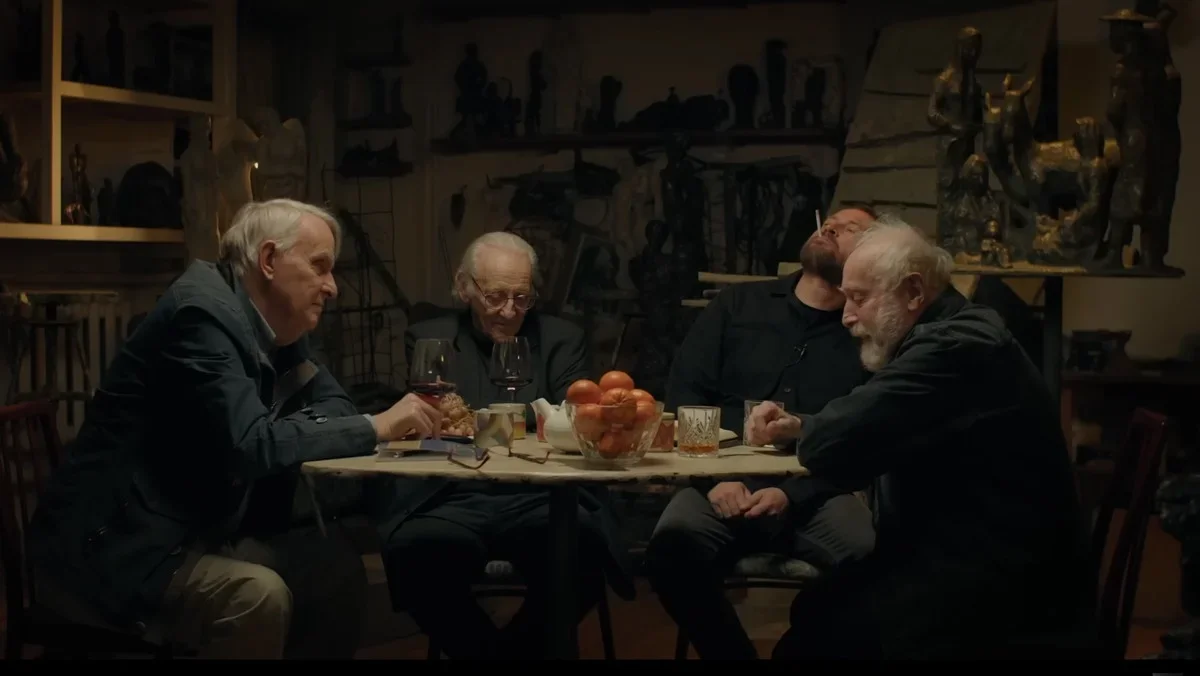
What does any cold have to do with it, when Pugacheva has a serious problem for Pugacheva today? Maybe they so allegorically express the support of the disgraced singer? Not at all. It’s just that the program is talking about music in the cinema and, in particular, about the inimitable performance of Pugacheva romances in the film “The Irony of Fate”. It turns out that during their recording, the singer was cold, sang in an undertone, and therefore a masterpiece turned out.
I will not hide, listen to smart, many knowledgeable, thin people are always pleasant. In peacetime, there would be no price of such conversations.
But today, something prevents you from fully enjoying their wisdom and erudition, and this “something” is a complete and demonstrative ignoring of the context, in which this fascinating unhurried conversation of cultural masters stems.
Strange. After all, from their own experience, they outlined what prohibitions, censorship and the inability to do what they love are. In principle, there is nothing to be afraid of them - there is a big life, worthy of life. Moreover, it is impossible to believe that what is happening today outside the windows of a cozy art workshop where the shooting is taking place, they are not at all worried. Most likely, they simply play according to the conditions specified by the host: not a word about low, momentary, beauty will save the world, art - our everything. This, of course, is not Gorgonzole with Marakuya - in some ways, the absolute “masterpiece” of Solodnikov in communicating with the aesthetically ideal Alena Doletskaya, but close to that.
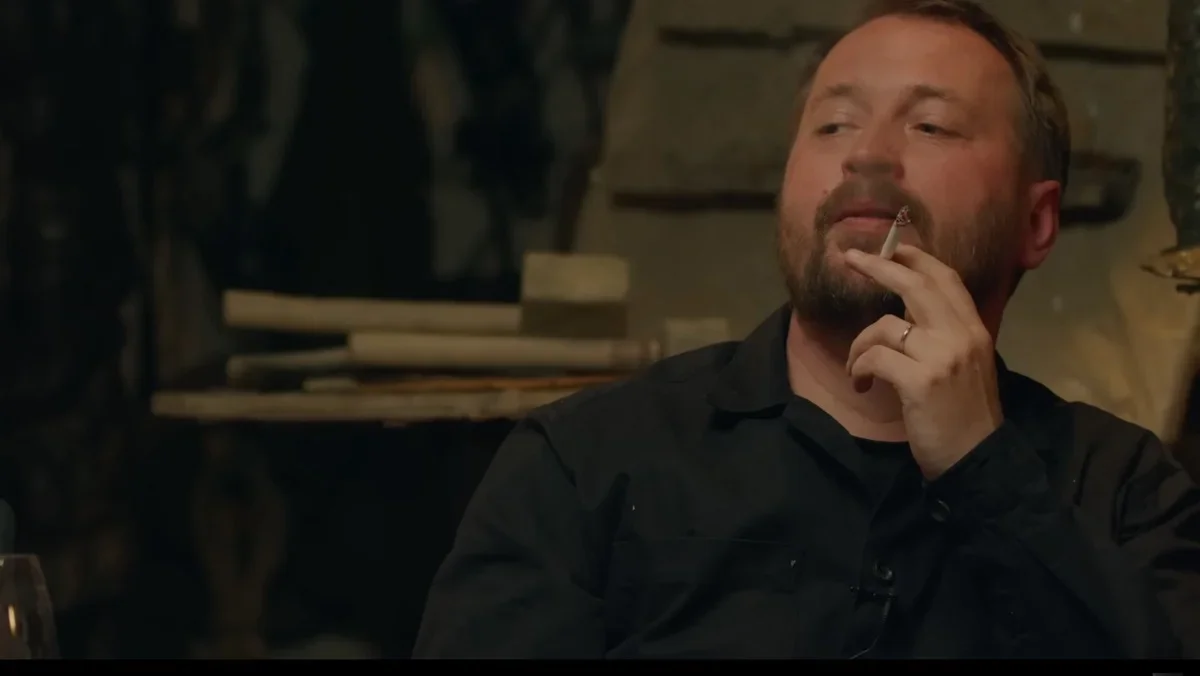
The audience of the Solodniki channel, by the way, likes such an introduction to high. They write in the comments: “Nikolay, you drink, and you have tears, and we just sob. With such meetings you tear our hearts to us. ”
Audio version
This material has an audio version on YouTube . Subscribe to the channel - Irina Petrovskaya reads the text.
TOP-5 best issues of the week on YouTube
Petrovskaya recommends
The film "Prophets in his Fatherland"
The documentary of Konstantin Goldenzweig “Prophets in his Fatherland” is the most important for understanding what happened and what was happening today in Russia. Sergey Kovalev, Galina Starovoitov, Valeria Novodvorskaya ... They were called urban crazy, marginals, demshiza. They were not listened or heard. They made fun of them, and they continued to fearlessly fight the system, protecting the rights and freedoms of citizens and warning of the dangers that lurking the country, as if that as if entering a democratic path of development. About how and why the tragic reversal predicted by them happened, Viktor Shenderovich*, Evgenia Albats*, Julius Rybakov and the author of the film thought.
The series "Dissentes and Madness"
The documentary series Eugene and Sergey Gindilis “Dissiders and Madness” dedicated to punitive psychiatry in the USSR as a method of combating dissenters. Vladimir Bukovsky, General Peter Grigorenko, Valeria Novodvorskaya and many others were subjected to terrible sophisticated methods of suppressing human personality and freedom. Six heroes, six chapters, six episodes on the Current Channel*.
Special reporting "Vrading. Nuclear electorate "
A large special report of Novaya Gazeta correspondents Ivan Zhilin and Anna Artemyeva “Examination. Nuclear electorate. " On federal channels, a possible nuclear strike across Ukraine is spoken daily-in all political programs and talk shows. In the USSR, nuclear tests were carried out 715 times. This led to multiple growth of serious diseases among residents of settlements located near nuclear landfills. The film crew drove to the places of nuclear tests of the Soviet era and talked with doctors, specialists and local residents who survived the consequences of these tests.
Anna Nelson with Dima Zitser
The legendary teacher, writer, author of the concept of informal education Dima Zitser tells the leading “voice of America”* Anna Nelson about how to make the reason to wake up in the morning, despite the fact that the world is collapsing; how to talk about terrible with the smallest and adults; What to do to teachers in a tough vice of the system and how to learn how to see a person in a child. Anna Nelson, presenting her interlocutor, warns the audience: “After you meet Dima Zitser, your life will never be the same again.”
Polina Ossetian on RTVI
The outstanding Russian pianist Polina Ossetian in an interview with the RTVI channel is about how Russian musicians live and survive today: those who have chosen the position “Silence - Gold”, and those who, as she themselves, could not be silent in a situation where silence is impossible. “Music can express much more than words,” Ossetian believes, but continues to play and speak. In her native country, her concerts are canceled, but she, touring around the world, still returns to Russia. While returning.