
Translated material
Mutation or murder
Biologist Irina Yakutenko understands the medical intricacies of the case of the most loud serial murder in Australia
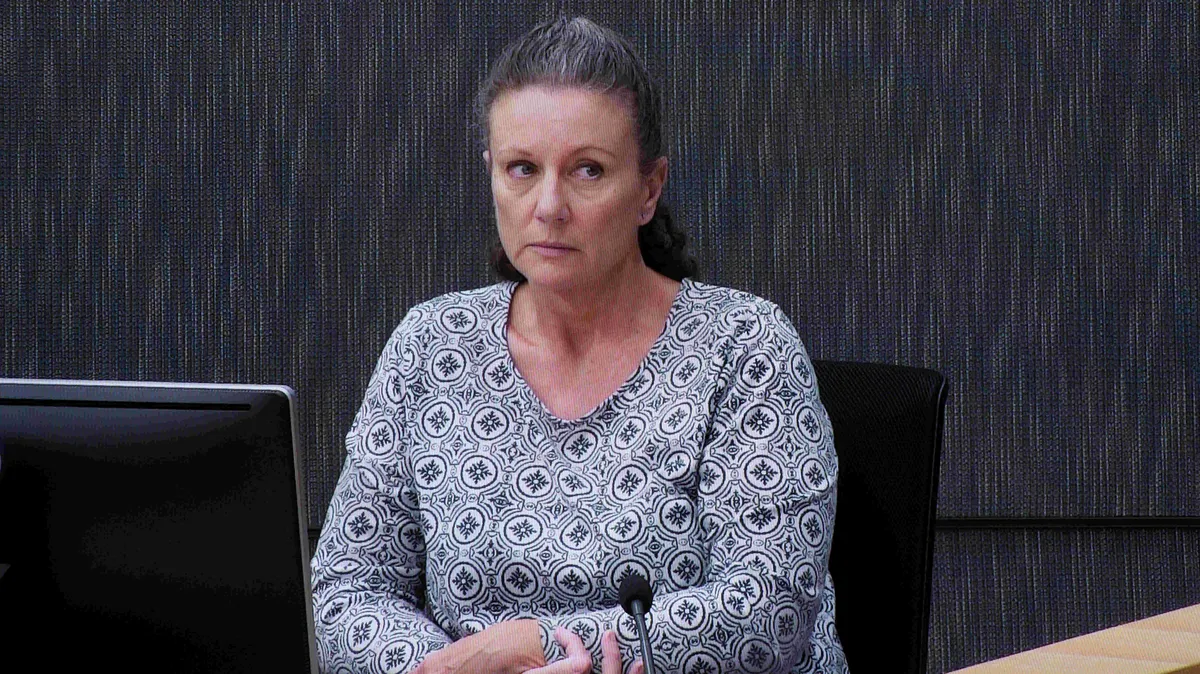
Kathleen Folbig during a court hearing in the court of the new South Wales in Sydney. Photo: EPA-EFE / Joel Carrett Australia and New Zealand Out
A few days ago, the Australian court fully justified Kathleen Folbig, which was called the most terrible serial killer in the country. She was accused of killing four children, but after a real scientific study was conducted at the initiative of protection, the verdict was canceled. Biologist Irina Yakutenko says that he forced the court to change his opinion.
The most terrible killer woman
The name Kathlin Folbigg appeared in the headings of newspapers not only in Australia, but also around the world in 2003. During the high -profile process, the jury and the court tried to understand what happened in the Folbig family from 1989 to 1999, when four children of Kathlin and her husband Craig died one after another. All children died under the age of two years, and in all cases the circumstances of death remained unclear.
The death of the first -born Folbigs Caleb was explained by the syndrome of sudden children's death, as well as the death of his brother Patrick and sister Sarah a few years later. But when Laura died in 1999, the fourth child of the Folbiggs, the cruiser had serious suspicions that strengthened after he discovered his wife's diaries. In them, Kathleen wrote many times that she could not cope with motherhood, about the dreams of “finally shut up” her daughter and her cruelty to her. There were completely suspicious passages there: for example, that Sarah left this world “with a little help”, or a record that Laura is a “completely benevolent child”, which “saved her from the fate of her brothers and sisters.” Craig transferred the police diaries, an investigation was launched, and in 2001, Kathleen Folbig was arrested.
It was difficult to believe in an accident of consecutive deaths of Caleb, Patrick, Sarah and Laura. In 2003, Kathleen Folbig was sentenced to 40 years in prison for the deliberate murder of her three younger children and the unintentional murder of the eldest. In 2005, the term of imprisonment was reduced to 30 years with a refusal to the right to parole for 25 years.
New data
From the moment of detention, Kathleen Folbigg has still denied all the accusations against him, and her lawyers collected evidence of the innocence of the client. In 2019, lawyers turned to the genetics of Carole Vinues for help, asking her to decipher the Cathlin genomes and dead children to check if there are indications of possible natural causes of death in their DNA.
Vinues agreed. In 2021, she and colleagues published an article in which not only described several rare mutations that were found in the Cathlin and her children at once, but also talked about the experiments confirming the version that at least one of the mutations found can lead to pathologies in the work of the heart muscle.
A potentially dangerous mutation was found in Kathleen and its two daughters in the Calm2 gene encoding Kalmodulin protein. This important intermediary protein or, more precisely, the transmitter works in all cells of our body and takes part in many processes-from the regulation of memory to immune reactions and reducing smooth muscles. To activate Kalmodulin, the protein should be connected by calcium ion. Vinuys with colleagues showed that the protein encoded by the mutant variant of the Calm2 gene does it badly.
Previously, similar mutations in other Calmodulin genes (three of them) have already been associated with arrhythmia and cases of sudden death of children due to interruptions in the work of the heart.
If a new mutation also increases the risks of heart problems, then the death of two daughters of Kathlin no longer seem so unlikely, they write vinues and co -authors in their article and add that an additional factor that increases the likelihood of an unfavorable outcome could be the temperature: both girls at the time of death ached with respiratory infections in the acute phase. A few days before the tragedy, parents took them to the doctor who prescribed antipyretic drugs. Evidence that the high temperature and in principle of infection (and the autopsy showed that both Sarah and Laura were infected with streptococci) increase the risk of heart failures if mutations found in girls found in girls, since this is the first described case. But the fact that both of these conditions are associated with increased probability of sudden deaths in children have previously been proven repeatedly. In addition, the younger girl had a myocarditis - a disease that in itself increases the likelihood of death from heart problems. In addition, a few days before the death of the girl prescribed pseudo -Epinephrine - a medicine that can also affect the work of the heart.
Two older children in the Folbigs in the Calm2 gene did not have mutations. But they found rare options for the BSN gene encoding protein, the work of which is important for nerve cells. People did not describe pathologies associated with the presence of two such options in the DNA (as Patrick and Caleb), but mice with two copies of the defective BSN develop epileptic convulsions - in half the cases, deadly.
In people, one “spoiled” copy of this genes leads to the development of the so-called syndrome of progressive oversized paralysis-a neurological disorder, because of which a person cannot fully control his body, walk and, in principle, maintain balance, and also does not control the eye movements. What happens when both copies of the BSN gene are defective is unknown.
A controversial examination
18 years ago, when the jury, without any hesitation, issued Kathleen Folbig, the indictment verdict, all these scientific knowledge was not and could not appear due to the weak development of molecular biological techniques. But this is not the only reason for such a tough solution.
Since the violent cause of the deaths of Patrick, Caleb, Sarah and Laura was not obvious - there were no traces of external influences on the bodies of children, the autopsy also showed anything that would clearly indicate the murder, they attracted medical experts. The accusation largely built its arguments at the statements of the pediatrician Roy Madow, who, operating with statistics, argued that in one family there were so many cases of sudden death of children from natural causes - an almost incredible event.
Madow was not a random person at the Cathlein Folbigg process. A famous and honored doctor and researcher, he studied the issues of the well -being of children, violence against them and sudden deaths all his life. For merits in this area, the doctor was even dedicated to knights. In his book “The ABC of Cruelment with Children”, Sir Madow brought out a formula that for many years determined the actions of justice in the processes related to children, and the thinking of British social workers.

The so -called Madow's law read: one sudden death of the baby in one family is a tragedy, two are an occasion for suspicions, and three are the murder until another is proved.
The trial of Kathleen Folbig was not the first in Madow's career: he acted as an expert from the prosecution of more than 80 processes . A convinced supporter of the idea that a significant percentage of inexplicable children's deaths is actually the crimes of parents, Madow has long been indisputable authority in this area. As long as one of the families in which the mother of deceased children Sally Clark went to prison on charges of murder, did not apply, during which it was also proved that the famous expert made logical errors, cited false data and incorrectly understood the basics of medical statistics.
The second appeal was followed by the second, then at the next process the jury recognized the defendant innocent, despite the arguments of Madow, after which a lawsuit was filed against the doctor about serious violations of professional ethics. In 2005, the British General Medical Council found the pediatrician guilty, but he appealed, and as a result, the charges were removed. Nevertheless, the reputation of Madow, once impeccable, was spoiled: experts and officials began to doubt his other judgments, the courts began to revise cases of potential infanticides and changed the approach to sentences in such cases.
The Cathlin Folbig case was considered after questions arose to Madow's competence. But in her process, the doctor’s arguments played a decisive role - despite their obvious fallacy. For example, the doctor ignored the fact that is obvious today that a sudden children's death syndrome has a genetic component that can be enhanced by external circumstances: for example, a child’s incorrect pose during sleep, the too soft surface on which the child sleeps, or recently transferred temperature diseases. So, the likelihood of cases of a sudden children's death syndrome in a family, in which one such case has already occurred, will be higher, and not lower than in a family, where children did not die in infancy for no obvious reasons.
Controversial justice
It would seem that justice has triumphed, although with a noticeable delay. Is Kathleen Folbigg justified - glory to science and progress? Alas, not quite so. Just as the jury once condemned the Australian, based on shaky, or even erroneous arguments of the prosecution, now the general prosecutor of the new South Wales has fully justified it on the basis of not much more convincing defense arguments. Because, although the words “new mutation”, “violation of calcium binding” or “association with lethal epileptic seizures” sound weighty, in fact, the scientific base on which an acquittal is built is quite weak.
Although the changes in the genremodulin genes are described for a long time, as well as the connection of changes in the BSN gene with neurological pathologies, the clinical significance of the mutations found in the Folbigs DNA is unknown. This formulation hides a serious problem, which has become obvious as genetic data accumulated. It often happens that a mutation, which, in theory, should be dangerous (or even dangerous in model animals and in laboratory tests), is also present in people, but its carriers do not manifest any pathological symptoms. This can happen for various reasons: for example, the defect associated with the mutation is leveled by other mechanisms.
In other words, we do not know how much changes in the Calm2 and BSN genes increased the risks of heart failure in Katlin children. Yes, in vitro , that is, in a test tube, defective Kalmodulin connected calcium worse, but does this affect health problems in practice? Kathleen herself is also a bearer of a mutant copy, but although she claims that since childhood she suffered from numerous episodes of loss of consciousness, the research of the heart did not show pathological changes.
Theoretically, the influence of mutations could be discovered by conducting special tests for it, when a person with the help of drugs deliberately provoke arrhythmia and observes how strong it will be, but there were no similar tests.
In the case of the BSN gene, it is even more difficult, since the connection of possible violations of its work due to mutations is at least mediated, that is, it is realized through possible epileptic attacks that were described only in mice. Five months before Patrick, Patrick had an epileptic attack - Cathlin addressed the child to the doctor, but the direct connection between these two events was not established. Just as it is not established that the attack was the result of a defect in the BSN gene.
To explain the death of Caleb, we even have two facts unrelated to each other: the first - in its DNA there is a defective version of the BSN gene, and the second - the autopsy revealed laryngomalization, an anomaly of the development of the larynx, in which the modified cartilage of the larynx, as it were, fail into it and interfere with the passage of air. In the vast majority of cases, this condition does not require treatment, although in exceptional cases it can threaten life.
In other words, new scientific data are not irrefutable evidence of innocence of Kathleen Folbigg. If we were talking about any neutral occasion, we would say that the Karola Vinuys described in the scientific work and her colleagues “set the direction for further research”. But in this case, we are talking about the deaths of four children, which means that we need much more serious evidence than those that are required to publish an article in a non -rating journal. In the meantime, it seems that both decisions of the court - both the indictment and the acquittal - are based on such weak arguments that it is impossible to recognize any of them reasonable.
In the case of the second sentence, apparently, the principle of "if evidence of both guilt and innocence is unconvincing, we should be guided by the presumption of innocence." However, it seems that such a decision will not always be optimal - especially considering that the further, the more biological data will be used in the courts to evidence of the correctness of one or the other side. Obviously, neither the jury nor the judges are able to figure out all the intricacies of molecular genetic procedures (and even in the case of Kathleen Folbigg, more than described in this text), which means that the verdict will depend on how convincingly the prosecutor, the lawyer or the experts they have chosen will be able to present scientific results. That is, in a paradoxical way, despite all the progress in medicine and molecular genetics, decisions on people's fate will be made on the basis of eloquence and conscientiousness (or dishonesty) of several people who are not experts in science.