
Translated material
"Pandemia was a rehearsal of war"
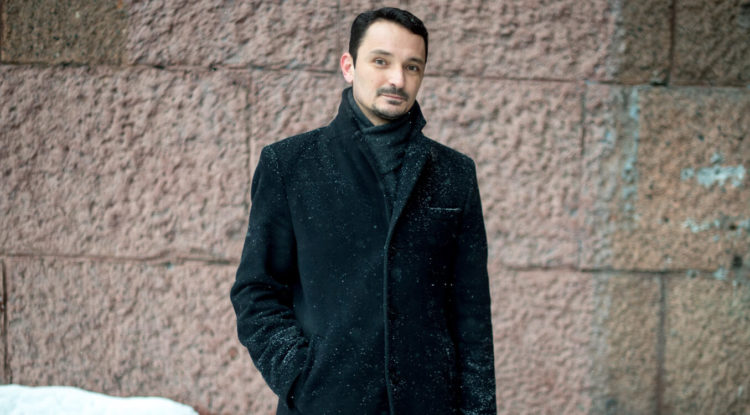
Interview with sociologist Viktor Vakhstein on how technologies affect modern society
The 2020s may turn out to be a turning point for human and technology relations. The pandemic has opened new opportunities for surveillance and control, but at the same time legitimized remote communication and work. ChatGPT is a new level of interaction with artificial intelligence. Drones and drones are the main weapon of modern war. A person may still sound proud, but not enough. What next? At the request of the Cold, the journalist and sociologist Denis Kurenov talked about this with the sociologist, the author of the book “Technique, or the charm of progress” Viktor Vakhstein.
In order not to miss the main materials of the "cold", subscribe to our Instagram and telegram .
You wrote the book “Technique, or the charm of progress”, in which the “Question of Technique” is considered from the point of view of sociology. Doesn't it seem to you that today this is the most “charm of progress” was replaced by fear of him?
- This is an old question. What depends on our collective perception of a particular technology? From the technology itself? Or from the prevailing framework of perception, prejudices, beliefs? These are two different areas of the search.
In the first case, we say: there are technological innovations that are more connected with the mechanics of cultural imagination. It is unlikely that somewhere there is a church of the infallible Uber or the congregation of the martyrs of the Holy Apple Pay. But the Church of artificial intelligence engineer Anthony Lewandowski registered back in 2015. Some technologies launch this mechanics - deification, desecration, eschatological hopes and fears, others - no.
And what is the second direction of the search?
- Another decision is to say that the matter is not at all in technology. And in specific social groups and in their collective ideas about the world. At the beginning of the 19th century, the class of future engineering and technical intelligentsia is born, and with it the worldview of liberal progressism. Dr. Andrew Yur (whom Marx calls in the “capital” “Pindar of Automatic Factory”) immediately constitutes a steam engine as a basis of a new - more fair - social order.
Until recently, a combination of political optimism and technological pessimism was widespread in the United States. Respondents in Pew Research Center polls said: “Hard corporations are behind technical progress, which are trying to deprive us of work through robots. And the task of democracy as a system of political protection of people's rights is to protect us from these kind of malicious creeps. ” Bill Gates then went out with a proposal to impose the labor of robots with additional taxes. In Europe, in the same period, fierce debates about the basic unconditional income were going on.
In Russia, on the contrary, the exact opposite combination of technological optimism and political pessimism triumphed . Technical progress was perceived as the fact that he would protect people from the sovereign of the state and correct the flaws of the political system: "robots will save this world if politicians do not destroy it before." They believed in a robot-sudu not because they deified technological progress (not at all), but because they did not trust Russian courts.
However, then the pandemic happened, and from the Antonym of the state, the technique turned into its synonym. Then technooptimism in Russia sharply decline. And then ... and then we do not know: the research is over.
The pandemic showed: no matter what greedy corporations stand behind technical progress, the state can quite use it. This influenced the fact that a political pessimism was added to technological pessimism?
- Depends on the country. In the United States, technology disputes are much more connected with the fear of loss of work than with the fear of political intervention in personal life. But this is a separate topic. It is important to remember that in the sociological perspective the pandemic was not at all a single event. Researchers of technology in it are primarily interested in three components: quarantine and technologicalization of state control; vaccination and public debate of her supporters and opponents; Changing models of everyday communication (primarily the transition to the remote).

In different countries, quarantine measures were very different in its stiffness. However, almost everywhere they were accompanied by the use of new technical means: from the mandatory installation of applications and the introduction of electronic gaps to the recognition systems of violators and patrolling the empty streets drones.
Although in Russia, quarantine was neither the longest nor the most stringent, the large -scale use of new technologies has become one of the reasons for the fall of a traditionally high level of technooptimism. The image of a just robot of the future rapidly gave way to the dystopic image of the "electronic concentration camp". A few years before the pandemic, Russian developers of neuro interfaces shared a ditty: “We came up with a neuroelectronic collar. Sing, dance, have fun, political prisoner. " In the pandemic - and after it - the perception of the relationship of technology and politics began to accurately describe this rhyme of “electronic” and “prisoner”. A new stable ligament of technological pessimism and political pessimism has appeared in Russia.
Was it primarily due to vaccination?
- Vaccination is probably the most beaten topic. In European data, we see a clear correlation: people who believe in technological progress and are convinced of the healing force of innovation become hot supporters of vaccination. Technophobes and technoconservatives are much more skeptical. This is not a new phenomenon. Even during the Black Ospes epidemic in Montreal in 1885, the city divided into two parts: Catholics, Francophones, Technophobes on the one hand, on the other - Protestants, Anglophones, Techno -optimists. It all ended with quarantine rebels, an attack on doctors and the commissioning of troops. We did not have anything like this. The key role in the perception of vaccination was played not by relation to science and technology, but by attitude to Russian medicine. Even the most radical technooptimists suspiciously reacted to the "satellite".
Finally, the remote and Pandemia of the Zuma. This is perhaps the most interesting direction. We have witnessed a radical technological mutation of everyday practices. Unlike violent vaccination disputes , which flashed as rapidly as they faded away, zoom - and other means of remote communication - entered our lives quietly and for a long time. What will be the long -term effects of this quiet revolution - let's see.
On February 24, the theme of the pandemic has retreated at least to the background. If we talk about technology in connection with the modern war, then what plots do you seem to you as the most important as a sociologist?
- The problem here is not that one event overshadowed another, pushing it from the information agenda. A series of events is not a news feed. The pandemic was a kind of rehearsal of war: unprecedented measures of biopolitics, rejection of contracts, trade in fear, mutual isolation both at the state and individual level. Plus, the pandemic has changed the set of collective ideas about what is generally possible. And when large masses of people from their own experience are convinced of the possibilities of the impossible, one should expect even more impossible.
But the sociologist of technology from all this global stream of madness distinguishes only those variables that seem to him relevant. For example, information technology: how do they change the perception of war? Until the middle of the 19th century, reports from the scene were delivered to imperial capitals with great delay. They were lengthy, pathos and spiritual lifting, so it was difficult to call them and reports. But in 1854, the Times correspondent William Russell was in Crimea. He appreciated the new miracle of technology - a telegraph. Russell's notes on the cholera epidemic among British soldiers, on poor supply, incompetence of the command, heavy losses were published almost every day.
Information transmission means have their own technical restrictions. You cannot send a detailed spiritual outline with a telegraph. But to write “Yesterday, due to the command of the command, the attack of a light cavalry near Balaklava failed, the brigade of Count Cardigan was practically destroyed, 409 people died”-you can. The telegraphic style of reporting easily pierced the armor of Victorian restraint-the London society Burlilo, like Irish stew, deputy Robak demanded an immediate parliamentary investigation, the Prime Minister Aberdin had to resign. After reading the next report in the Times, the venerable fathers of the families put on mourning and began to wait for the funeral. Who came only a month later.
What could the queen Victoria contrast this telegraph onslaught? The royal photographer Roger Fenton was sent to the front. He bought an old wagon from the wine merchant, equipped a bedroom and a photo laboratory in it, hired an assistant, stocked up with chemicals and moved under Sevastopol. Fixing means of visual information also have their own technical restrictions. Fenton could not photograph moving objects, so no storm and onslaught, no furious attacks. Only a measured military life: a hiking kitchen, a marquitant, a halt in a fire ... A field near Balaklava - already glorified by a resettlement and tennyson "Death Valley" - is photographed as a landscape park. It turns out later that Fenton removed a completely different valley, more picturesque, after asking to throw cannon nuclei for entourage in front of the camera. The Crimean War was the first modern war. Not in terms of weapons, but in terms of the spread of information and its use.
Today, instead of a telegraph - telegram?
- Yes. The rocket enters a residential building , corpses on the streets, you see all this on your screen on the same day - entries from phones and video recorders are the main materials for reports and posts on social networks. No measures of military censorship, no laws on the fight against fakes work in such a situation. It is required to have an incredibly trained brain to convince yourself: "This is all not true, but the truth is - it is on Channel One." And then the propaganda machine chooses the strategy of collective Gazlaling: you all live in a fictional world, everything you see is actually stripped, you cannot trust your eyes, only the official version of the events.
How did the drones change the modern war?
- Drones are another challenge to sociological theory. In general, there is nothing new in the use of such distance funds. Back in 1964, American engineer John Clark came up with the term “television” (from the Greek words “distance” and “hand”) to analyze the possibilities and consequences of actions at a distance. And although the war in Ukraine is sometimes called the “first war of drones”, this is not entirely true: drones were used in Iraq, Afghanistan, Libya, Israel. Especially large -scale - in the last Karabakh war.

Then why do we talk about drones as the main “innovation” of war in Ukraine?
- There are two parameters: distance and contact density. By the density of contact, sociologists usually mean physical involvement in the situation (philosophers sometimes call it “the fullness of presence” or “clutch”). If two people are fighting on swords, we can talk about a small distance and maximum contact density between them. When the operator leads volley fire on a city located at a distance of 30 kilometers from him, this is the minimum contact density and a large distance. But now drones, television and telephone devices have appeared. Operators act at the maximum distance and with a high fullness of presence. They are a little more “there” than “here”. The shooter can see many details of the situation, remaining safe. This is not just a different way of waging war. This is a radical change in the experience of action.
In the second half of the twentieth century, there was an idea that the main vector of arms evolution was an increase in the distance of defeat and weakening of the clutch, an increase in the number of victims and, as a result, their depersonification. The humanistic pathos of critics of the Cold War was in many ways to demand an increase in the density of contact: “It is known that the president is constantly accompanied by a young man, as a rule, a naval officer,” wrote a professor of international law Roger Fisher. -He everywhere wears the so-called nuclear suitcase-the attache-case containing the ciphers necessary to actle nuclear weapons. I vividly imagine this picture: the president surrounded by the generals discusses a nuclear war as an abstract, abstract problem. Perhaps his final words will sound like this: “In accordance with the SIOP No. 1 plan, the decision is positive. Submit through the alpha XYZ line.” Such a jargon does what should happen after this, very distant, and therefore difficult. The solution that I want to offer is very simple: to place this necessary code in a small capsule and implant it into the body of the one who express the consent near the heart. This volunteer will accompany the president everywhere, having a large and heavy knife with him, the way the butchers use. And if someday the president decides to start a nuclear war, he will first have to kill one living creature with his own hands. “George,” the president will say, “I am very sorry, but tens of millions should die.” And the president will have to look at him and realize what death is. Blood on the White House carpet: this is a reality that came here. ”
During the Operation Dawn, conducted by the Israeli army in the Gaza Strip in August 2022, a video of a missile blow coordinated by the Dron operator was spread. A man in a white T -shirt on the observation tower speaks on the phone. After a few seconds, the rocket will hit, but not on the tower in general, but directly on the person in a T -shirt. Professor Fisher clearly not so imagined the wars of the future.
But did we get to the point that the implementation of such operations is already possible without a person? Suppose we have a self -learning drone who sets himself goals and destroys them. After that, he writes a report on the task completed, where he explains why he chose this particular goal and decided to destroy it in such a way. What then, from a sociological point of view, is this AI operator different from a person?
- What you are asking about, in the sociology of technology is called the "authorization problem." What allows you to name some kind of human activity "action"? That it is jurisprudent. You can be responsible for it; It is you, and not circumstances, that are a genuine cause of the onset of some event. Between the cause and consequence, stimulus and reaction, there should be a gap (philosophers of law called it “spielrum”).
What operations does the action consist of?
-Firstly, the assessment of the situation. You are wondering where there are now fewer traffic jams, where it will be cheaper to buy the desired thing, how much time it takes for this interview. We call such "estates" fraim.
Secondly, the definition of alternatives and the choice of one of them. You can go this way or so, buy there or there. This is a decision -making operation.
Thirdly, implementation. When the decision is made, everything is just beginning. It still needs to be realized (modifying in the course of the appearance of unforeseen circumstances).
A simple example is chess programs. They assess the situation on the board, make a decision and make a move. Because for the course they do not need physical action. Like, for example, electronic traders selling on the exchange. The navigator performs only two out of three operations: assesses the situation on the road and paves the optimal route. The unmanned car is already closer to chess programs and electronic traders: it is delegated not only by framing and decision -making, but also to its implementation.
In complex algorithmic objects, which today are a little more subjects than objects, they distinguish three elements: sensor, algorithm and actuator. The actuator is just what allows you to implement a solution without human participation. And the most anticipated revolution of the future is the revolution of actuators. The transition from large data to existing data. Why hasn’t she yet? No, not because of technical restrictions. Because of the ethical. A person must still authorize, authorize the commission. In the case of drones - a shot.
Still?
- Yes, although in recent years we see tectonic shifts in the issue of authorization. For example, in March of 2021, a report of the UN Security Council on the use of Turkish Kargu-2 UNITRITIONS in Libya was published. The attacks recorded in the report differed from many other similar attacks from the air in that the Kamikadze drones were not controlled from the ground, did not receive authorizing sanctions from operators and, choosing goals from among the rebels, completely relied on their algorithms.
The main barrier on the path of authorization is the inability of the algorithmic object to “explain”, give a moral justification for the decision. This is the fourth operation: one cannot judge the one who “does not realize” the deed. He is insane in the literal sense of the word: he has nothing to impress. Технические субъекты сегодня (от беспилотника до электронного трейдера) — это безумцы.
Что, если удастся решить проблему авторизации? И дрон, как в рассказе Пелевина , сможет представить на суд общественности убедительное обоснование каждого принятого и реализованного решения? Более того, это обоснование будет воспринято как легитимное людьми? Представьте: беспилотный автомобиль, реагируя на опасную дорожную ситуацию, выезжает на встречную полосу. Это фиксируют камеры, алгоритм принимает решение, актуатор выписывает штраф. Беспилотный автомобиль, оснащенный приложением «Робот-юрист», оспаривает штраф, приводя убедительные доказательства: объезд по встречной полосе в сложившейся ситуации был необходимым и вынужденным. Робот-судья принимает сторону беспилотника и аннулирует штраф. Вся эта цепочка действий разворачивается за считаные секунды без участия владельца автомобиля.
Приблизило ли появление ChatGPT4 возможность решить проблему авторизации?
— Да, конечно, появление новых «достоверных агентов» вполне может приблизить нас к решению проблемы авторизации. Тут главное — отделить реальные социальные изменения, которые порождает новая технология, от наших полуаборигенских страхов и восторгов, о которых мы с вами говорили в начале интервью.