
Translated material
The United States collapsed cryptocurrencies
Claims against Binance and Coinbase led to a panic on the largest exchanges of the planet
The US Securities and Exchange Commission (SEC) took up arms against the largest crypto players - Binance and Coinbase. The bulk of the claims boils down to the fact that trading platforms combined the functions of brokers and exchanges - that is, they conducted auction and at the same time were their participants. Also, exchanges are suspected of violating prohibitions and the intentional use of client funds for the sake of profit. Investors, on the other hand, were frightened by pressure on the platforms and for a week brought out more than $ 4 billion from them, which led to the rigid subsidence of most crypto assets. The collapse is under control - in the material of the "cold".
In order not to miss the main materials of the "cold", subscribe to our Instagram and telegram .
SEC claims provoked a panic on crypto. According to the Nansen analytical system, in seven days from the date of filing claims, a net outflow of assets of the Binance amounted to $ 2.36 billion. In the American division of the exchange, investors deduced almost $ 124 million during this time. Her liquidity fell against this background by 78%. From Coinbase, investors withdrew $ 1.79 billion.
The Binance Token course in two days fell by 15%, and a week after the claim, he lost 27% of the cost. Other cryptocurrencies that the SEC recognized as unregistered securities were on average in a week fell by 25%. These are mainly little -known altcoins, but among them there is, for example, the main competitor Ethereum - Solana.
Panic sales and bitcoin have not been bypassed . On the day of filing the claim, the course of the most famous cryptocurrency decreased by almost 6%. On June 5, a trade session on Binance started from $ 2715, and closed at a price of $ 25728. On June 12, Bitcoin traded in the region of 26 thousand dollars.
USA against BINANCE
The US Securities and Exchange Commission on June 5 sued the Binance crypto officer and personally the head of the exchange Chanpan Zhao. The regulator accuses the site of trying to get around American laws. In particular, the exchange allowed investors from the United States to buy, sell and exchange crypto assets not registered as securities. In addition, the SEC claims that Binance deliberately risked the assets of its customers using billions of dollars in the auction: only a commission for transactions from such transactions allowed the site to earn an additional $ 11.5 billion.
In Binance, all charges reject. The cryptocurrency officer has issued a statement that states that the American regulator deliberately refuses to clarify the rules for the operation of the digital asset industry and is aimed at unilateral regulation of crypto. Binance believes that if the SEC wanted to protect the money of investors, then she would not refuse to cooperate with cryptocurrencies. The fact that the crypto industry needs to be adjusted, market participants are talking at least since 2017. During this time, significant changes that would not prohibit, but regulate cryptocurrencies, did not occur in the legislation of most countries.

“Due to its size and worldwide fame, Binance is a light target that ended up at the epicenter of a fierce struggle against the American regulator,” the exchange said in an official statement. Since June 8, Binance has suspended off -off trade on the American platform (when the asset is bought directly from a particular seller using the exchange infrastructure, but not at exchange trading. - approx. "Cold") and excluded 40 altcoins from trading. Binance.us recommended that customers display their assets until June 13. After this date, the exchange converts all the remains into stablecoins - cryptocurrencies, the price of which is tied to fiat money, for example, to the dollar or euro.
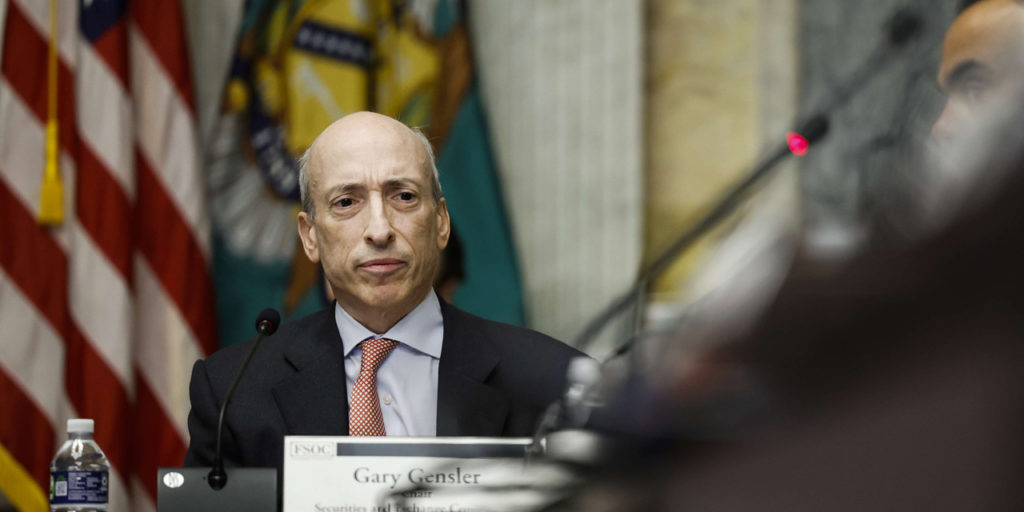
In turn, Binance lawyers demanded that the SEC Chairman Gary Hensler take self. They claim that in 2019, Hensler wanted to become an adviser to the exchange. In March of that year in Japan, he personally met with Binance head Chanpan Zhao. Moreover, at that time several sites at once were negotiating with the Henser and planned to attract him to work as an adviser. Hensler himself then taught at the Sloon Sloon Slown School of Massachusetts Institute of Technology. He was appointed by President Joe Biden in 2021 as the head of the SEC, and Hensler immediately began the war with the crypto industry.
However, not only SEC has questions for Binance. The US Ministry of Justice suspects the cryptocurrency that it helped Russian citizens bypassing the sanctions imposed after the outbreak of war in Ukraine. And earlier the site was accused of using sanctions imposed against Iran. Binance said that they observe all the restrictions introduced.
USA against Coinbase
With a difference in just a day, the SEC filed a lawsuit with another largest cryptocurrency site - Coinbase. She, like Binance, is accused of working without registration as an exchange and at the same time provides the services of a broker and a clearing agency.
“We do not see the New York Stock Exchange controlled the hedge fund,” said Gary Gensler, head of the SEC, in an interview with CNBC.
Coinbase is accused of trading at least 13 crypto actures that SEC considers securities. The regulator insists that at first they had to be registered accordingly. Coinbase Executive Director Brian Armstrong previously said that his company turned to the SEC with such a request, but received a “cold technique” from the Hessler. Since last year, the site requires the SEC to form clear rules of the game and even appealed for this.
“Coinbase and other cryptocurrencies are faced with regulatory measures from the SEC, although we were not informed why the SEC believes that the law is applicable to our business,” the main legal adviser to Coinbase wrote in his blog. Hensler then replied that crypto companies should comply with existing laws and that there is no need for special rules for cryptocurrencies.
The SEC lawsuit led to a fall in Coinbase shares. In a day they fell by more than 25%. Armstrong said that before the court decision comes into force, the exchange would work as usual. Moody's rating agency reduced the forecast assessment of the site from the “stable” to “negative”. The forecast will be reviewed if the exchange wins. In the event of a loss of Coinbase, you will have to pay large fines, which can affect the company's business model and its financial situation.
Cryptic crypt
SEC has recognized unregistered valuable assets of 13 cryptocurrencies, most of which are unknown to a wide audience. Some of them were traded on both exchanges, others only on Binance or Coinbase. However, they all collapsed in price immediately after claims against the sites, and the cost of value continues to this day.
Altcoin Sand has fallen most of all - this is the cryptocurrency of the project of the metavselny The Sandbox. From June 5 to 12, he collapsed by more than 34%. Also, more than 30% of the cost was lost by the Chiliz blockchain platform, which was developed by the Mediarex Maltese sports company. The token is used on the Socios.com platform, where sports fans can use their help in polls and advertising promotions of clubs, as well as receive awards. Chiliz cryptocurrency is also called fan-tokens. In addition, cryptocurrencies Dash , AXS , Flow , SOL on average lost about 30% of the cost. Matic , ADA , NEAR , VGX , ICP - about 25%.
Less than other steps reflect at the price of altcoin Nexo. In a week he lost only 5%. However, this may be due to the fact that the token is continuously cheaper since February this year. Filecoin cryptocurrency, which provides users with access to a cloud storage platform, has lost about 11%from the moment of filing of lawsuits. The Filecoin project in October 2020 launched a team of developers Protocol Labs. They refused to recognize the token with a security, noting that it is necessary for the work of their cloud service, which also stores documents on war crimes in Ukraine, which were submitted in the International Criminal Court.
SEC goal is to get into the media headlines
At least, they think in Binance. The leadership of the largest crypto -rush states that if the regulator wanted to protect investors, he would be more willing to cooperate with the players of the market. In the meantime, the SEC is more likely to acquire the image of the killer of promising crypto projects. So, in 2020, even before Gensler became the head of the SEC, the American regulator forbade the release of the GRAM cryptocurrency blockchain project Pavel Durov. The token, which worked in the Ton system, was also recognized as a security. As a result, Durov should remain investors more than a billion dollars.
The project was then invested in global venture funds and Russian billionaires-Yuri Milner and Roman Abramovich-as well as QIWI founder Sergei Solonin and even under investigation, ex-minister Mikhail Abyzov. In total, Ton managed to attract $ 1.7 billion.
Gram was supposed to launch on April 30, 2020, but this did not happen. Then Durov proposed two options to his investors: to return about 70% of the invested funds now or wait a year and in case of victory in court, nevertheless, to receive GRAM coins, and in case of loss of –110% of investments. Durov stated that in extreme cases he is ready to sell his share in the company, which owns the Telegram messenger to pay with investors. However, in May 2020, Durov finally disowned the Ton project, which was continued to develop separately from the former founder of VKontakte.
In 2021, Libra planned his cryptocurrency to release Facebook. The project was attended by PayPal, MasterCard, Visa, Spotify, Ebay, Uber and other large companies. But after the claims of the authorities of several countries, they gradually began to refuse to participate in the development of the Facebook cryptocurrency.
Then the company tried to introduce several stablecoins that would be provided with national currencies - the US dollar, the euro, or, for example, a British pound. Over time, the project itself has become less large. After rebranding, the name Stablecoin was replaced by Libra to Diem. But it was not possible to convince the regulators of different countries of the reliability of cryptocurrency. At the end of January 2022, it became known that the Diem project can sell its own assets to return investments to investors.
SEC accusations against Binance and Coinbase are similar to the attacks presented by the FTX crypto -story and its subsidiary Alameda Research. The site was also accused of attracting customers from the United States, despite offshore registration. The accusations from the SEC led to a sharp outflow of capital, and soon the crypto-rope went bankrupt , and its head Sam Bankman-Fried left the CEO post. The hole in the FTX balance was estimated at about $ 8 billion. Part of the money, however, managed to find - more than 5 billion returned to victims of customers, but the total losses of investors cannot calculate so far. However, experts see the difference in the SEC statements: in relation to Coinbase, it is much softer and more loyal, which can lead to the softer consequences of the proceedings with the authorities.