
Translated material
"Flight or Fight"
How lawyers find the strength to work in Russia
The work of a lawyer in Russia has always been dangerous. They were threatened, they were killed by the Nazis in street wars, they were beaten in police departments and were not allowed to see their clients, they were thrown down stairs by security forces, criminal cases were brought against them for doing their job - defending the rights and freedoms of others. With the beginning of the war, lawyers had more work and problems, and there were fewer of them themselves. Some were imprisoned, others were forced out of the country, and others chose to “go into the shadows.” Being a lawyer in Russia 2023 means trying to survive against windmills. Much like being a superhero. No Future and “NeMoskva Speaks” recorded monologues of defenders who continue to help people in spite of themselves, about why they continue to do this and how they manage not to reveal themselves. They also asked the neural network to imagine what the legal profession looks like in a dictatorship.
“Increasingly, the assistance of a lawyer is becoming “palliative”
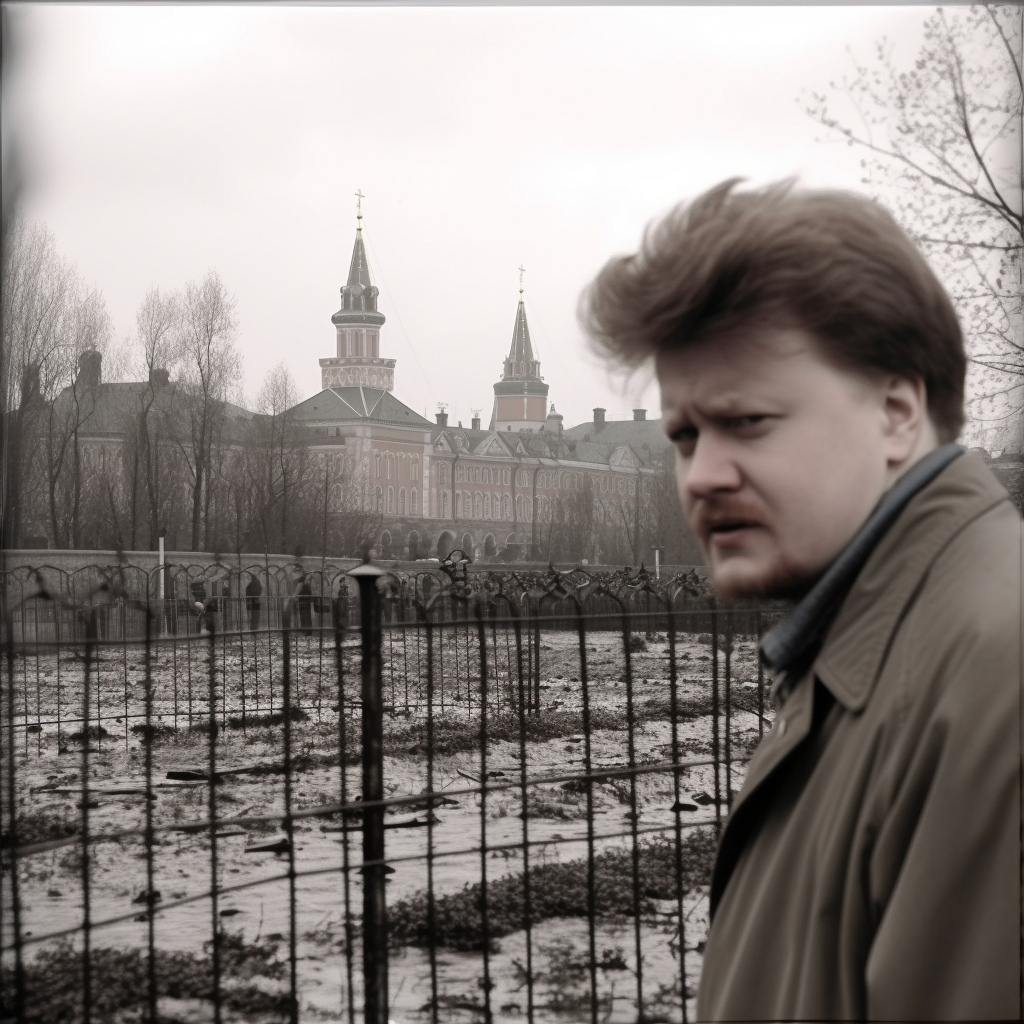
Leonid Solovyov - was the lawyer of political activist Yegor Zhukov, defended those involved in the “Moscow case”, the publisher of “Mediazona” Pyotr Verzilov, the creator of the “Left Resistance” Daria Polyudova, comedian Alexander Dolgopolov
The main case that I am currently involved in is the criminal prosecution of Artem Kamardin after the Mayakov Readings (the poet, after being detained by security forces at an anti-war rally, announced the rape of dumbbells - editor's note). And there is also a story about the kidnapping of a child - it involves a woman from the Forbes list. This is such a classic custom business as can be in Russia. Kamardin is now starting a trial on the merits: the case is based on the testimony of the person who entered into the pre-trial agreement and two more classified witnesses. Sometimes, of course, you believe in miracles, but I understand that the verdict will be guilty. The whole question is the severity of the punishment. If earlier, for example, in the “Moscow case,” two years for throwing a glass [at a policeman] was considered a heavy punishment, but now such a term is perceived as victorious.
Increasingly, the assistance of a lawyer is becoming “palliative.” Your main task in these conditions is to psychologically prepare the person [for a guilty verdict]. Well, show with him that you fought. They did everything they could, and the ship, as they say, sank “under sail.”
Why practice law in such conditions? The motivation here is simple. I understand well the aspirations of people who fall under political repression. Even if a person just went out with a picket on Red Square, he looks a little further than his own interests. I really like this attitude. And when the state decides for people what they can say and what not, it seems to me extremely unfair. Because the right to freedom of speech is on a par with the right to life. And if you remove it, then the state will not be able to guarantee the right to life - which is what we are seeing now.
For several years now I have been collaborating with human rights organizations Agora, Apology of Protest and Network Freedoms. Yes, the head of Agora, Pavel Chikov, was recognized as a foreign agent, and Apology was on this register (already excluded - editor's note). But I continue to work with them - although there have been stories when people refused. I don’t want to be paranoid in advance. You just need to accept the idea that you too can be recognized as a “foreign agent.” For me, the opportunity to collaborate with these people is more important.
I came to the legal profession already politically “charged”: I went to rallies, I understood that the system was not working very well, to put it mildly. Before becoming a lawyer, he worked as an investigator in the Investigative Committee. He left two years later - his health was severely damaged due to constant lack of sleep, being on duty and overtime. And in general, I did not find anything in the UK that would touch my soul. There I began to feel like I was part of an endless process of paper production. Constant reports, hearings - there is no energy left for a [full] investigation.
I understood the investigators' motivation. Most of them do not have bloodthirstiness. Investigators simply consider themselves an element of society that performs an important function. But they lack freedom to make decisions. And time. And a person buried under papers cannot physically exert emotional resources to sympathize with you. It is easier for him to get around sharp corners and direct the matter so that no one finds fault. They will not ask him to extend his detention in the pre-trial detention center. And for house arrest they can say: “Why are you letting a person out? Did you take a bribe?" Understanding such nuances helps to somehow build relationships.
Yes, now there is a peak of repression in the country - we are simply walking along these “peaks”. [Unjust] decisions in political cases are made very simply. No one will cancel them, they will turn a blind eye to any violations
But the problems with justice did not start today. This is an inevitable consequence of what happened in the first place. The judiciary has never [in new Russia] been precisely “power.” This is only a systemic mechanism in the general bureaucracy. This logic [of its existence] is inherent in the Constitution itself - the executive branch can influence the judiciary. The entire vertical of judicial power in Russia is built on this principle: there is a subject court, and under it are all district courts. No district judge will make a decision contrary to the opinion of the prosecutor's office without the consent of the administration of the subject's court. It directly affects his career. And there should be no hierarchy at all, only at the level of verification of court decisions. As a result, the state centralizes power, increasingly interferes in public life, and the courts go hand in hand with it.
There's probably nowhere else to make things worse. Then everything will depend on the “bloodthirstiness” of the legislator. And the courts, unfortunately, will simply carry out his will.
“The hunt has also begun for lawyers”
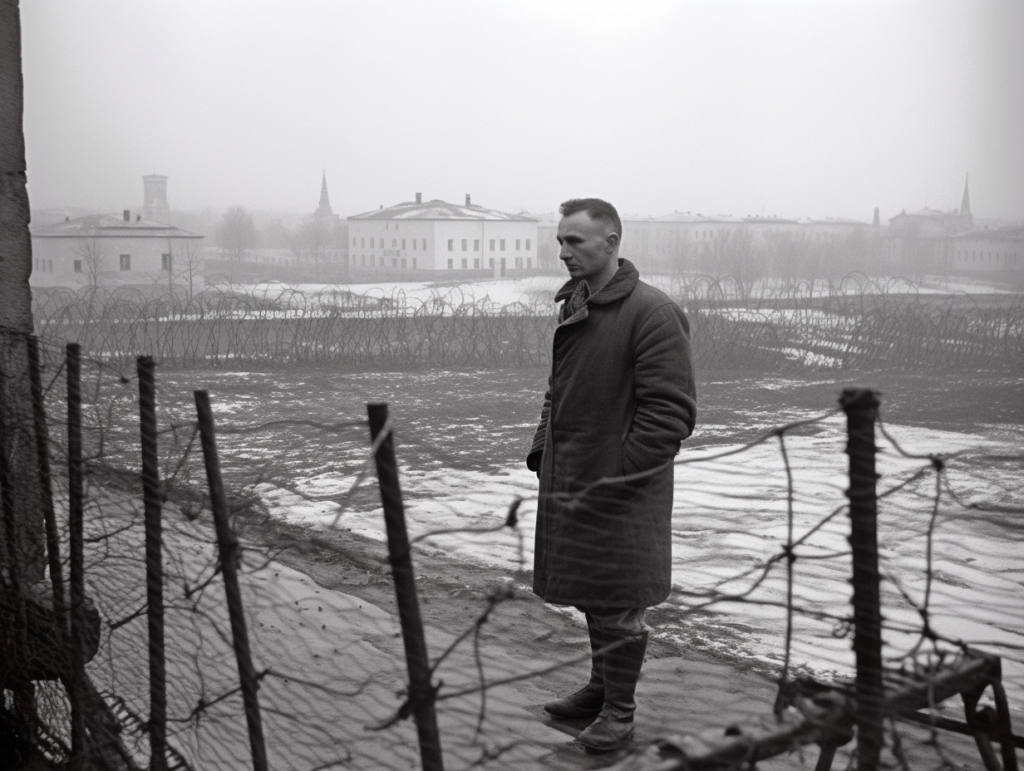
Alexey Matveev - defends political activists and victims of repression and asked to change his name
For the safety of my clients, colleagues and their clients, I cannot comment under my own name. Among our clients there are citizens, including those from non-“friendly” countries, and there are clients in whose lawyers an unhealthy interest is possible. Therefore, it is once again better not to appear publicly on the Internet.
Now I only have cases with “political overtones” in my work, the rest are ordinary ones, under Article 159 of the Criminal Code (“Fraud”). There were two things to do with the military: evading mobilization and leaving the military unit mobilized. Both were stopped.
Recently, the consideration of criminal cases in courts has turned into an absolute farce. It seems that with the beginning of military measures, judges were given a free hand - they were allowed to do whatever they wanted, in all categories of proceedings. The story may not concern the SVO at all.
For example, in the Penza court I had a case against one prisoner. While in prison, he allegedly extorted money from fellow inmates. There was no evidence in the case, except for the testimony of the victims, which was not supported by anything. And also - classified witnesses, whose testimony could not be made public - they left for the Northern Military District, and they shoved certificates at us that it was impossible to establish their whereabouts. And when a person was given seven years of “special regime,” there was a desire to tear up his [lawyer’s] certificate and throw it in the face of the presiding officer. Okay, “political” matters—we were never allowed to work on them normally. But my client had nothing to do with the war, or the rallies, or anything. Why do this? There is no logic here. It is clear that one cannot “discredit” the army. OK. You can’t spread “fake news” – okay. But when someone stole a jar of cucumbers, and there is no evidence, should a conviction be made?
I don’t understand in whose interests these people (the judges – editor’s note) are acting. It’s unlikely to be in Russia’s interests. When you read recent verdicts, it becomes scary. I will not make any allusions. But all this has already happened in our history.
Today's judicial system - specifically in terms of criminal legislation - is simply a parody of what it should be. A system where no one is interested in evidence or human lives. It would be interesting for the case to be considered faster, and for no one to be scolded for red tape. And no one cares what happens next. Not a single judge was held accountable for the fact that they deliberately passed unjust sentences. One of the judges said to me: “Alexey, there are situations when the Code of Criminal Procedure doesn’t give a damn.” This is a direct quote. These are the times: the Code of Criminal Procedure doesn’t give a damn.
Our work is being destroyed. But if you leave people alone with the system, it will be a disaster. When a doctor does not have expensive means, he must treat with what he has at hand. Moreover, even in such conditions it is sometimes possible to achieve results
Paradoxically, the general collapse of the [law enforcement and judicial] system helps. The quality of criminal investigations is steadily declining. And even taking into account the fact that the court can push through almost any case, they [the investigators] are not able to send [to the prosecutor’s office] a normal indictment. If you give such a document to a Russian language teacher, he will probably be very surprised.
Let's take article 20.3.3 of the Code of Administrative Offenses (“discrediting the army”) - one of the most popular now. I had four such cases, and in three of them I achieved termination of proceedings: there were maximum procedural jambs. The police are completely incapable of working with cases related to the Internet, even at the level of inspecting Internet pages. Sometimes such things save destinies. Therefore, yes, some legal levers are still working even with the current disgrace.
At the same time, repressive laws apply to lawyers themselves. An ideal example is Article 207.3 of the Criminal Code of the Russian Federation (“distribution of fakes”). You will defend a person, and you will tell yourself a crime. And then the guys will come to you and say that it’s probably time to “leave.” Or you yourself will go to jail.
Why should I leave? This is my country, and I spend time, nerves and health to make it better. It wouldn't be fair to leave. Several times I wanted to go and submit my certificate. But then I thought that they were crap. I’m not ready, so to speak, to drop everything and go bake pies.
I understand the risks perfectly well - in fact, the hunt has also begun for lawyers. I know about the interest in me from the security forces. But there are no direct threats yet. I won't lie that someone is bothering me. The way I worked is the way I work. But at the same time, I flinch every time from an unplanned knock on the door.
“No one but ourselves can save the situation”
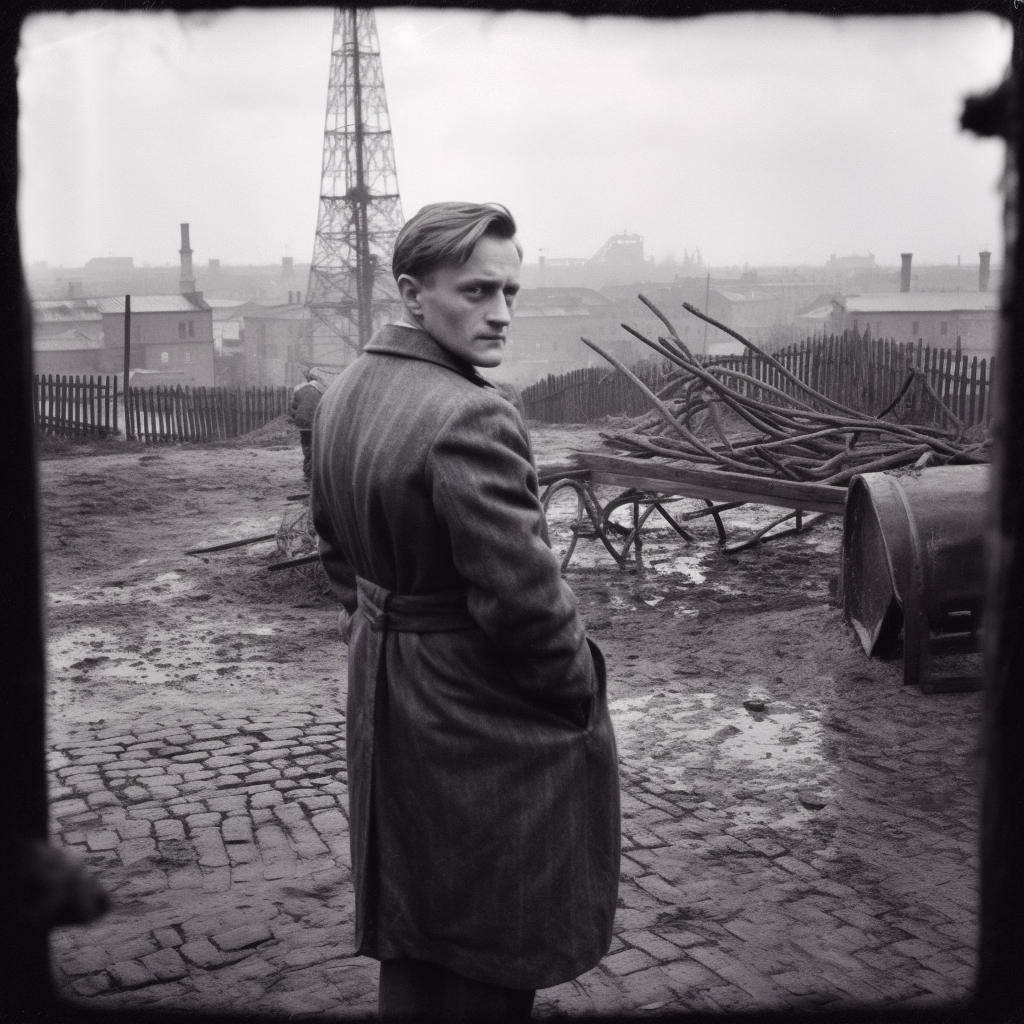
Dmitry Zakhvatov - defended former Channel One employee Marina Ovsyannikova, political activists and participants in anti-war actions, was a representative of Alexei Moskalev, convicted of discrediting the RF Armed Forces
I left Russia in December 2022 - I thought that given my publicity it would be safer. For the last six years I have been involved in human rights advocacy. I don’t have clients in Russia now, but I remotely advise people on corporate law and criminal matters. While abroad, you cannot engage in full-time practice. But you can cooperate with civil society structures in Russia. Which ones? Many of them are “foreign agents” or “undesirable” organizations.
Unfortunately, in the current conditions one cannot expect much from lawyers. Their role comes down rather to not leaving a person alone with the system. And on the other hand, for his case to receive some kind of international legal assessment - this was previously given by the European Court of Human Rights. After Russia was kicked out of the EU, human rights activists are very actively working with the quasi-judicial bodies of the UN. This, in fact, is why a lawyer is needed in Russia today. Especially if he works on political affairs.
With the outbreak of the war the situation became even worse. Previously, lawyers could at least talk publicly about topics related to the case. Now, [due to censorship laws], this opportunity is being curtailed, and more and more processes are being closed to the public. This is a practice of absolute arbitrariness.
The saddest thing is that the Federal Chamber of Lawyers (FPA) does nothing to somehow protect the rights of its members. There is a catastrophe in the field of public law in the country, and the FPA is neither seen nor heard. Although it is clear that sooner or later the authorities will follow the “Belarusian” scenario and completely deprive the lawyer corporation of independence. The leadership of the FPA itself is elected according to an undemocratic procedure; ordinary participants cannot influence its decisions. The problem is that there is no unity among the lawyers themselves. Many people have divided opinions [about the war], so it’s difficult for them to organize and change something.
What should ordinary people do in this case? It's very simple. Everyone has the Internet - you need to carefully study repressive practices and follow the security measures recommended by human rights activists. Because the key to safety is always awareness.
Maybe I’ll say it rudely, but we need to turn on our brains and stop hoping that everything will resolve itself. It won't resolve. We are entering an era of very serious turbulence, and it will only get worse
There are two options, and both of them are given by nature: “run” or “fight”. You can combine them. Participate, openly or covertly, in civil society activities. Help Ukrainian refugees or human rights activists. Maintain an anonymous telegram channel. In short, get involved in politics in one way or another. Because there is no magic guy who will come, kick everyone out of the Kremlin and carry out democratic reforms so that we don’t have to shake under the covers at 6 in the morning waiting for a search. There is no such thing as Superman. No one but ourselves can save the situation - it’s time to realize this.
Author Savely Romanov
Editor Anton Kravtsov
To publish materials more often, we need your donations. We will spend them on fees for authors, photographers and illustrators. Below there is a form for donating any amount for the future No future.