
Translated material
Unbomber died

The story of the scientist-terrorist, who 17 years old sent home-made bombs in the struggle against technology, progress and feminists
Ted Kachinsky is the youngest graduate of Harvard, who could become the best mathematician of America. Instead, he became one of the main neglects of science and technological progress and lived in a forest hut for 20 years, sending bombs to scientists. On June 10, 2023, he died, serving a life sentence in prison. "Cold" tells its story.
In order not to miss the main materials of the "cold", subscribe to our Instagram and telegram .
On May 25, 1978, a parcel appeared in the parking lot of the University of Illinoi. The sender was indicated by Buckley Krista, a professor of mathematics from the suburbs of Chicago. Nobody took the box and soon it was “returned” to Christ. But the professor himself did not send anything and, having received the parcel, contacted the police. As soon as the officer tried to open the box, she exploded. The policeman was wounded in his left hand, but no one was seriously injured. The sender was never found.
A year later, a similar incident occurred with a student at the University of Noruster John Harris. The bomb again detonated when the student tried to open the box. He received minor injuries. Some time later, the Boeing-727 of the American Airlines, flying from Chicago to Washington, was found on board the Boeing-727. The bomb did not explode, although it smoked a salon with pocked smoke, which is why the plane made an emergency landing, and some of the passengers were hospitalized with carbon monoxide poisoning.
After this incident, the FBI connected to the investigation. Investigators found similar features between an attempt to undermine the aircraft and the newsletter of boxes with bombs. The case was called Unaabom (University and Airline Bomber - a bombist of universities and aircraft), and journalists called the author of crimes Unbombert.
The FBI and the police were looking for a “single terrorist” for more than 17 years, during which time he committed 17 terrorist attacks against scientists. The publication in the newspaper helped to reveal his identity. More precisely, the two largest American newspapers The New York Times and The Washington Post.
Ideologist
In September 1995, the editorial office of The Washington Post received an unusual letter. Unabber, a single terrorist, whom the FBI, unsuccessfully tried to catch the last 17 years, wrote to journalists. The parcel, which was opened in the presence of the police, was a voluminous manuscript-manifesto for 35 thousand words. In the accompanying Unbomber, he demanded that his work called “Industrial Society and its Future” be printed by a large newspaper or a magazine without abbreviations and editing. Otherwise, he promised to continue to kill people. Over the past two years, he organized four terrorist attacks, the victims of which were two people. Later it turned out that the same ultimatum was received in The New York Times.
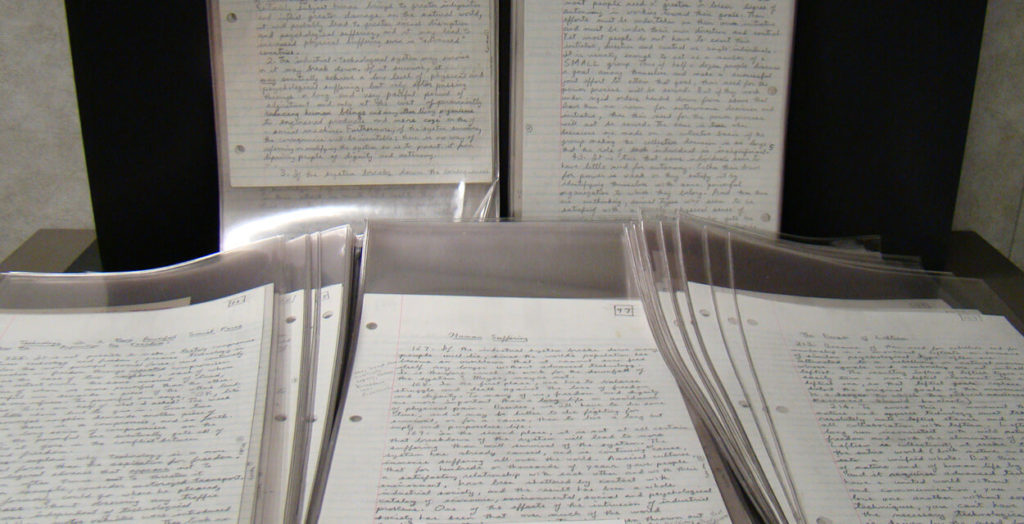
In the manifesto, Unabobert criticized modern society and his craving for technical progress. He wrote that progress makes people move away from the “natural lifestyle”, brings “mental and physical” suffering and deprives the society of “autonomy”. Therefore, people should return to nature and primitive system. He considered scientists who distribute technologies, engineers, biologists, psychologists, and leaders of large companies. As well as socialists, feminists, human rights fighters.
Unabobert perceived the murders as a way of attracting attention. He justified terrorist attacks by the fact that in the era of information oversaturation, not every person can be heard, therefore, in order to convey his position, he has to kill.
At first, journalists doubted whether to follow the “extremist” and publish his statements, but the FBI officers insisted that the requirements were met. The manifesto was published a few months later, according to journalists and investigators to prevent victims and, perhaps, finally reveal the identity of the criminal. The engineer from Chicago David Kachinsky read that publication and recognized in it his older brother - Ted Kachinsky.
Young genius
Theodor Kachinsky was born in Chicago in 1942 in a family of ordinary workers, emigrants from Poland. Ted had a huge mathematical talent. The result of the IQ of the test, which American schoolchildren pass after the fifth grade showed 167 points (the average IQ scientists - 125). Thanks to his intellectual abilities, Ted Extern passed the year of study and was enlisted immediately in the seventh grade.
At school, he attended a chess circle, played on a thrombone, composed music and was interested in biology. The only thing Ted did not feel confident in is communication with peers. Classmates considered him an arrogant bastard and avoided him . Ted himself also did not feel warm feelings for them and basically communicated only with his younger brother David.
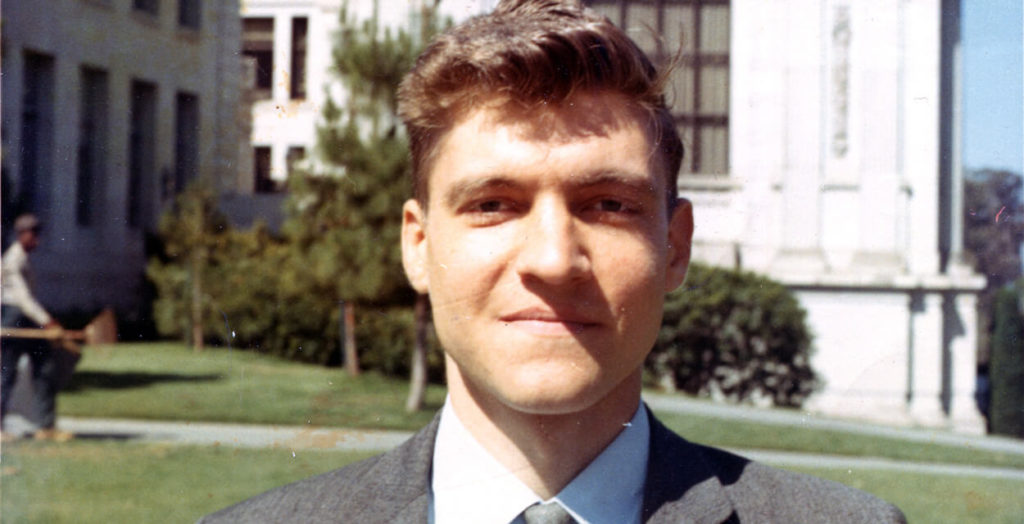
Already at the age of 15, Ted was able to enter Harvard at the faculty of mathematics. There he not only studied, but also took part in the psychological experiment of Henry Murray - an honorary professor of Harvard University. Murray investigated how stressful situations affect the formation of a human person. The scientist sought to develop his own scientific concept, which he called "personology."
Murray put students in various stressful situations and watched their reaction. One of the experiments took place in the form of interrogation. Students were asked to write an essay about their life views, and then, under the pretext of a philosophical discussion, they called into a room with an unpleasant white light, where special people insulted them. The scientist himself characterized these interrogations as “fierce, cruel and insulting attacks, touching the ego and their most cherished ideals and beliefs.” The experiment lasted three years, Kachinsky spent about 200 hours in it. According to one version , it was the approach of Murray that could destroy Kachinsky’s faith in science and in humanity as a whole.
Hermit
By the age of 20, Ted had already finished Harvard. At 25 - received a doctoral degree at the University of Michigan and an invitation to work, becoming the youngest teacher of the University of California in Berkeley. But here, in his career, difficulties began. Teda was not teaching - he gave a lecture on a piece of paper and rarely answered students' questions. In parallel, Kachinsky wrote scientific articles and published a voluminous dissertation , but on June 30, 1969, without explanation, he resigned that, according to the dean of the mathematical faculty, for many were a surprise.
Ted returned to his parents' house in Illinois. He locked himself in his room and tried to compose essays and novels, discussing the end of the technological era. However, the literary career did not set - the heavy academic language, which Ted was accustomed, did not fit for literature. Not a single text was published.
Every year, disappointed in the world order, Kachinsky decided to move to the slightly populated area of Lincoln, in Montana. There he arranged a hut for himself and tried to completely break off contact with civilization. Kachinsky read books in light from a candle, did not use water supply and electricity and tried to merge with nature as much as possible. Ted studied the skills of survival on books: he hunted, searched for firewood, made himself instruments.
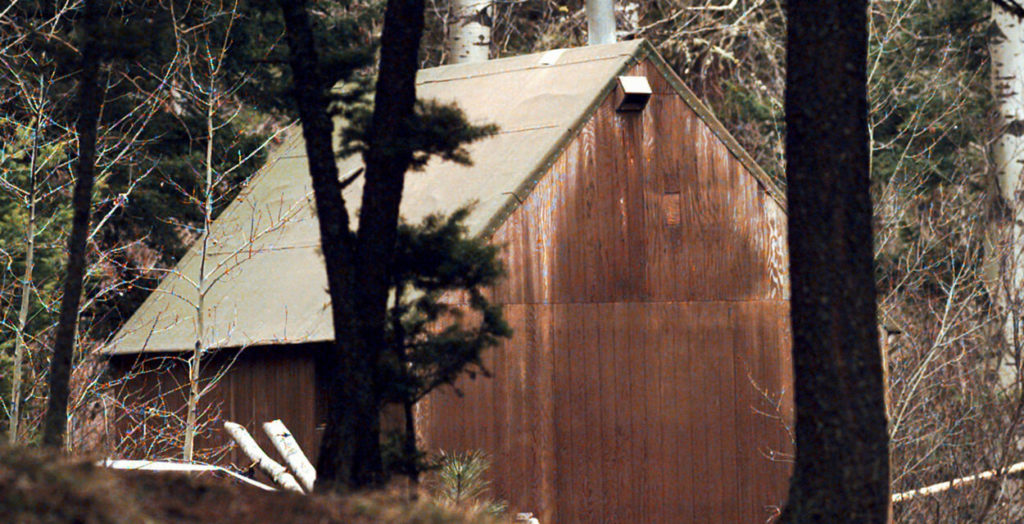
The neighbors recalled Kachinsky as a wild eccentric, from whom it smells bad and who never greets.
But civilization reached Kachinsky and in Montana. Industrial development prevented him from leading the life of the hermit.
“My favorite place was one big left of the plateau. Until the summer of 1983, it was better not to find a place. Returning to the plateau, I found that they had built the road right in the middle of him. <...> You have no idea how I was upset, ” said Ted. - At that moment, I decided that instead of honing my survival skills, I will work to give back this system. Avenge. "
Ted began to sabotage production that were near his hut. For example, on a sawmill nearby, he covered the sand into a woodworking machine, which disabled it. By that time, Kachinsky had been actively studying the works on sociology and political philosophy for several years. Over time, he came to the conclusion that violence is the most effective method of combating the system. In 1978, he sent his first bomb.
Terrorist
Unabobert’s attacks lasted several years, but the victims were finished with light wounds. The first person who was seriously injured was John Hochzer, a graduate student of the University of California at Berkeley, in which Ted once taught. In 1985, he received a parcel from Kachinsky and lost four fingers and eyes. In the future, attacks became more serious. The researcher of Dowan Charles Epstein, like Hochzer, lost several fingers and partially deaf, but survived. Professor David Gelerner torn his right brush and wounded his eyes. Despite the injuries, he was able to reach the clinic and seek medical assistance.
The first murder occurred at the end of the same 1985. On December 11, the 38-year-old owner of a computer store in California Hugh Skraton was mortally wounded with fragments from the bomb. The bomb was detonated in the parking lot of his car.
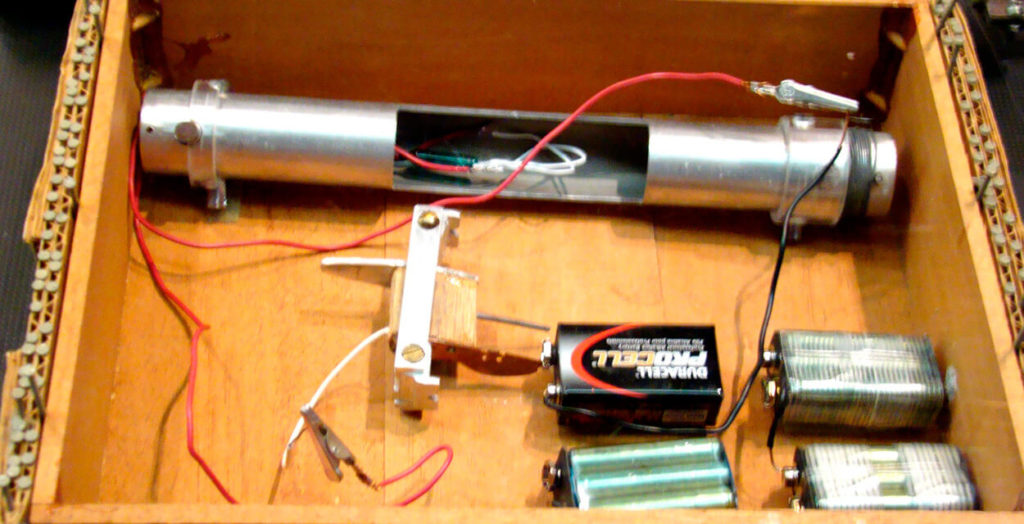
Investigators tried to calculate the mysterious terrorist, but the clues brought now. Kachinsky flirted with the police: he often left false tips, confusing them. For example, the inscription FC (Freedom Club) on that part of the bomb that remains intact after the explosion. The FBI checked hundreds of people with the same initials, but to no avail.
They were able to catch Unabert only in 1996, after the publication of the manifesto. After reading him in the newspaper, the wife of the brother of Kachinsky - David, suspected that Ted and Unabber - the same person. David corresponded with his brother for many years. He was tormented by doubts, but still he decided to report his guess in the FBI and handed over letters to the examination.
It was conducted by David Foster, one of the main specialists in the country to establish authorship of anonymous texts using textual analysis. He compared the spelling and stylistic features of letters and manifestos and found that Ted is an wanted terrorist.
Prisoner
On April 3, the FBI officers detained Kachinsky with a red -handed person - they found the original manifesto and a new bomb in his hut. For 17 terrorist attacks, three people became victims, the death penalty threatened Kachinsky, but the lawyers insisted that their client be recognized as insane. Ted did not agree with their position and demanded from the court the opportunity to defend himself on his own, but to no avail.
In the cell, Unabobert made an attempt to suicide. After that, he was sent for a psychiatric examination and the medical expert found that Kachinsky really suffers from paranoid schizophrenia, but sane and may be convicted. In 1998, Kachinsky pleaded guilty, the court sentenced him to a life imprisonment without the right to parole.
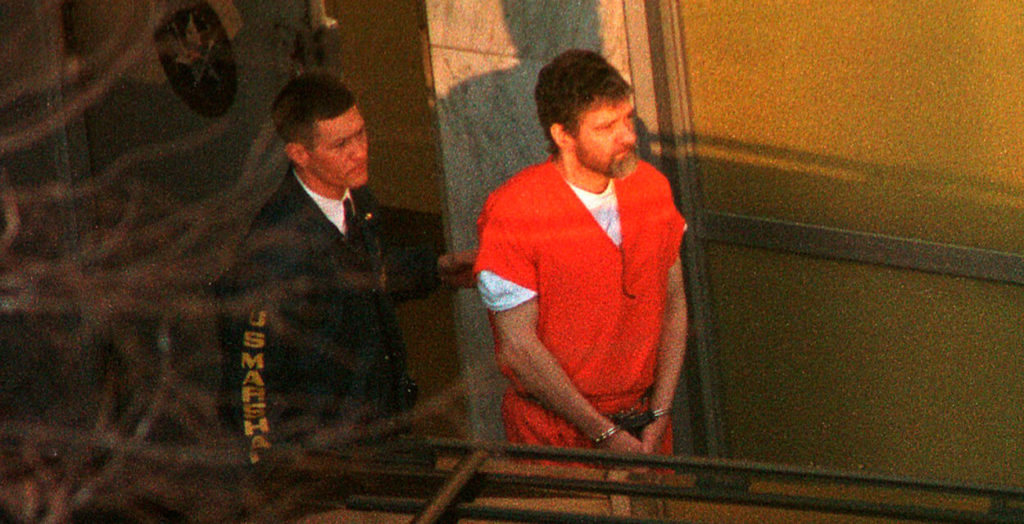
After the arrest in Unabobert, all major American media intervated, but Ted most often refused to communicate with the press. He demanded the right to edit his answers and considered journalists liars.
In prison, Kachinsky continued to defend his beliefs. In 2010, the collection of his essays and the supplemented text of the manifesto were published under the name “Technological slavery”. In 2016, he published the book “Revolution Against Technology” (Anti-Tech Revolution), in which he argues that the technological process cannot be stopped.
Unx Florence spent most of his time in ADX Florence, one of America's most stringent prisons. In 2021, Kachinsky discovered a neglected form of cancer and transferred to a prison type hospital. On June 10, 2023, according to the anonymous sources of the Associated Press, Ted Kachinsky committed suicide at 81 years of life.