
Translated material
Free elections after Putin are not a panacea
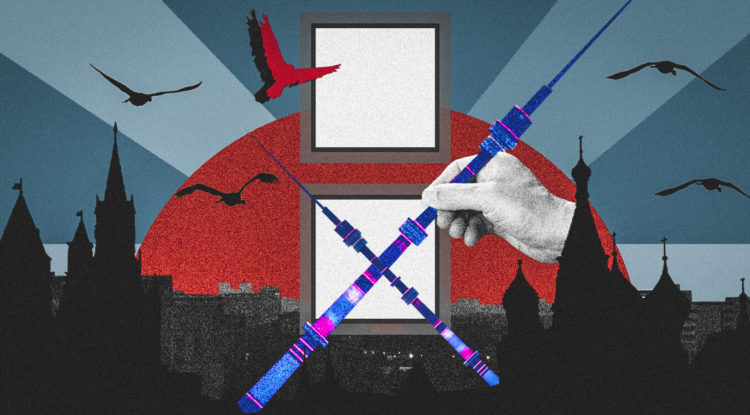
Political scientist Grigory Golosov explains why the system is not changed by a national vote
"Kholod" continues a series of articles by Doctor of Political Sciences Grigory Golosov about the possibilities of Russia after Putin. It is generally accepted that the first thing after the fall of the current regime is to hold free national elections. It doesn't work that way, Golosov says, and he explains why.
In order not to miss the main materials of "Cold", subscribe to our instagram and telegram .
The demand for free elections should be at the heart of any program of democratic change. This would seem to be undeniable. The problem is that the Russian authorities still consider their elections to be free, and one of the key goals of any group of representatives of the current regime that manages to retain power will be the opposition's agreement to recognize the results of the elections, which were actually held under the old rules. Such an agreement would be a colossal mistake for opposition politicians. Therefore, the item on elections, for all its importance, should not be the first item on the agenda.
I can seriously consider only one situation in which the holding of elections will become an absolute priority. This is a complete collapse of the old regime, when the ruling group will seek to get rid of power as soon as possible and either simply run away, leave the country (preferably with the wealth acquired by overwork), or stay, but focus on business projects. It was the last option that was implemented in the Eastern European countries, where the ruling communist parties, as they said then, "exchanged power for property." In Russia, this will not work, because we cannot have one without the other.
Nevertheless, if the country's leadership is nevertheless ready to transfer power to any opposition party that is lucky in the elections, then, in general, there is no other mechanism in sight. The word "lucky" is not a reservation here. In conditions of political chaos, the usual companion of revolutions, as well as the organizational weakness of all groups without exception that will lay claim to power, the structure of the opposition movement and random fluctuations in the mood of voters will be of decisive importance.
Elections after dictatorships. Experience of Eastern Europe
The Eastern European events of the early 1990s best illustrate this thesis. The least indicative example is Poland, where the first post-communist elections were held in conditions when, on the one hand, the ruling party was seriously going to win, and on the other hand, there was Solidarity, which was recognized as the main force of the opposition. Polarization in the first free elections in Poland quite naturally led to the fact that already in the next elections, voters, disappointed with the results of the first phase of reforms, brought to power former communists, who by that time had repainted as social democrats.
This was not the case in other countries, and there are two possibilities. The first was most clearly realized in Czechoslovakia. It consisted in creating such a broad opposition coalition of groups that were weak in themselves that the voters had a reasonable idea that this was not just the main, but the only force capable of taking responsibility for governing the country.
In Czechoslovakia, such a coalition was the Civic Forum, which was able to win almost half of the seats in the parliament elected in 1990. In the same year, the first free elections were held in Hungary. There was no broad opposition coalition, and the victory - unexpectedly for many - was won by the conservative-nationalist Hungarian Democratic Forum, which gained almost a quarter of the votes.
Both options proved problematic. Immediately after the elections, Czechoslovakia entered a period of long and painful political disengagement within the Civil Forum, which could undermine the functioning of the state body and did not lead to this, largely due to the outstanding tactical skill of Czech Prime Minister Vaclav Klaus.
In Hungary things went even less smoothly. The first phase of the reforms was ineffective and was accompanied by sharp political conflicts between different anti-communist parties. Things got to the point that before the next elections, the opinion was widely spread about the readiness of the Hungarian Democratic Forum to usurp power. This did not happen, but according to the results of the 1994 elections, former communists ended up in power in Hungary. The most negative scenarios in the Eastern European countries were avoided largely due to the fact that the prospect of joining the European Union softened political mores and saved politicians from acting too harshly. There will be no such factor in Russia.
It turns out that the hasty holding of elections was fraught with problems even where it turned out to be practically impossible to do without it. For Russia, however, it is difficult to recognize such a prospect as realistic. There are two possible options, which I already wrote about: an optimistic (and less likely) one, in which a leadership that includes representatives of opposition groups will be in power without any elections, and a less optimistic one, in which some part of the current leadership will retain power which, however, will be ready to make concessions. However, there is no fundamental difference between these options in terms of how to approach the issue of elections.
Possibility of free elections in Russia
Turning sham elections into real ones will be a complex process involving two separate aspects: political and technical. In Russia, they usually pay attention exclusively to the second. This is not surprising, given that the fictitious nature of modern Russian elections is largely ensured by "electoral technologies", many of which can be eliminated purely technically, by creating and legally enshrining more honest rules of the game. However, today I will start with the first.
Very often there is an opinion that has already become trivial that if free elections are held right now, then “communists and fascists” will certainly win them. This opinion is ridiculous already for the reason that "right now" there can be no free elections. It is quite obvious that any elections held without a political process leading to them, connected with the collapse of the current system of government, will not be free and it will not be “communists and fascists” who will win them, but the same “United Russia”, albeit under a different name. and in some refurbished form.
As a very distant analogue of such a situation - with the cardinal difference that the leadership was in power, really striving for change - one can consider the elections of people's deputies of the USSR held in 1989. The overwhelming majority of seats in these elections, as is known, were won by members of the CPSU, and only a few of the elected deputies were in favor of further democratization. For all the colossal significance of the results of the 1989 elections, the further development of events was determined not by the composition of the elected deputies, but by the political choice of Mikhail Gorbachev.
The political results of the perestroika elections were far from idyllic, but it is not worth dwelling on this topic simply because there will be no new Gorbachev, and if United Russia survives the political process that will make free elections possible (which I doubt), then badly shabby. Elections will be won by those who manage to play a leading role in this process. If they are "communists and fascists", then they will receive the main prize. But I don't think so.
This is a very simple logical conclusion. It cannot be ruled out that if not the communists, who are distinguished by their political impotence and extreme servility towards the authorities, then the radical nationalists will indeed play a significant role in the upcoming stage of the country's development. However, if they really turn out to be the main players with whom the authorities will interact, then there will be no free elections by definition. The movement of "national democrats" in Russia remains in the past, and even before it was, by and large, a journalistic fantasy, and not a real project. Russian radical nationalists, like many of their like-minded people around the world, are far from liberalism and simply do not want free elections. If necessary, they will negotiate with the authorities about something completely different.
Free elections will be on the agenda only if the participants in the main interaction with the authorities are groups interested in holding them. And this will naturally draw public attention to them. In a short time they will become not only recognizable among the general public, but also attractive to those parts of the ruling class who want to keep their political future in the new Russia.
Democratic forces in free elections
Of course, the years of aggressive propaganda will not pass without a trace, and Russia will have to live with some rather influential nationalist segment of the mass consciousness for a long time to come. However, the future importance of this segment should not be exaggerated. Mass consciousness is mobile. It changes easily when new ideas become public, and especially easily when old ideas are refuted by everyday practice.
They say that there is nothing more successful than success, but it is also true for the mass consciousness that there is nothing more successful than failure. So I wouldn't worry too much about "communists and fascists". Democratic forces will have good chances to win free elections.
However, in order to achieve such a result, the democrats must take place not only as recognizable opponents of the authorities, but also as an organized force at all levels of the social order - both social and territorial. This cannot be achieved without meeting the four basic requirements that I wrote about in a previous article . If these demands are accepted by the authorities, and even in a situation where someone from the democratic camp already enters the political leadership, it will take quite a long time to put this program into practice.
Even the release of political prisoners may not be an instant process, but if desired, it can still be done fairly quickly. The same is true of freedom of assembly. Care can and should be taken to ensure that this instrument ends up in the hands of the opposition as soon as possible. However, the situation is different with freedom of speech and especially freedom of association. These constitutional rights cannot be secured solely by the adoption of appropriate laws. Freedom of speech will become real only after a fundamental change in the structure of management, control and even ownership in the media sphere. Freedom of association will be achieved only after a period has elapsed during which parties can form as organized political players, which is difficult and time-consuming.
Of course, the elections can serve as an important stimulus for party building in the localities. But then the electoral process should be launched not from the national elections, but from the elections of municipal deputies. This, I think, would be of great benefit and can be considered as one of the first measures.
National elections - be it parliamentary elections or elections of some constituent assembly - are better not to be considered in this capacity. They should be approached with a formed structure of political alternatives understandable to voters. This takes time.
The opinion of the author may not coincide with the opinion of the editors.