
Translated material
People are the main danger
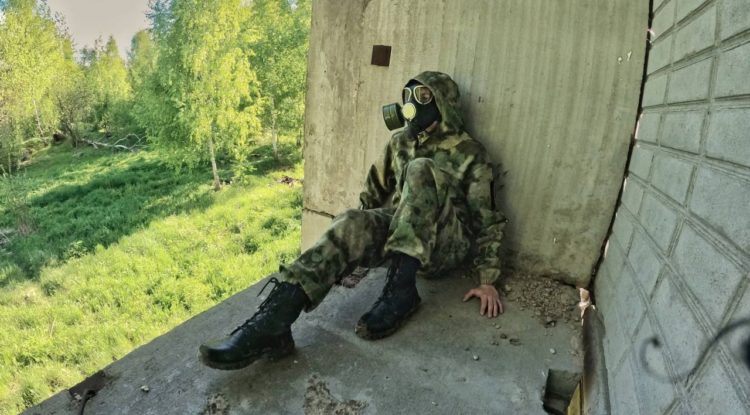
Russian survivors have been preparing for years by the end of the world. The war proved to them that they are right
The survivors, or survivilists, are people who spend time and money to prepare for a nuclear war or other scenarios of global cataclysms - exist as a subculture for more than 50 years: the construction of bunkers, collecting reserves and studying survival skills in the conditions of social collapse around the world is engaged in millions of people. There are in Russia - and, as far as one can judge, with the outbreak of war in Ukraine, Russian survivors began to prepare for the “big pussy” even more intensively than before. At the request of the Cold, Anton Mirsky studied the community of survivors and talked about how they came to their views on the world and how they are preparing to fight for life when the apocalypse comes.
In order not to miss the main materials of the "cold", subscribe to our Instagram and telegram .
Trihard left the house and headed for the subway. A raw autumn weather was on the street - on its camouflage hood covering his face from Moscow surveillance cameras, drops of rain fell. A half -empty backpack dangled on the back of Trihard. He took with him only the most necessary: a powerful lantern, a knife, a multitool (a folding compact set of tools), a camouflage robe and a can of stew - in case the output is being developed.
Why Trihard?
Trihard calls himself so in group chats, where the correspondent of "cold" met him. He asked to call himself in the text. The story of his sortie is written with his words based on several detailed interviews. "Cold" checked the details of the biography of Trihard and other heroes of the material, as far as possible.
Leaving the metro in the north of Moscow, Trihard crossed a couple of streets and was not far from the highway leading around the city. He had not yet been moved by hitchhiking, but there was nowhere to go: there is no car, a taxi - it is expensive and leaves a digital trace, public transport did not reach the place needed by Trihard. The right place was the disbanded and abandoned educational part of the Russian Guard, where Trihard hoped to get hold of some useful objects-that is, as stalkers call their prey, “habar” and “artifacts”.
Asking the driver to stop at the side of the road, Trihard thanked him for his help and went out. The base was a few kilometers. They decided to overcome them on foot: it’s more reliable, for sure no one will track down. An hour later, he reached the place where the review was opened on an abandoned training. Wearing a disguise, decided to go into the territory through a fallen fence. Stepping closer, he lay down on the ground and began to listen - to make sure that there were no suspicious sounds.
There was really no one on an abandoned base. Passing the open doors and rooms with knocked out glasses, Trihard went down to the basement of one of the buildings. There, radio components, boards, broken devices from the UAZ car, hard drives and battered books were lying there. Trihard threw a fee from some device into his backpack-he is fond of technology since childhood-and moved on.
In the neighboring building, where laundry and refrigeration chambers were previously located, the basement was even larger. It stored new dishes in packaging and canned food. Having replenished his backpack and there, Trihard moved on to the building, where, judging by the videos of his predecessors (on their basis he made a map of the base), allegedly, military uniforms should have remained. When he walked through the overgrown parade ground, someone’s voices were suddenly heard in a few meters. Seeing nearby three men, Trihard tried to hide in the grass, but nothing came of it: the men noticed him.
- Stand! - one of them shouted loudly.
Trihard jumped to his feet and rushed to the fence. He ran well, specially trained for such cases. He was almost caught up, but Trihard managed to jump over the fence and get to a secluded place. After 20 minutes, he calmed down. The threat passed. He was not found. Habar in a backpack. The sortie was a success.
“I traveled to very distant places and always got out of there,” he says. “This experience gave me hope for survival.” Trihard is going to survive in a nuclear war: he considers her "the most severe and most severe scenario of the Big Pussy."
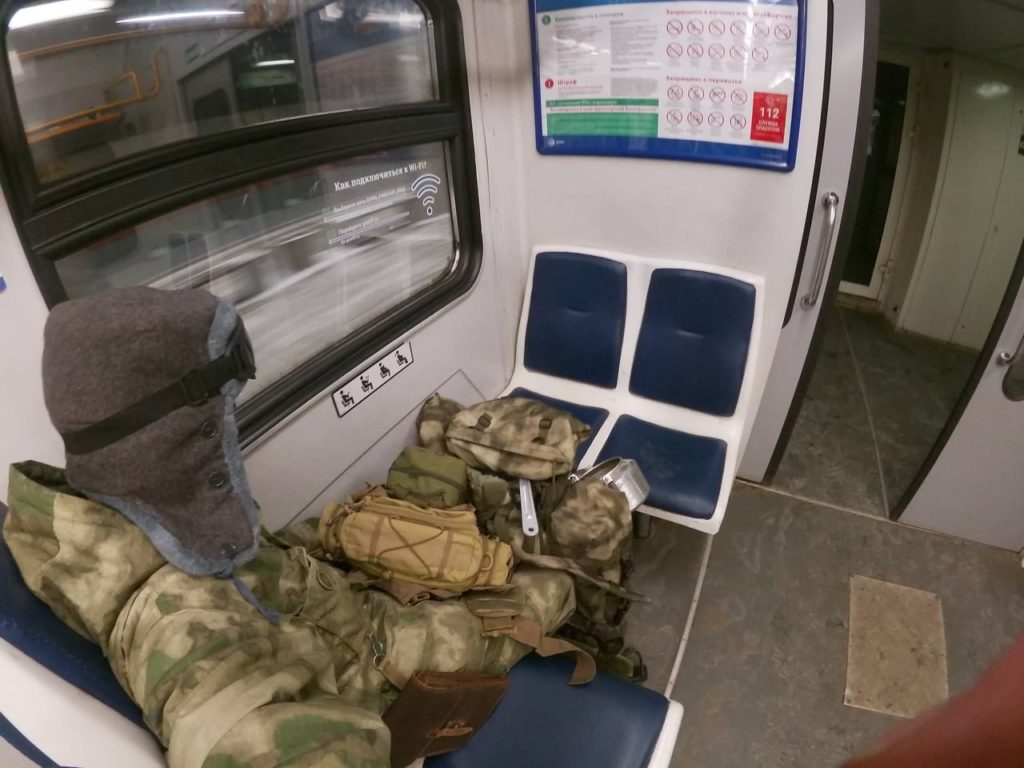
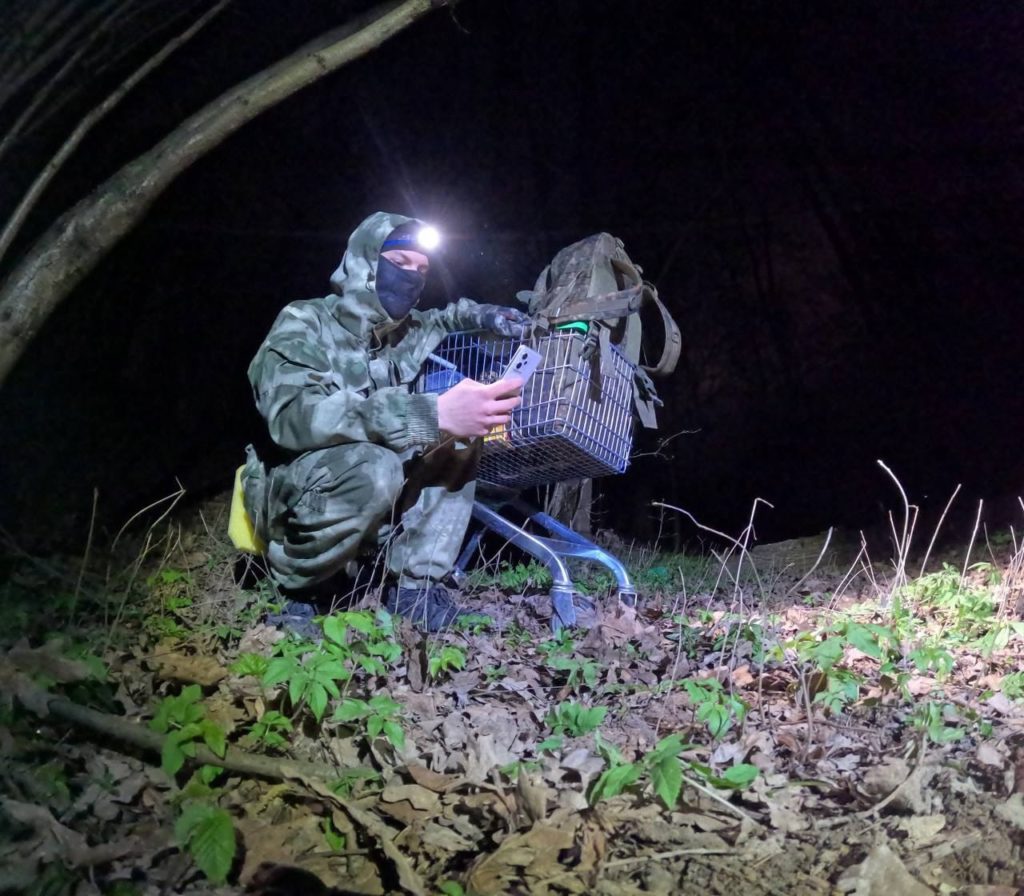
Trihard during his sorties, 2023
Trihard is one of the Russian survivors: this is the name of people who are preparing for a global disaster. Where and when it happens, they probably do not know, but they are sure that you need to prepare for it. They master autonomous survival skills, go on hikes, study and purchase weapons, learn to provide first aid and collect medicines. Some are lost in groups. Some go to the forests. And everyone has the feeling that with the outbreak of war in Ukraine, their expectations became even closer to reality.
The incentive to become strong
Five years ago, when Trihard was 13 years old, he was in a children's shelter: after his father’s death, his mother began to drink and soon died, leaving her son an orphan. According to Trihard, the example of his parents gave him "an incentive to become strong and lead a healthy lifestyle." It was then that he began to get involved in stalkerism and began, when the opportunity appeared, to arrange expeditions in abandoned buildings.
The shelter - a three -story building in the form of the letter "P" - was located in the south of Moscow. “There was an absolute prison,” Trihard recalls. - If I correctly tucked the bed or did not sleep at a quiet hour, punished. The food was disgusting, and I did the hires with bread. I had to take a lot of bread from the dining room quietly, a real holiday for me was sandwiches with butter. ” The children in the shelter, according to him, lived on the principle of “who is stronger is right”; For disobedience, the administration could send a pupil to a psychiatric hospital.
So the teenager learned to survive - and worked out valuable skills for the survivor. For example, everything valuable for life had to be hidden, and if it was about food, it was also necessary to figure out how to make it not spoiled. Trihard recalls that he put bread in a dark place under a towel.
Nine months later, when the legal status of a teenager cleared up, he was transferred to an orphanage (Trihard, like many former orphanages, calls him “Bator” - from the word “incubator”). He seemed to be Tyhahard simply paradise: there was much less cruelty and fed well - he didn’t even have to hide bread anymore. In addition, pupils were paid 400 rubles a month, and now Trihard learned to save money. He spent them, according to him, only on equipment for his campaigns in “abandans” and - sometimes - on “sacred” food - “Doshirak”.
Trihard studied tolerably, but without pleasure - and in general, according to him, he did exactly as much as it was necessary so that no one at the orphanage shouted at him: he would correctly refuel the bed, observe the quiet hour, tried not to receive bad assessments. According to him, the only book that he read at least with some pleasure is Harry Potter. Most of all, he loved to mess with technology. “Since childhood, it was interesting to know that inside the instruments and devices,” he explains. - My radio amateur experience began with the assembly of a computer from a written property [children's] center. Then began to collect homemade devices. And now I can calmly repair any household device. ”
When Trihard was 18 years old, he got out of the orphanage, moved to live with a friend (he leased his parental apartment) and entered the college, but devotes all his free time to the improvement of the survivor skills. He goes on campaigns, studies abandoned buildings, searches for “artifacts” and, of course, purchases equipment - according to him, scholarships and state payments, which he receives as an orphan, he has enough for this. There are already medical equipment in Trihard’s “alarming bag”, a gas mask with a turbine prototype (“forced air supply system”, which Trihard developed itself), drypikes, a soldering iron and other tools, a flashlight, and much more. At the moment, all this weighs about 50 kilograms together.
At some point, Trihard set a goal for himself: to create an autonomous base far from Moscow, where it will be possible to move when it begins. On February 24, 2022, plans for the distant future suddenly began to seem urgent. “The first thing I thought at that moment, [when the war with Ukraine began], was: one of the parties, perhaps NATO, will strike a nuclear blow,” recalls Traihard. “This will be the beginning of the Third World War.”
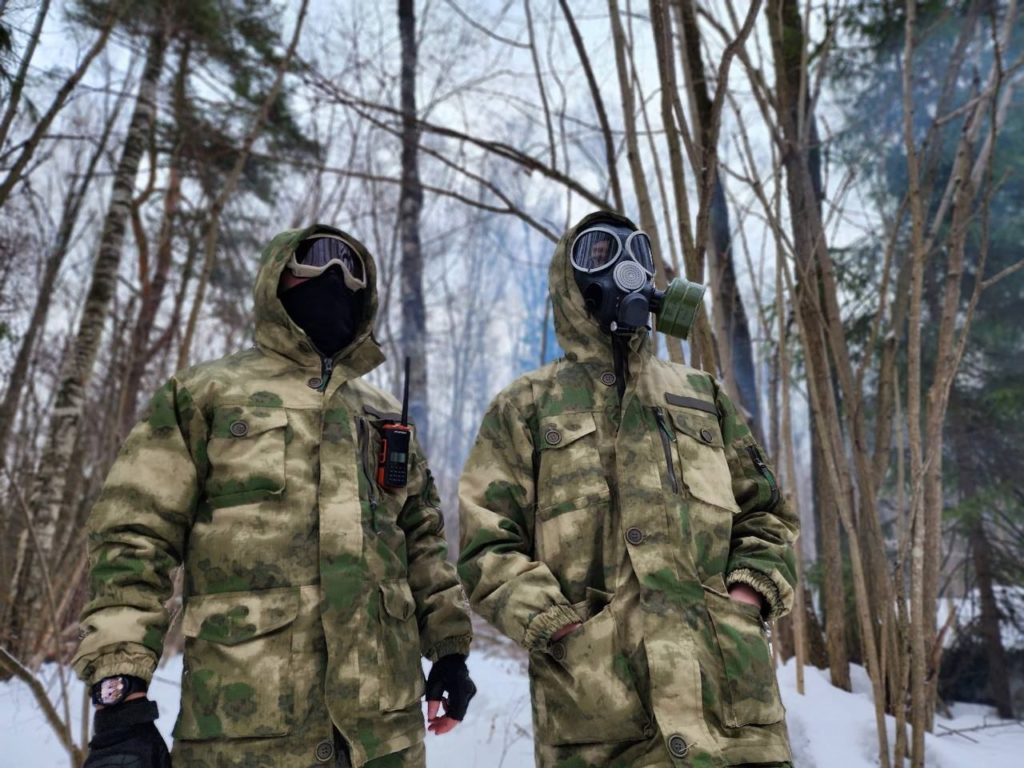
He urgently began to get the elements of equipment that are missing for survival in the case of a global cataclysm (for example, bought large solar batteries), prepare food supplies and look for like -minded people. And found. So Trihard found out what BP is: this abbreviation deciphens as a “big fucker” and has a wide circulation among Russian survivors - this is what they are actually prepared for.
Let them dig
It is generally accepted that survivors-sometimes they are also called, seducing with English, survivilists or preppers-first appeared in America in the 1960s: fearing a nuclear war, which seemed to be an inevitable consequence of conflicts between the United States and the USSR, many Americans began to store products and water, equip basements for bunkers, and so on. Gradually, the term “survivor” began to be applied to people who are preparing for a variety of extreme situations, and a whole industry has grown around them: there are separate survival instructors in the USA, special products and equipment are produced , there are thematic sites telling about everything that you need to know in order to survive in the case of an emergency situation - up so that they do not prepare the eggs so that they are not prepared for a long time spoiled. The National Geographic TV channel released in the 2010s four seasons of the Doomsday Preppers TV shows, in each issue of which specially hired consultants evaluated how well the heroes prepared for the apocalypse.
The coming to power of Donald Trump, and then the Pandemia of Coronavirus spurred the fears of the Americans. Wealthy businessmen began to buy land in New Zealand , as they believed that it was there that the probability of surviving in the case of a nuclear or climatic emergency is the highest. In the States itself, mass construction of bunkers began. The New Yorker magazine in 2017 wrote about the 15-story premium bunker in Kansas-it was built in a former missile mine, is able to withstand a nuclear blow, and there are enough reserves for 75 people for five years. In South Dakota there is a huge Vivos XPoint complex located on the former military base and positioning itself as the largest space for survival on Earth. The author of the book “Bunker: building for the end of the world”, the social geographer Bradley Garrett assesses the number of survivors around the world of 20 million people.
“Guarantees that nothing will happen tomorrow, zero. If you provide me to me, I will only be glad, ”says Alexander Prokhorov, author of the telegram channel about survival (the name and surname are changed at the request of the interlocutor) . He does not like the word "survivor": he lives his lifestyle - Prokhorov lives at the forest for many years - he calls a "pragmatic approach."
“If we look at the story, there are periods that end, and then new begins,” he argues. - And in these intervals between periods there are always problems. A strong and stable state ceases, and people become left to themselves. Remember the 1917 year, 1990s. I have no guarantees that the same thing will not happen tomorrow. Those in power have warehouses, bunkers, seed reserves, weapons, equipment and so on. And why then do we not have? "
The most famous bunker owner in Russia is President Vladimir Putin. A few years ago, the US Ministry of Defense talked about two bunkers for the president and the Russian elite: one of them is supposedly under the Kremlin, the other - not far from the main building of Moscow State University. The Pentagon believes that in the case of nuclear Armageddon, 10 thousand people will be able to hide in these bunkers. People who are not included in the close circle of the Kremlin, but have money, meanwhile they are erecting personal bunkers: as the “layout” said , there were more such customers from specialized construction companies at first during the pandemic, and then after February 24. The main clientele - people are “much higher than the middle class”, businessmen and senior officials; The cheapest bunker will cost 3.8 million rubles.
Those who do not have that kind of money, but there is a desire, build themselves. 50 kilometers from Krasnoyarsk, two inhabitants of the city built an individual bunker at a depth of four meters underground, an area of nine square meters; The rooms in the room should be enough for two for three months. “Let them dig,” Mikhail Yarin comment on this initiative to survive this initiative. “The bomb is fucked up by the bomb.
Yarin grew up in the village on the Far Eastern Range of Sikhote-Alin, was engaged in water tourism and mountaineering, served in intelligence, and was a military in the Arctic. Over time, he began to transfer the accumulated experience to those who needed it, and founded survival courses. Among the survivors, Yarin is a cult figure - and a recognized expert. In his opinion, the main thing in bunkers is the air, and it is tied to external communications. “Yes, there are many questions for this. And where to take the shit? - argues Yarin. - After all, a person gives an immense amount of waste. They need to be stored somewhere, dispose of, remove at least. There was a PSU - all the pumps stopped. After eight hours, oxygen will end, a person begins with hypoxia. This is uncontrolled behavior. People will begin to break into the street. There is no window, there is nothing to open, everything is underground, and the ventilation shafts all overwhelmed with fragments or fused. So let them build, for the sake of God, you will have to bury less. ”
Sometimes an emergency with amateur amateurs occur even before the PSU. A resident of Rostov-on-Don Vladimir Vorobyov, a hero of the plots of survivors at once in several Russian media, died in March 2022, when he expanded his home-made bunker.
People go to impetus
When Trihard became interested in whether there were other survivors in Moscow, he found a thematic chat in Telegram. Here people are not only from the capital, but from all over the country discuss the subtleties of survival: they share tips on equipment, discuss knives, backpacks, batteries and much more.
Bradley Garrett said that when collecting material for his book, his attention was attracted by the cultural and political diversity of survivors. “Oddly enough, it was one of the few modern communities that is really not party,” the researcher noted . According to his observations, instead of arguing about politics, the survivors discussed the tools and skills they needed.
In the chat where Trihard entered, the atmosphere was exactly the same. It consisted of people of different ages, of different social status (however, there were much more men among them); They almost did not discuss the war - and when they were talking about it, emoji and irony were used. For example, among the participants was a soldier of the Armed Forces of Ukraine, a former veterinarian from Poltava, who was mobilized as a medic. His interlocutors, the vast majority of whom are Russians, he spoke with irony about his equipment, about how they are fed, and about plans after demobilization: “I think, after I quit, to sign up for the gym. And intensely on cardio. For I killed my heart with a coffee. ” When someone reproached him that in the army he works instead of preparing for the PSU, the Ukrainian replied: “Me? Working? I'm trying not to die. "
However, hobbies among survivors are still specific-and in their communities you can find the most amazing theories of conspiracies , discussions of “hidden slavery” under capitalism, as well as frank anti-Semitism . One way or another, these people are united, first of all, not politics and ideology, but ideas about the future: as the study of psychologists from the USA, Germany and the Netherlands showed, most often they coincide in the fact that the end of the world is inevitable, it will lead to a limitation of resources - and people, struggling for them, will compete for survival. According to the observations of the correspondent of “cold”, Russian survivors are most often preparing for a nuclear strike or military invasion, and among specific threats they are especially distinguished by looters who, when social infrastructure ceases to exist, will unite gangs and attack those who have water, food, clothes and shelter.
The way out is simple: to leave the cities. Semen Ilyin (the name and surname are changed at the request of the interlocutor) , he is also the survivor Sam, or DJ, explains that the main danger can be avoided - people. Ilyin himself, in the case of BP, is going to go to the country, and Trihard - to the abandoned near Moscow, who looked into one of his expeditions. “Survival in the city is very problematic,” agrees Mikhail Yarin. -People regularly go to the impetus and pour a kettle from under the crane. As soon as the infrastructure stops, the push turns into a latrine smelly place and everything begins to go on the principle of a snow coma. What will you do in the apartment if you do not have electricity, no water and your sewage system does not work? ”
You also need to adapt to life outside the city. «Я как человек, который живет в лесу — реально в дачном поселке, в деревянном доме, в лесу, — могу сказать, что каждый день здесь нужно что-то делать», — объясняет Ярин. Нужно, чтобы рядом, в пешей досягаемости, был источник воды; нужно заранее запастись продуктами: «Добывать еду охотой и рыболовством — это ересь городская, потому что так даже в тайге люди не живут. Они всегда создают себе запасы». Продукты нужно где-то хранить — и это помещение должно быть защищено от осадков и грызунов. Если человек приобретает на случай БП дом в деревне — значит, ему нужно стать своим в этом сообществе: «У них любая бабка, сидящая на крыльце, превращается в наблюдателя, — рассказывает Ярин, ссылаясь на собственный опыт. — И она скажет: “Сашок, там какой-то мужик ходит, волосатый, на опушке, возле урочища”. И все, Сашок берет трех мужиков с собакой, и пиздец этому мужику».
В общем, выживание — это тяжелый труд. «Все эти московские выпендрежи в духе “я выживальщик, я сделал схрон, я буду грабить караваны” — ну, смешно, на самом деле», — заключает Ярин. Тем, кто к апокалипсису не готовился, он советует, когда начнется, двигаться к любой ближайшей военной части.
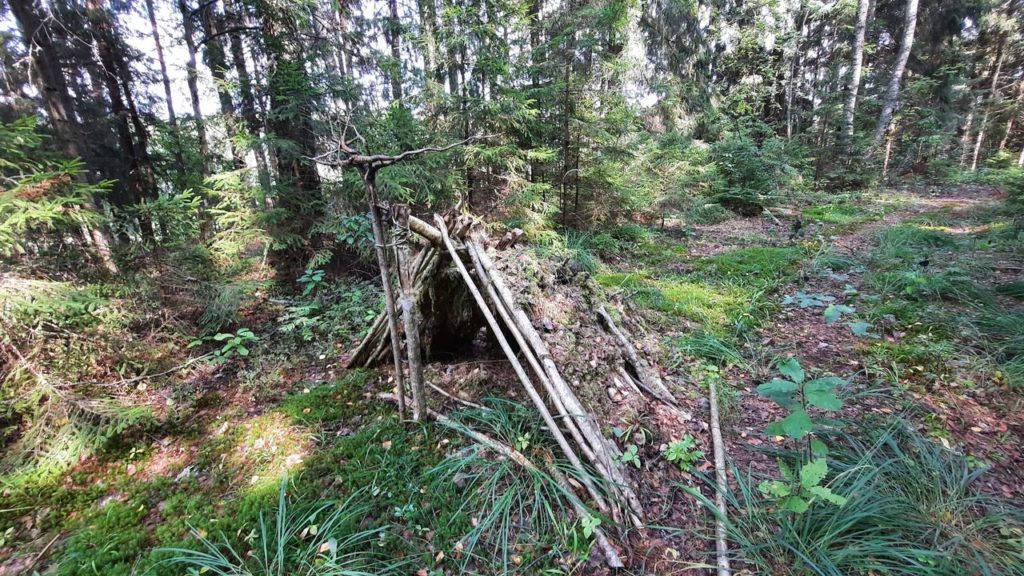
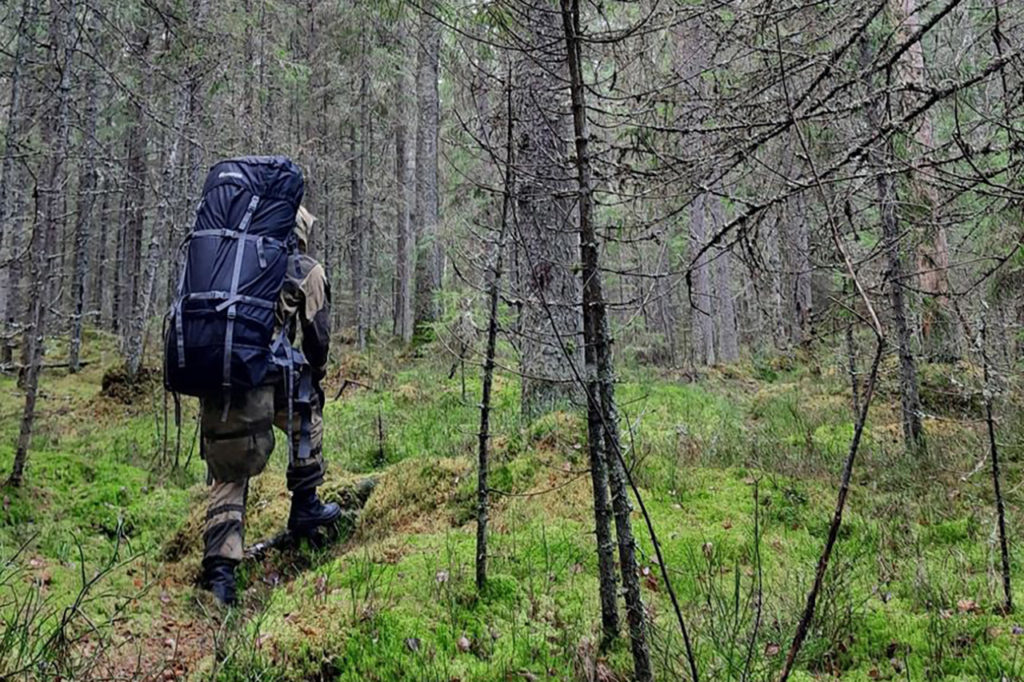
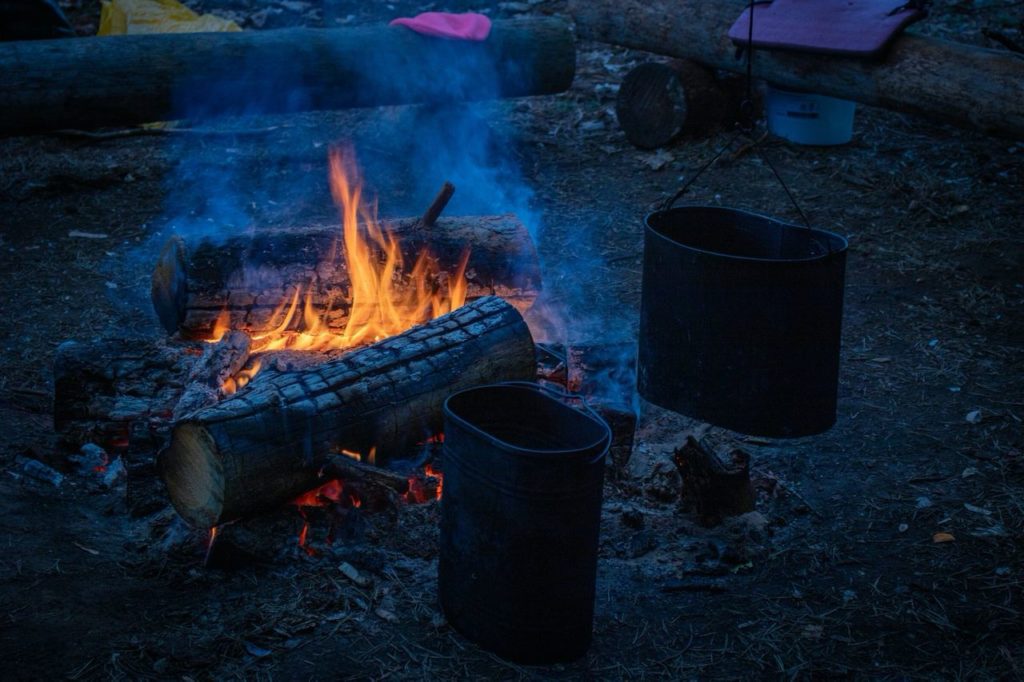
Семен Ильин (выживальщик Сэм) и его лесные экспедиции
Сам Ярин включил чрезвычайный сценарий, когда московские власти ввели жесткий карантин весной 2020 года. Составил план действий, несколько часов сидел за столом за картой Москвы и Московской области — расставлял точки, чтобы обойти блокпосты и добраться до дома в деревне. «У меня маршрут был 300 километров, потому что мне нужно было обойти все крупные перекрестки», — рассказывает он.
Своим подмосковным домом он доволен и намеревается остаться в нем и в случае БП: «Продукты я себе найду. Я знаю, в каком доме коза дает молоко, где картошку воровать с полей. С хлебом вопрос? Ну, надо муки купить, складировать, чтоб лепешек себе напечь».
Why are you here?
Автор телеграм-канала о выживании Александр Прохоров соглашается поговорить с корреспондентом «Холода» только после того, как тот пройдет испытание: нужно узнать человека на фотографии, которую Прохоров пришлет в чат. Фотография оказывается портретом князя Петра Кропоткина, одного из первых теоретиков анархо-коммунизма. Испытание пройдено. Пока мы разговариваем, слышно, как у Прохорова под ногами хрустят сухие ветки.
«Я занимался восточными единоборствами. Выяснилось, что за этим стоит большой пласт философии и культуры. Я стал копать, — рассказывает Прохоров о своем пути в выживальщики. — После философии и культуры начал изучать религии и даже секты. Дошел до язычества, суфизма. Мне стали интересны два основных вопроса, как в той песне из фильма про остров ненужных людей: “Кто ты здесь?”, “Зачем ты здесь?” Затем появились вопросы, кто [нами] управляет, зачем и как. Большой пласт информации [я изучил]. Затем я стал наблюдать, что в мире совпадает с тем, что я прочитал, и что не совпадает. Появились выводы».
Выводы эти, как объясняет Прохоров, заключаются в том, что «многие люди являются идиотами, потому что не участвуют в жизни своего мегаполиса или государства. А раз они не участвуют, соответственно, они не знают, что будет завтра и что произойдет». Окончательно он разочаровался в людях, когда попал на войну — на какую именно, Прохоров отвечать отказывается, но категорически отрицает, что речь идет о Донбассе. Детали своей жизни он вообще рассказывает неохотно — по косвенным проговоркам можно предположить, что одно время он служил во французском Иностранном легионе, но в ответ на прямой вопрос Прохоров это отрицает.
«Я посмотрел, как один общий народ в гражданской войне истребляет друг друга и как после этого развивается страна, — продолжает Прохоров. — В любой стране есть система управления, которая построена на своих принципах. Людей в ней обманывают на уровне психологии. Человек не умеет управлять собой. Если нужно задвинуть какую-то информацию кому-то, то для начала берется 20 процентов правды и 80 процентов неправды. Этими 20 процентами они убивают критику, анализ, и остальные 80 процентов заходят на автомате. И человек меняет свое отношение. Его перепрошивают, перепрограммируют, и он делает то, что нужно».
Люди, по словам Прохорова, «думают, что играют друг с другом, но [на самом деле] играют в чужую игру». Именно поэтому он сам решил из этой игры выйти. Сейчас, как он утверждает, государство не знает о нем практически ничего — и Прохоров хочет, чтобы так было и дальше. У него есть важное дело: он создает базу для других выживальщиков, которая понадобится, когда случится БП. «Про меня никто не знает, — рассказывает он. — Про запасы и убежище тоже. Я вышел в лес, и меня никто больше не видел».
Устроено убежище Прохорова так. Те, кто доверился ему, могут привозить на хранение все, что им необходимо для выживания: одежду, продукты, снаряжение, оружие. Есть и жесткие диски с информацией: «Все, до чего смог дотянуться. Медицина, технологии, сельское хозяйство. Даже художественная литература. Потому что при больших БП почитать будет нечего». Когда все случится, «задача [других выживальщиков] — схватить рюкзак с запасом, еду и необходимые вещи и добраться до меня. Там все их ждет». Впрочем, пока конец света не произошел, забрать свое имущество у Прохорова его товарищи могут в любой момент.
«Одно условие: он [человек, оставивший в шелтере свои вещи] должен быть адекватным, — предупреждает Прохоров. — Нам не нужны люди в тяжелой ситуации без мозгов, криминальные, нарики, алики, амбициозные и прочие абьюзеры и газлайтеры».
Прохоров не единственный человек, который строит подобное убежище. Другой публично известный проект такого рода сделал выживальщик Борис Волгаев: его лагерь «Воронье гнездо» находится в городе Петушки во Владимирской области. Однако Волгаев показывал свою базу журналистам, и другие выживальщики этого не одобрили. «Про эту базу уже знают все, — объясняет Семен Ильин (DJ). — Если вы делаете схрон, то про него не должны знать даже животные. Иначе у вас не будет схрона».
Те, кто оставляет вещи у Прохорова, платят за простой — это называется «демередж». Платить можно не только деньгами, но и продуктами, лекарствами или другими необходимыми выживальщикам вещами: каждый, как это определяет сам Прохоров, вносит свою «десятину» в общий котел.
— Как, например, у условных свидетелей Иеговы? У них же тоже есть пожертвования на общину.
— Типа. Но только они берут себе на хедж-фонды и разработку бактериологического и ядерного оружия на наши деньги, помимо печатной продукции на 157 миллионов долларов в год, — внезапно отвечает Прохоров. — А здесь все свое берем себе. И для себя. Мы круче них.
В разговоре с «Холодом» Прохоров вообще то и дело съезжает на объяснение мира через конспирологические теории: упоминает Ротшильдов, советует изучать труды Андрея Фурсова, автора книги «Мировая борьба. Англосаксы против планеты». «Знаете, почему люди не любят факты? — спрашивает он и сам отвечает: — Им приходится себя перестраивать, а это больно, и думать еще надо».
При всей вовлеченности в сообщество выживальщиков сам Прохоров на вопрос, ждет ли он наступления БП, отвечает так: «Я, может, и идиот, но не настолько». Однако конец света не единственный сценарий, при котором навыки выживальщиков могут пригодиться. Семен Ильин готов применить их, например, в случае объявления всеобщей мобилизации. «Если наша страна решит перейти на военные рельсы, то есть все общество будет направлено на войну, я не буду готов отправиться в зону боевых действий, — говорит он. — Люди — это опасность, а государство — это и есть люди».
Крыша в Подольске
В начале июня 2023 года Трайхард запланировал очередную вылазку — в заброшенный квартал в Подольске. С собой он взял товарища по прозвищу Стив: хотелось отработать навыки группового выживания. Снаряжения было столько, что его пришлось грузить в тележку; разбить базу решили на крыше расселенного 18-этажного дома.
Прибыв на место, друзья поняли, что затащить наверх всю тележку разом будет проблематично. Пришлось таскать вещи в несколько заходов — это заняло больше часа. Оказавшись на крыше, выживальщики развернули электростанцию: солнечные панели, контроллер, к которому все подключено, и батарея, которая днем заряжается, а ночью выполняет роль аккумулятора. Все это купил Трайхард — по его словам, он тратит на оборудование почти все свои деньги, оставляя совсем немного на еду и бытовые нужды.
Потом Трайхрад принес на крышу дверь, которую нашел на 17-м этаже, разделал ее на части, просверлил отверстия, закрутил дюбель и приделал ножки из газоблоков канализационной трубы — получился столик. Из дверной рамы приятели соорудили костер, чтобы погреться. (Значительную часть процесса они снимали на видео и показывали корреспонденту «Холода» в прямом эфире.)
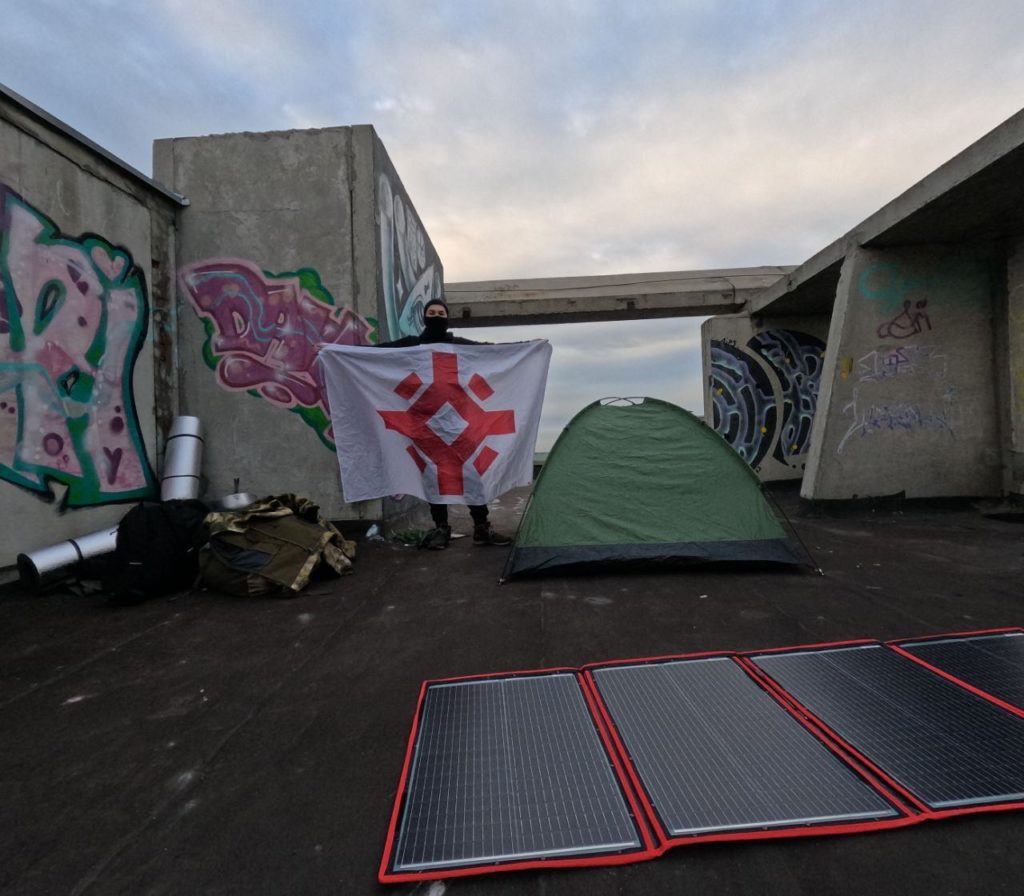
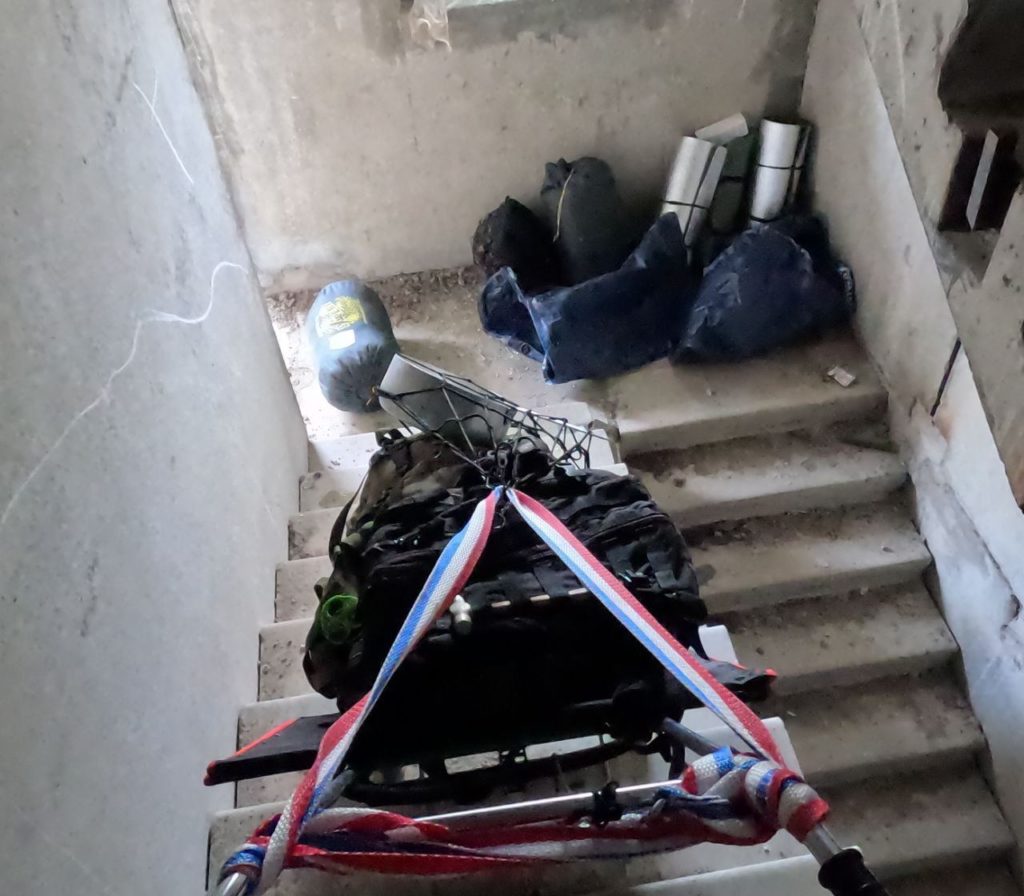
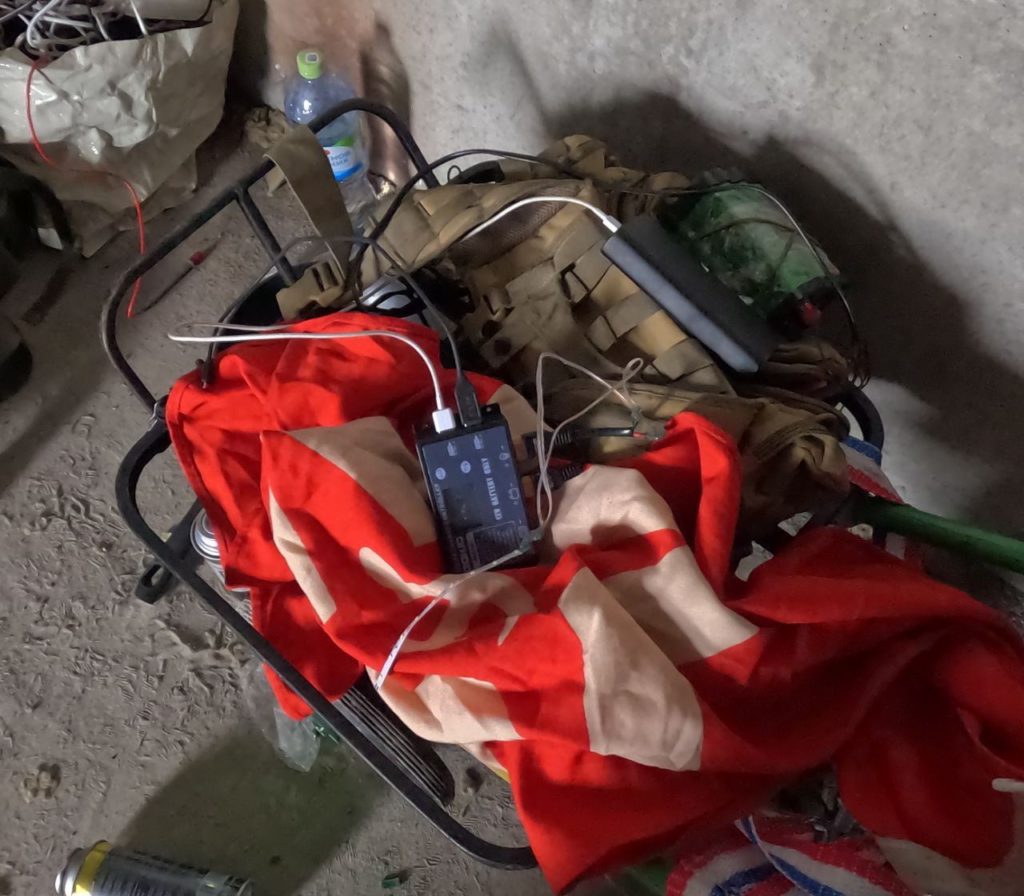
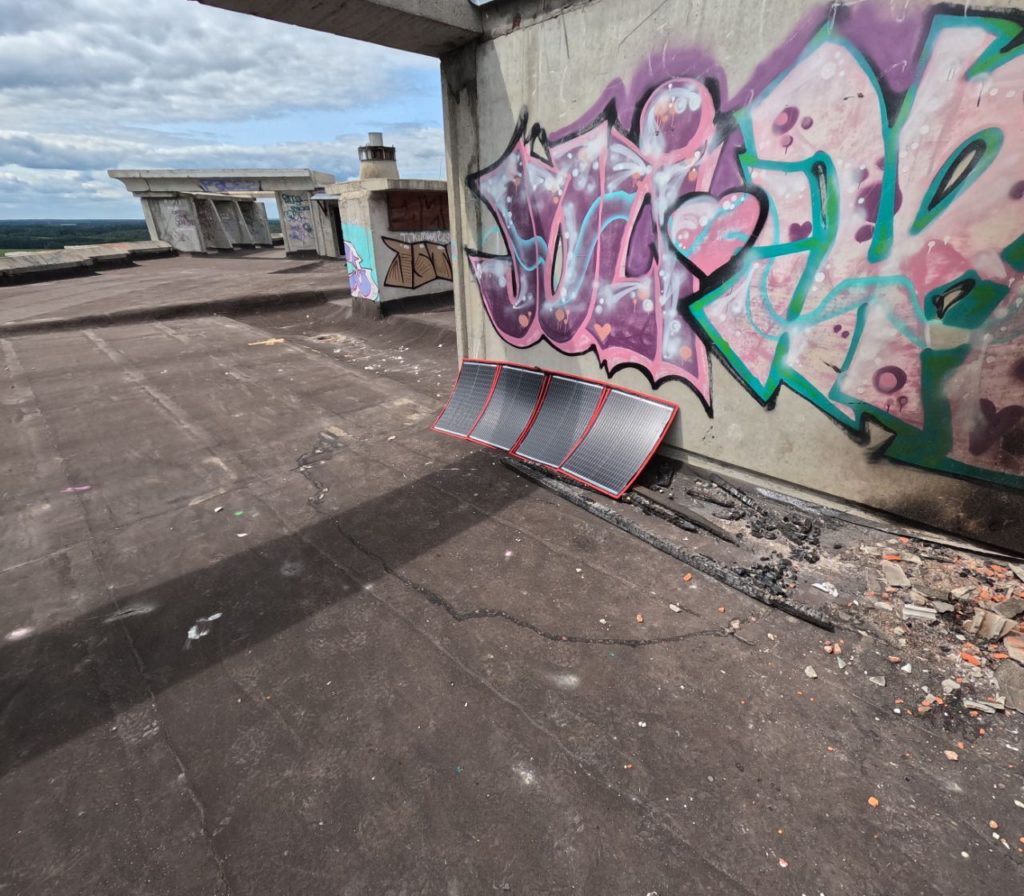
База Трайхарда и Стива на крыше заброшенного дома в Подольске, июнь 2023 года
Планировали также сделать примитивную сигнализацию — рассыпать стекло или вертикально поставить двери: их нельзя обойти, не передвинув, а это дает громкий звук. Но в итоге Трайхард и Стив отказались от этой идеи, сочтя, что угроза нежданных гостей невелика. Ночь прошла спокойно.
Утром приятели развернули солнечные батареи, позавтракали и взяли бинокли, чтобы осмотреться. В какой-то момент Трайхард заметил чужаков. Быстро выяснилось, что по территории просто гуляет влюбленная пара, и приятели решили их «припугнуть». "Stand! Security!" — закричали они, размахивая руками. Парень и девушка вскинули головы вверх, а затем дали деру. Расхохотавшись, приятели отошли от парапета и направились к базе.
— Давай серьезно. На случай мобилизации уже есть план действий? — спрашиваю у Трайхарда, пока он бредет к палаткам.
— С большой долей вероятности уеду в другую страну, — спокойно говорит он.
— А что насчет БП? Не хотелось бы стать свидетелем?
— С какой-то стороны, да, ибо общество очень сильно деградировало последние десятилетия. С приходом денег и смартфонов люди совсем забыли, как делать простейшие вещи, и привыкли, что все должны делать за них, — серьезно рассуждает Трайхард. — А с другой стороны, c приходом БП мы откатимся в прошлый век и жизнь станет суровой и ужасной.
— То есть все-таки лучше, чтобы обошлось без тотальной катастрофы?
Трайхард задумчиво смотрит на солнечные батареи, а потом коротко отвечает: «Да».