
Translated material
The share of the president
In Georgia, media manager Nick Gvaray, whose liberation was pardoned in Georgia, has been sought for a year by the West and the Georgian opposition
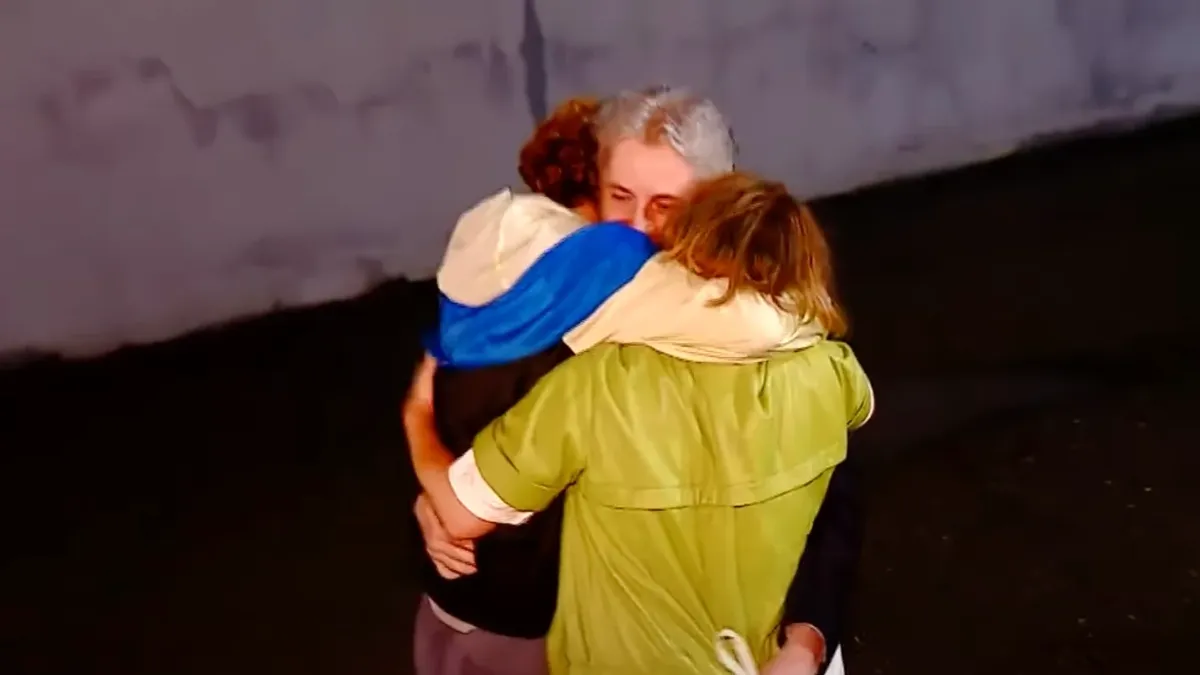
Meeting Nicky Gvaray with his family immediately after liberation. Photo: screen video
President Salome Zurabishvili made a serious attempt to preserve the European perspective for Georgia: she signed a decree on the pardon of the media manager of the opposition television company Mtavari Nicky Gvaray. Now Georgia has completed another item in the list of recommendations of the European Union, the President of the European Council Charles Michelle sends the government to the government, and the observers are wondering how the meeting of Prime Minister Irakli Garibashvili with German Chancellor Olaf Sholtsa affected the situation. At the same time, the main question remains open: whether Salome Zurabishvili will be decided to have a pardon of “prisoner number one” - Mikhail Saakashvili.
Salome Zurabishvili finally took a step that had been waiting for the opposition for a year and two months from her: Nika Gvaray left the prison last night. Despite the later time, dozens of colleagues from the opposition media came to the Gate of the Prison in Rustavi, to meet the general of the main Georgian opposition television company Mtavari, 30 km from Tbilisi. There were tears of joy among journalists and family members, numerous embrace and - an unthinkable thing - words of gratitude to the president, as well as recognition of her merits. Zurabishvili in recent months has so often hinted at the pardon of Guaria, which managed to disappoint the supporters of the opposition by the lack of result.
Everything happened at the president’s emergency briefing, which took place in Tbilisi just two hours after the European Union officials expressed dissatisfaction with the progress of Georgia to fulfill the 12 recommendations of the European Commission. And this means that Georgia may not receive the status of a country - a candidate in the EU by the end of the year and finally get off the European distance, at which a year ago it was ahead of Ukraine and Moldova.
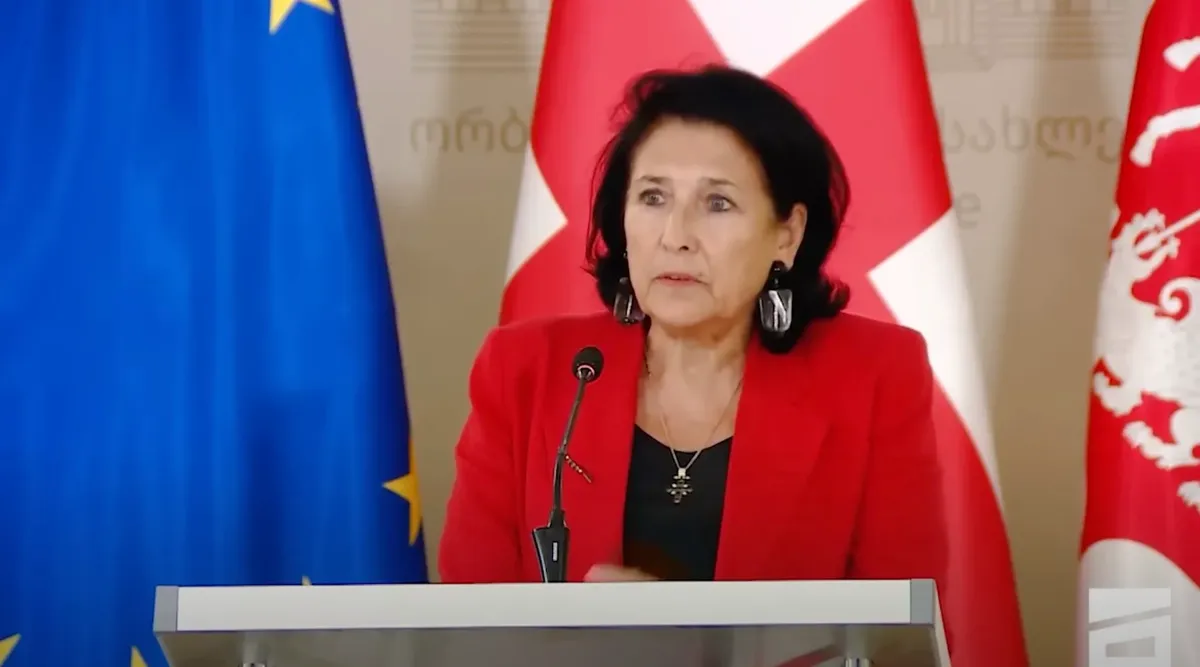
“I do not want to make my decision to explain,” Zurabishvili said at a briefing.
The president, whose powers, according to the Georgian Constitution, look mostly symbolic, recalled that pardon is its “discretional right”, that is, inalienable and not requiring arguments. Zurabishvili also warned the authorities that she would not respond to criticism in connection with his decision, since it "is not subject to someone else's pressure, advice, recommendations or any other type of threats."
The only thing that the president explained: the decision to pardon was made after the Supreme Court refused to consider the complaint of Gvaray’s lawyers, that is, all legal opportunities in his homeland were exhausted, and he was going to file a lawsuit in the Strasbourg court.
Zurabishvili made her decision against the backdrop of an informal meeting of the European Council in Stockholm, where they considered the progress of Georgia, Ukraine and Moldova on the way to the EU. Unlike two other members of the Associated Trio, Kyiv and Chisinau, Messages addressed to Tbilisi negative.
Two hours before the briefing of the President of Georgia, the European Commissioner for European Neighborhood Policy and Expansion Oliver Varhei said that Georgia had not reached “no progress” in the situation with the pluralism of the media, which was recommended to improve the European Commission. “To fulfill this item,
Georgia must amend the law “On Broadcasting”, bring it into line with the submission of the EU, and ensure the safety of journalists. The security and freedom of journalists and owners of media organizations should also grow ",
- said Varhei.
The hint was transparent: despite the presence of several effective opposition television channels and dozens of other critical media in Georgia, the Gvaray case clearly testified that the media manager in Georgia could be in prison if the government criticizes.
"Without convincing evidence"
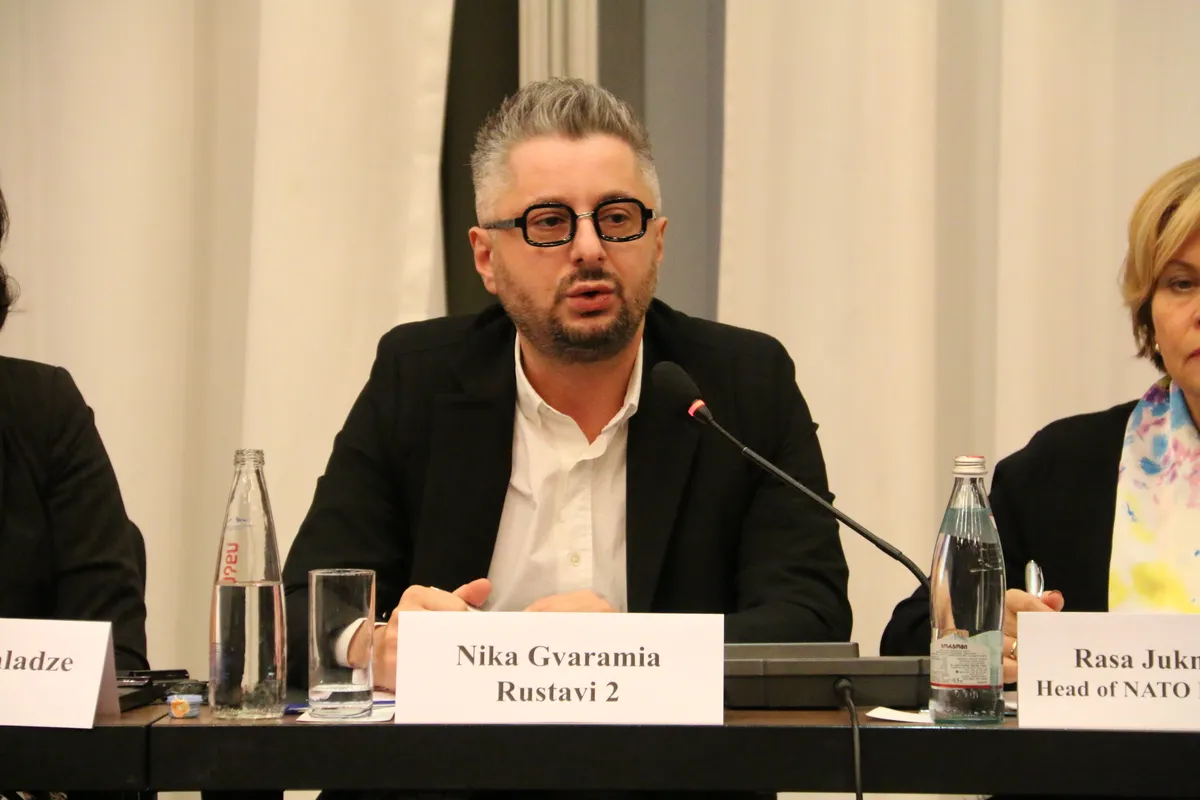
46-year-old Nika Gvaray, a comrade-in-arms and former member of the Presidential Government Mikhail Saakashvili, after a change of power in 2012 became one of the most high-profile critics of the Government of the “Georgian Dream”.
In 2019, Gvaray and the most of the journalists were fired from the influential opposition television company Rustavi 2. This happened after one of the former owners of the television company, loyal to the Georgian Dream, businessman Kibar Halvashi managed to restore his right to own the company through the Strasbourg Court. After the change of management, Rustavi 2 immediately lost the status of the flagship of the Georgian opposition media.
Gvaray did not despair and opened a new television company - Mtarava, translating his team of journalists there. However, in May 2022, the prosecutor's office had new claims to Guaria. The Tbilisi City Court saw in his acts the excess of directorial powers: his family members-his wife and children-drove in the Porsche car, once received in exchange for advertising on Rustavi 2. As a result, the court appreciated this as damage to the interests of a private television company. Gvaray was to atone in prison, the deadline was determined in three and a half years - this is an extreme measure under an administrative article.
The Office of the People’s Defender of Georgia, evaluating the verdict against Gvaray, noted that "even if the decision made by the director of the enterprise causes damage, this not only does not imply criminal liability, but even a corporate legal in exceptional cases."
The arrest of Guaria condemned the European Parliament. The Euro -deputies noted that the “unreasonable” sentence “poses a serious threat to the European future Georgia, which requires commitment to democratic values, including the freedom of the media and the rule of law”.
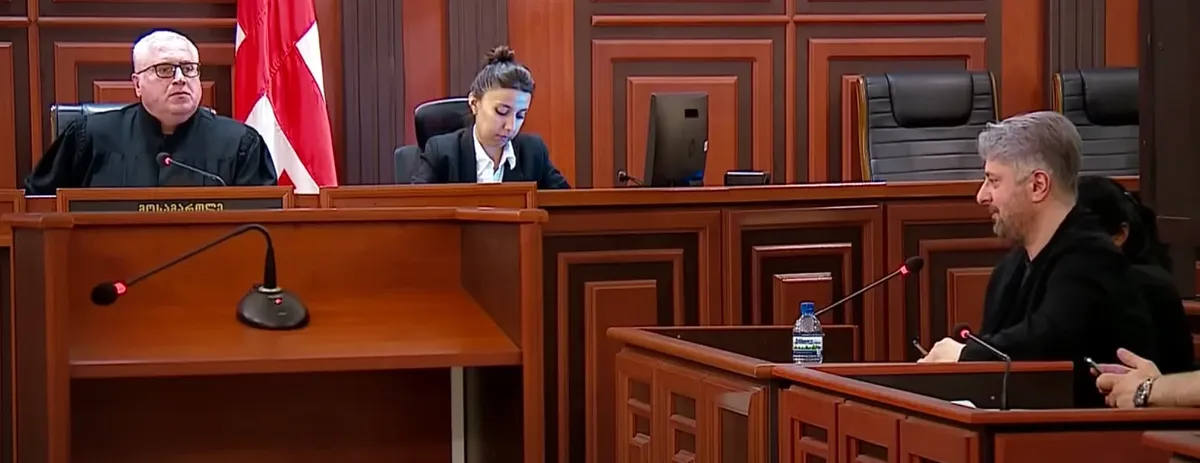
In their opinion, the verdict sentenced by the court “without convincing evidence” is “a worsening situation with the rule of law in Georgia”.
A number of Georgian and international organizations called the arrest and sentence regarding Hvaray unjust, and he himself - political prisoners.
“The arrest of Guariya brings Georgia to the list of repressive, authoritarian states of post -Soviet Eurasia and causes damage to your country's reputation,” such arguments used 11 international human rights organizations in their letter urging the president to pardon Guariya.
In the same ambassador, the Committee for the Protection of Journalists (CPJ) reported that since 1992 it has been a list of prisoners of journalists and until recently there has not been a single name from Georgia - Guaria was the first .
Sholets factor
The European Commissioner Warhei during a speech in Stockholm dismantled all 12 points of recommendations, the implementation of which Europeans expect from Georgia. So far, only three points are considered from the list: it is gender equality and the fight against crimes against women, the government of the decisions of the Strasbourg Court of Human Rights, as well as the transparent appointment of a folk defender.
At the meeting in Stockholm, it was reported that at seven points, Georgia has a “certain progress”, that is, the conditions were fulfilled up to 50%. This is the elimination of political polarization; the inclusion of civil society in the decision -making process at all levels, a constructive dialogue with a civil society and conducting regular and transparent consultations; The full functioning of state institutions and the improvement of electoral legislation, taking into account the recommendations of the OSCE, the BDIPC and the Venice Commission, the strengthening of the anti -corruption agency, strengthen the support of vulnerable groups, including LGBT. Also, “halfway” for the goal is the preparation of a comprehensive and effective judicial reform, including the Supreme Council of Justice.
Another question in which “limited progress” was noted (that is, work in this direction is at the initial stage) is the “law on deoligarchization”, which Europeans also persistently recommend to adopt.
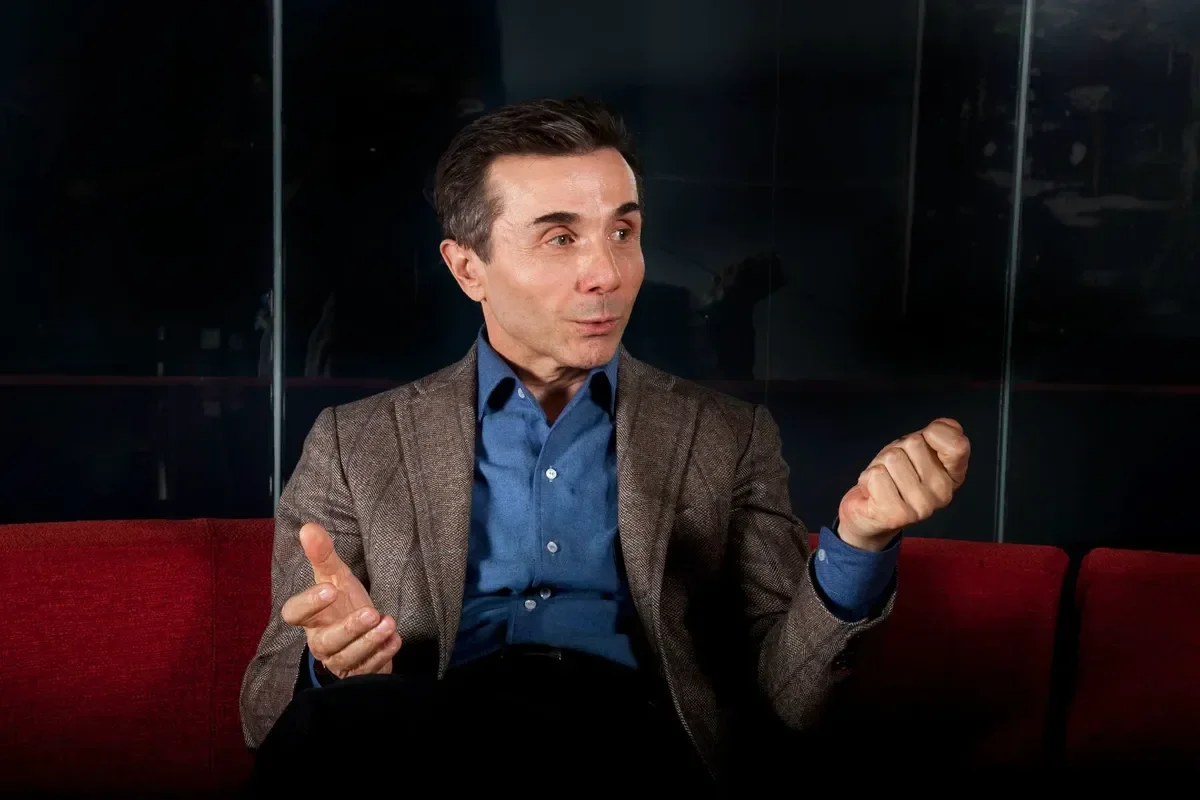
The problem is that in the European Parliament it is believed that the founder of the Georgian Dream Bidzin Ivanishvili is an oligarch who has governing the country from behind the curtains. But in the Georgian Dream itself, they insist that Ivanishvili is a philanthropist who had long left politics. Therefore, the authors of the law on deoligarchization from the Georgian Dream were going to use it exclusively against those who finance opposition television companies in the country.
However, the day before, clearly under the pressure of Europe, the Georgian parliament refused to adopt a controversial law in the third hearing. Observers suggest that European leaders talked to the bill after the Prime Minister of Georgia.
Another important detail: the Georgian prime minister recently stated that the Georgian Dream is not going to return to the law on “foreign agents”, an attempt to accept which led to mass protests in Tbilisi.
“This question, by the way, was executed among our European and American friends. I clearly confirmed to them on behalf of our team our position that the Georgian Dream is not going to return to the law on “foreign agents”. This question is closed, and we will no longer return to it, ”said Garibashvili.
Many experts associate the clarity that appeared in the position of Garibashvili on his sudden visit to Berlin on June 9 at the invitation of German Chancellor Olaf Sholts. The meeting went behind closed doors.
The Chancellor apparatus distributed an application in which he outlined the topics of the conversation: they concerned the domestic and foreign policy of Georgia. In Berlin, it was noted that the government, if he wants to get the status of an EU candidate, should carry out reforms and take specific steps literally in the coming weeks. Berlin promised his support only if the Georgian authorities take into account the calls of the Chancellor.
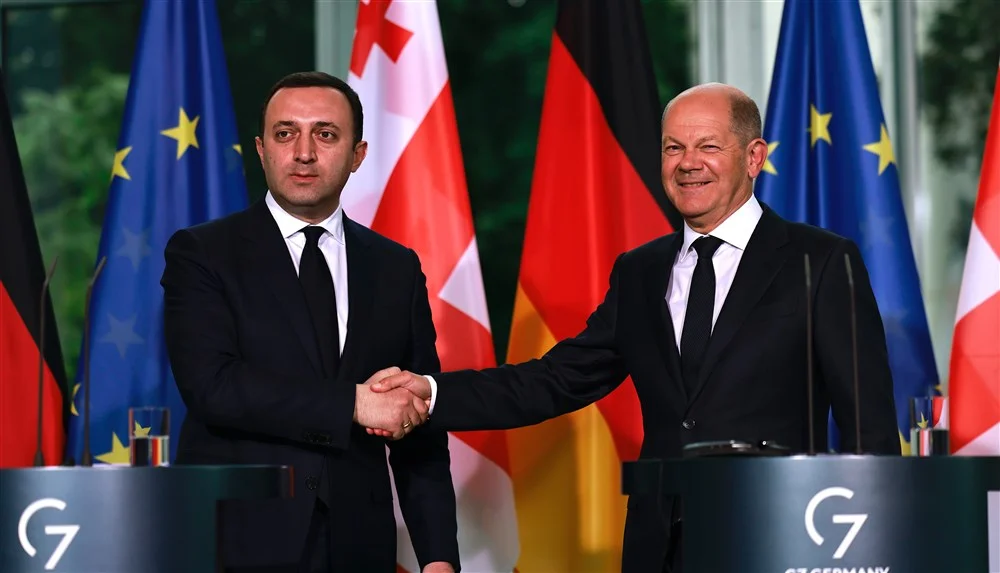
Scholz became the first head of Germany, who publicly stated that he would support the EU East, since the European Union, consisting of 27, 30 or 36 countries with more than 500 million citizens, "will be able to better protect itself from a global point of view."
Such a change in the position of Germany, of course, is connected with the war in Ukraine.
“Today, when Russia is trying to forcibly change the boundaries between freedom and autocracy, our voice of the peoples of Europe should be heard throughout Europe and beyond: from the Mediterranean to the North Seas, from Lisbon to Tbilisi. Together we must lay the foundation of free, safe and democratic Europe, ”Scholz said in October 2022 at the International Congress of the Party of European Socialists (Dog) in Berlin.
This time, penetrating speech in defense of Georgians, striving in Europe, in Stockholm was said by the Minister of European Affairs of Germany Anna Lurmann. According to recent surveys, about 90% of Georgia citizens want to join the EU.
Lurmann noted that "Georgian citizens are asking the government to carry out reforms not only for the sake of membership in the European Union, but also for the country to become more free."
“I saw many Georgians who stated that they really want the country to become a member of the EU. Unfortunately, as we have already heard from the commission, at present the government does not live up to these expectations. It is clear that Georgian citizens are asking the government to carry out these reforms not only for EU membership, but also in order for Georgia to become a more free country, a country with the lounger rule of the law ... We heard from the commission that when it comes to the rule of law and judicial reforms in Georgia, many issues arise. There was also a discussion about how the government refers to civil society, and we will receive more detailed information later. We want to see Georgians in the European Union, ”the minister said.
Michel's greetings
It seems that the decision of the President of Georgia to have mercy on Hvaray was agreed with Brussels: they reacted very quickly to the Zurabishvili briefing there.
The President of the European Council Charles Michelle welcomed this decision of the President of Georgia and called the pardon of Nicky Gvaray "an important step towards depolarization in Georgia."
Michelle also reacted approvingly to Garibashvili’s statement that Georgia would not strive to adopt a law on foreign influence.
He called the Parliament of Georgia a “positive step” not to adopt the law on deoligarchization in the third reading. “A systematic approach is needed in accordance with the recommendations of the Venice Commission,” Michel recalled.
Despite criticism in Stockholm, the press release of the European Council was generally optimistic: “The decision of the European Council to provide Georgia to the European perspective last year creates a positive moment for reforms to move along the European path. The future of Georgia is in the EU. ”
The intrigue around Saakashvili
Recently, since Saloma Zurabishvili began to criticize the government for too inaudible support for Ukraine, then for excessive criticism of the West and rapprochement with Moscow, disputes in Georgian society are not subsided by whether the president’s steps with Bidzina Ivanishvili are agreed. It is possible that Ivanishvili struggles seeking to preserve the balance and not quarrel with either the West or with Russia, and therefore forms different groups from the politicians created and supported by him.
Exactly a year ago, in June 2022, Salome Zurabishvili said that she was not going to change her position on the pardon of the Third President Mikhail Saakashvili. The position was in the words “no and never” said in October 2021, immediately after Saakashvili appeared in Georgia eight years after leaving and was arrested.
Saakashvili was the president of Georgia in 2004-2013. It was he who invited to become Minister of Foreign Affairs in his government Saloma Zurabishvili - a diplomat from France, whose ancestors were Georgian emigrants of the period of the first republic. However, Zurabishvili's career in the government did not get over then, and she went to the opposition. In 2012, the Saakashvili party lost the election, he himself remained president for another year, after which he left the country. The Government of the “Georgian Dream” opened several criminal cases against Saakashvili, for two of them he was sentenced to six years in prison. Saakashvili, who is considered the most pro -Western president of Georgia and at which fundamental reforms were carried out, became a citizen of Ukraine and was not even awarded the right to maintain his Georgian citizenship.
Both of the next presidents of Georgia, despite the fact that Ivanishvili were proteges and received votes in the elections thanks to the support of the Georgian Dream, quickly switched to criticism of the ruling party.
So, the fourth President Georgy Margvelashvili finished his presidential term in the status of an open oppositionist, and Salome Zurabishvili for his criticism of the government is constantly attacked by the Georgian Dream.
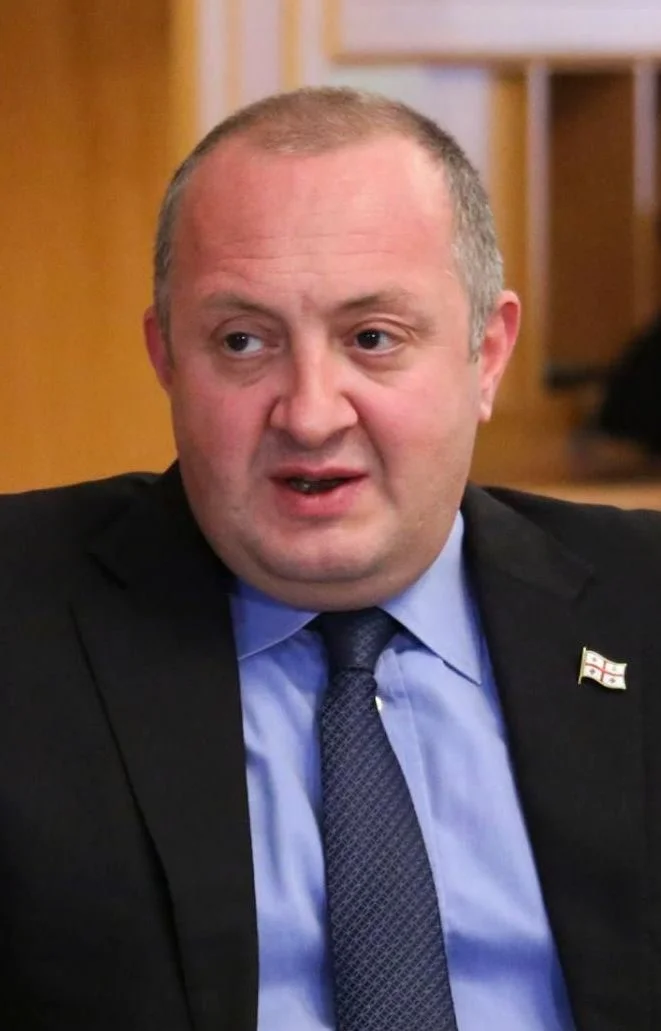
Nevertheless, in political sidelines there is an opinion that Georgia’s entry into the EU is so important for the 71-year-old Salome Zurabishvili, which is also concerned with its own European image, that it can have mercy on Saakashvili if the issue of the European prospect for the country really depends on this.
At least commenting on such probability six months ago, Zurabishvili mysteriously said that "the answer to the main question will be given when the question is asked."
As for the hero of the day, Nicky of Guaria himself, he urged Zurabishvili to pardon the third president. Gvarayu thanked the president for an amnesty, and also apologized for criticizing her, including in obscene expressions, in his copyright programs on the Mtaravar television channel.
“In those videos that, as I suspect, will now use it against her, I do not like myself, I behaved vile in relation to a woman. I regret it and apologize to her, but I can’t also say that she should not persist in her mistake as the president of this country, and she should have mercy, or rather, release Mikhail Saakashvili, ”Gvaray said.
History of pardon
The facts indicate that Salome Zurabishvili as a president had to quite often release opposition from prison.
In May 2020, the president pardoned Gigi Ugolyava and Irakli Distribvili - Oppositionists and former associates of Saakashvili. Zurabishvili stated that she did this only in order to lead the country out of the political crisis.
The liberation of Ugulava and district was part of the agreement of the ruling party and the opposition, reached on March 8 through the mediation of the ambassadors of the United States and the EU countries. Then Tbilisi threatened to cut important monetary assistance from the EU of 500 million euros, which stood out for reform, the fight against the pandemia of coronavirus and the elimination of the social and economic consequences of the pandemic. At that time, the EU financial assistance helped Georgia to survive an acute financial crisis caused by a fall in the economy by almost 7%.
В апреле 2021 года президент Зурабишвили также подписала акт о помиловании Георгия Руруа — еще одного из совладельцев оппозиционной телекомпании «Мтавари».