
Translated material
Eleven holes in the fence
The next package of European Union measures is aimed at combating the bypassing of sanctions
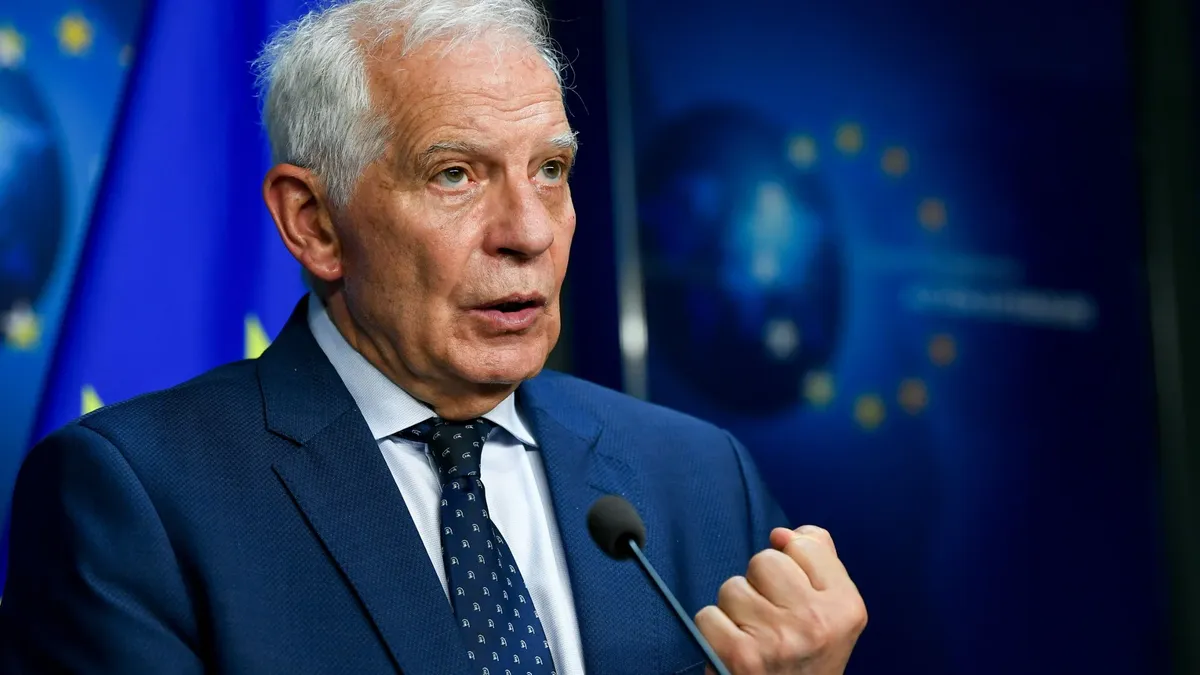
Josep Borrel. Photo: Zuma TASS
The Council of the European Union adopted on Friday the next package of anti -Russian sanctions - the eleventh in a row after the start of the Russian operation in Ukraine. He began to act on Saturday and is designed to strengthen the regime of sanctions. This time, the developers focused on breaking holes and gaps widely used to go around the barriers. This may affect what is customary in Russia “parallel import”.
The head of the EU diplomacy, Josep Borrel, commenting on a new law adopted unanimously after lifting the objections of some members of the Union, emphasized that “EU sanctions are already severe damage to the Russian economy” and the Kremlin’s ability to finance military operations. Not everyone in the political circles of the EU, including in the leadership of member countries, share this opinion. For example, the special position of the leadership of Hungary and a number of politicians in other EU countries is known.
Famous political analyst in Brussels, Georgy Gothev believes that "the West has yet to admit that his most powerful weapon in the support of Ukraine - sanctions - did not bring the expected results." In his opinion, new sanctions are likely to hit Western economies more than in Russia, they can complicate the EU relations with global partners.
But, as a high -ranking official of the European Commission, in charge of foreign trade, told reporters at a briefing.
The cumulative effect of 11 sanctions packages led to a reduction in the trade in goods between the EU and Russia by 55-60% of the “pre -war” level, i.e. 2021. Although the world market is arranged so that it is impossible to isolate the country completely and the goods finds secret, sometimes even legal ways.
“The larger the effect of the sanctions, the more temptation to get around them,” our interlocutor noted.
The new package claims to close holes in the sanctions fence used by Russian enterprises, European business and the rest of the world. To solve the problem of bypassing sanctions, the EU intends to cooperate more closely with third countries and mainly solve the problem with the help of diplomacy.
“Only in cases where cooperation does not give the expected results, the EU will take quick proportional and purposeful actions aimed exclusively to deprive Russia of resources that allow it to lead (...) against Ukraine,” the EU Council said.
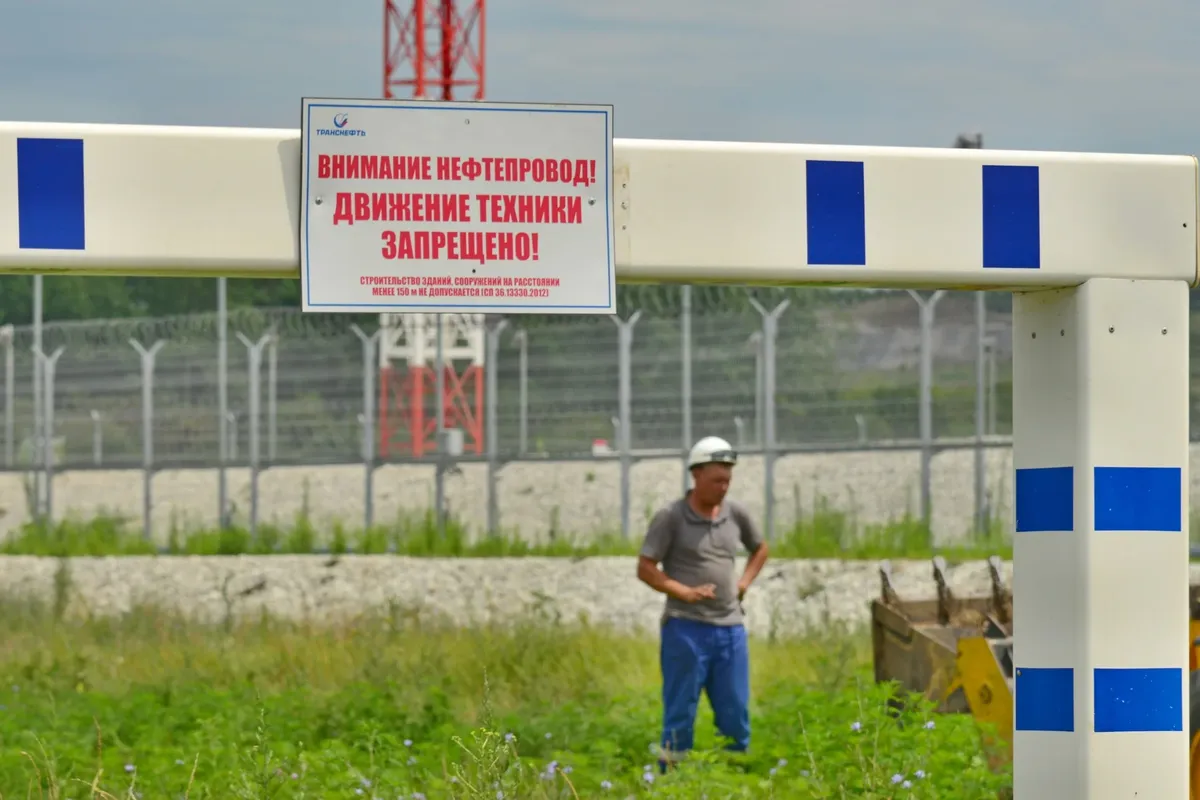
If the sanctions bypass are essential and systemic in nature, the EU Council can “limit the sale, delivery, transfer or export to third countries of goods and technologies, the export of which is already prohibited to Russia.” In particular, products and technologies of the battlefield. Countries in the documents are not diplomatically named, but everyone knows perfectly well, through which “sanctions” it penetrates into Russia.
The ban on transit through the territory of Russia is introduced more than now the amount of goods and technologies that can contribute to the military-technical improvement or development of the defense or safety sector of Russia. And those that can be used in the aviation or space industry, as well as for the production of jet fuel and additives to fuel exported from the EU to third countries.
The decision of the EU Council expands the list of such items. These are electronic components, semiconductor materials, equipment for the production and testing of electronic integrated circuits and printed circuit boards, precursors for energy materials and chemical weapons, optical components, navigation devices, metals used in the defense sector and marine equipment. The 11th package limits the export of refrigerators, printers, electronic calculators, etc. in the list of 155 pages.
New restrictions were introduced by transport.
From now on, it is impossible to transport goods in automobile trailers and semi -trailers registered in Russia through the EU territory. So far, the ban was only for trucks with Russian numbers.
But transport companies outwitted legislators: non -Russian trucks waited on the border when Russian trucks were brought up, reduced and drove further around Europe.
A similar situation of bypassing sanctions was observed in sea transport. Especially in connection with the prohibition of imports in the EU Russian raw oil and oil products by sea and with the installation of a price ceiling on Russian oil. From now on, it is forbidden to pump oil in the waters of the EU from one tanker to another, if it is not justified in a different way. The ship will be suspected that it either violates the ban on Russian oil imports in the EU, or transports Russian oil or oil products purchased at a price above the ceiling agreed by the EU and G7 coalition. And then the EU ports are closed to him.
The ban will be applied to the courts and when the “competent authorities” will have a good reason to suspect that they illegally turn off the transponders or otherwise disable the navigation system during the transportation of Russian oil and oil products.
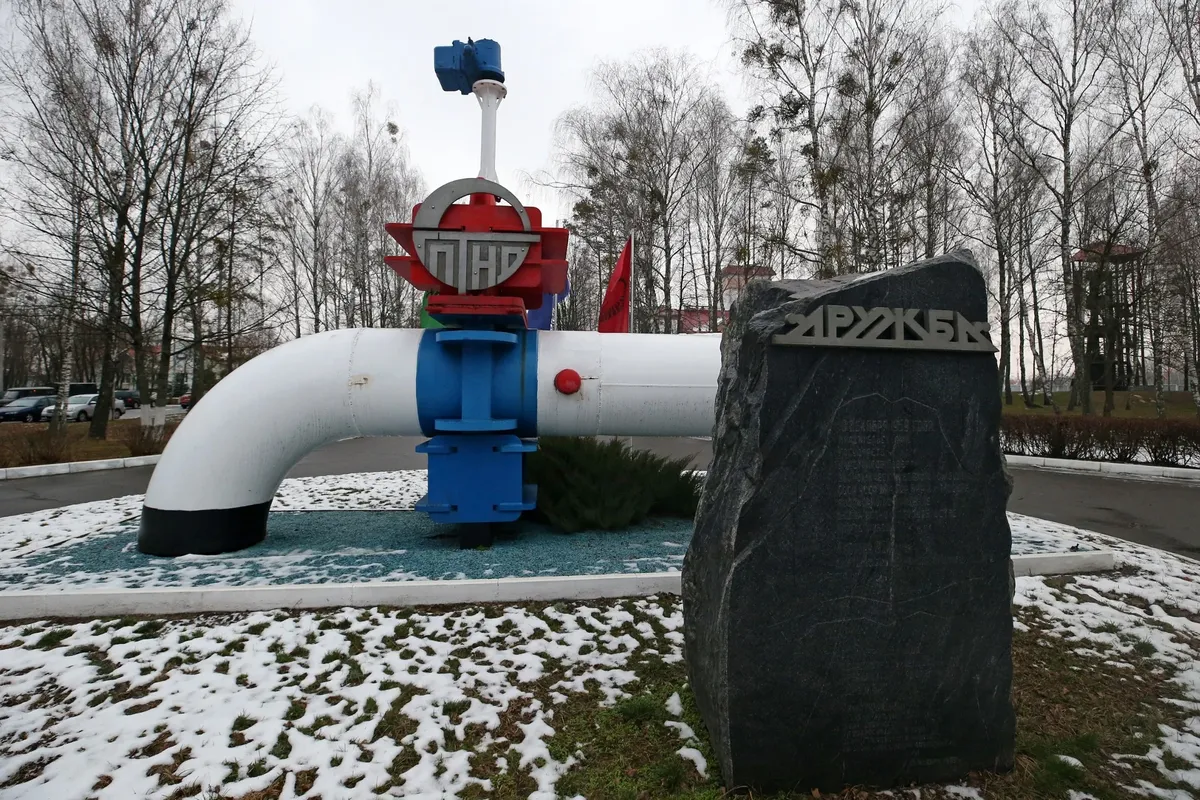
The 11th package fixes the cessation of supplies to Germany and Poland of Russian raw oil through pipelines. A temporary delay provided by Berlin and Warsaw, which received Russian oil in the northern section of the Druzhba oil pipeline, is stopped. In fact, it has long been discontinued.
The historical oil pipeline “Friendship” will remain not only a monument of another era, but will also serve for transit to Europe through Russia of oil from Kazakhstan.
Additional prohibitions on the import into Russia are concerned with machines and equipment that fall under certain criteria. For example, for the production of plastics.
The ban on the export of cars has been expanded. Exports from the EU to Russia of cars, new or with mileage, with an engine volume of more than 1.9 liters are prohibited. Last year, such cars were exported to 500 million euros. New restrictions are exported in the Russian Federation of spare parts for aircraft.
In addition to "sectoral" sanctions
The EU Council decided to significantly expand the sanctions list of individuals and enterprises. 71 people and 33 companies were additionally included in it, which, according to the EU wording, are “responsible for actions that undermine the territorial integrity, sovereignty and independence of Ukraine or threaten it.”
In total, almost 1800 individuals and legal entities were on this list as a result. All their assets, if any are found in the EU, are frozen, and EU subjects are prohibited to provide them with funds. Individuals are also deprived of the right to enter the EU countries, even for transit.
Borrel made it clear that the practice of individual sanctions would continue. Indeed, it is more difficult to get around them than economic ones. They apply to the active persons involved in the information war, to those who are involved in the export of Ukrainian children to Russia and their adoption, as well as to Russian IT companies that help technologies and software for Russian intelligence. Thus, the EU Council determined the criterion by which private companies are included in the sanctions list.
The EU Council added 87 organizations to the sanctions list, which, according to it, directly support the Russian military-industrial complex. They will apply to more stringent export restrictions in the supply of dual -use goods and technologies from the EU.
A significant part of the list of the list is the personalities and enterprises of the Armed Forces of Russia and the military -industrial complex: the highest military ranks, companies, enterprises producing missiles, drones, air defense systems, military equipment and high -tech components for weapons. So, the deputy minister of defense of the Russian Federation Tatyana Shevtsova, several Russian judges and senior military, including Colonel General Alexander Lapin, were included in the list. The sanctions were applied to the Fund for Support and Protection of the Rights of Compatriots abroad, which, according to the EU, mobilizes to support Russia's actions against Ukraine.
The sanctions list includes the military from Russia and the DPR, which were convicted by the Dutch court in connection with the destruction of the MALAYSIA AIRLINES Passenger Flight Liner on Donbass, when almost 300 people were killed. The convicts are included in the EU list in agreement with the Australian government, whose citizens were among the dead.
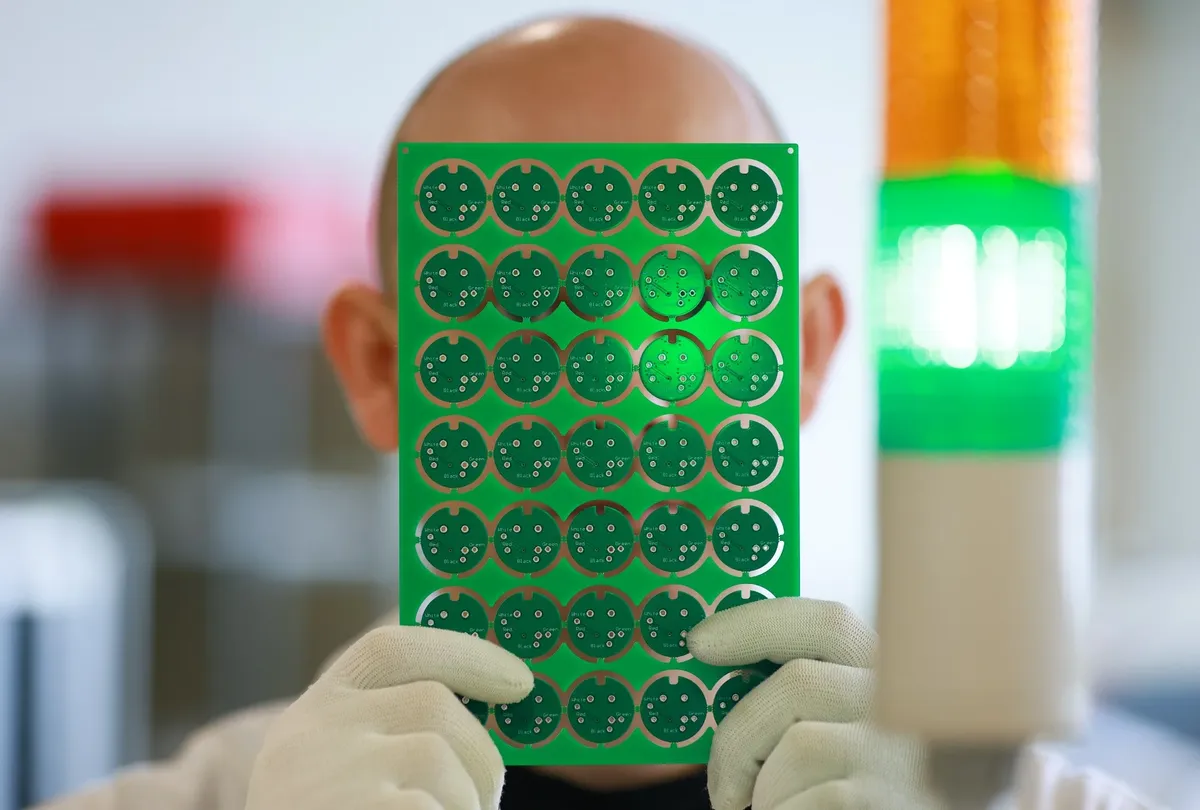
As a senior official of the European Commission told reporters, the most stringent forms of restrictions were applied to companies, including 10 non -Russian, which are noticed in the supply of “sensitive” products to the Russian military -industrial complex. These high -tech elements were found in fragments of Russian weapons found on the battlefield. From now on, all “trophy” fragments will be studied for tracking the ways of entering the Russian enterprises of the military -industrial complex. These are cameras, radars, positioning products, components of drones, weapons cellulose, etc.
The EU restrictive measures were made by high -ranking regional officials, including the Governor of the Voronezh region Alexander Gusev, the head of the Stavropol Territory Vladimir Vladimirov, the governor of the Krasnodar Territory Veniamin Kondratyev, the governor of the Magadan region Sergey Nosov, the Governor of the Kamchatka Territory, Vladimir Solodov and the head of the Republic of Adygea Murat Kumpylov.
Broadcasting of the most significant Russian state and pro -government television channels on the European audience and is so limited by the previous ten packages of sanctions. The eleventh continued this process.
The action of the licenses for broadcasting five more media outlets is suspended: “RT of the Balkan”, “Eastern Review”, “Tsargrad”, “New Eastern Review” and “Cateh”.
The EU Council found that these media are systematic and consistent propaganda, which “aimed at European political parties, especially in the pre -election period, as well as civil society, asylum supplements, Russian ethnic minorities, gender minorities, and the operation of democratic institutions in the EU and its members.” Journalists and employees of these media can work freely in the EU. The ban concerns broadcasting, not collecting information and interviews.
In the part of the “information war”, the “military commissar” fell under the restrictions, including Semen Pegov and Evgeny Poddubny, a number of journalists and senior employees of NTV and VGTRK. As well as Wagner Center, a group of cybersecurity companies Positive Technologies and the Zvezda TV channel.
Finally, the list includes members of the judicial authorities who made politically motivated decisions against citizens of Ukraine who opposed the accession of Crimea to Russia, as well as a number of businessmen, local officials and two banks: MRB Bank and CMR Bank, who work in the territories of Donetsk, Lugansk, Kherson and Zaporizhzhya regions.
The formation of the 11th package was a difficult thing, because the Permanent Representatives of the EU countries imposed a veto on a position that, to one degree or another, affected the specific economic interests of their countries and companies.
The initial proposal of the European Commission suggested restrictions against eight Chinese firms accused of re -export of sensitive goods to Russia. According to the source in diplomatic circles, after negotiations with Beijing, five of them were excluded from the list. Beijing took the obligation to put pressure on them. But three Hong Kong firms remained at the sight, because they are actually Russian.
One Iranian company, two companies from the United Arab Emirates, two companies registered in Uzbekistan, one with a base in Armenia and one in Syria, fell under the re -export of “sensitive” goods to Russia.
The adoption of the package was long blocked by Greece and Hungary.
The first because the EU has submitted five Greek shipping companies for the transportation of goods for Russia from the submission of Ukraine.
The second for the fact that one Hungarian bank is suspected of financing the Russian military operation.
Then Ukraine lifted the claims to the Greek shipowners, securing the promise of Athens to support the rest of the package. Hungary also ultimately supported him, despite the fact that her OTP bank remained in the Ukrainian list of “violators”, but stated that she would return to this issue when the EU would discuss a new tranche of money for Ukraine from the European Fund of the World. This is the first time that a company of the EU member of the EU: a Hungarian bank got into the sanctions list.
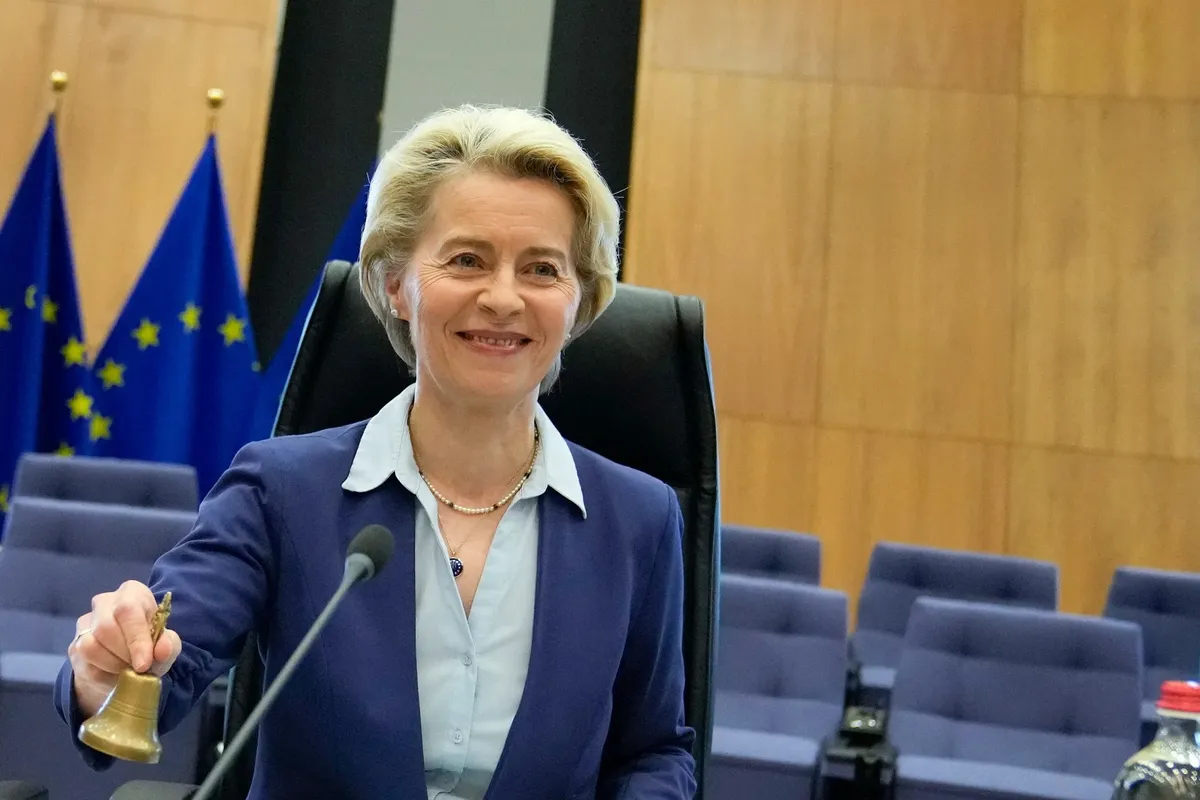
Finally, the most scrupulous question about the use of the avoirs of the Central Bank of the Russian Federation blocked in the West to restore Ukraine remained unresolved. The Chairman of the European Commission Ursula von der Lyaine, last week, found colleagues by surprise, announcing that Brussels would offer to use a profit of more than 200 billion euros frozen in the EU. “We will go out with a proposal for these assets until the summer holidays,” she promised boldly.
Can you spend other people's money? “Legally, this is a very difficult issue that will be discussed with EU members”,
- The Executive Deputy Chairman Valdis Dombrovskis lowered the bar in an interview with journalists. The idea is not to use the frozen 200 billion euros themselves, which legally still belong to Russia, but to redirect the profits that they generate. Options are discussed, but there is no consensus yet ...