
Translated material
To the bottom for the "Titanic"
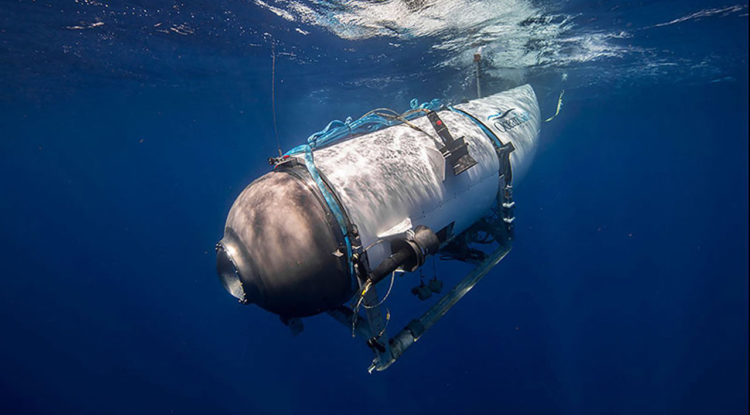
The richest people of the planet plunged to the depths of the ocean for the most famous liner and died. What happened to them?
A small expedition was the focus of the world's attention: five crew members disappeared during an immersion to the bottom of the Atlantic Ocean. In an attempt to satisfy scientific curiosity, the richest people in the world risked their lives for the fragments of the Titanic, which had sank in 1912. It was not possible to look at the giant liner for the crew’s members: as a result of the “catastrophic explosion,” they all died. The reason for the tragedy is most likely associated with the poor -quality design of the bathyscaphe, the problems of which were known a couple of years before the disaster. A very expensive ticket one way - in the material "Cold".
In order not to miss the main materials of the "cold", subscribe to our Instagram and telegram .
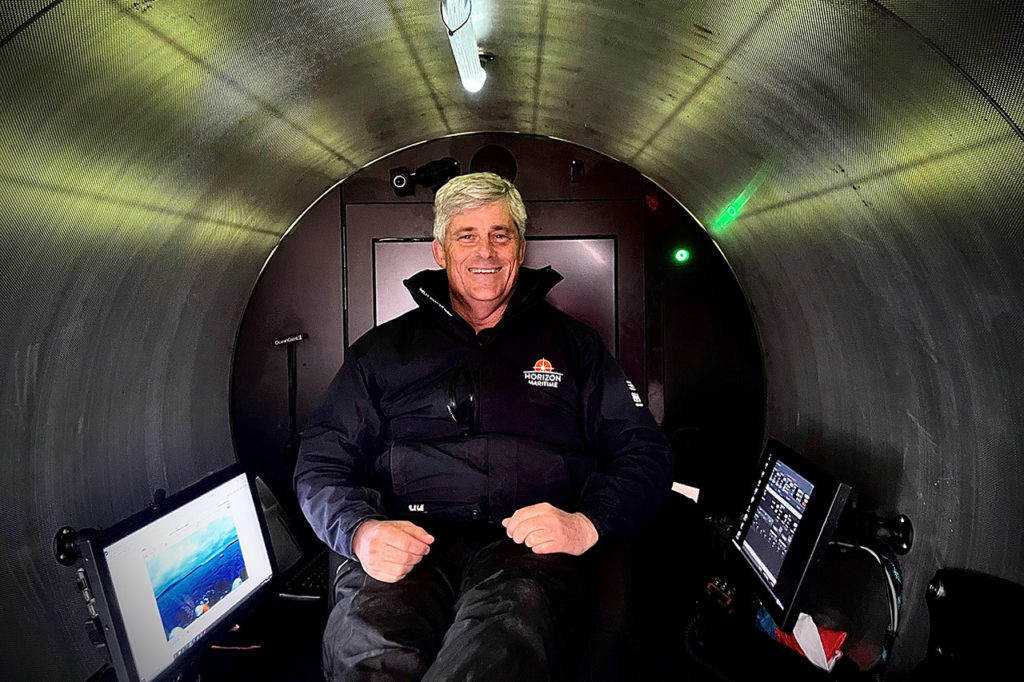
Oceangate battanian battanes descended into the waters of the Atlantic on June 18. There were five people on board the ship, including the founder of the company 61-year-old Stocton Rush. His company specialized in deep -sea excursions, one of which was an immersion on the bottom of the Atlantic. There, customers were invited to inspect the fragments of the sunken Titanic. The cost of the tour is 250 thousand dollars.
Stocton Rush himself was drawn to innovation from childhood: in childhood, he dreamed of becoming an astronaut, but in the end he was revealed in the post of a cap of bathyscaphe and commercial submarines. In adolescence, he was fond of immersion with scuba gear, and later decided to design a small submarine. At 18, he had already piloted planes. The thirst to change the attitude of mankind towards the ocean has moved Rashem throughout life.
One of the expedition participants was 58-year-old Hamish Harding , a British billionaire and owner of Action Aviation, who specializes in the purchase and sales of aircraft. Harding was not only a businessman, but also a pilot and a space tourist. He owns three records of Guinness Book of Records - the fastest round -the -world voyage through both poles, the largest length of stay at the depth of the ocean and the longest distance passed at a depth. Shortly before the immersion, the Harding HB A was , which will become a participant in the first submarine expedition to Titanic in 2023.
Another member of the Ocean’s bottom expedition is the 48-year-old Shahzada Davud -Vice-Chairman of Engro Corporation and Dawood Hercules Corporation, one of the richest people in Pakistan. His fortune exceeded 130 million dollars. Davud was interested in science for many years and loved to travel. Davud took the 19-year-old son Suleman, who studied in the UK. The young man has just graduated from the first year of Stratlayide University in Glasgow. According to his aunt Azmeh Davud, a few days before the expedition, Suleman was horrified by the upcoming dive, but did not dare to refuse. The immersion occurred on Sunday, on the day of his father, and he wanted to please Shahzad, who had been fond of the history of the Titanic for many years.
The most experienced on board the bathyscaphe was 77-year-old Paul-Henri Narzhole-director for underwater research at the E/M Group and RMS Titanic. He made his first immersion to the Titanic in 1987 and subsequently took part in about 30 expeditions to sunken ships.
Instant disappearance
Typically, the immersion lasts eight hours, and the expedition itself - eight days, including the journey to the crash site of the Titanic. But this time, everything went not according to the plan from the very beginning: less than two hours after the start of the Titan expedition, he lost contact with the Polar Prince (“Polar Prince”), auxiliary vessel, which delivered a bathyscaph to the place of immersion. The air at the bathyscaphe should have been enough for about 96 hours.
The coastal protection of the United States and Canada began searches on the same day. The difficulties of the operation rested on the remoteness from the shore (the Titanic crash site is about 600 kilometers from the coast of Canadian Newfoundland) and the depth: the fragments of the airliner are at a depth of almost 4000 meters.
It was possible to move out of the dead point only on the morning of June 21, when the Canadian search aircraft in the area of Batiscaf’s disappearance recorded underwater noises, but it has not been possible to determine the nature of the noise so far. On June 22, the situation became critical. It was on this day at 14:08 Moscow time (07:08 local time) the air ended on the bathyscaphe. At that time, rescuers did not find anything at all, hopes for the salvation of people in the bathyscaphe went out every hour.
Explosion in the depths
The US coast guard discovered the first finds on June 22: the service representative reported on the five parts of the bathyscaphe found at the bottom. According to rescuers, damage on the wreckage of the vessel testified to the “catastrophic explosion”, as a result of which part of the bathyscaphe was thrown from each other at a distance of about 500 meters.
Then the representative of the US Navy said that shortly after the immersion of the Batiscaf of the Navy, he recorded a sound similar to an explosion. Presumably, the ship could not withstand the pressure of the ocean. Due to the depressurization of the bathyscaphe, the crew members most likely did not even have time to understand what happened, their death was instant.
It is not known what exactly caused the explosion, experts will have to study the wreckage of the vessel. But now it is clear that Titan had some differences from similar submarines, which cast doubt on the safety of immersion. Such vessels are made of strong materials and have the shape of the sphere so that the huge pressure is evenly distributed to the depths.
However, Oceangate made a “titan” in the shape of a cylinder with an external carbon fiber case and Titan end lids so that more people can accommodate more people. The carbon fiber is very durable, it is sheathed, for example, aircraft wings, but they constantly undergo checks for cracks or stratification. Experts will have to find out whether the Titan was vulnerable from the very beginning or became so as a result of wear.
Speed contrary to safety
Oceangate began the development of a prototype of the Titan submarine in 2013. Initially, the project was called "Cyclops", during its creation, carbon fiber, a titanium case and glass were used. The further development of the project resulted in the creation of a new sample - “Cyclops 2”, and subsequently renamed it into “Titan”. A few years before the immersion, Stocton Rash abandoned the certification procedure of the bathyscaphe.
In 2018, the company was warned of the danger of using Titan. At that time, the director of naval operations Oceangate David Lochridge concluded that the ship needs additional tests. Among the problems is the bathyscaphe window that allows passengers to see what is happening outside. Batiscaf could work at a depth of not more than 1300 meters, the “Titanic” is at a depth of about 4000 meters. 38 experts in the field of the structure of submarines expressed their fears about the design of Titan’s design.
The company explained the refusal of certification by the fact that "the bathyscaphe was so innovative that years could take years to receive a certificate from ordinary assessment agencies." “Providing a third -party organization of information about each invention before it is subjected to testing in real conditions, is a curse for the rapid implementation of innovation,” Oceangate said.
Journalist David POG, who tried to plunge towards the Titanic in 2022, was also convinced of the dangers of the vessel. Before immersion, he, like other members of the expedition, signed a document stating that "this experimental vessel was not approved or certified by any regulatory body and immersion can lead to bodily injuries, emotional injuries or death."
According to him, many parts of the bathyscaphe were homemade, and management was carried out using the PlayStation joystick. Due to weather conditions, the immersion directly to the Titanic did not take place, which is why Rash offered an alternative to go down to the continental shelf. However, even then the immersion did not go according to plan. Before lowering the submarine to the bottom, it is first lowered to the depth, where the water of the ocean is calm, using a special platform. After that, the divers disconnect the bathyscaphe, and the platform remains to drift in open water with the help of floats. However, during the expedition, the float of the platform was broken and all the immersion ended at a depth of about 11 meters.
In 2022, the POG invited Rush to the podcast, where they discussed the safety of Titan. Rush answered the claims like this: “If you want to be safe, do not get out of bed. Do not get into the car. Do nothing. ”