
Translated material
People without the right to have the right
Alexey Borodin and Tom Stoppard in the play “Leopoldstadt” think about how the minority becomes a target
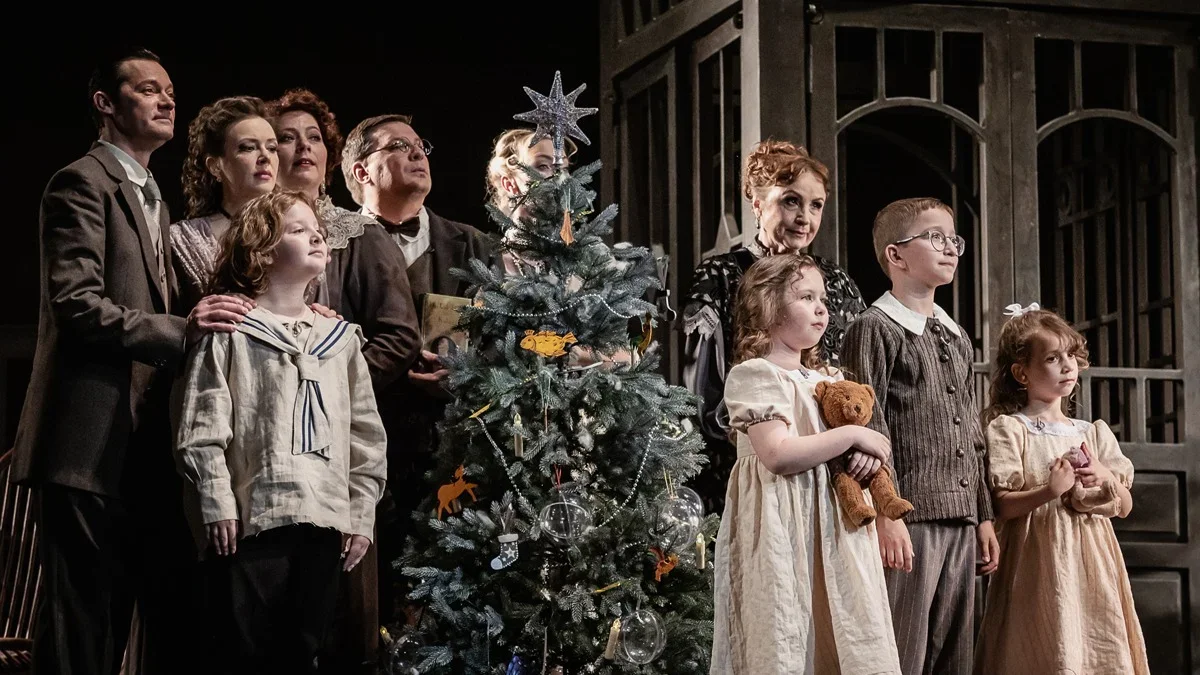
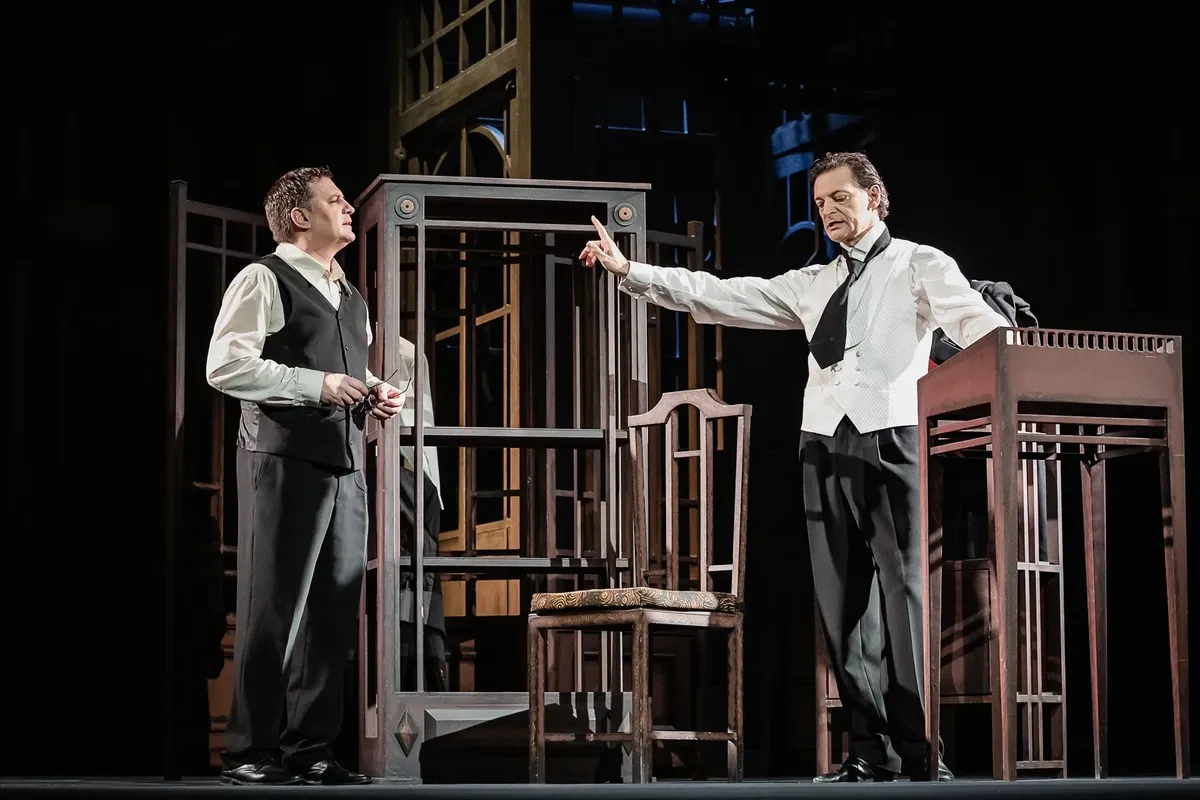
Scene from the play "Leopoldstadt." Photo: Maria Moiseeva
What new theater can tell such a time as ours? It turns out, maybe. Tom Stoppard and Alexei Borodin in Ramt explain how Jewry and the modern “Russian plot” are connected.
Gradually, but rapidly on stage, life begins to dizzy: someone lays out photos in a family album, someone jokes, someone drinks and rants, everything is ironic over themselves and others, dress up a Christmas tree, run children, and there are boxes with toys. Christmas Eve on the threshold of the twentieth century. Big Jewish family. The house in Leopoldstadt - the area where only Jews live, a blooming ghetto in the middle of an arrogant brilliant vein.
The play based on the play by Tom Stoppard “Leopoldstadt” in the staging of Alexei Borodin on the stage of Ramta unfolds in a calm, as it were, not theatrical intonation: people exist, simply exist and rejoice at existence.
There are three men in the family: German, manufacturer, Ludwig, mathematician, Ernst, doctor. With wives, sisters and children, they form a clan from several generations, led by Emilia, powerful and wise, mother and grandmother. Everything is still safe, except for the painful topic of betrayal to the roots.
Jewry as a mighty community has already been diluted (the eldest son accepted Christianity, married a Catholic, the sister of her daughter’s husband went beyond Lutherane), but the core of conversations remains - the difference, seal, stigma and pride.
Reflection about nationality is somehow tormented and birch by heroes, everyone affects the problems of assimilation, current policy and anti -Semitism flared up in Vienna. But the house is full of children (there are nine in the play), which means games and hopes.
- Who wants to lick a spoon from jam?! - Emilia asks and answers: - Well, since none of you said "Grandma, you, of course!" - In front of the eyes of amazed grandchildren, he licks the spoon herself.
“A Jew can be a great composer, but he cannot be a Jew!” - Adults argue, and children are inseparably looking at Ludwig's fingers, which shows how to make a cradle for a cat out of thread. Someone from the founders of the family walked from Kyiv to Lviv, certainly after Christmas, it is necessary to celebrate the seder; For the cradle you need other nodes ... Hannah plays the piano, one of the boys under the general laughter puts the sparkling star of David on the Christmas tree.
... They celebrate the Seder, and the vibrations of anxiety do not yet hang over the elegant table, where they eat “bitter grasses” and drink four cups of wine in memory of Jewish slavery and torment in Egypt.
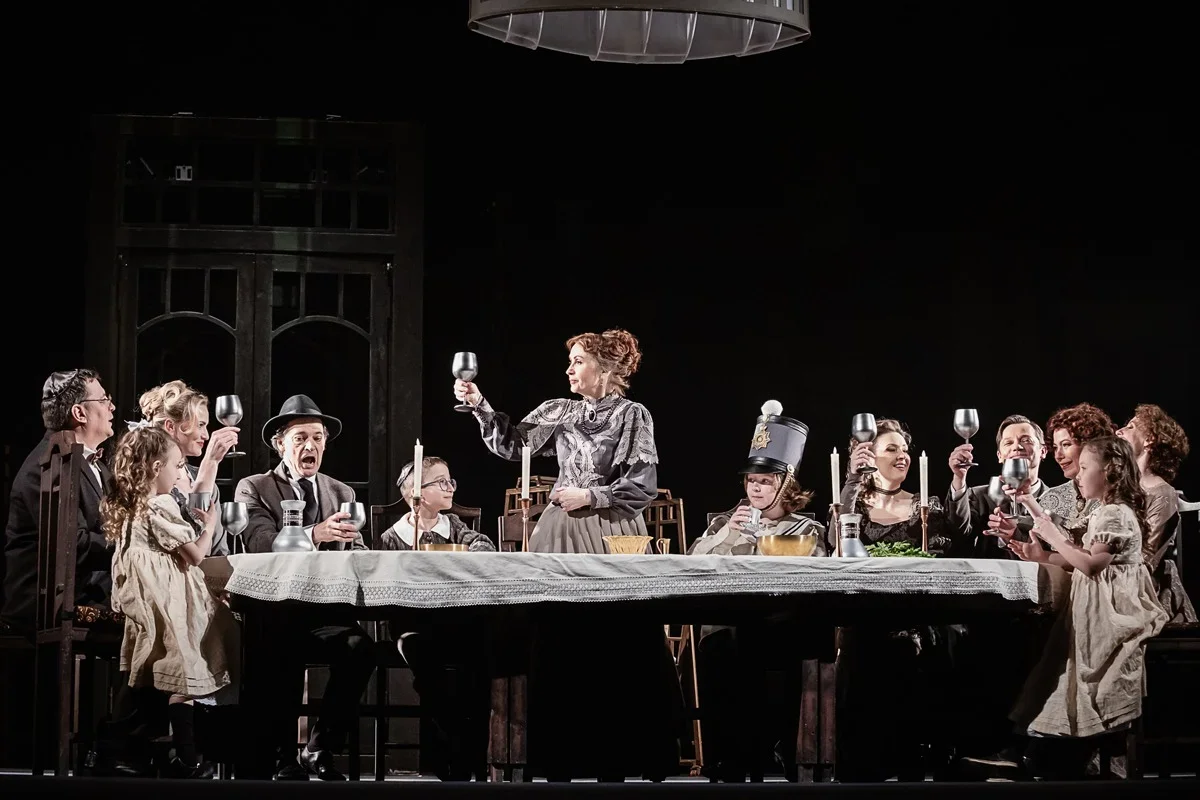
The most quiet and modest of the geniuses of the Russian theater workshop Stanislav Benedictov began to work on the scenography of the performance. He only managed to outline the plan, leave a few sketches. The work was brought by comrades, Viktor Arkhipov and Lilia Baisheva. There are many deceptively fragile, permeable objects on the stage - chairs with high backs, screen, office, elevator cell; The presence of things is unobtrusive, they only framed people and situations, while designating the fragility of existence. The main thing here is two circles - scenes and chandeliers above it, rotating in different directions and different rhythms.
The circle of the scene has many times symbolized the run of time, its replacement, but here the circle is the solution: the space of closed destiny, the inability to reach other dimensions and orders.
Years are flying and circling a family, everything is gradually changing, and adults, calming themselves, say: forms! Heroes do not believe in the monstrousness of changes, remove the thought that evil will enter their house directly. Until it includes: in a black hat, a civil coat with a list of all the inhabitants of the house in their hands. 1938. Anschlus, the Nazis came to power, Jews are robbed and thrown into the street.
The artists of Ramta Larisa Grebenshchikova, Victoria Tikhanskaya, Daria Semenova, Alexander Grishin, Alexander Doronin, Maxim Kerin, Daniil Shperling, all employed in the play, create his many -naked, an entire orchestra of acting parties. But the main one is Herman (Evgeny Redko), a person whom Stoppard explores what is happening.
At the beginning of the performance, he is a family center, a successful manufacturer assimilated in the Austrian elite. The son of a Jew, who had a hitch, intends to become a member of the Jockey Club of Arstocrats, a portrait of his wife writes a fashion Klimt, the son will inherit a prosperous business, the music of Strauss sounds in the house. Herman, in rapture from his achievements, does not want to recognize his real place under the Vienna sun. In his own eyes, he is “an Austrian citizen, patriot, philanthropist, dear member of society”; He accepted the baptism, but more than anything in the world wants Jewish ancestors to be proud of them, who "so want him to rise as high as possible."
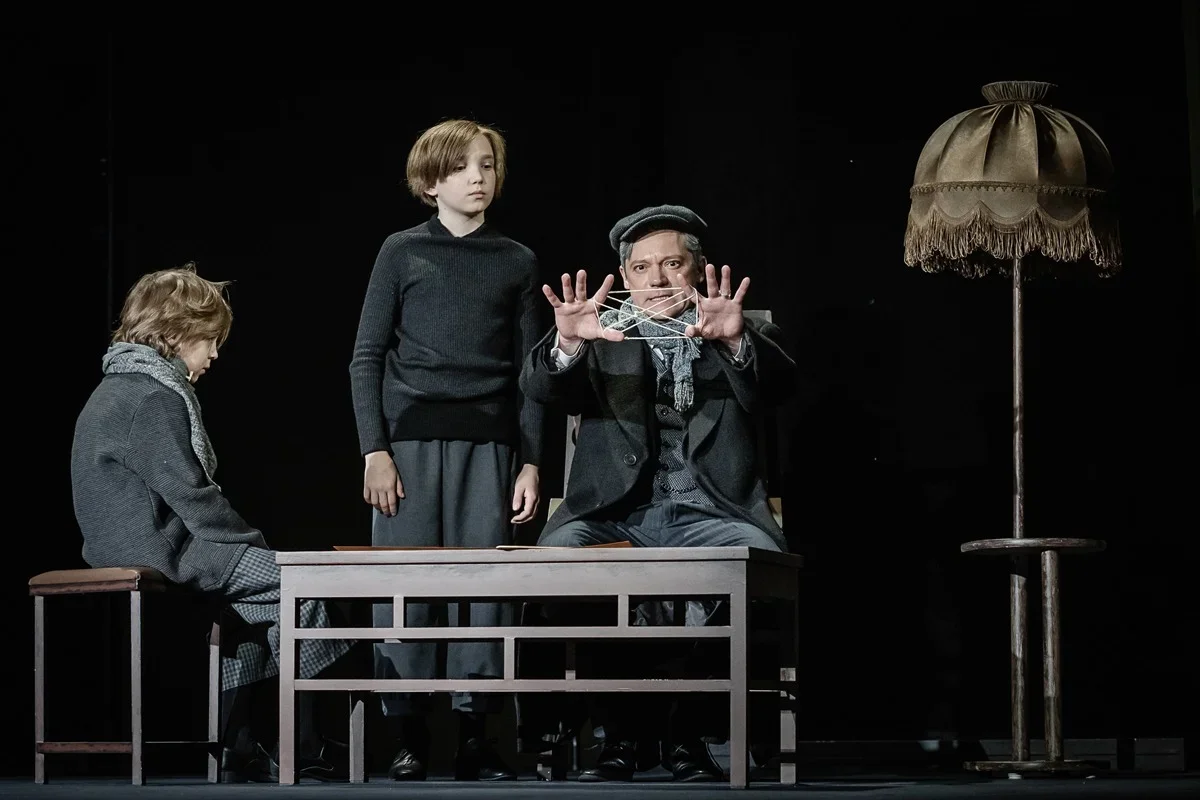
But Herman is going to call an officer who insulted his wife to the duel. And he finds out: the Austrian officers are forbidden to fight a duel with Jews - they "do not have the honor, they cannot be insulting." The full charm, the confident Viennese rich man loses the gloss in front of his eyes, settles in the fainting humiliation of the resident of the town as an old snowdrift.
He will live for many more years, but it is in this scene that a fracture of fate. Redko leads the hero through different states: Herman jokes about his baptism (gesheft), demonstrates how to benefit from the defeat (prove that his son is non -Jews, which means that confiscation of the factory does not have the strength of the law). And he summarizes the results, rushing into the flight of his own house.
Tom Stoppard, the classic of modern drama, created a play, partly reflecting his own biography: he lost his father in early childhood, his mother again married and raised her son with an Englishman, outside the Jewish roots and performances.
The play is deceptively simple: just a family passing through the times in which generations and circumstances are replaced, but all and all subordinates the lead tread of the twentieth century. Each scene discusses the present and future. Each raises questions that are reflected many times, but remained unanswered.
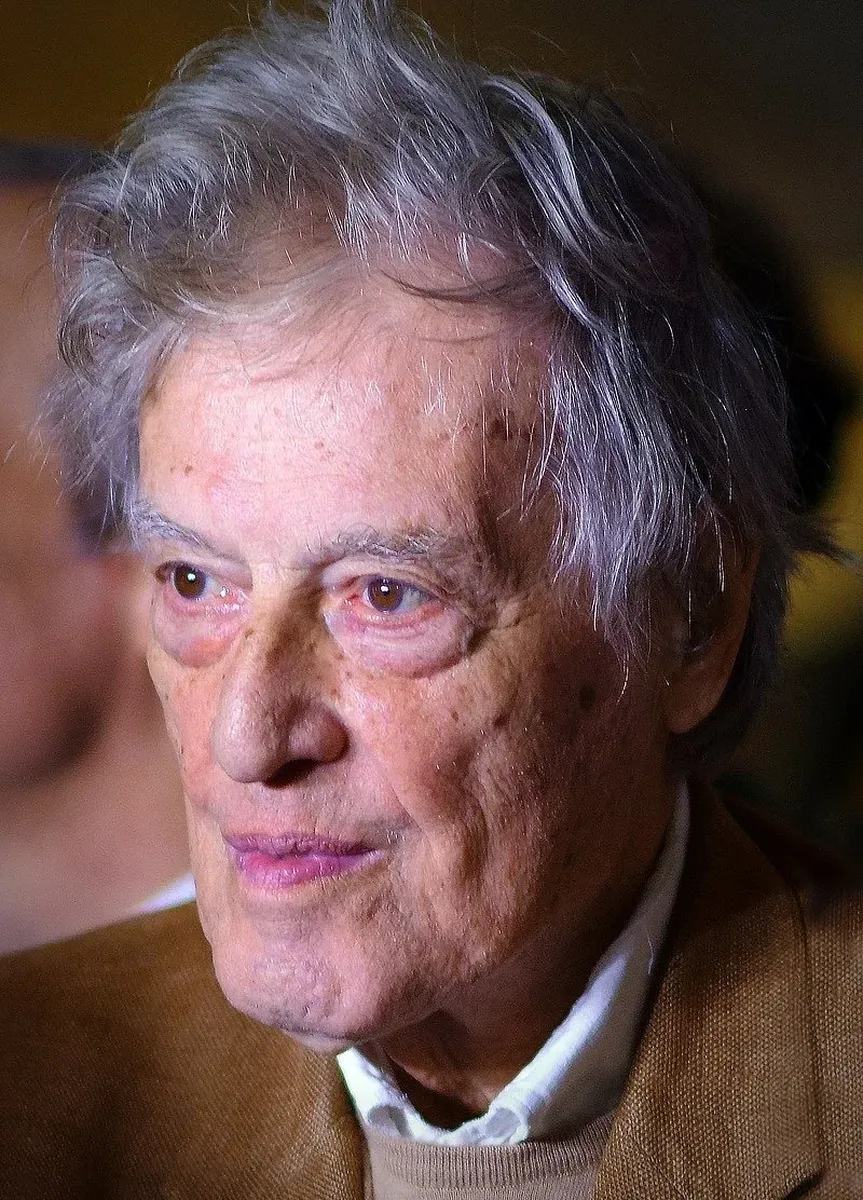
Stoppard knows how to make abstract ideas an integral part of real life. And at the same time, he carefully collects material for each work: it seems that he carefully read research on anti -Semitism, in particular Sartre and Hannah Arendt.
Following the great existentialist, the playwright reflects on what it is a Jew; Why do Jews cause unprecedented hatred, what are the world roots of anti -Semitism?
He literally follows the postulate of Sartre, who wrote that most European Jews kept loyalty to the states that despised them, either hoped to leave the upcoming persecution, without leaving the house, and to live.
And as Hannah Arendt, in the “origins of totalitarianism”, Stoppard is trying to find “some new law on Earth, which should be competent for everyone”.
Alexey Borodin in a special way connects the intellectual theater with humanity; It was in this connection that the power of the Stoppard trilogy “The Coast of Utopia” on the Ramta Stage, in the same, was the event “Leopoldstadt”.
For a long road in directing, Borodin was never tuned to serve - neither the power of common places, nor the power of dominant representations, nor the powers of the pre -war. He stubbornly moves only to the voice of the inner truth, and serves only his instinct of the artist and the utopian task of "daily preservation of himself as a person." Ramt under his leadership is a producer of ozone, and in today's society plays a special role.
The rehearsals were not easy, Borodin for a long time was waiting for the translation of the play, and when I received it, I had to seriously think about what to say significant. Time read in the play “Deep changes now taking place in the Russian plot”, as Shklovsky once wrote, and the off -expression material entered the fabric of the performance: the drama of the day, the bare nerve of the moment. As a result, the stage text is surrounded by a complex suspension of the moral states of the hall.
Jews were outcasts of the millennium. Today, the theme of adverse has entered the Russian agenda, the world turned to us an accuser, contemptuous face. A family saga carries a total directorial metaphor, hacking and official rhetoric, and borderline conditions of the public.
The “Jews” are all different here - strangers, other dissenting, dangerously talented, lawlessly pursued, expelled, inappropriate, passionate, not going together, replaced on the side of the road. "Jews" a minority becoming a target.
And how today not to evaluate the conclusion of the famous work of Hannah Arendt, confirmed not so much by the truth of art as the truth of life:
"The most important skill of totalitarian machines will be the ability to organize people's lives without the right to have the right to have the right ..."
... The last three, remaining from all the meres and the Jacobovites, are found after the end of the Second World War, in the mid-fifties, in the historical postscript: Rosa (Maria Ryshchenkova), a successful New York psychoanalyst, a student of Freud, Leo (Ivan Yurov) grew up in England and did not know anything about his Jewish relatives, and Natan, one of the family survived in the camps in the camps. (Alexander Nineyarov).
The impulsive, exhausted Nathan brings the desperation of a dead end to the stage - a damaged life, an anthropological catastrophe that erased the future.
Although he nevertheless returned to Austria and, with tragic echoing German, again convinces himself that he is not superfluous here.
“We made up ten percent of the veins and fifty percent of the university graduates, lawyers, doctors, philosophers, artists, architects, composers ... chestnuts bloom on the guard. This is my city "...
At the beginning of the performance, Emilia inscribes cards for the family album. In the final of the play, the rose has a drawing of the family tree in his hands. He hastily made for the sake of Leo (Stopard's stage prototype). The conversations are completed, the plots are folded, the last scene raises the performance to heaven.
Again a holiday, a Christmas tree shines, music sounds, adults joke and laugh, children play and make noise.
Leo examines the family tree and reads the names indicated on it. And Rosa, that little girl, who at the festival entrusted the most important thing - to hide the ritual piece of Matsa, and she forgot where, - says how the life of everyone ended: Verden, suicide, Auschwitz, Dachau, Auschwitz, Buchenwald ...
The horror of what is happening is not theatrical, and the audience in the final cry not only because of the fate of the heroes; In this performance, an invisible bell sounds, and you can hear what it calls.