
Translated material
Do we cancel?
Vladimir Putin could not "mobilize the country" even during an armed rebellion. And the elites showed that they are ready for a violent change of power
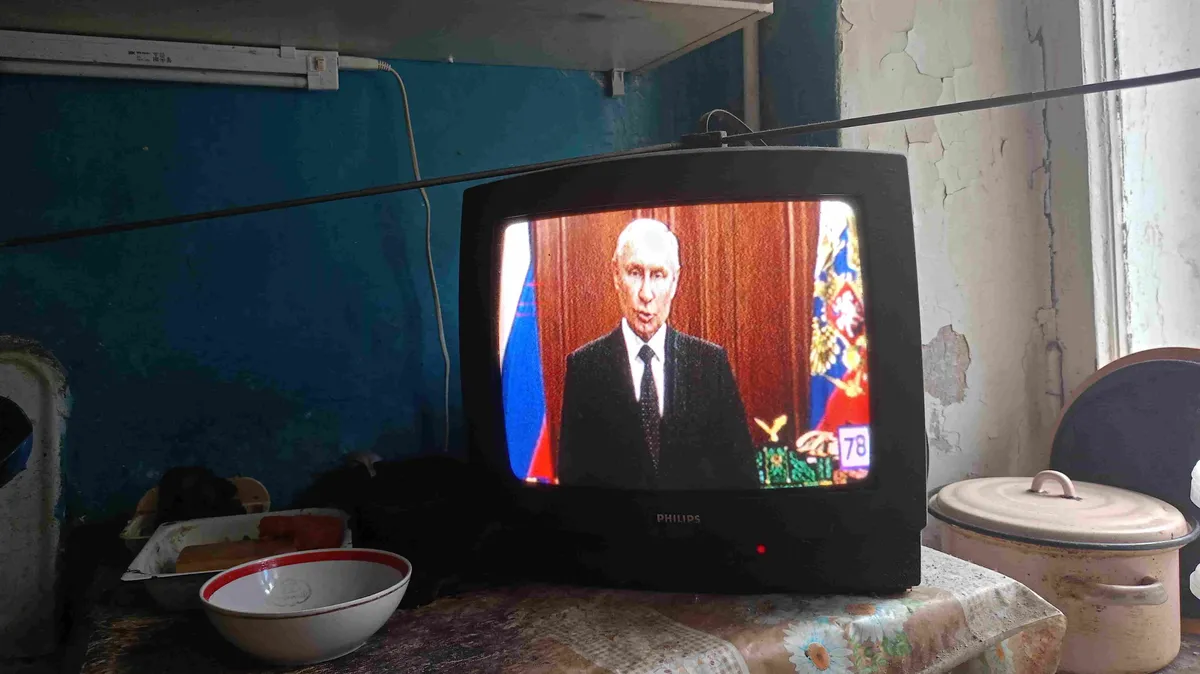
Photo: Artem priakhin / sopa images / Lightroket / Getty Images
The first reaction of an extraneous viewer to events on June 23–24 - what was it at all? Attempting a military coup, rebellion, production?
Something happened quite seriously: during the movement towards Moscow, the Wagnerians shot down five helicopters and a plane, having killed more than ten people in them-this is more than the loss of Russian aviation for any day of the war. Along the path of the alleged movement, Wagner, the army blew up bridges and struck the roads on roads and oil depot in Voronezh. Putin turned to the country, calling the rebels “traitors” and promising them terrible punishment. Much more serious?
On the other hand, it all ended with zilch, a quick agreement. The head of the rebellion, the official owner of the PMC Evgeny Prigozhin, goes on exile to Belarus, and the Wagner fighters, the very ones that Putin promised a “inevitable punishment” a few hours ago, are exempted from responsibility.
Could these events be a “production”, the original agreement between Prigozhin and Putin? It is unlikely.
The rebellion, which lasted two days, struck a powerful blow on the reputation of Putin, and on the reputation of the army and special services, primarily the FSO and the FSB.
The army units in the Rostov region without a fight, without a single shot, allowed Wagner to capture not only Rostov-on-Don, a city with a millionth population, but also the headquarters of the Southern Military District-a key center for managing the troops participating in the war with Ukraine.
The Federal Security Service, submitted by many employees in both the Rostov region and at the headquarters of the South Academy of Sciences, disappeared during the rebellion without a trace. It turned out that arresting poets, artists and professors is much easier than responding to real threats to state security. Moreover, apparently, the FSB generally overslept Prigozhin’s conspiracy - or what, did it participate in it? How else can you explain to anyone noticed the movement of thousands of soldiers, dozens of units of equipment?
For Putin, this day was a special blow to the reputation: neither in Rostov-on-Don, nor in Voronezh, nor in Moscow, no one came out with a protest against the call of his power. Within a few hours after his morning appeal, other Russian politicians did not say a word of support, and the mayor of Moscow Sobyanin, Prime Minister Mishustin, Foreign Minister Lavrov and completely disappeared from cameras and microphones. This pause clearly says that the Russian political elite is ready for the change of leader - moreover, it is ready for a violent change.
At the same time, if you look in the future, how, in fact, can Putin change? For 24 years of reign, he rebuilt such a system that, in addition to violently - with the help of a palace coup or armed rebellion - power in Russia cannot change. Prigozhin and the commanders of Wagner, occupying buildings in Rostov-on-Don and announcing the rebellion, were not going to overthrow Putin.
By all the grounds, their requirements were retired to Shoigu, the Minister of Defense, and Gerasimov, the chief of the General Staff and the commander of the operation in Ukraine.
Shoigu and Gerasimov-key figures of the Russian-Ukrainian war; It was they who developed plans and brought them to life. It is their Prigozhin who and many officers, soldiers and third -party observers accuse of catastrophic losses, incompetence and general theft. But the requirements of Prigozhin and those who clearly or secretly support him, of course, are not limited to two personalities. Many people in the Russian army and around are not happy with how war is being waged. They require a new (and large -scale!) Mobilization, and not just a new call, but a real mobilization of the whole country to win in a big war.
It is difficult for Putin to shift Shoigu and Gerasimov. For many years he picked up the most loyal subordinates to key positions.
No failures, no incompetence leads to their resignation or lowering.
Nevertheless, Putin can shift them - it is possible that he will do this in the near future - by the same agreement with Prigozhin, which allowed to stop the rebellion. Putin can also call several hundred thousand people into the army, although this is an unpopular and politically dangerous step.
What Putin cannot do is “mobilize the country”, force his ministers and the immediate environment to stop earned huge conditions on military contracts. The “security forces”, feeding from business and state orders and engaged in the terror of civil society, is the essence of the Putin regime. To demand from Putin to change how the country is governed and how war is waged is the same as demanding its own resignation. If Prigozhin needed something more from Putin than the resignation of Shoigu and Gerasimov, he could not get it.
“The rebellion cannot end in success, otherwise his name is different,” the epigram of the English poet John Harrington sounds translated by Samuel Marshak. The June rebellion of 2023 weakened the Wagner group, the Russian army, and Putin's presidency.
In history, rebellions, which led to losses for all participants, are not uncommon. The Kornilov rebellion of 1917 finally undermined the position of the Provisional Government and at the same time led to the removal of the Supreme Commander -in -Chief of Kornilov and the loss of control over the regular army. In 1991, the putschists who removed the President of the USSR Mikhail Gorbachev from the authorities were in prison three days after the start of the rebellion, but Gorbachev returned to his authority purely nominally and for a short time, and the collapse of the Soviet Union only remained on paper.
The rebellion of 2023 is a symptom of the decay of the Putin regime, and a wide step towards its end.