
Translated material
Shock wave
Can I swim in the Black Sea? The Batuman ecologist explains how the catastrophe at the Kakhovskaya hydroelectric power station affects the purity of water in Ukraine and in Georgia
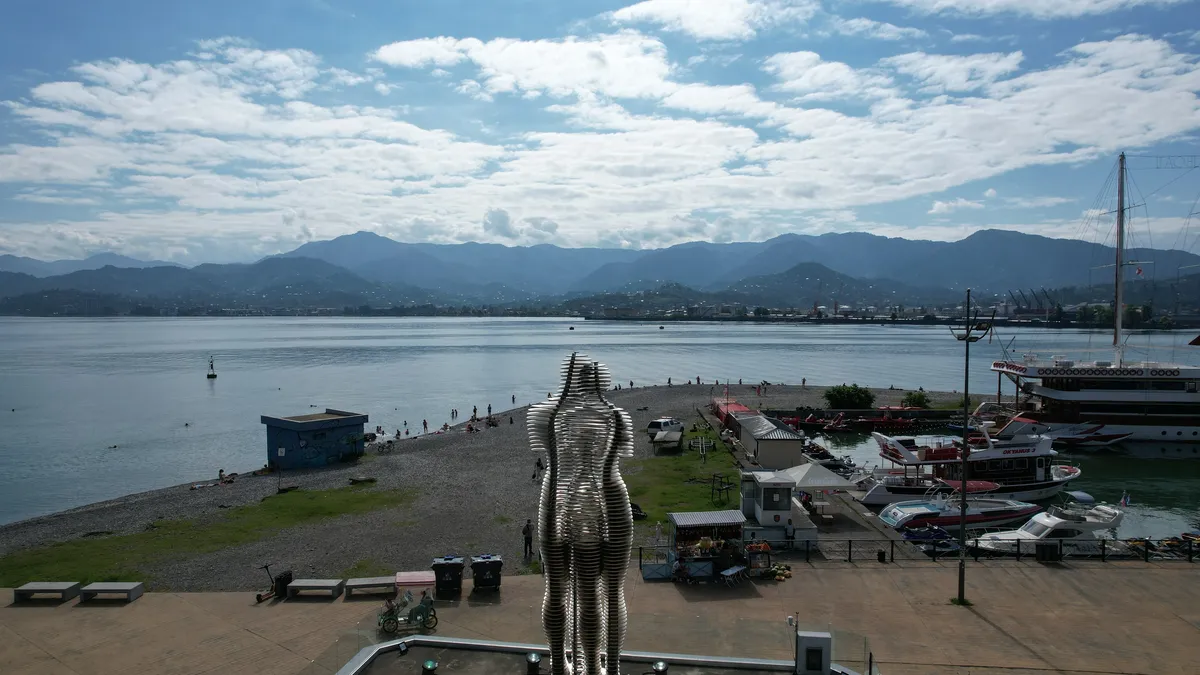
One of the consequences of a war crime is to undermine the Kakhovsky hydroelectric power station: residents of the south of Ukraine are deprived of the opportunity to swim at sea. Apocalyptic reports with beaches in Odessa have a panic and a logical question: is it worth it to rest on the Black Sea this year?
In the summer capital of Georgia - Primorsky Batumi - ecologists now often have to explain how everything is arranged in the Black Sea. The famous Georgian ecologist Kakha Guchmanidze answered questions about the currents, pollution and beloved fish of the Novaya Gazeta Europe Barabulka. In Batumi, he was asked by Iya Baratel.
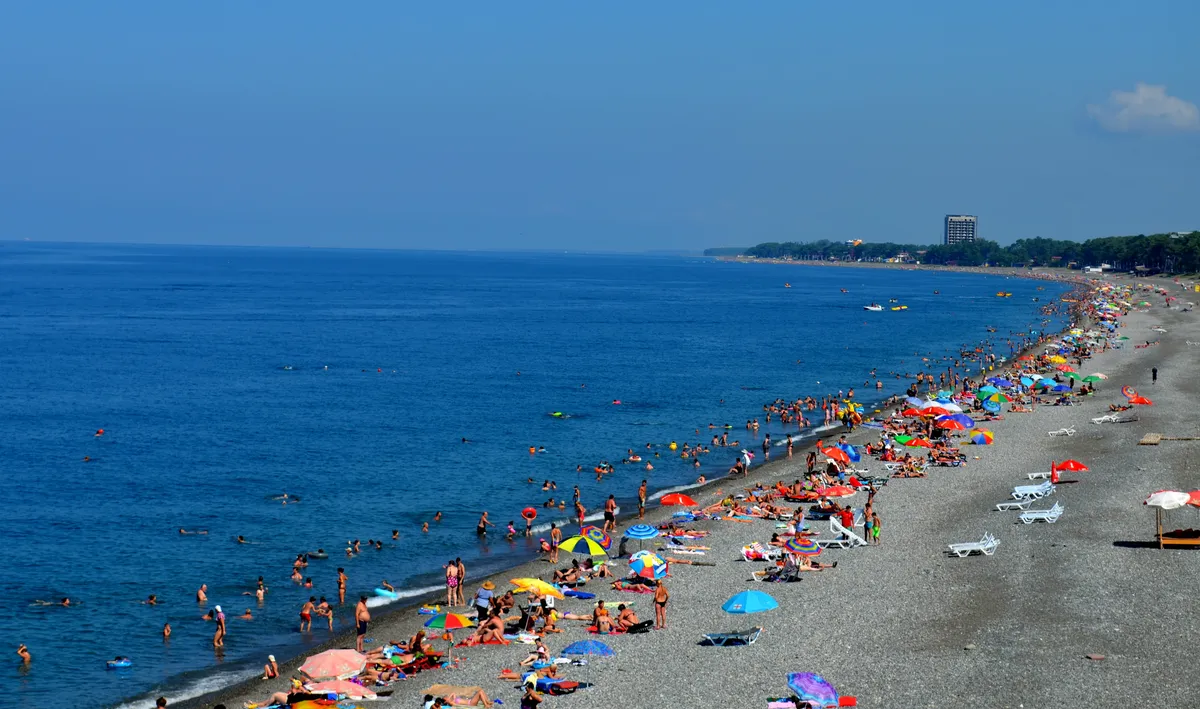
June is coming to an end, and seven kilometers of Batuma embankment - the old and new boulevard - are filled with crowds in the evenings. Here you will hear Georgian, Russian, Ukrainian, English, Farsi ... Girls in shorts and in hijabs, yachts “Gagra” and “Dnipro”, cafes and clubs with music for every taste. There are a lot of bathing in Batumi, but almost every day statuses appear on social networks: “We won’t go to the sea this year - there is cholera and a Siberian ulcer.”
Experts talk about the catastrophic consequences of undermining the dam for the south of Ukraine, where they have to solve the problem with access to clean drinking water. The fact that the anthrax does not survive in sea water, they also say, but the list of terrible diseases mentioned in social networks is still not reduced.

Kach Guchmanidze is a participant in many international environmental projects. In the past two weeks, he has already been invited several times to the prime time to Georgian television channels to ask how an environmental disaster in southern Ukraine can affect the Black Sea coast of Georgia.
Kakha, a resident of Batumi and the father of two small daughters, says that together with the family will, as always, go to the sea. Batumers are beginning to swim “truly” usually since July, especially since the first month of summer this year turned out to be rainy and cool.
- My house is 50 meters from the sea, not far from the well -known “orbi” high -heights, that is, this is a place where many tourists live and bathe. We rarely go outside the city - there is no time, usually we go the whole family to the beach closest to the house. The excitement that has now arisen is sucked out of the finger. There is no threat to Georgia from Ukraine. Together with my family, I’m going to spend the summer at sea and urge everyone to swim without fear, ”says the ecologist.
Not like in Odessa
There are no private fenced beaches in Batumi. They will take money from you for a sunbed or umbrella, but no one will certainly drive from pebbles near the sea. Of course, the Batumans have known the places where the current is more dead, and therefore the water is cleaner. Particularly biased fans of Instagram species can advise going out of town - in quariatry or cichisjiri. But in general, tourists, who in Batumi and neighboring Kobuleti in the summer are becoming more than local residents, are filled with city beaches.
On the same Black Sea coast, in Odessa, it is forbidden to swim in the sea. Due to the deterioration of the quality of river and sea water, the sanitary authorities of Ukraine from June 19 established a ban on fishing and bathing in open reservoirs in the Odessa and Nikolaev regions. The inhabitants of Odessa say that their sea has ceased to smell of sea, water "blooms", to the shore takes whole trees, the remains of houses, and dead fish.
Why don't we see such consequences in Batumi? It's all about the direction in which the water moves in the Black Sea basin.
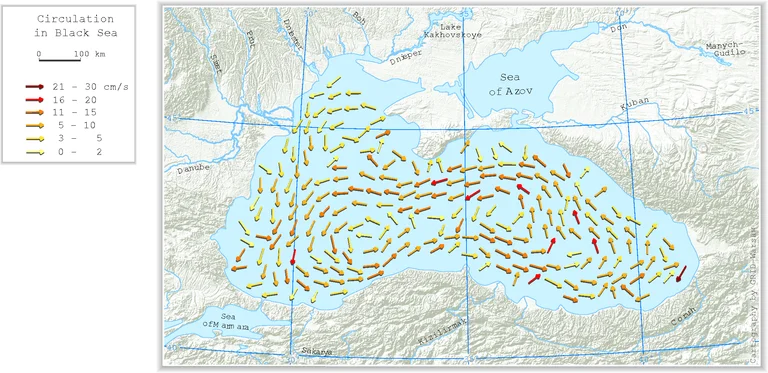
Scientists call this “cycle of the surface course”, and this movement occurs from north to south. This means that
The water that comes from Ukraine before getting into Georgia should pass almost a full circle along the Black Sea - through Romania, Bulgaria and partially Turkey,
Explains the ecologist.
The direction of the flow of water flow in the Black Sea is formed by large rivers - Danube, Dnieper, Dniester, as well as the Kerch Strait. In addition, the direction of the wind and morphology of the coast line affect the course. However, the dominant direction is on the right side. That is, immediately after Kherson, the water goes past Odessa, then follows to Romania, then-the Bulgarian Varna, Turkey-the Bosphorus and the Anatolian lowland, then from the north-west these currents go to Georgia, and then the current is divided in two, and the cycle ends again in Ukraine-in the Crimean area.
“The pollution that appeared in Ukraine has practically no chance of reaching our coast through such a distance, because natural filtration occurs during this time,” Guchmanidze notes.
Ecocide arising from a war crime
The ecologist recalls that the Kakhovskaya Dam is the last, sixth level of a rather large hydroelectric power station, which produced up to 380 megavatts of electricity. The undermining had serious military goals, but this attack caused an ecocide and a humanitarian catastrophe.
- First of all, Ukraine felt its consequences, but what happened affects the whole Black Sea. Of course, it is now difficult to demand the conduct of thorough studies of the sea from Ukraine: the country is fighting, it is not up to it. Therefore, I urge the relevant services of Romania and Bulgaria to pay attention to the results of research.
Now at the level of assumptions we know that as a result of the destruction of the dam in the water in the disaster area, the indicator of suspended particles, lead, nitrogen has increased. The flooding and gathering of water led to the fact that chemical pollution fell into the water: organics - corpses of pets, wastewater and sewage, as well as the remains of agricultural fertilizers, including pesticides.
Also at the Kakhovskaya hydroelectric power station there were more than 450 tons of fuel oil for turbines. According to the Security Council of Ukraine, as a result of the blowing of the dam into the Dnieper, at least 150 tons of machine oil washed away, another 300 tons can potentially get into the river.
There is still a danger that ammunition fell into the water, since the territory of the hydroelectric power station was partially mined.
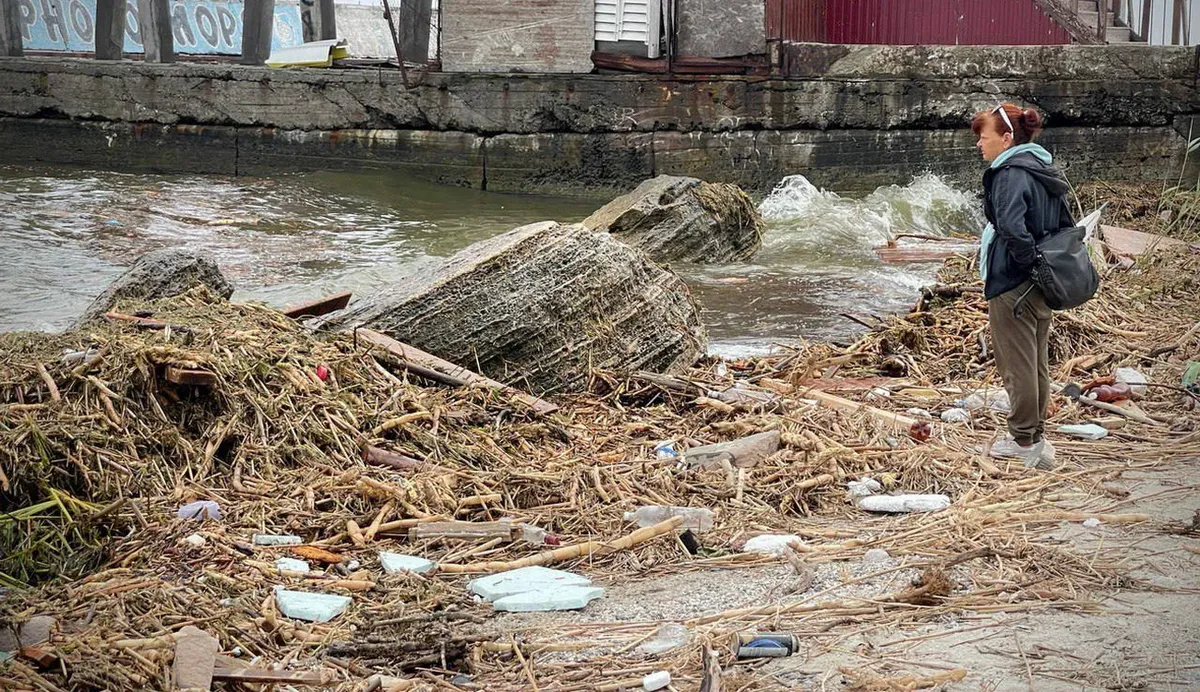
However, all this applies primarily to the Ukrainian water area. As a result, we observe the consequences on the coast near Odessa. There has already been eutrophy (sealing the reservoir as a result of pollution), the flowering of the sea, an increase in the number of algae, there increased pollution and at a certain level there was an ecocide. Although it should be noted that the coast of Odessa was not particularly purity before, ”Guchmanidze emphasizes.
At the same time, the environment is sure that although the disaster at the Kakhovskaya hydroelectric power station will have an effect on the Black Sea as a whole, this will not significantly affect the quality of sea water on the Georgian coast.
- I declare responsibility: the possibility that pollution from us may appear from Ukraine, from the Kakhovsky reservoir, is minimal. This will not affect the quality of water for bathing in the Black Sea, and there are no grounds for panic.
Hams and Barabulka
At the mouth of the Dnieper, precisely where the pollution occurred, is formed by ichthyofauna of the Black Sea. Therefore, environmentalists do not exclude that ichthyofauna will be polluted: in the next six months, this situation needs to be carefully studied.
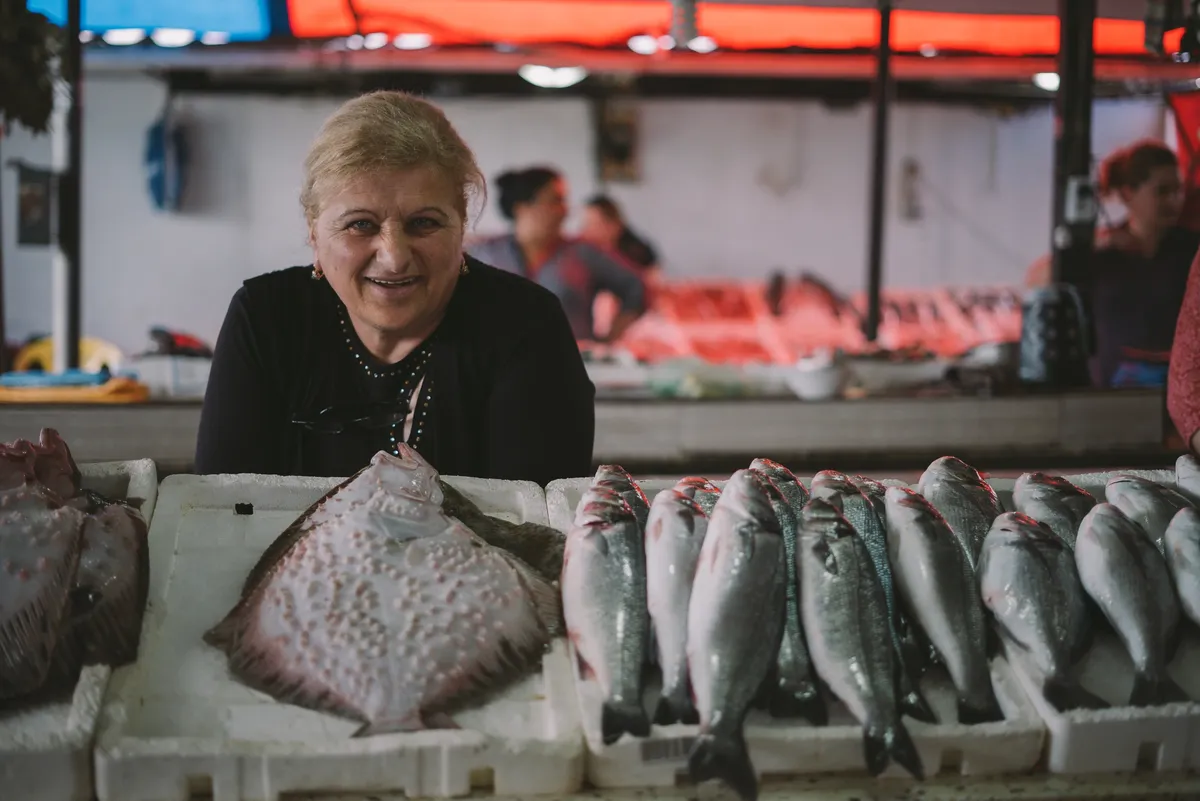
-As for the fishing stocks of fish in our Georgian water area, the jambs of fish such popular in Batumi as Hams are formed on the surface in the open sea, in its southwestern part, so the possibility of their pollution is minimal.
But there should be no problems with the beloved by many huts at all: the migration of this fish occurs slowly, besides, it does not come to us from Ukraine.
There is a slight probability that pollution can affect such a fish as a sargan, but this often happened earlier due to local sources of infection-for example, in the port. So, if this still happens once again, I would not be in a hurry to blame the Kakhovskaya hydroelectric power station of this.
But this does not give us reason to sit back and wait. It is necessary to take water samples daily and check biological, chemical indicators, as well as to study the ichthyophaun during the fishing period - especially in the fall to know if the pollution of fish came into fabric, ”says Guchmanidze.
Scientists state that as a result of the separation of hydroelectric power station, millions of cubic meters of fresh water fell into the sea, and this led to a decrease in the salinity of the sea. For example, the salinity indicator in the sea near Odessa is three times reduced. At the same time, on the coast of Georgia, salinity remains within the norm.
Is this harmful to fish in Ukraine? Researchers are not yet sure of how the situation will develop - there are different forecasts here, but Guchmanidze is an optimist.
- a three -time decrease in the salinity of sea water caused great damage to the sea biot in Ukraine ( BIOTA - a historically established set of species of living organisms united by a common habitat. - approx. I. B. ). However, I believe that the situation is subject to correction, and the previous balance will be quickly restored ... The fact is that ichthyofauna in this area is more or less adapted and resistant to such difficulties. The Dnieper and Danube are large rivers flowing into the sea in this area, and the salinity of the sea in this part was not high.
How to check water in Batumi
Guchmanidze advises the authorities against the backdrop of an ecocide in Kakhovka to take water samples every day and report on the results in the media in order to cope with the panic.
- There is a resource for this. It is not so expensive that our budget could not afford it, ”says the ecologist. - The other day, a dead dolphin was found in the Batumsk water area, and there were immediately rumors that this was connected with Ukraine. However, experts are sure that this is not so: dead dolphins on our shore are found several times a year, these animals get on the network, die from fungal diseases, there may be other causes. In short, pollution has nothing to do with it.
Also recently, a strange video spread on the social network how the corpse of a large animal swims near the shore in Sukhumi (Abkhazia). Guchmanidze is sure: it is impossible for the corpse of an animal who died due to a flood in Kakhovka to sail so far.
-It is possible that someone seeks to escalate the situation, and these were staged personnel.
The ecologist explains that the study of water in Ajaria conducts the National Agency for Nature Protection and the Local Administration for Nature Protection. He admits that samples are taken quite often, water in the rivers and at sea is checked according to various parameters: on lactose -positive intestinal sticks, colmorphic bacteria, coliphages, fecal streptococci, golden staphylococcus, general pathogens (including salmonella), as well as for chemical and biological oxygen consumption.
Black sea water is usually checked in those locations where, according to experts, the possibility of infection is great - for example, in the places of confluence of rivers into the sea. If the indicators are several times higher than the norm, then bathing on specific locations can be prohibited. However, this has not yet happened - on the contrary, the Adjara government recently reported that the water in Batumi is more pure than ever.
The ecologist admits that the sewage in Batumi is in excellent condition, all wastewater is filtered. However, the city of Kobuleti, located next to Batumi, as well as the villages, Coonio, Kvariati, who were popular among vacationers, as well as the villages of Vysokogorskaya Ajaria, are not included in this system, and there urban wastewater falls into the rivers, and then into the sea.
Guchmanidze also believes that the process of taking samples should more comply with the EU standards.
- There is a water frame directive of the European Union (VRD), there are EU instructions on how the water quality check for bathing is carried out. How do Georgians do it? I would advise clarifying the places of checking the sources of pollution, taking samples in places of active bathing of people, and not 50 meters deep from the shore, where not everyone sail, - the ecologist recommends.
In addition, in case of pollution, it is necessary to seek the identification of sources of infection in order to understand how to reduce its negative impact.
The ecologist advises all vacationers at sea to comply with the elementary rules of hygiene.
- Cases of poisoning or intestinal diseases, unfortunately, take place every summer season. Do not forget that after swimming in the sea you need to take a shower. Also axiom: children should not swallow sea water, no matter how clean it may be. These are elementary rules, and in the case of their violation, it is not necessary to blame the pollution of the sea.