
Translated material
It is difficult to be bo
Oleg Tundra - about one of the most anticipated copyright films of the year "All fears of Bo"
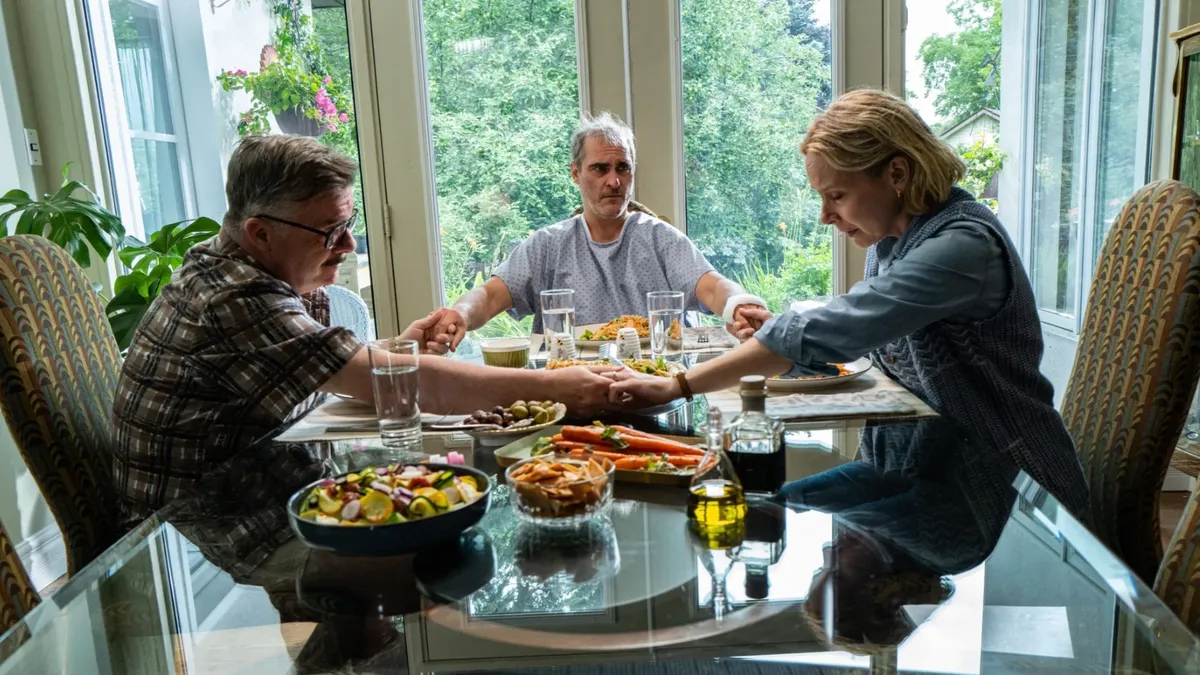
Frame from the film "All Fears of Bo." Photo: Kinopoisk
At the streaming, “All the fears of Bo” Ari Aster, a comedic horror with Joaquin Phoenix, came out at the streams. Three hours of screen time are dedicated to the absurd, terrible and homosexual inner world of the 45-year-old American Jew Bo: his memories, hallucinations, anxiety and dreams. “All the fears of BO” - the most expensive project of a cult ambitious film company A24 - can scare away with its rhythm and timing: usually for three hours on the screen we look at the superheroes that save the universe from robots and supermostations, but definitely not at a tired bald man, who throws from all into sweat. The uniqueness of the film is that it does not give the audience unequivocal answers, constantly deceives expectations and mixes very much, if you do not rush with conclusions and turn on the imagination. For no reason, a bloodthirsty naked maniac with a knife, a corpse without a head, a monstrous member or an animated fairy tale about the paradise gained on Earth may appear in the frame. Film critic Oleg Tundra explains why “All the fears of Bo” is one of the most witty and wise films about modern neurosis and why it is definitely not worth it to take it too seriously.
What is it about
The soft, passive and indecisive Bo (the grand role of Joaquin Phoenix) lives in a dysfunctional area of one of the large American cities. Rather, there are simply no prosperous areas on Earth: hundreds of aggressive homeless people graze at the entrance, weapons on the streets are sold with their hands, insects are flooded at home, a woman stands in a single picket with the announcement of “I will cut off my hands”, and the crowd of a onlookers embraces the suicide on the roof as soon as possible to jump down and shoots it on the camera.
Monday morning begins for Bo with a campaign to a therapist. Obviously, Bo has no relationship, no friends, and no one is waiting for him at work. At the appointment with the doctor, he shares his hypochondriacal suspicions and the plan to go to his mother on the anniversary of the death of his biological father. By telephone conversations and communication with the therapist, it becomes clear that the relationship between Bo and the mother is tense, albeit quite close. The doctor prescribes Bo a new drug Zipnotikil, which should soften the alarm, and warns that the medicine must be washed down with water. Bo returns to his neglected entrance and rises to the poor apartment, but suddenly realizes that there is no water left - no. In a panic, getting into the store behind a bottle, he falls into the whirlpool of unpredictable, terrible and surreal events that prevent him from coming to his mother in time. Fear and all-enjoying guilt-his main companions in this solo trip.
Garden of diverging paths
Retelling the content of “all fears of bo” is a pointless and completely unnecessary matter. The author of "Reincarnation" and "Solstice" Ari Aster shot a film in which everyone can discern their own and be carried away by any branch of history. Aster himself jokingly calls his brainchild "the" Lord of the Rings "about how the son returns to his mother." For some, it will be the “inner empire” or “Malholland-Drive” through the eyes of an aging anxious man. For some, the psychosis of the city neurotic, about which Woody Allen has been shot for decades. For Kafka admirers, this is a spiral around Metamorphosis. For fans of Joyce or Proust - Ulysses or “In Search of the Lost Time”. For lovers of American independent cinema, Aster's film is the new “Truman show” and the worthy heir Charlie Kaufman, who came up with the “eternal radiance of pure mind” and “I think how to finish all this.”
The insightful Aster and the “dizziness” of Hitchcock and the “eight and a half” Fellini quotes relaxedly, but removes an endless joke of a panic attack of three hours a completely unique joke. The biggest mistake is to perceive “all the fears of Bo” literally and seriously and suffer from the question: “What did the author want to say?” The author says the same thing every minute in different ways: "Mom, we are all seriously ill." And the main gift for the viewer of streaming is to stop the film almost every minute to look at the situation around the bo, read the inscriptions on the walls and pay attention to trifles. What kind of war in Karakas? Why etch in blue paint? Can a fallen chandelier tear off your head?
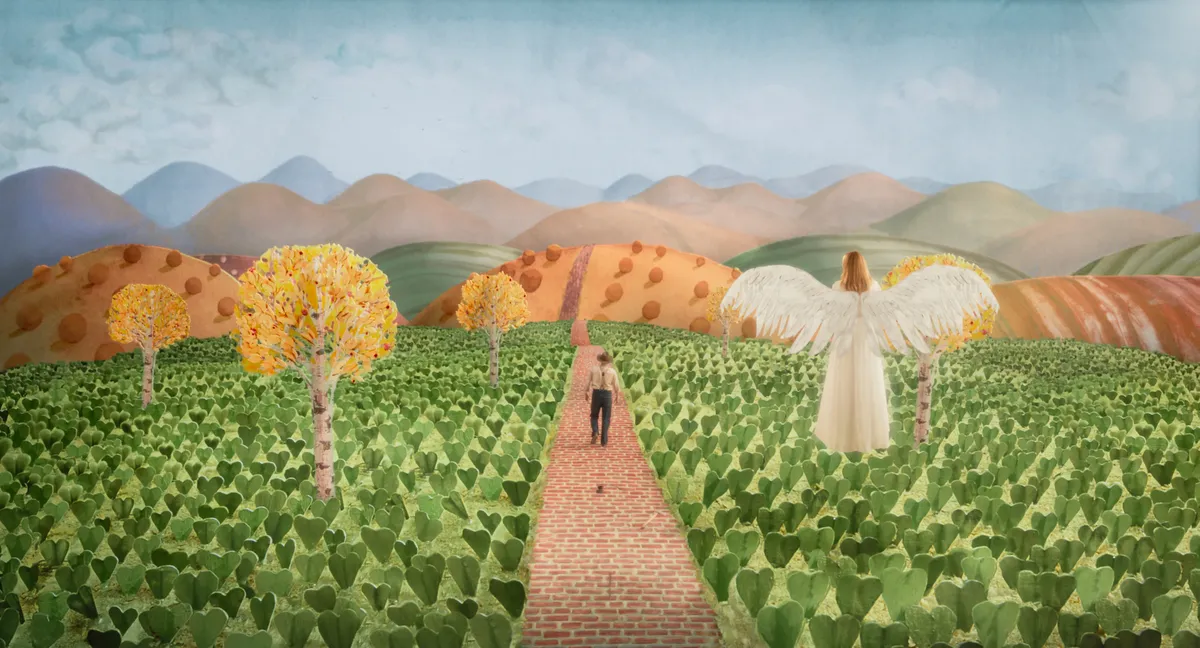
The anti -utopia, in which Bo lives, is to the limit to the twisted pseudoculated world with the strikes of cleaners and the sea of homeless in the richest megacities. In the sex bar Erectus ejectus on the signs-menu from Pornhub: from “Smoking Pussy” to the “perfect normal member”. In the entrance of BO it says "Glory to Satan!" And “all the toilers are clogged. The sink wherever you want! ”, And on the street there is a poster“ Jesus sees your abomination ”and advertising of cheap divorces. Monstrous teenagers seem to swallow pills from the "euphoria" and think of how to kill the teacher with fake accusations of harassment. Several roles are played by wonderful comedy actors (for example, a person who voiced Pumba in King Lion, and the unforgettable Holly from the Office), and terrible scenes will mix much more than they scare. Fiona Crombi is responsible for the fantastic production, who invented the alternative universes of the "favorites" and "Cruella", where violence is adjacent to solemnity and carnival. “All fears of Bo”, most likely, can hardly be learned the first time, but will be revealed with each next view.
All about his mother
The obvious theme of the film is the relationship with the mother, or rather, the relationship of the Jewish son with the Jewish mother (one of the tragicomic paths). But the audience will only win if they see in this plot not only a long history of psychological violence and manipulations, but the internal conflict of each person between duty and dreams: it does not matter if we are talking about the unjustified parental hopes or the world that remained for us from the generation of parents.
Bo is a non -accident name for the protagonist: in French it means “good” and “beautiful”. Wasserman is literally a “man of water”, the most calm, strong, nourishing and non -violent elements. Each person is born with a clean sheet, by default sinless and natural. And then he enters the world, where the house stands like a million of his salaries, at each stage it is examined and awarded or punished, and also pamper, scare, inspire the concepts and rules of the environment. Mom’s mother is the name of Mona - the name of the main mother in Western culture, the mysteriously smiling Mona Lisa. And for the time being, Mona really tries to give his son so much care, guardianship, love and warmth as an earthly woman, which has grown imperfect, can give.
But unconditional love is the same non -existent utopia as paradise on earth. So both parents and children are doomed to the gradual burden of love with the conditions and debts that will never be paid. How Nina Simon sings in one of the last scenes of the film, "We are all to blame." If we discard the Christian understanding of sin, we are always to blame for our parents and children, because we will never correspond to the ideal. “All the fears of Bo” can be watched as a drama about the injured and cowardly mamenkin son, the tragedy of the victim of parental manipulations or a sad necrologist. But he reminds me of a three -hour nightmare of an ordinary person on his not the most successful day. Existential horror transmitted to the body before an illogical, cruel, stupid and very unfair world, where it is impossible to make plans.
The pose of the child
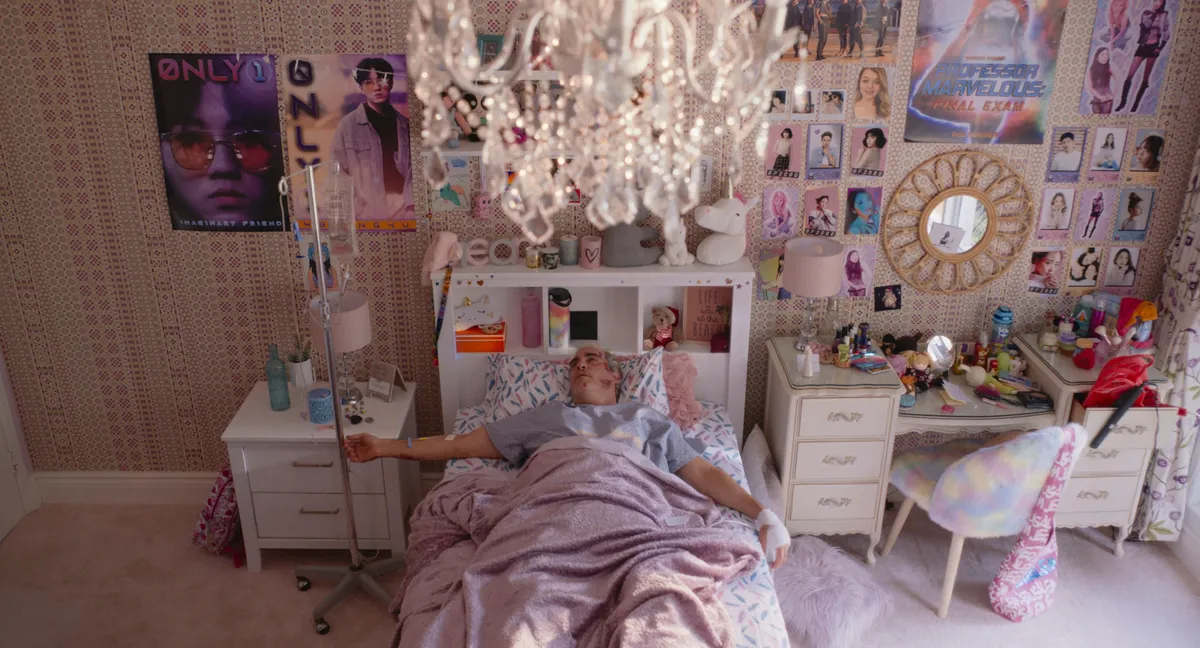
“All fears of BO” is perceived as a film about an abandoned and frightened inner child. After all, it is scary not that we are adults, but that adults are we. Safety among the slogans “kill children” and “fuck the pope” must be sought by himself. "What do you think I do?" - asks his mother Bo, bewildered, torn by contradictions, who wants to please and procrastinate. Everything that is happening around Bo goes according to the worst scenario, for which his inner child is not ready.
An attentive viewer will see that everything that surrounds the bo - from the microwave and a quick dinner to the house where he lives - belongs to his mother. The most frontal interpretation - his influential corrupt parent subjugated the world and imprisoned it in the scenery. But under the surface you can find the second layer: we are abandoned by children into this world, invented not by us, where everything belongs to someone and built by someone before us.
We are able to choose some actions and circumstances, but not a system. And the horror of good and beautiful bo - in his fundamental helplessness, which is so contrary to the neoliberal myth of success with life hacks, affirmations and self -help books. A map is blocked, a flight was missed, there are not enough trifles on a bottle of water - a person for a moment plunges into stress and complete impotence. And many live in this whirlpool for years. The burning shame is the usual feeling of a person in trouble, which, with regular failures and mismatch, voluntarily calls himself "the worst person in the world."
The choice of Joaquin Phoenix for this outstanding role is also important. His characters over the past decade are confused adults with children's expectations from the world, eager for love, understanding, justice and warmth. A broken jocker or a depressive reporter from Camon, Camon, a sentimental loner from “She” or a stooped detective from “Congenital vice”, the Savior from “You never was here” or a veteran frightened by the Figure Figure in Master. Bo is another disliked and misunderstood hero, whom Phoenix plays with a bewildered face and lethargic movements. “You have big eggs,” it is customary to say to the man when he makes a strong act. Bo has huge eggs (a comic detail, which was even devoted to a special interview ), and at the same time he is touchingly and recognizably cowardly.
False alarm
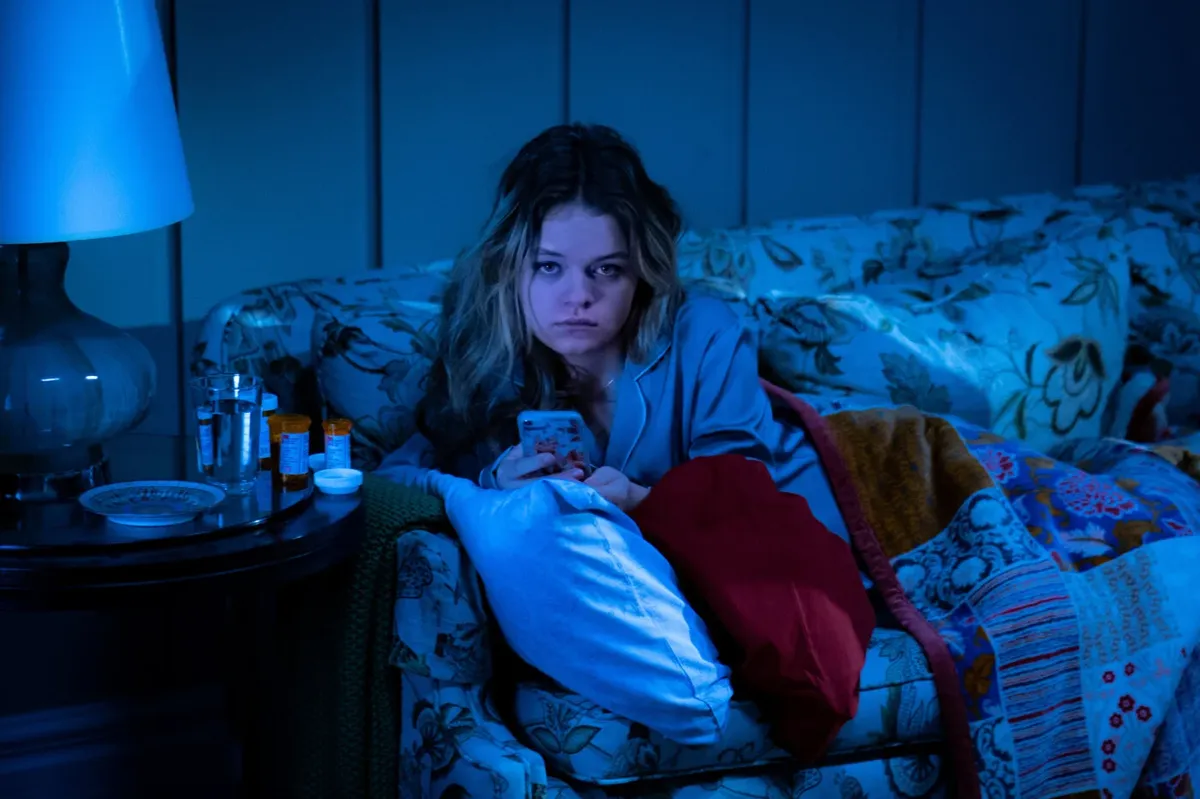
Anxious disorder and depression is one of the most popular and under -impaired diseases of our time, and Ari Aster constantly returns to the symptoms in the script. His heroes swallow pills in packs, live in a panic news stream, they are tracked by cameras and trackers, they are fighting and staring at violence. Bo, like all of us, is brought up in the myth of harmonious life and purpose: to find your place for life, build a family and house, plant a tree and collect fruits, learn crafts and convey it to children. Instead of a fairy tale at night, mom tells him how important it is to surrender to the partner entirely: “There is nothing more important in life than choosing a suitable satellite.”
Loaded with hyper -realization for each of its choice, BO lives in a society where the ideal is passed down as a standard. That is why a walk in the woods with the troupe of the orphan theater relaxes him. Instead of the rules of life on the trunks, soothing inscriptions hang: “Nothing more”, “Know yourself” and “Follow every rainbow, until you find your dream.” But this is not that the usual world reports Bo daily: the environment speaks with him by parental imperatives and scares with early death and lost opportunities. Just do it, achieve more, you just need to want! If love, then childish and pure. If an orgasm, then like a little death. If work, then by vocation. If income, then fabulous. Mom, we all went crazy. But this is treated - at least by death. Or awakening.