
Translated material
Safari in Putin
South Africa thinks how to conduct a BRICS summit with the participation of the Russian president and at the same time not to arrest him. But the West has its own levers of pressure on the praetory
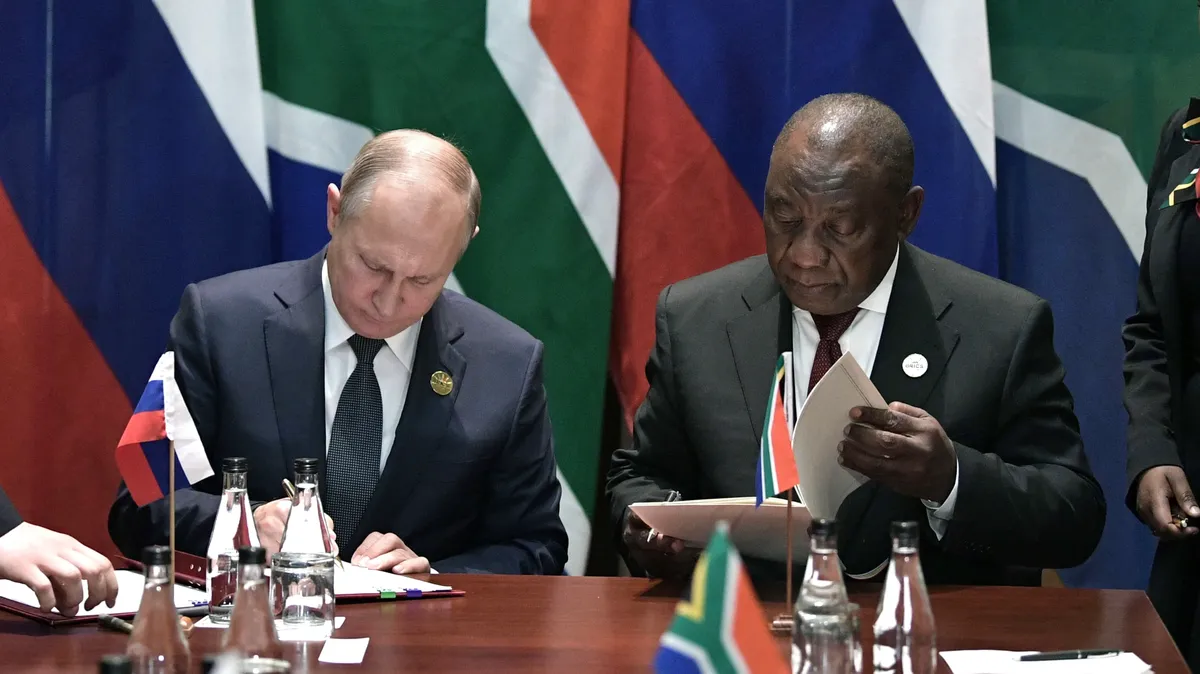
Vladimir Putin and Cyril Ramafos. Photo: EPA-EFE/ALEXEI NIKOLSKY
In August 2023, the 15th Brix summit should take place in South Africa. The leaders of the five countries of the Union - Russia, India, China, Brazil and South Africa - traditionally attend this event personally, including Vladimir Putin. However, after the International Criminal Court issued Putin's arrest warrant on suspicion of committing war crimes in Ukraine, for the President of the Russian Federation these plans were in question.
South Africa is trying to find a way out of a difficult situation, balancing between the desire not to offend Moscow and Putin personally and at the same time not to violate his international obligations as a country that signed the Roman Statute Mus. At the end of July, President of South Africa, Siril Ramafos, will probably fly to the Russia -Africa summit to agree with the Kremlin about the acceptable for everyone. Among alternative ideas there is even the transfer of the Brix summit from South Africa to China. Novye Europe talked with South African experts and tried to figure out the situation: what is happening in the country now, what is the likelihood that Putin will still be allowed to participate in the summit, as well as what leverage on the Praetory has the EU and the USA.
The news that the International Criminal Court (MUS) issued an arrest warrant of Vladimir Putin on suspicion of organizing the illegal deportation of children from Ukraine, put South Africa in a difficult situation. In August 2023, the next BRICS summit, the presence of the leaders of all countries participating, including Russia, is expected in the South African Republic. However, South Africa is also a country that signed the Roman Statute - an international agreement that established by the Mus - which means that legally its authorities will be obliged to detain Vladimir Putin immediately after he descends from the plane of the aircraft and transfer it to the Netherlands to the authorities.
So the routine event, usually not attracting a lot of attention outside the circle of participating countries, suddenly took the first stripes in the international agenda. The bets are growing by the day, but by the hour for all interested parties.
For Putin, this summit represents a chance to show the world community that attempts to isolation of Russia have failed. For Mus, this is a test of the strength of its authority-what is the meaning in the body if the participating state does not obey him.
For Western countries, it is a great opportunity to deliver a person to the court, who gave an order for a full -scale invasion of Ukraine. And for South Africa, the summit seems to become an exam on equalibrics: can the country be able to maintain relations with Russia and at the same time not to strike its international reputation?
Pretoria headache
The most accurate word that comes to mind when trying to describe the reaction of South Africa to Putin’s potential arrival in the status of a face that is looking for Musa is confusion.
On March 19, almost immediately after the news of the issuance of an arrest warrant, the representative of the president of the country Vincent Magvenia said that the government "continues to interact with all interested parties about the summit and other issues related to it." On March 23, the Minister of Foreign Affairs and Cooperation of South Africa Pandor confirmed that Putin received an invitation to the event, and on March 24 added that Praetory was expecting a “legal imprisonment on this issue” and “remains a participant in the Roman Statute”. At the same time, Pandor complained about the “double standards” of the International Court.
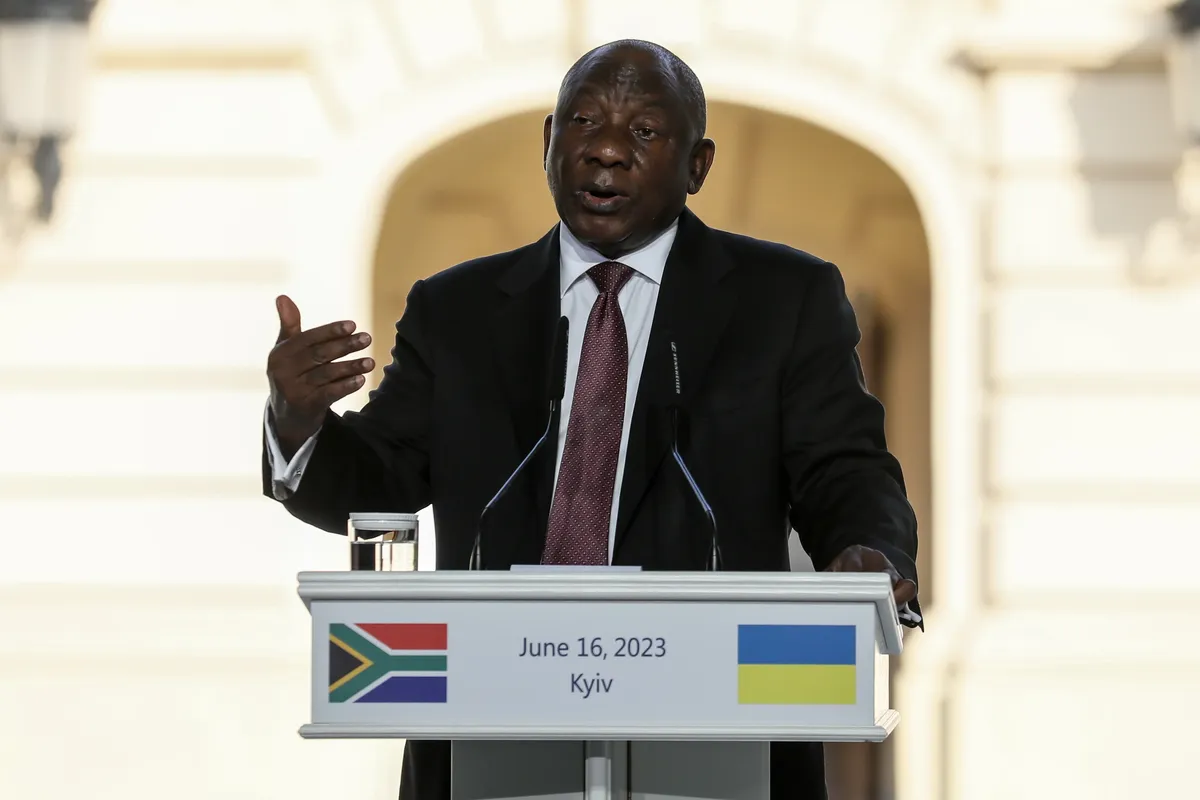
An unexpected performance by the President of South Africa made an even greater confusion to the question. On April 25, Cyril Ramafos said that the South African Republic is leaving the Roman Statute. However, literally a couple of hours later the president’s office published a refutation, saying that this was a “erroneous statement”.
Finally, on May 29, a short application appeared on the website of the South African Foreign Affairs on the provision of diplomatic immunity to members of the ministerial meeting and the BRICS leaders summit. According to the agency, this is the "standard procedure that is carried out for all international conferences and summits, regardless of the level of participation." However, on May 31, the Democratic Alliance, the main opposition party of South Africa, issued an application with confirmation from the Foreign Ministry that "diplomatic immunity will not be applied to Putin, and the warrant for his arrest remains in force." In turn, the Deputy Minister of State Enterprises of South Africa Bapel, BBC, told the BBC that the government intends to change national legislation in order to independently decide whether to arrest someone at the request of the MUS or not. “We will submit a bill in parliament in June,” he promised.
In parallel to these political and diplomatic unrest, various publications published stories about backstage negotiations between Praetory and Moscow. So, Sunday Times noted that the South Africa authorities asked Vladimir Putin not to come to the BRICS summit and take part in Zoom.
“We have no option not to arrest Putin. If he comes here, we will have to arrest him ",
- Sunday Times said one of the sources. Reuters later said that the summit could be transferred to China in order to avoid decisions on the arrest of the President of Russia.
The Kremlin is silent about Putin's plans. According to his spokeswoman Dmitry Peskov, a famous master to make a statement, not saying anything on the merits, the decision to travel the President of Russia to South Africa “has not yet been accepted”, but the preparation “goes on its own.” Peskov later added that "Russia will take part in this summit at the proper level." But, if you rely on the experience of the G20 summit in 2022, which took place in Indonesia, we can expect that confirmation or cancellation of the visit will happen just a couple of days before the event. Then the months of speculation on whether Putin will come to Bali personally at the end a week before the summit, when Peskov announced that the Russian delegation would be headed by Foreign Minister Sergei Lavrov. However, BRICS is a club of states much closer in spirit than G20, and Putin’s motivation is to visit it personally now.
Friendship against the West
Despite the fact that the identity of Vladimir Putin has recently acquired special toxicity in the international plan, Russia's partners are in no hurry to renounce a potential military criminal. So, the leader of China Xi Jinping recently visited Moscow. India Prime Minister Narendra Modi will preside at the SCO meeting with the participation of Putin and Si and meets with Nikolai Patrushev in New Delhi (although, according to press reports , he canceled his personal meeting with Putin in December 2022). Brazilian President Lula da Silva recently held a telephone conversation with his Russian colleague, in whom, however, he refused to invite to come to the PMEF, but confirmed that he was ready to talk with both parties to the conflict in Ukraine.
As for South Africa, then there is also no special cooling of relations. On the contrary, Praetory did not support a single UN resolution with criticism of Moscow’s actions in Ukraine, the Minister of Defense of South Africa came to Moscow in August 2022 for bilateral negotiations, the ruling party of the country exchanged experience with United Russia, and the head of the Russian Foreign Ministry, Sergei Lavrov, has already visited South Africa since the beginning of the year.
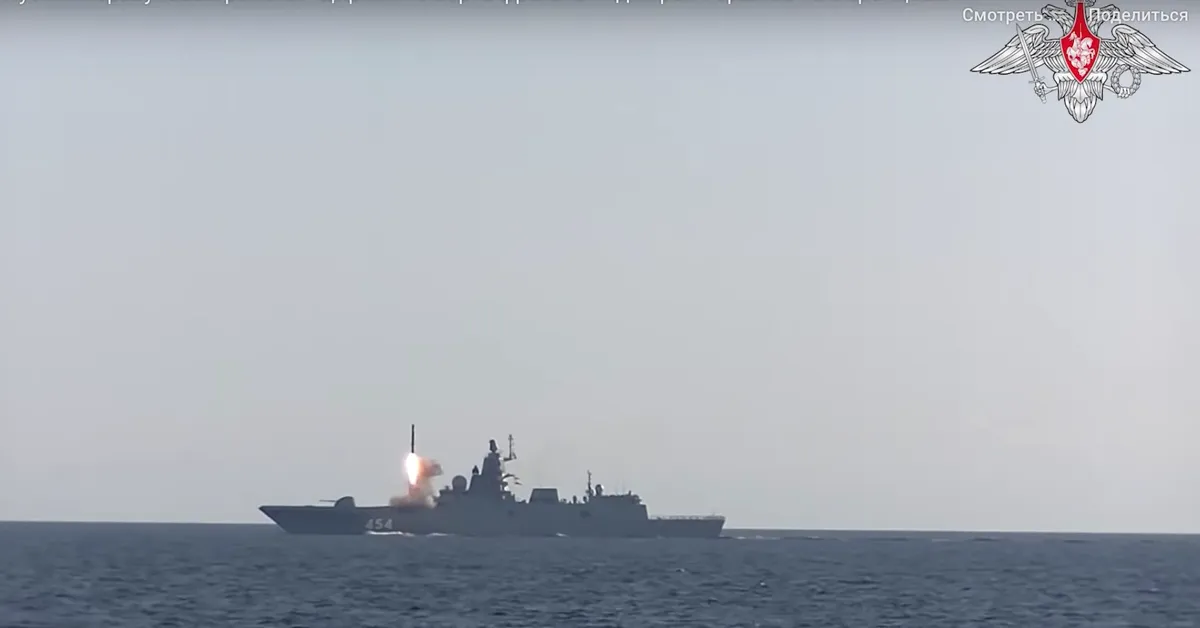
However, the most high-profile event was the tripartite naval exercises of the Russian Federation, China and South Africa, which took place in the Indian Ocean near Durban on February 17–27, just on the anniversary of the full-scale invasion of Russia in Ukraine. Although the head of the Russia -Africa project at the South African Institute of International Relations (SAIIA) Stephen Gruzz and does not consider the past teachings to be large -scale or serious, he is sure that "South Africa used these teachings as an opportunity to say: we have an independent foreign policy, we ourselves will choose friends and enemies and decide what we do as a sovereign state."
The ideas of “anti -colonialism”, the struggle against the Golden billion and “dictatorship of the West”, which have been promoting Moscow have been promoting in South African, find in South Africa. Since the beginning of the war in Ukraine, these theses have acquired a new dimension, and after the speech of Vladimir Putin in September 2022 at the official annexation of the four Ukrainian regions, it became clear that Russia will now present itself as a new attractive leader instead of the “selfish collective West”.
“Arguments about a more honest world, the multilateral world that Russia promotes, resonate in South Africa, they find fertile ground here,
- Stephen Gruzd is sure. -South Africa really sees Russia as an ally in the process of reforming the world order. The only question here is how sincere Russia is in these aspirations. ”
The accession of South Africa to the BRICS in 2010 was largely a continuation of the national foreign policy of multilateralism and multipolarity. “All BRICS countries express an anti-colonial and anti-imperialist ideological position in world politics, and the South African government shares these sentiments in its foreign policy,” says Theodor Neutling , professor of the Department of Political Science and State Administration of the University of Free Postin. South Africa also seeks to reform the global management system - the UN Security Council, IMF and the World Bank. To achieve these goals, the country needs allies. Perhaps this explains the unwillingness of South Africa to distance himself from Russia and Putin, which led Praetory to a kind of fork in the current situation.
On the same bowl of Libra lies the historical proximity to Russia: the Soviet Union actively supported the liberation movement of the black population during the apartheid. According to The Conversation, at that time Moscow was actively involved in support of the African National Congress, now the ruling party of South Africa, both financial and military terms. Thus, Russia has been crawling apartheid, and many ANC functionaries still remember this.
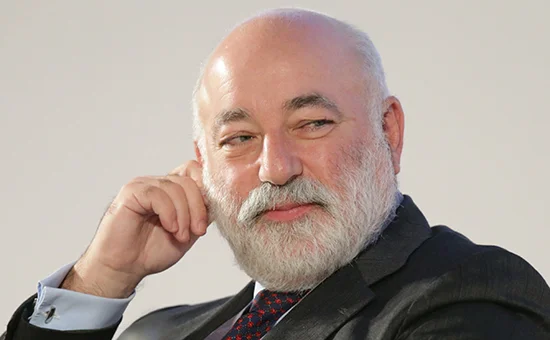
The memory was well refreshed by 826 thousand dollars, recently received by the party as a donation from a mining company, which is associated with the Russian oligarch Viktor Vekselberg. “Victor Vekselberg was previously connected with the ANC - his name is not the first time, and this is a rather large donation for a political party that was very in need of money,” said Stephen Gruzd's news for the Voice of America. And the local publication Daily Maverick claims that "relations with the alleged person of the Kremlin are extremely important for the party finance," since this company "is perhaps the largest source of the declared financing of the ruling party."
At the upcoming summit, as Bloomberg writes , BRICS leaders will discuss the potential expansion and creation of a common currency “for the opposition of the United States”. So if the war in Ukraine and the order of Putin’s arrest and influenced the harmony of the rows of BRICS, then this is not yet visible to the general public.
Omar al-Bashir 2.0
I must say that South Africa is not the first time in a difficult situation in connection with the decision of the Mus. In 2015, at the Summit of the African Union, the country received the then President of Sudan Omar al-Bashira, whose arrest warrant was issued in 2008 on charges of genocide in connection with a conflict in Darfur, where, as claimed, ethnic cleanings were carried out. Al-Bashir became the first acting head of state, against which international allegations were made. He received an invitation to the summit despite the protests of civil society and public organizations of South Africa.
The then administration of the President of the South African Republic, Jacob Zuma, also claimed that all participants in the event have immunity from law enforcement agencies as officially invited persons. The Mus insisted that the immunity of any person who was given an arrest warrant is suspended regardless of whether his native country has ratified the Roman Statute.
As a result, al-Bashir flew freely to South Africa and left the country after the summit.
Activists sued the government for non -fulfillment of international obligations and won the case in two different instances. In 2017, judges of the Mus decided that South Africa made a mistake, allowing al-Bashir to freely leave the country. This decision of the judges itself creates a precedent, but at the same time exposes a big problem in the jurisdiction of the Mus: in the performance of its duties, the court depends on the signature countries. The South African Institute for Safety Research (ISS) then wrote that "the court decision is important not only because it raises questions about the role of South Africa in international justice, but also because it indicates the weak tools that Mus has to ensure cooperation of states."
In the situation with Putin's alleged arrival of Praetoria, I also tried to apply the protection strategy with the provision of immunity, but, apparently under the pressure of the public, I was forced to clarify that this had nothing to do with Putin. Nevertheless, Stephen Gruzd believes that South Africa will again figure out how to get out of an impasse, retaining his face as much as possible: “I suspect that he will come [Putin]. But some deal will be concluded. And I do not think that he will be subjected to such a shame as an arrest in South Africa. But legal problems may arise. I believe that civil society is mobilizing and, perhaps, another court lawsuit will follow. ”
Theodor Neutling also believes that if the Russian president decides to visit South Africa, he will not be arrested. But he thinks that "Putin may be convinced to visit [the summit] online or even be presented by the Minister of Foreign Affairs Sergei Lavrov." The fact is that South Africa one way or another will have to look for a balance between relations with BRICS, on the one hand, and relations with the West, on the other. First of all, because South Africa needs to take care of their trade relations with the EU, Great Britain and the USA.
Blackmail tool
The United States and the EU hold in their hands a very serious tool for influencing South Africa - trade. The volume of foreign trade between South Africa and the United States reaches $ 21 billion a year. At the same time, South Africa enjoys the advantages of the law on ensuring growth and expansion of opportunities in Africa (Agoa), which gives the country privileged access to the American market and a number of other messages. The volume of foreign trade between South Africa and the EU, in turn, is estimated at 55.56 billion euros per year. For comparison, Russia provides South Africa by turnover only for $ 1.3 billion a year.
Back in February, against the backdrop of the naval teachings of Russia, China and South Africa, the United States announced that they were ready to revise trade relations with the latter. And in May, the US Ambassador to South Africa openly accused the country of supplying weapons and ammunition to Russia. According to his statement, the fact of the transfer was recorded at the marine base near Cape Town, where the Russian ship was moored. “The armament of the Russians is an extremely serious circumstance, we do not consider this issue resolved and would like to practice the South Africa to practice the non -alignment policy,” the ambassador said.
In response, President Ramafos promised to understand the situation and created a commission to investigate the incident, and his spokeswoman publicly criticized the ambassador for a hasty statement made in violation of an agreement with the White House about the need to first complete the investigation. According to The New York Times, against the backdrop of these accusations, the Course of the National currency of South Africa - the South African Rand - accelerated its fall relative to the dollar.
If you believe the official Praetory, a couple of days later the US Ambassador apologized for his words. And a few days later, South Africa announced that she would send the African delegation to Moscow and Kiev in order to offer the continent's view of a potential peace agreement that would stop bloodshed. Hardly such a sequence of events has become an accident.
According to Stephen, a burden, South Africa uses significant privileges in international relations as one of the key countries in Africa. “South Africa give a lot of freedom in the international community when it does things that the West does not like,” he claims. - I think that these relations can be tense, but Western countries will never risk cutting them off.
And it seems that the more the embassies express their disapproval, the more South Africa addresses China and Russia. So the stronger the pressure is, especially if this happens only in words, the harder South Africa stands on its own. ”
Nevertheless, all the tools in order to force South Africa to regret an alliance with the Kremlin and fulfill their international obligations to the Mus, the West has. Moreover, Praetoria is already criticized by international partners and opposition forces within the country for its desire to avoid criticism of the Kremlin for an unleashed war against Ukraine.
А это значит, что решение о том, как поступить с Южной Африкой, если президент России прилетит на саммит, лежит в руках западных стран. Вопрос только в том, готовы ли они действовать жестко и решительно.