
Translated material
Wake -up
Who and why wrote denunciations in the USSR
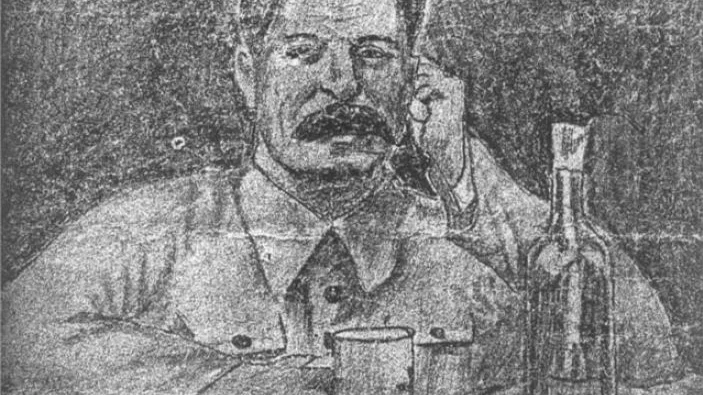
Portrait of a cheat shoemaker, drawn by Viktor Zyryanov. Source: Immortal hut
Recently, the director of the Russian school complained to the police of one of the students because of its pigtails, in which yellow-blue ribbons were supposedly woven in the colors of the Ukrainian flag. The hairdresser convinced the employees that the ribbons were not yellow, but the light green, and there was no political gesture in the hairstyle.
But the fact itself is a complaint about pigtails - a symptom of the "epidemic of denunciations", which again became popular with the outbreak of war. Particularly vigilant Russians began to complain about clothes, words and posts on the social networks of their fellow citizens, and sometimes real criminal cases are initiated on these complaints. All this Russia has already passed in the era of the USSR, and the information has reached its heyday under Stalin. Stalinism researcher Denis Skopin analyzes the typology of Soviet denunciations: who, to whom and why he wrote them.
Public control
Although usually denunciations in Stalinist Russia were not anonymous, in his letter the scammer often tried not to speak on his own behalf, but on behalf of the dissatisfied group, introducing himself as a “public voice”. Under Stalin, a special type of denunciations was distributed and encouraged - from ordinary citizens to officials. This "format" was considered public control in relation to bureaucracy. Stalin personally encouraged reporting and used it in a hardware game against the regional party elite.
The case of “graduate students” and a member of the party Polina Nikolayenko from Kiev, described in many memoirs , is widely known. A young employee of the museum town began to write denunciations for leadership-and the leadership tried to get rid of her in response, sending a young woman to study in the graduate school of the Association of Research Marxist-Leninist institutes. There the situation with denunciations repeated. As Nikita Khrushchev notes in his “ memoirs ”, who later was aimed at the place and personally communicated with Nikolaenko, she considered all the Ukrainians “nationalists and Petliurists”. The “graduate students”, the party leadership of the organization, and then the republic tried to fight Nikolaenko, preoccupied with such a violent activity. At the direction of the later secretary of the Kyiv regional committee of the Communist Party of the KP (b) of Ukraine, Pavel Pustyshev, who, by the way, himself destroyed a lot of people, she was even excluded from the party. However, through Lazari Kaganovich, who arrived in Kyiv to collect information about Sosehenshev himself, Nikolayenko’s case reached Stalin, who, in his speech at the February-March Plenum of the Central Committee in 1937, cited her as an example as a vigilant citizen, “small man”, “ordinary party member”, which the large regional authorities do not pay attention to. Most likely, the “vigilant citizen” Nikolayenko, who wrote a huge number of denunciations, was mentally unhealthy.
Vigilant pioneers
One of the reasons for the denunciation was spying, planted on top. The practice of looking for hidden enemies flourished and encouraged. The most vulnerable before propaganda, calling for the identified enemies and saboteurs, were children. In the pre -war USSR, the song “ Brown Building ” was popular for the verses of Evgeny Dolmatovsky. It told a fictional story about the pioneers who found a foreign button on the road and reported a suspicious object to the authorities. Thanks to their vigilance, the saboteur was detained.
It is not surprising that such behavior was reproduced by some schoolchildren. In her memoirs, “ how much does a person ” is the writer of Euphrosyne Kersnovskaya (who was arrested as a “landowner” and spent many years in the Gulag) tells how she met a girl of 11-12 years old, from whom she asked for water during a trip through Georgia. Having promised a naive traveler to bring milk, a vigilant pioneer instead brought the authorities to a suspicious stranger. Kersnovskaya recalls the disgust that she experienced, later reading an enthusiastic note in the newspaper, which told about the "feat" of the girl and gratitude of the authorities. In Kersnovskaya’s memoirs there is also a story about how her neighbors in a communal apartment - people to whom she made a lot of good - on the instructions of the organs took out her letters to her mother from the mailbox and attributed them to reading the NKVD. In general, memoirs of the 30-50s are replete with such plots.
"Professional" scammers
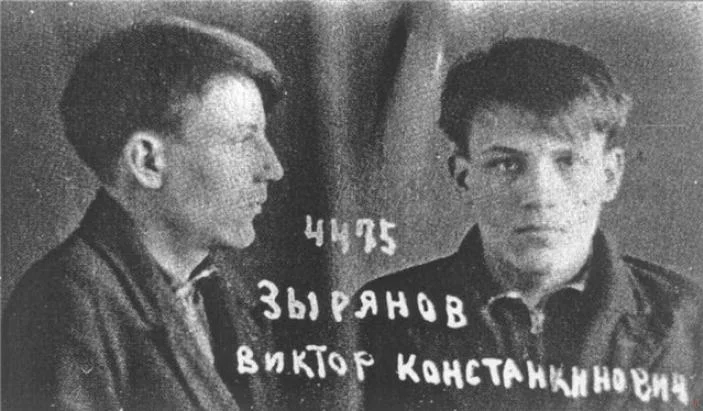
Of course, the chance to become a scammer depended on the profession. The monitoring of the loyalty of the wards was carried out by teachers, as well as small pioneering and Komsomol activists. One case is curious. In April 1934, a twenty-year-old lecturer of geography of the craft school, Sverdlovsk Zyryanov, decided to draw a portrait of his friend, Sapozhnik-Sawnitsa. However, Zyryanov’s shoemaker turned out to be incredibly similar to Stalin, sitting in thought with a bottle of vodka and a gnawed skeleton of herring. Zyryanov showed a portrait to several colleagues. The rumor about the existence of the drawing that defended the power reached a certain party member, who ordered the pioneer leader to steal a portrait from the dugout, where Zyryanov lived. The pioneer leader fulfilled the order, which was very proud. As a result, Zyryanov was sentenced to five years in prison, which, according to the results of a cassation appeal, were replaced for a year and a half.
Family raspings
The examples described above are denunciations of “without personal interest” made from a sense of civil duty. The authors of denunciations express sincere indignation that a disloyal citizen has not yet been punished. But more often, such “complaints” still had personal motives. For example, a person complained about the organs because he was offended, and the political accusation served as a confirmation that the accused deserves the punishment, and was designed to strengthen the denunciation.
The famous denunciation of Pavlik Morozov can be attributed to the same type - it was used to keep personal accounts within the family. As you know, the authorities tried to make a hero out of Morozov. This denunciation was selflessly awarded in verses by Sergey Mikhalkov, the father of director Nikita Mikhalkov. However, despite the efforts of the authorities, the “feat” of Morozov has not become popular. Although Pavlik retained a place in the pantheon of the heroes of the heroes until the collapse of the USSR, the attitude of the population towards him was ironic. In the article “ Signals from below, ” the researcher of Stalinism Sheila Fitzpatrick notes that, despite all the efforts of propaganda, denunciations of a close relative in Stalinist Russia were not a rule, but an exception. Under the pressure of the terror of the family, rather rallied.
In addition to moral, there were practical reasons not to convey to loved ones. In the case of a person’s announcement by the “enemy of the people”, all members of his family received a social stigma. Faced with popular rejection, the authorities ultimately refused to encourage denunciations of close relatives, as well as the practice of official abandonment of parents - enemies of the people, when a son or daughter signed a letter in which they condemned the “crimes” of parents and solidified with the pursuing those authorities.
Colleagues and neighbors
Another reason for the denunciation could be envy of the welfare of another person, which, according to the scammer, was unjustly. Many scammers, often insignificant, “small” people, were enjoyed by the fact that the fate of a higher person depends on them. The reason for the denunciation could be a career or professional rivalry.
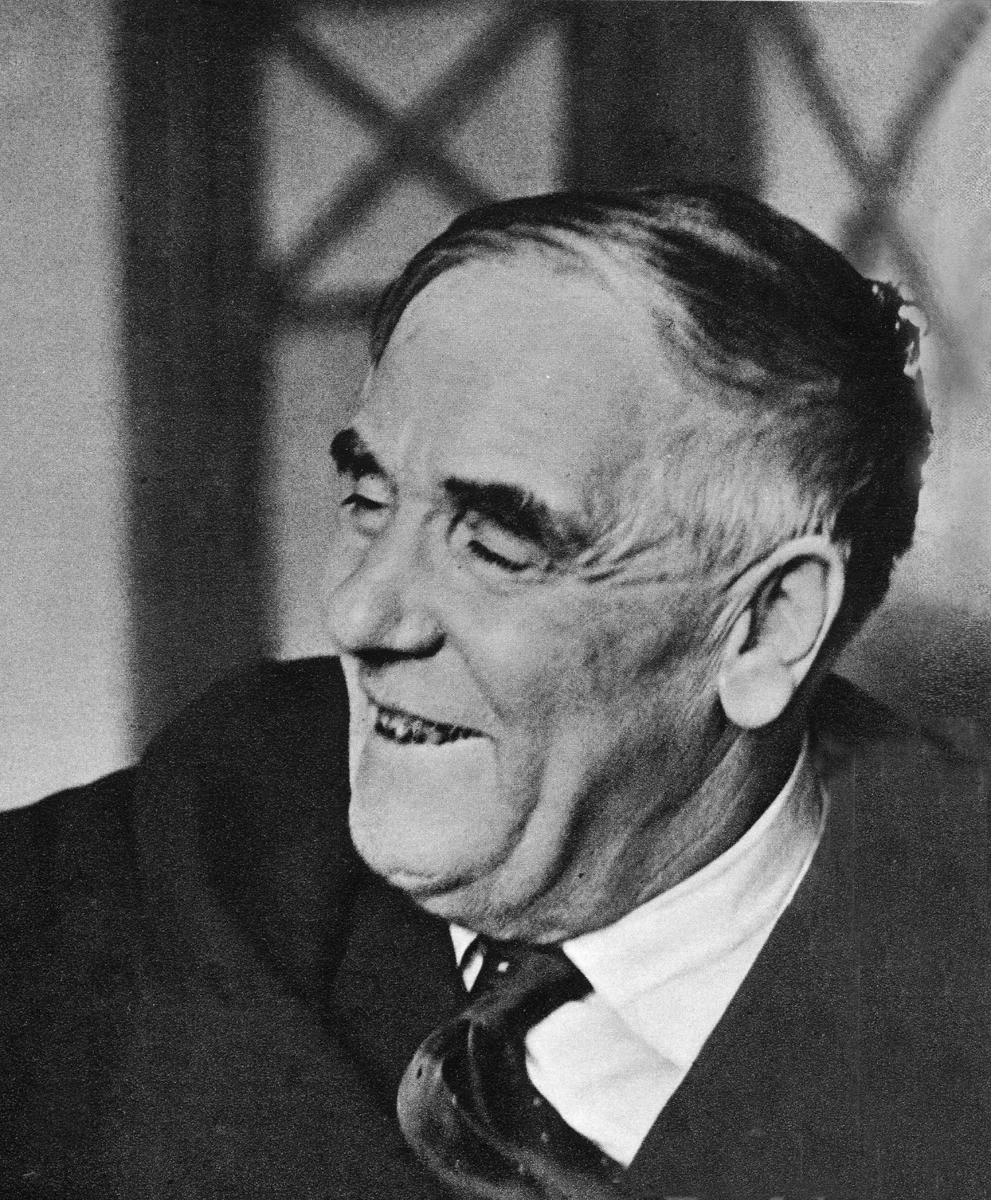
In particular, the denunciation was written on Peter Kapitsa, who, after an internship in Cambridge in the early 1930s, acquired an unreliable reputation. The scammer, a young communist-mathematician from Moscow State University, accused Kapitsa of anti-Soviet views and that, having risen at the head of the “pro-Western clique” of physicists, he got all funding to the detriment of other, less cosmopolitan and more patriotic colleagues, with a more correct class origin.
Residents of communal apartments also wrote denunciations to each other. Real life in communal services was different from the communist ideal of the fraternal neighborhood and was the cause of endless clashes on household grounds. The neighbors got scores, including with the help of denunciations. With a successful combination of circumstances, the room of the arrested neighbor could go to the author of the “complaint”.
Incorrectness
Some part of the denunciations was due to the fear of punishment for non-renewal, which was punishable by deprivation of liberty for a term of six months. So, at the party, one tipsy Soviet official had the imprudence of speaking in a positive way about Trotsky in the presence of several colleagues. In his opinion, Trotsky possessed many talents, and, if at the helm of the country, other people, his fate would have developed differently. One of the witnesses of the conversation decided to write a denunciation out of fear that otherwise he would be punished for undercarving (Sheila Fitzpatrick, “ signals from below ”).
In general, reporting was considered as a moral duty of a Soviet citizen. The citizen had to report to the party and Komsomol organization and to himself if one of his relatives was arrested as an enemy of the people. If a citizen did not, hiding the facts from his biography, he could be excluded from the party or the Komsomol, which in turn significantly limited life prospects.
Self -criticism - a very popular genre of the Stalin era - could also be considered as a denunciation of herself and also served as a measure of self -preservation.
If someone was accused of anti-Soviet activity, self-criticism could help soften the accusation, as she demonstrated: the accused had already repented and became a “other person”. Therefore, it was more profitable to convey to yourself through self -criticism than to become a defendant in the denunciation by another.
So, the Soviet writer Alexander Afinogenov in his diary subjected himself to fierce criticism for friendship with writer Leopold Averbach, who was arrested as an “enemy of the people”. Expecting the arrest, Afinogenov wrote how he eliminates all the “Averbakh elements” inside himself, and compared this with the removal of the stomach and even heart. Afinogenov managed to survive repression, he died later, during a bombing during the war.