
Translated material
Reduced game
Why does the ruble continue gradually falling over the past few months? Economists explain
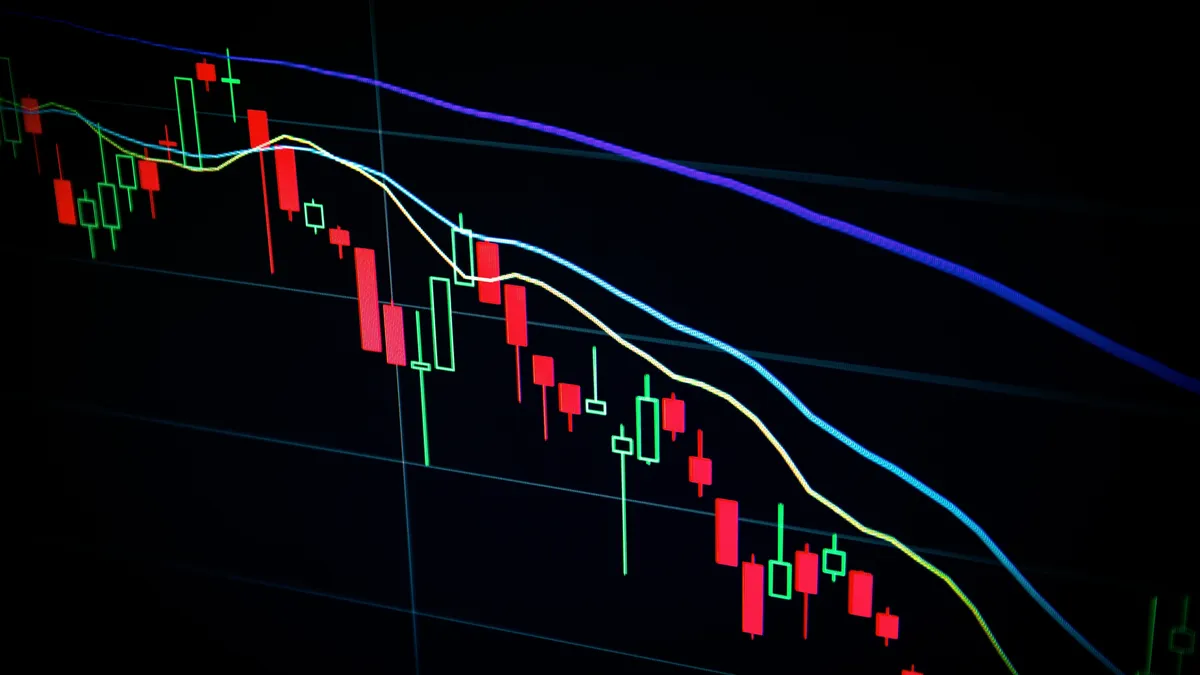
Photo: Maxim Hopman/Unsplash
According to the results of foreign exchange trading on Friday, the ruble approached the records of last spring, when panic on the exchange after the start of Russia's full -scale invasion of Russia provoked a sharp collapse of the cost of currencies. By the end of the trading session, the dollar almost reached a bar of 90 rubles (the peak of the session was recorded at 89.77 rubles), the euro reached 98 rubles, Yuan cost 12.35 rubles.
About how and why it became possible, we talked with an analyst, candidate of economic sciences and teacher Nikolai Kulbak.
We remind you that the New Gazeta Europe is recognized as undesirable. Do not refer to us in social networks if you are in Russia.
- If you try to explain in simple words, what does the exchange rate depend on?
- The exchange rate, if very simple, depends primarily on the ratio of export and import of the country. The more imports, the greater the demand for currency, and the more export, the greater the currency offer. This adds a desire to invest in a country that increases the demand for its currency. In the short term, a speculative game in the foreign exchange market may join this. The Central Bank in this market can either set restrictions on the currency course, or engage in foreign exchange operations, selling and buying currency.
Another global cause of changes in the exchange rate is the difference in inflation between countries. If the two countries trade among themselves and in one of them inflation are higher, then this will contribute to the fact that in this country the currency will weaken stronger.
-Do any separate political events (rebellion, mobilization, situation at the front) affect the course?
- Political events can influence the desires of investors, as well as the behavior of citizens who buy and sell currency. In fact, all these events most often serve as sources of short -term fluctuations in the course, but the fundamental causes are global flows of currency to the country and from the country.
- Is it possible to seriously analyze the exchange rate, taking into account the increasing closure of data, in particular budgetary expenses/income, oil revenues and other things?
- It is possible, but only for limited pairs of currencies and not in the short term. Short -term fluctuations for several months are almost impossible to predict. As for Russia, its stability does not depend on economic processes. Its economy, with all its inefficiency, is quite stable in itself, but strongly vulnerable to domestic political shocks, which are unpredictable.
- Is it possible to name the exchange rate still market?
- Yes, it remains a large extent market. And it will remain as if the state does not introduce a monopoly on foreign trade. But then the course will become artificial, as in the USSR, and will lose its meaning. However, this will be the beginning of a fast end, and it seems that they also understand this at the top.
- What influence on the course does currency restrictions have that continue to act?
- Currency restrictions, undoubtedly, have an impact on the course, holding back the demand for currency, which would otherwise be 10-15% higher.
- Why is the Central Bank not trying to actively interfere with the currency? Why is a weak ruble beneficial to him?
- The weak ruble is beneficial to exporters and the government, which is easier to cope with the budget deficit. The Central Bank is trying to maneuver between the desires of the government and the need to maintain low inflation. So far, it succeeds. What will happen next is difficult to say. The situation is changing too quickly.
- What is your forecast for further ruble behavior?
- Apparently, a slow weakening of the ruble awaits us. But this forecast is based on the continuation of the same intensity of the military conflict, the same intensity of sanctions, stability in relations between power groups in the country and preserving the world economy in about the same parameters as now. As you can see, there are too many factors that can change and which cannot be predicted.
Other grades
The chief macro economist "Ingosstrakh-investment" Anton Prokudin considers the weakening of the ruble "chronic":
- “The devaluation drivers change in time: at the end of 2022, exported - and this was the first driver, imports began to grow almost immediately, which had previously declined in the summer of 2022. This process can be delayed until mid -2024. By the end of the year, the inflation growth can additionally weaken the ruble to all this, but now we do not know how strong this influence will be. ”
Fundamental factors are still talking in favor of further weakening of the ruble, says Mikhail Vasiliev from the Sovcombank. At the same time, a too sharp decrease in the course can play against the authorities:
- “The rapid weakening of the ruble is unprofitable for the Bank of Russia and the Government, as it increases devaluation and inflation expectations,” Vasiliev said in the Forbes commentary.
The influence on the ruble is also exerted by transactions for the sale of foreign business assets leaving Russia: they stimulate increased demand for foreign currency to conclude a transaction:
- “Against the background of reducing the surplus of accounts of current transactions of the Russian payment balance, these operations can have a more significant impact on the foreign exchange market,” Vasiliev said .
Analyst Freedom Finance Global Natalya Milchakova in an interview with RBC said that political turbulence and nervous week after the riot Prigozhin can increase the demand of Russia's citizens for foreign currency, and this will exert speculative pressure on the ruble. However, the role of these factors is not so great:
“The political shocks that occurred on June 24, in the exchange rates in July, in our opinion, will not be much affected, since they did not cause any damage to the Russian economy.”
“The Russian ruble on Friday fell as if there was the last opportunity on the market for buying invaleuts. The speed of raising foreign currency pairs was more like a panic entry. Obviously, the market is a critical shortage of currency proposal in the context of an overabundance of demand ",
- said the analyst "BCS World of Investment" Mikhail Zelzer.
At the same time, according to him, this fall looks more “emotional”, and the return of the dollar to the range of 85–80 rubles is just a matter of time.
The Central Bank explains the drop in export prices and does not see risks for the financial stability of the country, said the deputy chairman of the Central Bank Alexei Zabutkin on Friday:
- “We pay attention: in recent months, prices for the main goods of Russian exports go down, and world prices, without even looking back at the discounts that are applied to world prices for Russian export goods. And the course reflects this deterioration in external conditions. We do not see risks for financiality ",
-said Zabutkin at a press conference.