
Translated material
Mikhail Zygar interviewed the American economist Nuriel Rubini. He predicted the financial crisis of 2008
They talked about sanctions against Russia, a new reserve currency and another Cold War - between the USA and China
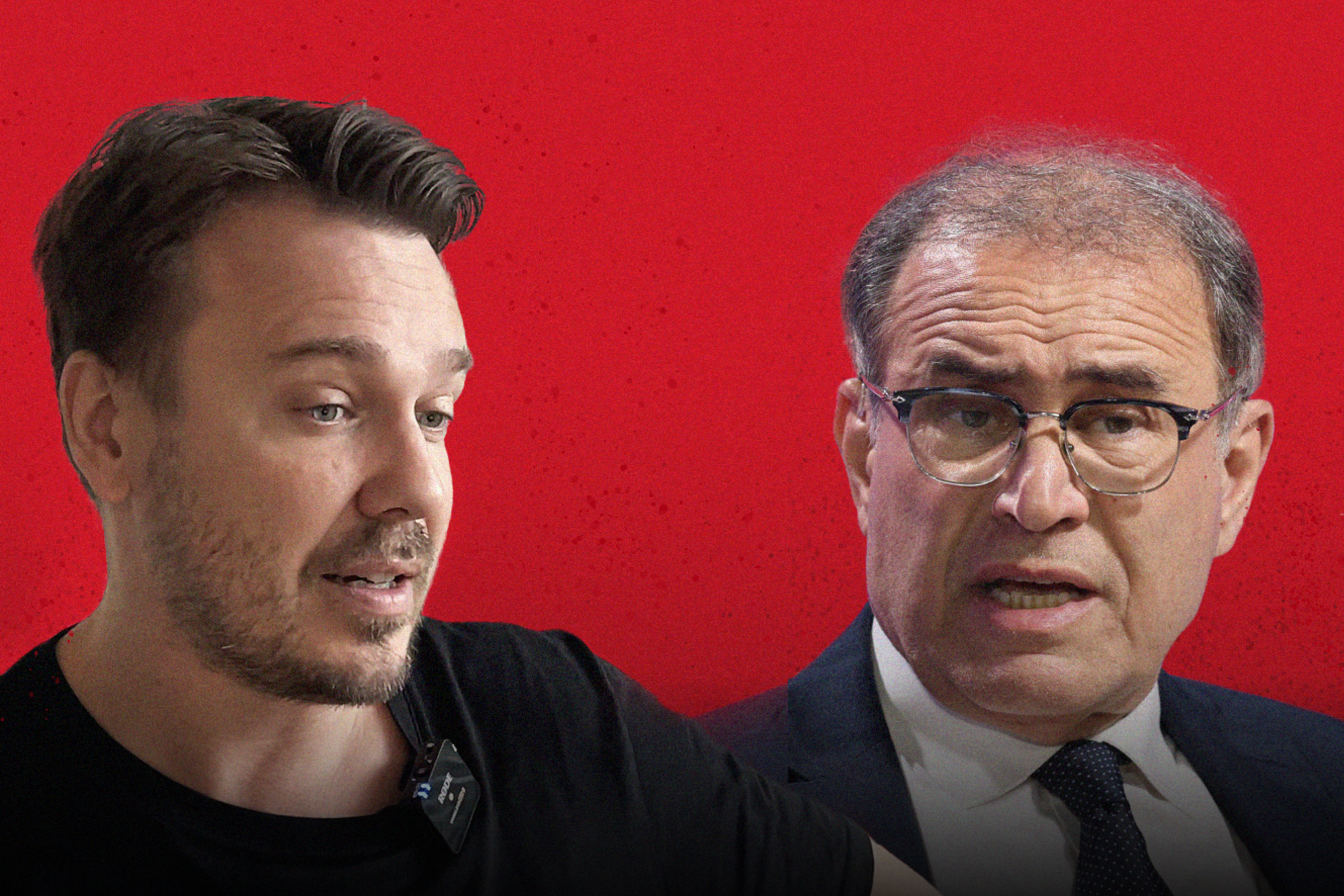
Journalist Mikhail Zygar talked with the American economist Nuriel Rubini, professor of business school Leonard Stern of New York University. Rubini, once part of the Council of Bill Clinton’s consultants on economic issues, is one of those who predicted the global financial crisis of 2008-2011. In an interview with Zygarya, the economist told what Europe’s refusal from Russian oil and gas will lead to, why a cold war between the West and China is possible - and whether other authoritarian regimes will be decided, following the example of Vladimir Putin, to open military conflicts. The video interview was released on the Yetyub channel "Zygar" . "Medusa" publishes this conversation.
- I want to ask you about your teachers. When you just started your career, you studied at Harvard University with such eminent economists as Jeffrey Sax and Larry Summers . They are not only well-known economists, but also advised the first Russian liberal government in the early 90s. Jeffrey Saxo now has some connection with Russia, he regularly appears on Russian television channels and comments on the situation in the USA and Russia. Maybe you know something from them, and on your part too. Why did Russia not reach real democracy and have not built an open economy that would not depend on oil and gas?
- This is a difficult issue and at the same time very important. I do not think that there is a unequivocal and simple answer to him. On the one hand, we know many success stories of the countries of Central and Eastern Europe, which made transit from the Soviet economy and communist ideology to other values. Look at Poland, Czech Republic, Slovakia, other countries. To a certain extent, this applies to Romania and Bulgaria.
There are many success stories here. First of all, these countries became part of the European Union, many of them entered the eurozone, became NATO members. Look at the Baltic countries, and they were also part of the Soviet bloc. On the other hand, we see Russia, which has chosen a different path of development, both economic and political. There are many explanations.
I think the fact is that some countries before their Soviet experience had a history of liberal political development and were already oriented towards a market economy. While Russia passed from the king right away to the Bolsheviks, survived the transit period, and as a result, a person like Putin was at the helm. This is the first.
The second aspect of the problem is that liberal democracy has never appeared in Russia, the country has not completely switched to a market economy either under the king, or at the Communists, or even under Putin. When Gorbachev was the head of state, the potential for turning in the right direction was preserved, but already under Yeltsin, and then under Putin the country was returned to the path of state capitalism.
This is a multilateral question. Unfortunately, it so historically happened that in Russia there has never been liberal democracy. And if this is not, the country cannot come to the market economic system. By the way, India, in my opinion, is a good example of the fact that a large country can be democracy and succeed economically.
I want to say that all talk about the impossibility of democracy for China or Russia are absolutely insolvent. And another interesting thing about Russia is a combination of a raw material curse and the so -called Dutch disease . You will prioritize the export of resources, while strengthening your own currency negatively affects your economy.
And of course, a raw material curse. You can’t rely too much on natural resources, this makes you dependent. As a result, the economic and political systems of the country become weak and corrupt. Russia has not been able to diversify its raw material economy. Therefore, a gift of fate in the form of natural resources was in the long term and a curse. I repeat, this is a really difficult question.
- You criticized Europe a lot for the fact that it relied too much on energy resources from Russia. What can the West make now to prevent Russia from continuing the export of oil and gas? After all, we see that, despite all the sanctions, Russia still sells, and the West still buys-though through intermediaries, through Turkey or other countries. Does the West somehow plan to pay attention to this question?
- Of course, the possibilities here are not unlimited. But there is something that can really be done. So, a very important decision, I consider the decision of Europe not to buy oil and gas from Russia until Russia torments Ukraine and until a real change in the regime within Russia itself occurs. Nevertheless, here you are right, Russia continues to sell oil and gas, especially gas through other channels.
This costs Russia much more expensive, because it has to be sold at a significantly lower price, which [as a result] will be painful for Russia. Europe, in turn, was very quickly able to abandon Russian gas. Many believed that the economic shock from a lack of Russian oil and gas would lead to a powerful recession in Europe. However, this did not happen.
For example, Germany was able to reduce energy consumption by 20% with minimal restrictions for production capacities. And of course, there are other large global gas suppliers in the Middle East and even the United States. So, the UAE and the USA will be leaders in the energy sector next decade.
Some of these energy resources will be exported to Europe. This will lead to the fact that Europe will (already become) completely independent of Russian oil and gas. Russia will have to resell its energy resources to the third countries at a low price, carrying high costs. And this certainly will not benefit Russia. But I do not think that there is a way to make sure that Russia could not sell its energy resources at all. You can complicate the sales process and make it much less profitable. I think this is the best thing to do.
- Now there is a lively discussion, including in Europe, what to do with the Russian business, with all those Russians who leave Russia to the West. There are two popular approaches. One of them is that everyone needs to punish and apply sanctions to them. Almost the entire large business in Russia is connected with the regime - and therefore all of them should be considered Putin's accomplices.
The second approach - on the contrary, the West should share political elites, attract large Russian business to its side and push it to challenge Putin.
As a result, it is the first approach that wins. Most Russian businessmen can no longer work in the West, so they plan to return or have already returned to Russia. They are forced to invest their money in the Russian economy, because Western banks no longer want to store Russian money, and thus help Putin. Do you think this is the right choice, the right strategy?
- Yana think that all oligarchs and businessmen from Russia are currently under sanctions. The sanctions affected primarily those who are directly related to Putin and his regime.
- But many banks stopped working with businessmen from Russia, so they had no choice. They could not do business in the West, and they had to return.
- That's it. But understand, someone was touched on fairly, someone is not, but those who wanted to return returned. I think that most oligarchs had exactly economic, financial motives for returning. Yes, they have assets abroad, but their main assets are in Russia. Since Putin’s regime is authoritarian, they risked them to lose, everything would be expropriated if they had not supported the regime.
Of course, many of them in personal conversations can speak out against the Russian invasion of Ukraine. Even many supporters of the Kremlin can be against. They were very surprised at what Putin did. But Putin, by nature, the aggressor, tyrant, he can simply take your property, throw you and your family.
I think everyone who returned is afraid. They have no other choice but to stay in Russia, since they are no longer happy in the West. But as you know, now there is a huge leak of brain from Russia. I mean a huge number of Russians who are not at all oligarchs.
- Yes, I know that.
- These are scientists, and programmers, and other popular specialists who left for Turkey, Georgia, the Gulf countries, those who were able, moved to Europe. They left because they are not ready to put up with the political regime, they do not see any hope and economic future in Russia. This leak of specialists will be very painful on the economic growth of Russia and will affect much more than [return] of several oligarchs that help Putin.
You see, when hundreds of thousands of people leave the country, this leads to serious economic shocks, and this is more important than those investments that several oligarchs can provide.
- Do you think that this policy regarding Russian business may turn out to be a signal for other businessmen, for example, from Arab countries or Asian countries? Suddenly they will begin to doubt whether to trust Western banks. They can see that investments in Western banks and the economy do not guarantee them that they will not lose their money in the same way as Russians.
- The fact is that the risk that the United States can apply sanctions against other countries is still small. Yes, the United States has a number of international agreements, but they are very selective in the issue of sanctions. For example, India needs energy resources for its production, it needs oil, fertilizers for agriculture, and we know that India is trading with Russia.
However, no one complains. India is democracy, and in a market economy, it is also an opponent of China. In the promotion of such interaction, there are much more advantages than minuses. Truly dragon sanctions will only be applied against rogue countries. There are so many opportunities in the global economy - look at the USA, look at Europe. Take any industry - these are technologies of the future, automation, work with big data, architecture for the fintech sphere. For example, a large proportion of superpituals from high oil prices from the Persian Gulf countries is invested precisely in Europe and the USA. And these are reliable investments. Of course, the United States and Europe should encourage such interaction. Let everyone be beneficial.
Yes, we can disagree on some issues, but this does not mean that due to this, sanctions will be applied against you. Ultimately, businessmen have a choice with which countries they want to work with.
They can invest in the USA, Japan, Australia, Canada, and Europe - or they can cooperate with Russia, China, Iran and North Korea. And yes, cooperation with China sounds attractive, but I doubt that cooperation with the other three countries is just as attractive to world business. So it is necessary to encourage other countries to encourage constructive cooperation.
- In your opinion, can Putin’s war against Ukraine open a kind of Pandora’s box and provoke other authoritarian regimes solve its problems in this way, with the help of aggressive wars? For example, do you believe in a real armed conflict between China and Taiwan?
- The United States, Europe and other countries that help Ukraine see this not only the support of Kiev against the cruel and unfair attack of Russia, but also the restraint of other countries that could think about achieving their goals, say, to acquire territories in a similar way.
The outcome of the war in Ukraine is important not only for Ukraine itself. This outcome will determine the future of Russia, which can have its plans for other neighbors, such as the Baltic countries. Or she can enter into an aggressive confrontation with Poland, Georgia or even Kazakhstan. Therefore, Russian aggression must be restrained. If this succeeds and the coalition of Western countries will continue to support Ukraine, so that in no case do not allow Russia to achieve its goals, then this will become a significant signal, including for China. China will know that if he tries to military manner to solve the issue of reuniting with Taiwan, this will have extremely serious consequences for China himself.
Therefore, I believe that everything that happens in Ukraine and the Western support of Ukraine send a signal to other countries to contain: “Do not even think to act in such a way because you will pay for it and the price will be very high.” That's what is important.
- In your recent book, you describe the upcoming crisis of the Western economy and write that the more turbulent the world economy becomes, the stronger people will sympathize with various radical populists, and authoritarian regimes. We see that many people think that authoritarian regimes can be more effective and respond to new economic challenges faster than democracy. Do you think it is possible to strengthen authoritarian regimes in the world against the backdrop of the economic crisis and global stagflation that you predict?
- I, of course, are worried that the opposite effect of people's adherence to the values of liberal democracy can be the rollback of society towards the extreme right or extreme left movements, many of which are inherently authoritarian. There are also proposals for reforming the existing system of democratic capitalism. Martin Wolfe, the leading economic observer The Financial Times, devoted a whole book to this book of democratic capitalism, in which he proposed a lot of excellent ideas on this subject. In my book, I explain why the desire for economic populism of the extreme right or extremely left -wing is more likely to lead to economic failures than to success.
Look at the US strategic rivals. Say, the economic growth of China was 10%, then five, now the potential growth of the economy of this country is hardly 3-4%. And if China continues the line of state capitalism, as Xi Jinping wants this, everything will only go worse. Giving the adoption of all decisions to the hands of a single person is not only a political, but also an economic mistake.
Even before a military invasion of Ukraine, Russia had quite mediocre growth indicators, which will now only worsen. See in which deplorable state is Iran: huge inflation and indicators, which can only be considered economic growth with a stretch. North Korea has already encountered the problem of hunger several times, this state is unable to even feed its own citizens. All these facts are an additional evidence that authoritarian regimes do not bring well -being, but just the opposite. Many of them will complete the economic failure.
Yes, of course, I am concerned about the problem of the reformation of liberal democracy and democratic capitalism. But we also have success stories, including among large countries. Take a look at India, this is democracy with almost one and a half million core. As a result of reforms in the next ten years, the expected economic growth of India will be seven or eight percent, and compare it with China, which has already reduced growth to three percent.
In the long run, democracy means the discovery of markets, the responsibility of the government to their people, a mixed economy, driving force for growth in which a private business is. And also this is state support for those in need. This path was chosen not only by the countries of Europe and the United States, but also by it in the West and successful democracies in Asia: India, Indonesia, South Korea, Japan or Malaysia.
There are many more examples. The situation in the world does not develop at all in favor of authoritarian regimes. Authoritarian regimes inevitably lead to economic failures.
- Doesn't it seem to you that in your words there is some paradox? On the one hand, you say that authoritarian regimes are ineffective, that Russia has very average indicators and China’s affairs are not so good. But at the same time, you think that the alliance between China and Russia is very dangerous for the West, moreover, the ruble or yuan can become the second reserve currency in the world. Do you think this alliance between China and Russia can pose a threat to the West?
- Well, as you know, I think China intends to create its currency regime. They rely much less on the American dollar, because if the Cold War between China and the United States once output into an open confrontation, all the dollar assets of China will be frozen or even confiscated. But in itself, the creation of an alternative currency regime does not yet guarantee economic success. Yes, it can temporarily protect against sanctions. But the main revisionist powers - Russia, China, North Korea and Iran - will be forced to build economic interaction among themselves. At the same time, each of these countries itself suffers from rather serious economic and financial problems, not to mention the political sphere. В такой ситуации Запад мог бы привлечь на свою сторону глобальный Юг с помощью открытости, посредством инвестиций, торговли, поддерживая развитие инфраструктуры и экологические преобразования. Запад может предложить другим странам иную модель развития, сказать: «Смотрите, с нами куда лучше, чем с Китаем, Россией, Ираном и Северной Кореей».
И одних слов тут будет явно недостаточно. Нужны будут конкретные действия, инвестиции, открытая торговля в инфраструктуре и перевод экономики на зеленые рельсы. Но я уверен, что Запад сможет с помощью реформ создать устойчивую и привлекательную инклюзивную модель для стран глобального Юга. И эта модель будет для них во много раз более привлекательной, чем сотрудничество с оппонентами Запада.
— Я правильно понимаю, что вы не очень верите в экономическое будущее БРИКС ? Вы говорили, что у России и Китая свои собственные интересы, которые расходятся с интересами Запада, а Индия, Бразилия и Южная Африка все еще остаются лояльны Западу и не поддерживают курс России и Китая создать новую резервную валюту.
— Вокруг БРИКС одно время было столько разговоров, но эти страны совершенно разные, у них разные экономики и совершенно разные политические системы. Три страны БРИКС — демократии, другие две, Россия и Китай, — автократии. Идея, что БРИКС покорит мир, не сработала конкретно для этих стран.
Рост Китая замедлился до 3–4 процентов. Россия тоже находится не в лучшем состоянии, имея потенциальный рост в 1%. Бразилия, безусловно, страна будущего, но ее нынешний рост, при текущей экономической политике, едва составляет 2%. На прошлой неделе я был в Южной Африке. Это страна с большим потенциалом, но и с большими экономическими проблемами, она демонстрирует пока весьма посредственный рост.
Из всех стран БРИКС на сегодняшний день и в ближайшем будущем наиболее перспективной является Индия с уверенным ростом более 7%. И с точки зрения геополитики страны БРИКС тоже не могут договориться между собой. Крупнейшим стратегическим соперником Индии является тот же Китай. Сотни километров спорных границ, по которым они никак не могут договориться. И я не думаю, что Индия и Китай смогут договориться по этим вопросам.
Со своей стороны США и европейские страны должны вовлекать ЮАР, Индию и Бразилию, чтобы быть уверенными, что они сохраняют свои связи с Западом. Нельзя воспринимать это как данность. Нужно продемонстрировать им и другим странам Юга, с их уникальной экономикой и социальным устройством, что они уважаемые партнеры, что сотрудничество с ними очень ценно для Запада. Хватит с нас и проблем после Брекзита.
Но главной силой в этом альянсе определенно станет Индия. Все остальные — посредственные.
— В вашей книге, описывая мегаугрозы будущего кризиса, вы упоминаете перспективу новой холодной войны, как вы ее сами называете, между Китаем и США. Как она может повлиять на мировую экономику и какие могут быть тут экономические последствия?
— Причиной так называемой великой умеренности, низкой инфляции и стабильного экономического роста за последние 30 лет, стала глобализация. Даже, я бы сказал, гиперглобализация. Коллапс Советского Союза, новая открытость Китая миру и вхождение в мировую экономику развивающихся стран привели к тому, что Китай стал крупнейшим производителем самой разнообразной продукции для всего мира, Россия и другие развивающиеся экономики стали играть важную роль в производстве сырья, Индия стала глобальным поставщиком услуг на мировой рынок.
Все это способствовало более высокому уровню интеграции: большой выбор товаров и услуг на мировом рынке; более высокая мобильность капитала и инвестиций; увеличение прямых инвестиций в иностранные экономики; трудовая миграция из южных регионов в северные, из бедных регионов в богатые; больше торговли технологиями; многократное расширение информационных и технологических рынков. В итоге это увеличило потенциал для дальнейшего экономического роста и уменьшило стоимость производства, что помогло держать инфляцию на низком уровне. В сегодняшнем же мире мы движемся в противоположном направлении: деглобализация, протекционизм, дезинтеграция и разъединение сложившихся торгово-экономических связей. Предпочтение отдается не свободной торговле, а защищенной; перемещение и разделение капитала важнее, чем иностранные инвестиции; большая часть внешнеэкономических связей, торгово-экспортных каналов оказываются избыточными и ненужными.
Фокус делается в первую очередь на безопасность и только во вторую — на эффективность. В результате мировая экономика становится более раздробленной. Конечно, все зависит от степени деглобализации. Нам не нужно выбирать между полной глобализацией и ее отсутствием. Вопрос в тренде. Сейчас он уходит от гиперглобализации, а более фрагментированная экономика будет больше склонна к стагфляции.
- The last question. В одном из недавних интервью вы сказали, что если начнется ядерная война, то первая бомба упадет на Нью-Йорк, где вы живете, а вторая — на Москву. Вы серьезно это говорили? Насколько реальным вам видится такой сценарий?
— Я, конечно, надеюсь, что такого никогда не случится. Я действительно считаю такой сценарий маловероятным. Вряд ли конфликт между двумя великими державами будет конвенциональной войной. Такой конфликт сразу переходит на новый уровень. Помните, во время холодной войны американские солдаты убивали советских и наоборот, но это были прокси-войны в Афганистане, Анголе, Мозамбике. Прямого военного противостояния не было как раз потому, что обе стороны имели ядерное оружие.
Я не верю в открытое противостояние ядерных держав. Если противостояние и случится, к примеру между НАТО и Россией, США и Китаем, такая война будет неконвенциональной. Если же дойдет до применения ядерного оружия и Россия ударит по Нью-Йорку и Вашингтону, то США в ответ разрушат Москву и Санкт-Петербург.
Я очень надеюсь, что этого никогда не произойдет. Это стало бы настоящей катастрофой для всех. И мы должны сделать все, чтобы этого никогда не случилось. Несмотря на то, что происходит сейчас в России, несмотря на войну в Украине. А я должен сказать, что я в этом конфликте целиком и полностью на стороне Украины, но мы ни в коем случае не должны допустить ядерной войны. Это стало бы катастрофой для всего мира.
За новыми интервью Михаиля Зыгаря можно следить в его инстаграме и телеграме .
Mikhail Zygar