
Translated material
Why there is no kangaroo in Indonesia
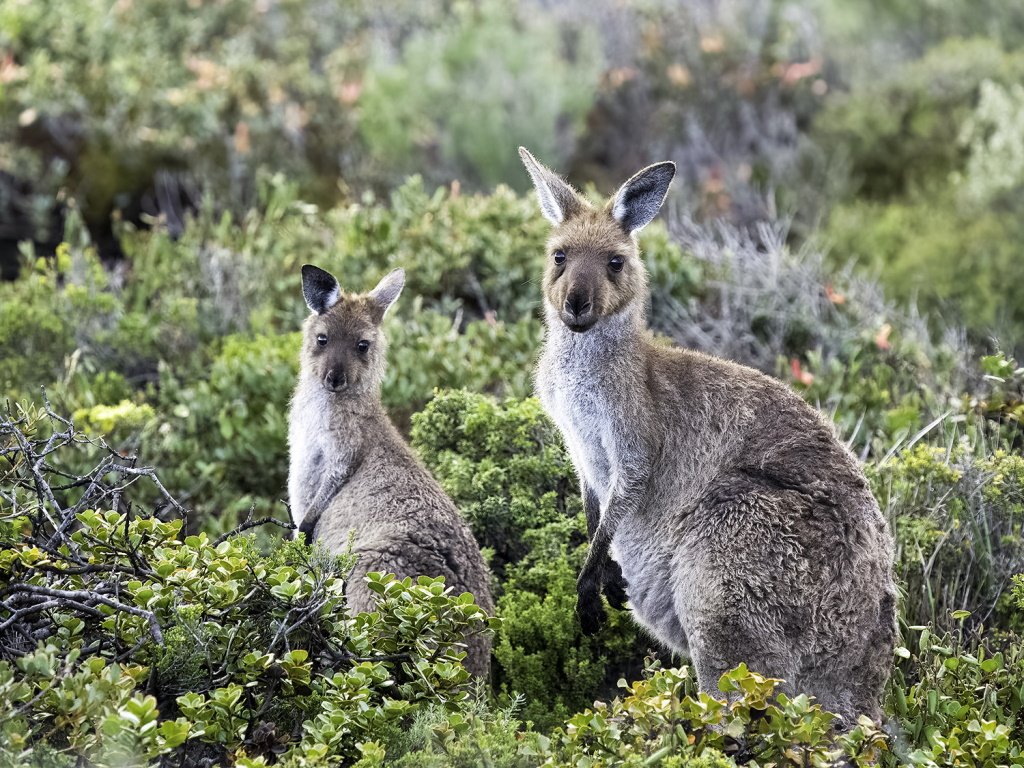
Scientists of the Australian National University and the Higher Technical School of Zurich proposed an answer to the question of why there are no kangaroo, koal and other marsupial animals on the islands of Indonesia, although many species of Indonesian origin, for example, rodents and Kukabarra live in Australia.
Biologists have long noted this asymmetric distribution of Australian and Asian species, having carried out an imaginary line that separates the fauna of Australia, New Guinea and part of Indonesia from the continental Southeast Asia. This invisible border is known as the Wallace line. In the article published in the Science journal, researchers say that the change in tectonics of the plates and a sharp change in the climate of the Earth tens of millions of years ago are the reasons for the uneven distribution of Australian and Asian creatures on both sides of the Wallace line.
Researchers analyzed a set of data on approximately 20,000 birds, mammals, reptiles and amphibians to determine which species moved between Indonesia and Australia, and which could successfully adapt to their new house.
Scientists from the Australian National University have discovered that the species coming from Asia can tolerate different climatic conditions and more successfully adapt and populate Australia, which explains why the Asian fauna lives in Australia than on the contrary. “If you go to Kalimantan, you will not see marsupial mammals, but if you go to the neighboring island of Sulawesi, you will see. On the other hand, in Australia there are no typical mammals for Asia, such as bears, tigers or rhinos, ”said Alex Skils from the Australian National University.
According to Skils, this uneven distribution of animal species on both sides of the Wallace line is partially related to changes in the ancient tectonics of plates of 45 million years ago, which ultimately led to a “continental clash” that changed the geographical composition of the Earth. “About 35 million years ago, Australia was located much south and was connected with Antarctica,” he says. -At some point in earthly history, Australia separated from Antarctica and drifted to the north millions of years, as a result of which it crashed into Asia. This collision gave rise to volcanic islands, which we now know how Indonesia. ” The islands of Indonesia served as a “springboard” for animals and plants originating from Asia and moving to New Guinea and North Australia, and vice versa. “Our study shows that much more groups of the Asian fauna crossed and settled in Australia than in the opposite direction,” said Dr. Skils.
But, as the researchers explain, the shift in tectonics of the plates is only a part of the puzzle explaining the migration of Asian species to Australia. When Australia separated from Antarctica, a climatic shift occurred, which led to the tendency of global cooling and drying of the continents, which led to mass extinctions around the world. “When Australia separated from Antarctica, she opened the ocean, where the Antarctic circumpolar current is now. This sharply changed the climate of the Earth as a whole; The climate has become much cooler, ”said Dr. Skils. - Despite this global cooling, the climate on the Indonesian islands, which organisms used as a gate to penetrate Australia, remained relatively warm, wet and tropical, which helped them in promotion. This does not apply to Australian species. They developed in a cooler and more and more dry climate and therefore less successfully entrenched on the tropical islands compared to creatures migrating from Asia. ”
“Our results can also give information for the forecasts of animal migration in the future and help us predict what species can better adapt to new conditions, since changes in the climate of the Earth continue to influence global models of biodiversity,” says Alex Skils.